
What started as a young child’s simple tribute to a colorful native Australian bird has turned into an unexpected internet sensation, capturing the attention of millions of listeners across the globe. Seven-year-old Miles Phillips, the creative mind behind the now-viral track “Eastern Rosellas!”, has seen his homemade song rack up more than 1.5 million views on digital platforms, a milestone that has turned a small personal project into a mainstream cultural moment. The charming, unscripted tune has resonated so widely with audiences that it has even earned a spot on radio playlists, bringing Miles’ infectious enthusiasm for these bright-plumaged parrots to even more listeners outside of social media. The viral success of the young artist’s work highlights how unfiltered, authentic content created by children can cut through the noise of polished mainstream media, connecting with people who crave lighthearted, genuine moments online. What began as Miles’ simple fascination with Eastern Rosellas has now become a global talking point, proving that creativity at any age can capture the public’s heart.
标签: Oceania
大洋洲
-
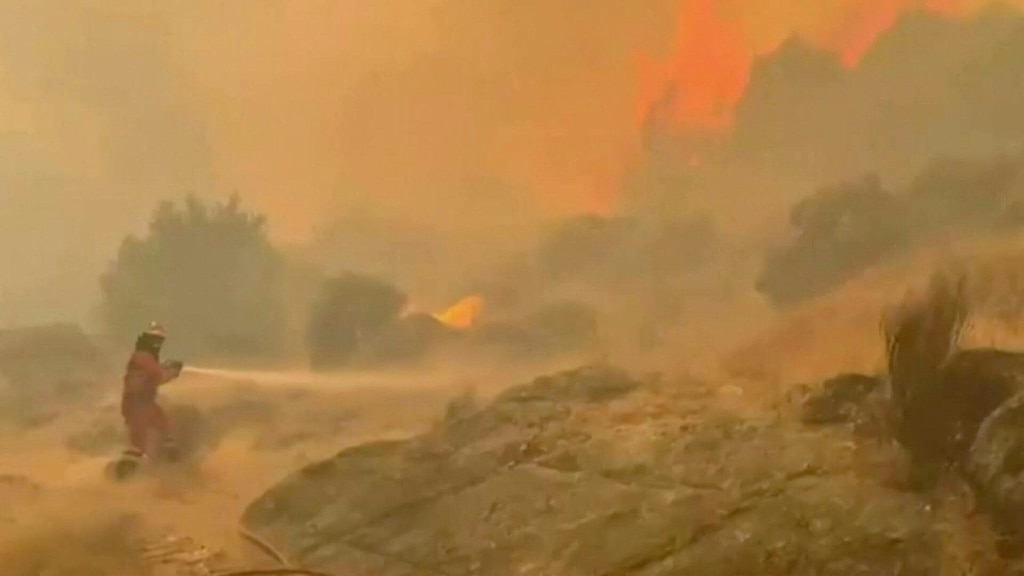
Untamed wildfires force over 160,000 to flee in France, Spain
In a devastating outbreak of climate-fueled wildfires that has become one of the most extreme weather emergencies Western Europe has faced in modern history, more than 160,000 people have been displaced across France and Spain, with emergency crews stretched to breaking point and military forces deployed to battle the raging infernos.
The crisis unfolded over three days of relentless burning, with large blazes breaking out simultaneously near Bordeaux in southwestern France and on the outskirts of Madrid, Spain. By Saturday, the scale of displacement had reached staggering levels: 141,000 residents and tourists were evacuated from fire zones in France, while 25,000 more fled the Madrid region, with an additional 39,000 people ordered to shelter in place to avoid toxic smoke. The smoke from the Madrid wildfires drifted as far as the city’s center by early Saturday, a stark reminder of how close the disaster has come to one of Europe’s major capital cities.
The fires have been amplified by exceptionally dry conditions, created by a string of record-breaking heatwaves that have parched forests across the Iberian Peninsula and southern France since May. Climate scientists have repeatedly warned that rising global temperatures are increasing the frequency and severity of droughts and extreme weather events, creating the tinder-dry conditions that allow wildfires to grow rapidly out of control.
In France, officials have described the Bordeaux-region blaze as the largest wildfire the nation has ever recorded. French President Emmanuel Macron ordered military intervention on Friday, and Prime Minister Sébastien Lecornu later announced that 1,000 military personnel would be deployed to support overstretched firefighters who have been working around the clock to contain the flames. To date, the fire has destroyed more than 22,000 hectares of land – an area roughly twice the size of the city of Paris. Authorities also arranged for 1.5 million protective face masks to be delivered to the Gironde department to protect first responders and local residents from toxic smoke inhalation.
The blaze near Bordeaux poses an additional high-stakes risk: it is advancing toward the broader Bordeaux wine region, which is home to many of the world’s most famous and prestigious wineries. Among the hardest-hit evacuation zones is the upscale Cap Ferret peninsula, where 44,000 people fled, hundreds of them escaping by boat as flames closed in on coastal roads. So far, 40 firefighters have been injured battling the Cap Ferret blaze, part of a rising toll that has seen three firefighters killed in wildfires across France and Italy this week alone.
Tens of thousands of evacuees are now sheltering in emergency facilities set up in local schools, gymnasiums, and large public hangars, many unsure if their homes will still stand when they are allowed to return. Ninety-year-old Maria Lalanne, who evacuated from Lege Cap Ferret to a gym in Andernos, told reporters she had left her glasses and hearing aid behind in the rush to escape. Living with pre-existing heart disease and high blood pressure, she said she had no information about the fate of her home. “I don’t know how long all this will last. I don’t know how my house is, whether it has burnt,” she said.
Forty-nine-year-old Caroline Larrode, who fled her home in Saumos with her three cats, said she had nowhere else to go and ended up in a large Bordeaux hangar housing evacuees from the Arcachon Basin. “We had no one to put us up,” she explained.
In Spain, the situation remains equally critical. Two of the three large wildfires burning west of Madrid have already merged into a single massive blaze, which is just kilometers from merging into an even larger inferno on the capital’s doorstep. Carlos Novillo, the Madrid regional government’s environment chief, warned Friday that the fire was “at its peak and… currently beyond the capacity of firefighters to contain” the blaze. Spanish Prime Minister Pedro Sánchez planned to visit the fire-ravaged region on Saturday to attend an emergency response meeting in the fire-stricken village of Cenicientos, followed by a press briefing to update the public on the response effort.
Luis, an audiovisual technician who grew up in a suburban town near the fire zone, had spent an afternoon helping evacuate residents from Pelayos de la Presa when he received his own evacuation order. “I cried at first because it’s where I grew up. But now, it’s more a feeling of anger and resignation, because there’s nothing we can do as long as we’re not allowed to go back and see what we’ll find there,” he told Agence France-Presse.
Francisco Martín, the Spanish central government’s delegate in Madrid, said a forecast dip in temperatures on Saturday offered a small window of opportunity for firefighters. “There is a real opportunity now to tackle this fire with some guarantee of success,” he said, though he warned that the day would still be challenging, with erratic, rising wind gusts expected through the morning.
Spain’s largest active wildfire, burning in Guadalajara province roughly 100 kilometers north of Madrid, has already scorched more than 32,000 hectares of land. Both France and Spain have formally requested assistance from the European Union to support their overwhelmed emergency response teams, as hundreds of firefighters on both sides of the border work to the point of exhaustion to contain the blazes.
-
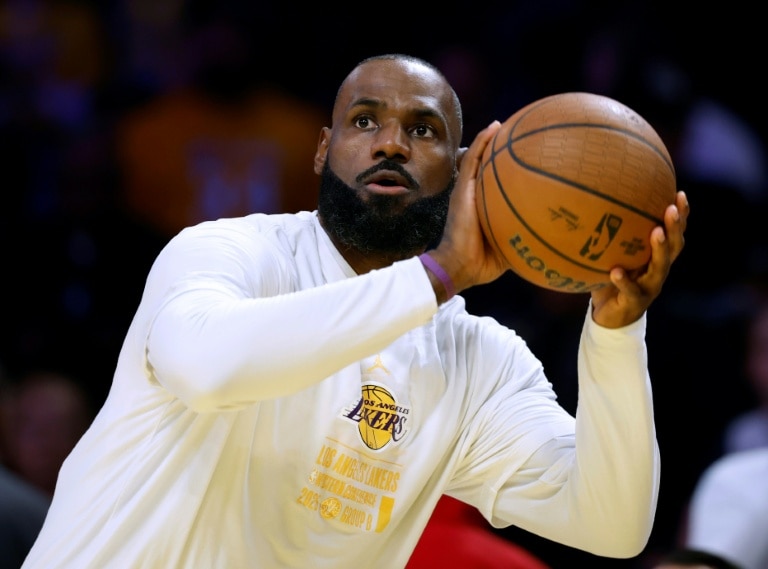
James hopes to bring title magic to Philadelphia 76ers
Four decades have passed since the Philadelphia 76ers last lifted the Larry O’Brien NBA Championship Trophy, and now the franchise is pinning its championship hopes on the most decorated player in league history: LeBron James. The 41-year-old all-time leading scorer of the NBA confirmed on Friday that he has agreed to a two-year, $8 million deal to join the 76ers as a free agent, ending three weeks of rampant league-wide speculation that followed his departure from the Los Angeles Lakers.
After 23 seasons and four championship titles across three different franchises, James entered the 2024 offseason facing major uncertainty about his future. When the Lakers’ 2023-24 campaign wrapped up, the four-time MVP openly admitted he was seriously considering retirement. “I thought I was done when the season ended. I wasn’t ready to announce it, and I knew I needed some time to really decide, but I was pretty sure I played my last game,” James shared in a post on X. “I was honest at that last press conference when I said I needed to look at myself and decide if I still love this game.”
Ultimately, the competitive fire that defined James’ 21-year Hall of Fame-caliber career won out. Rather than walking away from the game, the superstar decided to chase one last title, rejecting overtures from multiple contenders that included a return to his hometown Cleveland Cavaliers, a reunion with the Miami Heat, and a run with the champion Golden State Warriors alongside close friends Stephen Curry and Draymond Green. For James, this final free-agent decision was never about money or off-court factors. “I’m not going for money. I’m not going for family. What am I really playing for at this point? I still want to sacrifice. I still want to work, I still want to grind. I still want to compete, to win and to have a chance at the feeling of winning another championship,” he wrote.
The 76ers emerged as the clear choice thanks to the team’s newly constructed contender-level roster. Over the offseason, Philadelphia pulled off a blockbuster trade to acquire star forward Jaylen Brown from the Boston Celtics, pairing him with perennial All-Star center Joel Embiid, breakout guard Tyrese Maxey, and rookie guard VJ Edgecombe. James and Embiid already share championship chemistry as teammates on the 2024 U.S. Olympic men’s basketball team that took home gold in Paris, a connection that helped sway James’ decision. Current 76ers head coach Nick Nurse, who won a title with the Toronto Raptors in 2019, also brings proven championship experience to the new-look roster.
Reaction to the signing from the team’s new core was immediate and enthusiastic. Brown posted “#throwtheballup” on X to welcome James, while Maxey — who shares the same agent as James, Rich Paul — publicly celebrated his unplanned “recruiting” victory on social media. James also took a moment to thank his former teams, writing, “Thank you LA. Miami I’ll forever love and Northeast Ohio will always be home!”
Throughout his career, James has built a legacy of turning talented franchises into championship winners. He delivered back-to-back titles to the Miami Heat in 2012 and 2013, pulled off one of the greatest upset runs in sports history to end Cleveland’s 52-year major sports championship drought in 2016, and added a fourth ring with the Lakers in 2020. Now he will look to replicate that “title magic” in Philadelphia, a franchise that has not reached the NBA Finals since 2001 and has not advanced past the second round of the playoffs in eight of the last nine seasons. The team’s most recent title came all the way back in 1983, led by Hall of Famer Julius Erving.
The prolonged speculation around James’ free agency created unexpected ripples across the NBA’s business operations. League commissioner Adam Silver even acknowledged that the league could not lock in the official schedule for the upcoming 2024-25 season until James’ destination was confirmed, with national broadcasters scrambling to adjust broadcast schedules to feature the league’s biggest draw in his new home.
For 76ers fans, the writing may have been on the wall a week before the official announcement, when James referenced “trusting the process” while discussing his training routine — a phrase that became the iconic slogan of the 76ers’ 2013-2016 rebuild. James downplayed the coincidence at the time, noting he had used the phrase since his rookie season in 2003, but the connection still sent 76ers fan bases into a frenzy across social media. Now, after months of uncertainty, one of the most anticipated free-agent signings in NBA history is official, and the league prepares for LeBron James’ final championship run.
-

‘He goes with my blessing’: Craig Bellamy’s touching message to Cameron Munster as Harry Grant gives an update on his injury
In a surprising display of selflessness that has turned heads across the National Rugby League (NRL), long-time Melbourne Storm head coach Craig Bellamy has publicly given his blessing to star five-eighth Cameron Munster, should the Queensland captain choose to finish his professional playing career with the expansion PNG Chiefs. The unexpected development comes after it was confirmed earlier this week that the Storm has granted Munster permission to begin contract negotiations with the Papua New Guinea-based franchise for a 2028 move. Now in his 13th season with the Melbourne Storm, Munster still has one full year remaining on his current contract with the club, keeping him tied to Melbourne through the 2027 season. At 31 years old—with his 32nd birthday just weeks away—the veteran playmaker would bring elite experience and on-field leadership to the new-look Chiefs side, where he is slated to partner dynamic halfback Jarome Luai in the halves if the transfer goes through. While a permanent move to PNG remains far from finalized, and a contract extension to keep Munster in Melbourne is still a possible outcome, Bellamy emphasized that his star player has more than earned the right to pursue a lucrative contract with the expansion franchise. “I think ‘Mun’ has done a whole heap for our club, and he’s done it for a long period of time,” Bellamy told reporters. “He’s been a wonderful player for our club, so if he sees that he wants to go to the team in Papua New Guinea then I’d be happy to let him go.” Bellamy noted that final roster decisions are ultimately made by club leadership, not just himself, but added that Munster’s decades of loyalty and service to the Storm justify his right to prioritize what is best for his career and his family’s long-term future. “There are other people in the club that make that decision, and I don’t know if that will be the same decision as me, but he’s done a lot for our club, has been a valuable servant and very loyal,” Bellamy said. “If he wants to do that and that’s going to help him in later life then I’m willing to say OK, but there’s got to be a bit of water that flows under the bridge before he goes there, so we’ll just see what happens. I’ll go on the record as saying that if he wants to go and his family wants to go, then he goes with my blessing.” Current Melbourne Storm captain Harry Grant echoed Bellamy’s supportive stance, arguing that Munster has every right to explore his options at this stage of his career, particularly with Munster currently sidelined recovering from a knee injury that has given him time to consider his future. “It’ll probably be a busy time with the World Cup and everything like that later in the year, so it’s probably not a bad time for him to have that look,” Grant said. “That’s just part of the game. The NRL has brought a couple of new teams in so I don’t think you can fault players for having that opportunity to talk to them.” The positive discussion around Munster’s future was overshadowed by fresh injury news for the Storm, however, as Grant himself became the club’s latest high-profile player to go down with a soft tissue injury. The world-class hooker was forced to leave the field just before halftime during Melbourne’s narrow 28-26 defeat to the South Sydney Rabbitohs, after suffering a hamstring strain while accelerating during play. The injury leaves Melbourne’s hopes of scraping into the top eight for the 2024 playoffs hanging by only a mathematical thread. Grant told reporters that while injuries are an unavoidable part of rugby league, the recent spike in soft tissue injuries coming out of the State of Origin series deserves closer review from league officials. “It’s just part of footy, but it’s disappointing,” Grant said in the post-match sheds. “It was just running when I was accelerating. It’s part of the game and it’s a pretty common occurrence at the moment from last week into this week on the back of the Origin period. I think that’s got to be looked at a bit.” The skipper added that he is hopeful of returning to complete the 2024 season once he receives the results of an upcoming scan to assess the severity of the injury. “It feels pretty similar to the other ones on my left leg, but you’re just going off your feeling and the memory of last time,” Grant said. “I’ll get a scan and go from there. Fingers crossed I play again this year, but you’re a little bit blind until you go for scans and get some feedback.”
-
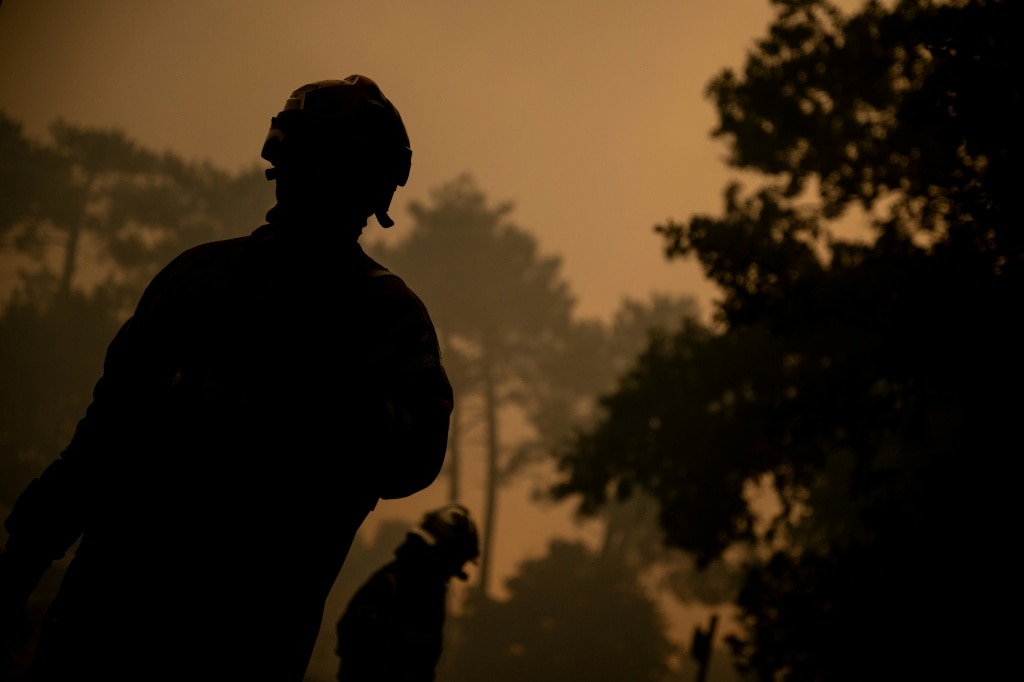
Tens of thousands in France flee burning holiday haven, by road and sea
One of France’s most beloved summer retreats, long a quiet favorite of A-list celebrities and wealthy families, has been reduced to a smoky disaster zone, forcing a massive coordinated evacuation of more than 35,000 residents and tourists as an out-of-control wildfire sweeps across the Cap Ferret peninsula.
Known for its windswept Atlantic sand dunes, casual oyster shacks and understated luxury that draws stars like Marion Cotillard and Jean Dujardin away from the glitzy bustle of the French Riviera, Cap Ferret is now a near-empty landscape. Deserted streets, shuttered storefronts and locked vacation homes mark the normally bustling peak summer tourist season, a transformation that long-term residents say is surreal.
The blaze ignited on Wednesday in the nearby village of Saumos, just kilometers from the world-famous Medoc wine region, before spreading rapidly through the dense pine forests that cover the Atlantic coast. By Thursday, it had jumped to the Cap Ferret peninsula, prompting regional authorities to order a full evacuation of the peninsula’s 40,000 seasonal and permanent residents.
Jean Goncalves, a 54-year-old resident of 30 years, fled his home early Friday after watching his neighbor’s wooden home go up in flames. “It’s a disaster, it’s horrible,” he told reporters from AFP, with a cloth tied over his face to block the acrid smoke. At the peninsula’s ferry terminal, local resident Cecile Maumy compared the empty streets to the height of the Covid-19 pandemic lockdowns. “There’s not a soul around. It feels like the Covid period. It’s unbelievable,” she said.
While no fatalities have been reported as of Friday, the fire has already destroyed more than 50 residential structures and an entire seaside campsite. Regional prefect Sophie Brocas labeled the blaze an “XXL wildfire, unpredictable and voracious,” with locals describing the landscape as resembling a war zone.
The mass evacuation unfolded via two routes: most evacuees left by private car along the peninsula’s only connecting road, while hundreds of others were transported out by civilian and government ferries. This sea evacuation plan, drafted after devastating 2022 wildfires in the same region, was activated for the first time this week. Local shopkeeper and elected official David Lafforgue noted that the evacuation itself proceeded calmly, despite the chaos of the situation. “Everything was handled smoothly. Suitcases were ready, and people remained calm,” he said.
But Lafforgue warned of catastrophic long-term impacts for the local tourism-dependent economy. The peak summer tourist season runs from mid-July to mid-August, the most profitable month of the year for local businesses. “Economically, it’s catastrophic. We go from everything to nothing,” he said. “We don’t know whether our seasonal workers will come back or whether our customers will return.”
Many evacuees have been relocated to the larger coastal town of Andernos, where authorities are now preparing for a potential full evacuation of that town as well, as the fire continues to advance. Andernos deputy mayor Jean-Francois Garric explained that the town is already adjusting to the shifting danger. “We are welcoming people from the peninsula who have been evacuated to our reception centres, and now we have been instructed to evacuate those centres as well,” he said.
Ninety-year-old Maria Lalanne, a lifelong Cap Ferret resident with no immediate family who fled to Andernos, spoke of her disorientation after being forced to leave her home quickly. She accidentally left her hearing aids and glasses behind amid the rush to evacuate. “I have heart disease, blood pressure issues, eye problems. I don’t know how long this will last. I don’t know what has happened to my house,” she said.
For visiting tourist Julie Boisvert, who was staying in the nearby village of Le Porge, the evacuation came with only minutes of warning. Gendarmes went door-to-door ordering residents to leave, giving her family just two minutes to depart with their two young children, ages two and five. “We had already packed suitcases just in case, but they gave us only two minutes and carefully checked that nobody was still inside the house,” she said, adding that she had already begun to feel surrounded by advancing flames.
The Cap Ferret fire is not the only major blaze raging in southwestern France this week. Firefighters are also battling a second large wildfire near the town of Biscarrosse, southwest of Bordeaux, which broke out on Thursday and has already forced the evacuation of 18,000 people. Landes prefect Gilles Clavreul noted that the scale of this year’s fire season is unprecedented for the region. “We have never experienced anything like this,” he said.
This year’s wave of intense wildfires follows three record-breaking heatwaves that have hit France since May, part of a global pattern of more frequent and more severe extreme weather events directly tied to human-caused climate change. The heat has already caused thousands of excess deaths across the country, dried up major rivers, and created ideal dry conditions for wildfire ignition and spread.
-
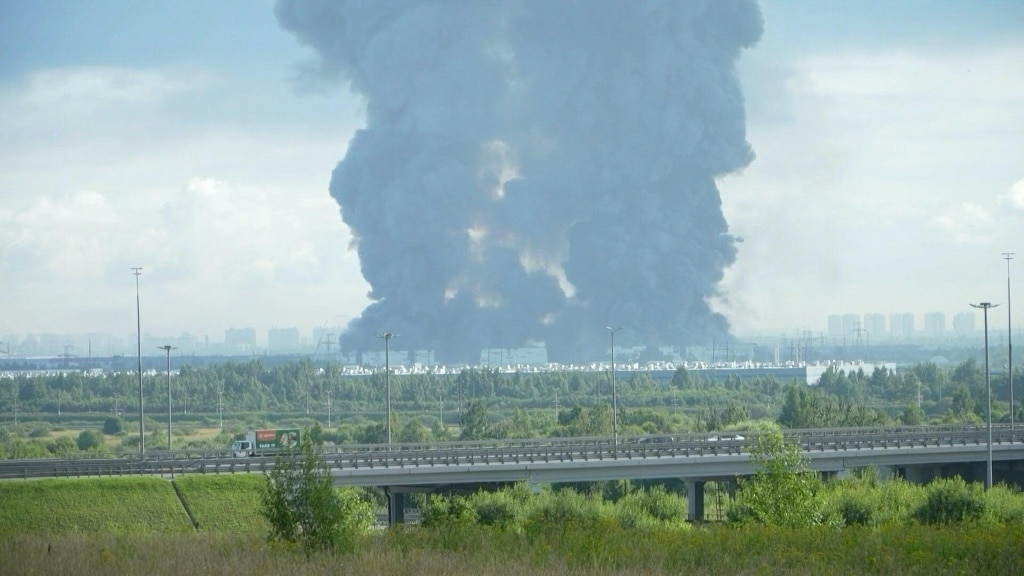
At least 17 killed in Russian and Ukrainian long-range strikes
Escalating cross-border attacks between Russia and Ukraine have left at least 17 people dead across both countries, marking a sharp intensification of violence as diplomatic efforts to end the four-and-a-half-year conflict remain completely deadlocked. The tit-for-tat long-range strikes on Friday targeted locations ranging from the outskirts of Ukraine’s capital Kyiv to industrial sites hundreds of miles east of Moscow, pushing civilian casualty rates to their highest levels since the early months of Russia’s 2022 full-scale invasion, United Nations data shows.
On the Ukrainian side, Ukrainian President Volodymyr Zelensky confirmed that a Russian missile strike on a suburb just outside Kyiv killed six people, with dozens more injured and rescue operations still ongoing as of Friday evening. Separately, five additional civilians were killed in Russian aerial bombing operations on Sloviansk, a strategic frontline city in eastern Ukraine’s Donetsk Oblast. Vadym Filashkin, the local Ukrainian governor, reported that Russian forces dropped two heavy aerial bombs directly on populated areas of the city. Sloviansk, which had a pre-war population of roughly 105,000, holds major symbolic weight as a site of early Ukrainian resistance against pro-Russian separatists in 2014, and has remained a key Russian military target throughout the current full-scale invasion. This daytime strike on Kyiv marked a rare escalation in Russian attacks on the capital, which has faced repeated waves of deadly ballistic missile assaults from Russian forces in recent weeks.
In a coordinated retaliatory strike the same day, Ukraine launched a large-scale wave of long-range drone and missile attacks targeting sites deep inside Russian territory. The deadliest of these attacks hit an industrial factory in Kirov, a Russian city located more than 1,000 kilometers (620 miles) from the active front line. Kirov Governor Alexander Sokolov confirmed that six people were killed instantly in the strike, with another 26 people injured. Zelensky framed the attack as a deliberate strike on a critical Russian military supply hub, noting that the facility produces components for Russian aircraft and missile systems used to attack Ukrainian population centers. While Ukraine has launched occasional strikes on Russian infrastructure as far east as the Urals and Siberia, fatalities among people located deep inside Russia have remained rare prior to the recent escalation of attacks.
Ukrainian forces also targeted a second high-profile site on Friday: warehouses operated by Wildberries, Russia’s largest online retail platform often described as the country’s equivalent to Amazon, in the outskirts of Saint Petersburg, Vladimir Putin’s hometown. This marked the third time Ukraine has targeted Wildberries facilities in the past week. Thick plumes of smoke from the attack were visible across the historic city center. Zelensky has publicly accused Wildberries of storing drone components and providing logistical support to the Russian military, and he hailed Friday’s wave of attacks as “successful.” Ukrainian officials have repeatedly stated that these retaliatory strikes deep inside Russia are intended to disrupt Moscow’s war production capacity and force the Kremlin to enter good-faith negotiations to end the conflict. The targeting of major Russian cities marks a dramatic shift from the start of the war in 2022, when the Kremlin launched its offensive confident of a quick victory and promised Russian civilians that the conflict would not impact daily life at home.
Public reaction to the strikes among Russian civilians in Saint Petersburg was divided, reflecting the uneven flow of information under Russia’s strict wartime censorship laws, which ban all criticism of the country’s military campaign. Anna, a 50-year-old teacher in the city, said the attacks only stoked anti-Ukrainian sentiment among ordinary Russians. “This Ukrainian tactic is not leading to peace,” she said. “Even in my entourage, people are getting angrier and say that if that’s their way, then we should continue the offensive.” Other residents expressed fear over the escalating violence. “I am frightened, everything is getting worse,” said Svetlana, a 30-year-old cashier in Saint Petersburg, who blamed Ukraine for the attack while adding that she wanted an end to the fighting.
The latest wave of violence comes amid a stark upward trend in civilian harm across the conflict zone. The United Nations reported this week that overall civilian casualties rose 37 percent in the first half of 2025, reaching almost double the number recorded in all of 2024. UN data confirms that this summer has seen more civilian deaths than any period since the first three months of Russia’s full-scale invasion. Diplomatic efforts to break the deadlock have gone nowhere, as Russia continues to occupy large swathes of eastern and southern Ukraine and refuses to abandon its maximalist goal of seizing the entire Donbas region.
-

Woman charged over anti-Semitic slur at Bondi Beach terror site
Weeks after a deadly terror attack on Bondi Beach claimed 15 innocent lives, a shocking incident of hate speech has occurred meters from the massacre site, leading to a 67-year-old local woman facing criminal charges and an upcoming court appearance.
On Wednesday afternoon, around 4:30 p.m., NSW Police received an emergency call about a woman aggressively confronting a gathered group at Archer Park, located adjacent to the Bondi Beach attack site. The confrontation unfolded at the same time that Jewish community leaders and Sydney Swans players were visiting the site to pay respects to the victims of the December terror attack.
Following a prompt investigation into the incident, law enforcement officers arrested the 67-year-old Bondi resident and formally charged her with one count of using offensive language in public. In an official statement released this week, NSW Police confirmed that the woman has been issued a mandatory notice to appear before the court, adding that investigators will allege she launched a verbal tirade against the visiting group that included explicit anti-Semitic slurs.
The incident has drawn widespread condemnation from Australian Jewish community leadership. Alex Ryvchin, co-chief executive of the Executive Council of Australian Jewry, released a formal response Friday praising the swift action of NSW Police. “We’re grateful to NSW Police for their professionalism in investigating and laying charges promptly,” Ryvchin said.
He emphasized that the Jewish community would not tolerate attempts to spread hate in a space that has been turned into a de facto memorial for terror victims. “The Jewish community will not succumb to hatred and vilification. We will not allow the desecration of a sacred site,” Ryvchin stated. He went on to push back against attempts to normalize anti-Jewish sentiment disguised as political critique, saying: “And we will not allow the poison of antizionism, which places targets on the backs of virtually all Jews, to be passed off as benign political commentary. We cannot turn antisemites into good and rational people. But we can exact consequences when they endanger our society and break the law.”
The accused woman is scheduled to make her first court appearance at Waverley Local Court on September 23, where the case will be formally heard.
-
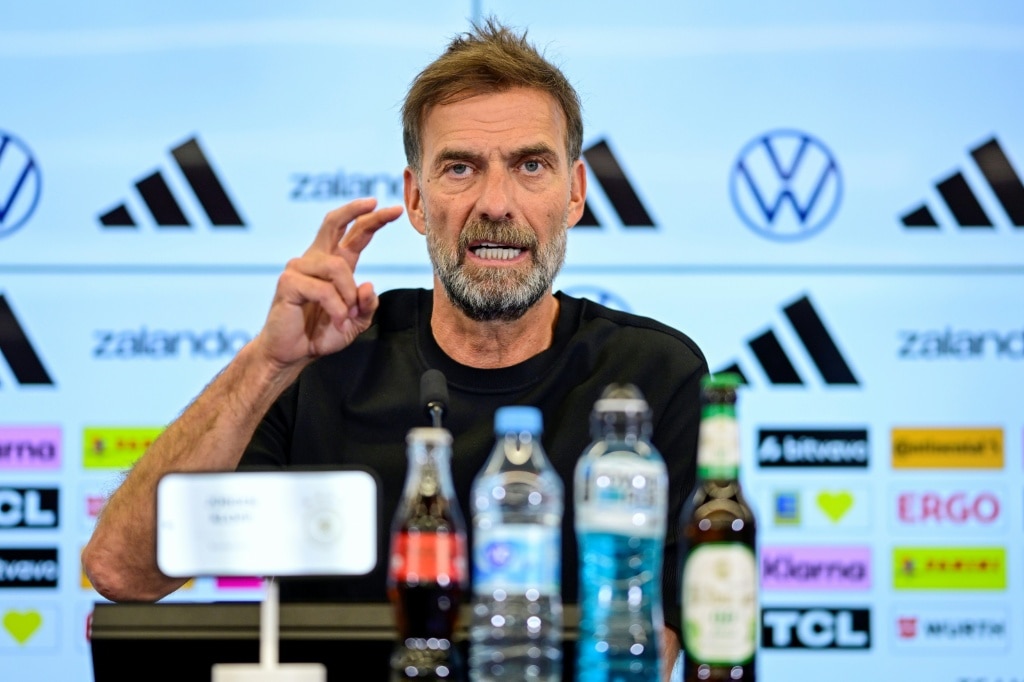
Klopp handed task of reviving Germany’s football fortunes
In a long-awaited move that has sent shockwaves through international football, the German Football Association (DFB) announced Friday that legendary former Liverpool manager Jurgen Klopp will take the reins as the new head coach of Germany’s men’s national team, tasking the 59-year-old with reviving the once-dominant program’s fading fortunes. The appointment comes on the heels of yet another early World Cup exit, and Klopp’s contract will run through the 2030 FIFA World Cup, co-hosted by Spain, Portugal, and Morocco.
Speculation around Klopp’s appointment had circulated for weeks, and the move gained momentum after former manager Julian Nagelsmann stepped down earlier this July. Nagelsmann resigned following a devastating round-of-32 penalty defeat to Paraguay at this summer’s tournament, marking Germany’s third consecutive early World Cup exit after the program’s 2014 title win. DFB sources confirmed that Klopp, who had publicly expressed interest in the role, was the federation’s top-choice candidate, and his willingness to accept the position accelerated Nagelsmann’s departure.
Speaking at an official press conference in Frankfurt announcing his hiring, Klopp framed the national team role as the crowning achievement of his decades-long professional career. “It’s a great honour for me to be sitting here today,” he said. “This is ideally the high point of my career, of my life, my professional life. I will give it everything I have.”
DFB President Bernd Neuendorf clarified that Klopp’s contract will officially begin on August 15, running through the summer of 2030. Prior to accepting the national team post, Klopp had been serving as Red Bull’s “Head of Global Soccer” since 2025, overseeing football strategy for the brand’s affiliated clubs across Europe and North America, including RB Leipzig, Red Bull Salzburg, and the New York Red Bulls. Neuendorf thanked Red Bull for agreeing to an early termination of Klopp’s contract, noting that the new Germany head coach will need to dedicate his full attention to reversing the team’s recent slump.
Germany is one of the most decorated men’s football programs in history, with four World Cup titles — tied for the most among European nations — and three European Championship trophies. But despite that historic success, the team has struggled to compete at the highest level in major tournaments over the last decade. Since reaching the Euro 2016 semi-finals, Germany has won only a single knockout match across three World Cups and two European Championships, making this turnaround project one of the highest-stakes jobs in international football.
Klopp brings a proven track record of success to the role, having built his reputation as one of the world’s top managers through stints at Bundesliga clubs Mainz and Borussia Dortmund before his trophy-laden nine-year spell at Liverpool. When he stepped down from Liverpool in 2024, he had led the club to every major trophy available, ending a 30-year league title drought by claiming the Premier League in 2020 and lifting the club’s sixth Champions League trophy in 2019. The DFB had courted Klopp for the national team role for years, with the federation consistently naming him as the ideal candidate to restore Germany’s standing among the world’s elite teams.
-

Rugby brain injury court case at risk of collapse
One of the most high-profile legal battles in sports history, a lawsuit brought by hundreds of former rugby players alleging long-term brain injury caused by inadequate safety protections from the sport’s global and national governing bodies, is currently on the edge of collapse after critical procedural failures from the claimants’ original legal team. The 561 claimants, a mix of retired professional and amateur athletes, have brought claims against five leading rugby organizations: World Rugby, the Welsh Rugby Union (WRU), England’s Rugby Football Union (RFU), the Rugby Football League, and the British Amateur Rugby League Association. The players allege these governing bodies breached their legal duty of care to protect athletes from avoidable head trauma, arguing the organizations knew or should have understood the risks of repeated concussions but failed to implement adequate protective policies or warn players of the long-term neurological dangers.
The case has already dragged on for six years and cost millions of pounds in legal fees, but it now faces a devastating procedural hurdle: the presiding senior master at London’s High Court, Jeremy Cook, is currently weighing whether to dismiss 95% of the first batch of claimants over their failure to comply with a court order requiring full disclosure of all existing neurological test documentation. In his assessment of the situation, Cook clarified that the fault for the procedural failure lies entirely with the claimants’ former lead legal representative, Richard Boardman of law firm Rylands Garth, not with the former athletes themselves. Cook emphasized, “The only complaint in this case is against the way Mr Boardman has handled the material. No claimant in this case can be said in any way, shape or form to be responsible for the deficiencies in the way this case has been presented.”
Following the procedural breakdown, the claimants voted unanimously to end their working relationship with Rylands Garth, and Boardman has formally notified the court of his intention to step down from the case. The claimants are now actively searching for new legal representation to take over the complex litigation, but it remains uncertain whether any firm will agree to take on the high-stakes, years-long case. Cook has openly expressed sympathy for the former athletes whose claims hang in the balance, drawing a parallel to the situation: “We have got three buses full of passengers going to the same destination. The first bus, the driver drives them off a cliff and the result is that they don’t get to the destination. The other two get to the destination. What of those on the first bus?”
Many household names in British and Irish rugby are among the claimants, including England Rugby World Cup winners Steve Thompson, Mark Regan and Phil Vickery, and former Wales internationals Colin Charvis, Gavin Henson, Ryan Jones and Lee Byrne. One of the most prominent claimants is Alix Popham, a former Wales flanker who was diagnosed with probable chronic traumatic encephalopathy (CTE) in 2020 at the age of 40. CTE is a progressive, degenerative brain condition linked to repeated head impacts and concussion episodes, and many of the claimants report living with a range of neurological conditions including early-onset dementia and CTE-related cognitive decline. Popham defended the decision to replace legal representation, noting that the “scale and complexity” of the ground-breaking case required new leadership. He added, “We hope it will help provide the momentum required to move the proceedings forward as efficiently as possible”. All five named governing bodies have denied any wrongdoing and are actively defending themselves against the claims.
-
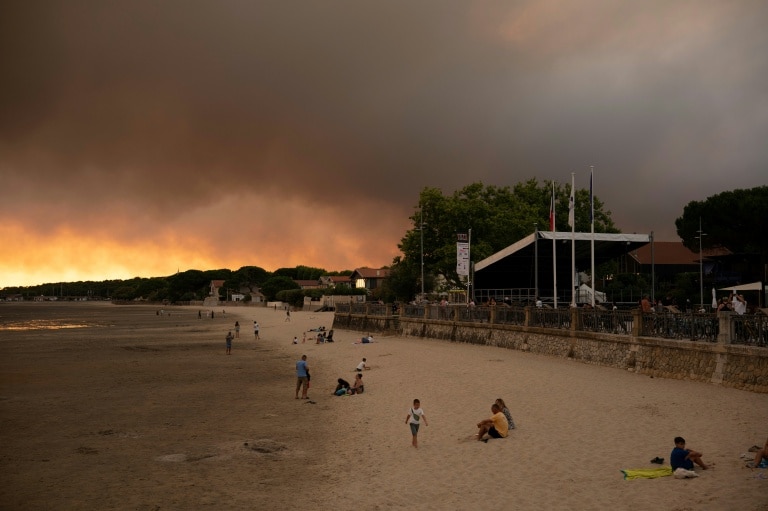
Fires in Europe: latest developments
Across the European continent, rapidly spreading and destructive wildfires have triggered emergency responses, mass displacement of residents, and renewed warnings about the accelerating impacts of human-caused climate change. New satellite data collected by the European Forest Fire Information System (EFFIS) confirms that 2024 has already seen the second-largest total area of burned land across European Union member states since systematic record-keeping began.
A new analysis published this week by the international climate research group World Weather Attribution draws a direct line between the increasing frequency and intensity of European blazes and rising global temperatures driven by the combustion of fossil fuels including oil, coal, and gas. The study confirms that regional drought conditions across the continent have grown far more severe in recent decades, creating tinder-dry landscapes that enable wildfires to ignite and spread much faster than historical norms.
France, one of the countries hardest hit by this year’s fire season, is facing what officials are calling the most destructive blaze of the current period. In southwestern France, a single massive wildfire in the Lege Cap-Ferret forest region has already burned through more than 10,000 hectares (approximately 25,000 acres) of land, forcing the evacuation of around 40,000 residents to safer areas. French Interior Minister Laurent Nunez confirmed in an interview with Agence France-Presse that the blaze has destroyed 80 residential structures, with roughly 50 of those homes reduced to complete ruin. As of the latest update, no casualties have been reported from the fire.
Across the entire country, 32 separate wildfires of varying intensity are still actively burning as of Friday. Nunez noted that total burned area in France since the start of the year has surpassed 50,000 hectares, a figure that is nearly three times higher than the total recorded over the same period in 2023. As the main blaze advanced on the Cap Ferret peninsula on Friday, hundreds of residents and visitors were forced to evacuate the coastal area by boat, after the fire outpaced ground evacuation routes. By early Friday, the Cap Ferret blaze had already consumed an area nearly twice the size of Manhattan, according to on-site reports.
Neighboring Spain is also grappling with out-of-control blazes that threaten populated areas. Two large uncontained wildfires are burning less than 100 kilometers (60 miles) from the Spanish capital of Madrid, and regional authorities warn that difficult weather conditions, particularly strong gusty winds, will hamper firefighting efforts through Friday. Spanish Prime Minister Pedro Sanchez has described the ongoing wildfire crisis as dramatic, noting that extreme fire conditions are impacting multiple provinces across Spain as well as regions in neighboring European countries. Sanchez confirmed that the national government has deployed every available resource to contain the blazes and protect affected communities.