标签: Oceania

大洋洲

  • Labor frontbencher warns AI bill could skyrocket to $40bn-a-year amid push for local models, companies

    Labor frontbencher warns AI bill could skyrocket to $40bn-a-year amid push for local models, companies

    Australia is currently facing a growing economic challenge tied to its reliance on foreign-developed artificial intelligence models, with a senior Labor government official warning that annual outbound payments for AI services could surge to as much as $40 billion within a decade without targeted local industry intervention.

    Assistant Science Minister Andrew Charlton will outline the Albanese government’s plan to nurture a domestic AI ecosystem and roll out a new national AI standard during a major address at the Australian National University’s Crawford School of Public Policy this Tuesday. His speech comes one month after Prime Minister Anthony Albanese launched a suite of world-leading policy measures, including a dedicated national Office of AI and formal guidelines for local data centre development.

    While Charlton is a vocal advocate for widespread AI adoption across Australia, telling audiences this week that Australians should “adopt AI everywhere we can” to unlock productivity and national output gains, he is also sounding the alarm on the growing cost of the country’s current dependence on foreign AI providers. New data set to be shared in his speech shows 20% of Australian households already hold paid AI subscriptions, and one in three Australian businesses pay for external AI services. When combined, these payments add up to between $5 billion and $8 billion in annual AI spending by Australian users – almost all of which flows offshore to foreign technology companies. Without policy action, that annual outflow could jump to $40 billion within 10 years, a sum Charlton describes as “one of the largest recurring outflows in the Australian economy”.

    Currently, Charlton argues, Australia is occupying the lowest value tier of the global AI supply chain. But the country can leverage its recent success attracting international data centre investment to capture a larger share of AI sector value, he says. The next critical step is to build out a domestic AI training ecosystem that leverages Australia’s data centre boom to strengthen local access to artificial intelligence computing power. Expanding this ecosystem will allow Australia to retain, grow, and attract top-tier AI research and entrepreneurial talent, which will in turn drive private-sector led economic growth, strengthen national digital sovereignty, and deliver long-term returns for the country without excessive government intervention, according to Charlton.

    The government’s new national AI standard includes a requirement that data centre providers seeking to develop infrastructure in Australia grant affordable, favorable access to computing resources for Australian startups, innovative small and medium businesses, academic researchers, and not-for-profit organizations – including local AI developers and domestic AI-focused businesses.

    Twelve months ago, most industry experts argued that middle-sized economies like Australia had no realistic path to compete in the global AI frontier, where the market was dominated by a small handful of U.S. technology labs with capital budgets larger than the GDP of many small countries. The conventional wisdom held that Australia’s best strategy was simply to adopt foreign AI quickly and negotiate good purchase terms. But the landscape has shifted dramatically over the past year, Charlton says. The rise of open-weight AI models now sees near-equal adoption with closed proprietary models, while the cost of developing competitive AI capabilities has collapsed, creating a far more competitive global market. As a result, capabilities that seemed entirely out of reach for Australia just one year ago – both for commercial and strategic purposes – are now well within reach, and this trend is expected to continue.

    Australia already holds unique competitive advantages to build a strong domestic AI sector, Charlton notes. The country is home to more than 1,500 AI-focused companies, has established global leadership in AI applications for high-value sectors including medical imaging, agriculture, mining technology, fintech, and quantum computing, boasts world-class public research institutions, and holds high-quality datasets in sectors where Australia already leads globally.

    In the coming weeks, the government will make additional announcements related to AI development through the National AI Centre, with further work underway by Charlton and Finance Minister to address Commonwealth chief information officers on the topic later this year. A core pillar of the government’s strategy is turning Australian data into Australian economic value, Charlton says. Sectors from agriculture to resources generate unique, valuable Australian data, while local creative output constitutes valuable intellectual property – all of which are national assets, he argues. Rules around ownership, licensing, and public procurement will determine who captures the value of these assets, which is why Prime Minister Albanese was correct to reject calls to weaken the intellectual property rights of Australian creators as a condition for foreign investment. “Our data and our creative work are national assets, and assets are licensed, not surrendered,” Charlton will say.

    Charlton emphasizes that Australia does not need to choose between boosting productivity through AI adoption and capturing local value from the sector – it needs both. “GDP tells us how much Australia produces. But our prosperity depends on how much of the resulting income Australians receive,” he will note. “Adopt AI everywhere we can, to lift the productivity of Australian workers and Australian businesses. That sets the size of the prize. Second, build around it. Create the companies, the capabilities, the intellectual property and the complementary assets that ensure Australians capture a meaningful share of the value AI creates. That sets our share of the prize.”

    Looking back at Australia’s economic history, Charlton points out that the country has long welcomed global capital investment, but has always leveraged its own unique assets to build domestic capacity and climb the value chain. “Our task in the age of intelligence is to do it again,” he will say.

  • Ebola outbreak now DR Congo’s deadliest ever

    Ebola outbreak now DR Congo’s deadliest ever

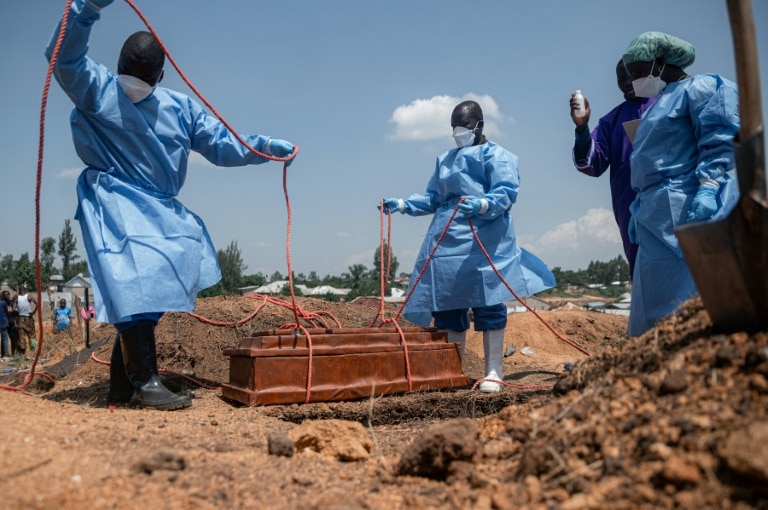
    A rapidly accelerating Ebola epidemic sweeping through the Democratic Republic of the Congo (DRC) has officially become the deadliest outbreak the country has ever experienced, new official government data released Monday confirms. With 2,325 fatalities recorded among 4,945 confirmed cases, the current 17th documented Ebola outbreak in the DRC has now surpassed the 2018–2020 epidemic, which killed 2,299 people according to World Health Organization (WHO) statistics.

    The United Nations has warned that this outbreak is “the fastest growing on record,” with one person dying from the virus every half an hour across affected regions. Unlike previous outbreaks, the current surge is driven by the Bundibugyo strain of Ebola, for which no specifically approved vaccine or targeted treatment currently exists. Like all Ebola variants, it spreads through direct contact with infected bodily fluids and causes life-threatening hemorrhagic fever.

    First publicly declared on May 15, health experts confirm the virus had already been circulating undetected in communities for several weeks before the official announcement. The outbreak has taken root in the country’s remote northern and eastern regions, where central government authority is limited, public health infrastructure is chronically underfunded and sparse, and armed rebel groups have operated freely for decades. It first emerged in the conflict-ravaged northeastern province of Ituri, and has since spread to five additional provinces across the DRC, a large central African nation with a population of more than 100 million people.

    Global public health officials note response efforts are grappling with a critical barrier: deep-rooted community mistrust of official health interventions. In Bunia, the provincial capital of Ituri where the majority of cases have been confirmed, protective measures are barely enforced. An Agence France-Presse correspondent on the ground observed that while local officials ordered traders to install hand-washing stations at market entrances, crowds of shoppers continue to gather with little adherence to safety protocols.

    “Community engagement in the response is still far too weak,” explained Mohamed Janabi, WHO’s Regional Director for Africa. He added that over 70% of Ebola deaths occur in community settings rather than in designated treatment centers, as many families opt to care for sick relatives at home instead of seeking formal care. Jean-Paul Malo Lotsima, a civil society representative in Ituri’s Djugu territory, explained that many local residents misattribute early Ebola symptoms to poisoning or other common illnesses, delaying medical intervention. “It’s often at the last minute, when the family realizes that the situation is getting worse, that patients are taken to hospital. And sometimes, they die on the way,” he said.

    Flavier Ngurima, a resident of Nizi, one of the outbreak’s hardest-hit hotspots, shared that his own brother died before he could reach a treatment center. “We had called on a nurse from the family to treat him at home because the patient and the family members were afraid to go to the ETC (treatment centre),” he said. “They said that over there, a lot of people die.”

    Beyond community mistrust, access to affected areas is severely complicated by ongoing armed conflict in many impacted regions. North Kivu and South Kivu provinces, which have recorded cases, are split by active front lines between the Congolese national army and the Rwandan-backed anti-government M23 rebel group, which controls large swathes of territory.

    The international public health response has also faced widespread criticism for being slow, under-resourced and uncoordinated. In recent weeks, local health workers including nurses and safe burial teams have held strikes and protests across multiple Ituri hospitals to demand long-overdue bonus payments that have not been disbursed. On Friday, the International Council of Nurses issued a formal statement urging DRC government authorities to deliver fair compensation and adequate protective equipment to frontline workers fighting the outbreak.

    Currently, several experimental vaccines are undergoing clinical trials to test their effectiveness against the Bundibugyo strain. Last week, the WHO announced it was targeting a reversal of outbreak spread within three months. To date, the deadliest Ebola epidemic in global history remains the 2013–2016 West African outbreak, which killed more than 11,300 people, primarily in Liberia, Sierra Leone and Guinea.

  • Rain brings respite as Belgium wrestles massive wildfire

    Rain brings respite as Belgium wrestles massive wildfire

    Four days into fighting the most extensive wildfire Belgium has seen in 100 years, emergency crews received a long-awaited boost on Monday when gentle rain fell across the fire zone in the Hautes Fagnes (High Fens) nature reserve, a protected peat bog and forest ecosystem along the country’s border with Germany.

    The massive blaze, which ignited on Friday of unknown origin, has already scorched roughly 3,000 hectares (7,400 acres) of protected land — an area roughly half the size of Manhattan. For the past week, a historic heatwave and record-dry conditions have turned much of Western Europe into a tinderbox, triggering a wave of destructive wildfires across France, Greece, Portugal and Spain that have already been linked to thousands of heat and fire-related deaths. This Belgian blaze has emerged as the most active and high-priority fire front on the continent this week.

    Around 500 Belgian firefighters and emergency personnel have been mobilized to contain the spread, supported by international resources: two water-bombing aircraft from Sweden, two Dutch military Chinook helicopters, and two additional Belgian aerial craft. Local farmers have also stepped in to assist, using their tractors to haul water tankers filled from nearby lakes to remote parts of the fire line that heavy emergency vehicles cannot reach. The boggy, uneven terrain of the High Fens has created major obstacles for ground crews: heavy trucks risk sinking into the soft peat, forcing firefighters to rely heavily on aerial support and making close-range fire suppression extremely difficult.

    By Sunday, the fire had crept close enough to the German border to prompt an evacuation order for the small German border town of Monschau, and two Belgian villages near the ignition point were also cleared as a thick plume of yellow smoke drifted across the region. Smoke from the blaze was detected as far away as eastern France, where local officials issued an air quality warning for affected communities. As of Monday morning, all evacuated residents remain under orders to stay away from their homes for safety.

    Crisis management spokesperson Tony Hosmans told reporters on Monday that the fire has stopped advancing toward the German border, a shift that comes alongside favorable wind conditions and the onset of light rain. Additional scattered showers are forecast for the region throughout the week, which officials say is helping slow the fire’s spread. “The wind is favourable and the current rainfall is helping to contain the spread,” Hosmans said. “At present, the fire is contained wherever intervention is possible.” Even so, Hosmans cautioned that the blaze is not yet fully under control, and an aerial reconnaissance mission scheduled for later Monday is expected to provide a full update on the fire’s footprint and remaining hotspots.

    Historically, the High Fens region was last hit by a massive wildfire of this scale in 1911, during a similar period of extreme heat and drought. This current blaze is the largest to hit the country since that event more than a century ago. Local residents and business owners, many of whom have mobilized to provide food, water and supplies to on-site crews, say the fire marks a wake-up call for a region that once assumed extreme wildfires were a problem for other parts of the world. “You always think it happens somewhere else. Well, not anymore. It’s happening to us,” Annick Dodemont, a 41-year-old restaurant owner in nearby Eupen who has been supporting firefighting efforts, told AFP.

    Belgium, like much of the European continent, has seen a recent surge in extreme summer temperatures, with highs reaching 37 degrees Celsius (98.6 degrees Fahrenheit) in parts of the country last Friday. These high temperatures, paired with weeks of below-average rainfall, have created ideal conditions for wildfire ignition and rapid spread across the region.

  • Retail and banks drag ASX down as JB Hi-Fi leads plummet

    Retail and banks drag ASX down as JB Hi-Fi leads plummet

    Australia’s benchmark stock index extended its losing run into a fourth consecutive trading session on Monday, dragged down by steep losses across the consumer discretionary and staples sectors after top electronics and home goods retailer JB Hi-Fi delivered results that signaled a sharp pullback in household spending across the country.

    By the closing bell, the ASX 200 had shed 42 points, or 0.5%, to settle at 9073.20. The broader All Ordinaries index followed a similar trajectory, dropping 34.20 points, or 0.4%, to end at 9279.00. Eight out of the 11 major market sectors finished the day in negative territory, with consumer staples, financial services and real estate recording the steepest declines. Only three sectors – materials, energy and communication services – notched gains for the session. The Australian dollar held steady at approximately 71.13 US cents by market close.

    The day’s biggest disruption came from JB Hi-Fi, whose shares plummeted 12.31% despite the retailer reporting both record annual sales growth and a rise in full-year net profit. The sell-off was triggered by results that missed analysts’ consensus market expectations, sending ripples across the entire retail and consumer sector.

    Justin Lin, investment strategist at GlobalX, explained that the sharp drop in JB Hi-Fi stock led market participants to reprice broader consumer spending trends across Australia. “Basically every one of those [consumer] stocks are getting the cross-read from JB Hi-Fi that the Aussie consumer isn’t really spending,” Lin told NewsWire. “Cost of living crisis is biting and the high interest rates in terms of mortgage payments is definitely starting to play a role. JB Hi-Fi has brought the proof to the pudding and demonstrated that the Aussie consumer is spending less and is buying less, and that is reading quite negatively for the rest of the sector.”

    Other major retail names followed JB Hi-Fi into the red: rival electronics and furniture retailer Harvey Norman fell 4.56%, conglomerate Wesfarmers – which owns a suite of popular retail chains including Bunnings and Kmart – dropped 4.35%, department store Myer slipped 2.33%, and infant formula producer A2 Milk declined 3.26%. A2 Milk’s chief executive David Bortolussi also confirmed the company has lost roughly 60% of its customer base for Chinese-labeled products compared to December 2023, adding additional downward pressure to its stock.

    The downturn extended beyond the consumer sector, with Australia’s big four banks all closing lower. National Australia Bank (NAB) recorded the steepest drop among the major lenders, falling 4.62% after the bank acknowledged that ongoing conflict in the Middle East, persistent high interest rates, and recent federal budget property tax changes have created increased “challenges and uncertainties” for its customer base. Commonwealth Bank of Australia dipped 1.30%, ANZ fell 2.6%, and Westpac closed 0.85% lower.

    Against the broad market downturn, the materials sector bucked the trend, supported by rising commodity prices. Gold extended its ongoing rally, while copper prices climbed near all-time record highs. Lin noted that major mining giants such as BHP, which generates a large share of its revenue from copper production, stand to benefit significantly from the sustained price uptick. “Assuming they have had very strong realised costs on these copper derivatives that they’re selling, they are likely to have much stronger revenues than last year,” Lin added.

    Several individual companies recorded large single-day moves on the back of earnings releases. Financial software provider Iress saw its shares plunge 11.63% even after reporting a rise in net profit, a drop Lin attributed to weak forward guidance from the firm. “Investors are less concerned with what has happened and more concerned about what will happen,” he explained. Freight rail operator Aurizon dropped 10.34% despite reporting $1.72 billion in underlying annual earnings and renewing a key coal supply agreement with the BHP Mitsubishi Alliance in Queensland. Construction and property developer Lendlease crashed 11.15% after posting a net loss of $749 million for the 2024 fiscal year (reported as 2026 in the original text, retained for accuracy per source).

    On the positive side of individual company results, pathology provider Australian Clinical Labs jumped 14.9% after releasing stronger-than-expected full-year earnings. Diversified investment firm L1 Group also saw its shares soar 7.24% after its full-year underlying net profit nearly doubled to $188.8 million.

  • One Nation MP David Farley had ‘great time’ at mardi gras, likens One Nation to United Nations

    One Nation MP David Farley had ‘great time’ at mardi gras, likens One Nation to United Nations

    Australia’s One Nation party has found itself mired in internal contradiction and public scrutiny over conflicting stances on Sydney’s annual LGBTQI+ Mardi Gras celebration, with party founder Pauline Hanson doubling down on her decades-long opposition to the event while one of her own sitting MPs publicly praised his experience attending as an enjoyable night of entertainment.

    The clash of views comes amid a turbulent period for the populist political party, which has already faced public backlash over harmful comments from a former One Nation candidate who incorrectly labeled gay people as mentally ill. That candidate has since issued a formal apology for the remarks, and the mixed messages around Mardi Gras have only amplified questions about the party’s internal diversity and ideological consistency on LGBTQI+ issues. Last week, former National Party leader Barnaby Joyce even drew widespread attention for his offbeat claim that One Nation is “one of the gayest parties in Australia”, adding another layer of chaos to the ongoing conversation.

    In public comments made to media on Sunday, Hanson, the party’s long-serving national leader, made clear her position has not shifted since she first became a high-profile opponent of the celebration more than 30 years ago. “I still don’t like the gay mardi gras, but that’s my opinion,” Hanson told reporters. When asked if she had ever attended the iconic annual event, she was clear: “Have I ever been to one? No. Do I intend to go? No, I don’t. I think your own personal sexuality should be kept … behind closed doors. It’s no one’s business to do it out there with the gay mardi gras anywhere.”

    But David Farley, the One Nation MP who won the regional seat of Farrer in a May by-election and delivered his maiden parliamentary speech just last week, offered a starkly different perspective when questioned about the event. Farley revealed he had already attended Mardi Gras alongside his sister, who is a member of the LGBTQI+ community, and an American friend visiting from Tennessee.

    “We started to walk our way back and we walked right into the start of the gay mardi gras,” Farley told the Australian Broadcasting Corporation. “Now, I can tell you, this gentleman comes from pretty conservative roots down there in Tennessee, and he was taken aback by it. But by the end of the night, we walked a couple of hundred – three or 400m into it – and it was a great night of entertainment.” Farley confirmed he would not attend the event again this year, and clarified his own stance: “It’s a cultural celebration for that group of people … am I for it? No, not really. But I’m not against it, put it like that.”

    Farley went on to frame the differing views within One Nation as a sign of the party’s broad inclusivity, rather than a flaw. He described the party as a “pretty broad church” that draws a diverse range of members from different backgrounds. “You look across our party now, sometimes I walk into the different offices and consider that wow, we’re part of the United Nations,” he said. “Sometimes I walk into it and I see part of it, I go, well, we’re part of the Gay mardi gras already. I think, you know, One Nation represents all Australians. We don’t have to align ourselves with one side or the other. We just want Australians to prosper, have a healthy life, a happy life, and a good life, and those choices, what we’re talking about now, are up to the individual.”

    The split public comments have reignited debate over One Nation’s positioning on social issues, following weeks of controversy over the party’s internal messaging around the LGBTQI+ community.

  • Perth mum Saoirse Wynne, 33, charged over fatal crash that killed four-year-old daughter Layna Leavy

    Perth mum Saoirse Wynne, 33, charged over fatal crash that killed four-year-old daughter Layna Leavy

    A devastating car collision in Perth’s southeastern suburb of Canning Vale has ended in criminal charges for a local mother, after the crash claimed the life of her 4-year-old daughter and left her 8-year-old son seriously injured. The incident, which unfolded just after 3 p.m. on June 3, has sparked an outpouring of public grief from both Australian and Irish communities, after the family recently relocated to Perth to build a new life.

    Major Crash investigators from Western Australia Police confirmed this week that 33-year-old Saoirse Wynne, a resident of Southern River, faces four separate criminal charges in connection with the crash. Official accident reports outline that Wynne was operating a grey Holden Astra traveling east along Boardman Road when her vehicle collided with an orange Ford Mustang heading north on Garden Street, the main intersecting roadway at the site. All three occupants of the Astra — Wynne and her two young children — were extracted from the wreckage and rushed immediately to nearby hospitals for emergency care. Despite rapid medical intervention, 4-year-old Layna Leavy succumbed to her injuries in hospital care.

    The charges brought against Wynne go beyond the core dangerous driving count, revealing multiple regulatory failures on the day of the crash. Investigators confirmed the charges include: careless driving causing death, careless driving causing grievous bodily harm, failure to secure a child passenger aged between 4 and 7 in an approved child safety restraint, and driving without a valid license — as Wynne never obtained a driving authorization in Australia. Wynne is scheduled to make her first court appearance at Armadale Magistrates Court on September 29.

    In the wake of Layna’s death, community members launched a GoFundMe campaign to support the grieving family, covering funeral expenses and lost income while Wynne and her relatives take time off work to mourn. As of the latest update, the campaign has raised more than $100,000 in donations from hundreds of supporters.

    A family member shared a tribute on the fundraising page, noting the family had relocated from Ireland to Perth earlier in 2024, chasing a fresh start in Australia. “In less than four short years, Layna had already woven herself into the hearts of so many, here in Australia, and across the community they had left behind in Ireland,” the statement read. “The flowers, teddy bears, and dolls placed at the crash site by friends and strangers demonstrate the mark this little girl made on the world in just four short years. The outpouring of love from the local Perth community and from Ireland is a testament of the impact this little girl had on so many lives and a reminder that Layna was, and always will be, deeply loved.”

    Local residents have continued to leave small tributes at the intersection where the crash occurred, with many describing the 4-year-old’s death as a heartbreaking tragedy for the newly relocated family.

  • Carlton appoints interim boss Josh Fraser as permanent head coach

    Carlton appoints interim boss Josh Fraser as permanent head coach

    In a move that ends weeks of swirling speculation, AFL side Carlton has formally confirmed that interim coach Josh Fraser will step into the full-time senior coaching role for 2027 and beyond, capping off a dramatic underdog run that has propelled the club to an unexpected wildcard spot in the finals series.

    Fraser’s rise to the top job comes after a nearly perfect stint as the club’s temporary leader, a performance that turned Carlton’s grim season around entirely. When the Blues parted ways with former senior coach Michael Voss in round 9, the club sat at just one win from nine opening matches, with little hope of securing a place in the finals. Poached from Collingwood earlier in 2026, where he served as head of player development, the former ruckman stepped into the interim role and immediately delivered results.

    Over his first 13 matches at the helm, Fraser claimed an impressive 10 victories. That turnaround peaked on Sunday, when a hard-fought draw against the Western Bulldogs at Marvel Stadium locked in Carlton’s place for wildcard weekend, a result few pundits predicted at the midpoint of the season. It also cemented Fraser’s status as the overwhelming favorite for the permanent role, beating out a field of high-profile candidates that included Corey Enright of St Kilda, Jaymie Graham from Fremantle, and Geelong’s James Kelly.

    The Carlton board held deliberations on Monday to finalize the appointment, following Sunday’s season-defining draw. Sources close to the club confirm Fraser is set to put pen to paper on a multi-year contract, with an official public announcement scheduled to drop later this week. Now, the club turns its attention to the final round of the home-and-away season, where Carlton will host Fremantle at Marvel Stadium this weekend to wrap up their regular season campaign before the wildcard match.

  • Axe hangs over Australian batters after Darwin ‘disaster’

    Axe hangs over Australian batters after Darwin ‘disaster’

    Cricket’s world number one Test side Australia is reeling from one of the most shocking upsets in modern international cricket, after an understrength Bangladesh side claimed a dominant nine-wicket victory in the series opener in Darwin that has left the hosts facing urgent calls for batting lineup changes. Openers Jake Weatherald and middle-order batter Marnus Labuschagne have emerged as the two players most at risk of being dropped ahead of the second Test, which kicks off this Saturday in Mackay.

    Heading into the first match, the result was widely predicted to be a one-sided Australian win. Bangladesh had collapsed to an innings defeat in their only warm-up fixture, and arrived in Darwin without their injured pace spearhead Nahid Rana. But Bangladesh defied all pre-series expectations to dominate all four days of the Test, securing a historic victory that left the Australian camp shell-shocked and facing widespread internal and external recrimination.

    This is not Australia’s first surprise home Test defeat in recent years — the side fell to an eight-run loss to the West Indies at the Gabba in 2024 — but the comprehensiveness of the Darwin loss has drawn unprecedented criticism. Australian media labeled the result a “national disaster” and the most embarrassing performance in the country’s modern Test cricket history on Monday.

    Leading Australian cricket figures have joined the calls for immediate change, including legendary former captain Ricky Ponting, who argues the time has come for selectors to make tough decisions to kickstart long-overdue team regeneration. “I’m the last one to want to make change,” Ponting told Channel Seven as the Test neared its conclusion. “As a captain or as a player I wanted to keep a group together, so it has to get to a bad point before I start saying you’ve got to leave somebody out. But there’s been enough evidence coming here to suggest they weren’t going to lose anything, or much at all, by starting that regeneration, bringing in another opener, bringing in someone at three. I think that has to happen.”

    Critics have pointed to Australia’s underwhelming batting performance as the core of the problem. With only Steve Smith, who scored 71 in the first innings and 44 in the second, and Cameron Green, who hit a match-saving century in the second innings, posting meaningful scores, the rest of the batting order collapsed through a string of soft, unforced dismissals. Since the start of the 2025 Ashes series against England, both Weatherald and Labuschagne have held batting averages below 27, leaving both running out of opportunities to prove their form.

    Former Australian opener Matthew Hayden echoed Ponting’s concerns, noting that consistent early wickets put unnecessary pressure on Australia’s middle order. “The 1-2-3, as Ricky and I will tell you, are absolutely fundamental to the set-up of a batting team,” Hayden told Channel Seven. “When they are constantly putting that middle order under pressure, Steve Smith arriving way earlier than he ever needs to be, then you’ve got to start to answer those questions.”

    Australian captain Pat Cummins has acknowledged that persistent batting failure has become a worrying trend, confirming selectors are willing to look beyond the existing 13-man squad for replacements. The most widely predicted change is veteran batter Matt Renshaw coming into the side to replace Weatherald at opener, but there is also growing momentum to hand opportunities to young, emerging players who have impressed in domestic cricket. Prospects including Sam Konstas, Campbell Kellaway, Ollie Peake and Cooper Connolly are all waiting in the wings for a first Test call-up.

    Australian great Mark Waugh has argued selectors “have to bite the bullet at some stage,” while former star opener David Warner — whose retirement in 2024 left a gaping hole at the top of Australia’s batting order that has yet to be permanently filled — added: “I think we’ve got to start blooding some youngsters.” With Australia set to face a challenging three-Test tour of South Africa in October, giving young prospects match time in Mackay to gain international experience makes strategic sense for the long term.

    For Labuschagne’s number three spot, media reports suggest Kurtis Patterson and Nathan McSweeney are the current frontrunners to replace him, though neither has been in outstanding recent domestic form.

    While the batting unit is facing the most intense scrutiny, there are also questions over Australia’s veteran bowling attack, which has remained unchanged for several years. All four core bowlers — captain Pat Cummins, Mitchell Starc, Josh Hazlewood and Nathan Lyon — are still favored to retain their spots for now, despite their advanced ages. Hazlewood, returning from injury, silenced critics with a six-wicket haul in Bangladesh’s first innings that cemented his position as Australia’s first-choice fast bowler. The most vulnerable bowler is 38-year-old off-spinner Nathan Lyon, also returning from injury, who was outbowled by Bangladesh’s Mehidy Hasan Miraz. Twenty-five-year-old understudy Todd Murphy is the leading candidate to replace Lyon if selectors opt for change.

  • Is this cave in Turkey where Homer wrote ‘The Odyssey’?

    Is this cave in Turkey where Homer wrote ‘The Odyssey’?

    Nestled on a sunlit hillside overlooking olive-draped slopes outside Turkey’s Aegean coastal city of Izmir, a rugged, rock-choked cave has been venerated for generations by local residents as the very spot where the ancient bard Homer composed his legendary epic *The Odyssey*. As renewed global interest in Homer surges following the release of Christopher Nolan’s hit blockbuster of the same name, scholars, local officials and residents in Bornova’s Homeros Valley are reigniting centuries-old debate over the cave’s legendary connection to one of Western literature’s most iconic figures.

    While no definitive concrete evidence has ever confirmed the cave as Homer’s creative workspace, the link between Homer and the Izmir region — anciently known as Smyrna — stretches back millennia. As far back as the 2nd century CE, Greek geographer and chronicler Pausanias recorded that Smyrna’s residents guarded a grotto along the Meles River where Homer was said to have written his works, cementing a mythic connection that has persisted to the modern day. Though other sites, most notably the Greek island of Chios, also lay claim to Homer’s origins, researchers in Bornova have recently unearthed new clues they argue lend unprecedented weight to their region’s claim.

    Turkish researcher Altan Altin, who has authored a full book on the subject of Homer’s connection to Bornova, argues that a 3rd-century BCE bas-relief frieze depicting Homer’s deification contains exact, matching geographic details that mirror the layout of the Bornova cave — a connection no scholar had previously identified. “This is the first time such a detailed geographical confirmation of the cave has come to light,” Altin explained, noting that ancient Ionia, the historic Greek region that encompassed both Smyrna and Chios on Turkey’s Aegean coast, is Homer’s true geographic home. “For me, there’s no doubt: Homer is from Bornova, and at the very least, he is from these lands.”

    Archaeological evidence from the region further supports this cultural connection, according to local archaeologist Mehmet Akif Erdem. Excavations have uncovered ancient coins minted in Smyrna that bear Homer’s likeness, indicating the city’s ancient residents already claimed the poet as their own centuries after his death. Additionally, the Ionic and Aeolic ancient Greek dialects used in both *The Iliad* and *The Odyssey* align with the language spoken in the Smyrna region during Homer’s purported lifetime, Erdem added.

    Today, Homer’s presence permeates every corner of Bornova: a Neolithic archaeological site on the town’s outskirts hosts a marble bust of the poet inscribed with the words “I compiled *The Iliad* and *The Odyssey* epics on this land. I lived in Bornova.” The town already hosts an annual book fair dedicated to Homer and features a statue of Trojan War hero Hector in its central park, and local leaders are now moving to renovate the cave to open it to international tourists, capitalizing on the new wave of Homeric interest sparked by Nolan’s film.

    “Preserving Homer’s legacy is a duty we owe to humanity. He is one of the founding fathers of literature,” Bornova Mayor Omer Eski told AFP. “The stories he tells are about this land. The question is not whether we should claim Homer or not — his story is also ours.”

    Not all local leaders share this vision, however. In 2024, officials from President Recep Tayyip Erdogan’s ruling AKP party sparked controversy by proposing to rename Homer’s Valley after a Turkish fighter pilot, arguing the culturally significant site should not carry a Greek name. Eski has pushed back forcefully against the proposal, arguing erasing Homer’s name would be an irreversible loss for Bornova’s cultural identity. His goal, he says, is to position the town as a global Homeric heritage destination that draws literary tourists from across the world.

    The release of Nolan’s *The Odyssey* has already had a visible impact on local interest: booksellers across Izmir report a sharp spike in sales of Homer’s epic, and members of the public say the film has helped them connect more deeply with their region’s ancient literary heritage. “I knew Homer was from these lands, but I didn’t know he was specifically from Izmir. We are incredibly lucky,” said Safak Tosun, a local teacher, outside a cinema screening the new film. “I feel proud, honoured and deeply privileged to be his fellow countryman.”

    For Altin, clues within Homer’s own works confirm the poet’s Anatolian roots: *The Iliad* is filled with specific anecdotes and cultural references that only would have been familiar to a resident of the Aegean Anatolian coast, he argues. Most importantly, he adds, the debate over Homer’s national or cultural origin should not fuel rivalry between modern Turkey and Greece. “Homer is 2,800 years old, while the Turkish-Greek border is only a century old,” Altin shrugged. “Homer is Greek. Homer is Anatolian. None of us is older than he is, not even our countries.”

  • Aussie rules footy players referred to police as detectives investigate sexual assault

    Aussie rules footy players referred to police as detectives investigate sexual assault

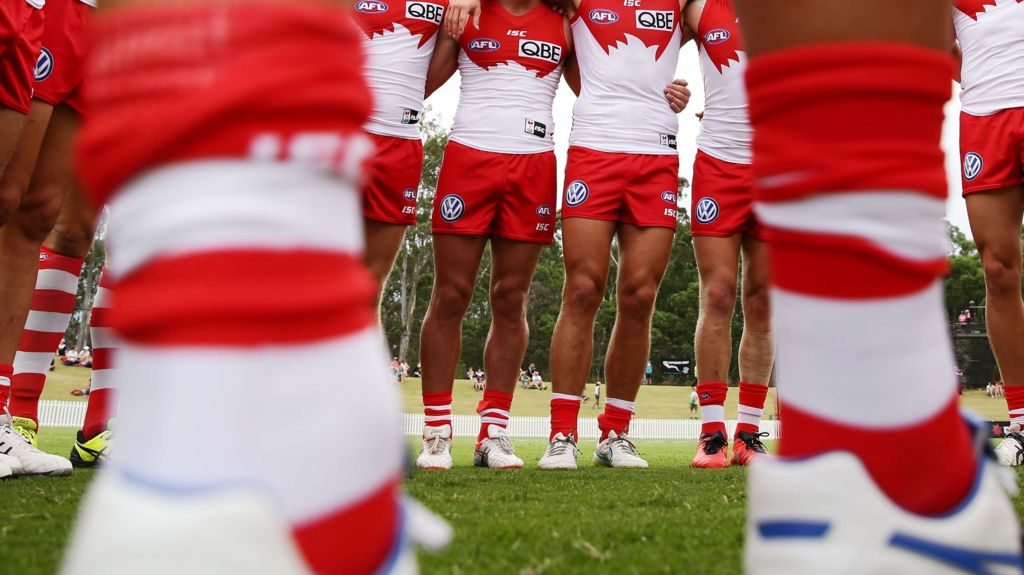
    An ongoing investigation into an alleged serious incident involving players from Australian Football League side Sydney Swans has rocked the Australian football community, after the club confirmed multiple squad members have been referred to Victoria Police over events that unfolded earlier this month in Melbourne.

    The controversy emerged shortly after the Swans claimed a victory at Melbourne’s iconic Melbourne Cricket Ground, with the incident alleged to have occurred in the hours following the match at an East Melbourne hotel on Wellington Parade in the early hours of Sunday morning.

    In a press conference held on Monday, Sydney Swans chief executive Matthew Pavlich confirmed that an unspecified number of players are connected to the investigation, and acknowledged the club’s profound reaction to the allegations. “Safe to say, we’re extremely shocked and disappointed that this has taken place, and that the players have found themselves in this situation,” Pavlich told reporters.

    Pavlich added that the club is still working to map out a clear timeline of exactly what occurred on the night in question, and declined to comment on the specific details of the allegations, including how many players are involved, whether any arrests have been made, or the exact nature of the claims. He also noted that widespread public speculation is unavoidable at this stage, but the ongoing police investigation means the club cannot release further details publicly.

    Victoria Police confirmed separately that its detectives are actively investigating a reported sexual assault at the East Melbourne hotel location, adding that the exact circumstances of the incident have not yet been confirmed, and the investigation remains active and ongoing.

    A spokesperson for the Australian Football League also confirmed that the Sydney Swans club promptly notified league administration of the matter as soon as it emerged, and the governing body is standing by to await the outcome of the police investigation before taking any further action.