标签: Oceania

大洋洲

  • Trump names inexperienced ally as intelligence director

    Trump names inexperienced ally as intelligence director

    In a surprise and controversial Tuesday announcement, former and current US President Donald Trump has tapped one of his most aggressively loyal allies, 38-year-old Bill Pulte, to serve as acting director of national intelligence — a role Pulte will hold alongside his existing positions overseeing the nation’s federal housing finance system. Pulte, who currently leads the Federal Housing Finance Agency (FHFA) and regulates the government-sponsored mortgage giants Fannie Mae and Freddie Mac, will step into the intelligence role to succeed Tulsi Gabbard, whose short tenure ended with her resignation in late May. Gabbard, herself a divisive pick for the intelligence post, departed after public reports of friction between her and Trump over his hardline policy against Iran.

    In an official post shared on his Truth Social platform Tuesday, Trump defended the unconventional appointment, highlighting Pulte’s track record overseeing US housing finance markets. “William has deep experience managing the most sensitive matters in America, the safety and soundness of the Markets,” Trump wrote, confirming that Pulte would not step away from his current housing and mortgage regulatory roles while leading the US intelligence community.

    Long recognized as one of Trump’s most vocal public defenders, Pulte has built a reputation as a blunt “attack dog” for the president, repeatedly targeting Trump’s political opponents across the Democratic Party with public accusations and investigations. He has openly claimed that Democratic Senator Adam Schiff and New York Attorney General Letitia James falsified information on their personal mortgage applications. According to reporting from The Wall Street Journal, an internal Fannie Mae complaint alleges Pulte improperly accessed the confidential mortgage records of James and other top Democratic officials, drawing criticism for misusing his regulatory power for political gain.

    The accusation against James led to a federal grand jury indictment in October last year, though a federal judge dismissed the case without prejudice a month later over unrelated procedural issues. Pulte has also brought forward mortgage fraud claims against Federal Reserve Governor Lisa Cook, a move that prompted Trump to attempt to fire the sitting central bank official. That legal dispute remains pending before the US Supreme Court.

    Beyond his attacks on political opponents, Pulte has drawn controversy for his actions inside FHFA and Fannie Mae. He has fired internal ethics watchdogs who were investigating close allies of his, framing the dismissals as a deliberate effort to eliminate diversity, equity and inclusion (DEI) programs within the agency. On housing policy, he has pushed a controversial proposal to introduce 50-year mortgages in the US, a plan that has sparked intense backlash even within Trump’s own pro-Trump MAGA movement.

    Pulte, the heir to the PulteGroup homebuilding fortune, left the company’s board of directors in 2020 after a public falling out with his family over the future of the business. His aggressive, public approach to political combat has also alienated many insiders, even within Trump’s own inner circle. Multiple US media outlets including The Wall Street Journal and Politico have reported that in 2025, Treasury Secretary Scott Bessent threatened to physically assault Pulte during a private dinner at an exclusive club, highlighting the deep divisions within the Trump administration over Pulte’s actions. Critics have raised widespread alarm over the appointment, noting that Pulte has no prior experience in national security or intelligence work, marking a sharp break with standard practice for the top intelligence leadership role.

  • Legendary 130-year-old French wine restored after decades under Czech castle floor

    Legendary 130-year-old French wine restored after decades under Czech castle floor

    A remarkable piece of viticultural history has been brought back to life after more than a century of hiding: eight bottles of legendary 130-year-old Chateau d’Yquem Sauternes wine, which survived both World War II and decades of communist rule tucked beneath the floorboards of a Czech castle, have been carefully restored by the very Bordeaux winery that originally produced them.

    The bottles form part of a larger 136-bottle rare spirit collection unearthed in the 1980s at Becov nad Teplou Castle in western Czechia, and all the recovered bottles are set to go on public display once preparations are complete. The collection originally belonged to the noble Beaufort-Spontin family, who were forced to flee Czechoslovakia abruptly at the close of World War II over allegations of collaboration with Nazi occupying forces. In their haste to leave, they hid their valuable wine assortment beneath the floorboards of the castle’s chapel, right next to the revered Shrine of St Maurus, where it lay undisturbed for four decades.

    In 1985, communist secret police stumbled upon the hidden collection during a search. While the Shrine of St Maurus was immediately transported to Prague for extensive restoration work before returning to Becov for public display in 2002, the forgotten wine was left undisturbed in its original hiding spot. It was not until a routine inventory audit a decade later that the cache was rediscovered, prompting a meticulous, years-long rescue and restoration project led by Chateau d’Yquem, the iconic producer of some of the world’s most expensive and sought-after sweet white wine from Bordeaux’s Sauternes region.

    The eight bottles restored by the winery were produced in two vintages: 1892 and 1896. Working to verify and preserve the rare liquid, the winery’s team conducted careful sensory testing to confirm the wine’s authenticity. “We tasted a very small quantity to be sure that, aromatically and in terms of balance on the palate and overall perception, the wine corresponded to a Chateau d’Yquem of that age,” explained Toni El Khawand, cellar master at Chateau d’Yquem. Follow-up laboratory analysis confirmed the wine’s provenance, allowing the team to move forward with conservation work: original degraded corks were replaced, fresh protective capsules were fitted to the original glass, and in some bottles where significant oxidation had occurred, the wine was transferred to new containers. As a result of this necessary conservation, only five fully intact original bottles will return to Becov for display.

    El Khawand described tasting the well-preserved wine, which survived the decades-long burial thanks to its naturally high sugar content that acts as a preservative, as an extraordinary experience. “What we’re really doing when we open it is unveiling a time capsule. We pull out this cork that has sealed the liquid off from its surroundings and, in a way, from the passage of time,” he told reporters at the official presentation of the restored bottles.

    Against all expectations, the 130-year-old wine retained remarkable brightness and complexity. “The wine impressed us with its freshness on the palate. It is very, very fresh, with an almost acidic freshness,” El Khawand noted. He went on to detail the wine’s layered bouquet, highlighting notes of cedar, dried fruit, saffron, cinnamon and nutmeg, alongside age-characteristic Chateau d’Yquem notes of chocolate, coffee, mocha and oud.

    While recent vintages of Chateau d’Yquem already retail for hundreds of dollars per bottle, the Czech National Heritage Institute estimates the entire 136-bottle recovered collection would fetch roughly $5 million if put up for auction. El Khawand, however, emphasized that the wine’s value extends far beyond its market price. “First and foremost, it has moral and historical value,” he said. “It is a memory, ultimately — a liquid memory, to be sure — but it is a memory of all those who came before us, of the work that was done.”

    There are currently no plans to auction the collection. Instead, Becov Castle is preparing a public exhibition that will showcase all recovered bottles of wine and cognac, including other rare vintages such as an 1899 Pedro Ximenez sherry and an 1892 port. To fund the exhibition space and further restoration work, the castle has launched a public fundraising campaign. If enough funds are raised, collections manager Katerina Nyvltova says the team plans to conduct more in-depth analysis of the remaining wines and complete restoration of all salvageable bottles in the collection. “If we raise the money, we will definitely want to do a more thorough analysis of the wines. And if we can recondition the rest, we’ll definitely go for it,” she told AFP.

  • UN warns world to prepare for El Nino extreme weather

    UN warns world to prepare for El Nino extreme weather

    Global weather authorities have sounded a clear alarm: the climate phenomenon El Nino is increasingly likely to develop in the coming months, bringing heightened risks of extreme weather that could compound decades of human-caused global warming. In its latest quarterly update on El Nino and its cooling counterpart La Nina, the United Nations’ World Meteorological Organization (WMO) announced Tuesday that there is an 80% probability of El Nino forming between June and August 2024, with that likelihood climbing to near or above 90% by November. Most climate models also project the event will be at least moderate, and possibly reach strong intensity.

    El Nino is a naturally occurring climate pattern defined by elevated surface ocean temperatures across the central and eastern equatorial Pacific. It reshapes global atmospheric circulation, wind patterns, and rainfall distribution, with effects that can last 9 to 12 months, occurring every two to seven years as conditions cycle between El Nino, La Nina, and neutral phases. As of late April to mid-May 2024, WMO data shows sea surface temperatures in the key monitoring region of the central-eastern equatorial Pacific are already approaching El Nino threshold levels, with sub-surface ocean temperatures measuring more than 6°C above the long-term average. The Southern Oscillation Index, the atmospheric metric that tracks El Nino development, also aligns with the pattern’s formation.

    While WMO confirms there is no conclusive evidence that human-caused climate change increases the frequency or strength of El Nino events, the agency emphasizes that rising global temperatures amplify the phenomenon’s most dangerous impacts. A warmer baseline ocean and atmosphere already hold extra energy and moisture, creating conditions that make extreme weather events such as heatwaves and intense downpours far more likely during an El Nino event. The most recent major El Nino was a key driver pushing 2023 to become the second-hottest year on record, and 2024 to break all previous temperature records, hitting an average of 1.55°C above the pre-industrial baseline from 1850 to 1900.

    WMO Secretary-General Celeste Saulo stressed that the time for global preparation is now, warning the upcoming El Nino could worsen existing droughts, amplify heavy rainfall, and boost the risk of dangerous heatwaves across both land and marine ecosystems. “It will have cascading impacts,” Saulo told reporters, noting that warming tropical oceans can ripple through global trade, national economies, and human security. “That’s why this early information is so relevant and so important.” Early preparation, she added, can help climate-sensitive sectors including agriculture, water management, energy, and public health adapt to coming changes. Currently, 128 countries operate multi-hazard early warning systems, and the UN has set a target of achieving universal coverage for all nations by the end of 2027.
    UN Secretary-General Antonio Guterres framed the forecast as an urgent climate wake-up call in a video address. “El Nino is arriving on our doorstep,” Guterres said. “The world must treat it as the urgent climate warning it is. El Nino conditions will pour fuel on the fire of a warming world.” Guterres added that the only meaningful response to the growing risk is scaled climate action: ending global dependence on fossil fuels, accelerating the transition to renewable energy, protecting vulnerable communities, and rolling out universal early warning systems.

    Though El Nino typically reaches its peak intensity between November and February, the associated temperature surge often emerges after the event’s peak. Forecasters expect more precise projections of the event’s timing and strength to be available next month. For the June to August period, WMO forecasts that nearly every region of the globe will see above-average temperatures, increasing the risk of overlapping extreme hazards and accelerating drought development in areas that receive reduced rainfall.

    Regional climate projections already point to specific high-risk zones: the northern Greater Horn of Africa is forecast to see below-normal rainfall during its critical June-September wet season; South Asia is projected to have below-average monsoon rainfall; and Central America is likely to face a hotter, drier than average summer. In terms of hurricane activity, El Nino’s warm Pacific waters typically fuel more intense hurricane development in the central and eastern Pacific, while suppressing storm formation in the Atlantic Ocean during the Northern Hemisphere summer.

  • Man, 40, raced to hospital after electrocution at Qld agricultural business

    Man, 40, raced to hospital after electrocution at Qld agricultural business

    Two separate electrocution incidents at Australian workplaces have occurred within 24 hours, leaving one worker dead and another fighting for recovery in a Queensland hospital, and reigniting long-running debates about national workplace safety standards. The most recent incident unfolded shortly before 1:30 p.m. on Tuesday at an agricultural worksite in Carole Park, a suburb of Ipswich, Queensland. A 40-year-old male employee of local industrial agricultural firm Dickson Ag suffered a severe electric shock while on the job. Emergency responders were dispatched immediately to the scene to provide urgent critical care, before transporting the injured worker to Brisbane’s Princess Alexandra Hospital. Queensland Police confirmed in a statement to NewsWire that the man remains in the facility in serious but stable condition as he receives ongoing treatment for his injuries. Joint investigations into the circumstances of the incident are now underway by Queensland Police and Work Safe Queensland. This non-fatal electrocution comes barely 24 hours after a fatal incident in a separate Australian state. In Melbourne, a 55-year-old male worker was killed on Monday when his scissor lift made contact with overhead power lines, resulting in an immediate fatal shock. Local workplace safety regulator WorkSafe has launched a probe into that fatal accident. These two back-to-back incidents come as new national data reveals Queensland already recorded the nation’s highest workplace fatality rate in 2024. The latest statistics, published by SafeWork Australia last October, show a total of 188 workplace fatalities across the country in 2024. Queensland alone accounted for 53 of those deaths, outpacing New South Wales which recorded 48, the second-highest total nationwide. Demographic breakdowns of the data also show men make up the overwhelming majority of workplace fatality victims, representing 96% of all work-related deaths recorded in 2024.

  • Flintoff named Sydney Thunder men’s head coach

    Flintoff named Sydney Thunder men’s head coach

    One of English cricket’s most iconic former all-rounders, Andrew Flintoff, has secured a landmark new position: he will take the reins as men’s head coach of Australia’s Sydney Thunder in the Big Bash League (BBL), marking his first senior coaching role in an overseas T20 competition. The 48-year-old, who has served as a full-time coach for England’s development side England Lions since 2024, will depart the team’s ongoing tour of South Africa earlier than scheduled to step into his new post with the Sydney-based franchise.

    While the full 2025-26 BBL fixture list has not yet been made public, England Lions are currently scheduled to remain in South Africa for a four-day match getting underway on December 18. The England and Wales Cricket Board (ECB) has given its full approval for Flintoff to take on the role, framing the opportunity as valuable professional development that will help him grow as a coaching leader. Flintoff has signed a two-season contract with Sydney Thunder, replacing outgoing former England national team head coach Trevor Bayliss in the position.

    In a statement following the announcement, Flintoff expressed his excitement for the new challenge: “I can’t wait to get over there and get started. I’m looking at this with a lot of optimism. You look at the franchise, you look at the players, you look at the support, and I think there’s something really big to build on.” The Thunder, who are captained by legendary former Australia opening batsman David Warner, finished as runners-up in last season’s BBL, falling just short of claiming the title in the final.

    Flintoff brings prior high-profile franchise coaching experience to his new role, having spent two seasons leading the Northern Superchargers men’s side in England’s domestic T20 competition The Hundred. During his tenure, he guided the Leeds-based team to consecutive top-four finishes, taking fourth place in his first season and third in his second. However, he was not retained for the 2026 edition of the tournament after the franchise was acquired by the ownership group of Indian Premier League side Sunrisers Hyderabad.

    Trent Copeland, general manager of Sydney Thunder, hailed Flintoff’s appointment as a transformative moment for the club, saying: “This is a huge day in the history of Sydney Thunder, and the BBL more broadly. Fred brings something truly unique to Sydney Thunder. He’s a global icon of the game, but more importantly he is a modern leader who understands how to build high-performance environments, connect with players as people, and set standards that last. His passion for the game, coaching itself and knowledge of Australian cricket and our Thunder program stood out during the process.”

  • Israel, Hezbollah exchange fire after Trump announcement

    Israel, Hezbollah exchange fire after Trump announcement

    Just hours after U.S. President Donald Trump announced a surprise bilateral ceasefire agreement between Israel and the Iran-backed militant group Hezbollah, heavy fighting erupted across the Israel-Lebanon border on Tuesday, derailing hopes for a quick end to months of escalating violence.

    The sudden resumption of hostilities came as both sides remained publicly divided over the terms of the deal Trump claimed to have brokered. Per Lebanese official sources, the draft agreement outlines that Hezbollah would halt all cross-border fire into northern Israel, while Israel would end its airstrikes on southern Beirut – a decades-long stronghold of the militant movement. The Lebanese presidency issued an official statement confirming the terms, noting that negotiators would work to expand the truce to cover all Lebanese territory, and the Lebanese embassy in Washington earlier claimed Hezbollah had accepted the U.S. proposal. However, the militant group has never issued an official confirmation of its acceptance of the deal.

    Trump doubled down on his ceasefire push in a post to his Truth Social platform, saying he “hopefully” the two sides would end their conflict “for ETERNITY!” He also claimed that no Israeli troops would enter Beirut, and that any Israeli forces en route to the capital had already been turned back, following what he called a “very productive” call with Israeli Prime Minister Benjamin Netanyahu. But unconfirmed reporting from Axios contradicted this public posture, revealing that Trump privately called Netanyahu “fucking crazy” in off-air remarks, accusing the Israeli leader of putting planned peace talks between the U.S. and Iran at risk. Trump also claimed he held a productive call with Hezbollah representatives through intermediaries, saying both sides had agreed to a full halt to hostilities.

    The renewed violence erupted against a backdrop of months of escalating conflict that has already pushed the region to the brink of a wider war. Following the killing of Iran’s supreme leader, Hezbollah opened its front against Israel on March 2, launching widespread rocket attacks. In recent weeks, Israeli forces mounted their deepest ground incursion into Lebanese territory in more than two decades, carrying out waves of heavy aerial bombardment across southern Lebanon and issuing explicit threats to strike southern Beirut’s densely populated suburbs. That threat sent thousands of local residents fleeing the area this week, with massive traffic jams clogging routes leading out of the suburbs toward central Beirut, according to on-the-ground reporting from Agence France-Presse.

    By Tuesday afternoon, multiple official sources confirmed that hostilities had resumed. The Israeli military announced its air defense systems intercepted two projectiles launched from Lebanon into northern Israel, shortly after the Lebanese National News Agency reported fresh Israeli airstrikes targeting multiple locations in southern Lebanon. Netanyahu confirmed in his call with Trump that Israel would continue to strike terrorist targets in Beirut if Hezbollah did not end its attacks on Israeli towns and civilians.

    The latest clash also comes as the fourth round of U.S.-hosted direct negotiations between Israeli and Lebanese military delegations is set to open this Wednesday, following preliminary security talks held last week. A previous truce brokered in April has been almost entirely ignored, with both sides accusing each other of daily violations that justify retaliatory strikes. The human cost of the conflict has mounted sharply: Lebanon’s health ministry reports that at least 3,433 people have been killed in Israeli attacks across Lebanon since March 2, while the Israeli military confirmed two additional soldier deaths in southern Lebanon this week, bringing the total Israeli military fatalities to 27 since the start of the current escalation.

    International actors have moved quickly to call for restraint. Stephane Dujarric, spokesperson for United Nations Secretary-General Antonio Guterres, released a statement urging all parties to respect a cessation of hostilities. In a confidential report to the UN Security Council obtained by AFP, Guterres also recommended that the UN Interim Force in Lebanon (UNIFIL) peacekeeping mission have its mandate extended when it expires at the end of the year, warning that a withdrawal would create a dangerous security vacuum. French Foreign Minister Jean-Noel Barrot also issued a statement Tuesday saying nothing could justify Israeli forces maintaining their presence deep inside Lebanese territory, a reference to Israel’s seizure of the strategic Beaufort Castle (locally called Qalaat al-Chakif) over the weekend. The castle, which holds commanding views over most of southern Lebanon, was used as an Israeli military base during Israel’s 22-year occupation of southern Lebanon that ended in 2000.

    Tehran, which has long provided financial and military support to Hezbollah, has insisted that Lebanon must be included in any final peace deal between Iran and the U.S. But Iran’s state-owned Tasnim News Agency reported this week that Tehran has suspended all diplomatic talks with Washington in response to Israel’s ongoing offensive in Lebanon, raising new doubts about the prospect of a wider regional de-escalation. For ordinary residents caught in the crossfire, the cycle of hope and violence has become a familiar pattern. Hadi, a 24-year-old resident of southern Beirut, told AFP he had dared to hope for a period of stability after Trump’s announcement, but “that feeling did not last long.”

  • Tesla, Polestar sales hit all-time monthly high in May as Aussie buyers ditch petrol cars in record numbers

    Tesla, Polestar sales hit all-time monthly high in May as Aussie buyers ditch petrol cars in record numbers

    Australia’s electric vehicle market has passed a historic milestone, with two leading automakers posting record monthly deliveries in May 2026 as skyrocketing petrol prices push thousands of drivers to abandon fossil fuel-powered cars. New data from the Electric Vehicle Council (EVC) confirms that combined deliveries from industry leader Tesla and premium Swedish brand Polestar reached 6,681 units for the month – the highest monthly total for the two brands ever recorded in the country.

    Tesla dominated the historic results, delivering 6,433 battery electric vehicles alone. This figure marks the highest single-month sales total for any brand in the EVC’s entire dataset, outstripping the automaker’s previous record of 6,017 units set in March 2024. The Tesla Model Y alone accounted for 84% of the combined Tesla-Polestar total, with 5,605 deliveries in May.

    Compared to April 2026, the two brands’ combined sales surged 358%, while they jumped 61.4% against May 2025 figures. Year-to-date sales for the two brands hit 15,866 units by the end of May, representing 52.7% growth over the same period in 2025.

    Polestar, which launched in Australia in 2021 and has delivered roughly 8,500 vehicles to local customers to date, also contributed to the record. The brand notched 14% year-to-date growth by the end of May, with its Polestar 4 crossover leading performance with 39.6% year-to-date growth over 2025. Polestar Australia Managing Director Scott Maynard noted that strong consumer inquiry remained sustained through the month, and the brand is preparing for further expansion with upcoming launches of the updated Polestar 2 and Polestar 3 models.

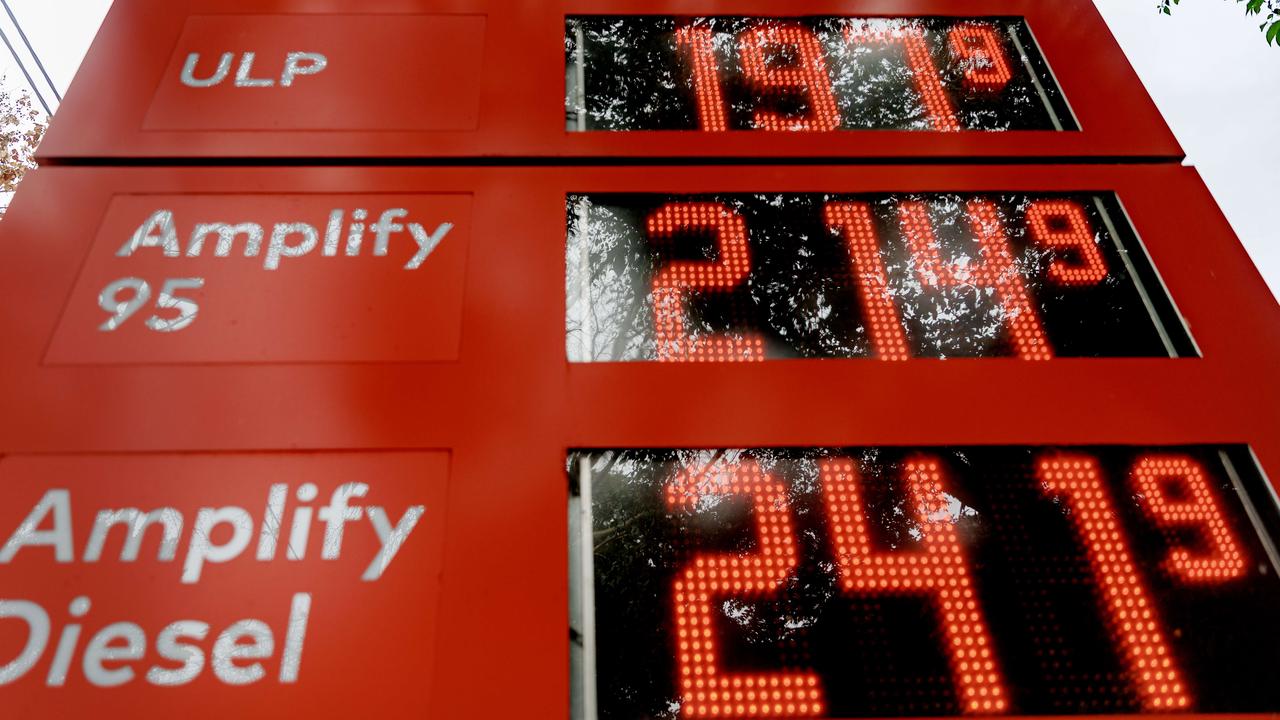
    Industry leaders attribute this unprecedented growth to a perfect storm of financial pressure on petrol car owners, driven by global and domestic market factors. Geopolitical tension between the U.S. and Iran has disrupted global oil markets, with a ongoing maritime blockade of the Strait of Hormuz – one of the world’s most critical oil shipping chokepoints – pushing global crude prices to near $100 a barrel, translating to pain at Australian petrol bowsers. Compounding this pressure, the Australian federal government’s temporary 26-cent per litre fuel excise cut is set to expire on June 30, with drivers bracing for an immediate sharp price jump when the full 53-cent per litre excise is reinstated.

    “Tesla’s record-breaking 6433 sales in a single month, the highest ever recorded in the Electric Vehicle Council’s dataset, shows more Australians are choosing electric,” EVC chief executive Julie Delvecchio said. “When fuel prices hurt, people look for alternatives. Electric vehicles offer exactly that, no trips to the servo, no price spikes at the pump, savings of around $3000 a year.”

    Tesla’s Australia and New Zealand Country Director Thom Drew linked the milestone to sustained consumer demand and the brand’s targeted product strategy for the local market. “This is not an isolated result. It reflects our sustained commitment to delivering world-class electric vehicles and an ownership experience that continues to raise the bar for the industry,” Drew said. “As the EV segment continues to mature and expand, Tesla remains at the forefront, not by chance, but by design.”

    Geographically, Australia’s eastern seaboard is leading the national transition to electric transport. Queensland posted the strongest year-to-date growth at 65.1%, followed closely by New South Wales at 63.3% and Victoria at 61.9%.

    Broader industry data from VFACTS confirms that EVs now hold a 16.4% share of all new car sales across Australia – meaning roughly one in every six new cars purchased in the country is now fully electric. Delvecchio noted that the record sales confirm a broader shift in consumer preference, as Australians increasingly prioritize vehicles that fit their lifestyle, perform reliably, and cut long-term motoring costs.

    “We know Australians buy cars that save them money, suit their lifestyle and perform well,” Delvecchio said. “Record EV sales suggest more Australians are finding electric vehicles tick all three boxes.”

  • Australian sharemarket slips as wage hike and Middle East uncertainty rattle investors

    Australian sharemarket slips as wage hike and Middle East uncertainty rattle investors

    Australia’s benchmark sharemarket delivered a rollercoaster trading session on Tuesday, closing with modest losses after a dramatic late recovery that erased most of an early 100-point drop, as conflicting geopolitical developments out of the Middle East and a larger-than-expected minimum wage hike created widespread uncertainty among investors.

    The ASX 200, Australia’s primary blue-chip index, finished the day down 20.60 points, or 0.24%, to settle at 8708.80. The broader All Ordinaries index fared slightly better, slipping just 3.80 points, or 0.04%, to close at 8966, a near-flat finish. The Australian dollar edged slightly higher, gaining 0.15% to trade at 71.75 US cents by market close.

    For market observers, the day’s wild swings were far from unusual. IG market analyst Tony Sycamore noted that Tuesday’s triple-digit intraday range marked the third such extreme shift in the past four trading sessions, and the ninth in just one month. “This is a clear sign of a market grappling for direction, primarily stuck within a stubborn 8500 to 8700 range,” Sycamore explained. The afternoon turnaround, he added, received partial support from U.S. President Donald Trump’s remarks downplaying rising geopolitical tensions that flared up over the weekend.

    Geopolitical volatility stemmed from mixed signals over a potential Middle East peace deal. While Trump posted on Truth Social that ceasefire talks between Israel and Hezbollah were “progressing”, and that a deal to extend the truce and reopen the strategically critical Strait of Hormuz could be reached within the next week, Iran pushed back against the prospect, threatening to suspend diplomatic relations and close the key shipping lane. The conflicting updates kept investors on edge through the first half of the trading day.

    Against this backdrop of macro uncertainty, the technology sector emerged as the clear outlier, driving the afternoon market recovery. The entire tech sector rallied 4.71% for the day, with standout gains from leading domestic tech names. Accounting software provider Xero climbed 7.47% to close at $87 per share, logistics tech firm WiseTech Global jumped 7.8% to settle at $42.23, and consumer safety tech company Life360 notched a 13.25% gain to reach $23.07 per share. Several other individual companies also posted strong gains on new contract wins: infrastructure firm SRG Global surged 16.56% to $3.66 after announcing $1.85 billion in new contracts spanning water, defence, energy, health and education; defence technology provider DroneShield gained 3.55% to $3.21 on a $24.9 million U.S. government contract; and medical imaging firm Pro Medicus rose an additional 10.81% to $160.08 following Monday’s announcement of a five-year contract with U.S.-based Visage Imaging.

    Offsetting these tech gains were broad declines across seven of the ASX’s 11 sectors. Healthcare stocks bore the brunt of the selling: biotech giant CSL fell 1.74% to $92.56, Sigma Healthcare dropped 1.71% to $2.87, and medical device maker ResMed slid 2.07% to $26.02.

    Retail and banking stocks also slumped after Australia’s Fair Work Commission announced a 4.75% minimum wage increase for the nation’s lowest-paid workers. The pay bump came in above current annual inflation of 4.2% and baseline national wage growth of 3.3%, stoking fears that higher labor costs will push inflation higher and force the Reserve Bank of Australia (RBA) to implement additional interest rate hikes sooner than expected.

    Major domestic retailers felt the selloff immediately: Woolworths fell 1.85% to $34.41, Coles dropped 0.74% to $21.55, and hospitality group Endeavour Group slid 1.73% to $28.40.

    AMP economist My Bui explained that while the wage adjustment was a reasonable move to prevent low-income workers from facing negative real wage growth, its broad impact across the Australian workforce could put sustained upward pressure on inflation. As a result, AMP has updated its interest rate forecast to predict a third RBA rate hike as early as November, pushing the peak cash rate for this cycle to 4.85%. Bui added that there is even a risk the hike could come sooner, in June rather than August. Prior to Tuesday’s minimum wage announcement, AMP had projected the next rate hike would not occur until August 2026.

    Despite the overall negative close, investors found some reassurance in the market’s ability to recover from early losses, with the 100-point afternoon rebound turning what looked set to be a sharp drop into a modest decline by the closing bell.

  • Albanese government allocated almost $9m to defend CFMEU administrators, hearing told

    Albanese government allocated almost $9m to defend CFMEU administrators, hearing told

    The full scale of taxpayer spending on personal security for administrators of Australia’s powerful Construction, Forestry, Maritime, Mining and Energy Union (CFMEU) has been laid bare at a Senate estimates hearing, with total expenditures reaching almost $9 million amid credible death threats linked to organized crime networks.

    The disclosure on Tuesday laid out how public funds have been earmarked to protect two successive government-appointed administrators brought in to clean up the union after it was placed into voluntary administration in late 2024 over widespread allegations of organized crime infiltration.

    Michael Crosby, a former New South Wales union official who took over the administrator role last month, has been allocated $5.3 million over the next two years in the 2026-27 federal budget to cover 24/7 protective security services, officials told the hearing. His predecessor, Mark Irving, who held the position for just 20 months, received approximately $3.8 million in cumulative budget allocations for his personal safety.

    Australian Federal Police (AFP) assessments have confirmed that death threats against Irving were not only credible, but came from actors with both the means and motive to carry out the attacks, senior officials confirmed. Most threats did not originate from rank-and-file CFMEU members, instead coming from external organized crime groups that had previously operated illegal networks within the union. As of March 31, the AFP is running three active investigations into unlawful activity across the building and construction sector, and has already secured a number of high-profile arrests linked to the probes.

    The hearing also revealed that Environment Minister Murray Watt received close personal protection for an undisclosed period of time amid the ongoing tensions. Watt declined to share further details about his security arrangements in the public forum, noting that disclosing such information posed unnecessary safety risks. ACTU Secretary Sally McManus also received targeted security provision, but government officials confirmed that those costs were not covered by public funds.

    Watt, who defended the decision to draw on taxpayer funds rather than passing costs to CFMEU members, argued that the government carried a core responsibility to protect administrators appointed under federal legislation. The government’s move to place the CFMEU into administration disrupted the illegal business models of criminal networks and corrupt actors, many of whom held ties to both rogue union officials and unethical building employers, he explained.

    Pressed on why the CFMEU or its membership do not cover the security costs, Watt pushed back against alternative funding models. He questioned whether it would be fair to pass the costs to either construction workers (as CFMEU members) or to the broader industry of building employers, pointing out that the cleanup of criminal infiltration is a public responsibility mandated by the Australian Parliament. “Given the parliament had set up this administration scheme, there was a responsibility on government to pay for the personal protection of the person who took on that role from threats being made from outside the union,” Watt said.

  • Pay workers ‘as much as possible’, Nvidia’s Huang says

    Pay workers ‘as much as possible’, Nvidia’s Huang says

    As the global tech industry gathers in Taipei for the 2026 edition of Computex, one of the world’s largest annual technology trade shows, Nvidia chief executive Jensen Huang has sparked industry-wide discussion with comments on worker compensation, just days ahead of his planned trip to South Korea. Huang’s remarks came in response to questions about a recent high-profile labor dispute at Samsung Electronics, where a looming strike by the company’s union was only avoided after leadership struck a last-minute bonus agreement with staff.