标签: Oceania

大洋洲

  • Eels don’t name Mitch Moses in potential Origin blow as Bulldogs star misses training

    Eels don’t name Mitch Moses in potential Origin blow as Bulldogs star misses training

    The build-up to the second State of Origin clash and this weekend’s round of the National Rugby League has been thrown into disarray, with a wave of injury updates, unexpected selection calls and Origin selection dilemmas shaking up teams across the competition.

    The most high-profile disruption hits New South Wales Blues head coach Laurie Daley, who faces a critical selection call in his playmaker group just weeks out from Origin II on June 17. Eels star Mitchell Moses, who was in line for a recall to the Blues starting side after missing the series opener with a hamstring injury, has not been named in Parramatta’s squad for their Monday night showdown against Canterbury Bulldogs. Initial assessments had suggested the injury was minor, but the latest Parramatta injury update confirms Moses is not expected to return to competitive play until either round 15 or 16.

    This timeline rules Moses out of any chance to prove his match fitness before the Blues name their Origin II squad early next week. With Moses sidelined, 22-year-old Ethan Strange, who was thrown into the starting five-eighth role last minute after Moses’ injury two days before Origin I, is now the firm favourite to retain his spot in the side for the second clash.

    Over at the Bulldogs, captain Stephen Crichton’s absence from Tuesday’s training session sparked rumours of a fresh shoulder injury ahead of both Monday’s club clash and potential Origin selection. However, the club confirmed the rest was planned, as the side is gearing up for five days of leave following the match. Bulldogs winger and potential Origin debutant Jacob Kiraz, who also took a light session on an exercise bike instead of full training, backed up his captain’s fitness.

    “I’m sure ‘Critta’ will be sweet,” Kiraz told reporters, addressing the injury rumours. The young winger, who is currently in contention to earn his first Origin cap, said planned rest was a necessary move following a string of physically demanding matches. “It’s a long turnaround. We’ve had a couple of big games the last couple of weeks, so probably the best thing is to (rest a bit),” he explained. When asked about his own potential Origin selection, Kiraz remained focused on his club commitments: “I guess it’s always nice to hear (your name in the mix). I know it’s probably the answer none of you want to hear, but being honest, I’m just worried about the Bulldogs at the moment. The Blues had a good win and I thought (Blues rookie Tolu Koula) has been outstanding.”

    In another major selection shock, Brisbane Broncos coach Michael Maguire has dropped starting five-eighth Ezra Mam following the side’s embarrassing home defeat to the previously winless St George Illawarra Dragons. Tom Duffy will step into the starting five-eighth role for the Broncos, with Xavier Willison shifting to lock, and Grant Anderson returning from injury to fill the gap left by injured starter Pat Carrigan.

    South Sydney Rabbitohs have received a major boost ahead of their upcoming clash, with star trio Brandon Smith, David Fifita and Campbell Graham all named to return to the starting side. Their returns offset the continued absence of star fullback Latrell Mitchell, who remains sidelined with his ongoing injury issue.

    The Rabbitohs’ opponents Manly Sea Eagles have been given clearance to select Blues winger Tolu Koula, who missed recent action after suffering a head knock in the opening Origin clash. Koula’s Blues teammate Haumole Olakau’atu is also set to return to the Manly side this week.

    Other key selection updates across the league include: Sydney Roosters winger Mark Nawaqanitawase has been named in the reserves, in line for an earlier-than-expected return from injury; Newcastle Knights will field Fletcher Sharpe at five-eighth after regular starter Sandon Smith was ruled out with a calf injury; defending premiers Penrith Panthers have welcomed back their entire Origin trio – Nathan Cleary, Brian To’o and Isaah Yeo – who were rested for the previous round; and Cronulla Sharks will hand a starting start to hooker Jayden Berrell after rookie Blues representative Blayke Brailey suffered a broken arm in recent action.

  • Between ballet and war: Japanese dancers pursue dreams in Russia

    Between ballet and war: Japanese dancers pursue dreams in Russia

    Deep in Russia’s historic Volga region city of Nizhny Novgorod, two Japanese ballet artists have built their entire lives around the rigorous, demanding craft they traveled halfway across the world to master – even as geopolitical upheaval and the ongoing war in Ukraine have created unexpected disruptions to their daily routines.

    Thirty-two-year-old Jotaro Kanazasi first made the decision to move to Russia 14 years ago, drawn to the country’s unrivaled legacy in classical ballet, home to world-renowned institutions like Moscow’s Bolshoi Theatre and St. Petersburg’s Mariinsky Theatre. Speaking in measured Russian, Kanazasi explains his choice was rooted in a desire to grow and reach his full potential as a professional dancer. Today, he holds the position of principal dancer at the Nizhny Novgorod Opera and Ballet Theatre, located roughly 400 kilometers east of Moscow, where he seamlessly transitions from iconic role to iconic role: the scheming sorcerer Rothbart in Swan Lake, the tragic noble Albrecht in Giselle, and more. When many foreign artists made the choice to leave Russia immediately following the start of the 2022 full-scale military campaign in Ukraine, Kanazasi made the deliberate decision to stay.

    For 20-year-old Haruka Takemi, who has now lived in Russia for six years, the draw of Russian ballet was similarly life-altering. “I love Russian ballet and I have always dreamed of being a professional dancer, but Japan does not have a national-level ballet school that offers the training I needed,” she explains. “That is why I chose to move here.”

    Both dancers say they prioritize their craft above all else, and only follow breaking news about the war in Ukraine very loosely. Takemi notes that it is her family back in Japan that monitors current events closely, constantly sharing news articles and updates to make sure she stays informed. That dynamic reflects the broader geopolitical context of their lives: Japan has stood firmly with Ukraine since the start of the Russian offensive, joining Western nations in imposing sweeping economic sanctions on Moscow, while Russia has introduced strict new censorship laws over the course of its military campaign, unmatched since the Soviet era.

    “I am either at the theatre rehearsing or performing, or at home resting – it is a constant cycle. I work all the time, and I only focus on ballet,” Takemi says, adding that her family back home is the one who carries the worry for her safety.

    Nizhny Novgorod, despite sitting more than 800 kilometers from the Ukrainian border, has not escaped the ripple effects of the conflict. In recent weeks, a major Lukoil oil refinery located in the nearby city of Kstovo was hit in a Ukrainian cross-border strike, part of Kyiv’s regular targeting of Russian military and energy infrastructure designed to weaken Moscow’s ability to sustain its offensive. The digital space has also seen significant changes: Russia has imposed sweeping new digital restrictions over recent months, particularly limiting open access to mobile internet, and many popular foreign apps are now blocked.

    “There are difficulties with internet access, so we have to use a VPN to connect,” Takemi says. “But it is important for me to stay in touch with my family, so they know I am safe.”

    Valeri Konkov, director of the Nizhny Novgorod ballet company, notes that Japanese dancers are far from an anomaly in Russia’s professional ballet scene. Many are graduates of the country’s most elite ballet academies, including the Moscow State Academy of Choreography, St. Petersburg’s legendary Vaganova Academy, and the Perm State Ballet School. For Japanese artists, building a sustainable career in classical ballet in their home country remains incredibly challenging, even now. Despite all the disruptions and uncertainties that have come with the conflict, Kanazasi says his resolve to stay has never wavered.

    “As long as I am still able to dance, I will stay here,” he says.

  • Teen, 16, dies after allegedly stolen car rolls on Stuart Hwy in the Northern Territory

    Teen, 16, dies after allegedly stolen car rolls on Stuart Hwy in the Northern Territory

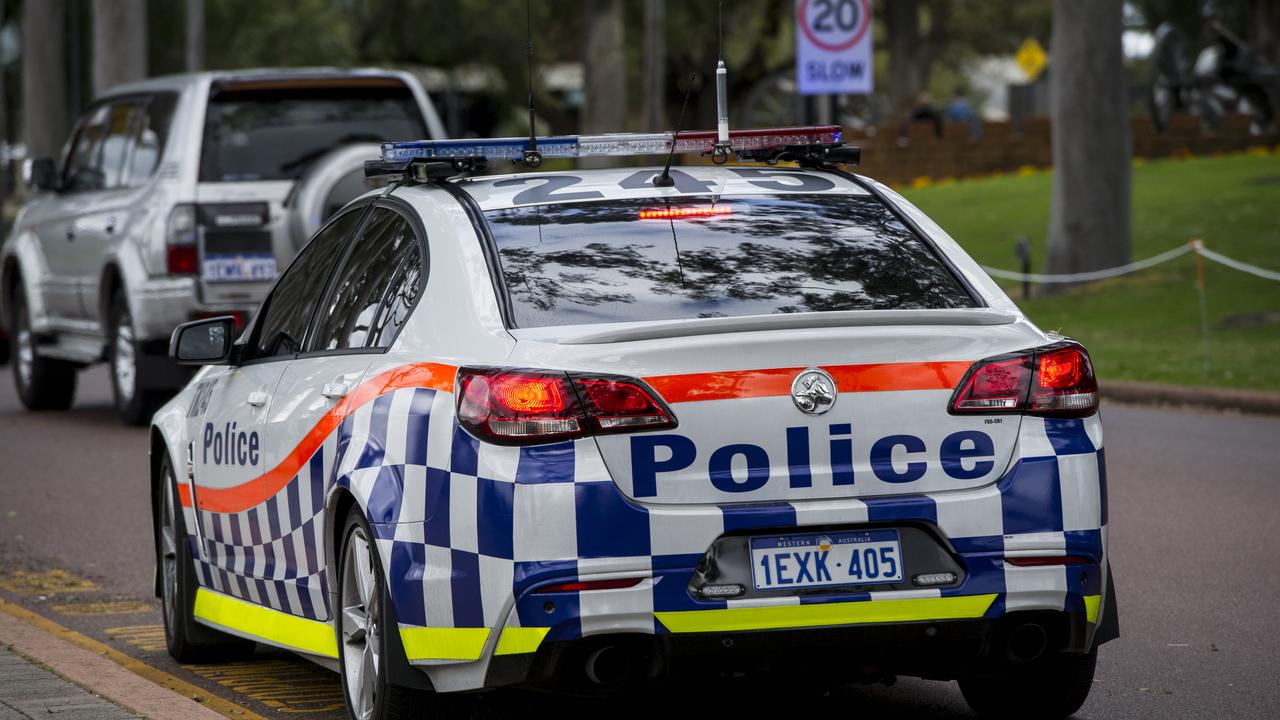
    A 16-year-old boy has lost his life after a stolen vehicle, at the center of a damaging multi-vehicle crime spree through a Northern Territory town, crashed and rolled on one of Australia’s major intercity highways. The sequence of dangerous events unfolded on Monday night in Katherine, a regional community located roughly 320 kilometers southeast of Darwin, according to Northern Territory Police.

    Authorities allege the trouble began just after 10:30 p.m. Monday, when offenders broke into a residential property on Zimin Drive and stole a parked car. The group of young people driving the stolen vehicle traveled to the local Charles Darwin University campus, where they abandoned the first stolen car before stealing two additional vehicles from the area.

    Over the following hours, the young drivers engaged in reckless, threatening behavior through Katherine’s central business district, police confirmed. The occupants of the stolen vehicles taunted responding officers and hurled objects, including a hammer, at police patrol cars while driving erratically through the town center. Acting Commander Mark Grieve of NT Police clarified that officers made the decision not to initiate a pursuit, a choice driven by the extremely dangerous driving that already put innocent bystanders at risk. In a separate pre-crash incident, Grieve added, a stolen vehicle drove past a parked police car whose officers were responding to an unrelated call, and threw objects at the unoccupied patrol vehicle.

    By roughly 6 a.m. the next day, Tuesday, one of the stolen vehicles carrying a group of teenagers rolled over on the Stuart Highway just north of Katherine. First responders arrived quickly at the crash site, transporting three 14-year-olds to a local hospital for treatment of injuries. The 16-year-old driver suffered critical trauma and could not be saved, dying at the scene of the crash.

    In the aftermath of the incident, police located two additional girls near the crash site, and investigators are working to confirm how many people total were in the vehicle when it rolled. The Stuart Highway was temporarily closed to all traffic to allow for forensic crash investigation, reopening once evidence collection was completed.

    Grieve described the incident as both tragic and deeply complex, noting that the series of dangerous criminal acts put the entire local community at grave risk. “We are investigating a significant series of offences, as well as the death of a 16-year-old male following extremely dangerous driving behaviour that placed the lives of the community at risk,” Grieve told reporters. “Our investigators will work to establish the full circumstances surrounding these events, and we continue to appeal to anyone with information to come forward.”

    The acting commander also highlighted a growing, nationwide concern: rising dangerous criminal activity among young people, a trend that has impacted the Northern Territory in particular. “It’s a trend and one we’re probably starting to see more of, we’ve been seeing it for quite a bit of time, unfortunately youth engage in this type of behaviour and see it as a bit of a game,” he said. “The youth space we’re dealing with is quite complex in nature, in the NT we’re trying to grapple with an increase in youth behaviours in the criminal space. It’s not only NT but Australia-wide and it’s not just a policing problem, it needs to be a whole community approach whether education, health or parental responsibility, it’s a big question to answer.”

    NT Police are continuing to urge any member of the public with details about the sequence of events leading to the crash to contact their investigators to assist with the ongoing inquiry.

  • Western Australia leads population boom as nation’s total tops 28 million

    Western Australia leads population boom as nation’s total tops 28 million

    Australia has hit a landmark demographic milestone this week, with its total population officially crossing the 28 million threshold early Tuesday, according to real-time data from the Australian Bureau of Statistics (ABS).

    The ABS’s population clock, which generates continuous live estimates by tracking births, deaths and net international migration, ticked past the 28 million mark in the early hours of Tuesday. Current demographic trends show the nation adds one new resident to its population every 75 seconds on average.

    Digging into state-level growth data, Western Australia (WA) stands out as the primary engine of this national population expansion. ABS demography chief Phil Browning confirmed that WA recorded a 12-month growth rate of 2.2% between September 2024 and September 2025, outpacing every other state and territory across the country. At the opposite end of the spectrum, Tasmania recorded the nation’s slowest annual growth, with its population expanding by just 0.3% over the same period. These divergent state growth trends aligned exactly with forecasts published in last year’s annual population statement from Australia’s Centre for Population.

    While the nation celebrates the 28 million milestone, official projections paint a slowing growth picture for the coming year. The Centre for Population’s latest outlook forecasts that national population growth will cool to 1.3% for the 2025-2026 period, driven by two key factors: a projected decline in net overseas migration and a continued drop in national birth rates that is set to hit a historic new low.

    The report projects Australia’s national fertility rate will fall to a record low of 1.42 children per woman in 2025-2026 – far below the 2.1 children per woman rate required to sustain stable long-term natural population growth without migration. Net overseas migration, which surged to unprecedented highs in the post-pandemic 2022-2023 period, is also expected to continue normalizing to pre-pandemic levels, with the centre projecting net migration of 260,000 for 2025-2026. This pullback is largely attributed to a drop in temporary arrivals, particularly students and international visitors holding travel and study visas.

  • Bumper pay rise set to cost households two rate hikes

    Bumper pay rise set to cost households two rate hikes

    Starting July 1 this year, 2.8 million Australian workers — roughly one-fifth of the nation’s total workforce — will see their pay packets grow, following a landmark ruling from the Fair Work Commission announced on Tuesday. The independent industrial tribunal greenlit a 4.75% increase to the national minimum award wage, lifting hourly earnings from $24.95 to $26.44, and weekly minimum pay to $1004.90, up from $948. The adjustment applies to all workers whose pay is set by modern awards and are not covered by enterprise agreements, and it was designed to help low-income households keep pace with years of elevated cost-of-living increases.

    The final wage decision landed between the two extreme proposals put forward ahead of the ruling: trade unions had pushed for a more aggressive 6% increase to offset persistent inflation, while industry business groups argued that a more modest 3.5% bump would be manageable for already strained employers. In welcoming the outcome, Australian Treasurer Jim Chalmers framed the adjustment as a balanced, sustainable real wage increase that aligned with the federal government’s formal submission to the Fair Work Commission, noting it was a raise millions of working Australians both needed and earned.

    However, leading economic analysts have warned that the larger-than-expected pay hike could exacerbate the nation’s ongoing inflation challenges, paving the way for additional interest rate increases from the Reserve Bank of Australia (RBA) that will deepen financial pressure on mortgage holders across the country.

    AMP senior economist My Bui explained that while the commission’s choice to avoid negative real wage growth for low-income workers is logically understandable, the sheer scale of the workforce impacted means the adjustment will likely add broader inflationary momentum to the economy. “Tuesday’s decision is only expected to add less than 0.6 percentage points to annual wages growth next year, but the real risk is that wage pressures spill over into other parts of the private sector,” Bui noted. She added that elevated wage growth will further entrench sticky services inflation, as businesses pass higher labour and input costs through to consumers, at a time when goods prices already remain elevated.

    CreditorWatch chief economist Ivan Colhoun echoed this concern, pointing out that the pay rise will hit already struggling businesses with extra cost pressure, particularly in the four labour-intensive sectors that account for more than two-thirds of all award-reliant employment: retail, hospitality, healthcare and social assistance, and administrative and support services. “While the larger than expected minimum wage increase will be welcome for the lowest paid, many businesses and the RBA are unlikely to be as happy,” Colhoun said. “The rise will add to business costs at a time of already elevated inflation, higher interest rates and at least a temporary surge in fuel costs.” He added that the higher wage baseline will make it marginally harder for the RBA to pull inflation back to its target range of 2-3% annually.

    RBA governor Michele Bullock has already implemented three interest rate hikes this year in an aggressive effort to cool stubborn inflation. Prior to the Fair Work Commission’s announcement, AMP had forecast one final rate hike by August 2025. But in response to the wage ruling, the firm updated its outlook: AMP now expects the RBA will deliver another rate increase as early as November this year, pushing the peak cash rate for this cycle to 4.85%, with an outside risk that the hike could come even sooner than forecast.

    Inflation projections have also shifted upward. AMP now forecasts that annual inflation will climb to 4.8% by the end of the June quarter, before easing only to 4.1% by the end of 2025 — still well above the RBA’s 2-3% target range. Recent official data has already signaled that underlying inflation pressures remain persistent in the Australian economy: while annual headline inflation edged down from 4.6% in March to 4.2% in April, that decline was driven largely by temporary federal government policies including a halving of the fuel excise and a GST rebate. The RBA’s preferred trimmed mean inflation measure, which strips out volatile price swings to show underlying trends, rose to 3.4% for the 12 months to April, confirming that core price pressures are still building.

    For Australian mortgage holders, the outlook means a double whammy of financial strain: not only will higher wages fuel further inflation, but it will also force the RBA to keep tightening monetary policy, pushing monthly home loan repayments even higher just as many households are already struggling to keep up with cost-of-living increases.

  • ‘Type of player every club wants’: Connor Watson signs with the Chiefs, with star utility to spend 2027 at a rival club

    ‘Type of player every club wants’: Connor Watson signs with the Chiefs, with star utility to spend 2027 at a rival club

    In a layered player transfer deal that links three National Rugby League (NRL) clubs, versatile utility Connor Watson has secured an early release from the final year of his contract with the Sydney Roosters, clearing the way for a multi-stage move that will see him join the St George Illawarra Dragons in 2027 before linking up with the expansion Papua New Guinea (PNG) Chiefs for their historic inaugural 2028 NRL season.

    Watson, a former New South Wales representative who has built a reputation as one of the league’s most adaptable and team-first players, had been contracted to remain with the Roosters, widely known as the Tricolours, through the 2027 season. The early release approval will see him suit up for the Dragons (nicknamed the Red V) for a single 2027 campaign before his two-year deal with the PNG-based expansion side kicks in.

    The PNG Chiefs, who are preparing for their first ever NRL season in 2028, have now secured three high-profile marquee signings to build their foundational roster, following earlier acquisitions of star playmaker Jarome Luai and veteran winger Alex Johnston. Chiefs football general manager Michael Chammas emphasized that Watson’s commitment to the expansion project runs deeper than just a playing contract.

    “From the very start, Connor made it clear he wanted to be part of the PNG Chiefs and the incredible journey we’re building here,” Chammas said in a statement confirming the signing. “He and his partner Kiana recently visited Port Moresby, and they genuinely fell in love with the country, the people, and the chance to be part of something far bigger than rugby league itself.”

    Chammas highlighted Watson’s intangible and on-field value for the fledgling club, noting: “Connor is exactly the type of player every organization wants to build around. He’s selfless, tough, relentlessly professional, and commands incredible respect across the entire league. His versatility and years of top-flight experience will be absolutely invaluable as we continue putting our squad together for 2028. Every signing matters for a new club, and there’s something really exciting about watching this roster come together piece by piece. Locking in Connor as our third major signing is another key milestone in the PNG Chiefs journey. We also want to thank the Sydney Roosters for their professionalism, patience, and understanding throughout this entire process.”

    For the St George Illawarra Dragons, Watson’s one-season stint comes at a critical time, as the club is set to lose veteran starting hooker Damien Cook to the UK’s Super League ahead of 2027. Dragons chief executive Tim Watsford said the club is eager to add Watson’s proven quality to their roster, even for just one season.

    “We’re incredibly excited to welcome Connor to the club next year,” Watsford said. “He’s performed at the highest level in the toughest competitions the game has to offer, and we love everything he brings to our group. He’s a true professional, and we’re confident his addition, even for one season, will make our entire team better. We’ve identified that his combination of skill, athleticism, and versatility fills key gaps for us, and we can’t wait to see him in the Red V.”

    This structured one-year “layover” arrangement follows a similar model used in other recent NRL transfers, including deals for Jonah Pezet at Parramatta Eels and Davvy Moale at Melbourne Storm for the 2026 season. For the Roosters, the early release also creates valuable salary cap space, with the club widely expected to finalize the signing of North Queensland Cowboys winger Murray Taulagi in the coming weeks.

    In an official statement confirming Watson’s release, the Roosters said: “The Sydney Roosters today announced that Connor Watson has been granted an early release from the final year of his contract following a request from his management, allowing him to pursue an opportunity with another NRL club. Watson will remain with the Roosters for the remainder of the 2026 season and will continue to play an important role within the club’s NRL squad.”

    Watson’s arrival adds to a busy offseason of recruitment for the Dragons, who have already locked in other key 2027 signings including Luke Metcalf, Keaon Koloamatangi, Scott Drinkwater and Phil Sami.

  • ‘Messi, Maradona, Tim’: NZ footballer’s viral fan club hits 4 million

    ‘Messi, Maradona, Tim’: NZ footballer’s viral fan club hits 4 million

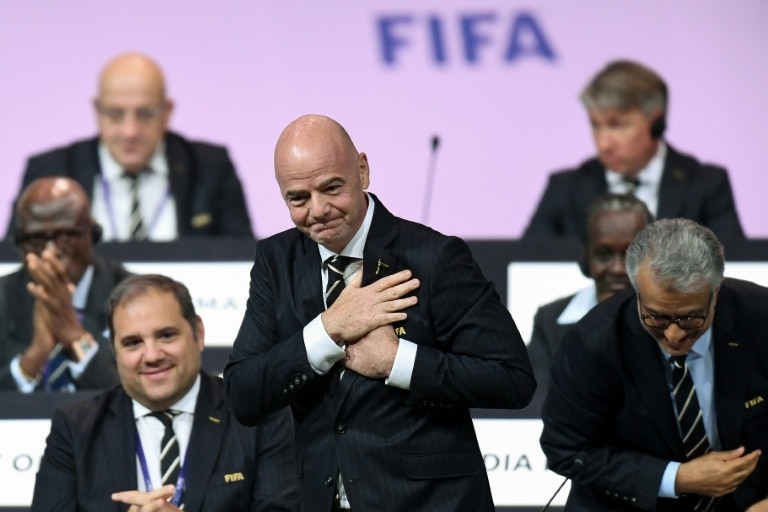
    A little-known New Zealand defender at the upcoming men’s FIFA World Cup has become one of the most talked-about names in global football this week, after a viral social media campaign catapulted his Instagram following from just 4,000 to more than 4 million followers in only seven days. The unexpected surge in fame comes thanks to Argentine influencer Valen “El Scarso” Scarsini, who set out last week to lift the profile of what he called the “least recognizable player” at the 2026 World Cup, zeroing in on Wellington Phoenix right-back Tim Payne, 32. By Tuesday, the grassroots social media movement had pushed Payne’s follower count past the 4 million mark, outstripping the follower base of the All Blacks — New Zealand’s world-famous national rugby union team, a cultural institution in the rugby-mad nation. If the growth continues at its current pace, Payne will soon match the total population of New Zealand, which stands at roughly 5.3 million. The viral campaign has been the top source of banter and conversation at New Zealand’s World Cup training camp in Florida, where the side is wrapping up warm-up preparations ahead of the tournament kicking off across Mexico, the United States, and Canada next week. Ranked as the lowest-placed side heading into the World Cup, New Zealand has never seen a player draw this level of global social media attention, a fact that has taken the entire squad by surprise. New Zealand head coach Darren Bazeley told local outlet Stuff.co.nz that the sudden explosion of fame has not shaken the steady 32-year-old defender, adding that Payne is handling the unprecedented attention better than most players would. “At the moment I do feel like he’s dealing with it really well, probably better than maybe some others would have,” Bazeley said. “Putting Tim up on a pedestal like that was really cool and probably not something that he, or anyone, expected.” The coach added that the squad has leaned into the lighthearted hype, with teammates constantly teasing Payne about his new celebrity status. “The players talk about it. I can hear the banter they’re having with Tim, and I think it’s amazing,” he said. Payne himself has described the outpouring of online attention as “pretty crazy,” and he is now set to meet the man who started the viral movement. Scarsini announced he would travel to Fort Lauderdale to watch New Zealand’s warm-up match against Haiti on Tuesday, with a meeting with Payne planned after the final whistle. “Guys tomorrow is the day,” Scarsini posted ahead of the match. “Let’s go watch Tim’s game v Haiti and then we’re going to meet him! Thanks to all who made it possible.” The lighthearted viral trend has spawned countless humorous memes and online comments, with many football fans drawing playful comparisons between Payne and Argentina’s two greatest football icons. One top comment on Payne’s latest Instagram post, which has racked up more than 2.1 million likes and 66,000 comments (most written in Spanish), read simply: “Messi, Maradona, Tim.”

  • Shocking dashcam captures moment alleged drink driver smashes head-on into couple’s vehicle

    Shocking dashcam captures moment alleged drink driver smashes head-on into couple’s vehicle

    Terrifying dashcam footage has documented a near-catastrophic wrong-way collision outside Adelaide, Australia, that left two vehicles totaled, but all people involved surprisingly walked away with no life-threatening harm. The incident unfolded at 6:44 p.m. local time on a Sunday, as 27-year-old Abissantun Priyambodo traveled along Whites Road in Paralowie, a northern suburban area of the state capital. As Priyambodo stayed in his designated travel lane, a Honda station wagon driven by a 56-year-old Paralowie resident suddenly veered across the center line directly into the oncoming path of Priyambodo’s Mitsubishi Lancer. Seconds later, the two vehicles slammed into one another in a violent head-on impact.

    Priyambodo, who captured the entire incident on his vehicle’s dashcam, described the aftermath of the crash in comments to local media. The force of the collision crumpled the front end of his Mitsubishi, leaving the vehicle too damaged to drive and requiring it to be towed from the crash site. Photographs from the scene confirm the extensive wreckage: both vehicles suffered severe structural damage, with the front ends of the cars compressed by the force of the impact.

    In a striking stroke of luck, Priyambodo, his wife, and the 56-year-old Honda driver all escaped serious injury in the crash. While the pair did not suffer life-altering harm, they developed minor body aches after the collision and sought a medical check-up with their general practitioner the next day as a safety precaution. “We are grateful that both of us were able to walk away safely from what could have been a much more serious incident,” Priyambodo said of the near-tragedy.

    Following the collision, South Australia Police officers arrived at the scene and administered a breath and blood alcohol test to the Honda driver. Officials confirmed the driver recorded a blood alcohol content of 0.130, well above the legal limit for operating a motor vehicle in South Australia. In response to the violation, police issued the driver an immediate six-month license suspension, an immediate penalty for high-range drink-driving offenses in the state. The crash has renewed public calls for stricter enforcement of drink-driving laws to prevent preventable, dangerous incidents on suburban roads.

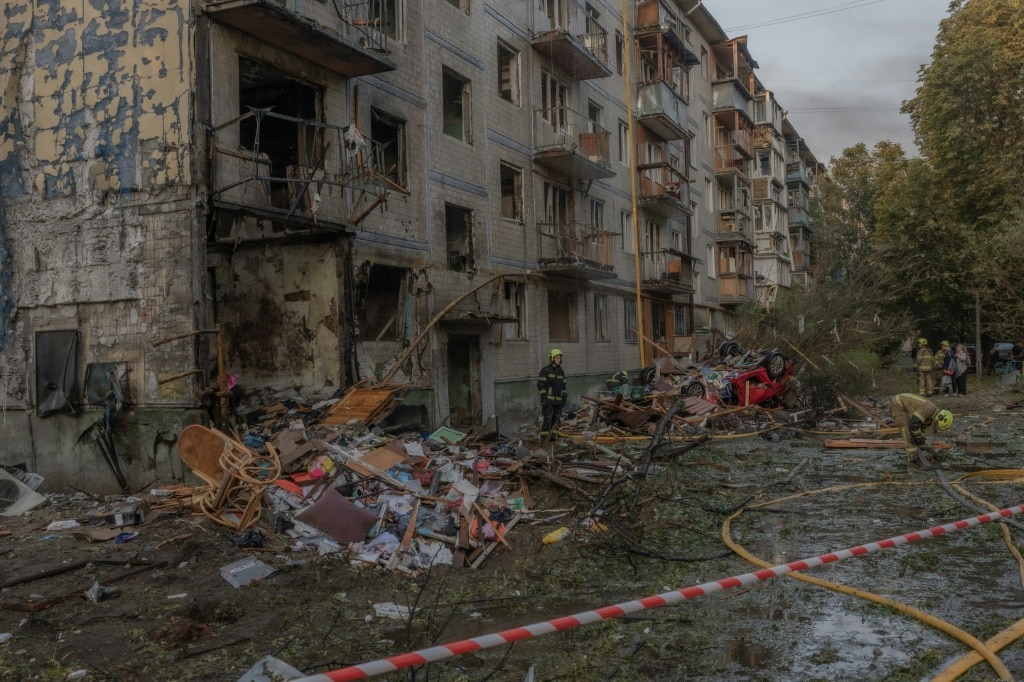
  • Russian strikes rock Ukraine, killing nine and wounding dozens

    Russian strikes rock Ukraine, killing nine and wounding dozens

    Just five days after Ukrainian President Volodymyr Zelenskyy publicly warned that Moscow was gearing up for a large-scale new offensive across the country, a coordinated wave of Russian missile and drone attacks killed at least nine civilians and injured dozens more across Ukraine on Tuesday, local authorities confirmed. The assault marks the latest escalation in a grinding, two-year-plus full-scale invasion that has become Europe’s deadliest conflict since World War II, with diplomatic efforts to reach a ceasefire remaining completely stalled as of this report.

    Agence France-Presse reporters on the ground in Kyiv, Ukraine’s capital, reported hearing multiple loud explosions rip through the city early in the attack. Local officials confirmed Russia used advanced ballistic missiles for the strikes, which ignited large structural fires and knocked out electrical power for residents in multiple central and residential districts.

    Kyiv Mayor Vitali Klitschko confirmed that four residents were killed in the capital’s assault, and at least 58 more people — including two young children — were wounded. “Explosions in the city. Air defence forces are working! Stay in shelters!” Klitschko had posted in an urgent public alert minutes after the first strike. AFP journalists observed panicked residents rushing to underground bomb shelters, many carrying only small bags of belongings and blankets, while a thick column of black smoke billowed over central Kyiv.

    Tymur Tkachenko, head of Kyiv’s City Military Administration, confirmed that all of the capital’s strikes were carried out with ballistic missiles, a weapon type that is far harder for Ukrainian air defenses to intercept than slower drones.

    The deadly assault was not limited to the capital. In the central Ukrainian city of Dnipro, local regional governor Oleksandr Ganzha confirmed a separate Russian attack killed five additional people and wounded 25 others, three of whom remain in critical condition as of Tuesday evening. In Ukraine’s second-largest city Kharkiv, located just miles from the Russian border, Mayor Igor Terekhov reported 10 wounded people, including one child, from the coordinated strikes.

    In what has become a standard pattern of retaliation amid the ongoing conflict, Ukrainian drone strikes hit targets inside Russian territory hours after the Russian barrage. Alexander Khinshtein, governor of Russia’s western Kursk region which borders Ukraine, confirmed one person was killed in a Ukrainian drone strike there. Separately, a second drone sparked a large fire at an oil refinery in Krasnodar, a major southwestern Russian city, according to the facility’s operational management team via Telegram.

    The timing of Tuesday’s Russian offensive lines up exactly with warnings Zelenskyy issued last Friday. The Ukrainian leader stated at the time that Kyiv had received credible intelligence confirming Russia was preparing a new massive strike, and urged all citizens to take air raid alerts seriously. “Please pay attention to air alerts, protect your lives. Our services are working efficiently and are prepared; the Air Force and other defenders of our skies will be on duty 24/7, as always,” Zelenskyy said in his address.

    Zelenskyy has repeatedly pushed Western allies to approve and fund additional supplies of Patriot air defense systems, the only weapon Ukraine currently operates capable of reliably intercepting Russian ballistic missiles. Last week, he sent formal requests to U.S. President Donald Trump and the U.S. Congress specifically asking for additional Patriot batteries to counter the growing intensity of Russian air attacks.

    In response to near-daily Russian bombardments across Ukrainian territory, Kyiv has significantly stepped up its own drone and missile strikes on Russian-occupied Ukrainian territories and targets inside mainland Russia. An Agence France-Presse analysis of official Ukrainian Air Force data found that Russia launched a record 8,150 long-range attack drones against Ukraine in May alone, a 24% increase from the total number launched in April. Ukrainian air force data indicates the country’s air defenses managed to intercept roughly 90% of all incoming Russian missiles and drones last month.

  • Benjamin Swann: Jailed baby killer admits assault on infant boy’s mother

    Benjamin Swann: Jailed baby killer admits assault on infant boy’s mother

    A Melbourne man already imprisoned for the 2024 killing of his girlfriend’s 115-day-old infant has entered a guilty plea for a savage, previously unreported assault on the mother of the child that took place less than two weeks before the baby’s death.

    Thirty-one-year-old Benjamin Joseph Swann, a former carpenter, was sentenced to 13 years in prison in November 2024 after being convicted of the homicide of 3-month-old Elijah, the infant son of his partner whom he began dating while she was pregnant. The fatal attack unfolded in the early hours of January 19, 2024, when Swann stayed overnight to help care for the newborn.

    On Tuesday, Swann appeared before the Melbourne Magistrates’ Court via video link to answer for the assault that occurred at his Manor Lakes home 13 days prior, on January 6, 2024. Court documents detail that the attack erupted after an argument when the woman told Swann she intended to leave him. Swann proceeded to punch her repeatedly in the head and torso, before grabbing her by the neck, pinning her to a bed and choking her. Prosecutors told the court he then pressed a pillow over the woman’s face, leaving her terrified she would lose consciousness. The woman managed to push Swann off and begged him to stop, convinced he intended to kill her. Swann pleaded guilty to a single charge of recklessly causing injury.

    Swann’s defense told the court that in the week leading up to the January 6 assault, their client had reached out to his general practitioner seeking treatment for persistent anger issues. Medical records show Swann told his doctor his anger had recently worsened and was damaging his relationship with his partner. The defense added that Swann came from a supportive, upstanding family and maintained consistent full-time employment before he was taken into custody following Elijah’s death. The court also heard that Swann has spent the majority of his 2.5 years of incarceration to date in protective custody, and he was supported by family members during the virtual hearing, waving to his mother as the proceeding concluded.

    In handing down the new sentence, Magistrate Kieran Gilligan ruled that a prison term was the only fitting penalty for the offense, calling out family violence as a growing threat to Australian communities. “Family violence is a scourge on society,” Gilligan told the court. “I’m afraid it’s my experience in this court it continues to grow exponentially.”

    Gilligan sentenced Swann to 12 months behind bars for the assault, to be served concurrently with his existing 13-year sentence for the infant homicide, meaning no additional custodial time will be added to Swann’s term. Under the sentence handed down for Elijah’s killing by the Victorian Supreme Court last year, Swann will become eligible for parole after serving 9.5 years of his sentence.

    The fatal circumstances surrounding Elijah’s death were previously laid out during Swann’s homicide sentencing. Last year, Justice James Gorton noted that Swann had initially expected to step into a father figure role for the newborn. In the early hours of January 19, the baby’s mother asked Swann to feed Elijah while she rested, before she heard a loud bang coming from the infant’s room. When Swann returned to the bedroom, he handed the unconscious baby back to his mother, telling her “Take this f**king baby.” The mother noticed Elijah was struggling to breathe and immediately called emergency services, while Swann performed cardiopulmonary resuscitation. The infant was diagnosed with severe, unsurvivable traumatic brain injury and major cranial trauma, and was taken off life support the following day. In the immediate aftermath of the attack, Swann initially denied harming Elijah and falsely attempted to direct blame to the boy’s mother, according to court records. Justice Gorton described the killing as an unpremeditated outburst of frustration common to tired caregivers, but noted that the infant was completely defenseless and could not recover from the harm inflicted.