标签: Oceania

大洋洲

  • Shots fired, Trump evacuated unhurt from press dinner in Washington

    Shots fired, Trump evacuated unhurt from press dinner in Washington

    On Saturday night, a shooting incident disrupted the annual White House Correspondents’ Dinner at Washington Hilton, triggering an immediate emergency evacuation of former president and current officeholder Donald Trump. What was meant to be a landmark appearance—Trump’s first attendance at the iconic media gala during his term in office—descended into chaos when gunshots rang out near the venue’s main security screening checkpoint, located just outside the packed ballroom where hundreds of formally dressed guests had gathered.

    Within seconds of the loud bangs being reported, United States Secret Service agents drew their weapons, rushed Trump from the stage he was preparing to speak from, and swarmed through the crowds of attendees. Panicked guests dove under tables to take cover as tactical security units established defensive positions around the stage, while uniformed police flooded the hotel perimeter and law enforcement helicopters circled overhead.

    The suspect, identified as the gunman, was taken into custody at the screening area shortly after the incident, and Trump confirmed he emerged from the evacuation completely unharmed. In a post to social media immediately after the incident, Trump praised the rapid response of security teams, writing, “Secret Service and Law Enforcement did a fantastic job. They acted quickly and bravely. The shooter has been apprehended.”

    He also confirmed that all other senior officials, including First Lady Melania Trump, Vice President and Cabinet members, were unharmed, stating, “The First Lady, plus the Vice President, and all Cabinet members, are in perfect condition.” Shortly after the evacuation, Trump announced he would hold an official press conference at the White House to address the incident, and shared plans to reschedule the gala event within 30 days.

    This incident marks the third high-profile security threat targeting Trump in less than a year. In 2024, an assassination attempt at a campaign rally in Butler, Pennsylvania left one attendee dead and Trump with a minor wound to the ear. Just months after that attack, a second man was arrested after a Secret Service agent spotted a rifle barrel protruding from bushes on the perimeter of a West Palm Beach golf course where Trump was playing a round.

    Adding historical weight to the incident, the Washington Hilton—site of Saturday’s gala—was also the location of the 1981 assassination attempt on Republican president Ronald Reagan, who survived a gunshot wound after the attack just outside the venue.

    Confusion lingered in the immediate aftermath of the shooting, with senior administration officials evacuated first, and no clear initial details emerging on the severity of the incident or the suspect’s motives. Cabinet member Mehmet Oz, who was escorted out by security, confirmed to reporters he had been told “shots fired upstairs” as the evacuation began. Organizers initially told guests the dinner would continue following the incident, but later reversed course and announced the event would be postponed.

    This year’s dinner was already notable for breaking decades of precedent: the White House Correspondents’ Association extended an invitation to Trump despite his years of public attacks on the mainstream media, and his attendance marked the first time he had appeared at the annual gathering during his current term in office. For more than a century, every sitting U.S. president has attended the dinner regularly, a tradition Trump had declined to uphold until this year.

    Dubbed the “Nerd Prom” by attendees, the annual event brings together hundreds of Washington-based journalists, media executives, and political figures to raise funds for journalism scholarships and honor outstanding reporting. The gala traditionally features a stand-up comedian routine skewering the sitting president, followed by comedic remarks from the president himself—but organizers did not book a comedian for the 2025 iteration of the event.
  • Angus Taylor takes on ‘bad countries’, Pauline Hanson to rally outside parliament

    Angus Taylor takes on ‘bad countries’, Pauline Hanson to rally outside parliament

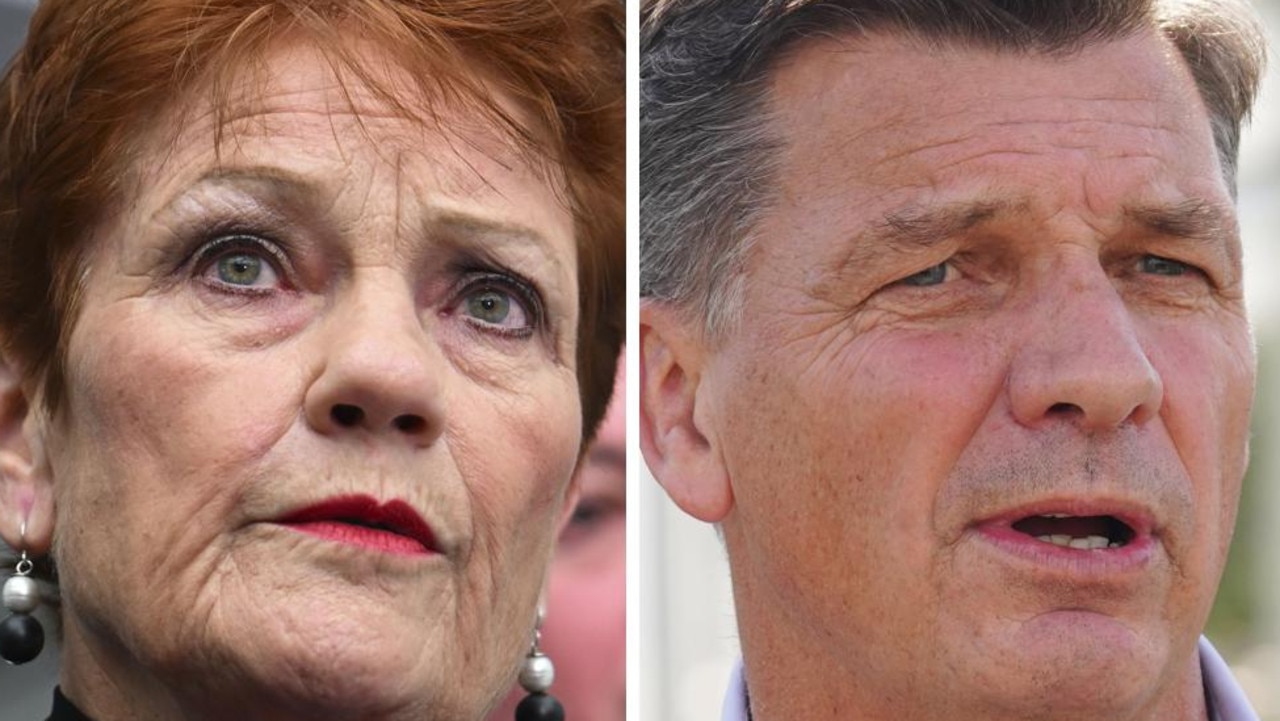
    As preparations got underway Sunday for a controversial anti-mass immigration rally led by One Nation founder Pauline Hanson on the grounds of Australia’s Parliament House in Canberra, senior Liberal Party figure Angus Taylor has publicly admitted he shares some policy ground with the far-right leader, while pushing for sweeping changes to Australia’s immigration system centered on “Australian values” screening.

    By early Sunday morning, event organizers had already begun setting up rally infrastructure, installing Australian national flags and immigration-focused posters emblazoned with flag motifs, with a large contingent of Australian police deployed to the site to maintain public order. Hanson is scheduled to address attendees of the “Rally To End Mass Immigration” later that day.

    In an interview with public broadcaster ABC, Taylor responded to questions about Hanson’s hardline anti-immigration position, confirming that the two politicians see eye-to-eye on some key issues, though disagree on others. Taylor’s core starting point for immigration reform, he said, is that Australia’s current annual migration intake has remained far too high, while entry standards have dropped to unacceptably low levels.

    The Liberal MP has repeatedly called for a full review and restructuring of Australia’s migration framework, one that enshrines Australian values as a core requirement for entry, including explicit provisions to block radical extremists from gaining entry to the country.

    Taylor pushed back on suggestions that his framing of values-based screening would advantage migrants from majority Western nations such as the United Kingdom over migrants from Asian countries including China and Vietnam. He clarified that while “many good people come from bad countries”, noting that some of Australia’s most accomplished citizens trace their roots to nations that were considered unstable or hostile at the time they migrated, he believes “bad countries” inherently carry a higher risk of producing “bad people” seeking entry to Australia.

    Despite this, Taylor insisted that the proposed screening process would not be based on country of origin, religion, or race, but exclusively on alignment with Australian values.

    When pressed to confirm whether China – which critics frequently accuse of mass imprisonment of journalists and broad application of the death penalty – qualifies as a “bad country”, Taylor avoided a direct answer, instead pointing to other examples. “To claim that Iran is a good country right now. Seriously?” he said, noting that the current federal Labor government has already implemented legislation restricting entry for Iranian citizens, a move Taylor supports.

    Taylor also repeated his earlier critical remarks about resettling Palestinian refugees from the Gaza Strip, pointing to ongoing “terrible acts of atrocity” connected to the Israel-Hamas war in the blockaded enclave.

    The public alignment between Taylor and Hanson comes at a tense political moment for the Liberal Party, as One Nation is widely predicted to win the New South Wales federal seat of Farrer from the Liberals following the resignation of former Liberal leader Sussan Ley. The Victorian-based MP addressed questions about the Coalition’s controversial decision to give One Nation candidate preferences ahead of Climate 200-backed independent candidate Michelle Milthorpe, brushing off concerns about the strategic choice.

    Taylor said the Liberal Party continues to prioritize earning first-preference votes from Farrer voters, and has ranked the National Party second on its how-to-vote cards. Pressed on whether One Nation poses an existential threat to the Liberal Party, Taylor argued that the “existential threats” to Australia’s regional communities are teal independent policies and federal Labor policies.

    Speaking to the impacts of current policy on regional Australia, Taylor said residents of rural areas are already facing acute anxiety over access to diesel, a critical resource for planting crops and operating freight transport that underpins regional economies across the country.

  • Man subdued with Taser after attacking nurses at Sydney hospital

    Man subdued with Taser after attacking nurses at Sydney hospital

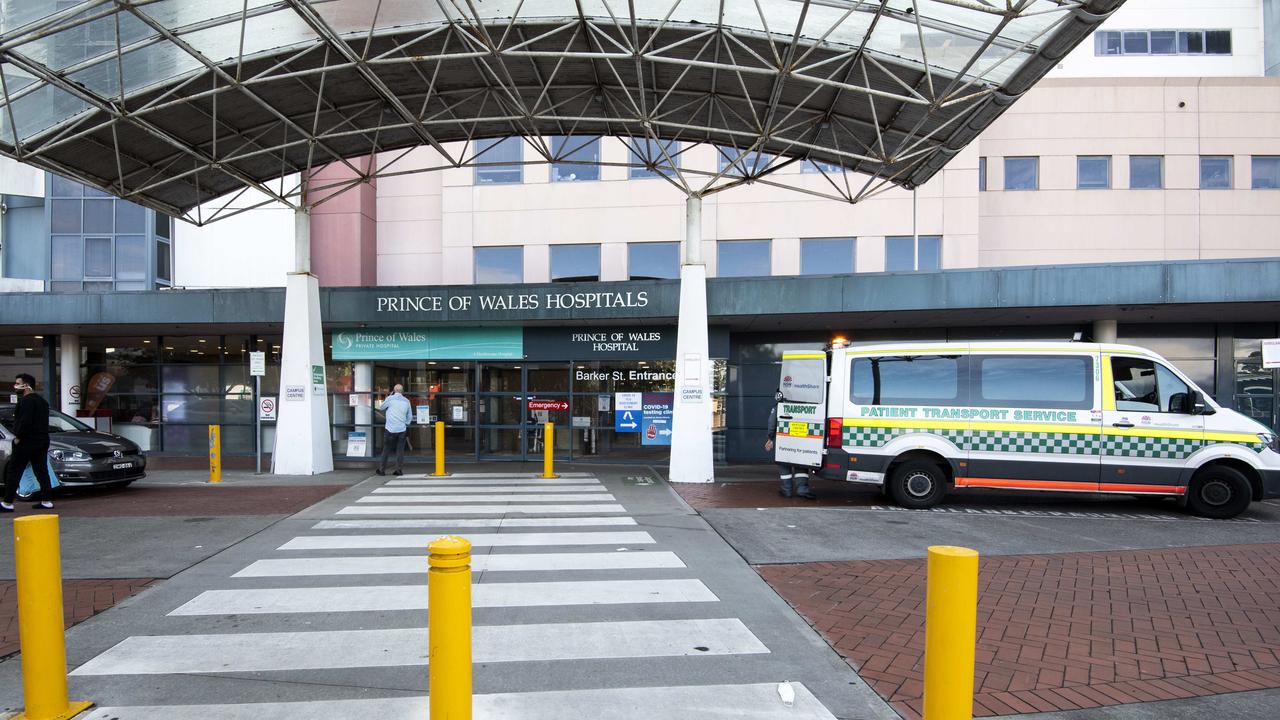
    A violent outburst by a patient at a major Sydney public hospital left multiple medical staff and a bystander injured Saturday night, prompting police to deploy a Taser to subdue the attacker before taking him into custody, New South Wales Police confirmed.

    Officers were already present on the grounds of Prince of Wales Hospital in Randwick when emergency alerts of an ongoing assault came in just after 8:30 p.m. local time. According to official statements from NSW Police, the aggressor — identified as a 51-year-old male patient at the facility — launched a sustained attack that left one nurse with severe leg wounds. The patient also assaulted two additional nurses and a hospital security guard in the incident.

    A 26-year-old woman who stepped in to protect another patient during the chaos was also attacked by the man, police added. After the situation escalated, responding officers used a Taser to disable the aggressor and took him into custody. He was subsequently moved to a secured unit within the Randwick hospital for holding.

    As of the latest update, the nurse who sustained serious leg injuries remains admitted to the hospital for ongoing treatment. The other four people hurt in the attack — the two additional nurses, the security guard, and the 26-year-old woman — received on-site medical care for their injuries and did not require admission.

    The Eastern Beaches Police Area Command has launched a formal investigation into the assault to determine the full circumstances of the incident and prepare potential criminal charges against the suspect. This attack comes amid growing national conversation in Australia about rising rates of violence against frontline hospital workers, who have repeatedly called for greater workplace protections to prevent similar harm.

  • Donald Trump evacuated from Washington dinner as ‘shooter’ arrested

    Donald Trump evacuated from Washington dinner as ‘shooter’ arrested

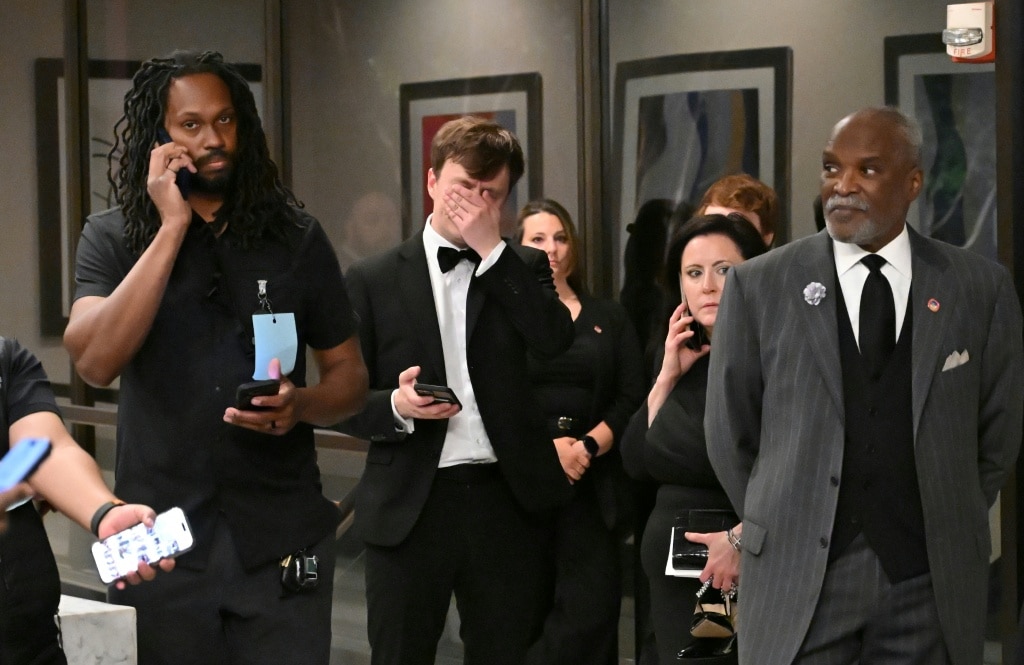
    On Saturday evening local time, a violent security breach disrupted the annual White House Correspondents’ Dinner at Washington D.C.’s Hilton Hotel, where former President and current U.S. President Donald Trump was among 2,500 high-profile attendees. Newly released surveillance footage and first-person accounts have now shed light on the chaotic sequence of events that unfolded shortly after 8:30 p.m.

    The alleged attacker, identified by authorities as 31-year-old Cole Thomas Allen, a California-based professional with backgrounds in mechanical engineering, computer science, game development, and K-12 education, forced his way through a lobby security checkpoint armed with a shotgun, a handgun, and multiple bladed weapons. According to D.C. Police Chief Jeffery W. Carroll, Allen was a registered guest of the hotel and was acting entirely alone, with no prior criminal record or known ties to extremist groups. Law enforcement officials confirmed Allen opened fire at close range on a U.S. Secret Service officer stationed at the checkpoint; the officer survived thanks to his bulletproof vest, and Trump told reporters Sunday he had spoken directly to the officer, who is in stable condition and recovering well.

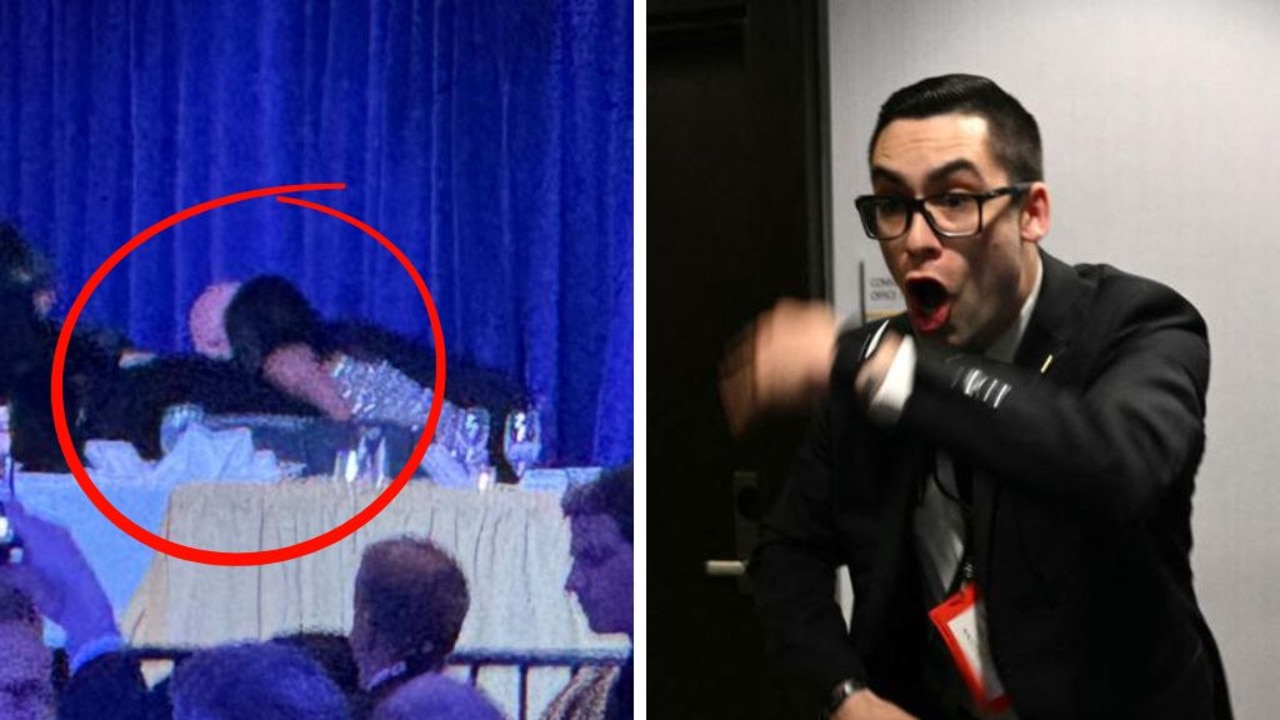
    Surveillance footage released in the hours after the incident captures Allen moving rapidly through the screening area, a detail Trump highlighted in his post-incident comments: “He was really moving … He looked pretty evil … he was a sick person.” For the President, the first sign of trouble was indistinguishable from a common event disruption: Trump told reporters he initially mistook the gunfire for a loudly dropped catering tray, before security personnel reacted within seconds to evacuate the venue. Footage from inside the packed ballroom shows Trump and First Lady Melania Trump seated at the head stage table when the shots rang out. Secret Service agents immediately rushed the President out of the room, an incident during which he appeared to stumble briefly, before evacuating the First Lady, Vice President JD Vance, and multiple senior cabinet members in attendance.

    Eyewitness accounts from journalists inside the venue paint a picture of sudden, widespread panic. Veteran CNN anchor Wolf Blitzer, who was just feet from the shooter near a lobby restroom, told his network he saw Allen brought to the ground by responding agents. “I did see the gunman on the ground after he started shooting,” Blitzer said, adding that the suspect carried a “very, very serious weapon.” ABC News editor John Lyons, who was in the ballroom, described a chaotic scene where attendees scrambled to take cover under tables for 15 full minutes: “There was shouting and fear and you heard this kerfuffle,” he said. Sky News correspondent James Matthews called the mood “an atmosphere of extreme fear,” noting that agents moved Trump out of the venue in seconds.

    By the time the scene was secured, Allen was taken into custody unharmed. Images from the hotel lobby show the suspect lying face-down on the floor, secured by law enforcement and wrapped in a thermal blanket. Overnight Sunday, FBI agents executed a search of Allen’s residence in Torrance, California, a suburban community roughly 20 miles south of Los Angeles, after securing a federal search warrant from a judge in the Central District of California.

    Allen is scheduled to appear in federal court Monday to face multiple felony charges, including weapons violations during a violent crime. Attorney General Todd Blanche told reporters Saturday that charges would be filed “shortly,” noting that the nature of the charges would be clear given the suspect’s actions.

    In comments to reporters Saturday night at the White House, Trump framed the attack as an assault on the U.S. Constitution, praising the “very brave members of the Secret Service” for their rapid response that prevented any fatalities. He later posted to his Truth Social platform shortly after the incident, writing: “Quite an evening in DC. Secret Service and Police did a fantastic job. The shooter has been apprehended. I have recommended that we “LET THE SHOW GO ON” but, will entirely be guided by Law Enforcement. Regardless of that decision, the evening will be much different than planned, and we’ll just, plain, have to do it again.”

    Event organizers ultimately canceled the dinner and announced plans to reschedule the event within 30 days. When asked whether the attack was an assassination attempt against him, coming after a previous failed assassination attempt during the 2024 presidential campaign, Trump offered a characteristic response. He noted that throughout U.S. history, assassination attempts and successful attacks have targeted high-profile, transformative leaders, citing Abraham Lincoln as an example. “They don’t go after the ones that don’t do much because they like it that way,” Trump said. “And when you look at the people that have either whether it was an attempt or a successful attempt, that they’re very impressive, inspirational. … I hate to say I’m honoured by that, but I do know we’ve taken this country … and now we’re the hottest country anywhere in the world with this country. And there are a lot of people that are not happy about that. So I think that’s the answer.”

    Saturday’s dinner marked the first time Trump has attended the annual press corps dinner during his two terms in office, an event held with extensive pre-planned security arrangements in response to ongoing threats against the President.

  • Spurs, West Ham win in battle for Premier League survival

    Spurs, West Ham win in battle for Premier League survival

    The English Premier League delivered another afternoon of high-stakes drama this Saturday, as two late match-winning goals upended the landscape of both the tense relegation battle and the race for Champions League qualification with just four matchweeks remaining in the season.

    The most electrifying twists unfolded in the fight to avoid the final relegation spot, where Tottenham Hotspur and West Ham United have emerged as the two remaining contenders after Wolverhampton Wanderers and Burnley already confirmed their drops to the Championship. In a turn of events that left fans of both clubs reeling, West Ham substitute Callum Wilson struck a 92nd-minute winner that preserved his side’s two-point advantage over Tottenham, keeping the London club in the driving seat to beat the drop.

    The day began looking grim for Tottenham, who traveled to face already-relegated Wolves without a Premier League win dating back to December. Blunted in attack, the side managed just two shots on target across 90 minutes, and looked set to settle for a frustrating goalless draw that would leave them mired in the relegation zone. It took an 82nd-minute strike from Joao Palhinha to secure a scrappy 1-0 win for Tottenham, lifting them temporarily out of the bottom three.

    Minutes later, when news broke that Everton had scored an 88th-minute equalizer at the London Stadium to cancel out Tomas Soucek’s first-half opener for West Ham, traveling Tottenham supporters erupted in celebration. At that point, the North London club had slipped above West Ham in the table, on course to escape the drop zone at West Ham’s expense. But Wilson had other plans, netting a dramatic late winner that shifted the dynamic back in West Ham’s favor.

    Speaking after the match, Wilson emphasized the unity that has carried his side through the tough relegation run-in. “The atmosphere was electric,” he told the BBC. “I think the fans and the players have really come together in this period and it has stood us in good stead. We’re the ones in the driving seat at the moment and if we take care of our own results it should stand us in good stead come the end of the season.”

    Nottingham Forest, who sit three points clear of both Tottenham and West Ham on 39 points, all but secured their top-flight status with a dominant 5-0 thrashing of Sunderland on Friday, pulling them well clear of the relegation battle.

    Across the country at Anfield, another set of late action reshaped the race for Champions League places, as Liverpool claimed a vital 3-1 win over Crystal Palace to climb into the top four. The result marked Liverpool’s first victory over Palace in four meetings this season, after the London side knocked them out of the League Cup and beat them in the reverse Premier League fixture, following a penalty shootout win in the season-opening Community Shield.

    Recently recovered from a fibula fracture that kept him sidelined for months, Alexander Isak opened the scoring for Liverpool, notching his first goal for the club since December. Defender Andy Robertson doubled the Reds’ lead shortly after with a tidy finish on a slick counter-attacking move. Crystal Palace cut the deficit in the second half through Daniel Munoz, but Florian Wirtz iced the game with a last-gasp third goal to restore the two-goal advantage.

    The result was tinged with minor concern for Liverpool, however, as star winger Mohamed Salah was forced to limp off the pitch in the second half with a hamstring injury, with less than a month remaining in his decorated tenure at the club. Despite the injury concern, the result leaves Liverpool level on 58 points with Aston Villa and Manchester United, eight points clear of fourth-placed chasing Brighton, making qualification for next season’s Champions League near-certain for Arne Slot’s side – a strong recovery after their disappointing title defence this campaign.

    “Our objectives this season have changed due to our form but the Champions League is so important to this football club and we’ve made a big step,” Robertson told Sky Sports after the match.

    In the day’s early kickoff, Fulham claimed a 1-0 win over Aston Villa, keeping the Cottagers’ own hopes of European qualification alive. Ryan Sessegnon scored the game’s only goal shortly before halftime, after both sides had missed early chances to take the lead. The result dropped Villa out of the top four, opening the door for Liverpool’s ascension.

    The final game of the day will see league-leaders in waiting Manchester City top when Arsenal host Newcastle United. The Gunners, who held a nine-point lead at the top of the table just two weeks ago, have seen that advantage evaporate amid a poor run of form. Arsenal now trail City only on goals scored, with the two sides level on goal difference heading into the evening kickoff.

  • War in the Middle East: latest developments

    War in the Middle East: latest developments

    Tensions and shifting developments continue to roil the ongoing Middle East conflict this week, bringing a cascade of new changes that have thrown future diplomatic efforts and regional stability into question.

    One of the most significant developments came from United States President Donald Trump, who announced Saturday in an interview with Fox News that he had called off a planned diplomatic trip by US envoys to Pakistan, where the delegation was set to hold negotiations with Iranian officials aimed at de-escalating the ongoing war. “They were getting ready to leave, and I said, ‘Nope, you’re not making an 18 hour flight to go there. We have all the cards. They can call us anytime they want, but you’re not going to be making any more 18 hour flights to sit around talking about nothing,’” Trump told Fox News during a phone interview. The president emphasized that the decision to scrap the diplomatic trip does not signal an imminent resumption of full-scale hostilities, leaving the door open for Tehran to initiate new communication at any time.

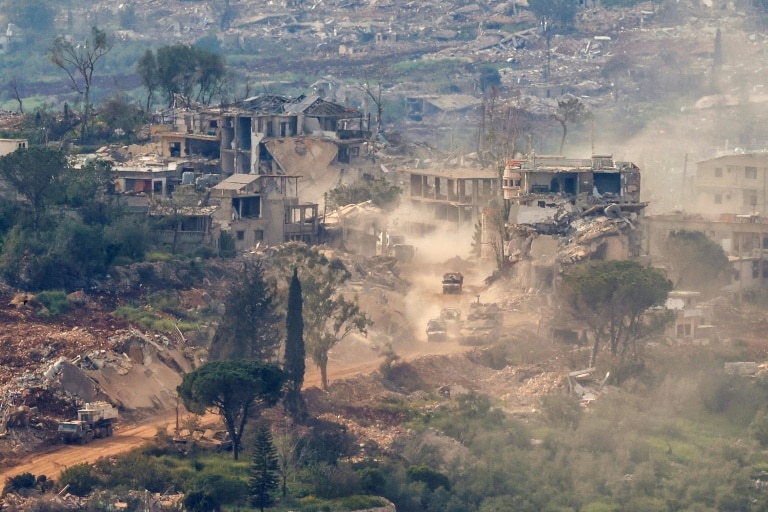
    Across southern Lebanon, violence persists despite a recently extended ceasefire between Israeli forces and the Iran-aligned militant group Hezbollah. Lebanon’s national health ministry confirmed that four civilians and combatants have been killed in fresh Israeli airstrikes across the southern region of the country. Photographic evidence captured from northern Israel on April 25 shows Israeli tanks and military armored vehicles moving along roads flanked by destroyed residential structures in southern Lebanon, underscoring the widespread destruction that has accompanied the ongoing clashes.

    Looking toward post-conflict security efforts, Germany has announced plans to deploy a minesweeper to the Mediterranean Sea in preparation for a potential security mission in the Strait of Hormuz once active hostilities between the US and Iran conclude. A spokesperson for the German defense ministry confirmed the deployment plans in a statement to Agence France-Presse.

    Iranian officials have pushed back against US actions, framing Washington’s position as a desperate bid to exit a conflict it cannot win. “The United States is looking for a face-saving way to escape the war quagmire it has become trapped in,” a spokesman for Iran’s defense ministry said. The Iranian military further issued a stark warning that it will launch a full military response if the US continues its blockade of Iranian ports, a policy Tehran has labeled “state-sponsored banditry.”

    Domestically, Iran has extended its wave of wartime executions, putting to death a man the country’s judiciary claims carried out covert operations on behalf of Israel’s national intelligence agency during large-scale anti-government protests that swept the country in January.

    In a separate development welcomed by Washington, an American-Kuwaiti journalist who contributed to prominent international outlets including The New York Times, PBS, and Al Jazeera English has been released from custody in Kuwait. Ahmed Shihab-Eldin was arrested on March 3 amid a government crackdown on individuals sharing footage of the US-Iran war, facing charges including spreading false information, endangering national security, and misuse of a mobile communications device. A US State Department official confirmed his release after weeks of detention.

    As part of Washington’s ongoing pressure campaign against Tehran, US Treasury Secretary Scott Bessent announced that American authorities have seized and frozen $344 million worth of cryptocurrency assets linked to Iranian entities. The move comes as the US seeks to ramp up economic pressure on Iran amid widespread war-related disruptions to global energy supplies.

  • Princess of Wales pays tribute to Anzac war dead

    Princess of Wales pays tribute to Anzac war dead

    Each year on Anzac Day, nations around the world pause to honor the courage and sacrifice of the Australian and New Zealand Army Corps, whose legacy stretches back to the disastrous 1915 Gallipoli campaign of World War I. This year, senior members of the British Royal Family led official commemorations across London, honoring more than 100,000 troops who lost their lives in the campaign that shaped ANZAC identity forever.

    The day’s formal events began in the pre-dawn darkness, when Princess Anne joined hundreds of attendees for a moving memorial service at London’s Wellington Arch. Organized in partnership by the high commissions of Australia and New Zealand, the service saw the Princess Royal lay a ceremonial wreath at the arch’s memorial. The gathering heard a recital of John McCrae’s iconic war poem *In Flanders Fields*, and the ceremony concluded with performances of the national anthems of the United Kingdom, New Zealand, and Australia, uniting attendees from three nations in remembrance.

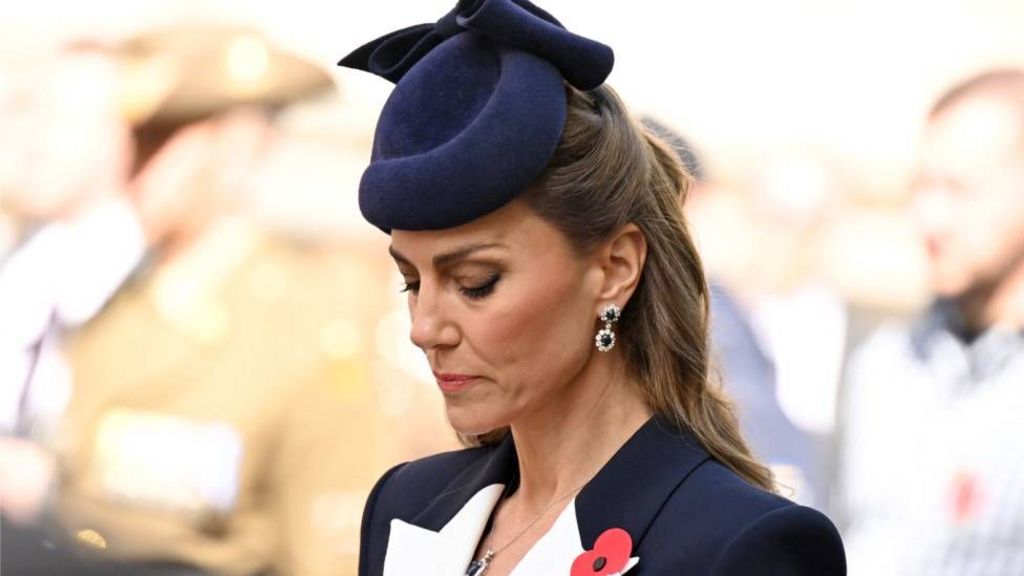
    As the day progressed, the Princess of Wales Catherine took forward the tradition of remembrance at Whitehall’s Cenotaph. There, she placed a handcrafted wreath of red remembrance poppies interwoven with white flowers, a subtle design echoing the feather motif of the Prince of Wales’ official crest. Attached to the wreath was a personal note signed jointly by Catherine and Prince William, which paid solemn tribute to “soldiers who made the ultimate sacrifice for our freedom.”

    Following the wreath-laying at Whitehall, the service proceeded with deep ceremonial tradition: Reverend Dr Lyndon Drake recited verses from Laurence Binyon’s *For The Fallen*, the iconic poem that has anchored remembrance services for a century. A trumpeter from the Royal Marines Portsmouth Road Band performed the haunting notes of The Last Post, after which the entire gathering fell silent for a full minute to honor the dead. Hamish Cooper, New Zealand’s High Commissioner to the UK, and Jay Weatherill, Australia’s High Commissioner, walked side-by-side to lay their own official wreaths at the memorial, marking the shared bond of the two ANZAC nations. Catherine joined attendees in singing the hymn *O God Our Help in Ages Past* before uniformed service personnel marched from Whitehall to a subsequent service of commemoration and thanksgiving at nearby Westminster Abbey.

    After the conclusion of the Westminster Abbey service, Catherine took time to speak with dozens of military families in attendance, many of whom still carry the legacy of ANZAC losses across generations.

    To place the day in historical context, the 1915 Gallipoli campaign was launched as a British-led offensive against the Ottoman Empire, with the strategic goal of opening a secure naval route through the Dardanelles strait from the Mediterranean to Constantinople, modern-day Istanbul. The offensive stalled into a brutal months-long campaign that dragged into 1916, ending in an Allied withdrawal with the catastrophic loss of more than 100,000 troops from both Allied and Ottoman forces. Today, Anzac Day honors not just the dead of Gallipoli, but all ANZAC service members who have fallen in wars, conflicts, and peacekeeping missions across the globe.

    Commemorative events were not limited to London. Services were held simultaneously across Australia, New Zealand, and on the Gallipoli peninsula itself, where thousands gather each year to mark the anniversary. In the French Somme region village of Villers-Bretonneux, which was successfully defended by Australian troops during World War I, local and international events also marked the day of remembrance. The British Royal Family marked the occasion officially on social media platform X, reaffirming the UK’s shared bond of remembrance with Australia and New Zealand.

  • AFL 2026: Essendon coach Brad Scott lamented his side’s handling of the Anzac Day occasion

    AFL 2026: Essendon coach Brad Scott lamented his side’s handling of the Anzac Day occasion

    One of Australian Rules Football’s most iconic annual fixtures delivered a lopsided result this Anzac Day, as Essendon Bombers head coach Brad Scott opened up about his team’s crushing second-half collapse to a inspired Collingwood Magpies side led by veteran champion Scott Pendlebury. Speaking to reporters after the final siren, Scott expressed deep frustration over his side’s failure to rise to the occasion, admitting he struggled to reconcile his honest assessment of the defeat with a more guarded, team-aligned narrative for the post-match press conference.

    The match was tightly contested through the first two quarters, with neither side managing to pull away despite Scott acknowledging Essendon never found their rhythm in the opening half. That stalemate shattered dramatically after halftime, when Collingwood slammed through 15 goals in the second half, including nine unanswered goals in a dominant final quarter that left Essendon powerless to stem the tide. At 38 years old, Pendlebury turned in a career-defining performance to anchor the Magpies’ charge, ultimately claiming his fourth Anzac Day Medal for his match-winning impact.

    Scott summed up the result bluntly, saying his squad was “absolutely obliterated” by Collingwood, a result he pinned largely to catastrophic performance at centre bounce clearances. While overall clearances for the match finished roughly even, Essendon couldn’t win a foothold in the contest out of the central stoppage, a failure that handed Collingwood repeated attacking opportunities that blew the game open in the final term. “The last quarter margin is almost entirely attributed to centre bounce territory and you lose contest forward,” Scott explained, noting that even when Essendon managed to move the ball into their attacking 50 after halftime, they were able to convert – they simply never got enough chances to mount a comeback.

    The Essendon coach added that his young squad looked visibly overawed by the magnitude of the Anzac Day occasion, one of the biggest non-finals matches on the AFL calendar, played in front of a capacity crowd at the MCG. Scott pointed out that Pendlebury alone has more career game time than 75 percent of the entire Essendon list combined, but he refused to pin the loss solely on inexperience, saying a lack of composure under pressure was a problem across the entire team. “Repeatedly we weren’t able to handle those moments, so we weren’t able to handle the occasion, we weren’t able to handle Collingwood’s pressure. Even worse, we weren’t able to stand up under perceived pressure which wasn’t even there,” he said.

    Asked about his comment that he was torn between sticking to the “party line” and sharing his true assessment, Scott confirmed he would not shift blame to his inexperienced players, despite the clear gap in big-game experience between the two sides. The collapse of Essendon’s game plan was a chain reaction, he explained: when their initial plan to contain Pendlebury and young Magpies star Nick Daicos failed, adjustments also fell flat, leading to a domino effect of missed assignments and missed opportunities.

    The brutal defeat leaves Essendon with no time to lick their wounds, as they prepare to face the reigning premier Brisbane Lions at Marvel Stadium next Saturday in what shapes as another tough test for the rebuilding side.

  • Gunfire in Mali as army battles ‘terrorist groups’

    Gunfire in Mali as army battles ‘terrorist groups’

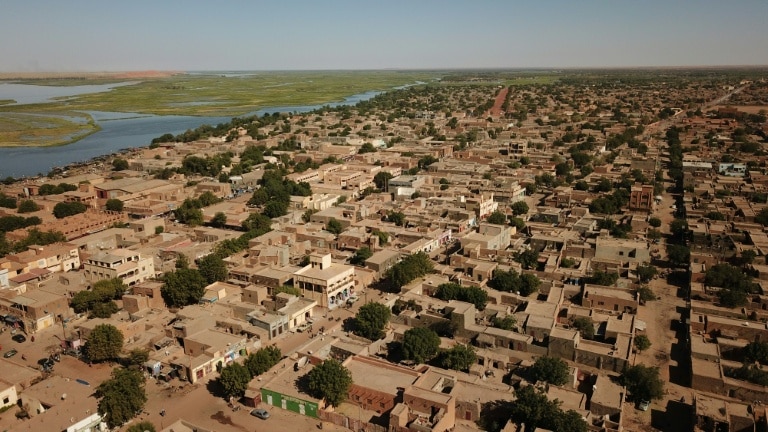
    On a violent Saturday across junta-governed Mali, Malian army troops engaged in fierce combat with armed groups the military labels as terrorist organizations, marking a fresh eruption of violence in a West African nation that has been mired in over 10 years of brutal jihadist insurgency. Eyewitness accounts confirmed active fighting broke out not only in Mali’s capital Bamako, but also in several other major population centers across the landlocked country, which has been under military rule following back-to-back coups in 2020 and 2021. An official statement from the Malian military confirmed that unidentified armed groups launched coordinated assaults on multiple strategic sites and military barracks across the capital and interior regions of the country early Saturday morning. To date, no organization has stepped forward to claim responsibility for the coordinated attacks, but the assault aligns with previous efforts by jihadist factions to destabilize the central government: last year, insurgents attempted to shut down the capital by severing its fuel supply lines. Confirmed locations of fighting include the capital Bamako, the northern cities of Gao and Kidal, and the central Malian city of Sevare. Witnesses additionally reported sustained heavy gunfire in Kati, a suburban town on the outskirts of Bamako that serves as the official residence of Mali’s military leader, General Assimi Goita. Local residents of Kati shared imagery on social media platforms showing extensive damage to civilian residential properties, with one resident telling Agence France-Presse (AFP) that locals remain trapped inside their homes amid ongoing clashes. Military helicopters were observed circling low over Bamako, with operations concentrated near the capital’s international airport. An on-the-ground AFP correspondent in the capital reported that city streets were almost entirely deserted, with only sporadic gunfire echoing across empty neighborhoods. Mali sits on vast reserves of gold and other valuable mineral deposits, but it has been locked in a crippling security crisis since 2012, when insurgent violence first erupted. Today, the country faces simultaneous threats from jihadist factions aligned with al-Qaeda and the Islamic State, local organized criminal networks, and separatist movements. Like the military administrations that hold power in neighboring Niger and Burkina Faso, Mali’s junta has cut diplomatic and military ties with its former colonial ruler France and multiple other Western nations, reorienting its foreign and defense policy to build closer ties with Russia. The Goita-led government has also drawn widespread international criticism for its crackdown on press freedom and systematic silencing of opposition political voices, including a full ban on all political party activity. The junta initially made a public pledge to transition power back to civilian rule by March 2024, but in July 2025, it approved legislation extending General Goita’s presidential term by five years, with the provision that the term can be renewed “as many times as necessary” without holding a democratic election. Despite this authoritarian shift, the second administration of U.S. President Donald Trump has moved to open diplomatic channels with the three Sahel juntas, while Togo has positioned itself as a neutral intermediary between Western governments and the three states, which have formally organized themselves as the Alliance of Sahel States. Over the course of the 13-year insurgency, thousands of Malian civilians and security personnel have been killed in attacks, and tens of thousands of residents have been displaced, seeking refuge in neighboring countries such as Mauritania. Russia’s Wagner Group, a private military contractor that had deployed fighters alongside Malian army forces to combat jihadist insurgents starting in 2021, announced it would wrap up its original mission in Mali in June 2025. The group was subsequently reorganized into Africa Corps, a new organization placed under the direct command of the Russian Ministry of Defense. Since September 2025, the Group for the Support of Islam and Muslims (known by its Arabic acronym JNIM), an al-Qaeda-affiliated jihadist faction, has carried out repeated targeted attacks on fuel tanker convoys traveling to Bamako. At the peak of that campaign in October, the capital was brought to a near-complete standstill. After several months of relative quiet, Bamako faced a renewed diesel shortage in March 2026, with all available fuel supplies redirected to meet critical energy sector needs.

  • Russian strikes kill six across Ukraine

    Russian strikes kill six across Ukraine

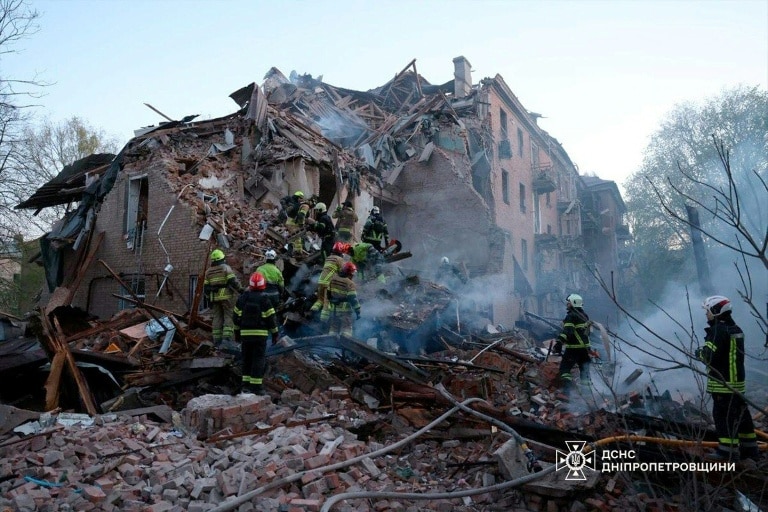
    Fresh Russian aerial attacks across multiple regions of Ukraine left at least six civilians dead and dozens more injured on Saturday, marking another chapter of persistent targeting of civilian infrastructure in the 2-year full-scale invasion, Ukrainian officials have confirmed.

    The deadliest violence unfolded in the eastern industrial city of Dnipro, where two separate strikes hit the same residential neighborhood over a short period. First, an overnight strike on a multi-story apartment block claimed four lives and left 27 people injured, Oleksandr Ganzha, head of the Dnipropetrovsk regional military administration, announced via Telegram. A follow-up strike on a second residential building in the same area killed one additional civilian and wounded seven more, Ganzha added.

    Further south in the Zaporizhzhia region, a Russian drone strike struck a civilian minibus, killing one passenger and wounding four others, regional administration head Ivan Fedorov confirmed in a Telegram post.

    In a public address following the attacks, Ukrainian President Volodymyr Zelenskyy noted that Russian military tactics have not shifted throughout the conflict: Moscow relies on a combination of attack drones, cruise missiles, and large volumes of ballistic missiles, with most of its targets located in urban areas far from front lines. “Residential buildings, energy facilities and businesses have been damaged,” he said, adding that the unrelenting attacks on civilian populations demand a much stronger response from Ukraine’s international partners, particularly European nations.

    “Every such strike should serve as a reminder to our partners that the situation requires immediate and firm action, and the rapid strengthening of our air defence,” Zelenskyy stated, renewing his call for the European Union to ramp up punitive sanctions against Russia.

    The appeal came just two days after EU leaders finally approved the bloc’s 20th package of sanctions against Moscow, a measure that had been stalled for months by former Hungarian Prime Minister Viktor Orban, who left office two weeks ago. The new sanctions package targets Russia’s banking sector and tightens restrictions on Russian oil exports. Alongside the sanctions, the EU also approved a €90 billion ($105 billion) long-term loan for Ukraine, earmarked to reinforce the country’s air defense and cover core state budget expenses through 2027.

    Since Russia launched its full-scale invasion in February 2022, civilian casualties have become a daily occurrence across Ukraine, with bombardments hitting populated areas on an almost constant basis. Saturday’s attacks also drew a reciprocal response on Russian territory: one person was injured in a Ukrainian drone strike in Russia’s western Kursk region, which shares a border with Ukraine, regional governor Alexander Khinshtein announced Saturday. In neighboring Belgorod region, another series of Ukrainian drone strikes left one woman dead, a man with life-threatening injuries after an attack on a civilian car, and a second man wounded when his tractor was targeted, regional governor Vyacheslav Gladkov confirmed.

    Diplomatic efforts to resolve Europe’s deadliest conflict since World War II remain deadlocked. U.S. mediation efforts that once focused on negotiating a path to peace have been redirected to the ongoing outbreak of conflict in the Middle East, leaving no active negotiations toward a ceasefire or peace deal in place.