标签: Oceania

大洋洲

  • No more excuses: World Cup pressure is on for host USA

    No more excuses: World Cup pressure is on for host USA

    As the United States prepares to co-host the 2026 FIFA World Cup alongside Mexico and Canada, the nation’s soccer community confronts unprecedented pressure to finally achieve the long-awaited breakthrough for the sport. The tournament’s return to American soil after 32 years represents a critical inflection point for soccer’s development in a country that has dramatically evolved since the 1994 World Cup.

    Alexi Lalas, the iconic red-bearded defender from the 1994 squad turned television analyst, encapsulates the heightened expectations: “We can no longer have low expectations. The opportunities and infrastructure we’ve built since 1994 have gone into producing better soccer players—anything less than the round of 16 is ultimately a failure.”

    The transformation since the 1990s has been remarkable. When FIFA initially awarded the 1994 World Cup to the United States, it came with the mandatory condition of establishing a top-tier professional league—a leap of faith that has yielded substantial returns. Major League Soccer has now attracted global superstars like Lionel Messi and consistently outperforms many European leagues in average attendance.

    Bettina Garibaldi, Chief Marketing Officer for the FIFA World Cup 26 New York New Jersey Host Committee, reveals significant progress: “It’s actually the third most popular sport in the US—it beats baseball. That officially came out as of January. So you can see how much the sport, in and of itself, is growing.”

    The statistical evidence supports this growth narrative. Nuria Tarre, Chief Marketing Officer at Manchester City and City Football Group, notes: “There are already 100 million people interested in soccer in the United States. Some 32 million say they’re interested in Manchester City. The numbers are crazy.”

    However, former US international Jozy Altidore emphasizes that structural challenges remain: “Academies abroad are by far more robust. It’s almost like a factory—Messi leaves Barcelona, here comes Yamal. It’s not an accident.” He argues that developing elite talent requires creating challenging environments rather than coddling players, alongside comprehensive grassroots investment beyond merely providing equipment.

    Broadcaster and former midfielder Stu Holden acknowledges the legitimate shift in expectations: “We’ve invested so much more in the game, and our expectations should not be that of the past. It’s based in realism now that we should expect this group can get to a fourth and final.”

    Two-time World Cup winner Carli Lloyd offers a different perspective on success metrics: “The measure of success with this team… is going to be how much they inspire the country. That is the power that they have—and that is in their control.” This sentiment reflects the broader recognition that the 2026 tournament represents not just a competitive opportunity but a cultural moment that could permanently reshape soccer’s place in American sports consciousness.

  • Coalition, Greens team up to strip Labor of ‘godlike powers’

    Coalition, Greens team up to strip Labor of ‘godlike powers’

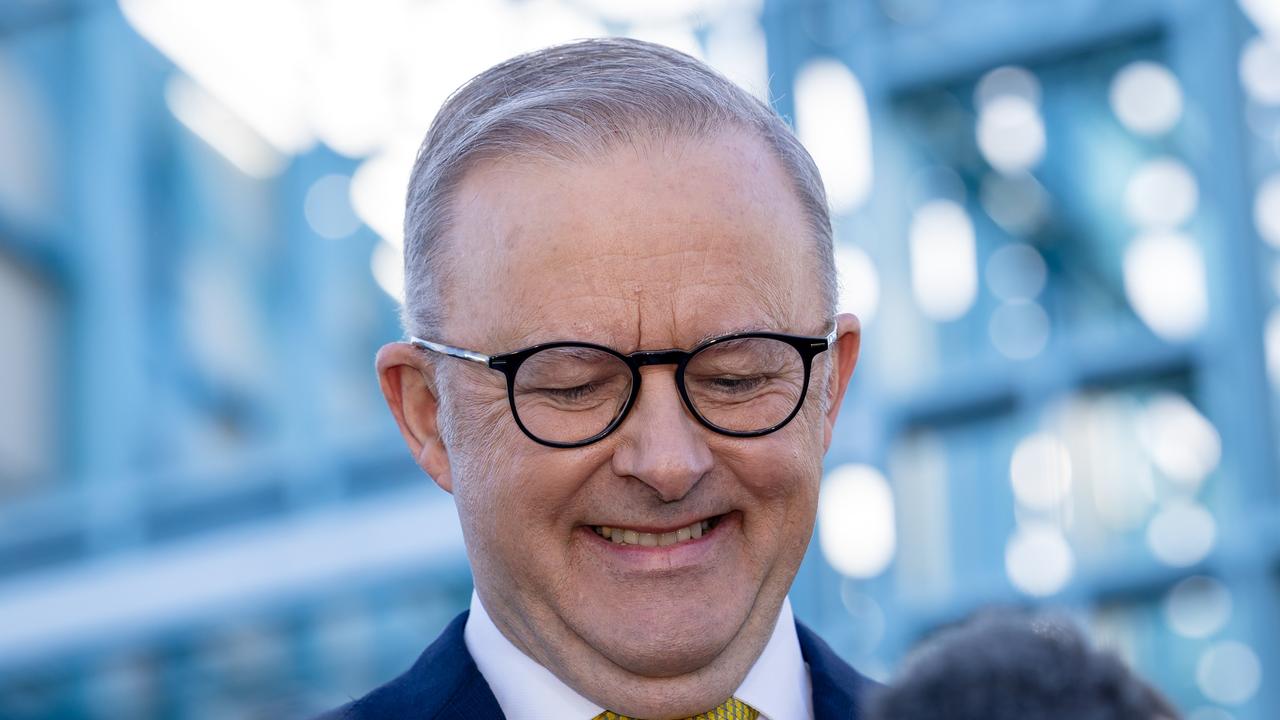
    In an extraordinary political development, Australia’s Senate has witnessed a rare cross-bench alliance between the Coalition and the Greens that successfully passed legislation challenging the government’s housing authority. The Housing Australia Amendment (Accountability) Bill 2025, introduced by Opposition Housing Spokesman Andrew Bragg, secured passage with a decisive 36-25 vote on Thursday—marking the first private senator’s bill to clear the upper house in two years.

    The controversial legislation specifically targets Housing Minister Clare O’Neil’s executive powers, which Senator Bragg characterized as ‘godlike’ in their scope. The bill mandates parliamentary oversight for any modifications to Housing Australia’s operations, including the housing guarantee scheme and the Housing Australia Future Fund. This government entity has evolved into both a property developer and significant insurer, handling critical housing initiatives without requiring parliamentary approval for operational changes.

    Senator Bragg defended the legislation as necessary check on ministerial overreach, stating: ‘We have a major problem in this country with the delegation of authority to ministers. In too many cases, ministers make laws without any reference to the elected assembly.’ He specifically cited the removal of means testing and placement caps from the Home Guarantee Scheme—which enables homebuyers to enter the market with just 5% deposits—as examples of concerning unilateral changes.

    However, the bill faces almost certain defeat in the House of Representatives, where Labor maintains majority control. Labor Senator Ellie Whitaker, continuing debate from early February, argued the legislation would actually hinder housing construction by creating investment uncertainty. ‘Housing projects don’t just pop up overnight,’ she countered. ‘They require years of planning, financing and construction, and they require dedication from government.’

    The political maneuver represents both a symbolic challenge to Labor’s housing policies and a practical attempt to increase parliamentary scrutiny over housing governance, even as its ultimate passage remains unlikely due to the government’s lower house majority.

  • Man charged with broad daylight murder of David Khou

    Man charged with broad daylight murder of David Khou

    In a significant development to a long-standing homicide investigation, New South Wales police have apprehended and charged a 31-year-old man in connection with the fatal daylight shooting of David Khou that occurred in December 2024. The arrest culminated a 15-month intensive investigation into the brazen attack that shocked the quiet suburb of Canley Heights.

    The victim, 31-year-old David Khou, was ambushed while seated in his vehicle directly outside his residence on December 29, 2024. According to police reports, the assailant fired multiple rounds at close range in full view of neighborhood residents, including children, creating a scene of profound trauma within the community. Emergency responders arrived approximately at 6:50 PM but were unable to revive Mr. Khou despite immediate medical intervention.

    Law enforcement officials executed a targeted raid at a property in Fairfield West at approximately 7:00 AM on Wednesday, resulting in the suspect’s detention. The individual faces multiple serious charges including murder, damaging property using fire or explosives, allegedly directing a criminal organization to facilitate criminal activity, failure to comply with digital evidence disclosure orders, and accompanying the operator of a stolen vehicle.

    The investigation previously led to charges against two additional men—aged 33 and 22—who remain involved in ongoing judicial proceedings. Police indicated that the shooting investigation also connected to a vehicle arson incident occurring shortly after the homicide on Bathurst Street in Wakeley.

    The accused is scheduled for arraignment at Fairfield Local Court, marking a pivotal moment in one of Sydney’s most troubling suburban crime investigations. Authorities have emphasized that the arrest demonstrates their persistent commitment to resolving violent crimes regardless of temporal passage.

  • A right-wing populist party made big poll gains – and it’s shaking up Australian politics

    A right-wing populist party made big poll gains – and it’s shaking up Australian politics

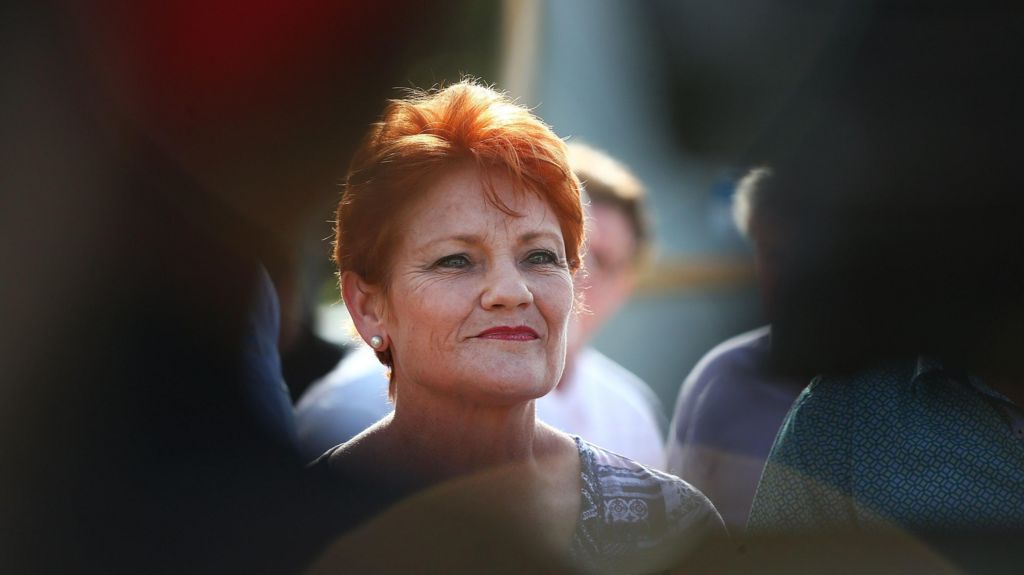
    Three decades after her improbable parliamentary entrance as a Queensland fish-and-chip shop owner, Pauline Hanson has transformed into Australia’s most persistent populist force. Her right-wing One Nation party, long relegated to the political fringe, is experiencing a remarkable resurgence fueled by widespread voter disillusionment with mainstream politics.

    The movement’s breakthrough arrived on March 21st in South Australia’s state election, where One Nation captured over 20% of the vote—its strongest performance outside Hanson’s home state. While Labor Premier Peter Malinauskas secured a decisive victory, One Nation gained at least three legislative seats, primarily at the expense of the conservative Liberal Party. This outcome signals a potential reconfiguration of Australia’s traditionally two-party dominated landscape.

    Political analysts view this development as particularly ominous for established parties. Kos Samaras, former Labor strategist and polling firm director, notes this represents a significant shift in Australia’s political gravity. The resurgence stems from multiple factors: a severe cost-of-living crisis, internal fractures within the Liberal-National coalition, and growing perception that mainstream parties disregard ordinary citizens’ struggles.

    Voter testimonials reveal this discontent. Brittany, a 36-year-old aged care worker from Adelaide, abandoned her lifelong support for the Liberal-National Coalition, citing economic pressures. Similarly, 68-year-old former Labor voter Andrew Sheffield expressed frustration with housing affordability crises affecting his children and grandchildren.

    One Nation’s campaign strategy proved remarkably comprehensive in South Australia. The party recruited prominent former Liberal senator Cory Bernardi to lead its ticket and fielded candidates in every electorate. Their platform emphasized housing supply expansion and immigration restrictions—though immigration policy remains federally controlled.

    Hanson’s political journey embodies turbulence. Initially endorsed as a Liberal candidate in 1996, she was removed from the ticket after criticizing welfare provisions for Indigenous Australians. Nevertheless, she achieved one of Australia’s largest electoral swings to claim a safe Labor seat. Her maiden parliamentary speech warned against Australia being ‘swamped by Asians,’ establishing her controversial reputation.

    Despite losing reelection within two years and spending 18 years in political exile, Hanson maintained public visibility through provocative stunts. These included wearing a burka in parliament to advocate for its ban, facing racial vilification charges, and receiving formal censure for anti-Muslim comments. In 2003, she was briefly imprisoned for electoral fraud before having her conviction overturned.

    According to biographer Dr. Anna Broinowski, Hanson’s endurance stems from her self-fashioned image as an ‘anti-politician’ who channels public frustration against elite institutions. Her early adoption of digital communication in the 1990s and recent forays into film production with right-wing commentator Holly Valance demonstrate innovative outreach strategies.

    The Bondi Beach shooting in December, which authorities attribute to Islamic State-inspired attackers, potentially amplified receptiveness to Hanson’s anti-immigration messaging. Simultaneously, the conservative opposition’s internal turmoil created opportunities for One Nation, evidenced by high-profile defections including former deputy prime minister Barnaby Joyce.

    However, significant challenges persist. The party has historically struggled with candidate selection, member retention, and navigating Australia’s preferential voting system. Over 60% of elected One Nation representatives have eventually left the party, often amid public acrimony. Former members have described Hanson’s leadership style as dictatorial and cited organizational dysfunction.

    Political scientists like Dr. Jill Shepherd argue that Australia’s electoral system—featuring compulsory voting and preferential ballots—likely prevents extreme political swings. She notes One Nation lacks the organizational discipline and resources to seriously challenge major parties at national levels, predicting the Coalition will eventually reclaim disaffected voters.

    Despite these limitations, Hanson remains undeterred. Following the South Australian results, she announced expansion plans targeting Victoria’s upcoming state election and a federal by-election in New South Wales. For supporters and critics alike, her message resonates clearly: Australia’s political establishment ignores growing populist sentiments at their peril.

  • AFL 2026: Carlton young gun Jagga Smith extends contract

    AFL 2026: Carlton young gun Jagga Smith extends contract

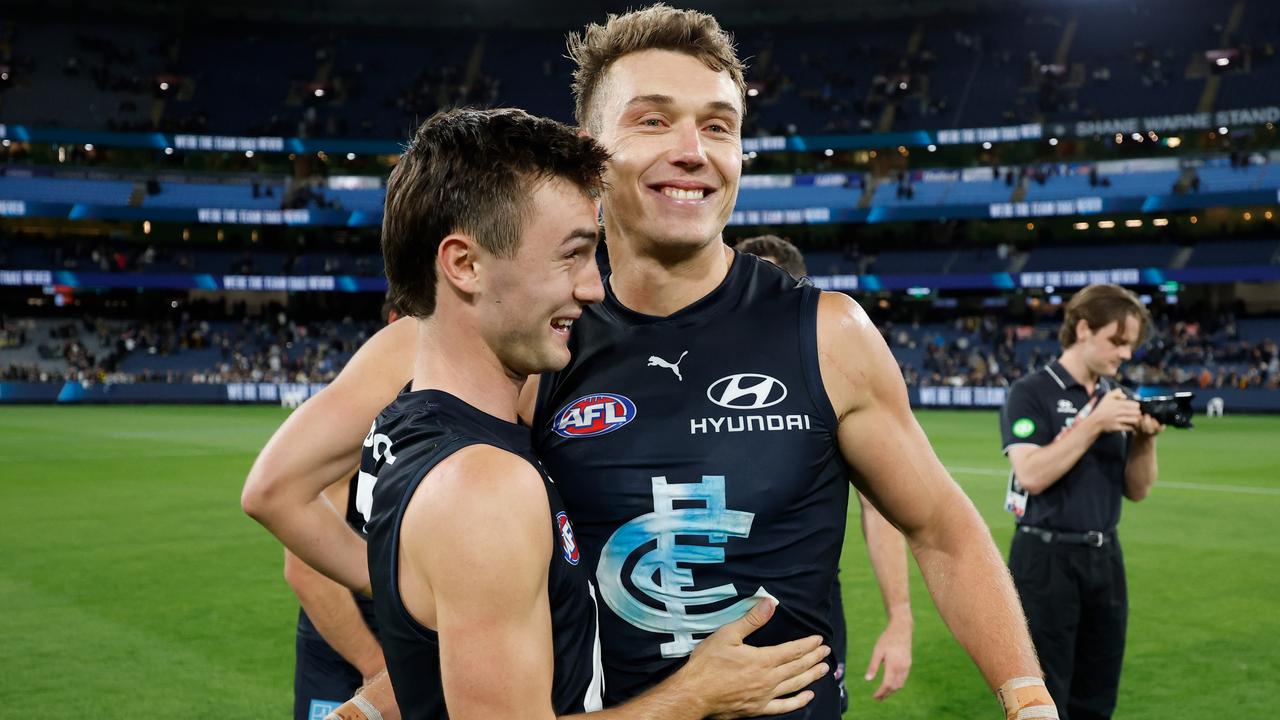
    In a powerful demonstration of faith in emerging talent, the Carlton Football Club has secured young midfielder Jagga Smith with a monumental contract extension that will keep him in navy blue until the conclusion of the 2030 AFL season. The commitment comes after Smith has played merely two games at the elite level, highlighting the club’s exceptional confidence in his potential.

    Selected as the No. 3 overall pick in the 2024 AFL Draft, Smith’s journey to Carlton’s senior squad faced an immediate setback when he sustained an ACL injury that sidelined him for his entire debut season. Despite this challenging introduction to professional football, the 20-year-old has delivered remarkably impressive performances across his first eight quarters of play, demonstrating the exceptional talent that made him such a coveted draft prospect.

    Carlton’s List Manager Nick Austin expressed overwhelming enthusiasm about Smith’s long-term future with the club, emphasizing both his athletic capabilities and personal character. ‘What we truly appreciate about Jagga is his complete willingness to execute whatever is required during training sessions or competitive matches,’ Austin stated. ‘As a natural competitor, he possesses the distinctive ability to consistently win possession, effectively involve his teammates in play, and display leadership qualities that are remarkably advanced for his age.’

    Austin further elaborated on the club’s strategic approach to acquiring Smith, noting that Carlton had identified him as a primary target well before the draft. ‘We held him in exceptionally high regard entering the draft process and implemented a targeted strategy to ensure he became a Carlton player. Two years later, we find ourselves even more impressed with his development as both an athlete and an individual—we are absolutely thrilled he has committed his future to our club.’

    The list manager specifically highlighted Smith’s resilience and maturity during his rehabilitation period, describing him as ‘a resilient individual with outstanding character and maturity beyond his years, which was clearly demonstrated last year through his dedicated approach to his recovery program.’

    With only two AFL appearances to his name, Carlton management believes Smith’s best football remains ahead of him. Austin concluded with optimistic anticipation: ‘It’s safe to assert that the best is yet to come from Jagga, and we eagerly await witnessing the exceptional contributions he will make while wearing the navy blue jersey.’

  • Day of reckoning arrives for social media after US court loss

    Day of reckoning arrives for social media after US court loss

    A landmark legal decision in California has established a critical precedent in the mounting litigation against social media corporations, potentially exposing them to billions in liabilities. A Los Angeles jury determined that both Meta’s Instagram and Google’s YouTube contributed to a teenage girl’s depression through addictive platform designs, despite corporate awareness of associated risks.

    The civil court found these technology giants liable for insufficiently warning young users about mental health dangers inherent in excessive social media engagement. While compensatory damages were set at $3 million with equivalent punitive penalties, the implications extend far beyond financial considerations. This verdict coincides with a separate New Mexico ruling ordering Meta to pay $375 million for endangering minor users on Facebook and Instagram.

    Legal experts identify these cases as bellwether trials that signal how juries respond to allegations of digital harm. According to Pennsylvania State University law professor Daryl Lim, these outcomes intensify pressure on platforms to settle hundreds of pending lawsuits alleging similar violations. Snap and TikTok previously settled with the Los Angeles plaintiff before trial commencement.

    The litigation centers on plaintiffs like Kaley G.M., who developed severe depression, chronic anxiety, and body image disorders following early, intensive social media exposure. Researchers increasingly correlate such psychological conditions with adolescent social media overuse.

    This judicial action represents a strategic circumvention of Section 230 protections—the legal provision historically shielding platforms from content-related liability. Lawyers successfully argued that platform architecture itself, rather than user-generated content, created addictive environments harming young users.

    The verdicts occur amid accelerating global regulatory scrutiny. Australia’s recent proposition to ban social media for under-16 users has inspired similar legislative considerations across multiple U.S. states. Industry analysts warn that court-mandated product redesigns could fundamentally threaten the attention-based advertising models underpinning these technological enterprises.

  • US says Iran talks continue, will ‘unleash hell’ if no deal

    US says Iran talks continue, will ‘unleash hell’ if no deal

    The White House has affirmed that diplomatic channels with Iran remain active despite Tehran’s purported rejection of a proposed U.S. peace framework, while simultaneously issuing stark warnings of military escalation should negotiations ultimately fail.

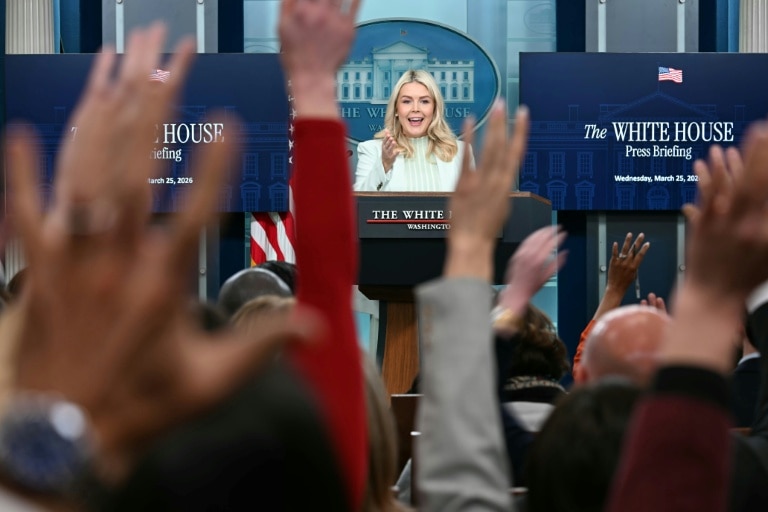
    White House Press Secretary Karoline Leavitt addressed reporters Wednesday, countering Iranian state media claims that Tehran had formally dismissed a 15-point American proposal to conclude the ongoing Middle East conflict. While acknowledging ‘elements of truth’ in media reports regarding the proposal’s contents, Leavitt characterized some details as ‘not entirely factual’ without specifying which elements were inaccurate.

    The proposed agreement, according to U.S. and Israeli media sources, would require Iran to completely abandon its nuclear development capabilities and dismantle its ballistic missile arsenal. These demands come amid significant leadership uncertainty within Iran following the assassination of Supreme Leader Ali Khamenei, with his designated successor Mojtaba Khamenei remaining absent from public view.

    Leavitt confirmed that discussions continue through Iranian parliamentary speaker Mohammad Bagher Ghalibaf, a prominent non-clerical figure who has emerged as a key interlocutor. The press secretary declined to verify reports that high-level talks involving Vice President JD Vance were scheduled to occur in Pakistan, which has positioned itself as a mediating party in the conflict.

    Despite maintaining diplomatic outreach, the administration delivered unequivocal warnings regarding military consequences. Leavitt stated that President Trump stands prepared to ‘unleash hell’ if Iran fails to recognize what the White House characterizes as their ‘military defeat.’ The comments coincide with substantial U.S. troop movements to the Gulf region, including thousands of airborne personnel and additional marine deployments.

    The administration maintains its previously stated timeline of four to six weeks for major combat operations, with Leavitt noting that President Trump has rescheduled his meeting with Chinese leader Xi Jinping for mid-May—approximately six weeks from the conflict’s initiation—underscoring the expected duration of military engagements.

  • UN designates African slave trade as ‘gravest crime against humanity’

    UN designates African slave trade as ‘gravest crime against humanity’

    The United Nations General Assembly has officially designated the transatlantic African slave trade as “the gravest crime against humanity” through a landmark resolution adopted on Wednesday. The historic declaration received overwhelming support with 123 nations voting in favor, while facing opposition from three countries and 52 abstentions.

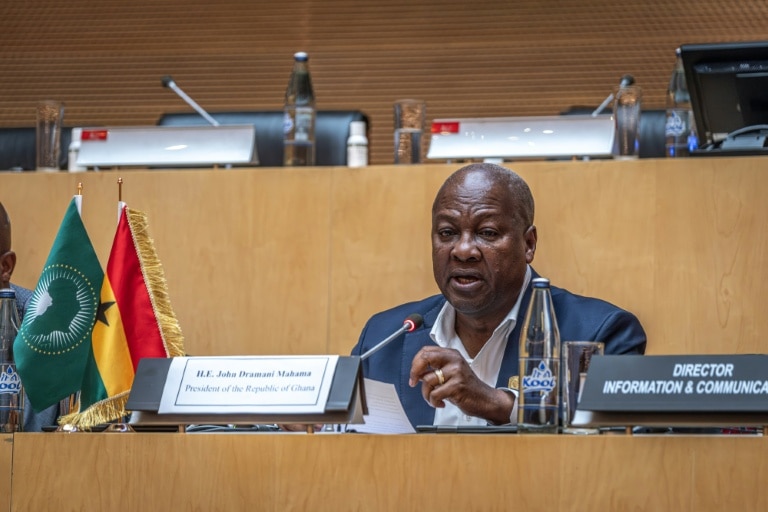
    The resolution, championed by Ghanaian President John Mahama—a prominent advocate for slavery reparations within the African Union—moves beyond symbolic recognition to call for concrete restorative justice measures from nations involved in the slave trade. Despite its non-binding nature, the measure explicitly addresses the enduring legacy of slavery through persistent racial discrimination and neo-colonial structures in contemporary society.

    UN Secretary-General Antonio Guterres characterized the transatlantic slave trade as a fundamental assault on human dignity that “struck at the core of personhood, broke up families, and devastated communities.” He further condemned the racist ideological framework constructed to justify the institution, describing it as “turning prejudice into a pseudoscience.”

    The United States, Israel, and Argentina stood in opposition to the resolution, with American ambassador Dan Negrea calling the text “highly problematic” and rejecting the concept of legal reparations for historical wrongs that weren’t illegal under international law at the time. European nations, including Britain and EU member states, abstained from the vote, with French representative Sylvain Fournel expressing concern that the resolution “risks pitting historical tragedies against each other.”

    Ghanaian officials dismissed these criticisms, with Foreign Minister Samuel Okudzeto Ablakwa emphasizing that the resolution doesn’t seek to rank human suffering but rather acknowledge specific historical crimes. He called for formal apologies from European nations and the United States, the return of looted artifacts to Africa, and potential compensation mechanisms for affected communities as pathways toward restorative justice.

  • Grieving families hail court victory against Instagram, YouTube

    Grieving families hail court victory against Instagram, YouTube

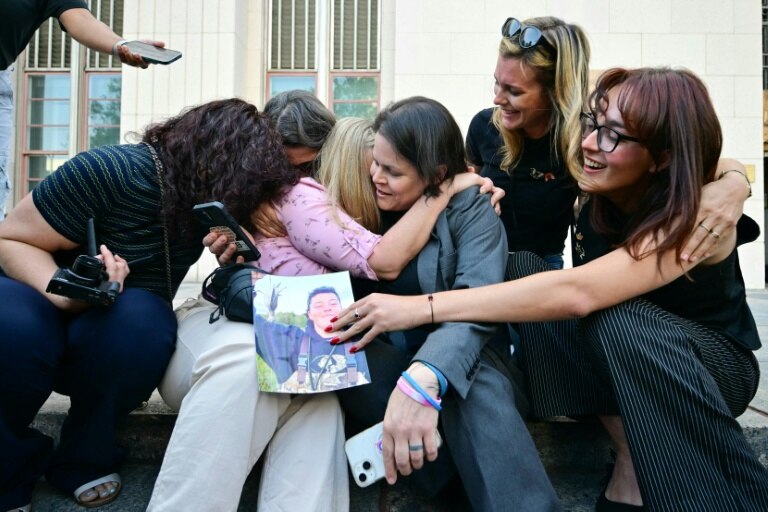
    In a groundbreaking legal decision with far-reaching implications, a California court has found Meta’s Instagram and Google’s YouTube liable for contributing to a young woman’s depression and suicidal thoughts. The ruling orders the tech giants to pay $3 million in damages in a case that could establish crucial precedent for thousands of similar claims across the United States.

    The case centered on Kaley G.M., a 20-year-old Californian who had been a compulsive user of social platforms since childhood. Her legal team successfully argued that platform features including infinite scrolling, autoplay videos, notification systems, and ‘like’ buttons were deliberately designed to create addiction among young users.

    During the emotional courtroom proceedings, Meta’s legal defense attempted to attribute the plaintiff’s depression to her challenging family background—a strategy that outraged attending families who had lost children to social media-related mental health crises. Lori Schott, who traveled over 1,800 kilometers from Colorado to attend the verdict, called this approach ‘predatory victim-blaming.’

    The trial revealed internal company documents that reduced users to mere statistics, including calculating ‘customer lifetime value’—with children reportedly valued at approximately $270 in projected platform revenue. This coldly analytical approach to young users shocked attending family members.

    While TikTok and Snapchat previously settled similar claims financially, Google and Meta chose to fight the allegations in court. The decision comes as Congress considers legislation that would impose a formal ‘duty of care’ on social media companies regarding minor users’ safety.

    Despite recent platform initiatives such as default private accounts for teens and parental alert systems for suicide-related searches, victim advocates remain skeptical. Julianna Arnold, co-founder of Parents Rise advocacy group, stated that increased litigation is essential to compel meaningful change, noting that ‘public opinion sway is the only way to get the ear of legislators in Washington.’

  • California jury finds Meta, YouTube liable in social media addiction trial

    California jury finds Meta, YouTube liable in social media addiction trial

    In a groundbreaking legal decision with far-reaching implications for the tech industry, a Los Angeles jury has delivered a decisive verdict against Meta and YouTube, holding both platforms accountable for their role in fostering social media addiction among young users. The Wednesday ruling found the companies liable for harming a plaintiff identified as Kaley through intentionally addictive platform designs, awarding $3 million in compensatory damages while opening the door for potentially substantial punitive awards in a subsequent phase.

    The jury unanimously affirmed all seven allegations on the verdict forms, determining that both Meta and YouTube acted negligently in designing and operating their platforms, with this negligence substantially contributing to the plaintiff’s harm. Crucially, jurors concluded that the companies were either aware or should have been aware that their services presented dangers to minors, yet failed to provide adequate warnings about these risks.

    Meta was assigned 70% responsibility ($2.1 million) for the damages, while YouTube was deemed 30% responsible ($900,000). The jury further determined that both companies acted with ‘malice, oppression or fraud’—a finding that establishes the foundation for separate punitive proceedings that could significantly increase the financial penalties.

    The case centered on Kaley (identified in court documents as K.G.M.), who began using YouTube at age six before progressing to Instagram at nine, despite her mother’s attempts to restrict access. Testimony revealed how her extensive social media engagement negatively impacted self-worth, social relationships, and personal development.

    Plaintiff attorneys successfully argued that platform features including infinite scrolling, autoplay videos, notifications, and engagement metrics were deliberately engineered to promote compulsive usage patterns among young audiences. Despite defense arguments attributing Kaley’s challenges to familial circumstances and disputing actual platform usage metrics, the jury rejected these counterarguments across all considerations.

    This bellwether case establishes a critical precedent regarding technology companies’ legal responsibilities for mental health impacts resulting from their platform designs, potentially triggering numerous similar lawsuits across the industry.