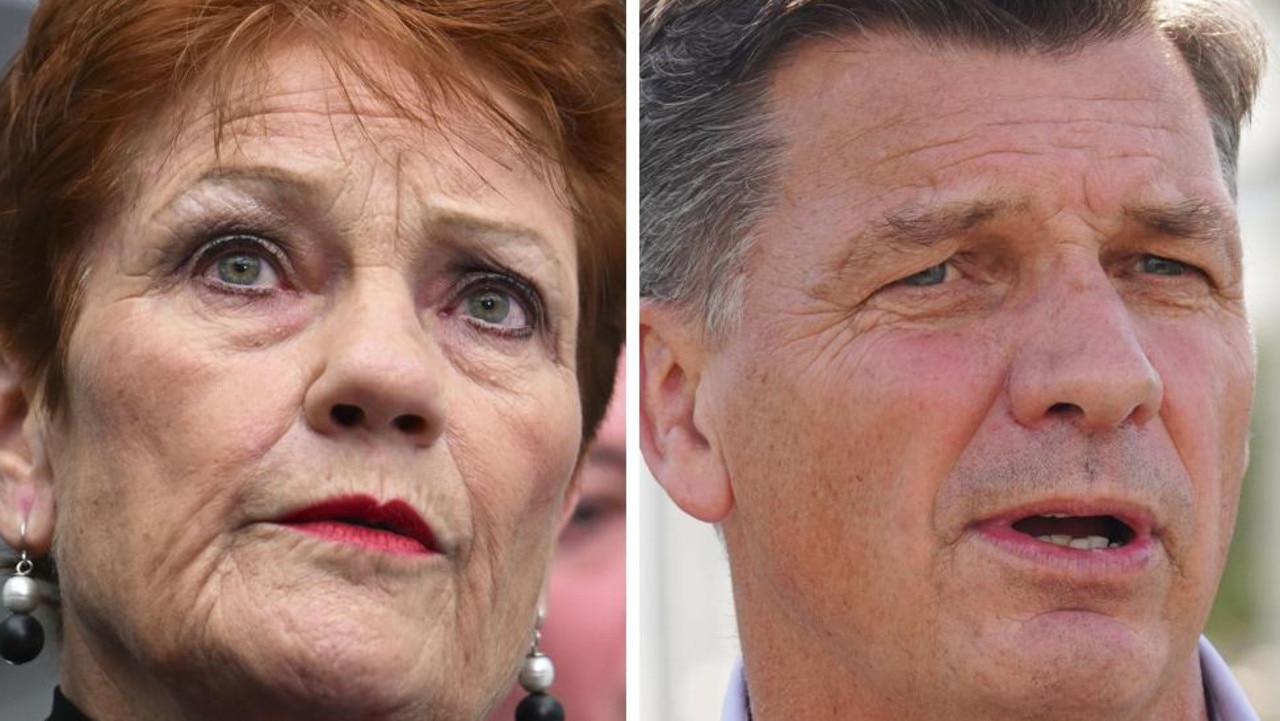
As preparations got underway Sunday for a controversial anti-mass immigration rally led by One Nation founder Pauline Hanson on the grounds of Australia’s Parliament House in Canberra, senior Liberal Party figure Angus Taylor has publicly admitted he shares some policy ground with the far-right leader, while pushing for sweeping changes to Australia’s immigration system centered on “Australian values” screening.
By early Sunday morning, event organizers had already begun setting up rally infrastructure, installing Australian national flags and immigration-focused posters emblazoned with flag motifs, with a large contingent of Australian police deployed to the site to maintain public order. Hanson is scheduled to address attendees of the “Rally To End Mass Immigration” later that day.
In an interview with public broadcaster ABC, Taylor responded to questions about Hanson’s hardline anti-immigration position, confirming that the two politicians see eye-to-eye on some key issues, though disagree on others. Taylor’s core starting point for immigration reform, he said, is that Australia’s current annual migration intake has remained far too high, while entry standards have dropped to unacceptably low levels.
The Liberal MP has repeatedly called for a full review and restructuring of Australia’s migration framework, one that enshrines Australian values as a core requirement for entry, including explicit provisions to block radical extremists from gaining entry to the country.
Taylor pushed back on suggestions that his framing of values-based screening would advantage migrants from majority Western nations such as the United Kingdom over migrants from Asian countries including China and Vietnam. He clarified that while “many good people come from bad countries”, noting that some of Australia’s most accomplished citizens trace their roots to nations that were considered unstable or hostile at the time they migrated, he believes “bad countries” inherently carry a higher risk of producing “bad people” seeking entry to Australia.
Despite this, Taylor insisted that the proposed screening process would not be based on country of origin, religion, or race, but exclusively on alignment with Australian values.
When pressed to confirm whether China – which critics frequently accuse of mass imprisonment of journalists and broad application of the death penalty – qualifies as a “bad country”, Taylor avoided a direct answer, instead pointing to other examples. “To claim that Iran is a good country right now. Seriously?” he said, noting that the current federal Labor government has already implemented legislation restricting entry for Iranian citizens, a move Taylor supports.
Taylor also repeated his earlier critical remarks about resettling Palestinian refugees from the Gaza Strip, pointing to ongoing “terrible acts of atrocity” connected to the Israel-Hamas war in the blockaded enclave.
The public alignment between Taylor and Hanson comes at a tense political moment for the Liberal Party, as One Nation is widely predicted to win the New South Wales federal seat of Farrer from the Liberals following the resignation of former Liberal leader Sussan Ley. The Victorian-based MP addressed questions about the Coalition’s controversial decision to give One Nation candidate preferences ahead of Climate 200-backed independent candidate Michelle Milthorpe, brushing off concerns about the strategic choice.
Taylor said the Liberal Party continues to prioritize earning first-preference votes from Farrer voters, and has ranked the National Party second on its how-to-vote cards. Pressed on whether One Nation poses an existential threat to the Liberal Party, Taylor argued that the “existential threats” to Australia’s regional communities are teal independent policies and federal Labor policies.
Speaking to the impacts of current policy on regional Australia, Taylor said residents of rural areas are already facing acute anxiety over access to diesel, a critical resource for planting crops and operating freight transport that underpins regional economies across the country.