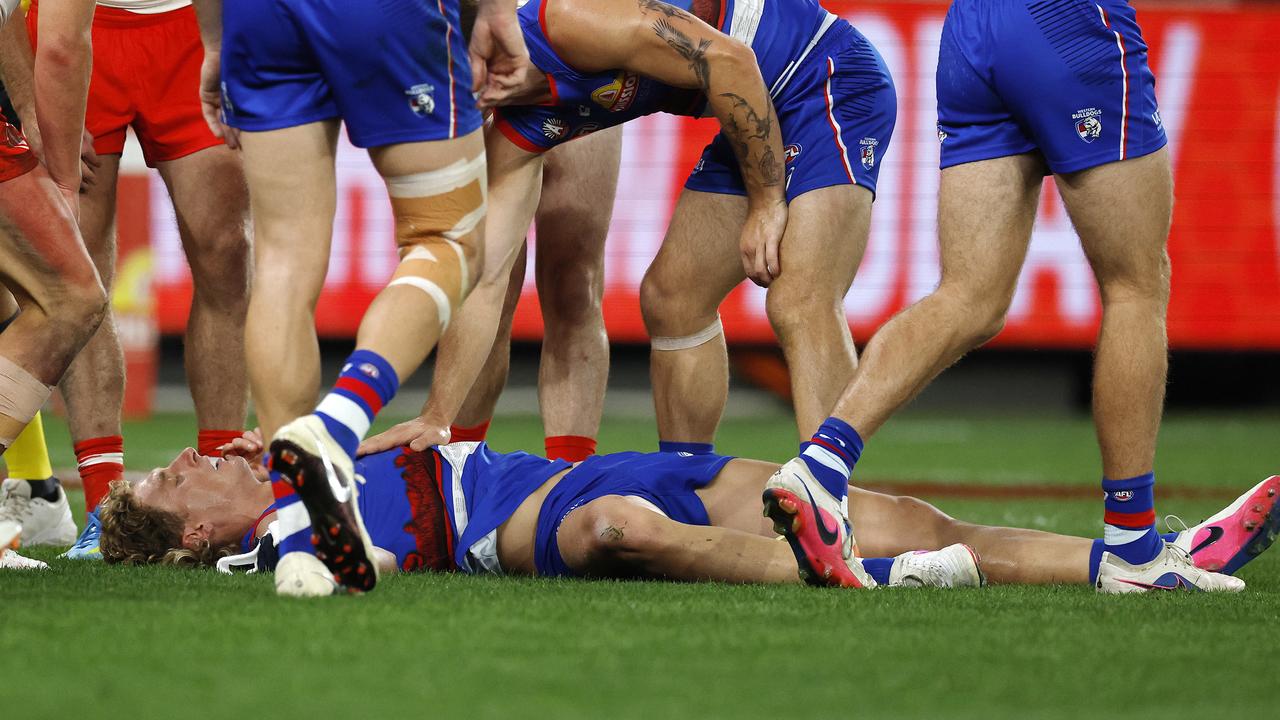
The Western Bulldogs have been hit with another devastating injury blow just one week after losing key young talent Sam Darcy to a season-ending ACL tear, with star spearhead Aaron Naughton carried off the field on a stretcher during Thursday night’s lopsided 66-point loss to Sydney at Melbourne’s Marvel Stadium.\n\nNaughton was stretchered from the ground in the third quarter after a hard landing when he jumped to take a contested mark, leaving fans and teammates unsettled as medical teams attended to him on the pitch. Speaking after the match, Bulldogs head coach Luke Beveridge confirmed that the star forward was cleared to leave the stadium with the team after the incident, and will undergo full diagnostic scans on Friday to clarify the extent of his injury.\n\nBeveridge told reporters that initial assessments point to a soft tissue strain in the side of Naughton’s neck, adding that a major positive sign from early checks is that the 24-year-old showed no signs of concussion. “He’s going to go home now and he’ll have his neck looked at tomorrow, we’ll get back to you on that,” Beveridge said. “He appears to have strained down that side of his neck from the incident. The bright side is there’s no sign of concussion but we’ll have to report in once we get something more definitive from a scan.”\n\nThe latest injury setback comes on the heels of last week’s devastating loss of Sam Darcy, who was ruled out for the rest of the AFL season after tearing his anterior cruciate ligament during the Bulldogs’ heavy defeat to Geelong. When asked about the string of personnel blows hitting the club, Beveridge acknowledged that the team has faced significant challenges in recent weeks, both on and off the field, during their current three-match losing streak.\n\nBeveridge pulled no punches in his assessment of Thursday’s performance, admitting that Sydney outmatched the Bulldogs across almost every area of the ground after a promising opening from his side. “We started off the game in good fashion and the things we spoke about beforehand came to the fore,” he said. “As the night went on, we probably needed our more experienced players really influencing the game, obviously Marcus Bontempelli was (influential) but we didn’t have enough elsewhere.”\n\nThe coach noted that while the club’s younger players showed glimpses of improvement as the match progressed, Sydney’s intensity, speed and spread across the ground proved too much for his undermanned side. The Swans’ pressure forced the Bulldogs into repeated uncharacteristic errors, turning the contest ugly in the final stages. “Fifteen back-half turnovers in that last quarter we gave up, that’s just extraordinary, that’s skill, that’s composure, it’s fatigue, it’s many things,” Beveridge said. “It turned really, really ugly for us. We have to work through that together and remain optimistic.”\n\nBeveridge admitted that these repeated late-game turnovers created the open opportunities that allowed Sydney key forward Charlie Curnow to boot a match-winning seven goals, adding that Curnow’s elite one-on-one performance was too much for the Bulldogs’ defensive unit to contain. “Curnow was quite exceptional one-on-one, none of our backs could stop him from taking those contested marks which is disappointing,” he said. “We think we should be better than that but he had obviously a very influential game.”\n\nWith the Bulldogs now stuck in a three-game losing skid, the side has barely a week to reset and fix their structural errors before they face a stern test next week, hosting an in-form Fremantle side that is pushing hard for a top-four position this season.
标签: Oceania
大洋洲
-

Coroner recommends NSW homicide squad investigate death of man found in Byron cow paddock with knife in chest, skull 13m from body
More than three years after the gruesome, unexplained discovery of 25-year-old Jackson Stacker’s remains in a cow paddock near Australia’s Byron Bay, New South Wales State Coroner Teresa O’Sullivan has officially referred the bizarre case to the state’s homicide squad for further investigation, after concluding her inquest could not definitively determine how the young man died.
Stacker, a Melbourne native who had relocated to the Northern Rivers region and was living nomadically in his van, was last seen alive on July 22, 2021. His heavily decomposed body was found nearly five weeks later, on August 25, 2021, in a rural paddock, presenting with macabre, unexplained details: a hunting-style knife embedded in his chest, and his skull separated from his torso, located 13 meters away from the rest of his remains. His van was discovered abandoned at a rest stop in Sleepy Hollow, roughly 120 meters from the scene of the discovery.
The coronial inquest, held at the NSW Coroner’s Court in Lidcombe, examined two core lines of inquiry: the cause of Stacker’s death, and whether the initial police investigation into the case contained critical inadequacies. Early in the probe, police had tentatively labeled the death a suicide, a classification that Stacker’s family has pushed back against aggressively for years.
During the inquest, O’Sullivan reviewed evidence including witness testimony, forensic reports, and details of Stacker’s life in the weeks before his disappearance. She confirmed that toxicological and contextual evidence showed Stacker’s drug use had risen sharply in the period leading up to his death, and that it was likely he was experiencing significant emotional distress or depression at the time. However, the coroner found no documented history of self-harm, and could not confirm that the young man died by suicide. Forensic testing also failed to resolve a key question: whether the knife found in Stacker’s chest was self-inflicted or placed there by another party. O’Sullivan also noted that there is no evidence to suggest any person intended to harm Stacker, who was described as well-liked by friends and acquaintances, and had never shared concerns for his safety with anyone close to him.
On the question of investigative inadequacy, the coroner ruled she could not find fault with the original probe’s conduct. Still, she identified one critical gap: there has never been sufficient explanation for the long delay in establishing a dedicated strike force to investigate the case. For this reason, she formally recommended that the NSW Homicide Squad take over the investigation to pursue unanswered lines of inquiry.
Stacker’s parents, Sandey MacFarlane and Ian Stacker, have long maintained that a more sinister explanation for their son’s death cannot be ruled out. In a 2024 interview with 60 Minutes, MacFarlane noted that nothing about the case aligned with what they knew of their son, adding that she had spoken to him the day he disappeared and he had appeared completely normal. Speaking to media after the coroner released her findings, MacFarlane said the family felt vindicated by the recommendation to pass the case to homicide detectives.
“Our position was if there is a door that is left open for us to continue to investigate, for us to now work with homicide [detectives], that would be our holy grail, even though notwithstanding, we don’t have our beloved son with us anymore,” MacFarlane told the Australian Broadcasting Corporation. “Our focus is to ensure that the truth is fully examined and that no stone is left unturned and we now have Her Honour’s recommendation for that to be placed in the hands of the people that do just that. We will continue to search, whatever the outcome, for justice for Jackson.”
-
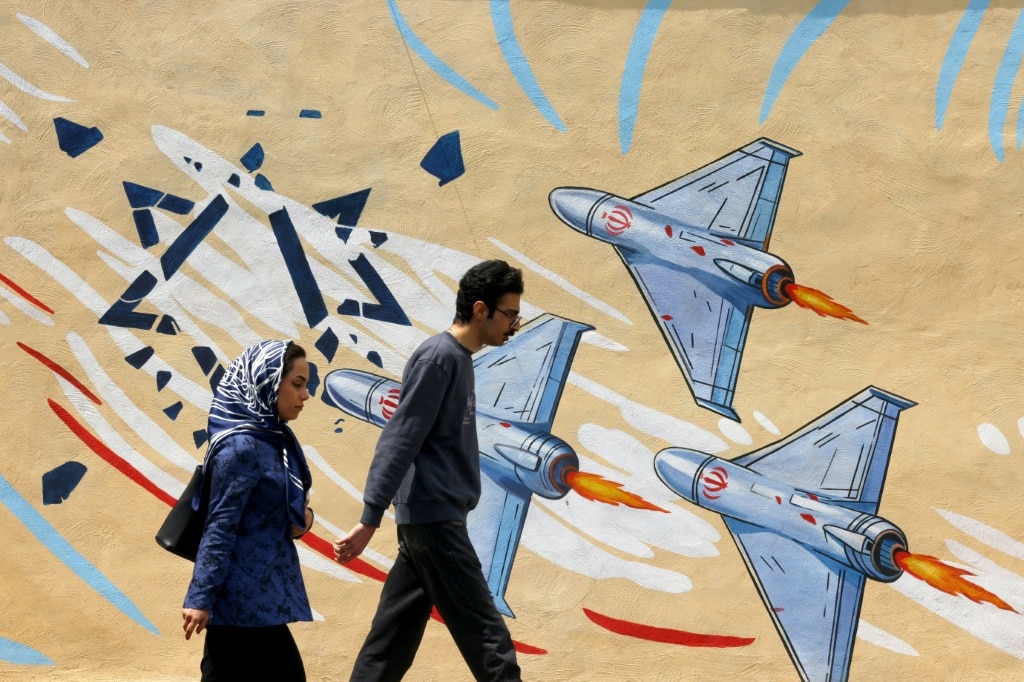
Iran defies US blockade to claim tolls from Hormuz shipping
A months-long geopolitical standoff between Iran and the United States reached a new milestone this week, as a senior Iranian official confirmed Thursday that Tehran has collected its first revenue from tolls imposed on commercial shipping passing through the Strait of Hormuz – a critical global energy chokepoint that normally carries 20% of the world’s oil and gas trade. The ongoing disruption to global supply chains, sparked by the US-led blockade of Iranian ports and Iran’s reciprocal restriction of Hormuz access, continues to ripple through the global economy, with fuel shortages forcing additional flight cancellations, benchmark oil prices opening higher on international markets, and new data revealing eurozone business activity has contracted for the first time in 16 months.
The confrontation remains at an impasse even as a two-week-old regional truce has largely paused direct military strikes, with Pakistani-mediated peace talks hanging indefinitely in the balance. US President Donald Trump has publicly demanded Iran immediately reopen the Strait of Hormuz and abandon its enriched uranium program, threatening continued economic pressure to force compliance. But Iranian leaders have rejected these demands, arguing that the US naval blockade of Iran’s seaborne trade itself constitutes a violation of the existing ceasefire agreement.
“A complete ceasefire only has meaning if it is not violated through a naval blockade,” stated Mohammad Bagher Ghalibaf, Iran’s parliamentary speaker and head of Tehran’s delegation for the first round of talks, adding that “Reopening the Strait of Hormuz is not possible amid a blatant violation of the ceasefire.” Ghalibaf’s deputy Hamidrez Hajibabei confirmed that Iran has received the first batch of payments from commercial vessels seeking authorization to transit the strategic waterway, a move that marks Tehran’s formalization of its new toll regime amid the standoff.
Regional analysts warn that both sides are doubling down on conflicting economic strategies, with neither willing to make major concessions ahead of a potential resumption of talks. Hardline factions aligned with Iran’s Islamic Revolutionary Guards Corps (IRGC) believe that holding Hormuz hostage – and driving sustained increases in global energy prices and widespread commodity shortages – will build enough international pressure on the Trump administration to end its blockade and withdraw US military forces from the region, according to a recent brief from the Soufan Center think tank. Conversely, the Trump administration calculates that its full blockade of Iran’s oil exports, which make up the vast majority of the country’s seaborne trade, will rapidly cripple Iran’s domestic economy and force Tehran to surrender to US demands.
Danny Citrinowicz, a researcher at the Tel Aviv Institute for National Security Studies, noted that US and Israeli leaders have consistently misjudged Iranian willingness to absorb economic hardship to defend core national security interests. “Tehran has consistently demonstrated a willingness to absorb economic pain while holding firm on what it views as core national interests. There is little reason to believe this time will be different,” Citrinowicz wrote in a social media post, adding that “Rather than moving toward concession, Iran is positioning itself to escalate.”
Uncertainty around the peace talks has deepened in recent days. Trump told the New York Post Wednesday that talks could resume in Islamabad within two to three days, but Iran has not confirmed its participation, and US Vice President JD Vance has already postponed his planned travel to Pakistan. For four consecutive days, Pakistani authorities have maintained extreme security measures in Islamabad’s government and commercial districts, closing most businesses, shuttering local schools in the secured Red Zone, and shifting universities to remote learning in anticipation of US and Iranian delegations arriving. No new timeline for resuming negotiations has been announced by either side.
In addition to the Hormuz standoff, Iran’s IRGC has announced it intercepted and diverted two commercial vessels to Iranian shores: the Panama-flagged container ship MSC Francesca and the Liberia-flagged bulk carrier Epaminondas. UK-based maritime security monitors have confirmed three separate recent incidents involving Iranian gunboats approaching commercial vessels in the strait, while US Central Command reports that its forces enforcing the blockade of Iranian ports have already redirected 31 vessels away from Iranian territorial waters during the ceasefire.
The broader regional conflict also remains unresolved along the Israel-Lebanon border, where a US-brokered truce between Israel and Iran-backed Hezbollah has held uneasily since the broader ceasefire with Iran was agreed. Lebanese media reported Wednesday that an Israeli strike near the border killed two people, including Al-Akhbar journalist Amal Khalil, and wounded another reporter Zeinab Faraj. Lebanese President Joseph Aoun denounced the attack as a deliberate war crime meant to silence coverage of Israeli actions, saying “Israel deliberately targets journalists in order to conceal the truth about its crimes against Lebanon.”
The Israeli Defense Force countered that it struck a vehicle carrying Hezbollah fighters that had crossed its self-declared forward defense line in southern Lebanon and approached Israeli troops. The military denied blocking rescue access to the site and said the incident is under internal investigation. Since the start of the broader conflict, Israeli attacks on Lebanon have killed more than 2,450 Lebanese people, according to Lebanese government data. A second round of bilateral talks between Israel and Lebanon is scheduled to open in Washington Thursday, with a senior Lebanese official telling AFP that Beirut will request a one-month extension of the current ceasefire during the negotiations.
-
17 injured, five critically, in head-on train crash in Denmark
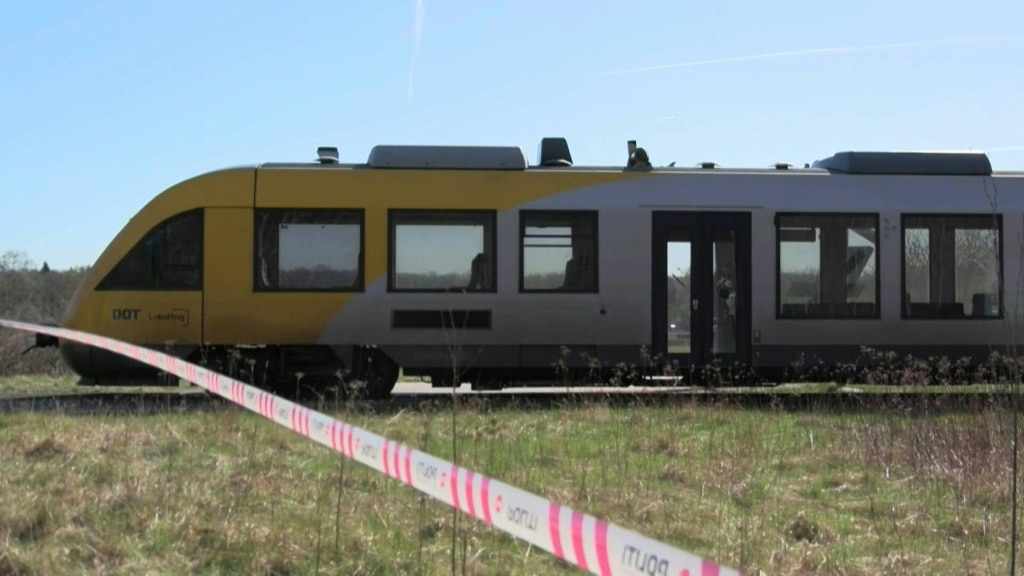
A devastating head-on collision between two commuter trains just outside Denmark’s capital Copenhagen early Thursday has left 17 people injured, with five of those casualties in critical condition, according to the country’s emergency response authorities. The crash unfolded shortly after 6:00 a.m. local time near a rural level crossing, in a forested area approximately 40 kilometers north of Copenhagen, close to the small town of Hillerod, falling within Gribskov Municipality.
As of the initial briefing hours after the incident, investigators have not released any confirmed details on what triggered the collision, with multiple probes now ongoing to piece together the sequence of events. Anders Damm-Hejmdal, chief physician for Copenhagen’s emergency medical services, confirmed the breakdown of casualties to reporters on the scene: “A total of 17 people were injured. Of them, five were deemed to be in critical condition at the scene.”
Local police confirmed they received the first emergency alert about the collision at 6:29 a.m. local time (0429 GMT). Visual footage from the crash site shows the yellow and grey front ends of both trains crumpled and smashed inward, with nearly all windshield and side window glass shattered across the carriages. Remarkably, both trains and all their attached cars remained upright on the railway tracks. In total, 38 passengers and crew were on board the two trains combined.
Emergency responders quickly mobilized a large fleet of ambulances and police vehicles to the remote site, and all passengers were evacuated within hours. All injured people have now been transferred to nearby hospitals for treatment, with some airlifted by medical helicopter according to Gribskov Mayor Trine Egetved. Rescue operations wrapped up roughly three hours after the crash, though official accident investigators remain on site to collect evidence and reconstruct the incident.
Morten Kaare Pedersen, a senior local police official, told reporters that no conclusions on the cause would be released until evidence gathering is complete. “We are in the process of gathering the necessary information about the course of events,” he said. “So there are, and will continue to be for quite some time, a lot of investigations underway.”
Damm-Hejmdal added that the number of critically injured patients could shift in the coming hours, noting that casualty statuses are dynamic in the immediate aftermath of major trauma incidents. “Initially it is difficult to get an overview of the exact injuries,” he explained at a press conference held nearly four hours after the crash. “You can imagine two trains colliding. That causes a lot of different injuries, people get thrown around.”
Mayor Egetved expressed her profound shock at the incident, noting that the commuter route is relied on daily by local workers and students. “I have been deeply upset and shocked,” she wrote in a post on Facebook. “This train is used by many residents of Gribskov, workers and students.”
Denmark has long held a reputation for strong rail safety standards, but this collision marks the third serious train incident in the country in less than five years. A 2019 fatal collision left eight people dead and 16 others injured, and in August 2022, an express train struck a farm truck at a level crossing, killing one person and injuring 27 more.
-
War in the Middle East: latest developments
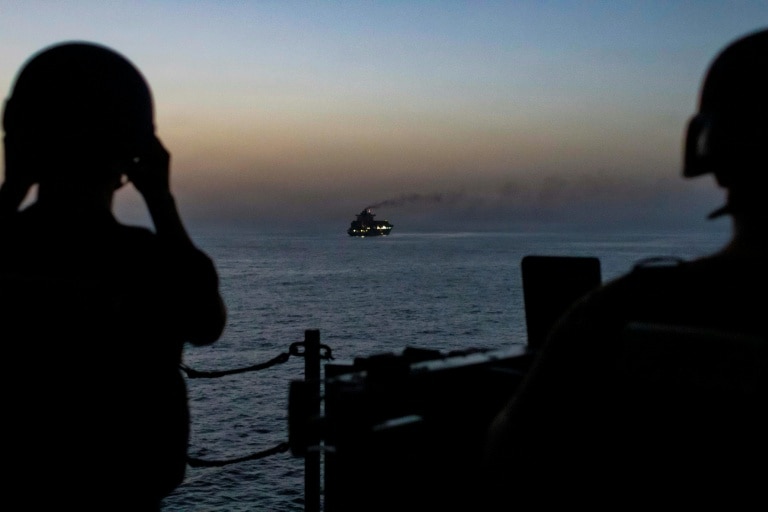
Fresh escalations and breaking developments continue to roil the Middle East this week, with a bitter standoff over the strategic Strait of Hormuz emerging as a flashpoint that threatens global energy supplies and economic stability. Multiple interconnected crises, from maritime blockades to diplomatic negotiations and violent attacks, have amplified instability across the region, sending shockwaves through global financial and commodity markets.
On the Hormuz front, Iranian officials announced Thursday that Tehran has collected its first batch of revenue from new tolls imposed on vessels passing through the waterway, a move implemented amid its ongoing standoff with the United States and Israel. Hamidreza Hajibabaei, deputy speaker of Iran’s parliament, confirmed the first toll payments have been deposited in an account held by Iran’s Central Bank, according to local Iranian news outlet Tasnim. This move marks a formal step forward in Iran’s effort to assert control over the chokepoint, through which roughly 20 percent of the world’s daily oil shipments pass.
Iran’s top leaders have doubled down on their refusal to reopen the Strait to full traffic, linking any reopening to an end to the U.S. naval blockade of Iranian ports. Parliament speaker Mohammad Bagher Ghalibaf, who led Iran’s delegation to preliminary talks in Islamabad, made clear that the ceasefire can only be considered legitimate if it ends the blockade. “Reopening the Strait of Hormuz is not possible amid a blatant violation of the ceasefire,” Ghalibaf stated, hardening Tehran’s position ahead of any further diplomatic negotiations.
U.S. military officials have responded with their own coercive measures, with U.S. Central Command (CENTCOM) announcing Wednesday evening it has ordered 31 vessels to divert from their routes or return to port as part of Washington’s blockade targeting Iran. In a post on X, CENTCOM confirmed the majority of the redirected vessels are oil tankers, and that most have complied with U.S. instructions. A separate U.S. Pentagon assessment, first reported by The Washington Post Wednesday, warns that clearing all mines laid by Iran in the Strait of Hormuz could take up to six months – a timeline that would keep global oil prices elevated for an extended period and continue dragging on the global economy. Iran has severely restricted access to the waterway since the outbreak of open hostilities with the U.S. and Israel, driving sharp increases in global oil and gas prices already strained by post-pandemic recovery and geopolitical uncertainty.
Beyond the Hormuz standoff, other developments have deepened regional unrest. Iran’s judiciary confirmed Thursday it executed a man identified as Sultan-Ali Shirzadi-Fakhr, who was convicted of membership in the banned opposition group People’s Mujahedin Organisation (MEK) and alleged collaboration with Israeli intelligence services. The execution, announced on the judiciary’s Mizan Online website, marks the latest in a series of high-profile convictions linked to alleged espionage against Tehran.
Along the Israel-Lebanon border, a new round of diplomatic negotiations got underway in Washington Thursday, aimed at extending a fragile ceasefire that is set to expire in days. Lebanese officials plan to request a one-month extension of the truce, while Israeli officials struck a conciliatory tone ahead of talks, saying they hold no major outstanding disagreements with the Lebanese government. Israel has called on Beirut to cooperate to disarm the pro-Iranian militant group Hezbollah, which has refused to participate in the negotiations and opposes any deal with Israel.
Tragedy struck southern Lebanon Wednesday, when an Israeli airstrike in an area officially covered by the ceasefire killed veteran journalist Amal Khalil, a correspondent for Lebanese newspaper Al-Akhbar. A second journalist, freelance reporter Zeinab Faraj, was wounded in the strike. Lebanese Red Cross officials confirmed to AFP that Khalil’s body was recovered from rubble after the attack, while Faraj was rescued and evacuated for medical care. Lebanese Information Minister Paul Morcos condemned the targeted attack on journalists as “a grave crime and a blatant violation of international humanitarian law.”
The rising tensions immediately rippled through global markets Thursday. Oil prices initially jumped more than 3.5 percent following Iran’s vow to keep the Strait of Hormuz closed, with benchmark U.S. West Texas Intermediate crude climbing 4.1 percent to hit $96.73 per barrel, and international benchmark Brent crude rising 3.6 percent to $105.63 a barrel before prices pared gains later in the session. Most major Asian stock markets fell in response to the geopolitical uncertainty, with indexes in Tokyo, Hong Kong, Shanghai, Sydney, Singapore and Wellington all closing lower.
-
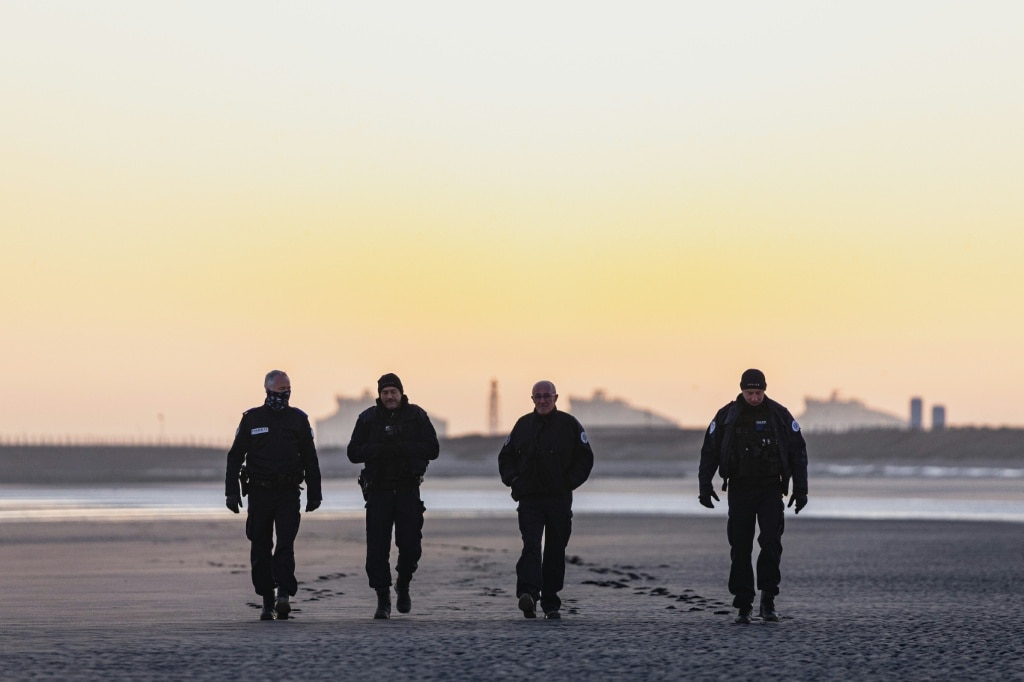
UK, France agree three-year deal to stop migrant crossings
After months of tense negotiations over border security, the United Kingdom and France have formally announced a new three-year bilateral agreement aimed at halting dangerous unauthorized migrant crossings of the English Channel in small vessels. The accord, which renewes and updates the 2018 Sandhurst Treaty set to expire this year, marks a major new step in addressing a long-running contentious issue that has roiled domestic politics on both sides of the Channel.
Under the terms of the new deal, France has committed to expanding its coastal law enforcement presence by more than 50 percent, with a target of 1,400 active officers deployed to border patrols by 2029. To support these expanded efforts, the UK will provide up to 766 million euros (equivalent to $897 million) in funding, though roughly 24 percent of this total allocation is tied to performance conditions. Even if the conditional portion of funding is not released, the UK’s guaranteed core contribution of 580 million euros still represents a 40 million euro increase over the funding level agreed in the last iteration of the treaty.
The months-long negotiation process was shaped by longstanding disagreements between the two neighboring countries. The UK has repeatedly criticized France for insufficient action to stop asylum seekers and irregular migrants from departing French shores, a gap that has allowed people smuggling networks to operate and pushed migrants to take increasingly life-threatening risks to avoid detection. Ahead of a new agreement, London insisted that any renewal of the Sandhurst Treaty would require the ability to attach performance conditions to how British taxpayer funds are used by French authorities.
British Prime Minister Keir Starmer framed the agreement as a historic breakthrough for UK border security, noting that existing bilateral cooperation “already stopped tens of thousands of crossings.” He added that “this historic agreement means we can go further: ramping up intelligence, surveillance and boots on the ground to protect Britain’s borders.” UK Home Secretary Shabana Mahmood echoed that framing, stating that “This landmark deal will stop illegal migrants making the perilous journey and put people smugglers behind bars.” Mahmood and French Interior Minister Laurent Nunez are scheduled to unveil further operational details of the plan Thursday during a visit to the site of a planned deportation accommodation center in Loon-Plage, near Dunkirk.
Per terms outlined in a French interior ministry document outlining the agreement, if the new measures fail to deliver “sufficient results” — as determined by a joint annual assessment — unspent conditional funding will be redirected to alternative anti-smuggling and border control initiatives.
Beyond increased foot patrols, the deal’s roadmap outlines plans for France to deploy new technological resources, including drones, helicopters and digital surveillance tools, to disrupt smuggling operations before departures. The agreement reflects a key constraint of international maritime law: once a small vessel has left shore, authorities may only intervene to rescue migrants from drowning, rather than turning them back to France.
The new deal comes at a critical political juncture for Prime Minister Starmer, who took office recently and faces intense domestic pressure to curb unauthorized immigration. His government is currently mired in a growing political scandal over the appointment of Peter Mandelson as UK ambassador to the United States, over Mandelson’s longstanding personal ties to the late convicted sex offender Jeffrey Epstein. Starmer’s political standing and the future of his Labour Party are widely seen as tied to the party’s performance in upcoming May local elections, with recent polling suggesting Labour faces significant projected losses.
Official data underscores the scale of the challenge the new agreement aims to address. Official UK statistics show that 41,472 people crossed the Channel to reach the UK illegally via small boat in 2025, marking the second-highest annual total on record since large-scale crossings began in 2018. An AFP tally compiled from official French and British sources confirms that at least 29 migrants died attempting the crossing in 2025. French officials have pushed back against UK criticism, noting that unauthorized arrivals to the UK have halved in early 2026 compared to the same period in 2025, and that French law enforcement arrested roughly 480 suspected people smugglers across 2025.
-
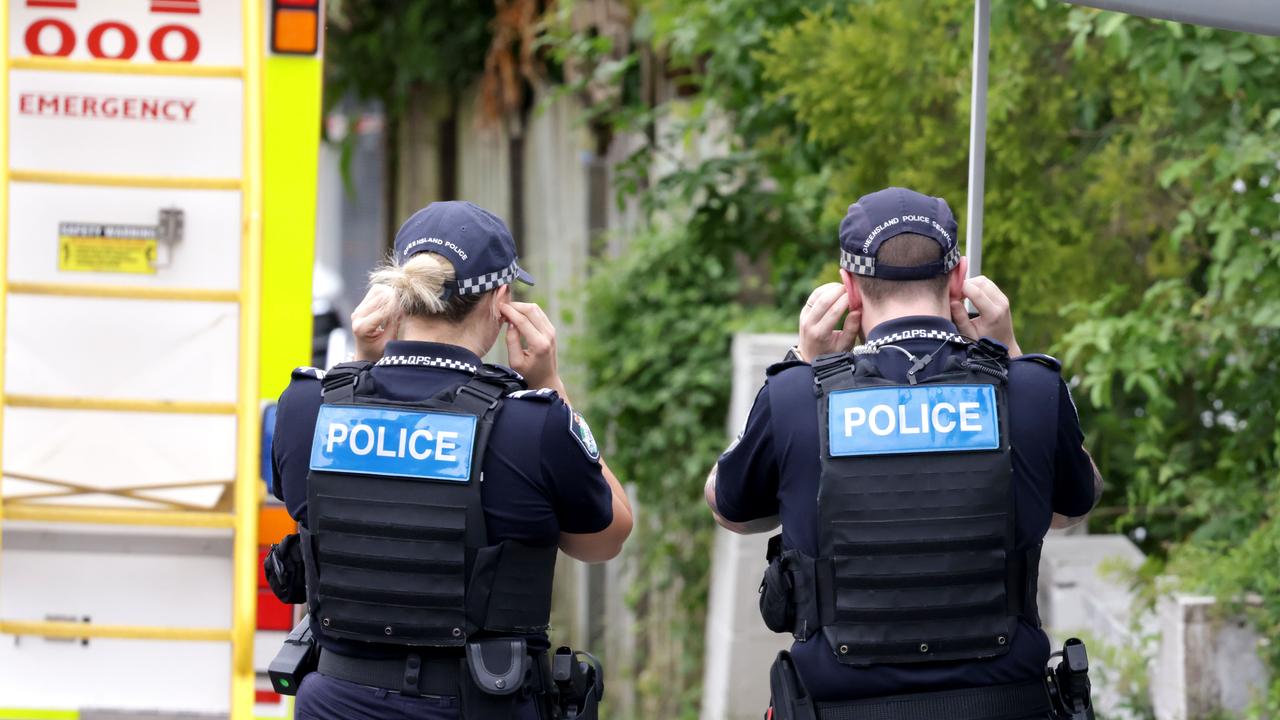
Queensland Police recall service-issued Glock handguns after major safety malfunction detected
Queensland Police Service (QPS) has announced a full recall of every service-issued Glock handgun across the entire state for urgent safety testing, after a potentially dangerous malfunction was uncovered during routine proactive weapons inspections. The safety review of the QPS’ entire firearms fleet was already in progress when inspectors identified the defect: under specific conditions, the weapon can discharge multiple rounds with a single trigger pull, a flaw that puts both officers and members of the public at unnecessary risk.
In an official public statement, QPS confirmed that it has moved to accelerate expanded testing across every regional command and operational division, prioritizing the recall to guarantee that all weapons in active use meet mandatory safety standards. At the time of the announcement, the service stressed that no operational accidents or injuries have been linked to the weapon defect to date.
The recall process will see all issued handguns collected for comprehensive testing. Firearms that pass the rigorous new inspection regime will be returned to frontline officers for active duty. Any weapons that fail to meet QPS safety requirements will be immediately withdrawn from service and retained by authorities. QPS added that it is already collaborating directly with Glock suppliers to develop a full resolution for the identified issue, aiming to restore the full complement of service weapons as quickly and safely as possible.
-
‘Catastrophic’ Melbourne Airport near-misses only avoided by ‘good luck’ after international airliners take off metres from active worksite
Australia’s aviation sector has been forced to confront critical gaps in safety protocols after a long-awaited official investigation concluded that two alarming near-collisions at one of the country’s busiest international hubs avoided catastrophe last year through nothing more than sheer good fortune. The Australian Transport Safety Bureau (ATSB) released its final public report on Thursday, detailing the two separate September 2023 incidents that unfolded at Melbourne Airport, Victoria’s primary international gateway, when runway construction work left a section of the takeoff strip drastically shortened.
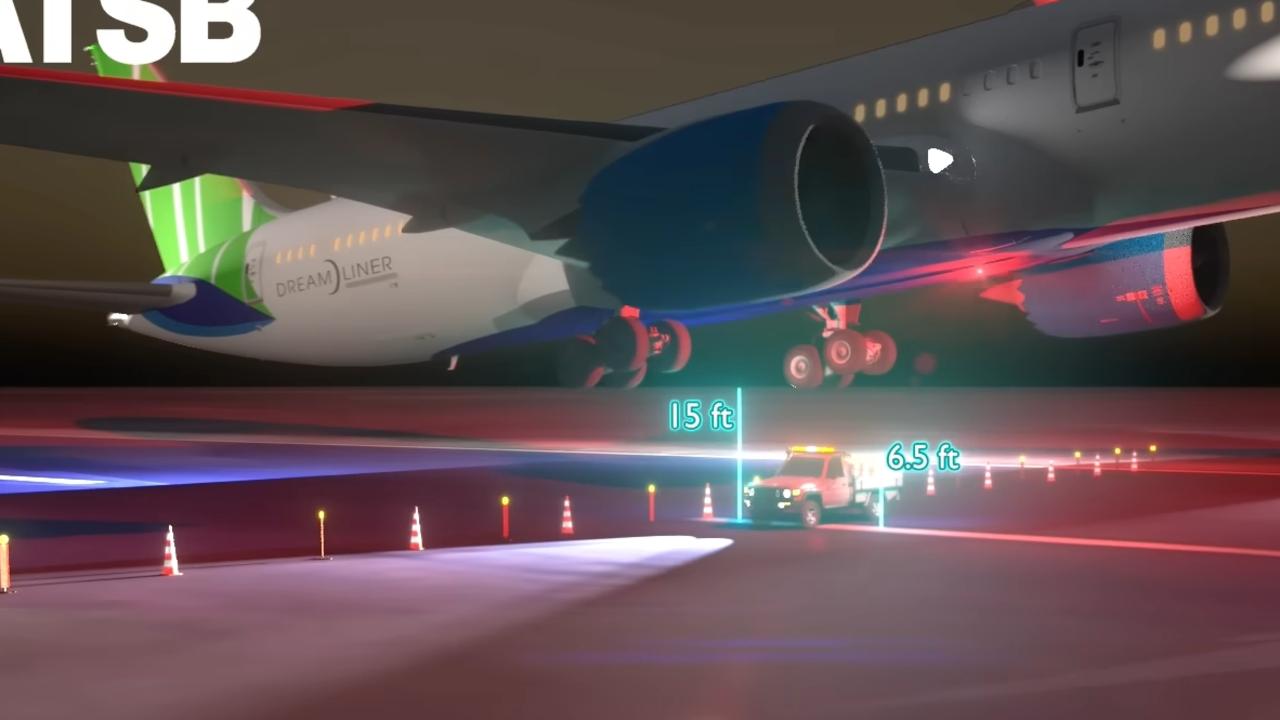
The first incident occurred on September 7, when a Malaysia Airlines wide-body Airbus A330-300, bound for Kuala Lumpur with hundreds of passengers on board, exited the usable length of the temporary runway during its departure takeoff roll. After overshooting the marked end of the available runway, the large commercial jet climbed just 7 meters above an active construction worksite, where heavy machinery and ground personnel were working below.
In response to this first close call, Melbourne Airport leadership launched an internal risk review and implemented incremental safety adjustments, including updating internal communication protocols and issuing a general safety alert to all airlines operating at the facility. But just 11 days later, a second nearly identical incident unfolded: a Bamboo Airways Boeing 787-9 en route to Hanoi also overran the same shortened runway, clearing the construction site by an even slimmer margin of only 5 meters.
In its official statement accompanying the final report, the ATSB confirmed that on both occasions, powerful jet blast from the departing aircraft directly impacted the active work zone, where workers and heavy vehicles were present. While no ground personnel suffered physical injuries in either incident, one worker developed a stress-related injury following the second close call.
Investigators found that information about the reduced runway length had been correctly distributed to the aviation community, including being broadcast over radio frequency and included in routine Automatic Terminal Information Service (ATIS) updates received by both flight crews. However, ATSB Chief Commissioner Angus Mitchell explained that neither flight crew recognized just how drastically the runway’s usable length had been reduced. “While both crews accessed a version of the ATIS that mentioned the shortened runway, they only noted to air traffic control the weather information from the ATIS, and not the reduced runway length,” Mitchell said.
Further investigation revealed that while flight dispatchers at both airlines had adjusted their performance calculations to account for the shorter runway, the adjustment was not explicitly flagged in the pre-flight briefing materials provided to the operating crews. The ATSB noted this oversight was likely rooted in the fact that both aircraft were fully capable of departing safely from the shortened runway if correct power settings were applied. Nonetheless, the missed alert led both crews to plan their takeoffs using the original full runway length, and set reduced thrust settings for departure, resulting in the overruns.
Legal experts have sharply criticized the systemic gaps exposed by the investigation. Peter Carter, director of Australian law firm Carter Capner Law, emphasized that the incidents exposed basic failures in core aviation safety procedures. “These are basic requirements even for day one students,” Carter said, noting that pilots are obligated to review NOTAMs (notices to airmen) and cross-check all ATIS safety information before departure. He added that a catastrophic collision would have killed more than 350 passengers and crew, along with any workers on the ground, and left a permanent stain on Australia’s already-tarnished aviation safety record. “A catastrophic event was avoided only by good luck,” Carter said. “It could have resulted in a 350-person fireball.”
In the wake of the ATSB’s findings, both Malaysia Airlines and Bamboo Airways have committed to updating their internal flight dispatcher procedures and pre-flight briefing guidance to prevent similar oversights. Australia’s national air navigation provider Airservices Australia and the country’s civil aviation regulator Civil Aviation Safety Authority (CASA) have also proposed revisions to protocols for communicating safety-critical information related to runway construction projects.
Mitchell closed by outlining long-term safety changes that could prevent similar near-misses globally, arguing that prominent visual markings, such as the signage proposed for inclusion in ICAO Annex 14, the international body’s standards for airport design, can serve as a critical final safety net to alert crews to changed runway conditions when the altered layout would otherwise look normal from the air. “Flight dispatchers, aircraft operators, airport operators, individual air traffic controllers, air traffic services providers and others can all contribute to ensuring pilots are aware of safety‑critical information when they need it,” Mitchell said.
-

AFL 2026: St Kilda forward Lance Collard is challenging his nine-match ban
An Australian Football League (AFL) player is taking one final stand to reverse what his legal team calls an excessively harsh and unprecedented suspension over an alleged homophobic slur, with his appeal hearing scheduled for Thursday evening.
Lance Collard, a 21-year-old forward for St Kilda, was handed a nine-match ban last week after the AFL Tribunal found him guilty of conduct unbecoming. The charge stemmed from an on-field incident where he was accused of directing a homophobic slur at an opponent from the Frankston team during a match. Collard has consistently denied using the slur, claiming the word he shouted was a different insult — he says he called Darby Hipwell, his former Sandringham teammate, a “maggot”.
This is not the first disciplinary issue for Collard: he already served a six-match suspension in 2024 for the same type of alleged homophobic slur offense. Two of the nine matches in the current ban are tied to an existing two-game suspension he received for a striking offense in the same match, meaning the new penalty for the slur itself accounts for the bulk of the suspension.
During the original tribunal hearing, Collard’s defense led by Michael Borsky KC argued the young player was physically jostled, roughed up and subjected to verbal abuse from opposing Frankston players before the alleged incident. Borsky described the nine-match ban as unfairly punitive, warning it could be a life-altering “sliding doors” decision that would effectively end Collard’s promising AFL career, which to date includes 15 senior-level appearances. He also noted that no player in league history has ever received a suspension of this length for a homophobic slur offense, marking the penalty as unprecedented. Borsky additionally requested that any new suspension be served concurrently with the existing striking ban, given the entire incident was triggered by the initial on-field collision and subsequent melee.
The Australian Football League Players’ Association (AFLPA) has publicly thrown its support behind Collard throughout the process, with chief executive James Gallagher releasing a formal statement last week reaffirming that backing.
Gallagher acknowledged that the entire AFL industry shares the common goal of eliminating homophobia from the sport, but noted the case highlights critical flaws in the current disciplinary framework. “The Tribunal has, rightly, acknowledged that issues such as racism and homophobia are difficult and sensitive issues and the manner of dealing with them is not enhanced if the starting point is a fierce debate over whether the words were used,” he said.
“Lance has maintained his innocence, and this has been consistent throughout. We’re disappointed the Tribunal did not accept that evidence. We’ll continue to fully support him and the club through this process including exploring any options to appeal.”
Gallagher added that meaningful long-term change requires a holistic approach, not just harsh punitive measures. He argued that lasting progress requires collaborative engagement with LGBTIQA+ community leaders, targeted education that centers the diverse backgrounds and experiences of players, and a disciplinary process that is fit for purpose: one that reduces harm, remedies harm when it occurs, and drives lasting behavioral change. He noted that through collective bargaining agreements, the AFLPA has already negotiated a shared commitment with the AFL to advance equality, inclusion and safety for all people in the sport, and work on these commitments remains ongoing. He also acknowledged the far-reaching impact of the case on all stakeholders, including the LGBTIQA+ community, First Nations communities, and Collard and his family.
The appeal hearing on Thursday will mark Collard’s final opportunity to overturn or reduce the historic ban, with the outcome set to shape not only his career but also potential future debates around how the AFL handles on-field discriminatory language. This story remains developing, with further updates expected after the appeal board delivers its decision.
-
AFL 2026: Richmond coach Adem Yze says his side has ‘nothing to lose’
As the only side still searching for its first win after six rounds of the current Australian Football League season, the Richmond Tigers head into one of the most anticipated games on the early calendar with an unorthodox mindset: nothing to lose, everything to gain. Head coach Adem Yze, now in his third season leading the rebuilding club, has urged his young, developing squad to embrace a no-fear approach ahead of the annual ANZAC Day eve blockbuster against an in-form Melbourne side at the Melbourne Cricket Ground this Friday night.
Melbourne enters the clash as heavy favourites, and Yze has not shied away from acknowledging the size of the challenge his team faces. Melbourne has enjoyed a strong start to the 2025 season, fresh off an upset victory over last year’s premiers that cemented their early form. The side retains a core of experienced premiership winners, complemented by emerging young talent that has filled key roles seamlessly, with their skipper hitting arguably the best form of his career to open the year.\n\n“It’s going to be a big test for us, on a big stage, against a team that’s in form – they’ve just beaten last year’s premiers,” Yze told reporters ahead of the clash. “Our boys are really looking forward to that, we’ve got nothing to lose, we’ve got some young lads playing. It’s an amazing game, we’re really privileged to be playing in it, we’ve got to do it justice.”
To help the young Tigers rise to the occasion, Yze has confirmed a series of changes to the match-day squad that inject both new blood and much-needed veteran leadership. Two first-year players, Sam Cumming and Tom Burton, will make their senior AFL debuts on Friday night, with Yze saying he expects the pair’s high-energy running game to put Melbourne’s defenders under pressure across the entire MCG pitch. The biggest boost, however, comes from the long-awaited return of star spearhead and key leader Tom Lynch, who has been sidelined by injury in recent weeks.
Lynch was a late omission from Richmond’s squad a week earlier, with coaching staff opting to hold him out to avoid rushing his recovery. At the time, a return would have come with just five days of recovery between his final training run and the match, so the club chose an extra week of preparation to get him fully up to speed. Now, the star forward is cleared to return, and his presence will be felt both on the scoreboard and in the young forward group that has been forced to step up in his absence.
“(Lynch) is ready to go, he was almost ready last week and the decision was to be really cautious with him,” Yze explained. “He would’ve been coming off a five-day break if we played him last week, so we took that extra week to get another week of training in him. We’ve obviously got a really young forward line at the moment, so to have him down there is really important for leadership. But his contest and the form he was in before he hurt himself was really strong. We can’t wait to see him back out there in our colours.”