标签: Oceania

大洋洲

  • Anti-Bezos campaign urges Met Gala boycott in New York

    Anti-Bezos campaign urges Met Gala boycott in New York

    As the 2025 Met Gala approaches, a grassroots activist campaign has spread provocative posters across New York City’s streets and subway systems, calling for a widespread boycott of the annual high-profile celebrity fundraising event to protest Amazon founder Jeff Bezos’s role as a lead sponsor and honorary co-chair. Bezos and his wife Lauren Sanchez Bezos are set to take top honorary roles at the May 4 gala, which regularly attracts A-list guests from fashion, entertainment, business, and sports, and serves as one of the biggest fundraising events for the Metropolitan Museum of Art’s Costume Institute. But their prominent position at the star-studded event has sparked fierce pushback from activists targeting what they call exploitative and unethical business practices tied to the billionaire entrepreneur.

    The campaign’s posters lean into sharp, provocative imagery to highlight criticism of Bezos and Amazon. One design shows a bottle of urine placed on a red carpet, a direct reference to longstanding reports that Amazon delivery drivers are forced to urinate in plastic bottles because rigid delivery schedules deny them regular bathroom breaks. Another poster depicts Bezos wearing a uniform from U.S. Immigration and Customs Enforcement (ICE), referencing Amazon Web Services – the company’s large cloud computing division – which holds a working contract with the agency, a body long criticized for its hardline immigration enforcement policies that gained notoriety during the Trump administration’s border crackdown.

    The campaign is organized by “Everyone Hates Elon”, a UK-founded activist group that clarified its scope extends beyond targeting Tesla and X CEO Elon Musk, the world’s wealthiest person, to hold other billionaires accountable for the impact of their business and political power. Speaking on condition of anonymity over concerns of potential retaliation from powerful figures, a group spokesperson emphasized the importance of direct action against billionaires who wield outsized control over daily life. “I think it feels really powerful to take action,” the spokesperson said. “I think it’s speaking to a need that people have to stand up to some of these people that are controlling our lives.”

    To fund the New York campaign, the group has raised more than 14,000 British pounds, equal to roughly $19,000, with nearly all funding coming from small individual donations that average 10 pounds per contribution. This is not the first time the Met Gala has faced public protest over its ties to extreme wealth and controversial figures. The annual event has long drawn criticism for its extravagant displays of elite affluence, and previous demonstrations have targeted the gala over issues ranging from economic inequality and environmental harm to the ongoing war in Gaza.

  • Powell’s decision to stay on at Fed ignites new Trump insult

    Powell’s decision to stay on at Fed ignites new Trump insult

    A high-stakes conflict between outgoing Federal Reserve Chair Jerome Powell and former president Donald Trump escalated dramatically on Wednesday, after Powell announced he would retain his seat on the central bank’s board of governors following the end of his term as chair — drawing a fresh verbal assault from Trump.

    Powell confirmed that while his four-year term leading the Fed concludes on May 15, he will exercise his statutory right to remain on the board of governors for a yet-undetermined period. The move comes as Powell has openly voiced concerns about protecting the Fed’s long-standing institutional independence from unprecedented political pressure from the Trump administration.

    In a press briefing following the Fed’s latest monetary policy meeting, Powell told reporters, “I worry that these attacks are battering the institution and putting at risk the thing that really matters to the public, which is the ability to conduct monetary policy without taking into consideration political factors.”

    Powell has drawn Trump’s anger for months over his refusal to hastily cut interest rates as the president demanded, and Trump has repeatedly pushed for Powell to step down entirely from the central bank. Shortly after Powell’s announcement Wednesday, Trump lashed out in a post on his personal social media platform: “Jerome ‘Too Late’ Powell wants to stay at the Fed because he can’t get a job anywhere else — Nobody wants him.”

    While it is unusual for a former Fed chair to remain on the board after leaving the top post, it is not without precedent. Powell, whose current term as a board governor runs through 2028, has pledged to maintain a low profile under Trump’s nominee for incoming chair, Kevin Warsh. Still, Treasury Secretary Scott Bessent condemned the decision in an interview with Fox Business, calling it a “violation” of long-standing Fed norms and “an insult” to Warsh.

    The clash unfolds against a backdrop of multiple escalating legal and political attacks on Fed leadership from the Trump administration, which returned to power last year. Trump has repeatedly criticized Powell for moving too slowly on aggressive interest rate cuts — a policy that would stimulate near-term economic growth but carries significant risk of reigniting inflation. The administration has also attempted to oust sitting Fed governor Lisa Cook over unproven mortgage fraud allegations, a case that is currently pending before the U.S. Supreme Court.

    Additionally, the Department of Justice launched a criminal investigation into Powell and the Fed over reported cost overruns on a facility renovation project, a step Powell has characterized as a deliberate tactic to undermine the central bank’s independence. While DOJ has paused the probe for the time being, Powell said he is encouraged by recent developments but will continue monitoring the case. He reiterated Wednesday that he will not leave the Fed until the investigation is “well and truly over,” reaffirming the critical need for an independent central bank free from political interference. He also extended congratulations to Warsh for clearing a key procedural hurdle in what has been a contentious confirmation process.

    Powell’s announcement came shortly after the Fed concluded a deeply divided monetary policy meeting, where voting members opted to hold interest rates steady for the third consecutive meeting. The decision came amid widespread economic uncertainty tied to ongoing conflict in the Middle East, which has driven up global energy prices. The Fed kept its benchmark interest rate range unchanged at 3.50 percent to 3.75 percent, noting “inflation is elevated, in part reflecting the recent increase in global energy prices.”

    The meeting produced the highest number of dissenting votes since 1992, highlighting deep internal divisions among Fed policymakers. Four of the 12 voting members opposed the final outcome: Governor Stephen Miran pushed for an immediate quarter-point rate cut, while three regional Fed presidents — Beth Hammack, Neel Kashkari and Lorie Logan — supported the pause in rate movement but rejected the statement’s signaling of future inclination toward rate cuts. ING analysts James Knightley and Padhraic Garvey noted that the split points to a contentious debate over future rate policy at Warsh’s first meeting as chair, scheduled for June.

    The Fed has been gradually moving toward rate reductions since late last year, but the outbreak of conflict between the U.S.-Israel coalition and Iran has sent energy prices soaring and disrupted global supply chains, leading analysts to warn that persistent inflation could even force policymakers to reverse course and consider rate hikes in coming months.

    Earlier on Wednesday, the Senate Banking Committee voted to advance Warsh’s nomination to the full Senate for confirmation, bringing him one step closer to taking over the top Fed post. But Democratic critics have warned that the nomination is part of a broader power grab by Trump to control independent monetary policy. Senator Elizabeth Warren charged that confirming Warsh would advance Trump’s “attempt to seize control of the Fed,” while Senator Raphael Warnock argued the nomination has been tainted by “persistent threats” from the White House.

    Even some Republicans initially pushed back on the nomination: Senator Thom Tillis initially pledged to block Warsh’s confirmation, but reversed his position after the Justice Department paused its probe into Powell. When asked whether he believed Warsh would push back against political pressure from the White House, Powell told reporters: “He testified very strongly to that effect in his hearing, and I’ll take him at his word.”

  • Alleged Trump assassin took selfie moments before attack: prosecutors

    Alleged Trump assassin took selfie moments before attack: prosecutors

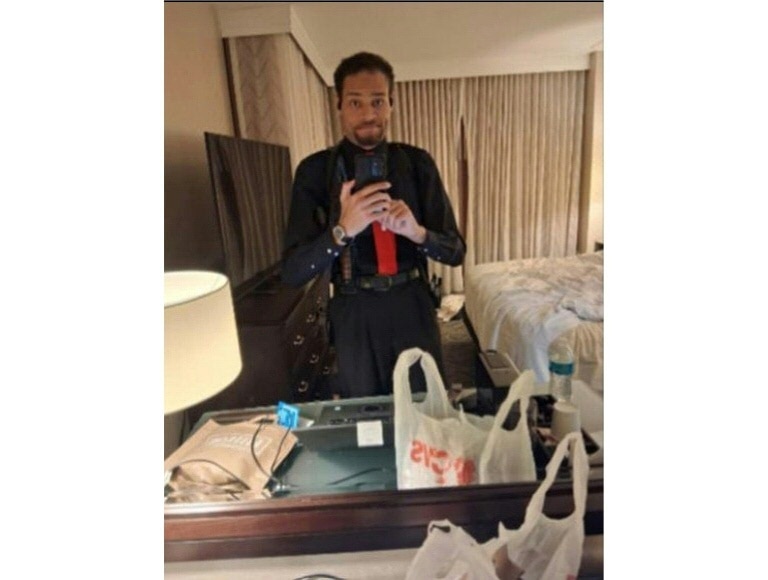
    Court documents made public this week have laid bare chilling new details of an alleged assassination plot targeting former U.S. President Donald Trump, revealing that the suspect snapped a selfie in his hotel room just minutes before launching an armed attack at a high-profile Washington media gala. Prosecutors outlined the sequence of events in a federal court filing submitted Wednesday, laying out the premeditated steps 31-year-old Cole Allen, a highly educated California teacher, took in his bid to attack Trump and senior members of his administration.

    According to the filing, Allen’s attempted attack unfolded shortly after 8:30 p.m. this past Saturday. After traveling from California to the nation’s capital via a scenic cross-country train route through Chicago, Allen checked into the Washington Hilton, where the annual media gala was set to take place in the hotel’s basement ballroom. Court records show that before leaving his room, Allen spent his final pre-attack minutes reviewing online updates of Trump’s public schedule, assembling a weapons arsenal that included a pump-action shotgun, a handgun, multiple knives, and ammunition, and posing for a mirror selfie captured on his cellphone. The surviving photograph shows Allen dressed in all black with a red tie, visibly carrying a knife, a shoulder holster for his handgun, and an ammunition bag.

    Before departing his room, Allen had pre-scheduled an email to be sent to his friends and family that contained a manifesto justifying his planned attack, which prosecutors described as an act of “unfathomable malice.” In the message, Allen laid out a ranked target list of Trump administration officials in attendance, prioritizing them from highest to lowest rank, and clarified that he hoped to avoid harming Secret Service agents, other law enforcement officers, or innocent hotel guests. Court documents also show Allen documented his surprise at the hotel’s lax security during his stay, writing on his personal phone that he had walked into the building with multiple weapons without any staff raising a single red flag. During his train journey, he even took time to note his appreciation for the changing American landscape, writing that the woodlands of Pennsylvania looked like “vast fairy lands filled with tiny trickling creeks.”

    Once he reached the hotel entrance near the ballroom, Allen discarded his outer long coat, drew his shotgun, and sprinted through a set of building metal detectors. Prosecutors confirm Allen fired the shotgun toward the stairs leading down to the ballroom, where Trump and other senior officials were already gathered. A responding Secret Service agent returned fire, shooting five times but missing Allen entirely. The suspect fell to the ground during the chaotic aftermath, suffered only a minor knee injury, and was quickly tackled and detained by security personnel. No bystanders or attendees were killed in the incident.

    The new details emerged as part of a prosecution request to a Washington federal court to deny bail for Allen, arguing he should remain in custody ahead of his trial. Prosecutors noted that Allen’s political motivation for the attack would persist as long as he maintains ideological disagreement with the U.S. government, making him a continued danger to the community if released.

    This incident marks the third alleged assassination attempt targeting Trump in less than two years. Following the attempt, the White House has blamed Democratic political leaders and national media outlets for inciting political extremism against the former president. At the same time, the 79-year-old Trump has drawn widespread criticism for breaking decades of Washington political norms with his consistent violent rhetoric directed at political opponents, journalists, foreign leaders, and immigrants.

  • Tuareg rebels vow Mali junta ‘will fall’, north will be captured

    Tuareg rebels vow Mali junta ‘will fall’, north will be captured

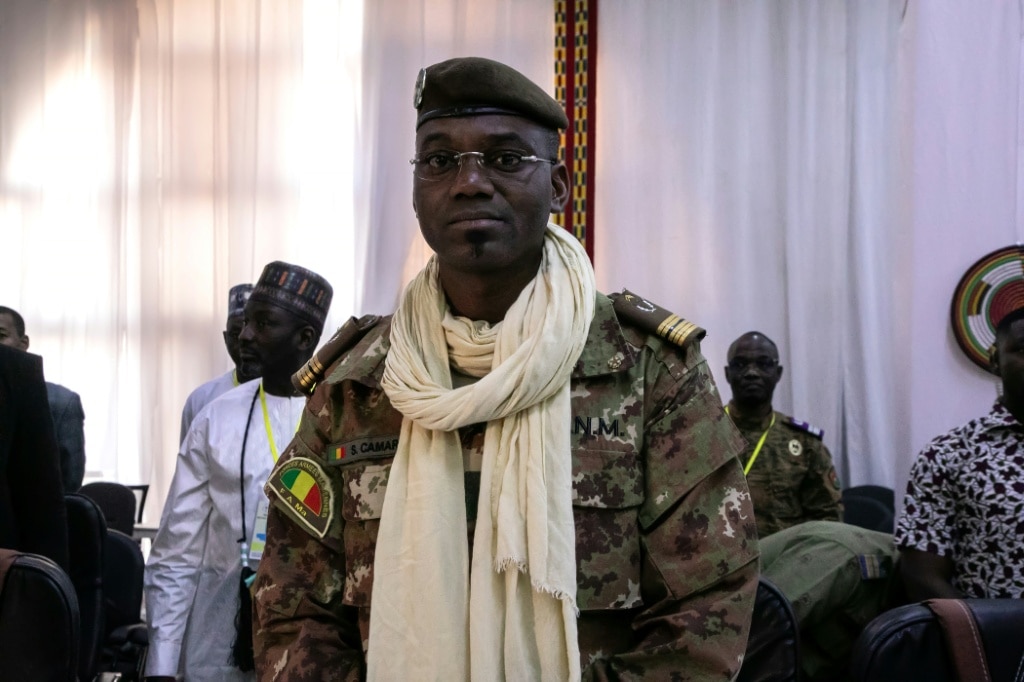
    Just days after launching the largest coordinated attacks against Mali’s ruling military government in nearly 15 years, Tuareg separatist rebels have publicly pledged to bring down the country’s junta and seize full control of northern Mali, a senior spokesperson confirmed in an interview with Agence France-Presse this Wednesday. The weekend offensive, a joint operation between the Tuareg-dominated separatist coalition Azawad Liberation Front (FLA) and the Al-Qaeda-affiliated jihadist group Group for the Support of Islam and Muslims (JNIM), marked a dramatic escalation of the West African nation’s 13-year security crisis. The insurgents launched a coordinated dawn assault on multiple strategic junta positions, including sites near the capital Bamako, leaving at least 23 people dead, with the death toll projected to rise as casualty counts are finalized. Among those killed in the two days of fierce fighting was Malian Defence Minister Sadio Camara, widely recognized as the architect of the junta’s decision to pivot away from Western partners and align with Russia. Camara’s funeral is scheduled to take place on Thursday. The combined insurgent forces successfully captured Kidal, a critical northern trade and administrative hub, earlier this week. Tuareg rebels have maintained visible patrols across the town’s streets since the takeover. In response, the Malian military launched a series of retaliatory airstrikes against insurgent positions in Kidal on Wednesday, targeting a key military camp and fighters stationed at the regional government building. A senior Malian security source told AFP that the armed forces “intend to give these enemies no respite”, a claim later confirmed by an official FLA spokesperson. The insurgent campaign did not end with Kidal’s capture: rebels also attacked a small military outpost in Gourma Rharous, a town located in Mali’s Timbuktu region, over the past week, and targeted multiple other major population centers during the weekend offensive, including the northern hub Gao and the central Malian cities of Mopti and Sevare. FLA spokesperson Mohamed Elmaouloud Ramadane, speaking to AFP during a visit to Paris, confirmed that the insurgent coalition’s next objectives are to seize full control of Gao, Timbuktu and Menaka, building on their recent victory in Kidal. Local sources in the Gao region have already reported that Malian army units have withdrawn from multiple forward positions in the area amid the insurgent advance. After three days out of the public eye, junta leader Assimi Goita addressed the nation on national television late Tuesday, acknowledging the security situation was “of extreme gravity” but insisting that the government had the crisis “under control”. Ramadane rejected that claim, stating bluntly that “the regime will fall, sooner or later”. The Sahel region has been grappling with widespread jihadist insurgency since 2012, when a combination of Tuareg separatists and jihadist fighters first seized large swathes of northern Mali. That original 2012 alliance ultimately collapsed, with jihadists driving separatist forces out of most captured territory before a French military intervention pushed the insurgents back. France has since fully withdrawn from Mali, following the junta’s decision to sever diplomatic and security ties with former colonial power Paris and other Western nations, a shift mirrored by military-led governments in neighboring Niger and Burkina Faso. The Malian junta has since aligned itself closely with Moscow. The Russian paramilitary Wagner Group, which had fought alongside Malian forces against insurgents since 2021, reorganized into the Africa Corps, a unit under direct control of the Russian defense ministry, in June 2025 following the group’s mutiny against the Russian government. Analysts note that while the FLA and JNIM hold vastly different end goals—separatists seek an independent state of Azawad for northern Mali’s Tuareg, Fulani and Arab communities, while jihadists aim to establish an Islamic emirate—the two groups have united over their shared opposition to the 2020 junta and Russian military presence in the country. Ramadane clarified that the FLA’s core demand is the permanent withdrawal of all Russian forces from Azawad and the entirety of Mali, stating: “We have no particular problem with Russia, nor with any other country. Our problem is with the regime that governs Bamako.” The latest large-scale offensive has cast serious doubt on the junta’s repeated claims that its counterinsurgency strategy, security partnerships and expanded military operations have successfully stemmed the growing jihadist and separatist threat across the country.

  • Australia duo O’Connor and Perese to leave Tigers

    Australia duo O’Connor and Perese to leave Tigers

    English Premiership rugby union side Leicester Tigers has made a major roster announcement this week, confirming that experienced Australian international fly-half James O’Connor and fellow Wallabies back Izaia Perese will leave the club when the current 2025-26 season concludes.

    O’Connor, 35, returned to top-flight English rugby for his third stint in the league when he joined the Tigers last September, moving to the Welford Road-based side from New Zealand’s legendary Super Rugby franchise the Crusaders. Since his arrival, the veteran playmaker has featured in 10 matches across all competitions. His only try for the club to date came in the side’s dominant 66-14 Premiership Rugby Cup final victory over Exeter Chiefs last month, and he has added 18 points from the kicking tee across his six Premiership outings.

    Reflecting on his tenure with Leicester, O’Connor described his time at the club as an overwhelmingly positive experience. “This has been an awesome experience for me, and right now I’m keeping my focus firmly on the business end of this season, we still have important work to do before the campaign wraps up,” he said.

    Leicester interim head coach Geoff Parling paid tribute to O’Connor’s impact on the squad, highlighting the veteran’s intangible leadership qualities that have strengthened the team’s backline group. “James has been brilliant during his time with us, bringing a wealth of experience and a calming presence that has really benefited our younger backs,” Parling said. “He will continue to contribute massively as we push through the final stretch of the season, and his ideas and diligence in everything he does have been a real asset to our program.”

    For 28-year-old center Perese, the departure comes 18 months after he joined the club from Australia’s Super Rugby side the New South Wales Waratahs ahead of the 2024-25 campaign, having signed a multi-year contract upon his arrival. Perese has been a consistent scoring threat during his time at Leicester, crossing for 11 tries in 28 total appearances for the side. This season alone, he has notched five tries, three of which came in Premiership play.

    Like O’Connor, Perese stressed that he remains fully committed to helping the club achieve its remaining goals this season, before his exit. “I’ll miss this group of lads, and I’m really proud to have been able to call myself a Leicester Tigers player,” Perese said. “There’s still a job to be done though, and I’m fully committed to giving everything I have for what’s ahead. I’d also like to say a big thank you to all my coaches and the club’s support staff for everything they’ve done to help me develop during my time here.”

    Both players are set to feature for the Tigers in the remaining weeks of the current domestic season as the side competes for silverware and league position.

  • Trump warns Iran better ‘get smart soon’ and accept nuclear deal

    Trump warns Iran better ‘get smart soon’ and accept nuclear deal

    Escalating tensions between the United States and Iran have reached a new critical juncture this week, after former President Donald Trump issued a blunt public warning demanding Tehran capitulate to Washington’s strict nuclear oversight demands, while stalled peace negotiations have sent energy markets soaring and raised alarm over a global humanitarian catastrophe.

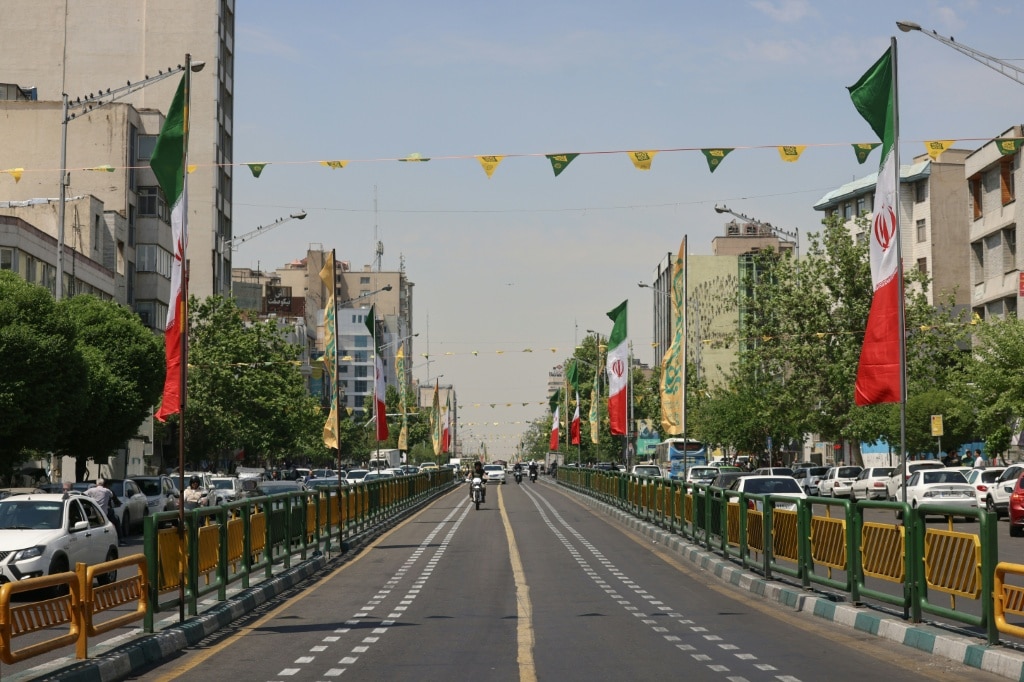
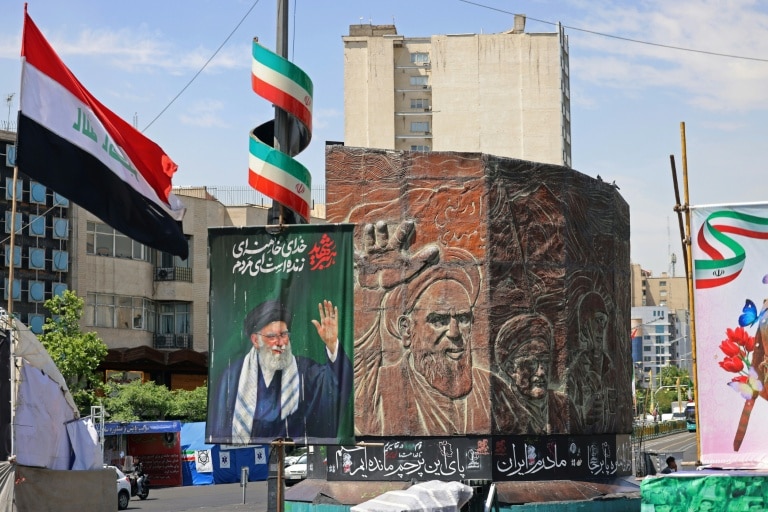
    For two months, Iran has held the Strait of Hormuz—one of the world’s most critical chokepoints for global oil and natural gas shipments, through which roughly a fifth of global daily oil consumption passes—under blockade, a retaliatory move after the United States and Israel launched a regional war two months ago. The U.S. has responded with its own naval blockade of Iran, putting massive pressure on the Islamic Republic’s already fragile economy while working to minimize fallout for American consumers.

    In a dramatic post to his social media platform Wednesday, Trump doubled down on his administration’s hardline stance, writing that “Iran can’t get their act together… They better get smart soon.” The post was paired with a viral doctored image showing Trump carrying a rifle against a backdrop of a destroyed desert fortress, emblazoned with the slogan “No more Mr. Nice Guy!”

    A senior U.S. administration official, speaking on condition of anonymity, confirmed that Trump recently met with oil industry executives to discuss extending the American naval blockade for months if negotiations remain deadlocked, while outlining steps to limit price increases for U.S. gasoline consumers. The official’s comments came after multiple press outlets reported Trump had already rejected a recent Iranian proposal brokered by Pakistan to reopen the Strait of Hormuz as broader talks proceed.

    The breakdown in talks immediately rippled through global energy markets Wednesday. By 13:35 GMT, Brent crude futures for June delivery jumped 5.16% to settle at $117 per barrel, marking the highest price point since a fragile bilateral ceasefire between the U.S. and Iran took effect on April 8.

    Beyond market volatility, the United Nations Development Programme has warned the conflict’s ripple effects—including skyrocketing energy and fertilizer prices—could push more than 30 million people across 160 countries into extreme poverty this year. UNDP chief Alexander De Croo described the crisis as “development in reverse” in comments to AFP.

    For Iran, the ongoing standoff is already taking a severe domestic toll. The Iranian rial hit an all-time historic low against the U.S. dollar this week, and ordinary Iranians expressed widespread despair and disillusionment with the endless cycle of negotiations and escalating sanctions. “Every time in recent years that negotiations have taken place, the economic situation of the people has only gotten worse. Sanctions have either started or intensified,” a 52-year-old Iranian architect told AFP, speaking on condition of anonymity. “They go to negotiate and come back with even more sanctions, and the issue is always nuclear. There’s no talk about people, the economy or freedom. People have the right to not even want to hear the word ‘negotiation.’”

    Speaking at a White House state dinner for Britain’s King Charles III Tuesday, Trump reiterated his non-negotiable position on Iran’s nuclear program, claiming Tehran had been “militarily defeated” and adding “we’re never going to let that opponent have a nuclear weapon.” Trump also claimed King Charles shared his stance on the issue.

    Iranian officials have rejected Trump’s demands and pushed back against claims of military defeat, with a senior army spokesman telling state TV Tuesday that Tehran “do not consider the war to be over” and hold “no trust in America.” “We have many cards that we have not yet used… new tools and methods of fighting based on the experiences of the past two wars, which will definitely allow us to respond to the enemy more decisively” should hostilities resume, said spokesman Amir Akraminia.

    The latest Iranian peace proposal, which was relayed to Washington via Pakistani mediators and reviewed by Trump administration officials at a Monday meeting, set clear Iranian red lines on both nuclear policy and the Strait of Hormuz, according to Iran’s semi-official Fars News Agency. Under the draft plan, Tehran would ease its blockade of the strait in exchange for Washington lifting its retaliatory naval blockade, while broader negotiations over the future of Iran’s nuclear program continue. But Iranian defense ministry spokesman Reza Talaei-Nik said Wednesday that Washington “must abandon its illegal and irrational demands,” adding that “the United States is no longer in a position to dictate its policy to independent nations.”

    Qatar, a U.S. ally that has served as a mediator in the conflict but still suffered Iranian strikes on its territory, warned this week that the standoff could devolve into a long-term “frozen conflict” if negotiators fail to reach a definitive breakthrough soon.

    Tensions have also spilled over onto the Lebanese front of the conflict, even after a recently extended ceasefire between Israel and Iran-backed Hezbollah, the armed group that drew Lebanon into the war after launching rocket attacks on Israel two months ago. Israel responded with widespread air strikes and a ground incursion into southern Lebanon.

    Lebanese officials confirmed Wednesday that an Israeli air strike killed one Lebanese soldier, marking the first deadly attack on Lebanese army forces since the ceasefire went into effect. A separate strike a day earlier wounded two additional soldiers. Lebanese President Joseph Aoun called for an end to the ongoing attacks Wednesday, saying “Israel must finally realise that the only path to security is through negotiations, but it must first fully implement the ceasefire in order to move on to negotiations. Israeli attacks cannot continue as they are. We are now waiting for the United States to set a date to begin direct negotiations.”

    A new UN-backed report released Wednesday warned that more than 1.2 million people in Lebanon are expected to face acute food insecurity in the coming months as a result of the conflict.

  • US Supreme Court curbs race-based voting maps in landmark ruling

    US Supreme Court curbs race-based voting maps in landmark ruling

    In a ideologically divided 6-3 decision released Wednesday, the U.S. Supreme Court delivered a landmark judgment that imposes sharp new limits on the consideration of race when drawing congressional electoral districts, a ruling that carries the potential to reshape legislative maps across the country and alter partisan odds ahead of November’s midterm elections.

    The case originated from Louisiana’s post-2020 census redistricting process. After courts ruled the state’s original map illegally diluted Black voting power, state legislators drew a revised plan that created a second majority-Black congressional district, a change intended to align with requirements of the 1965 Voting Rights Act. A group of white voters challenged the revised map, arguing it prioritized racial classification to an unconstitutional degree, setting up a high-stakes clash between voting rights protections and constitutional equal protection guarantees.

    Writing for the court’s conservative majority, Justice Samuel Alito ruled that the Louisiana map crossed into unconstitutional racial gerrymandering. Alito emphasized that Section 2 of the Voting Rights Act does not require states to draw electoral districts primarily along racial lines, noting that “compliance with the law could not justify” the state’s race-centered approach in this instance. “Because the Voting Rights Act did not require Louisiana to create an additional majority-minority district, no compelling interest justified the state’s use of race in creating SB8,” Alito wrote. “That map is an unconstitutional gerrymander, and its use would violate the plaintiffs’ constitutional rights.”

    The ruling leaves the core text of the Voting Rights Act intact but narrows the scope of how the law can be applied to enforce minority representation. For civil rights advocates, the decision represents another major blow to the landmark civil rights legislation, which has already been significantly weakened by a series of Supreme Court rulings over the past decade, most notably a 2013 decision that struck down a key provision mandating federal pre-approval for election law changes in states with histories of systemic discrimination.

    In a fiery dissent read from the Supreme Court bench — a rare step reserved for cases of exceptional national importance — Justice Elena Kagan warned of the decision’s far-reaching consequences. Kagan argued the ruling creates a pathway for states to systematically dilute minority voting power without facing legal pushback, a outcome that undermines decades of progress toward fair representation.

    Legal analysts broadly agree the ruling will raise the legal bar for justifying race-conscious redistricting intended to remedy minority vote dilution, making it far harder to create or preserve majority-minority districts nationwide. These districts, which have been a core tool for advancing minority representation for more than 50 years, have consistently tended to elect Democratic candidates, meaning the ruling is expected to give Republicans a tangible advantage in competitive House races this November.

    The decision marks a major shift in the Supreme Court’s interpretation of the balance between anti-discrimination protections and constitutional equal protection rules, aligned with the conservative majority’s long-stated commitment to what Justice Clarence Thomas — the court’s only Black justice — has framed as a “color-blind” interpretation of the Constitution. While the immediate impact of the ruling on November’s congressional control remains unclear, it has escalated the already fierce national battle over redistricting that has pitted political parties against one another in state legislatures and courts across the U.S.

  • Hungary’s Magyar visits Brussels seeking to unblock EU billions

    Hungary’s Magyar visits Brussels seeking to unblock EU billions

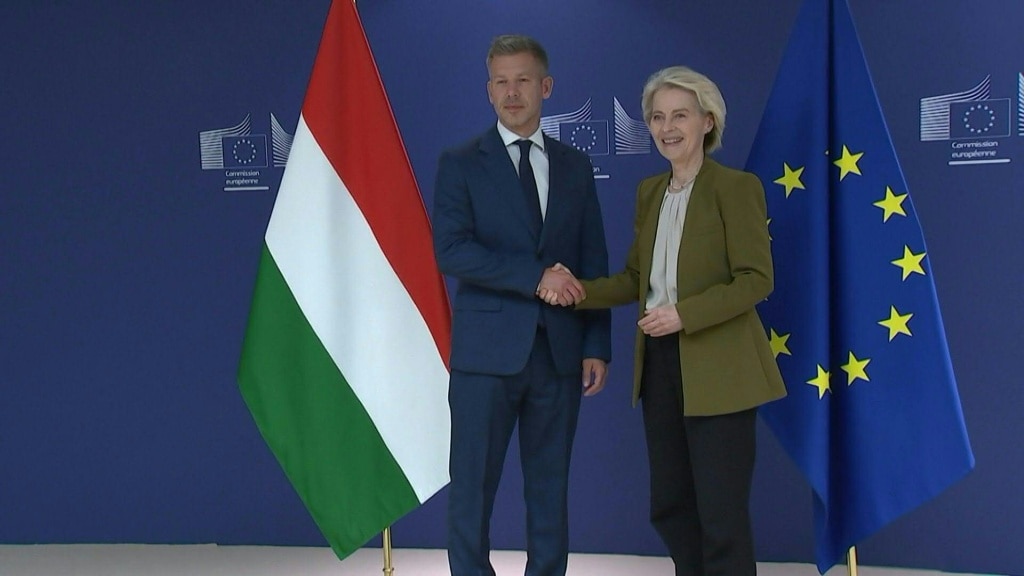
    In his first official visit to Brussels since securing a historic election victory that ended 16 years of nationalist rule under Viktor Orbán, Hungary’s incoming prime minister Peter Magyar sat down with top European Union leadership Wednesday on a mission to reset Budapest’s fractured relationship with the bloc and unlock billions in frozen funding. The trip, which included a high-stakes meeting with European Commission President Ursula von der Leyen, comes as Magyar moves quickly to deliver on his campaign promise of a new pro-EU course, even before he formally takes office next month.

    Magyar struck an upbeat tone ahead of the negotiations, telling followers in an online video that he entered the talks “very optimistic and hopeful.” His top near-term priority is reaching a formal agreement by the end of May to unfreeze roughly €10 billion in Covid-19 recovery funds held by the EU over long-standing rule-of-law concerns that mounted during Orbán’s Kremlin-aligned tenure. Magyar added that preliminary talks between his transition team and senior EU officials — which have already spanned two negotiation rounds — have proceeded smoothly, with both sides approaching discussions in a constructive spirit. “Political decisions” are now all that is required to move the process forward, he noted.

    Beyond the Covid recovery funds, Magyar is also pushing to unlock an additional €8 billion in frozen cohesion funding, bringing the total amount of suspended Hungarian aid seeking release to around €18 billion ($21 billion). Time is not on his side: the incoming Hungarian government faces a hard deadline of the end of August to implement required rule-of-law and governance reforms to secure the €10 billion in Covid recovery funds, or the allocation will be permanently forfeited.

    EU leaders have greeted Magyar’s election victory and rapid push for engagement with cautious optimism. The incoming prime minister’s super-majority control of the Hungarian parliament gives him the political capital needed to push through required reforms quickly — a luxury Orbán’s government never prioritized during years of standoffs with Brussels. European officials have been struck by the level of preparation and commitment from a transition team that has not yet formally taken power. “We’ve never seen such a level of commitment from a government that isn’t even in office yet,” Daniel Freund, a member of the European Parliament and longtime critic of Orbán, told Agence France-Presse. “It’s practically as if Hungary is rejoining the European Union.”

    As a potential early confidence boost for Magyar, Brussels is considering moving forward with approving €16 billion in preferential defense loans that were put on hold amid the standoff with Orbán in the lead-up to Hungary’s election. Still, some EU diplomats stress that concrete policy changes will be the only measure of genuine realignment in Budapest. “So far, wait and see,” one anonymous senior EU diplomat told reporters. “But that might change, considering all the good things he says and does.”

    Beyond domestic funding and rule-of-law reforms, EU leaders are also pushing for a major shift in Hungary’s policy toward Ukraine, where Orbán repeatedly blocked EU military aid for Kyiv, new sanctions on Russia, and progress on Ukraine’s EU accession bid during Moscow’s full-scale invasion. Magyar has already signaled a break from Orbán’s approach, announcing Tuesday that he plans to meet Ukrainian President Volodymyr Zelenskyy in June to “open a new chapter” in bilateral relations.

    Even before Magyar takes office, Orbán’s election defeat has already cleared long-standing logjams in EU policy toward Ukraine. Last week, the 27-member bloc approved a massive €50 billion macro-financial loan for Kyiv and a new package of sanctions on Russia — both measures that Orbán had blocked for months. EU member states now expect Magyar to lift Orbán’s remaining vetoes: unblocking billions in stalled EU military assistance for Ukraine, and removing Hungary’s objection to moving Ukraine to the next phase of its EU accession negotiations. While major EU powers have little appetite to rush Kyiv toward full membership in the near term, officials broadly agree that Ukraine is entitled to continue moving forward in the accession process.

  • War in the Middle East: latest developments

    War in the Middle East: latest developments

    Just 13 minutes ago, Agence France-Presse released a comprehensive update on the rapidly unfolding conflict across the Middle East, capturing multiple interconnected developments that ripple across global politics, energy markets and human rights. The update comes as the war, sparked by US-Israeli strikes in late February, continues to reshape regional dynamics and send shockwaves through the global economy.

    At the heart of US strategy toward Iran, former President Donald Trump has directed American national security officials to draw up plans for a sustained naval blockade of Iranian ports, according to reporting from the Wall Street Journal. The push for a long-term blockade stems from Trump’s deep skepticism that Tehran is negotiating in good faith on its nuclear program. The US administration’s core demands include a 20-year full suspension of uranium enrichment, followed by permanent stringent oversight and restrictions on Iran’s nuclear activities. Trump doubled down on this hardline stance in a post to his Truth Social platform, writing: “Iran can’t get their act together. They don’t know how to sign a nonnuclear deal. They better get smart soon!” The post included a graphic of Trump holding an assault rifle emblazoned with the phrase “NO MORE MR. NICE GUY!”.

    Trump made his first public remarks on the conflict’s trajectory during a White House state dinner honoring Britain’s King Charles III on Tuesday, claiming that Iran had been “militarily defeated”. “We have militarily defeated that particular opponent,” Trump told attendees, adding, “Charles agrees with me even more than I do — we’re never going to let that opponent have a nuclear weapon.”

    On the human rights front, the United Nations has issued sharp criticism of Iran, confirming that at least 21 people have been executed and more than 4,000 arrested across the country since the outbreak of the wider Middle East war. The UN Office of the High Commissioner for Human Rights detailed that nine of those executed were connected to anti-government protests held in January 2026, 10 were accused of membership in opposition groups, and two were executed on charges of espionage. The UN described the Iranian government’s crackdown as “harsh and brutal” against its own population.

    In Congress, US Defense Secretary Pete Hegseth is set to face intense bipartisan scrutiny Wednesday during his first congressional testimony since the war began. Appearing before the House Armed Services Committee to discuss Trump’s $1.5 trillion defense budget request, Hegseth will face tough questions over the administration’s handling of the conflict with Iran. Top US military officer General Dan Caine will also testify, and the hearing is widely expected to be fiery, as lawmakers from both major parties have already voiced deep frustration over the lack of transparency in classified briefings on the war’s progress.

    Violence continues to flare in southern Lebanon despite a fragile ceasefire implemented on April 17. Lebanon’s health ministry confirmed Tuesday that new Israeli strikes killed eight people, including several civilian civil defense rescuers, and wounded two Lebanese soldiers. Israel has been engaged in active ground combat with the Iran-backed Hezbollah militant group since early March, and low-intensity clashes have persisted despite the formal ceasefire agreement.

    For global energy markets, the conflict has already delivered significant financial windfalls for major fossil fuel producers. French energy giant TotalEnergies announced that its first-quarter net profit surged 51% year-over-year to hit $5.8 billion, a new record, driven largely by the sharp rise in crude oil prices tied to Middle East supply chain disruptions. The company noted that expanded oil and gas production in Brazil and Libya fully offset lost output from the Gulf region, which normally accounts for 15% of TotalEnergies’ total hydrocarbon production. The company highlighted its resilience, noting it has been able to capitalize on elevated global prices to boost its bottom line.

    In a separate operational update, TotalEnergies confirmed it has restarted operations at the Satorp refinery in Saudi Arabia, a joint venture with Saudi Aramco. The facility was shut down as a safety precaution after airstrikes in early April damaged three of its processing units. As of April 14, the refinery has returned to full operational capacity, processing 230,000 barrels of crude per day, with undamaged units brought back online to restart production.

    Global oil prices jumped sharply this week following two key developments: reports that Trump is unlikely to accept an Iranian proposal to reopen the Strait of Hormuz to commercial shipping traffic, and a warning from Qatar that the conflict could devolve into a protracted “frozen conflict”. By Tuesday, West Texas Intermediate crude breached the $100 per barrel mark for the first time in two weeks, while Brent crude climbed above the price point it reached before a temporary ceasefire was announced in early April. On Wednesday, both contracts continued their upward climb, with Brent holding above $113 per barrel and WTI trading above $101 per barrel.

  • Diving robot explores mystery of France’s deepest shipwreck

    Diving robot explores mystery of France’s deepest shipwreck

    Nearly 1.5 miles beneath the Mediterranean surface off the French Riviera, a remotely operated diving robot has begun the first archaeological investigation of France’s deepest recorded shipwreck, revealing a remarkably preserved 16th-century merchant vessel that could rewrite key details of early modern Mediterranean trade. The wreck, dubbed “Camarat 4”, was discovered entirely by accident last year during a routine French navy seabed survey off the coast of Ramatuelle, a short distance from the iconic resort town of Saint-Tropez. Though the deep location makes unauthorized access virtually impossible, navy officials have kept the exact coordinates of the site classified to protect the fragile archaeological remains from looting and disturbance.

    Before dawn on the first day of the mission, the expedition’s navy tugboat anchored above the wreck, carrying the specialized diving robot, a team of marine archaeologists from the French culture ministry’s underwater archaeology department, and two converted shipping containers that serve as mobile on-deck workspaces. Operated via a long fiber-optic cable linking the robot to the surface vessel, the craft — rated for dives as deep as 4,000 meters, well beyond the wreck’s 2,500-meter depth — began its slow descent, with every movement tracked in real time by a team of experts watching live monitoring screens. Navy officer Sebastien, who withheld his last name for security protocols, emphasized the extreme care required for the operation: every movement of the robot’s pincers must be deliberate and precise to avoid damaging fragile artifacts or stirring up clouds of sediment that would obscure visibility and disrupt the intact site.

    After a one-hour descent, the robot glided over the dark seabed, revealing a trove of well-preserved artifacts that have rested undisturbed for more than 400 years. High-resolution cameras captured clear footage of a cast-iron cannon, hundreds of intact ceramic pitchers and decorative plates, many adorned with hand-painted floral motifs, crosses and fish symbols. Over three hours of continuous scanning, the robot captured 86,000 individual images at a rate of eight frames per second; these images will later be stitched together to create a full, high-fidelity 3D model of the entire wreck site that researchers can study without disturbing the remains.

    Lead archaeologist Franca Cibecchini expressed surprise at the excellent condition of the site, noting that exceptional water clarity has made the survey far more productive than initial projections: “The visibility is excellent. You almost can’t tell it’s so deep.” Cibecchini and her team have concluded the vessel was almost certainly a merchant trading ship hailing from the Liguria region of northwest Italy, likely loaded with ceramic goods in the major trading ports of Genoa or nearby Savona before it sank en route to its destination. The team believes the ship was carrying a bulk cargo of glazed ceramics and raw metal bars when it went down.

    On the first day of excavation, the robot carefully maneuvered a small intact pitcher into a protective recovery cradle, moving with extreme slowness to avoid the cracks and breaks that ruin roughly one-third of all ceramics recovered from deep-sea shipwrecks, according to lead field archaeologist Marine Sadania. By the end of the first mission phase, the team successfully brought several jugs and plates to the surface, where they were transported to a dedicated marine archaeology laboratory in the southern French port city of Marseille for cleaning and analysis. Examining one recovered pitcher in the lab, Sadania pointed out the distinctive decorative work: dark blue outlines form rectangular panels across the rounded vessel, with some panels filled in turquoise and marked with saffron-yellow geometric symbols.

    Sadania emphasized the enormous historical significance of the find, noting that it fills a major gap in scholarly understanding of 16th-century Mediterranean maritime trade: “We don’t have very detailed texts about merchant ships in the 16th century, so this is a valuable source of information on maritime history.” As the first full-scale investigation of a shipwreck at this depth in French territorial waters, the mission also sets a new benchmark for deep-sea archaeological exploration, demonstrating how remotely operated robots can unlock historical secrets that were once permanently out of reach for researchers.