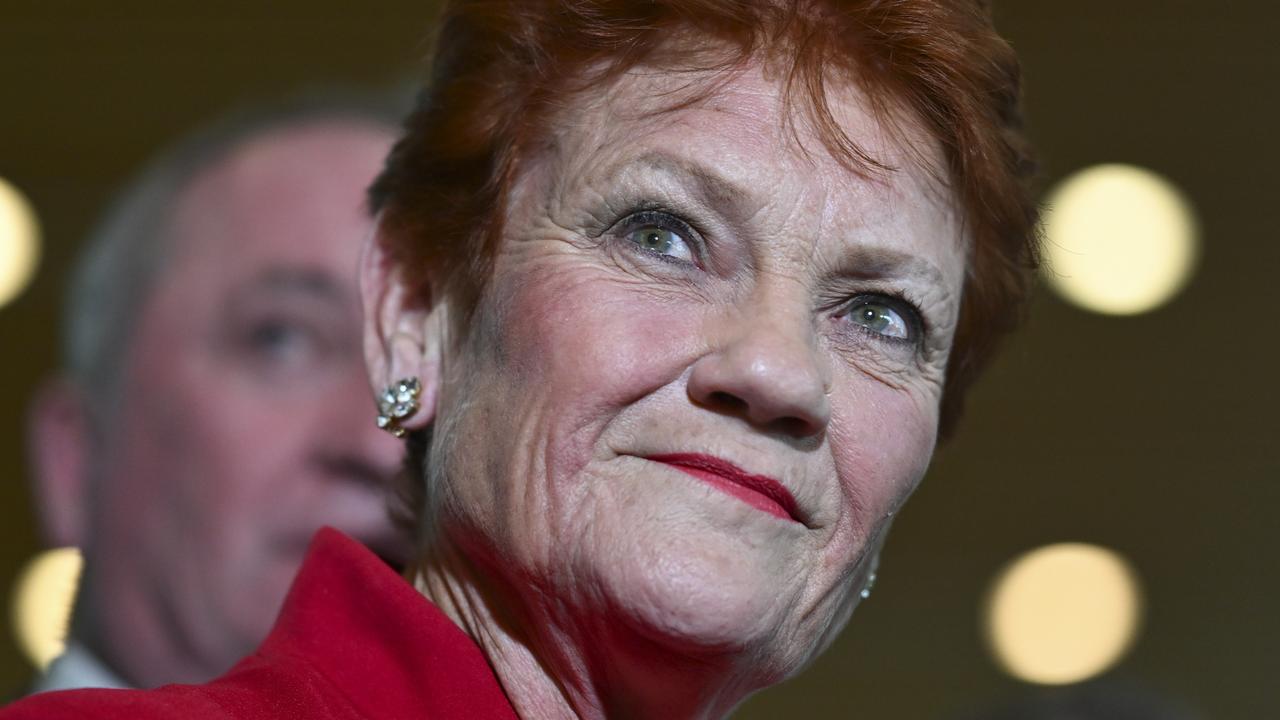
Fresh voter polling has painted a seismic shift in Australia’s political landscape, projecting a historic surge for Pauline Hanson’s One Nation party and near-total collapse for the Liberal-National Coalition if a federal election were held today. A senior Liberal figure has publicly slammed his own party’s decades of ideological drift and economic policy missteps as the root cause of the projected catastrophe.
The joint survey, conducted by the Redbridge Group and Accent Research, outlines a worst-case scenario for Australia’s two traditional major parties. The poll forecasts that the Coalition would be completely wiped out of parliamentary representation across four key states: Queensland, Western Australia, South Australia, and Tasmania. center-left Labor would hold onto a razor-thin 76-seat majority, while One Nation would capture up to 59 seats — a result that would upend nearly a century of two-party politics in Australia.
Responding to the survey’s findings, Liberal opposition housing spokesperson Senator Andrew Bragg did not mince words in his criticism of his own party. Speaking to Sky News’ Sunday Agenda program, Bragg argued that the Liberal Party has steadily abandoned its ideological distinctiveness on economic policy, growing indistinguishable from the Labor Party to the point of becoming what he called a “uni-party” with the incumbent government on core fiscal issues.
Bragg argued that the party’s failure to differentiate itself from Labor on tax policy, industrial relations, superannuation, and federal budget management over the past 10 years has left voters with no clear reason to support the Coalition, resulting in a widespread voter backlash that the new polling captures. “That’s my main takeaway, that we’ve had too much similarity with the Labor Party,” Bragg said. “We should have done more on tax, more on industrial relations, more on super, more on budget stuff … we’ve just been too similar to Labor over a long period, and we’re being punished. The chickens are coming home to roost.”
The senator warned that the Liberal Party faces political oblivion if it does not immediately course-correct and draw sharp contrasts with Labor on policy, pointing to emerging work on addressing bracket creep as a first step in the right direction. He added that Australian voters are hungry for substantive economic change, and that it is still not too late for the party to reset its agenda and win back disaffected voters.
Outlining his policy priorities, Bragg said he supports increasing the capital gains tax discount, rather than reducing it or rolling it back to the previous 50 per cent rate, arguing that adjustments to capital gains tax can be structured to incentivize greater private investment across the Australian economy. When pressed to identify which government programs he would cut to offset the cost of his proposed tax cuts, Bragg called out what he described as government “boondoggles” including the National Reconstruction Fund and the Housing Australia Future Fund as programs the Coalition could scale back or eliminate, noting that while the Coalition would continue to support the National Disability Insurance Scheme, other wasteful spending programs are fair game for cuts. “People are too afraid to say what they would cut,” he said, adding that the party needs to be clear about its policy trade-offs.
Reacting to the same polling data, Labor’s Assistant Technology Minister Andrew Charlton acknowledged that the rise of One Nation in voter surveys is impossible to ignore, framing the far-right party’s growing support as part of a global populist trend. However, Charlton argued that One Nation has excelled at exploiting voter grievances but failed to deliver substantive policy solutions that benefit working Australian families.
Charlton criticized One Nation’s voting record, noting that the party has repeatedly opposed policies that support ordinary workers, including the Same Job Same Pay legislation, wage increase measures, and cost of living relief. “Every opportunity they get … they vote against things that will benefit Australian families and workers,” Charlton said. “One Nation, every single time they face a choice between battlers and billionaires, they choose the billionaires.”
When asked if Labor risks losing significant seats to One Nation ahead of the next federal election, Charlton said the outcome remains uncertain, but that Labor’s best strategy is to continue delivering tangible policy solutions to address the daily economic challenges facing Australian households, pointing to the recent federal budget as evidence of that approach.
The polling shift comes as One Nation continues to build its electoral presence: earlier this month, the party seated only its second ever lower house federal MP, its first elected outright on a One Nation party ticket, and Pauline Hanson recently unveiled a new gas policy during a campaign visit to South Australia.