After weeks of heightened regional tensions that have sent shockwaves through global energy markets, indirect negotiations between the United States and Iran have edged closer to a preliminary agreement that could end the widespread conflict reshaping the Middle East. Top U.S. officials have signaled that a breakthrough is imminent, even as key sticking points continue to divide the two long-standing adversaries.
U.S. President Donald Trump was the first to publicly confirm that a deal has been “largely negotiated”, confirming that one core provision of the agreement would be the reopening of the Strait of Hormuz, the critical chokepoint for 20% of the world’s daily oil trade that has been closed to civilian shipping since the war began. Following Trump’s announcement, Secretary of State Marco Rubio told reporters the global community could expect “some good news” in the near term.
Iran has acknowledged the momentum toward detente, but stopped short of confirming a final deal is guaranteed. Foreign Ministry spokesman Esmaeil Baqaei told Iranian state television that while talks are moving in a positive direction, “it does not necessarily mean that we and the United States will reach an agreement on the important issues.” Under the current negotiating framework Iran has proposed, the two sides would first sign a non-binding memorandum of understanding to set core terms, with a final binding agreement completed within 30 to 60 days after the preliminary document is signed.
Multiple key issues remain unresolved, with stark public disagreements over what has already been agreed:
### The Nuclear File
According to Baqaei, Iran’s nuclear program will not be addressed in the initial framework agreement, and will instead be pushed to separate negotiations scheduled for a later date. However, The New York Times, citing two anonymous senior U.S. officials, reported that a central U.S. demand in the draft deal is that Tehran agree to give up its entire stockpile of highly enriched uranium. Details of how this transfer or dismantlement would occur would be hammered out in subsequent negotiations on the nuclear program, the paper reported.
Iran’s semi-official Fars and Tasnim news agencies have directly contradicted this account, stating that Iran has made no commitments related to its nuclear program in the ongoing talks. “Iran has made no commitment in this agreement to hand over nuclear stockpiles, remove equipment, shut down facilities, or even commit not to build a nuclear bomb,” Fars reported in a statement. Both outlets confirmed that all nuclear-related issues will be negotiated within 60 days of the preliminary memorandum being signed, if a preliminary deal is reached at all.
### Reopening the Strait of Hormuz
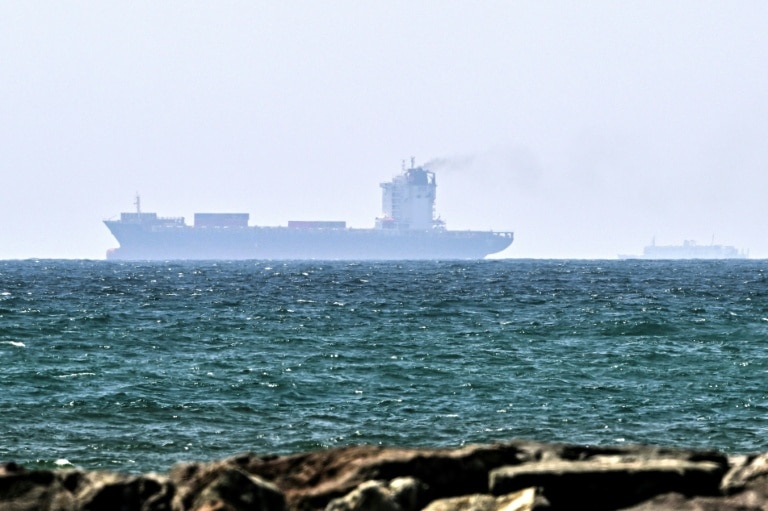
Control and access to the Strait of Hormuz has emerged as one of the most contentious issues in the talks, after Iran took full control of the waterway at the outbreak of the war and required all passing vessels to obtain approval from its armed forces to transit. Trump confirmed Saturday that the deal would see the strategic strait reopened, a move that would immediately ease pressure on global energy prices that have spiked since the waterway was closed.
Iranian state media, however, has pushed back on claims that the strait will return to its pre-war status. Fars reported that any final agreement would retain Iran’s full regulatory authority over the waterway, while Tasnim added that “the status of the Strait of Hormuz would not revert to its pre-war situation.” The Iranian outlet also noted that under the draft framework, the U.S. naval blockade of Iranian ports must be fully lifted within 30 days of the preliminary deal being signed, a key Iranian demand.
### Frozen Assets and Sanctions Relief
Tehran has made the release of billions of dollars in Iranian assets frozen by U.S. sanctions a non-negotiable condition for any preliminary agreement. According to Tasnim, Iran has insisted that “any initial understanding must be conditional on at least partial access to the assets” and that “there will be no agreement unless a specified portion of Iran’s frozen assets is released at the very first stage.” Iran is also demanding a formal, guaranteed mechanism to ensure the full release of all blocked funds over the course of negotiations. Tasnim’s source confirmed that disagreements over this provision are one of the main reasons a preliminary deal has not yet been finalized. Fars also reported that the draft deal calls for the U.S. to temporarily lift all sanctions on Iranian oil, gas, and petrochemical exports for the duration of the 60-day negotiation window.
### Ceasefire for Lebanon
Israel has continued to carry out daily airstrikes in Lebanon targeting the Iran-backed militant group Hezbollah, despite a separate U.S.-brokered ceasefire deal, escalating the regional spillover of the conflict. Iran has repeatedly stated that any ceasefire agreement must cover all fronts of the regional war, including Lebanon, and Hezbollah has said it trusts Tehran to uphold its commitments to the group.
Tasnim reported that the draft memorandum of understanding will explicitly call for an end to all hostilities across all regional fronts, including Lebanon. As a U.S. ally, Israel would be expected to halt its military campaign in Lebanon under the terms of the deal, the outlet added. Baqaei reaffirmed this priority in his remarks to state television, saying: “at this stage, we will not discuss the details of the nuclear issue… we have decided to prioritise an urgent issue for all of us: ending the war on all fronts including Lebanon.”