
On a trading day that saw broad-based growth across nearly all Australian market segments, a sharp downturn among the nation’s four largest lenders dragged the country’s benchmark ASX 200 into negative territory, with the Commonwealth Bank of Australia (CBA) posting its worst single-day performance in recent history. The Wednesday session closed with the ASX 200 down 40.30 points, or 0.46%, settling at 8630.40, while the broader All Ordinaries index slipped 0.32% to 8880.70, a drop of 28.90 points. Against this market shift, the Australian dollar strengthened slightly to trade at 72.38 U.S. cents. Notably, 10 of the 11 tracked market sectors closed the session in positive territory, making the overall index decline almost entirely attributable to the selloff in major financial stocks. The financial sector as a whole fell more than 4% following CBA’s release of its quarterly earnings and updated outlook, which spooked investor sentiment across the entire banking industry. CBA shares plummeted 10.43% to close at $153.67, erasing more than $25 billion from the bank’s total market capitalization in a single session. The lender reported a March quarter net profit of $2.7 billion, but what caught investor attention was its announcement of a $200 million increase in bad debt provisions. The bank cited mounting budgetary pressure on Australian households and businesses, amplified by geopolitical instability tied to the Israel-Iran regional conflict. Industry analysts say the move signals a growing cautious outlook across Australia’s major banking sector, as early signs of financial stress begin to emerge among consumers. “We are starting to see early signs of stress emerge more broadly,” explained Cameron McCormack, senior portfolio manager at global investment firm VanEck. “Arrears are edging higher across personal loans, home loans and credit cards, while total provisioning across the big four has risen to $6.5 billion. Importantly, this is not isolated to CBA. Provisioning has been stepping up across the major banks this reporting season, which is consistent with the cumulative impact of restrictive monetary policy beginning to bite.” McCormack added that persistent high inflation and a resilient labour market have created a dual pressure that is squeezing bank profits from both sides. “On the demand side, higher interest rates are weighing on consumers and slowing credit growth,” he said. “On the supply side, intense competition is limiting the ability for banks to reprice loans. As a result, net interest margins are increasingly being squeezed.” The market selloff triggered by CBA’s results pulled down the other three major Australian banks alongside it. Westpac closed down 2.84% at $35.57, the National Australia Bank (NAB) fell 1.50% to $36.86, and Australia and New Zealand Banking Group (ANZ) dropped 1.62% to $34.57. Outside the financial sector, strong gains in consumer discretionary stocks and mining shares helped offset much of the sector’s losses. Consumer conglomerate Wesfarmers added 0.35% to close at $71.55, while gaming firm Aristocrat Leisure surged 13.28% to $51.94 after reporting a robust first-half earnings report: normalised revenue hit $3.03 billion for the six months ending March 31, while net profit jumped to $725 million. Australia’s big three iron ore miners also posted solid gains. BHP closed up 2.91% at $61.52, Rio Tinto gained 1.93% to settle at $189, and Fortescue Metals climbed 2.78% to $22.52. A handful of other individual companies posted notable losses in Wednesday’s session. Buy now, pay later provider Zip fell 0.8% to $2.44 after Australia’s High Court ordered the firm to rebrand in the country over a successful trademark dispute. Pathology and medical diagnostics firm Healius plummeted 22.68% to $0.375 after it downgraded its full-year earnings guidance and announced the sale of its Agilex Biolabs subsidiary. Online furniture retailer Temple and Webster also slid 6.39% to $4.98 after it forecast underlying earnings of only $20 million to $22 million for the 2026 financial year, missing earlier market expectations.
标签: Oceania
大洋洲
-
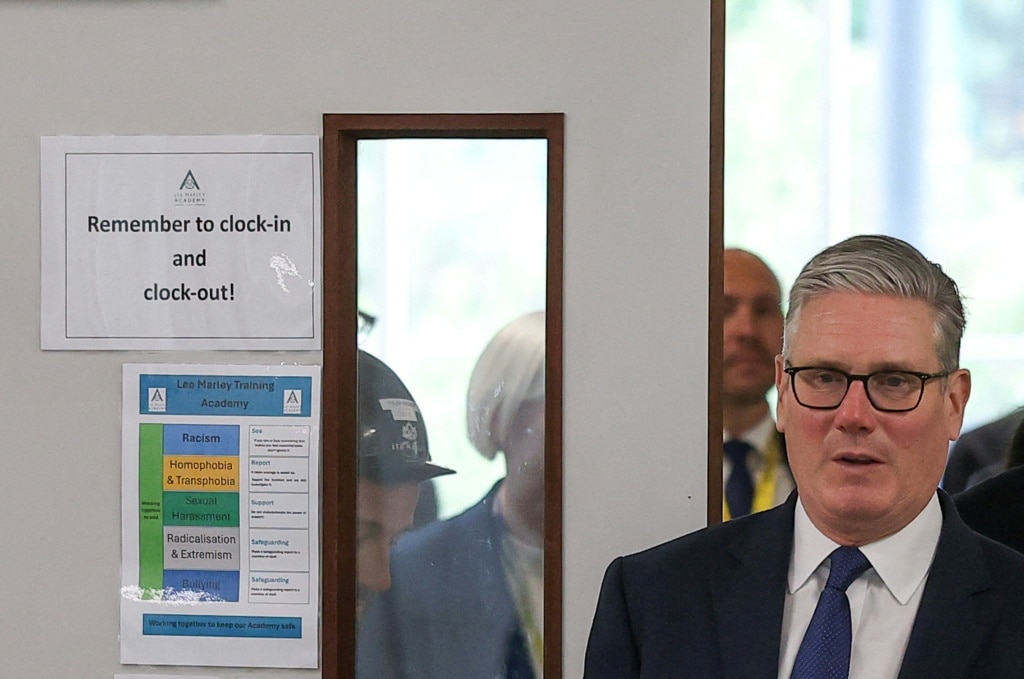
Besieged Starmer seeks to heal Labour divisions in King’s Speech
United Kingdom Prime Minister Keir Starmer faces one of the most critical junctures of his 22-month premiership this Wednesday, as he prepares to unveil his administration’s new legislative agenda through the traditional King’s Speech ceremony — an event that will likely shape the embattled leader’s political future. The carefully orchestrated state occasion, held at the Palace of Westminster, comes on the heels of a devastating weekend for the ruling Labour Party, which suffered lopsided losses in recent local and regional elections. The poor electoral performance erupted into open internal conflict on Tuesday, with deep divisions splitting the party over whether Starmer should step down immediately.
As of Tuesday evening, more than 80 sitting Labour Members of Parliament have publicly called for Starmer’s resignation, and four junior ministers have stepped down from their government posts in protest. But the tide has not completely turned against the prime minister: over 100 Labour MPs have signed an open letter backing his leadership, and most senior cabinet members have publicly rallied to his side. Starmer himself has doubled down on his commitment to stay in office, telling supporters that no viable challenger has yet stepped forward to formally launch a leadership contest against him.
Deputy Prime Minister David Lammy has called for calm among restless lawmakers, urging the party to “step back and take a breath” amid the chaos, while a spokesperson for Home Secretary Shabana Mahmood refuted widespread social media rumours that she was preparing to resign her post. Starmer is scheduled to hold a face-to-face meeting Wednesday morning with Health Secretary Wes Streeting, who is widely viewed as one of the leading potential contenders for the Labour leadership if a contest is called. Streeting commands strong support from the centre-right wing of the party, while former Deputy Prime Minister Angela Rayner is seen as the likely candidate for the party’s left flank if a challenge emerges. Another high-profile potential candidate, Greater Manchester Mayor Andy Burnham, is currently ineligible to run because he does not hold a seat in Parliament; however, his backers have called on Starmer to announce an immediate departure timetable that would allow Burnham to win a parliamentary seat and enter the race.
Under Labour Party rules, any would-be challenger needs the public backing of at least 81 sitting Labour MPs — equal to 20% of the party’s parliamentary caucus — to trigger a formal leadership contest. Starmer has repeatedly vowed to fight any challenge to his leadership.
In remarks released late Tuesday ahead of the ceremony, Starmer framed the moment as a turning point for the United Kingdom, arguing that “Britain stands at a pivotal moment.” He added, “We can either press ahead with a plan to build a stronger, fairer country, or turn back to the chaos and instability of the past.” The prime minister has already sought to shore up support from disillusioned voters, who have grown increasingly impatient for tangible change after Labour took office last year, promising that his administration will deliver “better, bolder” policy to address public concerns. Downing Street has framed the upcoming legislative package as an “ambitious programme” that will deliver long-term gains to make Britain “a stronger, fairer” nation. The 35-plus proposed bills included in the programme focus heavily on shoring up economic, energy and national security, with headline pledges including the full nationalization of British Steel and a deepening of political and economic ties with the European Union.
While the speech is delivered by King Charles III in his formal role as head of state, the text is drafted entirely by the prime minister’s government, to lay out its planned legislative agenda for the coming 12 months. The centuries-old ceremony follows a strict, ritualized schedule that dates back hundreds of years. The day begins with a traditional search of the Palace of Westminster’s basement by royal security personnel, a tradition rooted in the 1605 Gunpowder Plot, when Catholic plotters attempted to blow up the parliamentary building. King Charles will then travel from Buckingham Palace to Westminster in a royal carriage, escorted by mounted cavalry. In a longstanding custom meant to ensure the monarch’s safe return to Buckingham Palace, a member of Parliament will be held as a ceremonial “hostage” at the palace for the duration of the event. When a senior parliamentary official known as Black Rod travels to the House of Commons to summon MPs to the House of Lords, the door of the Commons will be ceremonially slammed in Black Rod’s face — a symbolic gesture to assert Parliament’s independence from the monarchy. MPs will then process to the House of Lords, where King Charles will deliver the speech from the golden throne, wearing the diamond-studded Imperial State Crown and a traditional crimson ermine robe, to assembled peers and invited MPs, scheduled for approximately 11:30 a.m. GMT.
-

Stinger trap deployed, car loses tyre in dramatic end to alleged bike thief’s cop chase
In a high-stakes operation that unfolded in the Queensland suburb of Springfield, dramatic infra-red aerial footage from the Queensland Police Service’s Polair unit has documented the successful conclusion of a chase against three men accused of armed motorcycle theft. The sequence of events began on Tuesday evening, when local law enforcement received an urgent distress call just after 7:10 pm from Southern Cross Circuit. The caller, a 25-year-old resident of Redbank Plains, reported that he had been threatened with a firearm by a group of men, who then stole his Yamaha MTN660 motorcycle before loading the stolen vehicle into the back of a 2018 Mitsubishi Triton utility truck.
Acting on the tip, officers set up an intercept along Regents Drive, where the suspected getaway vehicle was traveling. When the Triton failed to stop, police deployed a remote-controlled stinger device across the road. The aerial footage clearly captures the moment the device punctures one of the truck’s tires, leaving the driver unable to continue the escape. All three suspects immediately abandoned the disabled vehicle and attempted to evade capture on foot across the surrounding area.
What followed was a coordinated manhunt involving uniformed officers, detective units from the Ipswich Criminal Investigation Branch, and police service dogs. Within a short time, all three suspects were located and taken into custody, with one arrest on Regents Drive itself captured on the Polair aerial footage. Three men now face a series of serious charges related to the incident:
A 31-year-old Redbank Plains resident faces one count of armed robbery and one count of weapon possession for a knife; a 24-year-old Redbank Plains man has been charged with a single count of armed robbery; and a 31-year-old Bundamba man faces one count of armed robbery alongside an additional charge of illegal possession of dangerous drugs. All three suspects have been remanded in police custody and are scheduled to appear before the Ipswich Magistrates Court on 27 May to answer the charges against them.
-
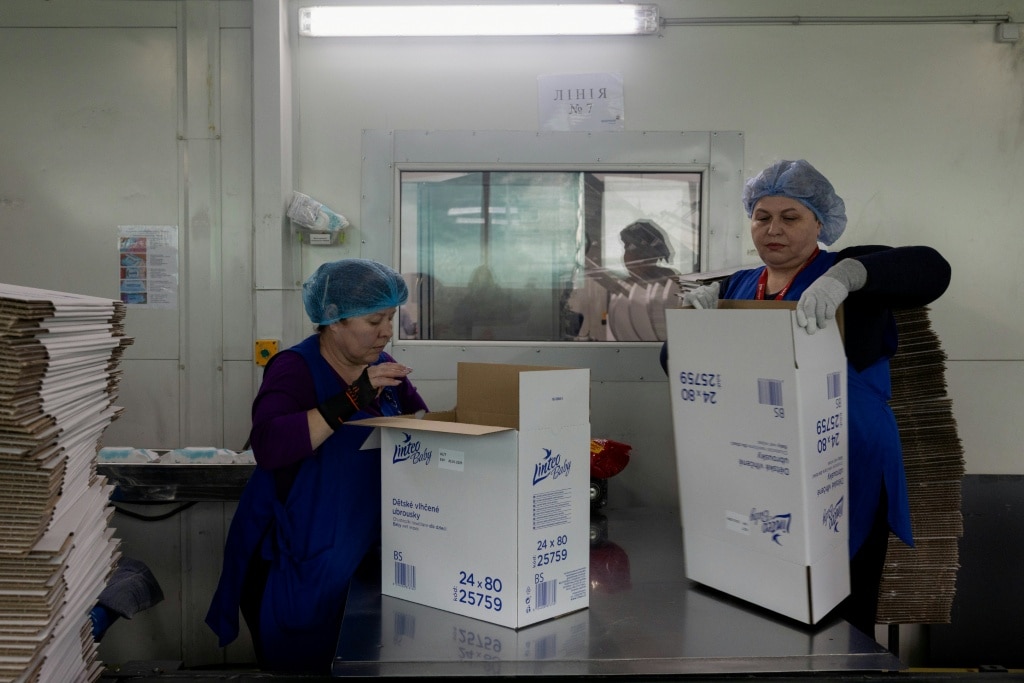
‘Short of blue-collar workers’: Ukraine’s battle for labour
When Anatoliy Synkov fled Russian advancing forces from the ruined city of Bakhmut and resettled in the central industrial hub of Dnipro, he encountered a rare opportunity in a war-battered economy: immediate job offers poured in from local employers desperate for staff. The 55-year-old former forester landed a position on a household goods production line at Biosphere Corporation within seven days, an unusually quick hiring process that underscores a growing, existential crisis for Ukraine’s wartime economy: severe, widespread labor shortages that have left hundreds of businesses struggling to operate.
Even months after starting his new role, Synkov says he still receives frequent unsolicited job offers from other Ukrainian companies, even as employers have hiked wages to attract scarce candidates. The scale of Ukraine’s labor crisis is rooted in the massive population displacement and human cost of the full-scale Russian invasion, which began in 2022. Before the war, Ukraine had a population of roughly 40 million. Today, hundreds of thousands of working-age men have been drafted into military service, with tens of thousands killed or wounded in combat, while the United Nations estimates that around 5.7 million Ukrainians still remain refugees in European and other countries outside of Ukraine.
Biosphere, one of Ukraine’s largest household goods manufacturers, has felt the labor crunch acutely — even after surviving a direct Russian missile strike on one of its Dnipro warehouses in April 2025 that killed one worker and injured 11 others, leaving a gutted, blackened structure still standing at the site. Today, the Dnipro plant employs just 500 workers, down from 800 before the 2022 invasion, according to Olena Shpitz, the facility’s human resources director. Around 100 of Biosphere’s former employees have joined the Ukrainian armed forces, and recruitment has become a constant, uphill battle.
“The number of candidates has dropped significantly,” Shpitz explained. Positions that once took just seven days to fill now take six times that long, and the company has even rolled out employee referral bonuses, offering cash rewards to current workers who help recruit relatives to fill open roles.
The labor shortage is not limited to civilian manufacturing. It has also hit Ukraine’s rapidly expanding military production sector, which is critical to supporting frontline forces against Russia. Kvertus, a leading Ukrainian manufacturer of anti-drone jamming systems, told AFP that critical skilled specialists are often impossible to find in sufficient quantities to meet growing military demand.
New data from the European Business Association (EBA) underscores the scope of the crisis: at the start of 2026, 78 percent of EBA member companies operating in Ukraine reported widespread shortages of skilled workers. Economist Lyubov Yatsenko, a researcher at Ukraine’s National Institute for Strategic Studies, told AFP the war has compounded long-term demographic and structural challenges that predated the invasion, including steady population decline dating back to the collapse of the Soviet Union and a persistent mismatch between the skills taught by Ukraine’s education system and the needs of modern employers.
The most acute gaps are for blue-collar manual labor roles, alongside public sector positions including doctors, teachers and agricultural administrators. These roles have long suffered from low pay and low social prestige, Yatsenko noted, making them even less attractive amid the upheaval of war.
Paradoxically, crippling labor shortages coexist with double-digit unemployment in Ukraine. Official employment data is not published during wartime, but polling firm Info Sapiens estimated the national unemployment rate hit 15.5 percent in March 2026. The disconnect stems from a major skills mismatch: the market has a surplus of accountants, corporate economists and lower-level managers, but far too few trained manual workers. To bridge this gap, Yatsenko has called for expanded retraining programs and targeted policies to draw underutilized groups — including young people, refugees, war veterans and older workers — into understaffed sectors.
Biosphere already employs 19 war veterans at its Dnipro plant, but company leaders say they need additional government support to hire more former soldiers and civilians living with war-related disabilities. Compounding the problem, tens of thousands of draft-eligible men avoid formal work entirely, either staying unemployed or working in the informal shadow economy to evade mobilization rules.
Resolving the crisis will require sweeping reforms to Ukraine’s mobilization system, exemption policies and efforts to bring informal workers into the formal economy, a senior unnamed Ukrainian foreign economic official told AFP. “The main direction must be a more transparent and structured way to change between war service, being at the front fighting, and working in the economy very normally,” the official said. “There must be better rules to go back and forth.” Ukrainian President Volodymyr Zelensky has recently announced plans to allow limited demobilization of long-serving troops in the coming months, though no concrete details of the plan have been released to the public.
Few Ukrainian companies are open to hiring foreign workers to fill gaps: an October 2025 poll found that only one in eight businesses consider bringing in workers from abroad, with most citing concerns over language barriers and cultural or religious differences. Instead, Ukrainian businesses are increasingly turning to women to fill empty roles, after the Kyiv government lifted restrictions on women working in a range of previously banned professions including mining. At Biosphere’s Dnipro plant, women now make up roughly half of the workforce, up from a much lower share before 2022.
“Women are the one thing that they rely on most right now to make it more long-term and sustainable,” the senior economic official said. Even with this shift, challenges remain: of the 3.7 million internally displaced people across Ukraine, many are unable to join the workforce due to war-related trauma or skills that do not match the needs of local labor markets in their new host regions.
For Synkov, the transition from life in Bakhmut to work in Dnipro was not easy. He says it took two full years to process the trauma of being forced to flee his home. But today, he remains pragmatic about his future in wartime Ukraine: “You have to live.”
-
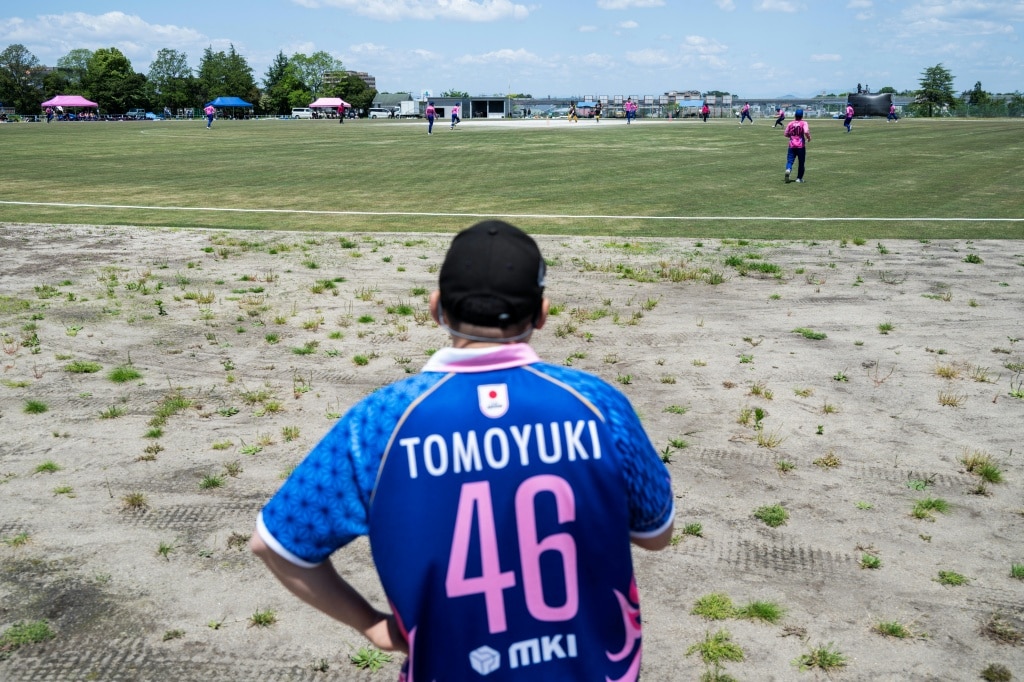
‘Don’t understand it, but it looks fun’: cricket bowls Japan over
Four months before the Asian Games kick off in Nagoya, a quiet but energetic buzz is growing around a converted baseball field turned brand-new cricket ground, where a sport largely unfamiliar to most Japanese is starting to win over casual spectators.
When the continental multi-sport event runs from September 19 to October 4, most competitions on the program will feel familiar to Japanese sports fans. Cricket, however, remains a complete mystery to the majority of the population – but that has not stopped locals from leaning into curiosity and showing up to watch the action.
Located 40 minutes by train from central Nagoya, Korogi Sports Park retains faint traces of its former life as a baseball diamond, with an old pitcher’s mound still sitting just beyond the playing boundary. Right now, the venue is cutting its teeth ahead of the Asian Games by hosting the first major international cricket event ever held at the site: the East Asia-Pacific qualifiers for the 2028 Men’s T20 World Cup. The tournament brings together eight emerging cricket nations alongside host Japan: Vanuatu, Fiji, Samoa, Indonesia, the Philippines, Papua New Guinea, the Cook Islands and South Korea.
For many local attendees, the match is their first ever live experience with the sport. Yuya Okimasu, a 34-year-old local resident who brought his wife and two children to watch Japan face off against Vanuatu, said his family only first encountered cricket through his daughter’s favorite Australian children’s cartoon *Bluey*. “I’m looking at the rules as I’m watching the game because I don’t understand it, but it looks fun,” Okimasu told reporters, echoing the sentiment of many first-time spectators.
On a windy opening weekend, roughly 300 fans turned out for Japan’s first qualifying match. Most relaxed on deck chairs, listening to a commentator walk through the basic rules of play to help new fans follow along. Temporary stands will be installed before the Asian Games to boost capacity to around 2,000 spectators. While top-ranked international teams are accustomed to far larger, more lavish venues, the quality of the venue’s playing pitch is not expected to disappoint.
The pitch is overseen by Asitha Wijayasinghe, the same curator who manages the playing surface at Sri Lanka’s 35,000-seat Pallekele International Cricket Stadium. Adam Birss, operations manager for the Asian Games at Korogi Sports Park, noted the pitch is expected to play with extra bounce, even with the approach of Japan’s annual September typhoon season. “I would say that it should act like the pitches in Pakistan, which are bouncy but also take spin,” Birss explained. “It’s got a grippy surface, so if you put spin on the ball, it will spin off.”
This new venue is a key piece of an ambitious long-term plan to grow cricket in Japan, a nation where baseball has long reigned as the dominant bat-and-ball sport. The International Cricket Council (ICC) has identified Japan as one of its global priority markets for expansion, and grassroots participation numbers have slowly climbed in recent years. The Japan Cricket Association (JCA) has already built a small but stable foothold for the sport in the Tokyo area.
Cricket’s inclusion in the 2026 Nagoya Asian Games was only confirmed in April 2024, leaving organizers with just 15 months of preparation time. The JCA had previously pushed unsuccessfully to host matches in Sano, a city north of Tokyo that is already a domestic cricket hotbed. JCA CEO Naoki Alex Miyaji acknowledged that Nagoya remains “a huge vacuum area for cricket”, and he has raised concerns that the tight timeline leaves too little time to build widespread public interest ahead of the tournament. “Creating something here with the Asian Games is an ideal situation, but not when you’re talking with 15 months’ preparation,” Miyaji said.
Long-term questions about the venue also remain unresolved. After the Asian Games conclude, the park will be shared between cricket and local baseball teams, and it is still unclear which governing body will take responsibility for maintaining the specialized cricket pitch. Even so, Miyaji says he holds out hope that the venue will become “one of the key ingredients of the growth of cricket in Japan”.
Local leadership has already gotten behind the project, with Nagoya’s mayor emerging as an enthusiastic early supporter. That early public curiosity among attendees who turned out for the qualifying match suggests there is potential for broader interest. In the opening qualifier, the Japanese men’s team picked up a confidence-boosting 30-run win over Vanuatu, adding to the growing momentum.
With just four months remaining until the Asian Games begin, Japanese players say they are ready to embrace the moment and help grow the sport they love. “The ground looks in incredible condition given that they only started building it a few months ago,” said Japan captain Kendel Kadowaki-Fleming. “Excitement is the overwhelming emotion that we’re feeling about it.”
-

Patients of retired dentist warned of bloodborne viruses, including HIV
Public health authorities in New South Wales, Australia have issued an urgent public warning to thousands of people who received dental care from a retired Sydney dentist over the past 25 years, urging them to get tested for serious bloodborne viruses after widespread failures in infection prevention were uncovered at his former clinic.
In a formal statement released Wednesday, the New South Wales Ministry of Health confirmed that inspections of Dr William Tam’s Strathfield-based clinic, located in Sydney’s western suburbs, found chronic poor cleaning protocols and inadequately sterilized medical equipment during a routine audit conducted this past April. Just two weeks after the audit was completed, Tam retired from practice, and has since been stripped of his dental registration, according to official records.
Officials note that the inadequate infection control measures put all former patients of Tam’s practice at low but non-negligible risk of contracting three dangerous bloodborne pathogens: hepatitis B, hepatitis C, and HIV. Dr Leena Gupta, clinical director of public health for Sydney Local Health District, emphasized that these infections often remain asymptomatic for decades, even as they cause progressive, long-lasting damage to a patient’s health that can be avoided with early intervention.
“People with HIV, hepatitis B, or hepatitis C may not have any symptoms for decades, so it is important that people at risk of these infections are tested, so that they can access treatment as appropriate,” Gupta explained in the ministry’s statement.
A major complicating factor in the public health response is the complete lack of surviving patient records that would allow officials to directly contact everyone who received care from Tam over his decades of practice. Investigators estimate that Tam treated thousands of individual patients across the 25-year period in question, leaving public health teams with no option but to issue a broad public appeal to anyone who visited his clinic to come forward for testing.
Dr Zeina Najjar, a staff specialist with Sydney Local Health District, outlined the findings of the April audit during a Wednesday press briefing, confirming the lapses in sterilization and cleaning that prompted the public warning.
This event marks the third such public health alert related to unsafe dental practices in Sydney in less than a decade, highlighting ongoing concerns around infection control oversight in dental care across the region. In 2018, roughly 10,000 patients at a Haberfield dental clinic were urged to get tested for HIV and hepatitis after similar infection control failures were uncovered. Most recently, in October of 2024, patients of a Mortdale dental clinic in southern Sydney received the same warning, after that facility’s dentist was barred from practice for repeated breaches of national infection control standards.
-
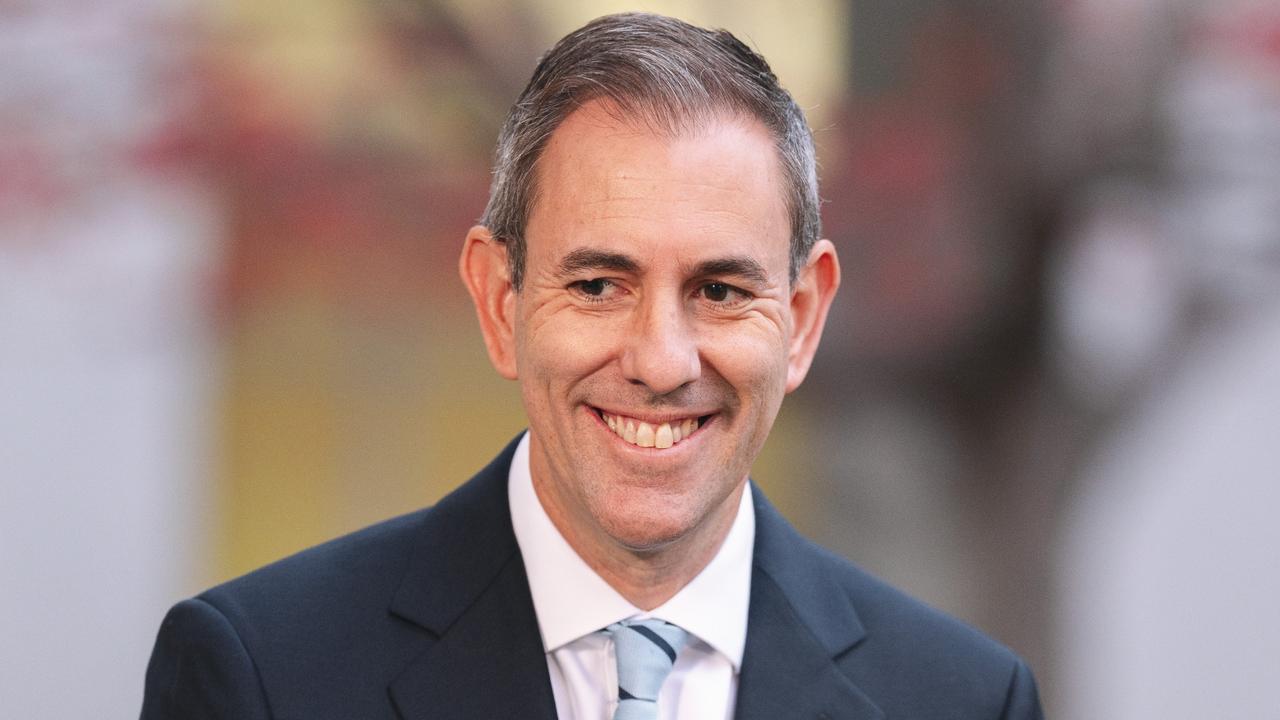
Treasurer Jim Chalmers speaks at National Press Club after budget
Fresh from handing down Australia’s most ambitious federal budget in recent memory, Treasurer Jim Chalmers has opened up about how escalating conflict in Iran upended months of policy planning, forced major adjustments to long-planned tax changes, and forced the government to accelerate reform efforts amid global economic uncertainty. In his traditional post-budget address to Canberra’s National Press Club this week, Chalmers revealed that while the Albanese government had reached a broad agreement to pursue sweeping tax reform over the 2023-2024 summer, final decisions on contentious changes to capital gains tax (CGT), negative gearing and trust taxation were only locked in after the outbreak of hostilities in Iran.
The Iran conflict has fundamentally altered the federal government’s medium-term budget forecasts, Chalmers explained. Treasury now operates under the assumption that global Brent crude prices will hold around $US100 a barrel through the end of June 2025 before easing back to $US80 a barrel. This baseline projection means Australia will face stickier inflation, weakened household consumption, and slower overall economic growth than officials predicted just six months ago.
Far from pausing ambitious policy changes to wait out global volatility, however, Chalmers said the upheaval reinforced the government’s commitment to pushing ahead with structural reform. “If you wait for perfect stability to reform, you’ll be waiting forever,” he told attendees. “This global turbulence is no excuse to roll up into a little ball and hope that it passes quickly. If anything, it’s a reason to do more on resilience and more on reform, more urgently. And that’s the attitude that we adopted here in the budget.” While Chalmers acknowledged that a number of progressive policy proposals had been delayed by the unpredictable external environment, he confirmed that the core of the government’s reform agenda remained fully intact, centered on advancing intergenerational fairness through a rebalanced tax system.
Turning to the domestic political context of the budget, Chalmers positioned the Australian Labor Party as the last bulwark of sensible centrist politics in the country, amid a global rise in far-right populism. He pointed to recent gains by right-wing populist forces, from Nigel Farage’s Reform UK in the United Kingdom to One Nation’s historic by-election win in the regional New South Wales seat of Farrer at the weekend – which ended 77 years of continuous Liberal Party control of the electorate. “We are the last ones standing in the sensible centre of Australian politics but we aren’t standing still,” Chalmers argued. “Standing still would make us the reluctant defenders of a status quo that doesn’t work. We stand for real change that makes a real difference.” One Nation leader Pauline Hanson has longstanding close political ties to Farage, making the string of recent far-right gains a point of explicit focus for the government’s political framing.
The centerpiece of the government’s tax reform package is a set of sweeping changes to Australia’s housing investment tax concessions that break a key 2022 federal election promise made by Prime Minister Anthony Albanese. Ahead of last year’s election campaign, Albanese explicitly pledged that a Labor government would not alter existing CGT or negative gearing settings. The new budget reverses that commitment: it will scrap the 50 per cent CGT discount introduced by the Howard-era Coalition government in 1999, replacing it with an indexation-based system, while limiting negative gearing tax deductions exclusively to newly constructed residential properties.
Chalmers acknowledged the shift in the government’s position, admitting that it was “not unfair for people to point out that the position we put last night in the budget is different to the position that we held and expressed 12 months ago.” He added that the government always expected the decision to spark political controversy, but framed the changes as a necessary correction to longstanding market distortions. The 1999 CGT discount, he argued, had skewed investment incentives across the Australian housing market, driving up prices for aspiring home owners and favoring wealthy property investors over first-time buyers. The government has designed the reforms to minimize near-term market disruption, Chalmers said, taking into account the millions of Australian investors who made long-term financial decisions under the previous concession regime. This broken campaign promise marks the second major reversal for the Albanese government, after its 2024 decision to roll back the former Coalition government’s stage 3 income tax cuts.
On defence policy, Chalmers defended the growing cost of the trilateral AUKUS nuclear submarine pact with the United States and the United Kingdom, as new budget figures revealed rising near-term spending on the program. The upcoming 2025-2026 financial year will see $512.5 million allocated to the Australian Submarine Agency, a 33 per cent increase from the previous year’s allocation, while the total projected cost of the nuclear submarine program has risen by an extra $431 million. Over the full 10-year implementation timeline, the total cost of Australia’s undersea warfare program is now projected to reach as high as $130 billion.
Pressed on whether the ballooning cost of AUKUS would force cuts to other critical defence and social programs, Chalmers acknowledged that large-scale defence capability projects always carry inherent risk of cost blowouts, but argued that the investment was non-negotiable amid growing regional security tensions. “Declaring the world a “dangerous place”, he said “I recognise that national security and economic security are effectively the same thing now, and nothing comes cheap in defence if you’re serious about making Australians safer. And I know that there’s been a range of views about that, but from my point of view, big investments in national security make a lot of sense.” The AUKUS pact, which aims to deliver Australia a fleet of eight nuclear-powered submarines – three built in the U.S. to the Virginia-class design, and five jointly designed Australian-built AUKUS-class boats – is the centerpiece of Australia’s 21st century defence strategy, designed to deter Chinese military aggression in the Indo-Pacific.
-
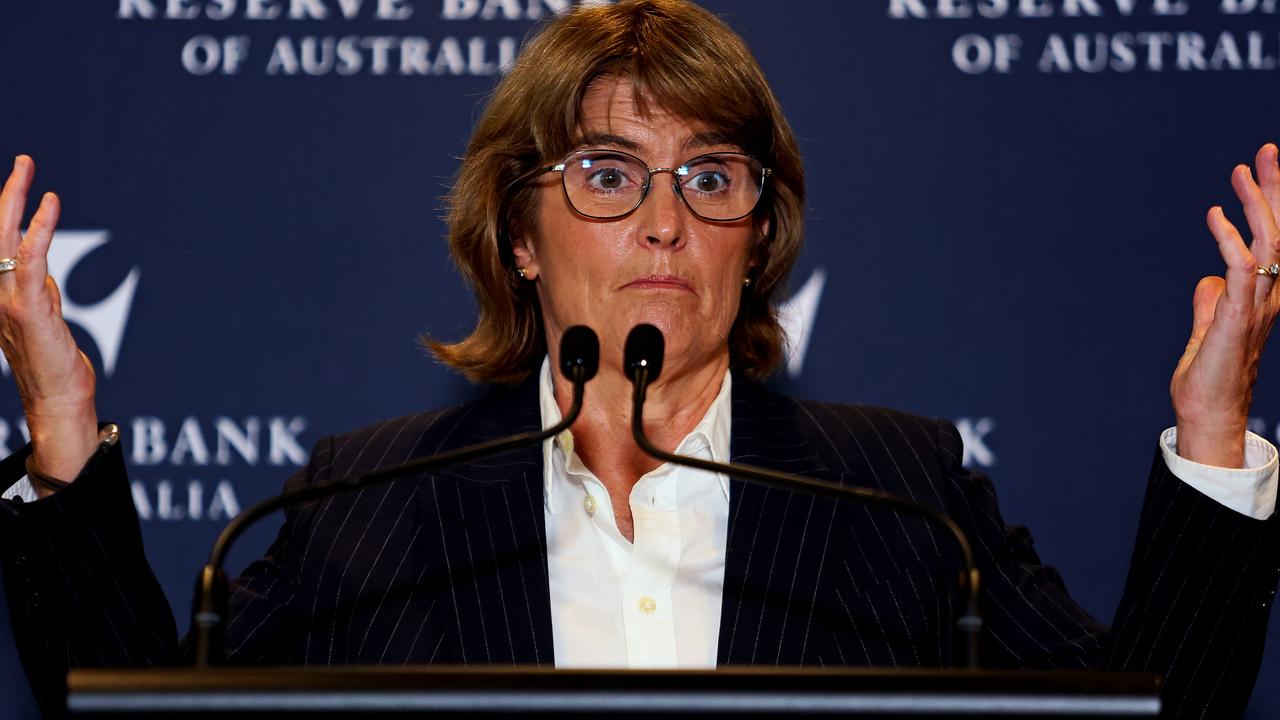
Mortgage holders warned of rate hike as budget fails to tame inflation
Australia’s recently unveiled federal budget has left many financially squeezed mortgage holders bracing for steeper home loan repayments, with leading economists warning the document fails to rein in excessive government spending, tame persistent inflation, or ease pressure on the Reserve Bank of Australia (RBA) to implement additional monetary tightening. The outcome has put already overstretched household budgets at further risk, as global energy market volatility driven by Middle East tensions between the U.S. and Iran continues to push up fuel and broader living costs.
AMP’s chief economist Shane Oliver, one of the most widely followed experts on Australian monetary and fiscal policy, sounded the alarm over the budget’s structural trajectory, noting that it locks in elevated public spending and ongoing budget deficits over the medium term. In comments to Australian NewsWire, Oliver explained that the budget even includes minor near-term stimulus measures that could add marginal upward pressure on inflation, which remains above the RBA’s target range. “It’s not huge but it certainly doesn’t make the Reserve Bank’s job any easier,” he said. Prior to the release of Treasurer Jim Chalmers’ fifth budget on Tuesday, Oliver had already predicted the RBA would implement another interest rate hike in August. The budget’s lack of meaningful fiscal contraction has not changed that forecast, he confirmed.
David Bassanese, chief economist at leading investment firm Betashares, echoed Oliver’s assessment. While he noted the budget does not dramatically worsen near-term inflation risks, it also fails to deliver the fiscal restraint needed to reduce the RBA’s burden of further policy tightening if inflation remains stubborn. “The Budget is hardly super restrictive either, so does not lessen the burden on the RBA to tighten policy further if need be,” Bassanese said.
On a more positive note, economists did acknowledge that the federal government resisted widespread political pressure to roll out broad, untargeted relief for households struggling with rising cost of living — a move that Oliver said would have been a catastrophic mistake for long-term inflation and interest rates. Many state Australian budgets have rolled out broad household relief in recent months, but the federal government held back from large-scale across-the-board support even as mortgage and energy costs climb. Oliver noted that broad-based relief would have added significantly to inflation, ultimately forcing bigger rate hikes that would leave mortgage holders worse off over time. “The temptation would have been to do more – like some of the state budgets – that would have been disastrous,” he said. “It was good to see the government holding back, I think we needed to see more of a cut back in the near term.”
Oliver added that any government support should be targeted exclusively at the most vulnerable households, rather than distributed to all Australians regardless of income. Untargeted universal relief is unnecessarily costly and adds unnecessary inflationary pressure, he argued. That pressure is already being amplified by a sharp rally in global crude oil prices, which have surged from roughly $US56 per barrel to briefly touch $US131 per barrel amid Middle East supply fears, driving up fuel prices across Australia. Industry calculations show every $US10 per barrel increase in crude adds 10 Australian cents per liter to retail fuel prices, stretching household transport budgets further. Official budget forecasts project oil prices will remain above $US100 per barrel before easing to $US80 per barrel next year.
Along with inflation and interest rate risks, the budget also reveals a steep upward trajectory for Australia’s national gross debt over the coming decade. Current data from the Australian Office of Financial Management puts gross national debt at $964.2 billion at present. Treasury projections show debt will rise every year over the next four years, hitting $982 billion by the 2026 financial year, crossing the $1 trillion mark in mid-2026, rising to $1.051 trillion in 2027, $1.12 trillion in 2028, and peaking at $1.249 trillion, equal to 35.6% of national GDP. After hitting that peak, debt is projected to gradually decline, falling back to 27.2% of GDP by 2037 as the country begins paying down accumulated obligations.
Oliver argued that Australia needs far more aggressive fiscal consolidation to get public spending back to sustainable pre-pandemic levels, which would ease pressure on the RBA, reduce inflation, and free up economic capacity for private sector growth. He estimates the government needs to cut roughly $100 billion in cumulative spending over the next four years to bring public spending down to 25% of GDP, a level that prevailed before the COVID-19 pandemic. “If you did that it would take us back to levels that prevailed prior to covid and free up capacity for stronger private sector activity and allow for lower interest rates without generating inflation,” he explained. “We saw only a small share of that in Tuesday’s budget.”
-

Perth man Gregory John Welton, 57, pleads guilty to child exploitation charges linked to author Craig Silvey
A Western Australian man has entered a guilty plea on child exploitation-related charges, marking the second defendant connected to the high-profile criminal investigation centered on acclaimed Australian author Craig Silvey.
Fifty-seven-year-old Gregory John Welton, a resident of Maylands, appeared before Perth Magistrates Court on Wednesday to admit to four total offences: producing child exploitation material, distributing child exploitation material, and unlawful possession of a restricted weapon. Court proceedings revealed that the illegal content Welton created was almost exclusively explicit written material, and he shared one graphic exploitative image across two months earlier this year, between January and February.
When law enforcement officers executed their search of Welton’s home, they also uncovered an unlicensed firearm stored in his bedside table. Court documents confirmed the weapon came into Welton’s possession during his time working as a security guard years prior. For the weapons offence alone, the magistrate issued a $300 fine, and granted Welton bail ahead of his sentencing for the exploitation charges.
During the hearing, Welton’s legal representation requested a modified bail condition that would allow the defendant access to the internet. The request specified that online access would be permitted for four key purposes: searching for fly-in fly-out (FIFO) work opportunities, obtaining legal counsel remotely, attending telehealth medical appointments, and general personal entertainment. The court granted this modified bail arrangement.
Welton’s case has now been transferred to the Perth District Court for sentencing, with his next scheduled appearance set for July 10.
This prosecution is the second to emerge from the wider investigation that first made headlines when police raided Silvey’s Fremantle residence in January, seizing multiple electronic devices as part of evidence gathering. Earlier this month, Silvey himself pleaded guilty in Fremantle Magistrates Court to charges of possessing and distributing child exploitation material.
A third accused, 68-year-old grandmother Glenda Joy McGregor from Perth, also faces allegations of producing and distributing child exploitation material tied to the same network connected to Silvey. McGregor has not yet entered a plea on her charges, and remains in custody at Melaleuca Prison. She was remanded on the exploitation charges and an additional offence of failing to comply with mandatory sex offender reporting obligations.
-

Hosting World Cup evokes powerful memories for Mexico, and raises expectations
As the 2026 FIFA World Cup co-host, Mexico steps into the global spotlight carrying a century of football heritage, even as it takes a supporting role to lead co-host the United States. While the tournament’s final will be held at a NFL venue in New Jersey, the opening match on June 11 will kick off at one of the most iconic grounds in world football: Mexico City’s refurbished Estadio Azteca, where the two greatest players in the history of the sport lifted football’s most coveted trophy.
Pele’s Brazil and Diego Maradona’s Argentina both claimed World Cup crowns at Azteca, cementing the stadium’s place in football folklore. This 2026 tournament marks a historic milestone for Mexico, making it the first nation ever to host World Cup matches across three separate editions, after previous stagings in 1970 and 1986. Only 13 of the tournament’s 104 total matches will take place across Mexican venues, with five in Mexico City, four in Guadalajara, and four in Monterrey, but the nation’s deep connection to the game makes its role far more than symbolic.
The 1970 World Cup, won by Pele’s unforgettable Brazil side, is still widely regarded as one of the greatest tournaments in football history. As the first World Cup held outside of Europe and South America, it broke new ground for the global game, introducing innovations that remain standard today: substitutes for injured players, the yellow and red card disciplinary system, the iconic Adidas Telstar match ball, and the first live color television broadcast that brought the drama of the tournament to living rooms across the world. “It was a World Cup of modernity, as football took its first tentative steps into a new era,” Andrew Downie wrote in *The Greatest Show on Earth*, his book chronicling the 1970 tournament. When Brazil dismantled Italy 4-1 in the Azteca final to claim the trophy, it was clear the tournament would forever be remembered as Pele’s. Former England captain Bobby Moore later reflected, “In the end it was almost as though the World Cup in Mexico had been staged for his benefit.”
Sixteen years later, Mexico stepped in again at short notice after Colombia was forced to withdraw as host. The 1986 tournament expanded the field from 16 to 24 teams, and it became forever linked to Diego Maradona’s magical run. His controversial “Hand of God” goal and a breathtaking solo strike against England in the quarter-finals remain two of the most iconic moments in World Cup history, before Maradona led Argentina to a late 3-2 final victory over West Germany. Argentina star Jorge Valdano said of Maradona ahead of the final: “Really, he is extraordinary. Having Maradona is like having a miracle that repeats itself in every game.”
To prepare for its 2026 role, the Azteca has undergone a major two-year renovation, reducing its seating capacity from more than 100,000 to 83,000 before reopening in late March. Mexico head coach Javier Aguirre, who represented El Tri at the 1986 World Cup and returned for a third stint as head coach in 2024, praised the revamped venue after a 0-0 friendly draw with Portugal marked its reopening: “It is beautiful. The pitch is exquisite.”
Mexico’s national side, nicknamed El Tri, will open their Group stage campaign against South Africa at Azteca on June 11, before facing Czech Republic at the same venue and South Korea in Guadalajara. If Mexico tops its group, it will secure a Round of 32 tie at Azteca, with a potential Round of 16 match against England also possible at the iconic ground if they advance again.
Hosting has brought challenges alongside celebration: ongoing concerns over gang violence have prompted the Mexican government to deploy 100,000 security personnel across venues throughout the tournament. But unlike co-hosts Canada and the United States, Mexico is a nation universally defined by its obsession with football. El Tri has a long-held record of performing best on home soil, reaching the quarter-finals in both of its previous host tournaments, after a disappointing group-stage exit at the 2022 Qatar World Cup. Led by Fulham striker Raul Jimenez, the current side is hungry to exceed expectations and draw on the energy of home crowds. Aguirre summed up the nation’s fighting spirit: “I played in a World Cup in Mexico so I know what it is like. People know I am going to give everything, and we will have a team which is a reflection of its coach – a team that will fight and leave its soul on the pitch.”