标签: Oceania

大洋洲

  • Historic Swiss solar-powered plane crashes into sea

    Historic Swiss solar-powered plane crashes into sea

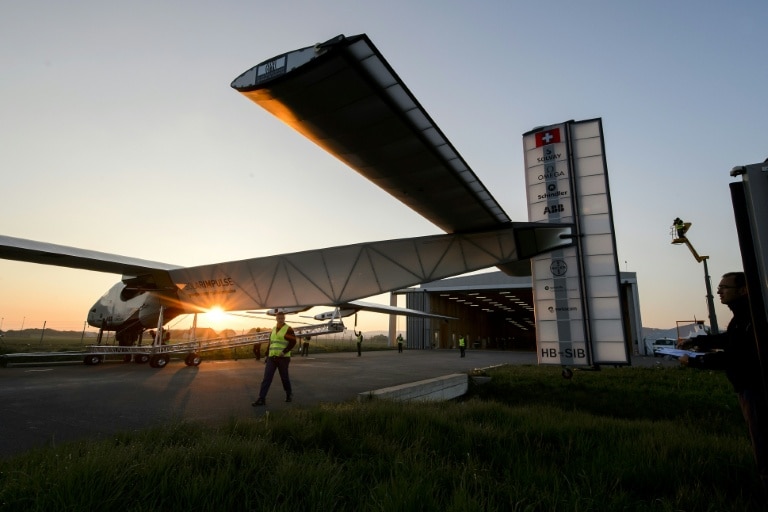
    One of aviation’s most groundbreaking sustainable technology experiments has met an unexpected end. Solar Impulse 2, the Swiss-engineered solar-powered aircraft that made global history in 2016 by completing the first ever fuel-free circumnavigation of the globe, has crashed into the Gulf of Mexico during a post-conversion test flight, its former owner confirmed recently.

    When it completed its landmark journey seven years ago, Solar Impulse 2 redefined what renewable energy-powered flight could achieve. Piloted alternately by Swiss explorers Bertrand Piccard and Andre Borschberg, the aircraft completed its round-the-world trip across 17 separate legs of travel. Over a total cumulative flight time of 23 days, it covered 43,000 kilometers (26,700 miles), crossing four continents, two oceans and three seas without relying on a single drop of traditional jet fuel.

    The aircraft changed hands three years after its record-setting voyage, when it was acquired by U.S.-based aerospace firm Skydweller Aero. The company had launched an initiative to convert the legendary manned plane into an autonomous long-endurance drone, designed to support a range of operations including military and scientific missions. According to an official statement released by the firm this Tuesday, the doomed flight was part of a planned controlled ditching exercise tied to a U.S. Navy test program.

    Skydweller Aero confirmed that the aircraft departed from Stennis, Mississippi on April 26 for the test flight, but crashed into the Gulf of Mexico on May 4. Despite the crash, the company noted that the test campaign had already achieved a major milestone: an 8-day and 14-minute continuous flight that proved the feasibility of perpetual solar-powered flight for military operations in real-world conditions.

    The U.S. National Transportation Safety Board has launched an official investigation into the accident to determine the root cause of the crash. Industry observers note that while the loss of the iconic aircraft is unexpected, the technological breakthroughs it enabled during its historic career will continue to inform the development of sustainable and long-endurance solar aviation for years to come.

  • Indian pharma fuels Africa’s ‘zombie drug’ and opioid crisis

    Indian pharma fuels Africa’s ‘zombie drug’ and opioid crisis

    West Africa is currently grappling with an explosive, deadly opioid epidemic that can be traced directly to unregulated, high-strength tapentadol exports from Indian pharmaceutical manufacturers, a months-long Agence France-Presse investigation has confirmed. Sold openly at roadside kiosks and unlicensed street pharmacies across the region, these cheap, unapproved pills are not only driving widespread addiction and death but are also being mixed into the devastating “zombie drug” kush, worsening an already catastrophic public health emergency.

    Unlike regulated prescription painkillers sold globally, the tapentadol flooding West African markets comes in doses so potent that no national regulatory authority anywhere in the world has authorized them for human use. Despite India’s 2025 pledge to crack down on this illicit trade after international outcry over harm caused to African communities, customs and shipment records reviewed by AFP show millions of dollars worth of these unapproved high-strength pills continue to flow out of Indian ports every month, bound for Nigeria, Sierra Leone, Ghana and other West African nations where even low doses of tapentadol are explicitly banned. Many shipments are deliberately mislabeled as “Harmless Medicines for Human Consumption” to evade border inspections.

    Public health and law enforcement officials across the region say the crisis has reached catastrophic levels. In Sierra Leone, where kush mixed with tapentadol has already been declared a national emergency, authorities collect hundreds of bodies of overdose victims from streets, open-air markets and overcrowded slums every three months — just in the capital Freetown alone. Ansu Konneh, director of mental health at Sierra Leone’s ministry of social welfare, described the addition of tapentadol to the already destructive kush cocktail as “very alarming”. Freetown-based public health researcher Ronald Abu Bangura confirmed that tapentadol is now ground into powder and mixed with kush for distribution, adding that the drug is “being misused all over the place”.

    AFP’s investigation cross-checked licensing numbers on seized tapentadol tablets across four West African nations against Indian export records, linking multiple prominent Indian pharmaceutical firms directly to the illicit trade. Gujarat Pharmaceuticals, whose manufacturing license number appeared on seized tablets in both Sierra Leone and Guinea, has been listed in export monitoring databases as a major tapentadol supplier to the region. Merit Organics, another Gujarat-based company, also had its license number found on seized shipments in Guinea. Madhya Pradesh-based McW Healthcare exported more than $1 million worth of 250mg tapentadol tablets to Sierra Leone and Nigeria after India’s February 2025 ban, while PRG Pharma shipped multiple consignments mislabeled as harmless medicines. The investigation also identified Syncom Formulations as the largest single tapentadol exporter to West Africa by value, moving nearly $15 million worth of unapproved pills into the region after the ban, most mislabeled as general harmless medicines.

    When contacted by AFP, the Nigerian importer for McW Healthcare was listed at a Lagos address that turned out to be a small camera repair shop with no valid pharmaceutical import permit, with Nigerian health authorities labeling all such shipments explicitly illegal. Notably, PRG Pharma’s director is a shareholder in Maiden Pharmaceuticals, the Indian company blamed by Gambian authorities for the deaths of 69 children in 2023 from contaminated cough syrup.

    Experts say the shift of Indian generic drug manufacturers to flood African markets with unapproved opioids follows decades of heavy regulation of opioid sales in wealthy nations, which have seen more than one million opioid-related deaths in the United States alone. For many low-income workers across West Africa, tapentadol is not initially used for recreational purposes: motorbike taxi drivers, market porters and artisanal gold miners take the drug to endure long hours of brutal, back-breaking labor, using it as a makeshift pain reliever and performance enhancer. Abubakar Sesay, a motorbike rider in Freetown who navigates bone-rattling unpaved backroads for a meager income, told AFP, “It energises my body to ride day and night. Without it, I can’t survive.” The pills are also used as an appetite suppressant for people who cannot afford regular meals, and even as a form of currency to pay ransoms for kidnapping victims. Criminal groups and extremist organizations including Boko Haram have also been documented using the drug to build courage for violent attacks.

    Nigeria’s National Drug Law Enforcement Agency reports that opioids are now the second most commonly used illicit drug in the country, after cannabis. The agency seized more than two billion high-strength tapentadol pills in 2023 and 2024 alone. Vanda Felbab-Brown, a senior fellow at the Brookings Institution and a leading expert on transnational opioid trafficking, told AFP that weak regulation and limited enforcement capacity in West African nations has created a permissive environment for unscrupulous Indian manufacturers. “This creates opportunities for unscrupulous Indian companies to sell products that are problematic, dangerous, harmful or outright illegal to African countries,” she said. “It’s a prime situation for trafficking networks from India to try to get people hooked.”

    A recent report from the Global Initiative Against Transnational Organized Crime found that 90% of all global tramadol seizures over the past decade have occurred in West and Central Africa. After India classified tramadol as a controlled narcotic in 2018, manufacturers simply shifted to producing and exporting tapentadol, which experts note is two to three times more potent than tramadol and far more dangerous. Today, lab testing in Sierra Leone shows that nearly all pills sold on the street as tramadol are actually unregulated high-strength tapentadol, with the similar-sounding name helping the drug slip under the radar of underfunded regulators.

    Analysis of shipment data conducted by AFP confirms that nearly 75% of all tapentadol exported to West Africa since India’s 2025 crackdown is the unapproved 225mg and 250mg dosage form. Andrew Somogyi, a professor of pharmacology at the University of Adelaide, told AFP he is not aware of any country that has approved 225mg tapentadol tablets for medical use. He questioned “why a country would want that strength except to bypass regulatory and commercial restrictions”.

    India’s national drug regulator, the Central Drugs Standard Control Organisation, told AFP it has “no record” of issuing export approvals for 225mg and 250mg tapentadol, and did not respond to repeated follow-up questions about the ongoing trade. The Indian Drug Manufacturers’ Association, the country’s leading pharmaceutical industry body, defended its members, arguing that legitimate manufacturers who follow domestic export procedures cannot be held responsible for misuse or diversion after the product leaves India. Jaydip Patel of Gujarat Pharmaceuticals told AFP the company’s exports were legal because the importer provided the required authorization letter, and added that manufacturers shifted from tramadol to tapentadol because tapentadol “is easier to export because it is not classified as a narcotic”. When AFP visited Gujarat Pharmaceuticals’ facility in Godhra in January, the building was deserted, with charred tablet fragments and ash scattered across the grounds following a recent fire. None of the other named manufacturers responded to requests for comment.

    Across the region, regulatory officials have confirmed that tapentadol of any strength is illegal in their countries. Ghana’s Food and Drugs Authority says it has never issued a permit for tapentadol importation or manufacturing, while Nigeria’s food and drug agency states that any tapentadol found in the country is unauthorised and illegal. Sierra Leone only allows 50mg tramadol to be administered in licensed health facilities, meaning all tapentadol traded on the street is explicitly banned.

    Most alarmingly, officials report the drug is now spreading to children and young adults, including primary school students who split tablets into smaller pieces to mix with energy drinks for a stronger high. In Sierra Leone, where the population still carries physical and mental scars from a decade-long civil war, informal detox centers chain addicts to beds for months to force them through cold turkey withdrawal, as the country’s limited official rehab facilities are overwhelmed. Mental health director Konneh noted that many addicts do not even recognize tapentadol as a dangerous drug, because it is packaged and sold as a legitimate medication. “The tragedy is that even addicts seeking help tell us, ‘I’ve stopped taking kush, I’m just taking tapentadol tablets.’ They don’t see that to be a problem to their health,” he said.
  • Australians cut spending on petrol and travel as interest rate hikes bite

    Australians cut spending on petrol and travel as interest rate hikes bite

    After a period of relentless interest rate increases and skyrocketing global fuel prices, Australia’s household spending has dipped – but not nearly as sharply as many economic analysts had warned, new data from the country’s largest lender Commonwealth Bank (CBA) reveals.

    CBA’s latest monthly spending tracking shows Australian households cut their overall spending by 1.2% in April compared to March, a decline driven largely by a sharp pullback in fuel expenditure following emergency government intervention. The federal government in early April rolled out a temporary $2.5 billion cut to fuel excise, alongside a GST rebate, to ease the pressure of March’s record-high fuel prices that pushed crude costs from $US60 a barrel at the start of March to over $US100 a barrel by month’s end. Treasury projects crude prices will remain above $US80 ($A110) a barrel through the next financial year, keeping cost pressures alive for motorists.

    Belinda Allen, CBA’s head of Australian economics, noted that while broad spending has softened amid rising borrowing costs and geopolitical uncertainty from the Iran conflict, the slowdown has not turned into the dramatic consumer retrenchment many forecasters predicted. “To date, weakness in sentiment due to the conflict in Iran and higher interest rates is not yet translating into a sharp pullback in discretionary spending,” Allen explained. “Petrol price movements continue to have a big impact on the month-to-month swing in household spending, and we expect households to do much of the heavy lifting over coming months in slowing spending and cooling inflation.”

    The April spending data captures the impact of the Reserve Bank of Australia’s (RBA) back-to-back rate hikes in February and March, but does not yet reflect the third rate increase implemented in May, which lifted the cash rate to 4.35% following three consecutive cuts in 2025. The overall spending trend aligns with recent remarks from RBA Governor Michele Bullock, who has pushed back on narratives of an imminent consumer collapse, noting that plummeting consumer confidence has not translated to equally sharp spending cuts.

    “Confidence has been low for some time but the consumers have been continuing to spend,” Bullock said in March. “So there’s this issue about the relationship between consumer confidence in these surveys and what people actually do. I think the consumer confidence numbers for some time have been reflecting basically concerns about how much things cost.”

    Breaking down April’s spending figures, CBA found a split performance across sectors: six of 12 tracked spending categories recorded growth, while the other six contracted. Even after removing the large monthly drop in fuel spending, overall household spending still dipped by a mild 0.2% seasonally adjusted. The hardest-hit category outside transport was recreation spending, which fell 2.6% month-on-month, marking the second-weakest performance of all sectors. On an annual basis, recreation is the only category still recording negative growth.

    Allen attributed the recreation decline primarily to cutbacks in travel-related spending, a trend tied to broader economic uncertainty and cost-of-living pressures. “It appears households may be lowering their travel-related consumption in the face of higher costs and uncertainty from the conflict in Iran. This is picked up in the broader recreation category,” she said. “Declines in annual spending growth were recorded in travel-related categories such as online travel bookings, ticketing services, travel agencies, commercial airlines and accommodation.”

    These travel and recreation cutbacks were partially offset by continued growth in hospitality spending, which rose 0.2% in April and 6.2% over the 12 months prior, showing persistent consumer demand for in-person dining and leisure services despite broader economic headwinds. The softer-than-expected spending pullback suggests Australian households are adjusting gradually to higher borrowing and energy costs, rather than facing the severe economic contraction many experts predicted just months earlier.

  • Man City ease past Palace to keep pressure on Arsenal

    Man City ease past Palace to keep pressure on Arsenal

    The English Premier League’s 2024-25 title race has tightened to a stunning climax, after Manchester City secured a comfortable 3-0 victory over Crystal Palace at the Etihad Stadium on Wednesday that cut Arsenal’s lead at the top of the table to just two points with only two matches remaining for City.

    With a grueling fixture schedule stretching into the final weeks of the season, Pep Guardiola made the call to rotate his squad heavily, making six changes from the starting 11 that defeated Brentford 3-0 over the weekend. Star striker Erling Haaland and dynamic winger Jeremy Doku both started the match on the bench, while Crystal Palace manager Oliver Glasner also made several adjustments to his own lineup ahead of his side’s upcoming UEFA Conference League final. Despite the rotated squad, City never looked troubled on a damp evening in Manchester, taking firm control of the contest before halftime with two quick goals and adding a third late on to cap the win.

    The opening goal arrived in the 32nd minute, crafted by Phil Foden’s exquisite backheel pass that put Antoine Semenyo in on goal. Semenyo finished calmly, slotting the ball past Crystal Palace goalkeeper Dean Henderson into the far corner to break the deadlock. Eight minutes later, Foden was once again the architect, setting up Egyptian forward Omar Marmoush to score his third Premier League goal of the season, putting City 2-0 up going into the halftime break. The second half was a largely uneventful affair, though defender John Stones – who is set to leave the club at the end of the campaign – received a raucous standing ovation from the Etihad crowd when he came on as a late substitute. Minutes after Stones’ introduction, the match’s final goal arrived: young French midfielder Rayan Cherki carried the ball from his own half to set up Savinho, who finished cleanly past Henderson to put City three goals up.

    The result leaves City on 77 points, two points behind leaders Arsenal, but Guardiola’s side hold a narrow advantage in goal difference of plus one, having scored seven more goals across the campaign than the Gunners. The title race has swung dramatically over the past fortnight: City had clawed back ground to put themselves in pole position, but a costly 3-3 draw at Everton last weekend restored Arsenal’s comfortable lead. Just two days before City’s match against Palace, Arsenal survived a late scare to beat West Ham 1-0, after a stoppage-time equalizer for the Hammers was ruled out following a lengthy VAR check, keeping the Gunners in the driving seat.

    City now turn their attention to a major cup test this weekend, as they face Chelsea in the FA Cup final at Wembley Stadium on Saturday, targeting a domestic cup double having already won the League Cup earlier this season. Defending his decision to rotate heavily against Palace, Guardiola emphasized the need for squad depth in a congested fixture list, saying: “When the schedule is so tight, everybody is fit, everybody needs to help.”

    Despite City’s win, Arsenal remain overwhelming favorites to claim their first Premier League title since 2004. If Mikel Arteta’s side beat already-relegated Burnley next Monday, City will need to take all three points against Champions League-chasing Bournemouth the following day to keep their title hopes alive. The final matchday of the season falls on May 24, when Arsenal travel to face Crystal Palace, while City – who currently hold a 14-match unbeaten run in league play – host Aston Villa at home.

    Speaking after the final whistle, Foden insisted City will not give up their title bid, noting that anything can happen in the final stretch of the campaign. “It’s a team game at the end of the day. If you want to win titles and trophies it’s about a full squad and everyone playing their part,” Foden told Sky Sports. “The aim is to keep pushing and keep them on their toes. We’ve seen a lot of things can happen on the final day. I’ve experienced it many times when the game doesn’t go your way. We just have to keep pushing and doing our part.”

    For Crystal Palace, all focus now shifts to their first major European final, as they prepare to face Rayo Vallecano in the UEFA Conference League final in Leipzig on May 27. The match will be Glasner’s final game in charge of the south London club.

  • AFL 2026: Western Bulldogs will ‘tread carefully’ with Tim English

    AFL 2026: Western Bulldogs will ‘tread carefully’ with Tim English

    The Australian Football League’s Western Bulldogs are moving deliberately and cautiously with star ruckman Tim English’s return to competitive play, after a fresh head knock reignited long-standing concerns over the athlete’s repeated concussion history.

    English’s latest injury occurred during last weekend’s victory over Port Adelaide, when he collided in a training drill with teammate Matthew Kennedy. Speaking to reporters on Thursday morning, Bulldogs head coach Luke Beveridge emphasized that the club would prioritize the athlete’s long-term health over a rapid comeback, stressing that no timeline for his return has been finalized.

    “We haven’t got an update for you today, we’ll wait and see how he goes over the next week and what his availability will be,” Beveridge told reporters. “I think because of his history — he’s been out of action at different times and spent a whole pre-season a couple of years ago non-contact — we’ll tread carefully.”

    English’s history of head injuries dates back to 2021 and 2022, when he sustained multiple concussions that forced him to sit out all contact drills during the 2024 pre-season to prioritize recovery. Without their starting ruckman, the Bulldogs have been forced to throw two inexperienced young tall players, Lachie Smith and Louis Emmett, into the rotation earlier than club officials had planned.

    Beveridge acknowledged that the club’s recruiting team is actively exploring the option of adding a supplementary ruckman via the upcoming mid-season draft, to ease the pressure on the club’s underprepared young talent. “Obviously, Lachie Smith has played a bit recently and dipped his toe in the water,” Beveridge said. “Louis Emmett has played some minutes there as a young player who is probably not ready for the ruck position, definitely not ready to be frank, but he’s a competitor and he’s done his best for us. It’s something that we’re thinking about, but is there a player available? And our recruiters are working through that at the moment.”

    The Bulldogs are also taking a measured approach to the return of veteran midfielder Tom Liberatore, who has not seen game action since Round 6. While Liberatore also has a recent concussion, Beveridge noted that the primary barrier to his comeback is a knee injury, with the head injury listed as a secondary concern.

    “He’ll be a while, Tom … he’s a fair way away with that knee,” Beveridge said. “Concussion I think is secondary at the moment, for me, we’re not really talking about it, we’re talking about the knee. He’ll have some tests along the way around the concussion, but I think it’s mainly just about the knee at the moment.”

  • France blames stomach bug for new cruise outbreak, lifts lockdown

    France blames stomach bug for new cruise outbreak, lifts lockdown

    In the wake of a sudden illness outbreak aboard a British cruise ship anchored off western France, local authorities have cleared asymptomatic passengers to disembark, after confirming that a common gastrointestinal virus — not the internationally concerning hantavirus linked to a recent fatal outbreak on another vessel — is the cause of the illness. The incident, which sparked initial public alarm following the death of a 92-year-old British passenger, has been brought under control through targeted precautionary measures.

    The Ambition, operated by UK-based Ambassador Cruise Line, carrying 1,233 passengers (the vast majority from Britain and Ireland) and 514 crew members, first reported a spike in gastrointestinal symptoms among passengers when it docked in Brest, Brittany, on Monday. The 92-year-old passenger died before the ship reached the Brittany port, and initial reports of his death alongside dozens of sick passengers triggered swift action: French officials ordered a full temporary lockdown of the vessel, which later sailed to its scheduled stop in Bordeaux, where it remained anchored while health officials conducted testing.

    Local government and regional health authorities confirmed in an official statement Wednesday that testing ruled out any connection to the hantavirus outbreak that killed three people on the Dutch-flagged MV Hondius, an incident that had already stoked global public health anxiety. They confirmed the outbreak on the Ambition is a viral gastrointestinal infection, with no severe cases recorded among those affected. Officials also clarified that the 92-year-old passenger’s death was caused by a heart attack, and no link has been found between his death and the gastroenteritis outbreak. Per international conventions, the man’s body remains on the vessel pending next steps.

    French authorities noted that the full lockdown was implemented out of an abundance of caution, specifically to prevent unnecessary public panic amid ongoing attention to the Hondius hantavirus incident. As of Wednesday, asymptomatic passengers were permitted to leave the ship, while those showing symptoms of the virus remain in isolation aboard the vessel. The cruise line confirmed that cases of illness began rising after new passengers boarded in Liverpool, UK, on Saturday, during the ship’s scheduled itinerary.

    The Ambition departed the Shetland Islands, Scotland, on May 6, made stops in Belfast and Liverpool before arriving in Bordeaux, and was originally scheduled to sail from Bordeaux to Spain before returning to Liverpool on May 22. Passengers aboard the ship described a calm atmosphere despite the temporary lockdown, with many continuing routine activities. “We are onboard with extra sanitation guidelines in place. It is not as bad as it was during Covid. People just going about as normal,” Seos Guilidhe, a 52-year-old passenger from Belfast, told AFP via Facebook while playing bingo aboard the ship Wednesday, before confirming that restrictions had been lifted and asymptomatic passengers were allowed to disembark. For infected passengers, however, the experience has been far less comfortable: “Two of us in one cabin with the bug is a challenge,” one infected passenger wrote on social media.

  • Iran holds World Cup send-off for national football team

    Iran holds World Cup send-off for national football team

    On Wednesday, Iran hosted a high-stakes, politically infused public send-off ceremony for its men’s national football team ahead of the 2026 FIFA World Cup, the historic tournament co-hosted by the United States, Mexico and Canada. Footage broadcast on Iranian state television showed thousands of fans packing Enghelab Square in central Tehran, where players clad in the national team’s signature red and black tracksuits were introduced to the cheering crowd from a central stage.

    Both head coach Amir Ghalenoei and Iranian Football Federation president Mehdi Taj joined the squad for the celebratory but tense event. In his remarks to attendees, Taj framed the national team’s participation in the upcoming tournament through a sharply political lens, noting that the squad would represent not just the Iranian people, but also the country’s fighters and current Supreme Leader Mojtaba Khamenei. “Our national team is the national football team of wartime,” Taj stated, adding that the side would serve as a “pillar of authority and resistance” on the global stage.

    Attendees waved Iranian flags and sang patriotic chants throughout the ceremony, with many holding up placards and portraits of the late former Supreme Leader Ali Khamenei, who was killed in recent U.S.-Israeli strikes that sparked an ongoing regional war across the Middle East. One prominent placard carried a direct message to the squad, reading: “For the blood of the martyrs, sing the national anthem with firmness and without hesitation.”

    Iran has been drawn into Group G for the tournament’s group stage, where it will face off against New Zealand, Belgium and Egypt. As a World Cup participating nation, Iran will base its training and operations out of Tucson, Arizona for the duration of the tournament, and will kick off its 2026 campaign against New Zealand on June 15 in Los Angeles.

  • Berlin launches scheme to swap trash for treats

    Berlin launches scheme to swap trash for treats

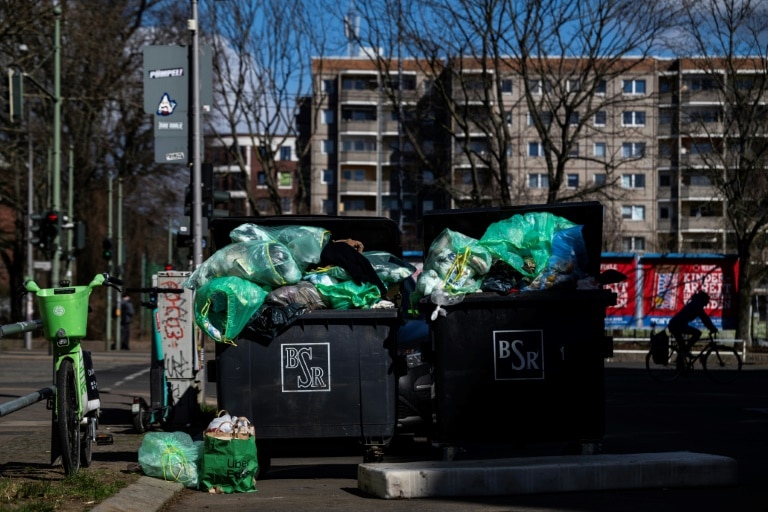
    Berlin has kicked off an innovative new pilot program that turns environmentally conscious actions into tangible perks for both residents and visitors, drawing inspiration from a successful trial launched earlier this year in Copenhagen. Dubbed BerlinPay, the initiative centers on encouraging sustainable behavior across the German capital, with a particular focus on cleaning up the iconic Spree River that cuts through the heart of the city and boosting sustainable water tourism. The pilot program will run through June 14, and invites participants to earn rewards by completing eco-friendly activities beyond litter collection, from planting native flowers and watering urban greenery to switching from car trips to cycling. The city’s extensive network of summer-popular lakes and waterways, a major draw for tourists each year, also stands to benefit from the scheme’s environmental goals. Deputy mayor Franziska Giffey noted that Berlin’s water tourism sector is currently experiencing strong growth and is a key contributor to the local economy, but the increasing popularity of these waterways also comes with measurable environmental costs. Speaking at Wednesday’s launch press conference, VisitBerlin CEO Sabine Wendt explained that the project aims to encourage both Berlin residents and out-of-town guests to engage with the city in a more thoughtful, environmentally aware way. To join the initiative, participants register for free through the official VisitBerlin platform, where they can choose from more than 5,000 available activity slots. Around 40 partner organizations including local businesses, cultural associations, and public museums have signed on to offer rewards for completed actions, ranging from discounted meals at local restaurants and free canoe tours on the Spree to complimentary entry to Berlin’s world-famous museum collections. The core mission of the program extends far beyond cleaning up local waterways: organizers hope to foster long-term environmental awareness among both residents and the millions of tourists who visit Berlin each year. BerlinPay is directly modeled after Copenhagen’s CopenPay program, which launched in 2024 and saw impressive early results: more than 75,000 tourists participated in the initiative’s first month, bike rentals across the city jumped 29%, and volunteers collected multiple tons of improperly discarded litter. If the Berlin pilot delivers similar positive outcomes, Giffey confirmed the city plans to make BerlinPay an annual recurring event for the capital.

  • Trump and Xi set for high-stakes talks in Beijing

    Trump and Xi set for high-stakes talks in Beijing

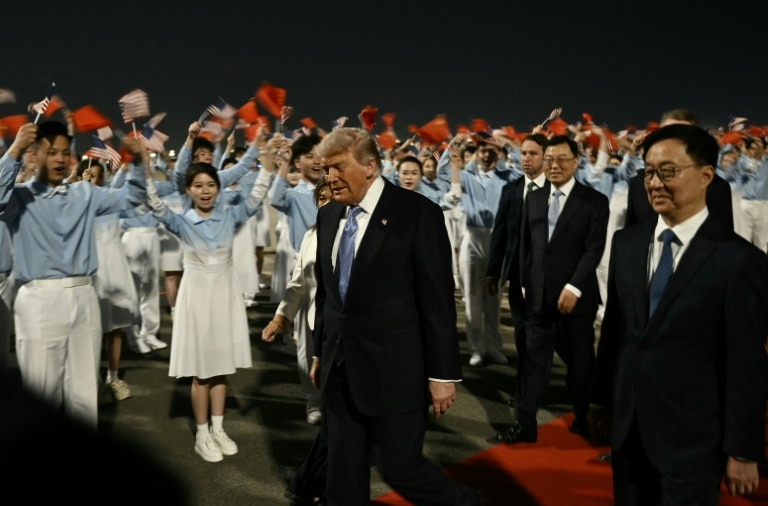
    Eight years after his last visit to China, U.S. President Donald Trump touched down in Beijing Wednesday evening for a two-day high-stakes leadership summit, marking the first trip by a sitting U.S. president to the Chinese capital since 2017. Welcomed with traditional ceremonial fanfare, including a red carpet greeting and 300 uniformed Chinese youth chanting welcome and waving both national flags as the U.S. leader pumped his fist descending from Air Force One, the lavish opening sets the stage for discussions on a host of thorny issues that have split the world’s two largest economies and nuclear powers.

    Trump’s traveling delegation includes some of America’s most high-profile business leaders, headlined by Nvidia CEO Jensen Huang and Tesla CEO Elon Musk — names the president has highlighted as symbols of the commercial breakthroughs he aims to secure during the meetings. On Thursday morning, Chinese leader Xi Jinping will formally greet Trump at Beijing’s opulent Great Hall of the People, followed by an official state banquet that evening. After the summit, Trump is scheduled to tour the Temple of Heaven, a centuries-old UNESCO World Heritage Site that once served as the ceremonial worship site for Chinese imperial dynasties, before holding informal talks, a tea gathering and working lunch with Xi on Friday ahead of his departure back to Washington.

    This summit was originally scheduled for March, but was delayed by the escalating conflict around Iran, a sticking point that will still top the bilateral agenda. Most of Iran’s oil exports, which are sanctioned by the United States, currently flow to China, and Trump has confirmed the two leaders will hold a lengthy discussion on the issue, even as he downplays the need for Chinese cooperation on Washington’s policy toward Tehran.

    Trade tensions, the longest-running source of friction between the two nations, will also be a core focus of the talks. Following Trump’s 2017 visit, the U.S. rolled out sweeping tariffs on hundreds of billions of dollars worth of Chinese goods, triggering a tit-for-tat trade war that saw retaliatory levies push combined duties to over 100% on many cross-border goods. The two leaders reached a one-year truce on tariffs during an October meeting in South Korea, and this week they are expected to negotiate an extension of that pause — though negotiators on both sides have cautioned a final agreement is far from guaranteed.

    Trump has pinned his approach to the talks on his self-described close personal rapport with Xi, telling reporters ahead of the trip he expects a “great big hug” from the Chinese leader, who he has long praised for his firm governing style. Top on the president’s commercial priority list are new trade deals covering U.S. agricultural exports, aircraft sales and wider market access for American companies. Aboard Air Force One en route to Beijing, Trump wrote on social media that he would press Xi to “open up” China’s markets to U.S. firms, saying “these brilliant people can work their magic” given fair access.

    For its part, the Chinese foreign ministry struck a constructive tone ahead of the summit, releasing a statement Wednesday saying Beijing “welcomes” Trump’s visit and stands ready to work with Washington to expand bilateral cooperation and productively manage differences. But analysts note China’s global position has shifted significantly since Trump’s last visit in 2017, with Beijing now far more assertive on geopolitical and trade issues, leaving multiple core disputes unresolved.

    One of the most sensitive issues on the agenda is Taiwan, the self-governing democracy that Beijing claims as its sovereign territory. Trump confirmed ahead of the trip that he will raise the topic of ongoing U.S. arms sales to Taipei during his talks with Xi — a break from decades of U.S. policy that has refused to consult Beijing on arms sales to the island, a shift that is being closely watched by Taipei and U.S. regional allies.

    Other topics slated for discussion include China’s export controls on rare earth minerals, the growing global rivalry in artificial intelligence development, and broader restructuring of the bilateral trade relationship. Both sides enter the summit seeking to secure tangible wins while preventing a further escalation of tensions, a delicate balance that carries major implications for the global economy and international security. Trump is also pushing to lock in a firm date for a reciprocal visit by Xi to the U.S. later in 2026, a move that would serve as a high-profile proof of his claim to have built a strong working relationship with his Chinese counterpart.

  • Ex-Nicaragua guerrilla believes Ortega-Murillo days numbered

    Ex-Nicaragua guerrilla believes Ortega-Murillo days numbered

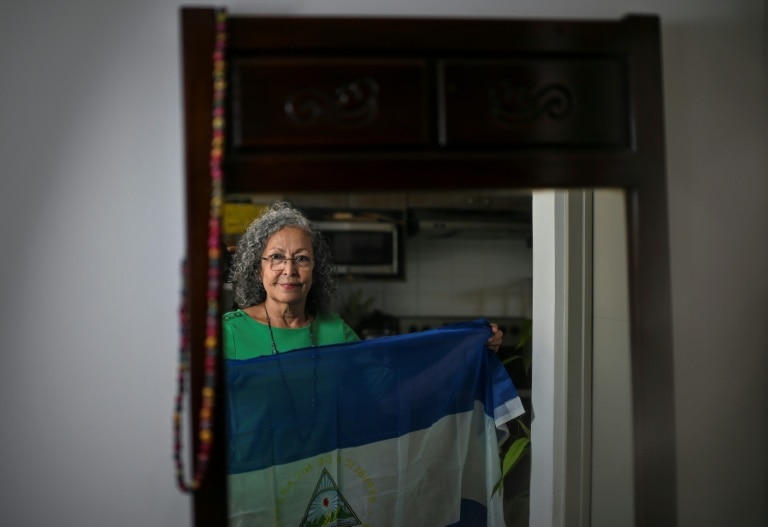
    In an exclusive interview with Agence France-Presse from her exile home in Costa Rica, a former veteran commander of the Sandinista National Liberation Front (FSLN) has issued a stark prediction about the future of Nicaragua’s ruling power couple. Seventy-one-year-old Monica Baltodano, who once fought alongside current Nicaraguan President Daniel Ortega in the revolution against the Somoza dictatorship, argues that 74-year-old Vice President and first lady Rosario Murillo will not be able to hold onto power once 80-year-old Ortega passes away.

    Ortega, a once fiery Marxist revolutionary who led the 1979 uprising that ousted the U.S.-backed Somoza regime, has held the Nicaraguan presidency since 2007. His successive election victories have been widely questioned by the international community, and the United States has formally labeled his administration a dictatorship, accusing it of rewriting the national constitution to consolidate absolute control and systematically suppress all political dissent.

    Today, Baltodano has broken completely with the regime she once helped bring to power, describing Ortega and Murillo as figures utterly corrupted by unbridled ambition for power. Speaking from her sunlit Costa Rican home, decorated with Nicaraguan art and personal mementos from her homeland, she reflected on how far the country has strayed from the revolutionary ideals they once shared.

    Baltodano recalled that during the fight against the “genocidal” Somoza dictatorship, the FSLN built a broad movement that united civic resistance, armed struggle, public demonstrations and an independent press. By contrast, she argues, modern Nicaragua under Ortega is more closed and repressive than even the Somoza era, comparing its political climate to that of North Korea. She accuses the regime of weaponizing exile and denationalization to silence opponents, brutally repressing the Catholic Church, and eliminating all independent state institutions.

    As rumors spread of Ortega’s declining health, opposition sources report that Murillo has already begun a quiet internal purge of the ruling party to solidify her grip on power ahead of Ortega’s death. But Baltodano says Murillo’s efforts are doomed to fail. “Rosario wouldn’t withstand Ortega’s disappearance because she’s still using him as a kind of icon, almost elevated to the level of a deity,” Baltodano explained. “Institutions wouldn’t be subordinated to her the way they are now.”

    Baltodano fled Nicaragua in 2021 after publicly denouncing Ortega’s growing authoritarian turn. In 2023, she was stripped of her Nicaraguan citizenship alongside dozens of other exiled dissidents, a common tactic the Ortega regime has used against its opponents. Today, the Nicaraguan government faces sweeping sanctions from the U.S. and European Union, and thousands of Nicaraguans have fled into exile after hundreds of real and perceived opposition figures were jailed by the regime.

    Baltodano notes that Ortega and Murillo rule in a climate of constant paranoia, pointing out that the regime now imprisons more dissidents from its own ruling ranks than it does from the formal opposition. Rejecting calls for foreign intervention similar to the recent push against Venezuelan leader Nicolas Maduro, an Ortega ally, Baltodano stressed that Nicaraguans must be the ones to solve their own political future. “We Nicaraguans have to be able to resolve our own problems, not by turning our backs on the international community, but not as the result of interventionist actions by any power either,” she said.

    For Baltodano, life in exile grows “doubly painful” each passing year, separated from her homeland. A March report from independent United Nations experts documented the Ortega regime’s growing pattern of targeting Nicaraguan dissidents even in exile, but Baltodano says she refuses to live in constant fear. Though she takes basic safety precautions, she remains absolutely certain that she will one day return to a free Nicaragua.