标签: Oceania

大洋洲

  • In Algeria, Saint Augustine’s city anticipates Pope Leo’s visit

    In Algeria, Saint Augustine’s city anticipates Pope Leo’s visit

    On Algeria’s sun-dappled Mediterranean coast, the eastern city of Annaba is buzzing with quiet anticipation and open excitement as it puts the final touches on preparations for a momentous occasion: the first ever visit by a sitting Catholic pontiff to Algeria, scheduled for April 13–15. The visit, which holds deep religious and historical weight, comes after Pope Leo XIV openly embraced his connection to Saint Augustine, one of Christianity’s most influential theologians whose life and work are deeply rooted in this corner of North Africa.

    Since his election to the papacy in May of last year, Leo XIV has repeatedly emphasized his admiration for Saint Augustine, even calling himself a “son” of the famed thinker in his inaugural address. Saint Augustine was born in 354 CE in Thagaste, an ancient settlement that is today the Algerian town of Souk Ahras, roughly 100 kilometers south of Annaba. Annaba itself sits on the ruins of Hippo Regius, the Roman city where Augustine served as bishop starting in 391, wrote his iconic autobiographical work *Confessions*, and died in 430 CE. That historical tie makes Annaba the focal point of the papal visit, and the site of the most intensive preparations.

    At the Basilica of Saint Augustine, the city’s primary Catholic shrine perched on a hill overlooking ancient Hippo’s archaeological remains, preparations have been underway for months under the direction of rector Father Fred Wekesa. Municipal maintenance crews, working alongside volunteers from the Order of Saint Augustine, have spent weeks repainting interior walls, polishing historic religious statues, and touching up the grounds to welcome the pontiff. For Annaba’s small Christian community, the visit is far more than a ceremonial event—it is a long-awaited moment of recognition.

    Father Wekesa described the upcoming arrival as an occasion of profound joy, noting that Leo XIV is the first pope to prioritize a visit to the Algerian Christian community. “We are what I call a ‘small flock’, a minority. But that does not mean we are forgotten,” he said. “On the contrary… the Pope’s presence supports us as a minority. It carries a message of encouragement and solidarity.”

    Across Annaba, which sits roughly 550 kilometers east of the capital Algiers, the entire city has joined in preparations. Roads leading to the basilica, which overlooks the ruins of the ancient Basilica of Peace where Saint Augustine once preached, are being resurfaced and repainted, transforming swathes of the city into an active construction zone in the best of ways. For many local residents, both Christian and Muslim, the visit is a point of national and civic pride. Imad, a 54-year-old Annaba resident, called the trip “a great honour for us, the Algerians of Annaba, because it is an important symbol of peace, not just for our community but for all Christians and Muslims.”

    Algerian national authorities have echoed that sentiment, attaching major strategic and symbolic importance to the visit. Preparations have been personally overseen by President Abdelmadjid Tebboune, and Father Wekesa said he has been deeply moved by the widespread spontaneous enthusiasm from ordinary Algerians, who moved quickly to extend a formal invitation as soon as the pope expressed his desire to visit.

    For Father Wekesa, the visit also offers a chance to reintroduce the world to modern Algeria, pushing back against outdated narratives that still frame the country through the lens of its 1991–2002 civil conflict, a bloody period between Islamists and state security forces that killed an estimated 200,000 people. Between 1994 and 1996, 19 Christian clerics were killed in targeted attacks, including Oran’s bishop Pierre Claverie and seven Tibhirine monks, who were beatified by the Catholic Church in 2018. Father Wekesa lamented that “all too often, some people view this country only through the lens of the ‘dark years’,” but expressed confidence the papal visit will reveal Algeria’s “true face” to the global community. “With the Holy Father’s visit… the whole world will see the hospitality and generosity of the Algerian people, and that we are capable of living together in peace,” he said.

    Not all commentary surrounding the visit has been celebratory, however. Three prominent international human rights organizations—Human Rights Watch, EuroMed Rights, and the MENA Rights Group—published a joint open letter on Tuesday calling on Pope Leo XIV to raise the issue of religious freedom repression during his meetings with Algerian authorities. The groups have documented ongoing targeting of religious minority communities in Algeria in recent years, and asked the pontiff to “call on the authorities to end discrimination against religious minorities and respect their right to freedom of religion or belief, including practicing their religion freely.”

    Despite those calls, members of Annaba’s Christian community remain focused on the unifying potential of the visit. According to Father Wekesa, most of Annaba’s Christian population is made up of sub-Saharan African scholarship students, foreign workers, and a small number of Algerian converts. Students from the University of Batna, located 270 kilometers south of Annaba, have even traveled to the city to help with final preparations ahead of the papal arrival. For Patricia Kouago, a 22-year-old student taking part in the preparations, the visit is an opportunity to build cross-community connection. “It is an occasion for Christians and Muslims to come together,” she said. “It is also a sense of solidarity that we are building. His arrival could strengthen the bonds between us.”

  • Aussie dollar up, oil tanks on news of US-Iran ceasefire

    Aussie dollar up, oil tanks on news of US-Iran ceasefire

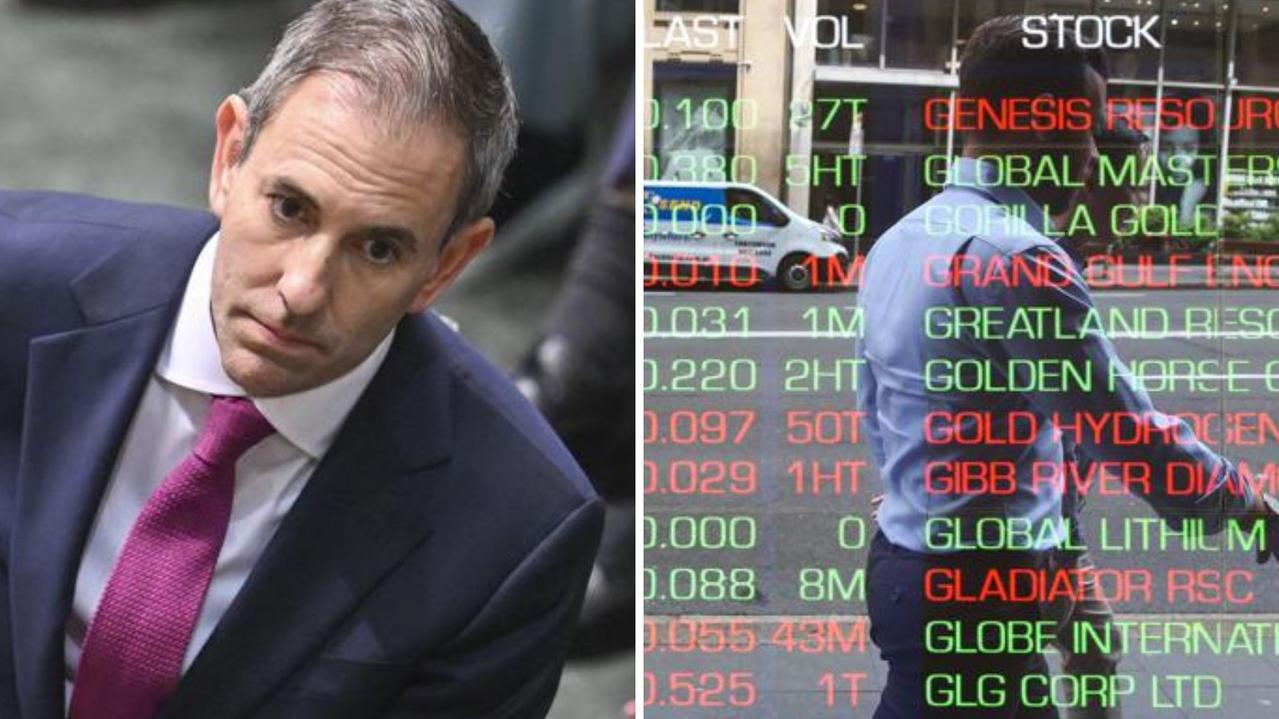
    The Australian equities market delivered a sharp early rally on Wednesday, driven by plummeting global oil prices following the announcement of a conditional two-week ceasefire agreement between the United States, Iran, and Israel. By the first hour of regular trading, the benchmark ASX 200 index jumped 2.6 percent across the board, with technology and materials sectors leading the upward momentum, as geopolitical tensions that had rattled global markets for days eased unexpectedly.

    The ceasefire deal, brokered by Pakistan, is set to reopen the critical Strait of Hormuz—one of the world’s most vital oil shipping chokepoints that handles roughly 20 percent of all global crude trade. The news sent international oil prices falling as much as 19 percent, triggering a sharp pullback for Australian energy stocks. Major domestic energy players posted steep losses in early trading: Woodside Energy and Viva Energy both dropped 10 percent, Santos slid 5.6 percent, and fuel retailer Ampol fell 4.25 percent.

    Lower oil prices, however, injected fresh optimism into the aviation sector, which has been squeezed by rising fuel costs. Qantas Airways saw its shares climb 9 percent, while rival Virgin Australia recorded an even larger 13 percent gain in early trading. Beyond equities, the Australian dollar also strengthened against the U.S. dollar, rising 1.5 percent to 70.70 U.S. cents, while spot gold prices gained 2.3 percent as reduced geopolitical risk supported broader risk-on positioning across assets.

    The ceasefire came after global financial markets braced for potential military escalation, waiting for the expiry of a U.S. deadline for Iran set by former President Donald Trump that passed at 10 a.m. Australian Eastern Standard Time. Analyst Stephen Innes, who commented on the market reaction, noted that the decision by the White House to step back from the brink of conflict came as a major relief to regional and global markets.

    “Once the White House stepped back from the brink and replaced imminent escalation with a conditional two-week ceasefire, oil stopped acting as a lever of global fear and began to revert to something closer to flow and balance,” Innes explained in a market note. “That matters enormously for Asia. Lower oil prices remove the chokehold that has weighed on regional risk sentiment, especially in markets that feel imported energy shocks first and hardest.”

    Innes added that Asian markets entered Wednesday trading primed for volatility, with all asset prices positioned around the high-stakes deadline. “The market walked into Asia like a spring wound too tight, every asset calibrated to a single moment on the clock,” he said. “It walks out of the open with that tension released, not resolved, but eased just enough to let air back into the system. The two week ceasefire buys time, and in markets, time is oxygen.”

    Official details of the agreement confirm direct talks between U.S. and Iranian negotiators will be held in Pakistan this Friday. Iran’s foreign ministry confirmed the country will allow unimpeded transit of oil tankers through the Strait of Hormuz for the duration of the 14-day truce, with security oversight managed by Iranian military authorities. The ceasefire announcement follows a recent missile strike on the Thai bulk carrier Mayuree Naree near the strait on March 11, which had stoked fears of disrupted shipping routes and spiked oil prices in preceding days.

    Australia’s energy market dynamics make the truce particularly impactful for domestic investors: the country relies heavily on refineries in Singapore, Malaysia, and South Korea for processed transport fuel, while many Asian economies depend on Australian natural gas exports, creating a direct link between Middle East geopolitics and domestic market performance.

  • ‘Searching for perfection’: Terrifying Panthers stat that has rival players thinking they can go undefeated

    ‘Searching for perfection’: Terrifying Panthers stat that has rival players thinking they can go undefeated

    The Penrith Panthers have kicked off the 2025 NRL season in historic fashion, putting together a five-game run so dominant that even rival players are openly speculating the club could pull off the unprecedented feat of finishing the entire regular season undefeated.

    No other side in the league’s modern history has opened a campaign with such a devastating combination of offensive firepower and defensive discipline. Through the opening five rounds, the Panthers have outscored every other club, while conceding fewer points than all 16 competing rivals. They have piled up 190 total points for an average of 38 per game, and held opponents to just eight points per match — a mark that stands out starkly across the league, where nine squads have already given up at least 40 points in a single outing this season, with multiple clubs hitting that mark twice.

    Even with this historically strong start, Panthers players insist the version of the team taking the field right now is far from the finished product, warning competing sides that Penrith will only continue to improve as the season progresses.

    “I’ve always said that the sky’s the limit,” centre Paul Alamoti told reporters. “We’re searching for perfection, but it’s an illusion because you’ll never get there. If we continue to try to get better each day, that’s all we can be in control of and focus on at this stage. Things are obviously heading in the right direction with the way that we’re playing and how things are looking on the field, but we know internally that there’s still a long way to go. There are still 20 rounds to go and there’s still stuff in our game that we need to work on. We’re heading in the right direction, but we’re not getting too ahead of ourselves. Every team is still trying to get better, and we’re in the same position.”

    Much of the Panthers’ current success has been anchored by a dynamic, high-scoring left edge attack that has left opposition defenses scrambling to keep up. Young backline talent Casey McLean has skyrocketed into State of Origin contention after a standout performance against the Melbourne Storm, while winger Tom Jackson has already notched a league-record 12 tries through just five rounds. Five-eighth Blaize Talagi, who joined the club last year when the Panthers sat at the bottom of the ladder after 12 rounds, has emerged as a key playmaker for this dangerous attacking unit, crediting head coach Ivan Cleary for giving young players the space to grow into their roles.

    “I feel like we’re seeing opportunities and we’re not afraid to take them. I think our fundamentals are showing out there,” Talagi said. “Everyone is always alive and ready to take whatever comes on. We’re seeing things and we’re ready to take it and it’s coming off. It’s still not perfect. I’m still growing as a player, but I feel like we’ve come a long way and that’s thanks to Ivan for trusting us.”

    Newly appointed attack coach Ben Harden has also been singled out as a major driving force behind the team’s record-breaking offensive output, as the squad adapts to his refreshed strategic framework. For Alamoti, the room for improvement extends to both sides of the ball — a prospect he says the club is eager to pursue, even as it leaves rivals shaken.

    “We’ve got a new attack coach so that’s a bit different and we’re trying to adapt to his style of game play and what we’re trying to achieve out of that,” Alamoti explained. “We’ve obviously scored a few points over the first couple of weeks, but there are still little pockets of our game that we think we’re going to get better in. Defensively, we leaked 20 points two weeks ago and another 10 points last week. Everyone wants to keep the other team to zero, so that’s the goal.”

    That relentless pursuit of improvement has already convinced even top rival players that the Panthers are on track for history. Melbourne Storm star Cameron Munster is among those who have publicly said he sees no reason Penrith cannot finish the entire season undefeated, even as club leaders acknowledge the squad will likely rest its key starters at multiple points later in the 25-round campaign — the only factor analysts see as a potential roadblock to the historic run.

  • Pakistan makes last-minute bid to avert Trump threat to destroy Iran

    Pakistan makes last-minute bid to avert Trump threat to destroy Iran

    Just hours before a self-imposed deadline for massive military action against Iran, Pakistan tabled a last-minute diplomatic proposal Tuesday aimed at pulling the Middle East back from the brink of catastrophic full-scale war, after more than five weeks of escalating US-Israeli strikes across Iranian territory. The initiative comes after US President Donald Trump issued an unprecedented, chilling warning that a “whole civilization will die tonight” if his demands were not met, leaving the global community reeling from the scale of the threat.

    The White House confirmed it had received the Pakistani proposal and would issue a formal response in due course. Pakistan stepped into the mediator role as regional tensions hit a boiling point, with daily strikes crippling key Iranian infrastructure and violence spilling across neighboring borders. In a post on the social platform X, Pakistani Prime Minister Shehbaz Sharif affirmed that diplomatic efforts to resolve the ongoing conflict were moving forward with tangible momentum, adding that substantive progress could be reached in the near term if both sides agreed to the compromise.

    Under the terms of Pakistan’s proposal, Sharif appealed directly to Trump to extend his 8:00 PM Washington time deadline by 14 days. In exchange, the plan calls for Iran to commit to reopening the Strait of Hormuz for a two-week period – the non-negotiable core demand Trump has laid out since Tehran shut down the critical global oil chokepoint in retaliation for the initial US-Israeli attacks on February 28.

    Trump’s latest threats have drawn widespread international condemnation, with even observers familiar with his history of provocative rhetoric expressing shock at the escalation. Critics have warned that the planned attacks amount to a call for genocide, and could open the door to future war crimes charges for any US service members who carry out the orders. The apocalyptic warning marked a sharp escalation from a profanity-laden post Trump shared on his Truth Social platform two days earlier, on Easter Sunday, where he threatened to destroy every bridge and power plant across Iran, a country home to 90 million people. International law defines deliberate attacks on civilian infrastructure as a war crime unless the sites serve an overwhelming military purpose, a condition the US has not publicly established.

    Pope Leo XIV issued a blunt rebuke of the threat, stating that any attack targeting the entire population of Iran is “truly unacceptable.”

    While Trump prepared for a potential major strike, US Vice President JD Vance fueled speculation about unconventional military action during a speaking appearance in Budapest, noting that the US held military tools “that we so far haven’t decided to use” against Iran. The White House quickly issued a clarification to AFP, denying that Vance’s comments were a reference to nuclear weapons.

    Even ahead of Trump’s deadline, the US and Israel had ramped up daily strikes on Iranian infrastructure. Israeli Prime Minister Benjamin Netanyahu confirmed that recent attacks targeted railways and bridges, which he claimed were being used by Iran’s Islamic Revolutionary Guard Corps. In a rare acknowledgment of error, the Israeli military issued a statement of regret after confirming that an overnight strike damaged the Rafi-Nia Synagogue in central Tehran during an operation targeting a senior Iranian commander. Iran, which is governed by Shia Muslim clerics, is home to a centuries-old Jewish community that maintains roughly 100 active synagogues across the country.

    Iranian senior officials have made clear that the country is prepared for every possible outcome of the current standoff. “No threat is beyond our preparedness and intelligence,” First Vice President Mohammad Reza Aref told state media Tuesday.

    On-the-ground reporting confirms that the strikes have already killed civilians and disrupted critical transport links across Iran. Iranian authorities reported Tuesday that a US-Israeli strike on a bridge near the holy city of Qom and a second attack on a rail bridge in central Iran left two people dead. Regional officials added that a key highway connecting Tabriz in northern Iran to the capital Tehran has been completely shut down by a strike, while the Iranian Mizan news agency reported fresh damage to railway lines in Karaj, a city just outside Tehran. Early Tuesday, multiple explosions were reported across Tehran, and Iranian state media confirmed that 18 people – including two children – were killed in strikes in neighboring Alborz Province. Iran’s Mehr news agency also reported strikes on Kharg Island, the central hub of Iran’s oil export industry, though US media outlets claimed the strikes targeted only military infrastructure on the island.

    As the deadline approached, ordinary Iranians expressed a mix of fear, resignation, and defiance in interviews with AFP. University student Metanat, 27, who lost a classmate to an earlier strike, said “I feel terrified and so should everyone else in the country. Some people dismiss Trump’s ultimatums as a joke, but death is not a joke.” 62-year-old pensioner Morteza Hamidi said he felt “gloomy for the future of the country after the war,” adding that repeated threats from Trump have left many Iranians desensitized: “We are now numb to his threats.”

    In a show of public unity as the deadline neared, Iranian state media published images of thousands of Iranians forming human chains around critical power plants to shield the facilities from potential attack. The display of patriotism comes just months after Iran’s clerical leadership violently cracked down on widespread mass anti-government protests, with international human rights groups documenting over a thousand deaths in the crackdown.

    The conflict has already spilled far beyond Iran’s borders, raising fears of a full regional war. Overnight Tuesday, a strike hit a petrochemical complex in the Saudi industrial city of Jubail, a witness confirmed to AFP, just hours after similar energy infrastructure targets were hit in Iran. Loud explosions were also reported late Tuesday in central Baghdad, just kilometers from the US embassy compound in the heavily fortified Green Zone.

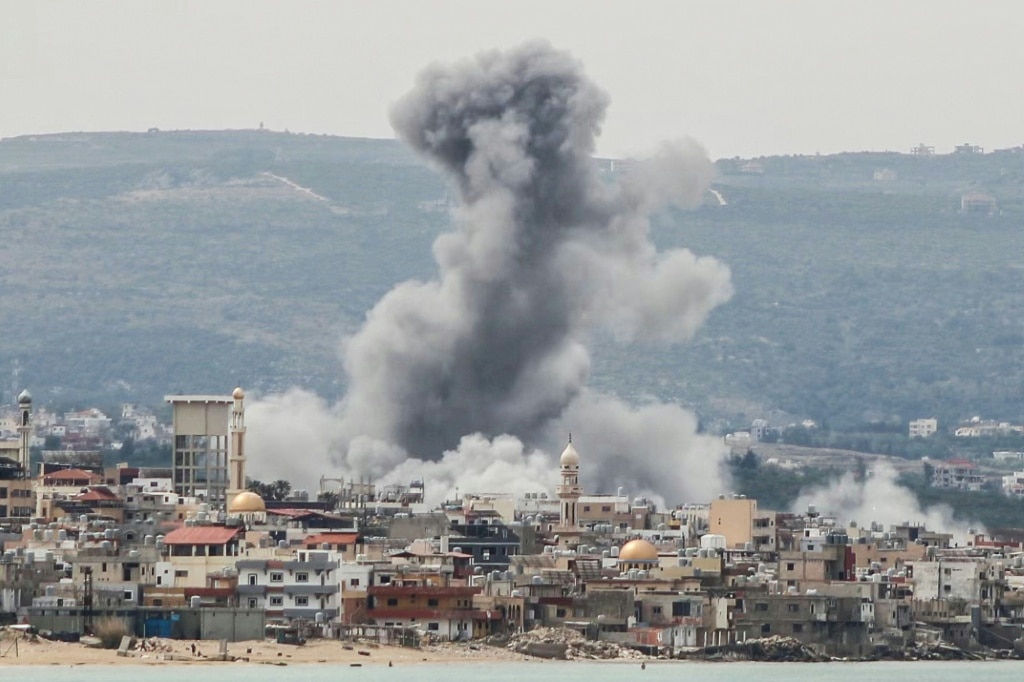
    Iran has responded to the US-Israeli attacks by targeting Gulf Arab states that host US military bases, while Israel has launched a full-scale ground invasion of southern Lebanon, vowing to seize territory controlled by Iranian-backed Hezbollah, which has launched thousands of rockets into Israel since the conflict began. Lebanese authorities report that the Israeli invasion has killed more than 1,500 people to date. On Tuesday, the Israeli military issued a new warning ordering all vessels in the maritime zone off southern Lebanon to move immediately north of the city of Tyre, announcing new military operations would be carried out in the area in the coming hours.

    As regional governments prepared for the worst, Israel warned its citizens of a sharply increased risk of retaliatory Iranian attacks ahead of the deadline. Kuwait urged all of its citizens to remain indoors from midnight GMT until 7 AM Wednesday, while Bahrain’s main commercial port announced it would suspend all operations starting early Wednesday over security concerns.

    The standoff centers on the closure of the Strait of Hormuz, the strategic waterway that carries roughly one-fifth of all globally traded oil. After the initial February 28 attacks, Tehran seized control of the strait to force a response from the international community, a move that has sent global oil prices soaring and put intense domestic political pressure on Trump, who has made reopening the strait his top priority in the conflict. Trump has justified the attacks by claiming Iran is months away from building a nuclear weapon, a claim that has not been corroborated by the United Nations’ nuclear watchdog or independent nuclear analysts.

    At the United Nations Security Council last week, Russia and China vetoed a Western-backed resolution calling for the Strait of Hormuz to be reopened. The draft resolution had already been watered down to remove a provision that would have given Gulf states authorization to use military force to secure the waterway, but Beijing and Moscow still rejected the text.

    US and Israeli officials maintain that all strikes are aimed at degrading Iran’s military capabilities, and that civilian casualties are unintended consequences of the military campaign.

  • Artemis and ISS astronauts share celestial call

    Artemis and ISS astronauts share celestial call

    In a rare and historic cross-orbit exchange between two groups of humanity’s space explorers, the four astronauts of NASA’s Artemis II mission — currently streaking back to Earth after completing the first crewed lunar flyby in more than half a century — connected live for a lighthearted, reflective conversation with the crew of the International Space Station (ISS) on Tuesday.

    The cross-space call marked a special moment for both teams, coming just one day after the Artemis II crew checked off a string of landmark milestones: breaking the all-time record for the farthest humans have ever traveled from Earth, executing the first close lunar pass by a crewed mission since NASA’s Apollo program in the 1970s, and capturing more than six hours of high-resolution, firsthand observations of the Moon’s cratered surface. For the Artemis team, the chat with ISS colleagues was a long-awaited chance to swap perspectives on life off our home planet.

    “We have been waiting for this like you can’t imagine,” Artemis II commander Reid Wiseman opened the conversation. Canadian astronaut Jeremy Hansen, a first-time space traveler making the journey around the Moon as part of NASA’s international partnership on the Artemis program, added: “It’s fun to be up in space with you at the same time!”

    Leading the question from the ISS side was Crew-12 commander Jessica Meir, who pressed the Artemis crew on how seeing Earth from the Moon’s neighborhood transformed their view of our planet. At roughly 240,000 miles from Earth, the Artemis II crew’s vantage point is around 1,000 times farther out than the ISS’s low-Earth orbit, creating a dramatically different view of the pale blue planet set against the infinite black of deep space.

    “Every astronaut that comes to space remarks on how seeing Earth from orbit changes your perspective,” Meir noted. “We really wanted to hear what that felt like, how different that felt now from your new perspective around the Moon?”

    Artemis astronaut Christina Koch — who previously made history alongside Meir as part of the first all-female spacewalk in ISS history — shared that the contrast between Earth and the surrounding blackness of deep space created an unforgettable impression. “It truly emphasized how alike we are, how the same thing keeps every single person on planet Earth alive,” Koch explained.

    Beyond the big reflective questions, the conversation turned to the shared practical realities of living and working in space. All three American Artemis II crew members are veteran ISS astronauts, and both teams agreed that every lesson they learned on the low-Earth orbit outpost — from large-scale operational procedures to the small, everyday tricks for surviving in microgravity — prepared the Artemis team for this historic lunar voyage.

    “Basically every single thing that we learned on ISS is up here,” Koch said. “And then, of course, there’s the funny and practical, how to eat, how to do silly things with water, how to flip around. We’re bringing that with us too.”

    Wiseman shared a lighthearted anecdote that highlighted Hansen’s first-time experience in space, as the crew prepared to fire their engines to leave Earth orbit and set course for the Moon. As the craft aligned for the burn, the view of Earth grew rapidly larger in the capsule’s window, prompting a moment of playful panic from Hansen.

    “Jeremy turns around to us and goes, ‘I’m not sure. I think we’re going to run right into it!’” Wiseman recalled. “We were all dyin’ laughin’.”

    Following the successful lunar flyby, the Artemis II crew is now on the final leg of their 10-day test mission, which is designed to validate all of the Orion capsule’s critical systems ahead of future crewed lunar landings as part of NASA’s Artemis program. The mission is scheduled to conclude with a splashdown in the Pacific Ocean late Friday.

  • War in the Middle East: latest developments

    War in the Middle East: latest developments

    In a rapidly escalating conflict that has sent shockwaves across the global community, the Middle East is facing one of its most volatile security crises in recent years, marked by a joint US-Israeli strike on Iran’s capital Tehran that left visible destruction on April 7, 2026. As the conflict approaches a critical turning point following a US ultimatum to Iran, developments are unfolding by the hour, drawing condemnation, warnings, and intervention from world leaders and international bodies.

  • Trump branded ‘crazy’ over apocalyptic Iran threats

    Trump branded ‘crazy’ over apocalyptic Iran threats

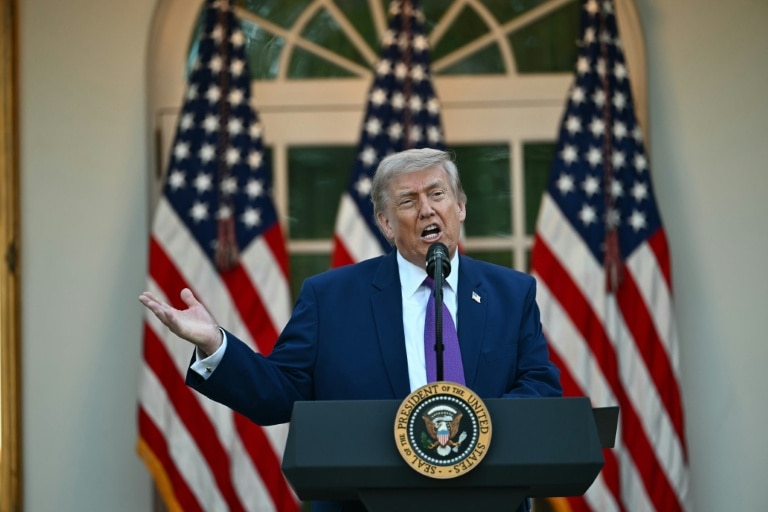
    For U.S. President Donald Trump, incendiary, provocative rhetoric has long been a political trademark. But his recent menacing threats to erase the entirety of Iranian civilization have crossed unprecedented lines, sparking widespread condemnation and urgent questions from across the political spectrum — even among his former allies — about his mental fitness to hold the highest office in the country.

    The 79-year-old Republican, the oldest elected president in U.S. history, has escalated his fiery apocalyptic language amid growing frustration over Iran’s refusal to negotiate a new deal to de-escalate ongoing tensions in the Middle East. A string of erratic, often profanity-laced posts on his personal Truth Social platform has pushed demands for his removal from office, even from conservatives who once backed his agenda.

    The latest crisis centers on a self-imposed Tuesday deadline Trump set for Iran to reopen the Strait of Hormuz, a critical global chokepoint for oil shipping that accounts for nearly a fifth of the world’s daily petroleum trade. Twelve hours ahead of the deadline, Trump issued a chilling warning on Truth Social: “A whole civilization will die tonight, never to be brought back again. I don’t want that to happen, but it probably will.”

    Days earlier, on Easter Sunday, he issued an even more crass ultimatum: “Open the Fuckin’ Strait, you crazy bastards, or you’ll be living in Hell.” The following day, at the White House Easter Egg Roll — a family-friendly annual event surrounded by hundreds of children, the First Lady, and a costumed Easter Bunny — Trump doubled down on his aggressive stance, dismissing concerns that targeting Iranian civilian infrastructure and power plants would qualify as a war crime.

    As global anxiety spread over what the scope of his threatened action could be, the White House was forced to publicly deny speculation that Trump was preparing to use nuclear weapons, a rumor amplified by comments from Vice President JD Vance, who referenced “tools in our toolkit that we so far haven’t decided to use.”

    Longtime observers of Trump’s negotiating style note that he has historically relied on extreme, maximalist opening positions to pressure opponents into concessions, a tactic he honed during his decades as a real estate developer. Many analysts suspect the current threat follows this familiar pattern. “He does seem a bit more unhinged than in the past,” Peter Loge, director of George Washington University’s School of Media, told Agence France-Presse. “But this feels to me like a broader pattern of Trump bluster. My guess is as we approach one more deadline in a long series of deadlines, the president will declare victory, say I drove Iran to the bargaining table, I’ll give them two more weeks. Then we’ll see this movie again in a couple of weeks.”

    Even by Trump’s well-documented outspoken standards, his recent remarks have been labeled as distinctly unpresidential, and criticism has poured in from across the political divide. Hard-right former Congresswoman Marjorie Taylor Greene, who split with Trump last year, condemned the threats on X, writing, “We cannot kill an entire civilization. This is evil and madness.” Greene is among a group of former loyalists who have joined Democrats in calling for Trump’s cabinet to invoke the 25th Amendment, a constitutional provision that allows for the transfer of power if a president is deemed unfit to govern due to physical or mental incapacity.

    Other prominent conservative voices have echoed the alarm. Right-wing media host Tucker Carlson called Trump’s Easter Sunday comments the “first step toward nuclear war.” Former White House press secretary Anthony Scaramucci labeled Trump a “crazy person” and publicly called for his removal from office. Even prominent conspiracy theorist Alex Jones asked on his *INFO WARS* program, “How do we 25th Amendment his ass?” For their part, former Democratic vice-presidential candidate Tim Walz simply stated, “the President has lost his mind.”

    When pressed on the growing concerns about his mental state by an Agence France-Presse reporter during a White House briefing Monday, Trump brushed off the criticism. “I haven’t heard that,” he said, responding to questions about whether his mental state should be examined following his inflammatory remarks. “But if that’s the case, you’re going to have to have more people like me.”

    The world now waits to see whether Trump will follow through on his threats when his deadline expires, or back down from the extreme position, a path he has taken repeatedly after similar high-stakes standoffs throughout his political career.

  • Artemis II crew snaps historic Earthset photo on way home

    Artemis II crew snaps historic Earthset photo on way home

    Almost six decades after the Apollo 8 mission gave the world its iconic Earthrise photograph, humanity has a new, breathtaking celestial keepsake from its latest journey around the Moon: the Artemis II four-person crew has captured the first-ever Earthset image taken from lunar space, a milestone that caps a historic mission that has already rewritten space exploration records.

  • NASA releases picture of ‘Earthset’ shot by Artemis crew

    NASA releases picture of ‘Earthset’ shot by Artemis crew

    Fifty-seven years after one of the most influential space photographs in human history changed how humanity sees its home planet, NASA has released a new historic image captured by the Artemis II crew: a striking view of ‘Earthset’ as our world dips beyond the bleak gray lunar horizon.

    The image was taken from the Orion capsule, which is carrying four astronauts on the first crewed lunar flyby mission in more than 50 years, marking a major milestone for NASA’s long-term Artemis program. The frame mirrors the 1968 ‘Earthrise’ shot that forever shifted public perspective on our planet, captured by Apollo 8 astronaut Bill Anders during humanity’s first crewed mission to orbit the Moon.

    Both NASA and the White House shared the new ‘Earthset’ image on the social platform X, alongside a brief caption from the White House that framed the moment as a historic first: “Humanity, from the other side. First photo from the far side of the Moon. Captured from Orion as Earth dips beyond the lunar horizon.”

    The Artemis II crew, made up of NASA astronauts Reid Wiseman, Christina Koch, and Victor Glover, plus Canadian Space Agency astronaut Jeremy Hansen, is currently completing a 10-day looping mission around the Moon that lays critical groundwork for the program’s target: the first crewed lunar landing in more than 50 years, currently scheduled for 2028. Over the course of the mission, the astronauts have shared detailed, vivid observations of the lunar surface’s rugged features, and have already witnessed other rare astronomical events. Alongside the ‘Earthset’ image, the White House also released a NASA-captured photo of a deep space solar eclipse, where the Moon passed directly between the Orion capsule and the Sun — a sight the administration noted “few in human history have ever witnessed.”

    The original 1968 ‘Earthrise’ image remains a cultural touchstone for space exploration. During Apollo 8’s 10 orbits of the Moon (which, like Artemis II, did not include a surface landing), Anders snapped the iconic frame that showed Earth’s vivid blue oceans and continents glowing brightly against the endless black of deep space, framed by the desolate gray foreground of the lunar horizon. The shot has consistently ranked among the most influential photographs ever taken, and was included in Life magazine’s 2003 landmark collection *100 Photographs That Changed the World*. The new ‘Earthset’ image carries on that legacy, offering a fresh perspective of our home planet from the lunar neighborhood as NASA works to establish a long-term human presence on the Moon.

  • Trump warns ‘whole civilization will die’ in Iran if ultimatum expires

    Trump warns ‘whole civilization will die’ in Iran if ultimatum expires

    In an escalation of bellicose rhetoric against Iran that has sent shockwaves through the global political landscape, former and current U.S. President Donald Trump has issued a catastrophic warning: if Tehran fails to comply with his sweeping demands by a Tuesday midnight GMT deadline, an entire Iranian civilization faces permanent annihilation. The stark threat marks a new peak in weeks of escalating military pressure led by the United States and its regional ally Israel, which have already carried out sustained airstrikes against Iranian military sites, eliminated top Iranian military and political leadership, and left critical segments of the country’s infrastructure in ruins.

    Early Tuesday, Trump doubled down on his aggressive posture in a post to his Truth Social platform, issuing one of the most extreme threats of the ongoing conflict. “A whole civilization will die tonight, never to be brought back again. I don’t want that to happen, but it probably will,” he wrote. While he offered few specific details on what a full-scale U.S. attack would entail, Trump has already outlined plans to target civilian infrastructure, threatening to bomb Iran’s bridges, power grids and other critical public facilities back to the “Stone Age”.

    The core demand at the heart of Trump’s ultimatum is that Iran end its de facto closure of the Strait of Hormuz, the strategically critical narrow waterway that carries a large share of the world’s global oil and commodity trade. Rejecting incremental de-escalation, Trump dismissed a circulating temporary ceasefire proposal as insufficient on Monday, leaving no room for partial compromise. Iran has already pushed back firmly against U.S. pressure, with state media reporting that Iranian authorities refuse to accept anything less than a full, permanent end to the ongoing war, rather than a temporary pause in hostilities.

    Despite his apocalyptic rhetoric, Trump appeared to leave a narrow opening for a last-minute diplomatic breakthrough. “Now that we have Complete and Total Regime Change, where different, smarter, and less radicalized minds prevail, maybe something revolutionarily wonderful can happen, WHO KNOWS? We will find out tonight,” he added in his Truth Social post.

    Critics across the political spectrum have decried Trump’s threats as a blatant violation of international law. On Monday, Trump confirmed that if his deadline passes without Iranian compliance, U.S. forces would begin systematically destroying every bridge across Iran and crippling every major power plant – a planned attack that military and legal experts widely condemn as a clear-cut war crime. Leading Congressional Democrat Chuck Schumer, the Senate Minority Leader, was among the most vocal critics, condemning the president’s words in a post to X. “This is an extremely sick person,” Schumer wrote. “Each Republican who refuses to join us in voting against this wanton war of choice owns every consequence of whatever the hell this is.”

    The Trump administration’s campaign of pressure received backup from Vice President JD Vance, who doubled down on the threat during a diplomatic visit to Budapest, where he met with Hungarian Prime Minister Viktor Orban. Even as Vance acknowledged that the U.S. has “largely accomplished its military objectives” to date and suggested further negotiations were possible ahead of the deadline, he delivered an ominous warning to Tehran. “They’ve got to know we’ve got tools in our toolkit that we so far haven’t decided to use,” Vance told reporters. “Trump will decide to use them if the Iranians don’t change their course of conduct.”

    Sustained airstrikes have continued across Iran since the U.S.-Israeli bombing campaign began on February 28. On Tuesday, Iranian officials confirmed that the country’s primary oil export terminal, located on Kharg Island, has come under fresh attack, adding to the growing damage to the country’s energy sector and broader economy.