标签: Oceania

大洋洲

  • He’s Australia’s most decorated soldier. Now he’s at the centre of a historic war crimes case

    He’s Australia’s most decorated soldier. Now he’s at the centre of a historic war crimes case

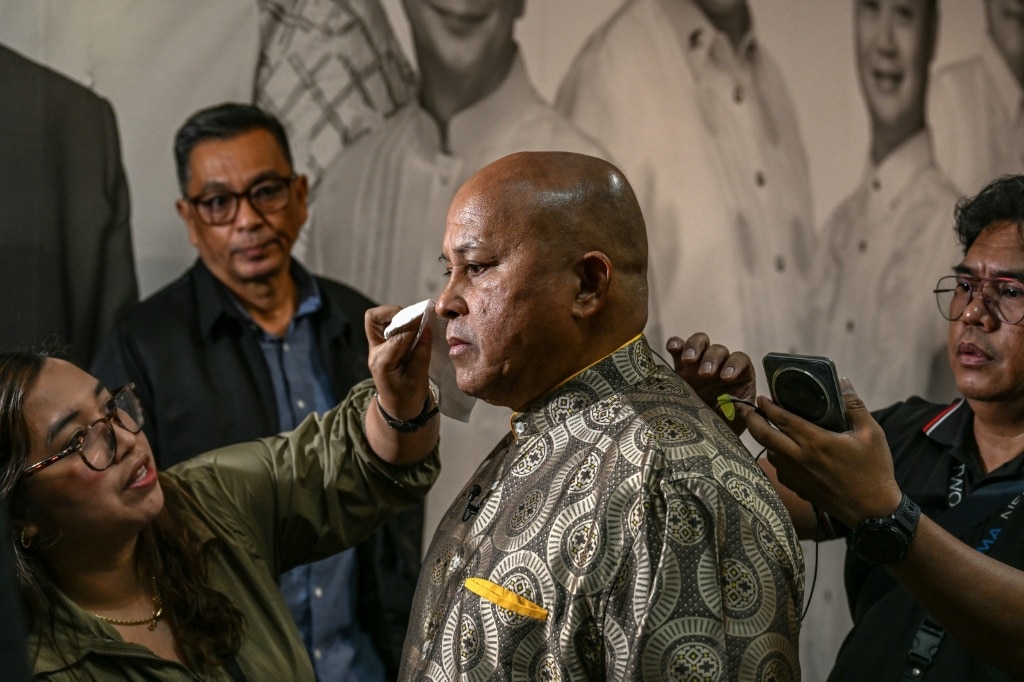
    On a quiet Tuesday on the tarmac of Sydney Airport, a landmark moment in Australian military history unfolded with little fanfare: Ben Roberts-Smith, once the nation’s most celebrated and highly decorated living war hero, was escorted off a commercial flight and into a waiting police vehicle to face five criminal charges of war-time murder.

    Less than 15 years ago, Roberts-Smith returned home from his tour of duty in Afghanistan a national icon. Awarded the Victoria Cross, Australia’s highest military honor, for reportedly single-handedly overcoming Taliban fighters who ambushed his Special Air Service (SAS) patrol, he quickly became the face of Australia’s revered military legacy. He stepped away from the Australian Defence Force (ADF) in 2013, and parlayed his fame into lucrative speaking engagements, corporate board positions, mainstream magazine covers, and high-profile honors including Father of the Year. He even met the late Queen Elizabeth II at Buckingham Palace just months after receiving his top military decoration.

    But that carefully cultivated reputation crumbled in 2018, when Nine newspapers published a bombshell series of investigative reports detailing widespread alleged misconduct during Roberts-Smith’s service. The reports included claims of unlawful beatings and extrajudicial killings of unarmed Afghan detainees, workplace bullying of fellow soldiers, and domestic abuse of a former partner. To clear his name, Roberts-Smith launched one of the most expensive and high-profile defamation lawsuits in Australian history, a seven-year legal battle dubbed the “trial of the century” that cost millions of dollars.

    In 2023, three years after the case began, a Federal Court judge ruled that the core allegations of four murders were substantially true, a finding that was later upheld on appeal. While claims of domestic violence and some bullying allegations were dismissed, the civil trial shattered the myth of Roberts-Smith as a national hero. Now, he faces criminal prosecution that carries a life sentence if convicted, and he continues to maintain his innocence. He has denounced the allegations as “egregious” false claims driven by jealous and spiteful former comrades.

    The criminal charges against Roberts-Smith mark an unprecedented turning point not just for Australia, but for the global community. As a Victoria Cross recipient, Roberts-Smith is the first holder of Australia’s highest military honor to ever be charged with war crimes. Experts note it is nearly impossible to find a recipient of a comparable top military valor award anywhere in the world that has faced such prosecution.

    “For Roberts-Smith to now be charged with war crimes – and not just one, but multiple war crimes – is a very significant cultural and social moment for a country that, for much of its history… has placed a lot of store in the exploits and contributions of the members of its defence forces,” Donald Rothwell, a leading Australian international law professor, told the BBC.

    Deane-Peter Baker, a special forces ethics scholar who redesigned the ADF’s ethics training following the Afghanistan war crime scrutiny, called the moment extraordinary, noting “We’ve never seen this before.”

    Roberts-Smith’s arrest is the culmination of a five-year investigation by the Office of the Special Investigator (OSI), a special watchdog body created after the 2020 release of the landmark Brereton Report. That official inquiry found credible evidence that elite Australian SAS soldiers had unlawfully killed 39 Afghan civilians between 2001 and 2021, when Australian troops withdrew from the country, and recommended 19 current or former ADF members face formal investigation. To date, the OSI has opened 53 probes, finalised 39, and only charged one other former soldier, Oliver Schulz, who is not scheduled to face trial until 2025, two years after his arrest.

    OSI investigations director Ross Barnett told reporters Tuesday that investigators have operated under uniquely challenging conditions that have slowed progress dramatically. All alleged crimes took place in Afghan war zones roughly 9,000 kilometers from Australia, and investigators have no ability to access original crime scenes, recover physical evidence like bullets or blood spatter, conduct post-mortem examinations, or coordinate cross-border law enforcement cooperation. Compounding these challenges is the long-standing military culture of loyalty between “brothers in arms” that discourages service members from testifying against one another. Still, Peter Stanley, former principal historian at the Australian War Memorial, noted that many witnesses who previously stayed silent have come forward, recognizing their obligation to truth outweighs informal loyalty bonds. He added that the original investigative reporting from Nine Newspapers helped uncover critical leads and cleared a path for prosecution.

    Barnett called Roberts-Smith’s arrest a “significant step” in the OSI’s mandate, and the agency says it remains committed to wrapping up remaining investigations as quickly as possible. But legal experts warn the criminal trial itself is still years away, as Australia’s legal system has no modern precedent for domestic war crimes prosecutions, and the case presents a host of unprecedented procedural hurdles. The five separate charges relate to events that occurred more than a decade ago, requiring the court to manage massive volumes of evidence. Coordinating witnesses is another major logistical challenge: some witnesses require identity protection for security or national security reasons, while others based in Afghanistan are nearly impossible to reach under current conditions. Additionally, years of high-profile public coverage of the civil defamation trial, which included 110 days of public evidence, means finding an unbiased jury — should the case go before a jury rather than a judge-alone trial — will be extremely difficult.

    Beyond the legal process, the Roberts-Smith case has forced Australia to confront a long-overdue reckoning over its military legacy and national identity. For more than a century, Australia has anchored its national self-image in the “Anzac spirit,” a set of values centered on courage, loyalty, honor, and ethical conduct forged from the World War One Gallipoli campaign. The slow, unfolding saga of war crime allegations has eroded public trust in the ADF and caused distress among current service members, while the glacial pace of investigations has drawn criticism from veteran groups, who argue the drawn-out process is unfair to all parties involved, including the families of the alleged victims.

    Opinion across the country remains deeply divided. High-profile public figures including former Australian prime minister Tony Abbott and billionaire Gina Rinehart have publicly sided with special forces veterans, arguing that the investigations amount to unfair persecution of soldiers who served their country. “I am very sorry that some of them have been subjected to a form of persecution by the country they served,” Abbott said this week.

    But supporters of the investigations argue that the prosecution of Roberts-Smith demonstrates Australia’s unwavering commitment to the rule of law, even when it requires holding the nation’s most beloved heroes accountable. Other countries, including the United Kingdom, have already launched their own Brereton-style inquiries into Afghan war misconduct following Australia’s lead.

    “In a weird way, this is a moment that Australians should be proud of,” Baker said. “For a nation to hold a member of their armed forces to account – someone who has been held up as one of our greatest living heroes – shows a commitment to ethics, decency and the rule of law that is unfortunately very rare among nations.

    “That ought to be recognised and applauded, however embarrassing or sad this is for many people,” Stanley added.

  • Scale of killing in Lebanon ‘horrific’: UN rights chief

    Scale of killing in Lebanon ‘horrific’: UN rights chief

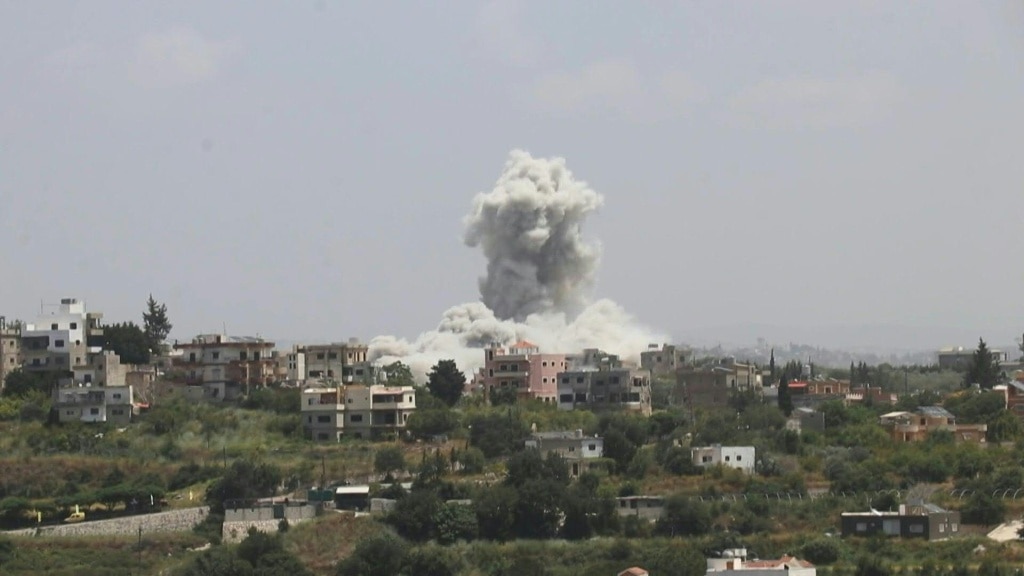
    Just hours after a ceasefire deal was reached between Israel and Iran, a devastating wave of Israeli air strikes across Lebanon left a staggering death toll in its wake, drawing sharp condemnation from the United Nations’ top human rights official who has labeled the scale of killing “horrific” and called for urgent global intervention to end the spiraling crisis.

    Updated figures from Lebanon’s Ministry of Public Health confirm that at least 112 people were killed and more than 830 others sustained injuries in the unprecedented wave of strikes carried out Wednesday, marking the deadliest single day of violence since Lebanon became entangled in the broader regional Middle East conflict.

    In an official statement released following the attacks, UN High Commissioner for Human Rights Volker Türk expressed revulsion at the staggering number of civilian and overall casualties, saying, “The scale of the killing and destruction in Lebanon today is nothing short of horrific. Such carnage, within hours of agreeing to a ceasefire with Iran, defies belief. It places enormous pressure on a fragile peace, which is so desperately needed by civilians.”

    The statement detailed the catastrophic aftermath of the strikes, noting mass casualties have overwhelmed local hospital capacity across the country. A UN human rights field team deployed to a strike site in the Lebanese capital Beirut reported a scene of utter devastation, where multiple dead bodies were recovered from piles of rubble left by destroyed buildings.

    Türk stressed that international humanitarian law (IHL) sets clear, non-negotiable requirements that all parties to armed conflict must uphold: civilians and civilian infrastructure must be protected at all times, and every attack must adhere to the core IHL principles of distinction between combatants and civilians, proportionality, and precautionary measures to minimize harm to non-combatants. “These principles are non-negotiable, and must always be respected, whatever the circumstances of armed conflict,” he said. The UN rights chief also called for prompt, independent investigations into all alleged violations of international law, with any actors found responsible held legally accountable for their actions.

    Lebanon was dragged into the ongoing regional conflict back in March, when Iran-backed militant group Hezbollah began launching rocket attacks into northern Israel. Türk also made clear his condemnation of Hezbollah’s sustained missile and drone strikes targeting northern Israeli communities, echoing his call for an immediate end to all hostilities from both sides.

    Months of sustained conflict have already caused a humanitarian catastrophe in Lebanon: more than one million Lebanese people have been forcibly displaced from their homes, and Israel has launched a full ground invasion into southern Lebanon. Türk drew particular attention to concerning statements from senior Israeli officials that indicate a long-term intention to occupy or formally annex parts of southern Lebanese territory. “The scale of such actions, coupled with statements by Israeli officials indicating an intention to occupy or even annex parts of southern Lebanon, are deeply troubling,” he said.

    Closing his statement, Türk stressed the urgent need for the international community to act swiftly to stop the bloodshed. “The international community must act quickly to help bring an end to this nightmare. Efforts to bring peace to the wider region will remain incomplete as long as the Lebanese people are living under continuing fire, forcibly displaced, and in fear of further attacks.”

  • ‘Ketamine Queen’ jailed for 15 years over Matthew Perry drugs

    ‘Ketamine Queen’ jailed for 15 years over Matthew Perry drugs

    In a high-profile sentencing that closed one major chapter of the investigation into the 2023 death of beloved *Friends* star Matthew Perry, a British-American drug trafficker known publicly as the “Ketamine Queen” has been sentenced to 15 years in federal prison for her role in supplying the ketamine that caused the actor’s fatal overdose.

    Forty-two-year-old Jasveen Sangha, a dual U.K.-U.S. citizen, was one of five people charged in connection with Perry’s death, the 54-year-old actor who was found unresponsive in the hot tub of his luxury Los Angeles home in October 2023. Court documents detail that Sangha operated a large-scale illicit drug distribution ring out of her upscale Los Angeles apartment, intentionally targeting wealthy, high-profile clients in the heart of Hollywood’s entertainment industry.

    Prosecutors emphasized in sentencing filings that Sangha deliberately built her brand as an exclusive supplier for A-list clientele, boasting to customers of her tight-knit VIP network of celebrity buyers. In a 2020 message to one customer, she wrote, “I’m really select with people, it’s a very VIP circle of celebs.”

    The conspiracy that led to Perry’s death saw Sangha partner with middleman Erik Fleming to sell 50+ vials of ketamine to Kenneth Iwamasa, Perry’s live-in personal assistant. Court records confirm Iwamasa administered repeated injections of Sangha’s ketamine to Perry, including at least three separate doses on October 28, 2023—the same day the actor died of an overdose. Within hours of learning of Perry’s death from breaking news reports, Sangha attempted to cover up her involvement, ordering Fleming to “delete all our messages” to destroy evidence of their arrangement.

    Prosecutors argued that Sangha’s actions reflected a deliberate disregard for human life, prioritizing illegal profits over the well-being of her customers. “She chose profits over people, and her actions have caused immense pain to the victims’ families and loved ones,” prosecutors wrote in their sentencing recommendation. When law enforcement raided Sangha’s home following Perry’s death, they seized a large cache of controlled substances including methamphetamine, ketamine, ecstasy, cocaine, and counterfeit Xanax, alongside drug trafficking equipment: a money counting machine, a digital scale, and electronic devices designed to detect hidden surveillance cameras and wireless bugs.

    The investigation into Perry’s death uncovered a broader network of enablers who profited off the actor’s long-public struggle with addiction, including two medical professionals who violated their oaths to traffic drugs to Perry. Dr. Salvador Plasencia, who pleaded guilty to four counts of ketamine distribution connected to the case, was sentenced to 30 months in prison last year. A second physician, Dr. Mark Chavez, received a sentence of home confinement coupled with hundreds of hours of community service. Court records show Chavez supplied ketamine to Plasencia, who then resold it to Perry at exorbitant markups. In one text message, Plasencia wrote, “I wonder how much this moron will pay,” highlighting the callous exploitation of Perry’s addiction. Prosecutors confirmed Perry paid more than $2,000 per vial of ketamine, while his suppliers paid only a small fraction of that price for the drug.

    Sangha pleaded guilty to a five-charge indictment, including one count of operating a drug-involved premises, three counts of ketamine distribution, and one count of distribution of ketamine resulting in death. Her guilty plea also acknowledged she supplied four vials of ketamine to 33-year-old Cody McLaury in August 2019; McLaury died of an overdose just hours after purchasing the drug from her.

    For decades before his death, Perry spoke openly about his decades-long battle with substance use disorder. The actor, who found global fame and fortune playing sarcastic everyman Chandler Bing on the hit 1990s-2000s sitcom *Friends*, had long struggled with addiction to painkillers and alcohol, even as his role on the show made him a household name worldwide. In 2018, he suffered a life-threatening colon rupture linked to drug use that required multiple emergency surgeries. In his 2022 memoir *Friends, Lovers and the Big Terrible Thing*, Perry documented his experience going through detox more than 60 times, writing, “I have mostly been sober since 2001, save for about sixty or seventy little mishaps.” At the time of his death, colleagues told reporters Perry appeared to be managing his addiction and making progress in his recovery. He had originally been using ketamine as part of a physician-supervised therapy program for depression, but prosecutors confirmed he developed an addiction to the drug, which is used legally as an anesthetic and depression treatment but is also commonly misused as a psychedelic party drug.

    The remaining co-defendants in the case—personal assistant Iwamasa and middleman Fleming—are scheduled to be sentenced later this month. Perry’s death triggered an outpouring of global grief from *Fans* across multiple generations who grew up watching the hit sitcom.

  • ‘Total victory’ or TACO? Trump faces questions on Iran deal

    ‘Total victory’ or TACO? Trump faces questions on Iran deal

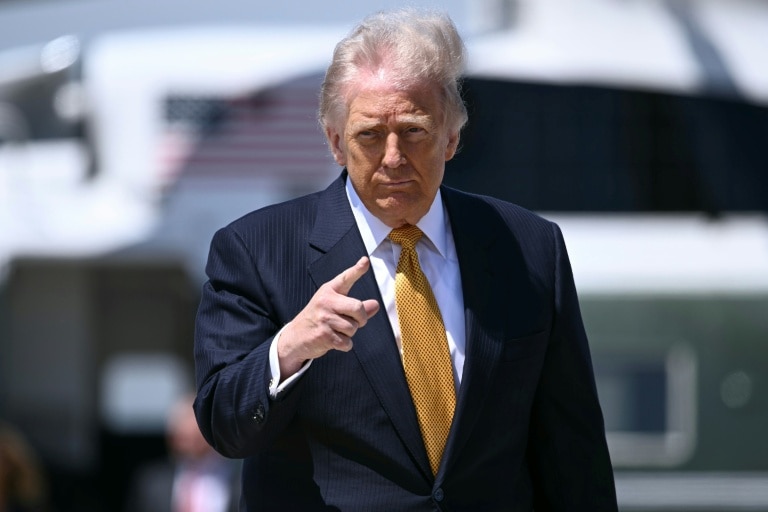
    Just 12 hours after issuing an apocalyptic warning that an entire civilization could be wiped out by conflict, U.S. President Donald Trump stood before the public to hail a new ceasefire agreement with Iran as a landmark win for global security. But the triumphant tone has quickly given way to fierce debate, with detractors arguing the shaky two-week truce is just the latest example of a well-documented pattern they have labeled with the viral trader-coined acronym: TACO, short for “Trump Always Chickens Out.”

    Trump, a former real estate developer who built his public brand on the negotiating playbook outlined in *The Art of the Deal*, has built a reputation for leaning into maximalist opening positions to gain maximum leverage over counterparties. In the lead-up to the ceasefire, that style included dire threats to bomb Iranian infrastructure back to the Stone Age, targeting civilian energy facilities and key bridge networks. For the president, that hardline pressure worked exactly as planned.

    In a brief post-announcement phone interview with Agence France-Presse, Trump insisted he had secured “Total and complete victory, 100 percent. No question about it.” White House Press Secretary Karoline Leavitt echoed that narrative, telling reporters that the entire timeline was intentional from the start. The administration’s military campaign, codenamed Operation Epic Fury, was always planned to run four to six weeks, she said, and the success of U.S. military operations created the leverage necessary to open productive negotiations.

    But critics across the political spectrum say the pattern that played out with Iran matches a consistent trend they have observed across Trump’s handling of everything from trade tariffs to territorial disputes to international conflicts: ramp up threats to the brink of major conflict, then back down when market and political pressure builds, all while declaring a premature victory. That pattern has become so predictable that political analysts and even former allies have joined in the criticism.

    “President Trump is proving to be an increasingly unpredictable force and unreliable ally,” said Peter Loge, director of George Washington University’s School of Media and Public Affairs, in an interview with AFP. Loge, who accurately predicted Tuesday morning that Trump would declare a self-proclaimed win and agree to a two-week ceasefire, added: “The only consistent thing President Trump does is declare victory.” For long-time Trump observers, the two-week timeline of the truce is also a familiar marker, one the president has relied on in multiple past crises to pause conflict while claiming success.

    Leading Democratic critics have launched especially sharp attacks, arguing the president stretched executive power far beyond its limits while a largely compliant Congress is out of session. Senate Minority Leader Chuck Schumer has labeled Trump a “military moron” and announced the Senate will hold a vote next week on a new war powers resolution to rein in the administration’s authority. Schumer argued that the ceasefire leaves Iran still firmly in control of the strategically critical Strait of Hormuz, giving the country outsized influence over global energy prices, and has done nothing to roll back Iran’s stockpile of highly enriched uranium or block its path to a nuclear weapon.

    Republican lawmakers are also growing nervous about the political fallout of the conflict, as American households already struggle with rising cost of living ahead of November’s midterm elections that will determine which party controls Congress. “All of this happens when one man…has unchecked power to wage war,” Schumer added.

    Even a former Trump ally in Congress has broken with the president over the deal. Former Representative Marjorie Taylor Greene said Thursday that “Trump, ‘the peace President’, should have never started this war alongside Israel, who clearly doesn’t want peace.” Fears over the truce’s longevity have also grown, as Iran has already threatened to walk away from the agreement if Israel does not halt its military operations in Lebanon.

    Still, Trump’s loyal supporters have defended the deal and his negotiating approach. Fox News host and long-time Trump ally Laura Ingraham argued shortly after the ceasefire announcement that the president’s strategy worked as intended. “It looks like Trump ultimately hits the home run here, takes it to the brink. Iran blinks,” Ingraham said on her show. For now, the truce remains on shaky ground, and the debate over whether Trump secured a historic foreign policy win or caved at the last minute looks set to drag on through the upcoming midterm campaign.

  • Trump to discuss leaving NATO in meeting with Rutte: White House

    Trump to discuss leaving NATO in meeting with Rutte: White House

    A high-stakes meeting at the White House on Wednesday is set to bring long-simmering transatlantic tensions to a head, as U.S. President Donald Trump confirmed he will open discussions about the possibility of a United States withdrawal from the North Atlantic Treaty Organization during talks with NATO Secretary-General Mark Rutte. The encounter comes just 24 hours after the U.S. and Iran reached a last-minute two-week ceasefire agreement that averted an all-out American military strike, and it unfolds against a backdrop of deep anger from the Trump administration over what it calls a betrayal by Western NATO allies.

  • In Trump war on Iran, tactical wins and long-term damage to US

    In Trump war on Iran, tactical wins and long-term damage to US

    When former U.S. President Donald Trump launched a joint military campaign against Iran alongside Israeli Prime Minister Benjamin Netanyahu on February 28, he positioned the action as a definitive warning to Tehran to never challenge American military power, while calling on Iranian citizens to overthrow the country’s unpopular clerical leadership. Weeks of intense conflict ended this Tuesday with a two-week ceasefire between the two adversaries, and the outcome reveals a stark contradiction: while Trump claimed victory over the tentative reopening of the Strait of Hormuz – a waterway that Iran only closed in retaliation for the initial attack – the Islamic Republic’s governing authority has emerged more deeply entrenched domestically, and Tehran’s military operations have inflicted widespread disruption across the Middle East.

    The campaign was driven largely by Israel’s long-standing strategic goal of undermining the Iranian government, which has been the Jewish state’s most bitter regional adversary for decades. For the United States, however, Trump’s objectives remained muddled and inconsistent throughout the conflict. He framed the strikes as a push to destroy Iran’s missile arsenal and block the country from developing a nuclear weapon – a puzzling framing, given that Trump had previously claimed he had already “obliterated” Iran’s nuclear sites, and formal diplomatic talks over the nuclear program were already ongoing when the war began.

    As the conflict progressed, Trump walked back his early rhetoric about “librating” the Iranian people. Days before the ceasefire, he made a threat that was widely interpreted as genocidal, warning that Iran, home to one of the world’s oldest continuous civilizations, would be wiped off the map entirely. Analysts across the political spectrum have since concluded that the conflict has inflicted lasting damage to U.S. strategic interests, even as it delivered limited short-term tactical gains.

    “ I think the US has lost the narrative war and the information war inside Iran, regionally in the Middle East, internationally, and even here at home,” said Alireza Nader, a veteran Iran analyst based in the United States. Nader noted that even Iranians who have long been critical of the Islamic Republic have rallied behind the country’s elite Islamic Revolutionary Guard Corps in response to U.S.-Israeli strikes that hit civilian targets including universities, bridges, and manufacturing facilities. “It is in the US national security interest to have a long-term positive relationship with Iran, and Trump really damaged that possibility for no reason whatsoever,” Nader added. “A lot of people who hate the regime are also outraged at the vast destruction of civilian infrastructure.”

    Negar Mortazavi, a senior fellow at the Center for International Policy, argues that the strikes have only fueled nationalist solidarity across Iran, uniting disparate factions behind the hardline government. “For the US, they didn’t achieve any of their set goals. Nothing changed about the nuclear program. Iran still has operational missiles, it still has drones, the state has become more hardline, and there has been no regime change,” Mortazavi said.

    Not all analysts see the campaign as a total loss for the United States. Michael Singh, a former top Middle East advisor to President George W. Bush and current managing director at the Washington Institute for Near East Policy, acknowledged that the U.S.-led campaign did significantly degrade Iran’s short-term military capabilities, destroying large stockpiles of missiles and drones, crippling the country’s navy and air force, and eliminating multiple senior military leaders. “From a US perspective, I would say the US was operationally brilliant but the conflict was strategically indecisive,” Singh explained.

    Paradoxically, Singh added, the overwhelming display of U.S.-Israeli military power could push Iran to accelerate its nuclear ambitions. “Iran has seen that the US and Israel together have a vastly superior military capability, and of course that could create a stronger incentive to pursue nuclear weapons as a deterrent,” he said.

    Despite the military disruption, Iran has emerged from the opening phase of the conflict with new diplomatic leverage ahead of planned long-term negotiations set to launch this Saturday in Pakistan. A core topic of the talks will be the future of the Strait of Hormuz, the critical chokepoint at the entrance to the Persian Gulf through which roughly one-fifth of the world’s global oil supplies pass. During the conflict, Iran proved it can quickly shut down the strait to disrupt global energy markets, a point it has made clear it will use as a bargaining chip.

    Tehran has agreed to allow unrestricted safe passage through the waterway for the duration of the ceasefire, but has already floated the idea of implementing a new toll system for transiting vessels, with the revenue going toward post-war reconstruction in Iran. For its part, the United States has made a major concession during the conflict, relaxing decades-old sanctions on Iranian oil exports for the first time to bring down sky-high global oil prices – a move driven by political concerns over voter anger over energy costs ahead of upcoming U.S. elections.

    Ali Vaez, Iran project director at the International Crisis Group, explained that if Tehran can secure acceptable concessions from Washington in the upcoming talks, it will be able to frame the entire conflict as a political victory. If Iran secures U.S. assurances, it can “argue that escalation produced negotiations on terms it could accept,” Vaez said. He added that the underlying balance of power in the standoff has not shifted dramatically: Iran still retains its stockpile of enriched uranium, while the United States has made clear that its immediate priority is preventing further disruption to global energy markets – particularly through the Strait of Hormuz – rather than adopting Israel’s more maximalist goal of toppling the Iranian government entirely. “That points both to Trump’s appetite for a deal and to the limitations of the strategy pursued so far,” Vaez noted.

  • Dilemma over crossings as fate of Hormuz ships remains uncertain

    Dilemma over crossings as fate of Hormuz ships remains uncertain

    In the wake of a last-minute bilateral ceasefire announcement between the United States and Iran that was meant to reopen the strategically critical Strait of Hormuz, global shipping operators are still holding back, with barely a handful of vessels daring to transit the waterway just one day after the agreement. As of Wednesday, only three commercial ships had completed passage through the chokepoint, a stark contrast to pre-crisis traffic levels and a clear indicator of the deep uncertainty still hanging over one of the world’s most vital maritime trade routes.

    Data from multiple maritime industry analysts underscores the scope of the ongoing logjam. Ship tracking service MarineTraffic confirmed that beyond the three transits Wednesday, only a small number of additional vessels are currently scheduled to make the crossing, a number that amounts to no meaningful recovery of trade flow. Since March 1, maritime data provider Kpler records an average of just eight commodity-carrying ships transiting the strait per day, far below the usual 20-plus vessels that pass through daily during normal conditions. Maritime intelligence firm Lloyd’s List Intelligence estimates that more than 800 commercial vessels remain stranded across Gulf waters, with overall traffic through the strait plummeting by roughly 95% from pre-crisis levels.

    “Everybody across the global shipping sector is obviously on edge right now,” Richard Meade, editor-in-chief of Lloyd’s List, told Agence France-Presse. For the thousands of crew members who have remained confined to their stuck vessels for weeks, the ceasefire announcement does offer the first glimmer of hope after weeks of uncertainty. “The ceasefire has definitely calmed our nerves, and we’re holding out hope that the calm holds. The crew can finally take a breath after all this time,” an off-duty captain, whose vessel and crew remain stranded off the coast of Qatar, told AFP.

    Despite the tentative diplomatic breakthrough, major shipping industry bodies are still warning carriers against rushing to resume full transit through the strait, saying conditions remain too volatile for large-scale movement. “Heading out through the Gulf right now would not be advisable without explicit, verified coordination with both US and Iranian authorities,” Jakob Larsen, chief safety and security officer at the international shipping association Bimco, told AFP. His warning aligns with guidance from other leading industry groups, which all emphasize that the long-term stability of the waterway remains far from guaranteed. “We still have no clear confirmation that the area has truly become safe for regular transit,” the Japanese Shipowners’ Association told AFP Wednesday.

    Industry leaders add that core details of the agreement have yet to be clarified enough to restore shipping confidence. John Stawpert, principal director of marine affairs at the International Chamber of Shipping (ICS), noted that much of the public discussion has centered on Iran’s 10-point framework for the deal, but key elements of that proposal remain undefined. That framework, presented by Iran as the basis for talks with the United States, does not align with the terms the White House has agreed to, a senior US official has confirmed.

    The International Maritime Organization, the United Nations’ maritime regulatory body, announced Wednesday that it is currently developing a formal mechanism to guarantee permanent safe transit through the strait for all commercial vessels. Beyond the ongoing geopolitical risk, a rushed, uncoordinated mass departure of hundreds of stranded vessels from the Gulf also raises major safety risks of collisions and groundings in already congested waters, Meade added.

    One of the biggest outstanding unresolved questions is the future of the limited transit system Iran implemented during the closure of the strait, which Lloyd’s List has dubbed the “Tehran Toll Booth” amid widespread reports that vessels were required to pay fees to secure passage permission. The Iranian 10-point plan explicitly includes language calling for “maintaining Iranian control over the Strait of Hormuz”, a condition that conflicts with US demands for fully unrestricted, free passage.

    US President Donald Trump previously stated in a social media post that Iran had agreed to the “COMPLETE, IMMEDIATE, and SAFE OPENING of the Strait of Hormuz”. But an Iranian diplomatic source told reporters Wednesday that a new transit mechanism has been organized in partnership with Oman, “under which there has been and will be a right of passage” for all vessels. Oman’s government issued a statement Wednesday welcoming the ceasefire but declined to comment on the details of the proposed transit mechanism or any potential toll system.

    According to reporting from the Financial Times, Tehran is expected to demand a fee of one US dollar per barrel of oil passing through the strait, with payment required to be made in cryptocurrency to avoid US-led financial sanctions. Writing in an op-ed published Tuesday, Amir Handjari, a senior fellow at the US-based Quincy Institute for Responsible Statecraft, argued that a joint Omani-Iranian arrangement to manage the strait is far from unrealistic. “Oman would gain a consistent new revenue stream and increased strategic relevance in the region. Iran would gain international legitimacy, much-needed hard currency, and a tangible diplomatic win to show its domestic population after the conflict,” Handjari wrote.

    The current effective shutdown of the Strait of Hormuz has no modern precedent. Even during the eight-year Iran-Iraq War between 1980 and 1988, the strait remained open to commercial traffic, despite a series of deadly tanker attacks that significantly slowed trade flows. More recently, in 2024, repeated attacks by pro-Iranian Houthi militias in the Red Sea cut traffic through the Suez Canal and Bab al-Mandeb Strait by half, France’s economy ministry confirmed.

  • Iran truce spurs hopes for world economy, but recovery will be rocky

    Iran truce spurs hopes for world economy, but recovery will be rocky

    The recent ceasefire agreement between Iran and the United States has sparked cautious optimism across global markets, offering a much-needed respite for a world economy sent into turmoil after the outbreak of hostilities in late February. However, industry analysts and economic experts warn that a full, balanced recovery will be uneven, with multiple sectors facing persistent headwinds that could delay a return to pre-conflict stability for months.

    One of the most immediate market reactions to the truce was a sharp drop in global oil prices, with leading international crude contracts falling below the psychologically significant $100 per barrel threshold. This pullback is set to bring direct relief to consumers around the world, who have grappled with skyrocketing retail fuel prices over recent weeks. In response to the surge, many national governments were forced to implement emergency consumption reduction measures and targeted support programs to protect low-income households from energy cost shocks. In France, for example, fuel prices could drop between 5 and 10 euro cents per litre “very quickly” according to Olivier Gantois, president of the French Union of Petroleum Industries (Ufip), in an interview with AFP.

    The truce also led to the reopening of the Strait of Hormuz, the strategic chokepoint that carries roughly 20 percent of the world’s daily crude oil and liquefied natural gas shipments. Already, two commercial vessels — one Greek-owned and another flagged in Liberia — have completed transits of the waterway since the agreement was reached. Despite this milestone, risk management firm Vanguard cautioned that the Strait “remains subject to coordination with Iranian armed forces, suggesting continued Iranian control and influence.” This ongoing oversight means shipping conditions will likely remain controlled and potentially restrictive for the foreseeable future. Niels Rasmussen, chief analyst for global shipping association Bimco, added that he does not expect a sudden flood of vessels returning to the Gulf. “Many ships have already sailed to other regions and they do not want to risk being trapped after the two-week window closes,” Rasmussen explained.

    Aviation, one of the sectors hit hardest by the regional conflict and subsequent energy market volatility, is also set for a slow return to normal operations. To date, only Iraq has announced a full reopening of its airspace to all commercial traffic. Major aviation hubs in the United Arab Emirates and Qatar — including Dubai, Abu Dhabi and Doha, which handle a large share of global long-haul flight traffic — still maintain extensive flight restrictions. Beyond airspace access, the International Air Transport Association (IATA), the global industry body for airlines, warns that restoring normal jet fuel supplies will take several months due to widespread disruptions to Gulf refining capacity. As a result, the trade group notes that “the most immediate lever” for airlines to protect their operating margins remains passing higher energy costs through to consumers via elevated ticket prices.

    Even with the ceasefire in place and oil prices trending downward, experts warn that meaningful increases in physical energy supply will not materialize quickly. Widespread damage to oil and gas infrastructure across the Gulf region has left output capacity severely constrained, and rebuilding will be a gradual process. “Restarting oilfields and fixing damaged infrastructure is a gradual process, and producers will be cautious about ramping up output without reliable export routes,” said Simone Tagliapietra, a fellow at Brussels-based think tank Bruegel. International Energy Agency (IEA) executive director Fatih Birol echoed this assessment in an interview with French newspaper Le Figaro published Tuesday, noting: “Seventy-five energy plants have been attacked and damaged and more than a third of them are seriously or very seriously affected. Recovery will take a long time.”

    Global financial markets reacted positively to the ceasefire news, with major stock indices posting strong gains and European government borrowing costs falling sharply. Claudia Panseri, chief investment officer at UBS Wealth Management France, told AFP that the long-term macroeconomic impact of the conflict will depend entirely on the durability of the truce. “If we quickly return to February levels, the macroeconomic impact and the impact on budgets won’t be very significant, I’d say almost negligible,” Panseri said. But she cautioned that if the agreement collapses within the next two weeks, and oil prices climb back above $100 per barrel while natural gas prices remain elevated, the knock-on effects for global inflation and economic growth will be far more severe.

  • ‘Pathetic’: Son slams Commonwealth Bank for gifting mum marked pin, flowers  after 45 years of employment

    ‘Pathetic’: Son slams Commonwealth Bank for gifting mum marked pin, flowers after 45 years of employment

    A viral social media post has ignited widespread debate about corporate gratitude toward long-serving employees, after an Australian creator called out one of the nation’s largest lenders for what he describes as a shockingly underwhelming retirement gift for his mother, who dedicated 45 years of service to the bank.

    Nick, who posts personal and lifestyle content to his TikTok account under the handle @dreamfueltribe, shared the story with his thousands of followers, framing it as a harsh lesson on how corporations view loyal staff. His mother spent nearly two-thirds of her entire life as an employee of Commonwealth Bank of Australia, one of the country’s dominant ‘Big Four’ national banking institutions, building her entire career within the organization from entry through to retirement.

    In his viral TikTok video, Nick questioned the bank’s paltry recognition, pointing out that the organisation did not extend a meaningful gift such as a quality watch, fine jewelry, or even a celebratory dinner for his mother’s decades of commitment. Instead, the bank only presented her with a small bouquet of cut flowers and a commemorative service pin to mark her 45 years of continuous service.

    Nick used the moment to share a broader takeaway for workers around the world: that for large corporate systems, individual employees are ultimately replaceable cogs rather than valued long-term team members. “The sooner you realise this, the better off you will be,” he told his audience.

    The post spread rapidly across social platforms, drawing hundreds of conflicting reactions from users across Australia and beyond. A small share of commenters argued that formal recognition itself, regardless of the gift’s material value, should be enough to honor an employee’s tenure. But the vast majority of respondents expressed anger and disbelief at the bank’s gesture, with many echoing Nick’s criticism that a major profitable bank could not afford a more meaningful token of appreciation for 45 years of loyal work.

    Dozens of other users stepped forward to share their own families’ similar stories of shockingly underwhelming recognition for decades of corporate service. One user recalled that her father received just two cinema tickets after 45 years of service at a multi-million dollar corporation. Another shared that her father, who worked 50 years for a single employer without ever taking a single sick day, was gifted an empty whiskey decanter — despite the fact he never drank alcohol.

    The viral conversation has renewed broader public discussion about the disconnect between large profitable corporations and their most tenured staff, particularly as many companies face growing pressure to improve worker retention and show tangible appreciation for long-term commitment.

  • Adelaide couple charged with child abuse, bestiality and running ‘brothel’

    Adelaide couple charged with child abuse, bestiality and running ‘brothel’

    A joint law enforcement operation targeting suspected online criminal activity has led to the arrest of two Adelaide residents in their 30s, who now face a series of extraordinarily serious charges including bestiality, animal cruelty, child exploitation offences, and operating an unlicensed brothel. The raid, carried out on Wednesday by South Australia Police in partnership with the Australian Federal Police and animal welfare organisation RSPCA Australia, targeted an undisclosed property in Adelaide’s northern suburbs. The operation grew out of an ongoing investigation into the distribution and possession of online child exploitation material, law enforcement officials confirmed.

    Following the entry to the property, investigators seized a number of electronic devices for forensic analysis. Initial examination of those devices uncovered what detectives describe as damning evidence: material confirming the possession of child exploitation content, plus proof linking the two suspects to acts of bestiality. Beyond the digital evidence, authorities allege the private residence was being secretly operated as an illegal commercial brothel, in violation of South Australian state regulations.

    The 39-year-old male suspect faces four separate charges: possession of child exploitation material, managing an illegal brothel, committing bestiality, and ill treatment of an animal. His 33-year-old co-accused, a woman, has been charged with two counts: bestiality and animal ill treatment. Both suspects were granted bail following their arrests, and are scheduled to make their first court appearance at Elizabeth Magistrates Court in the coming weeks.

    Detective Chief Inspector George Fenwick, the senior officer leading the joint investigation, spoke publicly about the severity of the allegations following the arrests. “These allegations represent a heinous and blatant breach of the law and a profound violation of community standards and expectations,” Fenwick said. “We will continue to work with our partners to identify, investigate and prosecute anyone who seeks to exploit or harm those in the community who cannot protect themselves.”

    Law enforcement officials are continuing to analyze additional seized electronic devices to uncover any further evidence of criminal activity, and are appealing for public assistance. Any member of the public with information about suspected child abuse or exploitation is urged to contact Crime Stoppers Australia confidentially on the national hotline 1800 333 000.