A fresh wave of political violence has shaken central Mogadishu, after Somalia’s former prime minister Hassan Ali Khaire accused government forces of launching a targeted attack against his compound just 24 hours before planned mass opposition demonstrations against President Hassan Sheikh Mohamud’s controversial term extension. The outbreak of heavy gunfire on Wednesday has deepened a months-long political crisis that has split the fragile Horn of Africa nation, pitting the federal government against a united bloc of opposition figures and regional leaders.
The current crisis ignited after Mohamud’s presidential mandate was scheduled to expire on May 15. Instead of stepping down or holding a long-promised national election, the president pushed through a parliamentary vote in March that approved a new constitutional framework extending his tenure by an additional 12 months. Opposition groups have uniformly rejected this move, labeling it an unconstitutional power grab, and organized large-scale peaceful protests set to take place across the capital on Thursday.
In preparation for the demonstrations, Khaire relocated from his secured residence in the airport-adjacent Green Zone, a heavily fortified area that houses most international missions and senior government officials, to his private home in the capital’s Howl Wadaag district. Shortly after his arrival, heavy weapons fire erupted across the neighborhood. In an urgent social media statement following the clash, Khaire confirmed the confrontation was an unprovoked attack ordered by the presidency.
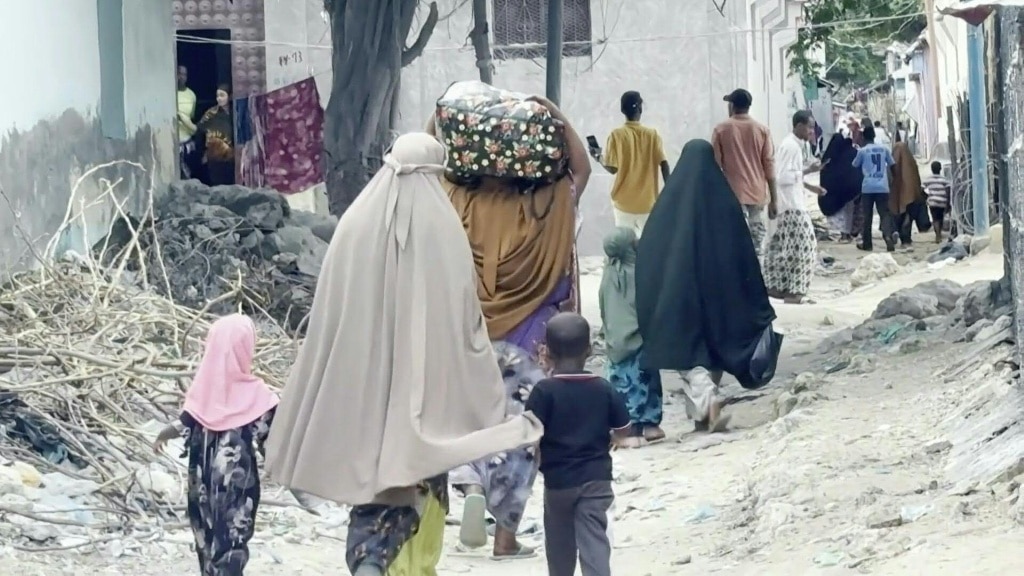
“An attack was launched against us by forces commanded by the president whose term has expired,” Khaire wrote, noting that his group had been making preparations for a “peaceful demonstration” against Mohamud’s power grab. Reporters from Agence France-Presse on the ground captured footage of panicked residents fleeing the area, with continuous gunfire audible in the background. Multiple witnesses confirmed the clash involved armed opposition supporters and Somali federal police, with heavy weaponry including rocket-propelled grenades deployed during the 15-minute confrontation.
“The shooting lasted for about 15 minutes before it subsided. They even used RPGs, and the sound of the explosions could be heard across the surrounding neighbourhoods,” local resident Saleban Mahad told AFP.
Mohamud has framed his term extension as a necessary step to complete a years-long transition to full democratic elections, replacing the country’s long-standing clan-based power-sharing system. He argues that the March parliamentary approval of the new constitutional framework gives his extra year in office full legal legitimacy, allowing the government time to organize inclusive national polls across the country. Critics, however, point out that little progress has been made on election organizing outside a handful of small local districts: large swathes of southern Somalia remain under the control of al-Shabaab, a violent Islamist insurgency, and deep political divides between rival clan factions have stalled all efforts to unify the country around a shared electoral process.
Opposition and regional leaders argue Mohamud’s power grab is a deliberate attempt to consolidate centralized power at the expense of regional autonomy and democratic representation. Another senior opposition figure, former president Sharif Sheikh Ahmed, has also relocated to central Mogadishu to join Thursday’s protests, and he issued a sharp rebuke of the attack on Khaire in a post on X. Ahmed called the assault proof that Mohamud, who he says holds no legitimate mandate, is willing to escalate bloodshed to hold onto power, adding that the violence would not deter demonstrators from gathering.
“This attack will not stop the demonstrations by residents of the capital who are protesting against injustice, displacement, and the abuse of government power,” Ahmed wrote.
This is not the first time a Somali president has extended his term beyond the official end of his mandate to hold onto power. In 2021, former president Mohamed Abdullahi Farmaajo stayed in office for more than a year after his mandate expired, triggering widespread violence and broad international condemnation. International powers including the United States and United Kingdom have attempted to mediate negotiations between Mohamud’s government and the opposition bloc to find a peaceful resolution to the current crisis, but those efforts have so far failed to produce any breakthrough.