标签: Oceania

大洋洲

  • Mexican BTS fans go wild as concerts grow near

    Mexican BTS fans go wild as concerts grow near

    As the highly anticipated return of South Korean K-pop supergroup BTS draws near, Mexican fans have erupted in collective excitement, turning public spaces across Mexico City into vibrant hubs of celebration ahead of the band’s first string of shows in the country following a nearly four-year hiatus.

    The countdown to the trio of concerts—scheduled for May 7, 9 and 10 in the Mexican capital—kicked off with a lively pep rally on Paseo de la Reforma, one of the city’s most iconic central thoroughfares. Hundreds of fans gathered here, bouncing in sync to BTS’s chart-topping hits, clapping along and cheering as they prepped for the upcoming shows. Attendees tried on band-themed temporary tattoos, posed for photos next to a towering black-and-white poster of all seven members, and bonded over their shared love for the group.

    Jude Pelaez, one of the dancers who participated in the May 3 pre-concert event, told Agence France-Presse that gatherings like this are more than just fun—they help fans build the right energy ahead of the shows. “Like everyone here, I’m so happy,” Pelaez said. “We do these types of events to emotionally and psychologically prepare ourselves, and to prepare the energy and vibe of the place. That makes Mexico different.”

    The BTS fervor that has taken hold of Mexico extends far beyond one-off public rallies, weaving its way into everyday life for fans of all ages. For many young supporters, the band’s message of self-acceptance and authenticity has created a welcoming community where anyone can be themselves. Sixteen-year-old Mare Sousa, who studies K-pop choreography at a local dance studio with roughly 30 other students, says BTS mania is defined by this open, inclusive spirit: “everyone is free to be who they are.” At the studio, students arrive early to rehearse choreography in front of the mirror before class even starts, and often spend break times helping each other perfect tricky steps, according to instructor Ginna Montoya, 22.

    Even many parents have embraced their children’s passion for BTS, drawn to the group’s positive messaging that stands out from some of Mexico’s most popular local music genres. Lucio Campos, a father whose 15-year-old daughter Ana is a devoted fan, decided to take Korean language classes at the South Korean cultural center after Ana asked to travel to Seoul for her birthday. Campos said he appreciates BTS’s core mission of encouraging healthy, intentional living among young people—a stark contrast he noted to the often violent or hypersexualized themes common in reggaeton and narcocorridos, a popular Mexican subgenre that glorifies drug trafficking. “BTS was born with the idea of transmitting healthy questions for young people,” Campos explained. “Their war cry is ‘let’s live life, let’s live it healthily, let’s live well,’ and obviously this fascinates me.” For Ana, the impact is even more personal: “BTS taught me to love myself,” she said, flipping through a photo album filled with band memorabilia and motivational quotes.

    Demand for BTS’s Mexico City shows has been unprecedented: all 135,000 tickets available to the public sold out in mere minutes, leaving tens of thousands of fans empty-handed and desperate for more dates. Even Mexican President Claudia Sheinbaum stepped in to help, urging her foreign ministry to send an official letter to South Korean President Lee Jae Myung to request that the band add additional performances in the country. Sheinbaum said the South Korean leader was “very open” to the request and agreed to forward it to BTS’s production team, but no new concert dates have been announced as of yet. On secondary ticketing platform StubHub, resold tickets are currently being scalped for as much as $13,000 apiece, a testament to the extreme demand for the shows.

    BTS’s global comeback, which launched in March 2025, comes after the group paused group activities for nearly four years to allow all seven members to complete their mandatory South Korean military service. For the South Korean government, the band’s global popularity has become a major soft power asset: officials cite a 26-nation study that found 82% of respondents hold a favorable view of South Korea, a shift widely attributed to the global spread of K-pop led by BTS.

  • Europe’s first commercial robotaxi service rolls out in Croatia

    Europe’s first commercial robotaxi service rolls out in Croatia

    After years of development and testing in global markets, Europe has welcomed its first commercial autonomous robotaxi service, launching in the heart of Zagreb, Croatia, after a nearly month-long initial rollout. Developed by local mobility firm Verne – with backing from global ride-hailing giant Uber and autonomous driving technology from Chinese industry leader Pony.ai – the service has been operating 10 self-driving vehicles for pre-vetted users across the Croatian capital since April 8.

    While commercial autonomous taxi services have operated in China and the United States for several years, European markets have been slower to open to the technology, with multiple mobility and tech firms still competing to be the first to roll out a fully functional commercial offering across the continent. Verne’s long-term goal is to launch a completely driverless service, but the phased rollout currently keeps a trained human operator in the driver’s seat for emergency intervention if required.

    During a test ride with an AFP journalist this week, the system performed reliably through typical Zagreb traffic, with the on-board operator never needing to take control of the vehicle. The only interruption to the smooth journey came when an oncoming passenger car veered out of its lane, prompting the robotaxi’s autonomous system to trigger an immediate, safe stop, which was followed by a calm audio alert to passengers. Verne country operations head Filip Cindric, who accompanied the test ride, noted that even with Croatia’s often unpredictable urban traffic and complex intersection layouts, around 90% of all completed trips require zero human intervention. So far, the service, which has already racked up tens of thousands of kilometers of operation, has recorded zero collisions, and 90% of active users have rated the experience four or five out of five stars, according to internal company data. Currently, only 300 pre-approved users have access to the service, which explains why sightings of the autonomous vehicles on Zagreb streets have been rare in the weeks since launch.

    For the initial phase, the robotaxis only operate across a limited service area covering central Zagreb, select southern districts of the city, and routes surrounding Zagreb Airport. Verne CEO Marko Pejovic explained that the company is prioritizing careful, incremental expansion rather than rapid rollout, adding that new service zones will only be added after extensive real-world testing and validation to confirm the system’s reliability in local conditions.

    Priced at a low 1.90 euros ($2.32) per ride – a rate designed to attract early users and gather valuable feedback – the service has already seen far stronger public interest than anticipated, with approximately 4,000 potential users currently on the waiting list for access. Pejovic noted that the introductory price will increase gradually as the service expands its fleet and service area.

    Like traditional rideshare services, the robotaxis are booked through Verne’s dedicated mobile app. Each vehicle is outfitted with a full suite of autonomous navigation hardware, including multiple high-resolution cameras, lidar laser sensors, and radar systems to map surroundings and detect obstacles in real time.

    Founded in 2019, Verne already has plans for far-reaching expansion beyond Zagreb. The company confirmed it is already in active discussions to launch the service in 11 additional cities across the European Union, the United Kingdom, and the Middle East, with 30 more cities under consideration for future rollout. In Zagreb itself, the company aims to transition to fully driverless operations by the end of 2024, pending final approval from local transport regulators. Cindric emphasized that the slow progress of autonomous taxi rollout across major European cities speaks to the complexity of the technology, noting that “if it were that easy, it would already exist in London or some other major European city,” adding that the company is proud that small Zagreb has beaten much larger European hubs to become the first to launch a commercial service.

  • Fresh UAE attacks blamed on Iran draw new reality in the Gulf

    Fresh UAE attacks blamed on Iran draw new reality in the Gulf

    Just hours after the United Arab Emirates’ top energy leader declared the country had “emerged stronger” from months of regional conflict, and as thousands of delegates gathered in Abu Dhabi for an economic summit aimed at reviving investor confidence, emergency missile alert notifications blared across smartphones nationwide.

    The Monday strikes — the first to hit the UAE since a shaky truce took effect last month — delivered a brutal wake-up call to a nation that had already begun rebuilding its sense of normalcy. While Iran issued a categorical denial of involvement on Tuesday, the incident has shredded fragile hopes for a swift return to pre-conflict stability and laid bare the extreme fragility of the current ceasefire across the Gulf.

    Within hours of the attacks, schools across the UAE suspended in-person instruction just two weeks after welcoming students back to classrooms. In the preceding weeks, life had slowly crept back to routine: foreign residents, who make up 90% of the country’s population, had begun returning after earlier departures, crowds flocked back to Dubai’s iconic man-made Palm Jumeirah beaches, and restaurants across the emirate had restored full service.

    One anonymous food and beverage industry executive shared their experience with AFP, describing a sudden shift in tone during a meeting where leaders were preparing to reverse war-era pay cuts. “We literally just slammed our faces into our hands and sat in silence for a solid minute,” they said. “There was an overall feeling of… exhaustion, of disbelief that this might start again.”

    Throughout the ongoing regional conflict, the UAE has borne the brunt of more Iranian-aligned attacks than any other country. Strikes have targeted U.S. interests, critical energy infrastructure, civilian sites, and major tourist landmarks. Even with the UAE’s high rate of interception of incoming drones and missiles, the attacks shattered the Gulf’s long-held reputation as a haven of stability, driving away international tourists at the height of the peak travel season.

    Now, the persistent threat of renewed violence hangs over the entire Gulf economy, not just the UAE’s core oil and gas sector, putting long-term economic diversification plans across the region at serious risk. Data from S&P Global Market Intelligence already reflects growing strain: “The UAE non-oil private sector signalled a further loss of momentum in April, with operating conditions showing their weakest performance for more than five years,” noted senior economist David Owen.

    For weeks, Gulf nations have remained stuck in a limbo between war and peace, with diplomatic talks stalled and the strategically vital Strait of Hormuz — through which roughly 20% of the world’s oil supplies pass — remains effectively closed to most commercial traffic. For many residents and business leaders, intermittent security alerts may be the new normal. “This might become a new reality where every now and then we have a few alerts,” the F&B executive said, adding that the UAE’s economy is uniquely dependent on both tangible stability and public perception of safety.

    Emirati political scientist Abdulkhaleq Abdulla framed the dynamic simply: “Whenever they are angry against America or Israel or anything, they could, they will shoot at us and probably we are their prime target.”

    Middle East security expert HA Hellyer, of the London-based Royal United Services Institute for Defence and Security Studies, outlined three core reasons the UAE remains Iran’s top target. First, it is a leading U.S. ally in the Arab world and one of the few Arab states to normalize diplomatic ties with Israel, putting it firmly in Iran’s crosshairs. Second, its status as a diversified global business and tourism hub means any attack carries outsized regional and international ripple effects. Third, its geographic proximity to Iran makes it a far easier target for drone and missile strikes than more distant Israel.

    Hellyer added that Iran may also be targeting the UAE to deepen existing divides among Gulf Cooperation Council states, compounding a public rift between the UAE and Saudi Arabia that emerged in December over Yemen policy. Today, the Gulf’s two largest economies remain divided over both the ongoing regional conflict and approach to Iran: the UAE has taken a far more hawkish stance, demanding maximalist concessions in any potential peace deal, while Saudi Arabia has backed diplomatic mediation efforts led by Pakistan.

    The latest attacks, blamed on Iran by the UAE, carry new risks of escalation, Hellyer warned: Abu Dhabi has already signaled it will deepen its security and diplomatic ties with both the U.S. and Israel. This puts further distance between the UAE and Saudi Arabia, which has shifted its perspective on regional security since normalization talks with Israel collapsed after the outbreak of the Gaza war. Unlike the UAE, which has faced far more frequent Iranian attacks, Riyadh has concluded “the risks of action as being greater than the risks of inaction and the Emiratis view it in the opposite direction,” Hellyer explained.

  • Arsenal on cusp of history after reaching Champions League final

    Arsenal on cusp of history after reaching Champions League final

    For 20 long years, Arsenal football club has dreamed of a return to the biggest stage in European club football. On Tuesday night, that dream became reality, as a 1-0 second-leg semi-final victory over Atletico Madrid at the Emirates Stadium sealed the Gunners’ spot in the 2025 Champions League final — their first appearance in the showpiece match since a heartbreaking defeat to Barcelona back in 2006.

    The decisive moment came in the first half, when winger Bukayo Saka tucked home a close-range finish to secure a 2-1 win on aggregate for Mikel Arteta’s side. The full-time whistle triggered wild celebrations: 60,000 cheering fans packed into the north London stadium, while a frenzied Arteta joined his players for an emotional lap of honour, his high-energy celebration matching the momentous occasion.

    The win leaves Arsenal on the cusp of something no side in the club’s 140-year history has ever achieved: a domestic and European double. With three remaining Premier League fixtures against West Ham United, Burnley and Crystal Palace, three wins will hand the Gunners their first English top-flight title since Arsène Wenger’s iconic Invincibles side went unbeaten to claim the crown in 2004.

    Once the Premier League title race with closest contender Manchester City concludes, Arteta’s squad will travel to Budapest on May 30 to compete for their first ever Champions League trophy. Their opponent will be either defending champions Paris Saint-Germain or Bayern Munich, with PSG holding a 5-4 aggregate lead heading into Wednesday’s second leg in Munich. Ironically, it was PSG who knocked Arsenal out of the Champions League at the semi-final stage last season.

    The electric atmosphere began hours before kickoff, when thousands of Arsenal supporters gathered outside the Emirates to greet the team bus, waving red flares, unfurling club flags and roaring defiant words of encouragement for the side. In the aftermath of the win, Arteta said that energy had shifted the entire mood around the club, and he urged his players to channel that momentum across their final four matches of the season.

    “Everybody can feel a shift in energy, in belief, in everything,” Arteta told reporters post-match. “Let’s use it in the right way and understand that the margins and the difficulty of what we are trying to achieve are huge, but that we have the ability and the conviction to do it. I’m really going to enjoy it tonight, everybody is enjoying this moment now. But the high is not too high and the low is not too low. My job is to be quite stable. We have an incredible game against West Ham, a really tough one, and we’re going to have four days to do that.”

    It has been more than two decades since Wenger’s Invincibles cemented their place in English football history, and in the years following the 2006 Champions League final defeat to Barcelona, the club drifted away from the pinnacle of the sport. But Arteta, who took over as the club’s first team manager in 2019 for his first senior managerial role, has spent six years rebuilding the bond between players, fans and the club’s historic identity — a project that looked uncertain during a four-year trophy drought that followed Arsenal’s 2020 FA Cup win.

    This season, the rebuilding work has come to fruition, putting Arsenal on the brink of erasing the pain of three consecutive second-place finishes in the Premier League. Arteta hailed the contribution of the club’s supporters, who he said created an unmatched atmosphere that pushed the team over the line against Atletico.

    “It was an incredible night. We made history again together and I cannot be happier and prouder for everybody that’s involved in this football club,” he said. “The supporters were with us for every ball. They made it special and unique, and I have never felt it like that in this stadium. We knew how much it meant to everybody, we put everything on the line, the boys did an incredible job.”

    Looking back at his tenure at the club, Arteta admitted he never could have imagined getting this close to such historic glory when he first took the job. The side didn’t even qualify for European competition when he first arrived, making their run to the Champions League final even more remarkable.

    “They are the ones that have to make these kind of performances. I didn’t really imagine it because we weren’t in Europe at the beginning. This is a big achievement,” he said. “We have been building little by little. We believed in what we wanted to do. Now we have to maintain it.”

  • Rolling Stones announce July 10 release of new album ‘Foreign Tongues’

    Rolling Stones announce July 10 release of new album ‘Foreign Tongues’

    The Rolling Stones, one of the most influential and enduring British rock bands in music history, made an exciting announcement Tuesday that their 25th full-length studio album, titled ‘Foreign Tongues’, will hit global music platforms and retail shelves on July 10. This upcoming release arrives less than three years after the band’s 2023 record ‘Hackney Diamonds’ — a project that broke commercial records by claiming the number one spot on album charts across more than a dozen countries and earned widespread critical praise from music critics worldwide. Notably, ‘Hackney Diamonds’ itself was the band’s first new studio collection in 18 years, marking a highly anticipated comeback that far exceeded industry expectations. Alongside confirming the official release date via an online announcement Tuesday, the legendary group also dropped the album’s first lead single, ‘In The Stars’, giving fans an early taste of the new material.

    A behind-the-scenes video shared to the band’s official Instagram channel offered audiences a glimpse into the recording process, capturing founding members Mick Jagger and Keith Richards, both 82 years old, alongside 78-year-old bassist Ronnie Wood as they collaborated in the recording studio. A public promotional event hosted in New York by comedian Conan O’Brien brought the three band members together to open up about their creative process for the new album, with exclusive previews of several unreleased tracks played for attendees.

    Speaking at the event, Jagger emphasized that the band still finds deep joy in creating new music, saying, “We’re still having a lot of fun. It’s a lot of fun, but also a lot of concentration.” When O’Brien complimented Jagger’s still-powerful, clear vocals — noting that many performers’ voices weaken with age, while Jagger’s remains “absolutely impeccable” and full of force — Jagger joked with the audience, “Well, I was taking a lot more drugs in 1968,” before sharing the straightforward secret to his vocal longevity: “The secret is practice… it’s simple.”

    Andrew Watt, one of the producers tapped to work on ‘Foreign Tongues’, opened up about the experience of collaborating with the iconic band in an interview with AFP, calling the project the highlight of his career. “I had the time of my life. I’m the biggest fan in the world,” he said.

    While the band did not officially announce a supporting concert tour during the New York event, multiple media outlets have confirmed that tour plans were considered by the band’s management team but ultimately scrapped over concerns about the health risks associated with extensive touring for the band’s aging members. The new album will feature high-profile guest appearances from two music legends: former Beatles bassist and solo star Paul McCartney, and The Cure’s frontman Robert Smith.

    The official announcement came after weeks of growing fan and industry speculation that a new record was on the way. Last month, the band quietly released a limited-edition vinyl-only single under the alias The Cockroaches — a pseudonym they have used for decades to play unannounced secret shows. The track, titled ‘Rough And Twisted’, was sold exclusively at select record stores in the UK priced at exactly £10.07, a detail that led sharp-eyed fans to correctly predict the July 10 release date long before the official confirmation.

  • LIV Golf boss sees hope for new sponsors beyond 2026

    LIV Golf boss sees hope for new sponsors beyond 2026

    Just months after Saudi Arabia’s Public Investment Fund (PIF) confirmed it would end its massive financial backing of LIV Golf at the close of the 2026 season, the breakaway tour’s chief executive Scott O’Neil says he is optimistic about the circuit’s long-term future, pointing to growing early interest from a wide range of potential new investors.

    Speaking to reporters Tuesday ahead of this week’s LIV Golf tournament hosted at Trump National Washington in Virginia, O’Neil revealed he has already held preliminary discussions with prospective financial backers as he drafts a sustainable long-term business plan to present to both tour players and potential sponsors. While he declined to share specific details of the upcoming strategy, O’Neil confirmed the 2027 season will bring substantial, meaningful changes to the tour’s operating model.

    Most notably, the era of LIV Golf players earning inflated salaries for competing in fewer events than their counterparts on the PGA Tour is set to end once PIF pulls its support in August 2026. Despite that shift, O’Neil said he remains confident that the tour’s top athletes will choose to remain with LIV once the new business model is finalized.

    “Do I believe that when we have a business plan and we raise money, that this is the place the players will choose? I do,” O’Neil told reporters. “I have a lot of confidence this is a place players want to be.”

    That confidence stems from early outreach from potential backers: O’Neil says he received roughly a dozen unsolicited inquiries from interested parties over the previous weekend alone, split evenly between private equity firms, private family investment offices, and high-net-worth individuals with a history of investing in professional sports and sports franchises. O’Neil added that he has also held productive conversations with existing broadcast and marketing partners about continuing their partnerships with the tour under new ownership, leaving the leadership team with a clear sense of the circuit’s future direction.

    Under O’Neil’s proposed framework, LIV Golf would retain its current 14-event annual schedule, while pushing for reciprocal agreements with other major global golf tours that would allow LIV athletes to compete in outside events. The goal, O’Neil explained, is to create more opportunities for the world’s top golfers from across different circuits to face off against one another in head-to-head matchups throughout the year. Currently, the PGA Tour bans LIV Golf players from its events, only offering a limited reinstatement path that has allowed just a small number of athletes, including major champion Brooks Koepka, to return in 2026.

    While O’Neil would not share a firm timeline for rolling out the finalized business plan to players and investors, he emphasized that the LIV leadership team is working with urgency to lock in new funding ahead of the 2027 season. When discussing long-term value for potential investors, O’Neil highlighted the tour’s team-based format, which has been adjusted in recent months to feature more nationality-aligned rosters. O’Neil argued that once the tour establishes a stable revenue and cost structure, individual LIV teams will hold significant long-term value for owners.

    Notably, O’Neil said current LIV players have already volunteered to help court private equity investors, joining meetings to make the case for the tour’s sustainability. The circuit has already proven its ability to draw massive live crowds in key international markets, he noted, pointing to 115,000 attendees at its 2025 event in Adelaide, Australia, 100,000 attendees in South Africa, and 60,000 attendees at its 2024 UK event. Those turnouts, O’Neil argued, demonstrate that the LIV brand and its team model are gaining traction with fans globally.

    “I’m feeling good. I’m feeling an appropriate amount of pressure. I’m feeling inspired and I feel like we have a clear path to a win,” O’Neil said.

  • Rubio plays down Trump attacks on pope before Vatican trip

    Rubio plays down Trump attacks on pope before Vatican trip

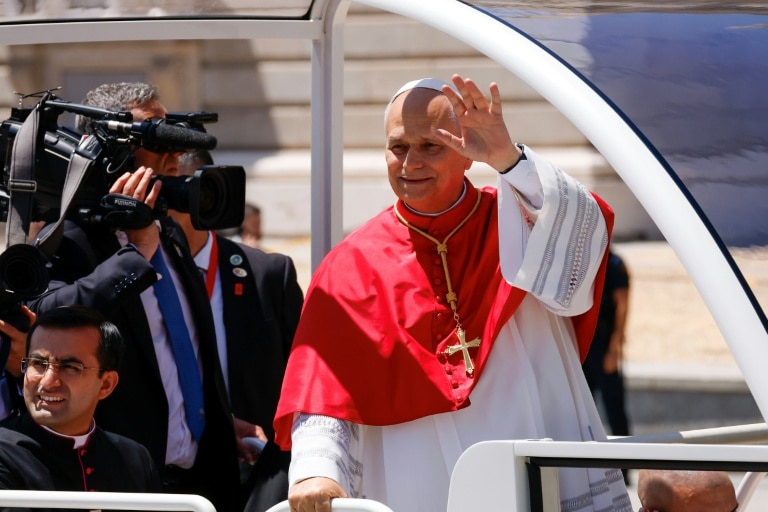
    As U.S. Secretary of State Marco Rubio prepares for a high-stakes scheduled meeting with Pope Leo XIV at the Vatican this Thursday, the devout Catholic has sought to downplay escalating public criticism of the first American-born pope by President Donald Trump. The diplomatic visit, arranged long before the recent verbal clash between the White House and the Holy See, remains on track despite sharp rhetoric from the commander-in-chief that has put a bilateral religious-diplomatic relationship under unprecedented strain.

    Speaking to reporters at the White House on the eve of his departure Tuesday, Rubio acknowledged the public tension but framed the encounter as a necessary opportunity to address shared priorities between the Trump administration and the Vatican. “It’s a trip we had planned from before, and obviously we had some stuff that happened,” Rubio told assembled media. “There’s a lot to talk about with the Vatican.” He pointed to religious freedom as a key area of alignment between the two sides, a policy issue that has long united conservative U.S. leaders and Catholic Church authorities.

    The conflict erupted last month after Pope Leo XIV took firm public stances that directly challenged the Trump administration’s foreign policy: he called for an immediate ceasefire to the ongoing Israel- and U.S.-led war in the Middle East, defended the rights of global migrants, and publicly rejected Trump’s inflammatory call to permanently destroy Iranian civilization, labeling the rhetoric “unacceptable.” In response, Trump launched an extraordinary public attack on the leader of the world’s 1.4 billion Catholics, posting on social media that the pope was “WEAK on crime, and terrible for foreign policy.”

    The president doubled down on his criticism in an interview with conservative talk show host Hugh Hewitt late Monday, falsely claiming that Pope Leo XIV supports Iran acquiring a nuclear weapon. “I think he’s endangering a lot of Catholics and a lot of people,” Trump told Hewitt. “But I guess if it’s up to the Pope, he thinks it’s just fine for Iran to have a nuclear weapon.”

    Pope Leo XIV pushed back on the allegations when speaking to reporters Tuesday, reaffirming the Catholic Church’s longstanding, unambiguous opposition to all nuclear weapons and framing his public calls for peace as a core part of the Church’s mission. “The Church’s mission is to preach the Gospel and to preach peace,” the pope said. “If anyone wishes to criticize me for proclaiming the Gospel, let them do so truthfully. The Church has spoken out against all nuclear weapons for years, so there is no doubt about that, and I simply hope to be heard for the sake of the value of God’s word.”

    The growing rift between Trump and the pope carries notable political risks for the president ahead of any future electoral contests. Polling conducted in March and April already shows sliding approval for Trump among American Catholic voters, a key demographic that delivered a majority to Trump in his 2024 presidential election victory.

    Beyond religious freedom and the current diplomatic clash, another core topic on Rubio’s agenda for the Vatican talks will be Cuba. The Holy See has long maintained an active diplomatic role on the island, and Rubio, a Cuban-American who has spearheaded the Trump administration’s hardline pressure campaign against the Cuban communist government, is expected to press Vatican leaders for alignment on that front.

  • Trump says pausing Hormuz operation in push for Iran deal

    Trump says pausing Hormuz operation in push for Iran deal

    Just 24 hours after launching a new U.S. military escort mission through the strategic Strait of Hormuz, former President Donald Trump announced Tuesday that the operation will be put on hold, as international mediators push to finalize a comprehensive peace agreement with Iran to end the ongoing Middle East conflict.

  • Uber One members can now earn Qantas Points on Uber Eats orders and premium rides

    Uber One members can now earn Qantas Points on Uber Eats orders and premium rides

    Two of Australia’s most widely used consumer service brands have deepened their collaborative ties, opening a new pathway for regular customers to turn daily spending into future travel. Qantas and Uber have announced an expansion of their long-running loyalty partnership, allowing Australians to accumulate Qantas Frequent Flyer points through routine takeaway orders and everyday ride-hailing trips, a shift that moves beyond the pair’s original airport-exclusive rewards arrangement.

    Under the updated terms of the deal, Uber One subscribers who link their Qantas Frequent Flyer accounts can now earn points on two new categories of Uber services for the first time. For eligible Uber Eats restaurant delivery orders that meet a $20 minimum spend, members earn one Qantas Point for every $2 spent. For rides booked through Uber’s premium tiers – Comfort, Comfort Electric, and Black – members earn one Qantas Point per $1 spent.

    The expansion taps into a massive existing market for on-demand delivery in Australia. Since Uber Eats launched its domestic operations in 2016, Australian users have placed more than one billion orders on the platform, with millions of orders completed across the country every week. This scale makes everyday food delivery a fertile new ground for driving frequent flyer point accumulation for Qantas members.

    Notably, the original benefits of the partnership remain in place for all Qantas Frequent Flyer members, regardless of whether they hold an Uber One subscription. All members still qualify for up to one Qantas Point per $1 spent on eligible rides to and from Australian airports, the core offering of the original partnership that launched years prior.

    Andrew Glance, chief executive of Qantas Loyalty, noted that Uber has long been a go-to service for Qantas members traveling to and from airports. “With millions of Uber Eats orders made across Australia every week, we are now rewarding members for everything from midweek dinners to their daily commute,” Glance explained. “By bringing the Uber Eats ecosystem into the fold, we’re also helping our members reach their next reward even faster.”

    Ed Kitchen, managing director of Uber Eats Australia and New Zealand, framed the expansion as a major milestone in the two companies’ ongoing relationship. “Expanding our partnership with Qantas Frequent Flyer to include Uber Eats is an exciting step forward for our Uber One members,” Kitchen said. “Whether it’s getting across town or enjoying a meal at home, Australians rely on Uber for everyday moments, and now Uber One members can be rewarded for more of them. By bringing rides and delivery together, we’re creating a more connected experience that helps members earn Qantas Points across more of their interactions with Uber.”

    Industry observers note the deal is a win-win for both companies: it increases customer retention for Uber One subscriptions, while giving Qantas more touchpoints to keep its frequent Flyer program engaged with everyday consumer spending, boosting the program’s relevance for users who may not travel frequently.

  • AFL 2026: Essendon coach Brad Scott says he ‘loved’ Nate Caddy’s post-game frustration

    AFL 2026: Essendon coach Brad Scott says he ‘loved’ Nate Caddy’s post-game frustration

    Ahead of Essendon’s upcoming clash with GWS at Engie Stadium this Saturday, two off-field controversies have dominated headlines surrounding the AFL club, but head coach Brad Scott is framing both as opportunities for growth rather than causes for division. At the center of the first talking point is star third-year forward Nate Caddy, who sparked widespread fan and media speculation last weekend after opening up about his frustration with the Bombers’ recent on-field performance. Following a lopsided loss to reigning premiers Brisbane Lions, Caddy told 3AW in a post-game interview that he refused to accept what he called Essendon’s ongoing “mediocrity”, a blunt assessment that quickly ignited debate over whether the young forward would seek a trade to another club in pursuit of premiership success. Across 34 career matches, Caddy has been on the winning side in less than a third of his outings, a stat that adds context to his public call for improvement.

    Far from criticizing Caddy for his candid comments, Scott has welcomed the young star’s hunger for victory, describing the forward’s “explicit desire” to lead the club to success as exactly the kind of attitude the developing Bombers need. In a recent media briefing, Scott spoke enthusiastically about the growth Caddy has shown throughout the 2024 season, noting that the forward has shifted his focus from simply establishing his place in the AFL lineup to taking responsibility for driving the entire club forward. “I loved what he said,” Scott explained, wearing a visible smile during the briefing. “I talk to Nate constantly about his competitiveness, and how he’s stepped up as a third-year player to lead our forward line. He’s clear about his goal to get this club into a sustained period of success, he’s hungry for it, and he’s impatient – that’s exactly what excites me. He’s the ultimate competitor, he loves this club and the environment we’re building here. I’ve watched that growth in him week by week this year, it’s been remarkable.”

    Scott also pushed back firmly against speculation that Caddy or any of Essendon’s young core are considering leaving the club to pursue success elsewhere. Throughout more than a decade of leading young developing teams as a head coach, Scott says he has seen no indication that Caddy or any of his recruited teammates are looking to exit. Instead, he argues that Caddy’s comments are proof that the club’s young leaders are taking ownership of Essendon’s future, rather than shying away from responsibility for poor results.

    The second controversy to hit the club this week has been dubbed “whiteboard gate”, after Brisbane Lions’ internal player-by-player scouting analysis of the entire Essendon squad was leaked to the public. Scott acknowledged that the leak has been an unexpected talking point for his squad, but he is choosing to frame the incident as a valuable learning opportunity rather than a distraction. Scott noted that the Lions conduct this kind of detailed opposition analysis for every club they face, and Essendon was just unlucky to have the internal document made public – a problem that ultimately rests with Brisbane, not his side. For the Bombers, however, the leak gives Scott a chance to reinforce the club’s internal evaluations of players, and to confront any gaps between how the club sees its players and how opponents perceive them. “You can either choose to ignore external opinions and pretend they don’t exist, or you can sit down, analyse them, and if that’s the perception people have, you go out and change it,” Scott said. “Our own view of our players is what matters most, but that doesn’t mean we should just dismiss what an opposition who studies us closely has to say.”

    All off-field discussion will be put aside this weekend when Essendon takes on GWS at Engie Stadium, in a match that will test whether the club can turn its growing hunger for improvement into a much-needed win.