标签: Oceania

大洋洲

  • Suspected hantavirus cases to be evacuated from cruise ship

    Suspected hantavirus cases to be evacuated from cruise ship

    A rare hantavirus outbreak that has claimed three lives on a Dutch-flagged polar expedition cruise ship has triggered an international public health response, with authorities finalizing plans to evacuate severely ill crew members and redirect the vessel to Spain’s Canary Islands. The MV Hondius, operated by Netherlands-based Oceanwide Expeditions, has been anchored off the coast of Praia, the capital of Cape Verde, since Saturday when Cape Verdean authorities barred the ship from docking over virus fears, placing all remaining 85 passengers and 59 crew members in isolation onboard.

    Operators confirmed Tuesday that two gravely ill crew members will be medically evacuated through Cape Verde to the Netherlands for urgent treatment, alongside a third individual who had close contact with a German passenger that died after developing the infection over the weekend. Following the evacuation, the vessel will set sail north for the Canary Islands, a three-to-four day journey that will bring it to the closest destination with the specialized medical infrastructure required to manage the outbreak, according to the World Health Organization (WHO).

    Spanish health officials noted that once the ship docks at either the port of Gran Canaria or Tenerife, all passengers and crew will undergo comprehensive health screenings, receive necessary care, and be arranged for repatriation to their home countries. There are 23 nationalities represented among the people onboard the voyage, which departed Ushuaia, Argentina on April 1 bound for Cape Verde, carrying an original complement of 88 passengers and 59 crew.

    As of the latest update from the WHO, two cases of hantavirus have been laboratory confirmed: one of the three fatalities, and a British passenger who remains in intensive care in Johannesburg, South Africa. Five additional suspected cases have been recorded, bringing the total affected to seven. Among these cases, three have died; the British patient in Johannesburg remains in critical condition, and three people still onboard the MV Hondius experienced mild symptoms, one of whom has since become asymptomatic.

    The timeline of infections has raised questions about how the virus spread onboard. The first fatality was a Dutch man who developed symptoms on April 6 and died on April 11. His wife, also Dutch, accompanied his body off the ship at Saint Helena, a remote Atlantic island, and flew to Johannesburg with gastrointestinal symptoms. She deteriorated mid-flight and died in South Africa on April 26, making her the second fatality. The third death was the German passenger who died onboard Saturday.

    Contact tracing efforts are already underway for the 82 passengers and six crew members onboard the Airlink flight that carried the Dutch couple to Johannesburg. Airlink representative Karin Murray confirmed that the airline has followed South African health authority instructions to notify all passengers on the flight to contact local health departments for monitoring.

    Investigators are still working to identify the origin of the outbreak and confirm the specific strain of the virus. WHO epidemic preparedness director Maria Van Kerkhove told reporters that while full genomic sequencing is being conducted by South African researchers, the working hypothesis is that the responsible virus is the Andes strain, the only hantavirus variant previously linked to human-to-human transmission. Notably, Van Kerkhove added that there are no rats onboard the ship, which eliminates the common rodent-based transmission route that causes most hantavirus infections. The WHO also currently suspects the original Dutch couple were infected before boarding the vessel during travel in South America, opening the possibility that limited secondary transmission occurred among close contacts onboard.

    Ann Lindstrand, WHO representative to Cape Verde, confirmed that the evacuation process clears the way for the ship to continue to the Canary Islands as planned, bringing an end to the days-long standoff that left the vessel stranded off the African island nation’s coast.

  • Saka ends Arsenal’s 20-year wait to reach Champions League final

    Saka ends Arsenal’s 20-year wait to reach Champions League final

    After two decades of near misses, unfulfilled potential and long-suffering fan expectation, Arsenal Football Club has finally punched its ticket to the UEFA Champions League final, with homegrown star Bukayo Saka delivering the decisive goal in a tense 1-0 semi-final second leg victory over Atletico Madrid at a sold-out, electric Emirates Stadium on Tuesday.

    The result sees Mikel Arteta’s side advance 2-1 on aggregate, after the two sides played out a 1-1 draw in the first leg in Madrid last week. Saka’s clinical finish in the 44th minute of the first half proved enough to hold off a late Atletico push, ending the north London club’s 20-year drought since their only previous Champions League final appearance in 2005-06.

    Arsenal now set their sights on the May 30 final in Budapest, where they will face either defending champions Paris Saint-Germain or German powerhouse Bayern Munich. PSG carry a narrow 5-4 aggregate lead into their second leg tie in Munich on Wednesday, and have already knocked Arsenal out of the Champions League at the semi-final stage last season.

    For a club that has not lifted European football’s most prestigious prize in its history, the milestone marks a cathartic turning point. Arsenal’s only previous major European honours date back to the 1970 Inter-Cities Fairs Cup and the 1994 Cup Winners’ Cup, and their most recent continental final appearance ended in a 4-1 defeat to Chelsea in the 2019 Europa League. This run to the final is already the highlight of decades of European effort for the Gunners.

    What makes this achievement even more remarkable is that the club is on the cusp of an unprecedented domestic and European double, sitting atop the Premier League table with just three matches remaining in the title race. Just 24 hours before Saka’s match-winning strike, second-placed Manchester City dropped points in a draw at Everton, handing the Gunners a critical advantage in the title chase. If Arteta’s side can close out wins against West Ham United, Burnley and Crystal Palace, they will claim their first English top-flight title since the iconic 2003-04 ‘Invincibles’ season – and could cement this as the greatest season in the club’s entire history if they go on to win the Champions League.

    It is fitting that it was Saka, the face of Arsenal’s youth-driven rebuild under Arteta, who delivered the decisive moment. The academy graduate, who has been a consistent standout for the Gunners throughout this historic campaign, reacted fastest to a parried shot to slot home from four yards out. The sequence started with a clever run from Viktor Gyokeres that stretched Atletico’s defense, pulling defenders out of position and creating space for Leandro Trossard to fire a low effort toward goal. Atletico keeper Jan Oblak could only push the shot weakly into the path of Saka, who made no mistake from close range.

    The opening 15 minutes of the match had been fraught with tension for Arsenal, with Atletico carving out two dangerous early chances on the counter: Julian Alvarez dragged a shot just wide, before Giuliano Simeone’s close-range effort deflected past the post. But Arsenal stabilized after those early scares and seized control of the half, ultimately earning the reward they deserved with Saka’s goal.

    After the break, Atletico threw everything forward in search of an equalizer to force extra time, but Arsenal’s defense held firm. Gabriel Magalhaes produced a last-ditch tackle to deny Simeone a certain goal, while keeper David Raya made a key save to turn away a powerful strike from Antoine Griezmann, preserving the clean sheet and the aggregate lead.

    In the stands, and long before kick-off, the emotion was palpable. Thousands of jubilant Arsenal fans gathered outside the Emirates Stadium, greeting the team bus with flares, flags and deafening chants, turning north London into a sea of red and underlining how much this milestone means to a fanbase that has waited a generation for a return to the Champions League final. Only weeks earlier, the side faced heavy criticism after a four-loss dip in form that sparked old fears of another late-season collapse, with fans and pundits alike labeling the Gunners ‘nearly men’ and questioning their mental toughness. Those doubts are now all but erased, as the club stands 90 minutes from a domestic title and one win from a historic European crown.

    Arteta, the Spanish architect of Arsenal’s rebuild, celebrated jubilantly after Saka’s goal, punching the air in front of the delirious home crowd. The manager has revealed in recent weeks that he visualized this exact moment even during the difficult, early stages of his tenure, when the club was fighting just to qualify for the Champions League. Now, his long-held daydream is just one win away from becoming a glorious reality.

  • Road tax proposal could end fuel excise as EV uptake surges

    Road tax proposal could end fuel excise as EV uptake surges

    Australia’s electric vehicle market is seeing its fastest growth driven by middle-income families on the outskirts of the country’s largest cities, and a new progressive policy proposal aims to overhaul the nation’s road taxation system to replace the decades-old fuel excise, delivering thousands of dollars in annual savings for low-income motorists.

    Data from a new report released by progressive think tank the McKell Institute, backed by the Electric Vehicles Council, highlights a surprising trend in Australian EV adoption: outer suburban regions have posted explosive growth in new registrations, outpacing uptake among high-income households. Since 2021, annual EV registrations have jumped 119% in western Sydney, and grown an even more dramatic 125% in Melbourne’s west. Contrary to common assumptions that EV uptake is led exclusively by wealthy buyers, the report confirms middle-income earners are accelerating adoption faster than the top income brackets.

    To address the growing gap in road tax revenue as more drivers switch to EVs, which currently do not contribute to fuel excise that funds road maintenance, the McKell Institute has put forward a bold long-term plan to phase out the fuel excise entirely and replace it with a national, progressive road user charging system tied directly to driver income.

    Under the proposed model, the per-kilometre charge would be adjusted across four income bands to protect lower-earning road users. Drivers in the lowest income bracket would pay just 3.74 cents per kilometre, working out to an average annual road tax bill of roughly $444. By comparison, highest-income earners would pay 12.88 cents per kilometre, totaling an average of $1,531 per year. Lower-income motorists and concession card holders would be automatically enrolled in the reduced rate, with charge adjustments handled through existing individual tax return systems to avoid administrative complexity.

    McKell Institute chief executive Edward Cavanough explained that the plan relies on built-in road usage tracking technology that will become standard in new vehicles over time, particularly as EV adoption grows. Once EVs make up 30% of Australia’s national light vehicle fleet, they would be integrated into the new charging system, creating a path to fully eliminate the fuel excise over the coming decades.

    “Over time, if our model is adopted, more and more vehicles will include this tracking technology and fall under this taxation framework,” Cavanough said. “This transition will eventually allow us to phase out the fuel excise entirely.” Cavanough noted that full elimination of the fuel excise, which stood at 48.2 cents per litre before a temporary cut during the 2022 global fuel crisis, would likely take around 20 years to complete. In the interim, the new system would protect vulnerable motorists from the wild price volatility that has shaken global fuel markets in recent years, he added.

    “Lower-income earners are the most exposed to swings in petrol prices,” Cavanough said. “We want to move away from a system that exposes everyday drivers to this kind of unpredictable pricing at the bowser. This model creates a far more predictable tax revenue stream for governments, and gives drivers clear visibility into exactly how much road tax they are paying each year, based on how much they actually drive.”

    The think tank has also proposed an alternative simpler model, which would introduce a flat $600 annual charge for all light vehicles regardless of fuel type starting in 2031, a policy that McKell estimates would generate roughly $12 billion in annual revenue for road maintenance.

    The proposal comes as state governments have begun rolling out their own standalone EV road user charging policies, a move the McKell Institute and Electric Vehicles Council have criticized as disjointed and counterproductive to Australia’s EV transition targets. New South Wales has already legislated to introduce an EV road user charge starting July 1, 2027 – or when EV uptake hits 30% of the state’s fleet – which will set a flat rate of 2.97 cents per kilometre for EV drivers. Cavanough argues that this state-by-state approach creates a messy patchwork of tax rules, and that a coordinated national system is the only sustainable long-term solution.

    “This is not the best path forward,” Cavanough said of the NSW plan. “State governments are correct to identify declining fuel excise revenue from growing EV uptake as a major fiscal problem, but we need a coordinated national approach to build a universal system, not a hodgepodge of inconsistent state tax rules.”

    Electric Vehicles Council chief executive Julie Delvecchio added that the flat NSW EV charge risks discouraging the outer suburban working families who are currently driving EV growth from making the switch, trapping them in higher ongoing petrol costs. “Working households in outer Sydney who are switching to EVs are doing so to cut their monthly household costs after seeing how much they spend on petrol,” Delvecchio said. “This EV-specific tax will shut the door on those families in Parramatta and Penrith who are trying to reduce their cost of living.”

    NSW Premier Chris Minns has defended the state’s policy, framing it as an unavoidable step toward long-term tax reform to protect funding for critical road infrastructure. “I know this is a difficult truth, but as EV use continues to grow – and it will only grow, not decline – falling fuel excise revenue will put enormous pressure on our ability to fund road repairs,” Minns said. “Anyone who drives around Sydney right now can see our roads are full of potholes that need fixing, and we have relied on fuel excise to fund that maintenance for generations. We need a new source of revenue to keep our road network in good repair.”

  • Ethiopia and Sudan accuse each other of attacks

    Ethiopia and Sudan accuse each other of attacks

    Fresh cross-border accusations have sent already strained relations between Ethiopia and Sudan into a dangerous new phase, with Khartoum leveling claims of direct military aggression involving the United Arab Emirates that Addis Ababa has roundly rejected. On Tuesday, the neighboring nations traded blistering allegations of territorial incursions and support for hostile insurgent groups, a escalation that analysts warn is deepening the overlap between the two countries’ ongoing internal conflicts and drawing outside powers into an increasingly volatile regional crisis. Sudan, which has been gripped by a brutal civil war between the national army and the Rapid Support Forces (RSF) paramilitary since 2023, has faced expanding conflict that has pushed against its border with Ethiopia, which itself grapples with multiple active insurgencies across its territory. Experts warn these parallel conflicts are merging, creating risks of a wider regional confrontation.

    The latest exchange of accusations opened with a public statement from Ethiopia’s foreign ministry, released via the social platform X from its Addis Ababa headquarters. The ministry claimed that Sudan’s regular army has become a logistics and training hub for anti-Ethiopia factions, specifically providing weapons and funding to mercenary fighters aligned with the Tigray People’s Liberation Front (TPLF). The TPLF waged a two-year civil war against Ethiopia’s federal government that ended in 2022, but tensions between the group and national authorities remain unresolved. The Ethiopian statement also accused TPLF fighters of operating as mercenaries inside Sudan in exchange for Sudanese backing for cross-border raids into Ethiopia’s western frontier.

    Senior TPLF official Amanuel Assefa quickly dismissed the federal government’s claims in comments to AFP, denying any official connection to Sudanese authorities and arguing that the Addis Ababa government is scapegoating external actors to distract from its own policy failures.

    Hours before Ethiopia released its accusations, Sudan had already announced it would recall its ambassador to Addis Ababa for urgent consultations following a series of alleged drone strikes. At a Khartoum press conference, Sudanese army spokesperson Assim Awad made the unprecedented allegation that drone attacks targeting Sudanese army positions were launched from Ethiopian territory in direct collaboration with the United Arab Emirates, a claim that adds a new international dimension to the ongoing Sudanese conflict.

    The UAE is widely perceived as the primary foreign backer of the RSF, the paramilitary group fighting to overthrow Sudan’s civilian-military government, though it has repeatedly denied all allegations of military support. Awad told reporters that Khartoum holds conclusive evidence linking UAE-manufactured drones launched from Ethiopia’s northeastern Bahir Dar airport region to strikes on Sudanese army positions across multiple states on March 1 and March 17. He added that drone attacks originating from the same base have targeted sites in Khartoum since last Friday, including Khartoum International Airport on Monday. To back the claims, Awad said data recovered from a drone shot down over El-Obeid, capital of North Kordofan state, confirms the aircraft belonged to the UAE and took off from Bahir Dar.

    “Based on this documented evidence, we affirm that what the two states of Ethiopia and the United Arab Emirates have carried out constitutes direct aggression against Sudan and will not be met with silence,” Awad stated, adding that Sudanese armed forces have been placed on the highest level of operational readiness. At the same press conference, Sudan’s army-aligned foreign minister Mohieddin Salem went further, saying Khartoum is fully prepared to enter into an open military confrontation with Ethiopia if the situation requires it.

    Ethiopia’s foreign ministry immediately dismissed Sudan’s allegations as completely baseless, marking the second time in recent months it has denied claims of facilitating attacks from its territory. Back in March, the Sudanese military first made public claims that drone attacks were launched from inside Ethiopian territory, a charge Addis Ababa rejected at that time, along with repeated claims that it hosts RSF or UAE military personnel on its soil. The UAE has also yet to respond to AFP’s request for comment on the latest round of accusations.

    Beyond the high diplomatic standoff, drone attacks across Sudan have intensified in recent months, carried out by both the Sudanese army and the RSF. On Tuesday, a drone strike hit a civilian fuel station in Kosti, White Nile state, around 300 kilometers south of Khartoum, killing three civilians and wounding two more, according to security and medical sources speaking to AFP. Last year, the RSF launched a wave of drone strikes across Khartoum that mostly targeted military infrastructure, power grids and water facilities. After a period of relative calm in the capital over recent months, attacks resumed last week: five civilians were killed in southern Omdurman, across the Nile from central Khartoum, and a hospital in the southern Jebel Awliya district was damaged.

    According to militia sources speaking to AFP, a Sunday RSF drone strike targeted the home of Abu Aqla Kaykal, commander of the army-aligned Sudan Shield Forces in central Sudan, killing nine of his relatives. Kaykal, a former RSF commander who defected to the Sudanese army in October 2024, has led recent government offensives that recaptured large swathes of central Sudan, including parts of Al-Jazirah state and sections of Khartoum. Just last week, another senior RSF commander, al-Nour al-Guba, also defected and was received in Khartoum by army chief Abdel Fattah al-Burhan, in what is seen as a major boost for government forces. Despite these small gains, active fighting continues across most of Sudan, including the war-torn western region of Darfur and southern Kordofan. The conflict has recently spread into southeastern Blue Nile state, which borders both Ethiopia and South Sudan, stoking international fears of a prolonged, fragmented conflict that could destabilize the entire Horn of Africa region.

  • Albanese government to spend $74m on dedicated national online terrorism centre

    Albanese government to spend $74m on dedicated national online terrorism centre

    The Australian federal government led by Prime Minister Anthony Albanese has unveiled a $74 million investment to create a dedicated national hub focused on detecting and disrupting escalating online terror and violent extremism threats, with a particular focus on stopping the manipulation of vulnerable children and young people across the country.

    Announced on Tuesday alongside harrowing new testimony before the Royal Commission into Antisemitism and Social Cohesion, the two-year funding package will establish the Counter Terrorism Online Centre, a collaborative venture jointly operated by Australia’s top security agencies – the Australian Security Intelligence Organisation (ASIO) and the Australian Federal Police (AFP). The new unit will partner with domestic law enforcement teams and global counterparts to target bad actors operating in digital spaces, prioritizing groups and individuals that seek to radicalize impressionable young Australians.

    Speaking on the announcement, Minister for Home Affairs Tony Burke emphasized that the rate of online radicalization among Australian youth is growing at an alarming pace. “It happens fast,” Burke noted, pointing out that Australia already operates specialized centers for child protection and cybercrime response. Building a standalone institution focused on online violent extremism and terrorism, he argued, is the logical next step to address a rapidly evolving digital threat landscape.

    Burke added that the new centre will expand the monitoring reach of security personnel into private digital spaces, including closed chatrooms where extremist recruitment often occurs. “A bolstered online threat capability will give AFP and ASIO the resources they need to target terrorists and violent extremists online,” he said.

    The $74 million allocation for the centre forms part of a broader $80 million commitment for the 2026–27 fiscal year, all earmarked for boosting national online counter-terrorism capacity and preventing youth radicalization and violent extremism. Government officials have warned that violent extremists are increasingly radicalizing recruits via overlooked digital spaces, including mainstream online video game platforms and encrypted private chatrooms, out of view of traditional monitoring efforts.

    Official data underscores the urgency of the initiative: over the past two years alone, 27 young Australians have been charged with offences related to violent extremist material, and 15 of those suspects were 17 years old or younger.

    The announcement comes as the Royal Commission into Antisemitism and Social Cohesion, convened following the October 2024 Bondi Beach terror attack, continues to receive disturbing evidence from members of Australia’s Jewish community. In one shocking testimony, Joshua Gomperts, a St John Ambulance volunteer, told the inquiry that during a 2011 New Year’s Eve event, a firefighter pulled out a large hunting knife and told him, “I would skin you the way my family skinned yours in the camps.”

    This new counter-terrorism investment marks one of the most significant Australian government policy shifts focused on domestic digital extremism in recent years, as authorities race to close gaps in monitoring and disruption of online threats targeting minors.

  • Race to find port for hantavirus-stricken cruise ship

    Race to find port for hantavirus-stricken cruise ship

    In the aftermath of three fatalities linked to a suspected hantavirus outbreak aboard a Dutch-operated expedition cruise ship, global and national health authorities were in a urgent race on Tuesday to secure a port of disembarkation for the vessel, which remained anchored off the coast of Cape Verde after local officials blocked it from docking.

    The MV Hondius, operated by Netherlands-based Oceanwide Expeditions, launched its journey on April 1 from Ushuaia, Argentina, bound for Cape Verde off the western coast of Africa, carrying 147 passengers and crew representing 23 nationalities. To date, the World Health Organization (WHO) has confirmed two cases of hantavirus infection, with five additional suspected cases, resulting in three deaths, one critical case, and three people experiencing mild symptoms.

    According to WHO, the virus strain responsible for the outbreak has not yet been definitively identified. Genetic sequencing is currently being conducted by South African health laboratories, and officials expect results imminently. Maria Van Kerkhove, director of WHO’s epidemic and pandemic preparedness and prevention division, told reporters in Geneva that the leading working assumption among experts is that the pathogen is the Andes virus, a specific hantavirus variant endemic to South America that has been linked to rare cases of human-to-human transmission in past outbreaks.

    Two of the three people who died and one infected patient previously disembarked the vessel before the outbreak was declared. Most notably, a female passenger who fell ill after disembarking flew to Johannesburg, South Africa, and died on April 26. Health officials have already launched contact tracing operations to identify and monitor all passengers and crew that may have been exposed to the woman during her flight.

    The first two fatalities were a Dutch couple that joined the expedition in Argentina. The husband died aboard the Hondius on April 11, and his wife disembarked in Saint Helena on April 24 to accompany his remains home. She developed gastrointestinal symptoms, her condition deteriorated during a flight to Johannesburg, and she died the day after arriving. A British passenger remains in intensive care in Johannesburg, while two crew members – one British and one Dutch – require urgent medical evacuation that could see them flown to the Netherlands for care.

    Van Kerkhove noted that the typical incubation period for hantavirus ranges from one to six weeks, leading WHO investigators to conclude that the initial infected Dutch couple most likely contracted the virus before boarding the vessel, or during one of the multiple shore excursions the expedition made to Atlantic islands for birdwatching and outdoor activities. “There could be some source of infection on the islands,” she explained.

    Hantavirus is a rare but potentially lethal infection that is most commonly spread to humans through contact with infected rodents or their excreta. While human-to-human transmission is extremely rare for most hantavirus strains, Van Kerkhove said investigators believe limited transmission among close contacts may have occurred on the Hondius. She stressed that even for the Andes variant, spread is almost exclusively limited to close personal contacts, and the risk to the broader global population remains very low, per WHO assessments.

    The WHO announced Tuesday that the MV Hondius would be redirected to Spain’s Canary Islands for a full epidemiological investigation and complete disinfection. However, Spanish health officials clarified that no final decision on which specific port will accept the vessel has been made, pending a full review of all epidemiological data collected from the ship while it remained off Cape Verde. Once the two crew members requiring urgent care are evacuated, the vessel will be cleared to travel to its assigned destination.

    All passengers and crew remaining aboard the Hondius have been in isolation since the outbreak was detected, after Cape Verdean authorities refused the ship permission to dock. Spanish officials have confirmed they will accept the vessel to complete the outbreak response, conduct full public health risk assessments for all people on board, and carry out complete sanitation of the ship.

  • Dramatic footage shows moment van engulfed in flames on Bondi street

    Dramatic footage shows moment van engulfed in flames on Bondi street

    A sudden, out-of-control van fire has shut down a busy street in one of Sydney’s most popular coastal neighborhoods, prompting a rapid response from emergency crews and drawing crowds of curious onlookers this Tuesday afternoon.

    The blaze broke out just after 4 p.m. local time on O’Brien Street, located steps from the iconic Bondi Beach, reducing a parked van to a charred hulk within minutes. Emergency officials confirmed the vehicle was completely engulfed by flames when firefighters arrived, and its proximity to large, mature trees along the street raised brief concerns the fire could spread to surrounding vegetation.

    Local community social media pages quickly issued alerts to regular commuters and pedestrians, urging all non-essential visitors to steer clear of the area while firefighting teams worked to bring the raging, often exploding, flames under control. As crews battled the blaze, dozens of passers-by stopped to observe the dramatic incident, forcing on-scene officers to repeatedly ask the crowd to step back and maintain a safe distance to give emergency personnel room to operate effectively.

    A spokesperson for the New South Wales Police Force confirmed Wednesday that investigators do not currently consider the fire suspicious, indicating it was likely caused by an accidental mechanical or electrical fault rather than foul play. The street was reopened to traffic and pedestrians once crews confirmed the fire was fully extinguished and the scene was made safe, with no reported injuries to bystanders or emergency workers released in initial statements.

  • German car-ramming suspect had mental health problems: reports

    German car-ramming suspect had mental health problems: reports

    A deadly car-ramming incident in the historic center of Leipzig, eastern Germany, has left two people dead and multiple others injured, with emerging reports indicating the suspected attacker had recently received psychiatric care before the violence unfolded.

    The 33-year-old German national is accused of accelerating his vehicle down a busy main street on Monday, striking pedestrians gathered in the area. Officials confirmed the two fatal victims were a 63-year-old German woman and a 77-year-old German man, while the exact number of injured people has not yet been released by authorities.

    Multiple local and national German outlets, including top tabloid Bild and regional public broadcaster MDR, have reported that the suspect had recently been undergoing treatment at a psychiatric facility. Bild further detailed that the suspect had admitted himself voluntarily to the center, but was discharged on Sunday just one day before the attack over aggressive behavior directed at other patients. It remains unclear whether the facility fulfilled its legal obligation to notify local police ahead of releasing an individual that could pose a public danger; German authorities have so far declined to directly confirm reports of the suspect’s mental health history.

    The suspect was taken into custody at the scene immediately after the attack, and senior officials have stated they have found no evidence linking the attack to political or ideological extremism or religious motive, a common line of investigation after high-profile vehicle attacks in Europe in recent years.

    Germany has faced a string of deadly car-ramming attacks over the past decade, most recently a December 2024 attack on a Magdeburg Christmas market that also left multiple casualties. Previous incidents have also targeted public spaces in Berlin and Munich, keeping issues of public safety and threat assessment top of mind for national and local security officials.

    On Tuesday, the day after the attack, the affected street remained cordoned off as law enforcement carried out forensic searches to collect evidence. Members of the local and regional community have already begun gathering to mourn the victims and express solidarity: 32-year-old Heidi Rheinsdorf traveled from a neighboring town to attend a gathering at a university campus church, telling AFP she was devastated by the news. “I was shocked when I heard about the car-ramming. I just don’t understand why the alleged perpetrator did it, I just feel so sorry for the people,” she said, wiping away tears during the gathering.

    The investigation into the attack is ongoing as authorities work to confirm the suspect’s background and clarify the circumstances of his release from the psychiatric facility.

  • Iran warns ‘not even started’ in Hormuz

    Iran warns ‘not even started’ in Hormuz

    Tensions in the strategically vital Strait of Hormuz have reignited sharply in recent days, bringing the Middle East back to the brink of broader conflict just weeks after a ceasefire paused a two-month-old war sparked by U.S.-Israeli strikes on Iran. The fresh wave of clashes has sent shockwaves through global energy markets and drawn urgent calls for de-escalation from world powers.

    After U.S. forces engaged with Iranian vessels near the strait — a chokepoint through which roughly 20% of the world’s daily oil supplies pass — a top Iranian official issued a stark warning to Washington that Tehran has not yet unleashed its full force in the ongoing standoff. Mohammad Bagher Ghalibaf, Iran’s parliament speaker and chief nuclear negotiator, wrote in a post on X that the current status quo is already untenable for the United States, emphasizing that “we have not even started yet.” Ghalibaf added that the U.S. and its allies have undermined shipping security in the region, and that Tehran will never cede control of the strait, predicting that Washington’s “malign presence will diminish.”

    The latest clashes unfolded on Monday, when the U.S. military announced that its Apache attack and Seahawk helicopters had struck six Iranian boats that it said posed a threat to commercial shipping in the area. U.S. forces also intercepted and repelled incoming Iranian missiles and drones, the Pentagon confirmed. Separately, the United Arab Emirates (UAE) reported fresh Iranian attacks on its territory, including a strike on an energy facility in the emirate of Fujairah and a drone attack on a tanker owned by the UAE’s state oil giant ADNOC. UAE authorities said four cruise missiles were launched in the attack: three were shot down by air defenses, while the fourth fell into the Persian Gulf. The UAE condemned the strikes as “a dangerous escalation and an unacceptable transgression” of international law.

    Iran has pushed back on the U.S. account of the sea clashes, denying that any of its military vessels were damaged in the U.S. airstrikes. Tehran did, however, accuse Washington of killing five civilian passengers on boats operating near the strait. For the attacks on the UAE, an Iranian military spokesperson told state media that Tehran had no pre-planned agenda to target Emirati energy infrastructure, placing full blame on the U.S. for provoking the strikes. “What happened was the product of the U.S. military’s adventurism to create a passage for ships to illegally pass through the forbidden passages of the Strait of Hormuz, and the U.S. military must be held accountable for it,” the spokesperson said.

    The renewed tensions follow an announcement from U.S. President Donald Trump, who unveiled a plan to escort neutral countries’ ships through the Gulf in a bid to break Tehran’s de facto blockade of the strait. Trump’s initiative, dubbed “Project Freedom,” has already seen its first successful transit: Danish shipping giant Maersk confirmed on Tuesday that one of its commercial vessels had passed through the strait under U.S. military escort. Despite this small milestone, the latest clashes have upended a weeks-long ceasefire that paused the broader war that began more than two months ago when U.S.-Israeli forces launched strikes on Iran.

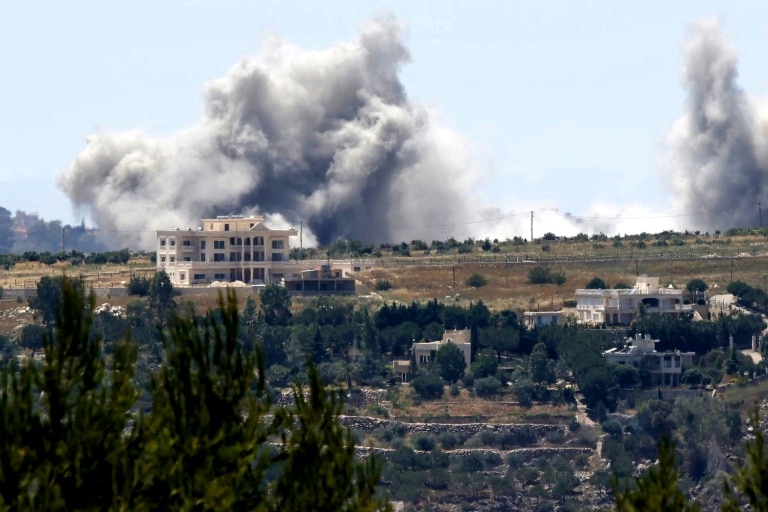
    That ceasefire had already failed to stop low-level clashes along other fronts, including the Israel-Lebanon border where Israel continues exchanges of fire with the Iran-backed militant group Hezbollah. An Israeli military official confirmed on Monday that the Israel Defense Forces remains on high alert, closely monitoring developments around the strait after the U.S. downed Iranian missiles and drones. Lebanese President Joseph Aoun also reaffirmed this week that a security agreement and full halt to Israeli strikes are required before any planned meeting with Israeli Prime Minister Benjamin Netanyahu, a meeting Washington has pushed for to de-escalate the Lebanese front. Israeli and Lebanese officials held two landmark direct talks in Washington last month, the first such negotiations in decades, after Hezbollah opened a new front in the war on March 2, triggering heavy Israeli strikes and a limited ground invasion of southern Lebanon.

    The sharp escalation in the Strait of Hormuz has already delivered a major blow to the global economy, which has been reeling from the impact of months of conflict. Crude oil prices surged on Monday in response to the tensions, driven by fears that the strait could remain closed to large-scale commercial traffic, dragging global energy costs even higher. Global stock markets sank on Tuesday as investor confidence eroded, extending losses driven by months of volatility tied to the Middle East conflict. Soaring consumer energy prices triggered by the war have already caused widespread economic hardship across the world, and the fresh crisis has created significant political challenges for Trump just months ahead of U.S. midterm elections.

    U.S. European allies have also sounded the alarm over the crisis, warning that prolonged closure of the strait will cause deep economic damage to their own economies. European Commission President Ursula von der Leyen wrote on X that “these attacks are unacceptable,” noting that “security in the Gulf region has direct consequences for Europe.” German Chancellor Friedrich Merz joined French President Emmanuel Macron and British Prime Minister Keir Starmer in calling on Iran to return to diplomatic negotiations, saying Tehran must “stop holding the region and the world hostage.” Saudi Arabia, a key U.S. ally in the Middle East, also issued a statement on Tuesday calling for intensive diplomatic efforts “to reach a political solution” to the standoff.

    Despite widespread international calls for dialogue, negotiations between Washington and Tehran remain completely deadlocked. To date, only one round of direct peace talks has been held, with no breakthroughs on core issues including the future of the Strait of Hormuz and Iran’s broader regional security demands. With both sides digging in and exchanging deadly fire, the international community is bracing for a further escalation that could drag the entire Middle East back into full-scale war, with cascading consequences for the global economy and millions of people around the world.

  • Former premier Annastacia Palaszczuk cancels book tour events after partner Dr Reza Adib charged with rape

    Former premier Annastacia Palaszczuk cancels book tour events after partner Dr Reza Adib charged with rape

    A major political development has shaken Australia’s Queensland state, as former premier Annastacia Palaszczuk has seen multiple stops on her upcoming book tour cancelled or postponed, just days after her partner, 65-year-old medical professional Dr. Reza Adib, was hit with serious criminal charges including rape.\n\nMultiple scheduled events have already been pulled from the tour calendar. One of the scrapped engagements was an author talk scheduled for Thursday at Fraser Coast Libraries, where Palaszczuk was set to discuss her new memoir, *The Politics of Being Me*. Another planned event at the Australian National University (ANU) in Canberra, scheduled for May 13, was officially called off in an email notification sent to registered attendees.\n\nThe official statement from ANU Events read: “We regret to inform you that Meet the author – Annastacia Palaszczuk has been cancelled due to unforeseen circumstances. We sincerely apologise for any inconvenience this may cause and appreciate your understanding. We hope to see you again at our next event.”\n\nConflicting reports have emerged about the status of the full tour: while multiple events have already been postponed or cancelled, Palaszczuk’s publicist, high-profile industry figure Max Markson, has publicly confirmed that the overall book tour remains on track to proceed as originally scheduled. Markson has not issued further public comment beyond the initial confirmation, and has been approached for additional detail on the revised tour schedule.\n\nThe legal crisis at the center of the disruption unfolded last week, when Dr. Adib was formally charged with three counts of rape, two counts of deprivation of liberty, and one additional count of sexual assault. He is scheduled to make his first court appearance on May 14 to answer the charges.\n\nIn an official statement released on May 1, Dr. Adib’s defense counsel Dan Rogers addressed the allegations publicly on his client’s behalf. Rogers said that his client “is shocked about the allegations made about him and is taking the matter very seriously.” He reiterated that the fundamental legal principle of presumption of innocence applies, noting that Dr. Adib “intends to vigorously defend the charges.”\n\n“Right now, Dr Adib is primarily concerned about the welfare of his family and his patients, and he will do whatever it takes to ensure that they are looked after in the coming weeks,” Rogers added. The statement closed with a request for media restraint: “Dr Adib asks that the media respect the privacy of his family and his patients at this difficult time. Dr Adib will not be making any comment about the matters while they are before the courts.”’