标签: Oceania

大洋洲

  • Households face more rate hikes as global oil shock hits Australian economy

    Households face more rate hikes as global oil shock hits Australian economy

    Australia’s stretched mortgage holders are bracing for more financial pain after top economists warned that three consecutive Reserve Bank of Australia (RBA) interest rate hikes have only addressed domestic inflationary pressures, leaving the country exposed to a soaring oil price shock sparked by the US-Iran conflict that could force even more aggressive monetary policy tightening.

    In a stark warning to Australian households already grappling with rising living costs, Westpac chief economist Luci Ellis explained that the RBA’s 2026 rate hiking cycle was designed solely to cool domestic demand-driven inflation, and did not account for the global energy price volatility triggered by the escalating Middle Eastern conflict.

    “Before the war broke out, Australia’s economy was already contending with persistently high inflation, and the RBA moved to raise rates to lean against that pressure,” Ellis said. “Three back-to-back hikes had largely put domestic inflation on a path to cooling, but that entire calculus shifted once the conflict began.”

    When the conflict erupted, Australia’s headline inflation already sat at 3.7% – above the RBA’s statutory 2-3% target range. Following its latest two-day policy meeting this week, the RBA announced a further 25 basis point rate increase, lifting the official cash rate to 4.35%. This move fully erases the three rate cuts rolled out in 2025, bringing borrowing costs to their highest level in more than a decade.

    In its post-meeting statement, the RBA board noted that current inflation remains elevated at 4.6%, far outside its target range, and signaled that additional rate hikes remain on the table. The board added it would closely monitor incoming economic data and evolving global conditions to guide future policy decisions.

    Global oil prices have skyrocketed in recent weeks amid the Middle East crisis, jumping from roughly $US56 per barrel in January, before the conflict began, to a volatile range of $US100 to $US110 per barrel – a jump that translates directly to higher fuel costs for Australian consumers. Industry estimates show every $US10 per barrel increase adds 10 Australian cents to every liter of fuel at the pump, hitting household transport budgets and raising operational costs for businesses across every sector.

    Ellis noted that the RBA has now shifted its focus to global-driven inflation pressures, particularly how rising fuel, diesel and fertilizer prices flow through to broader consumer prices across the Australian economy. “Our assessment is that these price pressures are already front-loaded and extensive – we’re already seeing formal notifications of price hikes for a wide range of goods and services,” she said. “For this reason, we expect further rate hikes from the RBA from here.”

    National Australia Bank chief economist Sally Auld shares Ellis’s hawkish outlook, projecting an additional 25 basis point hike in June that would push the official cash rate to 4.60%. “The RBA continues to face the core challenge of already above-target inflation, and the second-round inflationary pressures from higher oil prices will flow through to the broader economy relatively quickly,” Auld explained.

    Not all major bank economists agree on the path forward, however. Commonwealth Bank analysts forecast the RBA will hold rates steady at 4.35% through the end of 2026, arguing that current monetary policy settings are already “well placed” to cool inflation over time.

    While the RBA has historically looked past one-off oil price shocks when setting policy, the central bank has grown increasingly concerned about second-order inflation effects, where businesses pass higher energy and input costs directly on to consumers. RBA governor Michele Bullock defended businesses’ right to pass through higher costs, noting “It is not unreasonable for firms because they are seeing their cost basis rise …. It is not unreasonable for them to want to recover their costs. The alternative is they can’t absorb the costs and they might end up going bust, and that isn’t good either.”

    Ellis said she was surprised by Bullock’s framing, arguing that effectively giving businesses the green light to pass through higher costs will only entrench higher inflation and force the RBA to implement even sharper rate hikes down the line, deepening the financial pressure on Australian households already struggling with mortgage repayments and cost-of-living increases.

  • AFL 2026: Coaches hopeful for clarity and funding for full-time psychs

    AFL 2026: Coaches hopeful for clarity and funding for full-time psychs

    The Australian Football League’s recent mandate requiring all AFL and AFLW clubs to employ full-time in-house psychologists has sparked mixed reaction from two veteran senior coaches, who have raised practical and financial concerns over the new rule.

    The regulation was introduced as a key disciplinary sanction against Carlton Football Club, stemming from the controversial Elijah Hollands incident that brought club mental health support protocols under intense scrutiny. AFL chief executive Andrew Dillon and executive Laura Kane formally announced the policy change earlier this week, with additional implementation details promised for release in the coming weeks.

    Western Bulldogs head coach Luke Beveridge has publicly questioned the logic behind the strict full-time requirement, noting that his club’s existing psychologist already works a near-full-time schedule dedicated to player welfare. In comments to reporters, Beveridge said he remains confused by the wording of the new mandate, pointing to the disjointed, travel-heavy nature of the AFL competition that makes a rigid full-time role structure difficult to implement. “What happens in an AFL environment is we all take care of the players’ welfare,” Beveridge explained. “I think the empowerment of staff and the playing group to support each other is absolutely critical, and a skilled practitioner like our club psychologist Andrew Waterson is absolutely critical to any organisation. But it’s also your senior high performance management that needs to continue to oversee that and make sure everyone’s empowered to look after each other.”
    Beyond the full-time psychologist rule, Beveridge also hit out at the AFL’s updated illicit drug policy, which bars club coaching staff from being informed when a player returns a positive drug test. He argued that this restriction directly undermines the quality of care clubs can provide to at-risk athletes, as coaches are left unable to address underlying mental health struggles that may be tied to substance use.

    For his part, Essendon senior coach Brad Scott centered his criticism on the financial burden the new mandate places on already cash-strapped clubs. Scott called on the AFL to either fully fund the new full-time psychology positions or exempt their salaries from the existing club soft salary cap, arguing the league’s inconsistent financial rules create unnecessary strain for club management.
    “There’s this complex formula of exemptions that the AFL deem are more important than others. Whether that be setting a minimum spend for medical, setting a minimum spend for mental health and wellbeing,” Scott said. “Personally, it gets very frustrating when the AFL are reactive to something and decide you must spend on this after cutting the soft cap and dictating what we can and can’t do with our money. Clubs get held responsible, as Carlton have been in this case, and then the AFL come over the top and mandate things. It’s been a constant challenge that soft caps have been cut and clubs are forced to decide where to allocate money, then the AFL have an incident and respond like this.”

    The new mandate marks the AFL’s latest attempt to strengthen player mental health support across both the men’s and women’s competitions, but the pushback from two high-profile senior coaches signals ongoing debate over how best to structure welfare resources while balancing the operational constraints of individual clubs.

  • Theodoros Tsalkos: Rapist convicted of 1987 kidnapping and abuse has sentence reduced after appeal

    Theodoros Tsalkos: Rapist convicted of 1987 kidnapping and abuse has sentence reduced after appeal

    Nearly 40 years after he kidnapped and sexually assaulted two underage girls while posing as a law enforcement officer, an Australian sex offender has seen his original prison term reduced following a successful sentence appeal, marking a twist in a cold case that relied on modern forensic science to reach prosecution.

    Theodoros Tsalkos, 64, was first linked to the 1987 attacks through advances in DNA testing more than three decades after the crimes. Back in the early hours of that 1987 morning in St Kilda, the then 25-year-old approached two 15- and 16-year-old child sex workers, identified their vulnerability, and claimed to be a police officer conducting a prostitution bust. Over the next three and a half hours, he subjected the teenagers to a prolonged, terrifying ordeal of sexual violence that trial judges later described as depraved, sadistic and evil, before abandoning the girls back in the St Kilda area.

    It was not until 2022 that advances in DNA technology matched Tsalkos to forensic samples recovered from the victims, leading to his arrest and trial. A jury rejected his insistence that the encounters were consensual, convicting him on charges of kidnapping, rape and gross indecency. In 2023, Judge Rosemary Carlin sentenced him to 13 years and six months in custody, with a scathing rebuke of his actions. Carlin emphasized that Tsalkos had intentionally exploited the victims’ youth and naivety by hiding behind a false police identity, threatening the girls with legal action, then subjecting them to repeated unprotected sexual assaults while ignoring their obvious fear and suffering.

    Tsalkos immediately launched an appeal against both his conviction and sentence, and in 2024 the Victorian Court of Appeal sided with him on the conviction challenge. Prosecutors appealed that ruling to the High Court of Australia, which ultimately overturned the lower appellate court’s decision by the end of 2024, ordering Tsalkos back into custody after he had spent nearly a year free in the community pending a retrial.

    With the conviction upheld, the case returned to the Victorian Court of Appeal to re-examine Tsalkos’ challenge to the length of his original sentence. On Wednesday, the court ruled that the 2023 sentence was “manifestly excessive”, setting aside the original term and resentencing him to 10 years and six months in prison. Tsalkos’ non-parole period was also cut by 18 months, bringing the new non-parole term to six years and eight months. Accounting for time he has already served in custody, he will now become eligible for parole in March 2030. Tsalkos continues to maintain his innocence in the case.

  • 100 years on Earth: Iconic naturalist Attenborough marks century

    100 years on Earth: Iconic naturalist Attenborough marks century

    As the clock ticks toward Friday, the global community is preparing to mark a historic milestone: the 100th birthday of David Attenborough, the legendary naturalist, broadcaster, and climate advocate whose decades of work have redefined how humanity understands the planet we call home. For nearly 80 years, Attenborough has been the guiding voice leading audiences into the most isolated, awe-inspiring corners of the Earth, turning far-flung wild landscapes into familiar fixtures in living rooms across every continent.

    Attenborough’s lifelong connection to the natural world took root in childhood, growing into an academic foundation with university studies in geology and zoology before he joined the BBC in the early 1950s to launch what would become an unparalleled broadcasting career. His 1979 magnum opus *Life on Earth* — which alone has drawn an audience of more than 500 million viewers worldwide — remains one of the most watched nature documentaries in history. It was in this series that Attenborough shared one of his most iconic personal encounters: a close, unplanned meeting with a family of mountain gorillas in the Rwandan wilderness, an experience he still calls “bliss” and “extraordinary” decades later. Recalling the moment ahead of his centenary, Attenborough described how an adult female gorilla gently twisted his head to meet his gaze, while two young gorillas settled on his lap as cameras rolled: “I was simply transported,” he said.

    Over the decades that followed, Attenborough built a catalog of landmark series including *Planet Earth II*, *Blue Planet II*, *Life in the Freezer*, and *Paradise Birds*, each capturing the fragile, extraordinary beauty of ecosystems from polar ice caps to tropical rainforests. Peers across academia and science communication say his impact extends far beyond entertainment. Sandra Knapp, research director at London’s Natural History Museum, told Agence France-Presse that Attenborough’s work “has expanded people’s horizons” and gifted global audiences access to places “we would never otherwise go” — a gift that has inspired generations of scientists, conservationists, and nature lovers. Jean-Baptiste Gouyon, a professor of science communication at University College London, notes that Attenborough achieved what few thought possible: he turned natural history programming into a cultural phenomenon as popular as mainstream football, fostering a widespread, unmatched sense of wonder and passion for the natural world among the general public.

    His influence has crossed generational and national boundaries, earning acclaim from figures across public life, royalty, and entertainment. Britain’s heir to the throne Prince William has hailed him as a “national treasure,” and the late Queen Elizabeth II knighted him in 1985. American pop star Billie Eilish, whose praise underscores Attenborough’s cross-generational appeal, has celebrated his “deep love and knowledge of our planet,” noting that “The animal kingdom brings out the childlike curiosity within us all.”

    In recent decades, Attenborough has pivoted from simply documenting the natural world to sounding the alarm about the existential threats it faces. In 2006, after waiting for conclusive scientific proof of human-caused climate change, he publicly dropped his earlier skepticism and joined the global movement calling for urgent action. Even well into his 90s, he continued to make hard-hitting, unflinching documentaries: his 2025 film *Ocean* saw him condemn the industrial fishing practices of wealthy nations, calling the exploitation “modern colonialism at sea.” Most recently, in early 2026, he released *Wild London*, which explores the unexpected wildlife thriving in his native British capital, from urban foxes and reintroduced beavers to tiny harvest mice and hedgehogs. At the 2021 UN Climate Summit in Glasgow, he shared a message of cautious hope that remains central to his public advocacy: “Perhaps the fact that the people most affected by climate change are no longer some imagined future generation, but young people alive today… will give us the impetus we need to rewrite our story, to turn this tragedy into a triumph. We are, after all, the greatest problem-solvers to have ever existed on Earth.”

    Now 100 years old, Attenborough no longer treks through remote jungles or crosses scorching deserts to film new content, but he has not stepped away from storytelling. After a lifetime of global travel, he still resides in the quiet, leafy southwest London suburb of Richmond — his favorite place on Earth, he has confided — in the family home he shared with his late wife Jane, where he raised their two children. Rejecting the label of celebrity even as he became a global household name, Attenborough has always focused attention on the natural world rather than his own fame, a trait Gouyon says has been key to his enduring connection with audiences.

    To celebrate the centenary of the British icon, the BBC is spearheading a week-long slate of special programming dedicated to Attenborough’s life and decades of work. Classic episodes of his most beloved series are being rebroadcast, with an extensive catalog of his work available to stream on the BBC’s iPlayer service. The celebration will culminate on his birthday with a 90-minute live event hosted at London’s iconic Royal Albert Hall, bringing together fans and admirers to honor the life and legacy of the man who taught the world to love the natural world.

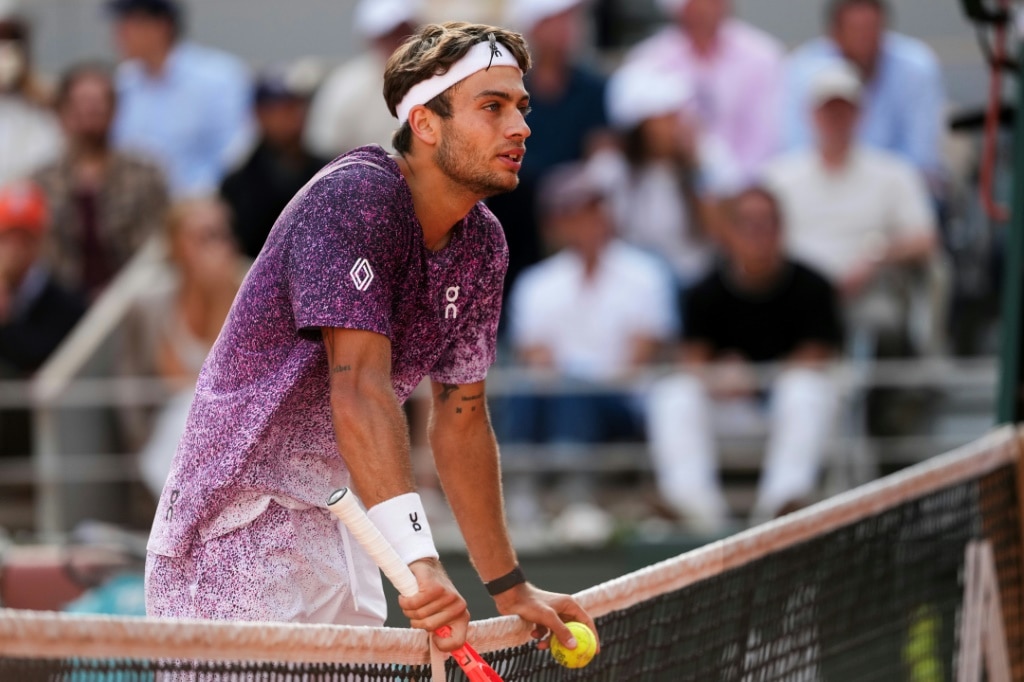
  • Strasbourg on verge of European final amid fan displeasure at owners BlueCo

    Strasbourg on verge of European final amid fan displeasure at owners BlueCo

    As RC Strasbourg Alsace prepares to write what could be the most iconic chapter in its 118-year history this Thursday, the historic French club finds itself caught between the thrill of a once-in-a-generation European achievement and simmering discontent over the ownership structure that got it here.

    Strasbourg, which shares its BlueCo consortium ownership with English Premier League giant Chelsea, hosts La Liga side Rayo Vallecano at its recently upgraded Stade de la Meinau for the second leg of the UEFA Conference League semi-finals. Needing to overturn a narrow 1-0 deficit from the opening fixture in Madrid, Patrick Vieira’s side? No, Gary O’Neil, the English manager appointed earlier this year, will lead the squad out for the biggest match the club has ever contested on the continental stage. The winner of the tie will advance to the May 27 final in Leipzig, where they will face either England’s Crystal Palace or Ukraine’s Shakhtar Donetsk — neither of which have secured a European final spot before this tournament either.

    For long-time supporters of the Strasbourg-based club, located on France’s eastern border with Germany and home to the European Parliament, even the prospect of reaching a continental final would have been unthinkable not long ago. The club has only ever claimed one Ligue 1 title, back in 1979, and its prior best European run came a year later, when it bowed out to Ajax in the European Cup quarter-finals. A memorable 1997 upset over Liverpool in the UEFA Cup remains the only other high-profile continental win in the club’s history, putting Thursday’s opportunity in stark context.

    The road to this semi-final has not been an easy one. Just 15 years ago, Strasbourg was on the brink of extinction, forced into liquidation after catastrophic financial mismanagement that sent it tumbling down to the amateur regional fourth and fifth tiers of French football. After a painstaking rebuild led by club president and former Strasbourg player Marc Keller, the club fought its way back to Ligue 1 in 2017, nearly a decade after its relegation, and cemented its place as a steady top-flight outfit. But competing at a continental semi-final level remained out of reach with the club’s small, fan-aligned operating model — which is what led Keller’s board to approve BlueCo’s takeover in June 2023, one year after the American consortium purchased Chelsea.

    “We were conscious that we had gone as far as we could with our existing model,” Keller explained to French broadcaster RMC after Strasbourg knocked out German side Mainz 05 in the quarter-finals. Since the takeover, significant investment has poured into the first team, allowing the club to bring in talented young players, many loaned in from Chelsea, and qualify for the Conference League on the back of a strong 2023-24 league campaign under former manager Liam Rosenior.

    But that investment has come with a steep cost that has alienated the club’s core supporter base. Fans have grown increasingly frustrated by a clear pattern emerging under BlueCo: any player or coach that posts strong results at Strasbourg is quickly poached by the consortium’s flagship club, Chelsea, turning the French side into little more than a development feeder team. The anger boiled over in September 2024, when starting striker and fan favorite Emmanuel Emegha confirmed he would move to Stamford Bridge at the end of the season. Then, in January 2025, Chelsea poached Rosenior himself to take over as their first-team manager, a move that left supporters furious. Rosenior did little to defuse tensions, telling reporters he hoped Strasbourg fans would be proud that his work at the club earned him a job at a Champions League-winning side.

    Rosenior was replaced by O’Neil, who has already guided Strasbourg to a French Cup semi-final defeat this season. Ahead of Thursday’s make-or-break tie, O’Neil has called for the full-throated support of the home crowd, saying: “Thursday’s game is the biggest in the club’s history. We will need the same support and energy that we got against Mainz.”

    Yet the club’s most passionate and vocal supporters have no plans to set aside their grievances, even for a historic European night. Since the start of last season, leading supporters group Ultra Boys 90 has organized a silent protest for the first 15 minutes of every home match, holding their cheers to demonstrate their opposition to BlueCo’s ownership model. In an open letter published earlier this year, the group warned that Strasbourg’s current situation is a warning sign for football globally: “What is happening at Strasbourg is what the future could look like for the vast majority of clubs. They will be relegated to the role of feeder teams, without their own resources, with no soul and no link to where they come from.”

    While the group is urging fans to gather outside the stadium ahead of kick-off to welcome the team bus, the 15-minute silent protest will go ahead as planned on Thursday. Despite the discontent, the recently renovated Stade de la Meinau — which expanded its capacity to 32,000 after the construction of a new main stand — is sold out once again for the semi-final. For many fans in the stands, the day will bring a complicated mix of emotion: the chance to cheer their club to a historic first European final, but a growing unease about whether the club they have supported for generations will retain its identity under its new American owners, even if it lifts a trophy that was won by BlueCo’s Chelsea just 12 months ago.

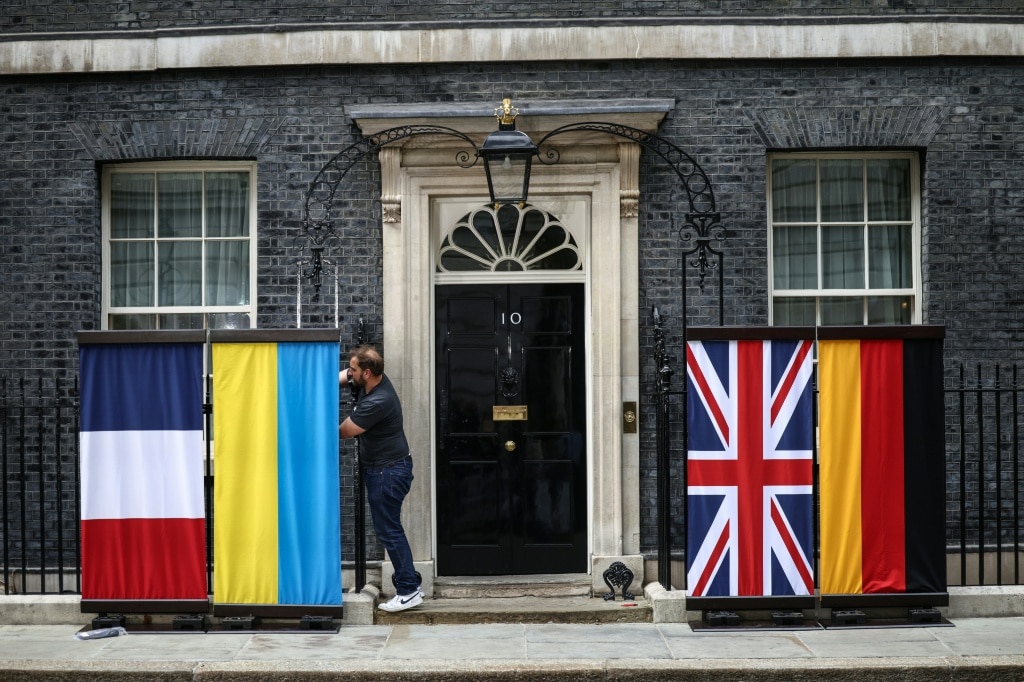
  • Ukraine reports strike as Kyiv’s ceasefire due to begin

    Ukraine reports strike as Kyiv’s ceasefire due to begin

    Hours before Kyiv’s unilateral ceasefire was scheduled to take effect on Wednesday, a wave of coordinated Russian strikes across multiple Ukrainian regions left at least 28 people dead and more than 120 wounded, marking the deadliest assault on Ukrainian territory in weeks and derailing temporary hopes for a lull in fighting.

    Ukraine’s Interior Minister Igor Klymenko confirmed the strikes targeted civilian and infrastructure sites across 10 regions, stretching from the northeastern Chernigiv and Sumy to the southern coastal region of Odesa and the frontline Zaporizhzhia. By late Tuesday, the official death toll climbed one additional fatality in Kramatorsk, the last major Ukrainian-held city in the embattled Donetsk region. The attack on Kramatorsk’s city center killed six people, with Ukrainian President Volodymyr Zelensky condemning it as a deliberate strike on civilian targets. Four people also died in a strike on the central city of Dnipro, carried out just hours before Kyiv’s ceasefire deadline, while 12 were killed in frontline Zaporizhzhia, an attack Zelensky called “absolutely without military justification.”

    Moscow’s actions drew sharp condemnation from senior Ukrainian officials, who accused the Kremlin of deliberate cynicism just days after both sides announced separate unilateral ceasefire plans tied to Russia’s annual May 9 World War II Victory Day commemorations. Russia first called for a pause in fighting to mark the holiday, which the Kremlin has framed in recent years as a ideological extension of the 1945 Soviet victory over Nazi Germany to justify its 2022 full-scale invasion. Kyiv later announced its own separate 36-hour ceasefire set to begin Wednesday, just ahead of Russia’s planned celebrations.

    “With mere hours until Ukraine’s ceasefire proposal comes into force, Russia shows no signs of preparing to end hostilities. On the contrary, Moscow intensifies terror,” Ukrainian Foreign Minister Andrii Sybiga wrote on social media platform X early Wednesday. Zelensky similarly denounced Moscow’s actions as “utter cynicism” for launching deadly attacks while publicly seeking a pause in hostilities. As of early Wednesday, Russian officials had not reported any new Ukrainian strikes in the first hours of Kyiv’s proposed truce, but Ukrainian authorities in southern Zaporizhzhia confirmed that Moscow had targeted local infrastructure overnight.

    In a surprising development that broke a months-long period of quiet diplomatic contact, U.S. Secretary of State Marco Rubio spoke by phone Tuesday with Russian Foreign Minister Sergei Lavrov at the Russian side’s request. A State Department spokesperson confirmed the two discussed U.S.-Russia relations, the ongoing war in Ukraine, and relations with Iran, but neither side released further details on the substance of the conversation. Russia’s foreign ministry confirmed the call added that the pair had discussed scheduling future bilateral contacts, offering no additional context.

    This year’s May 9 Victory Day celebrations in Russia have been significantly scaled back, a shift widely attributed to growing concerns over potential Ukrainian strikes on parade sites. For the first time since the full-scale invasion began, no military hardware will be displayed during Moscow’s main parade, and Russian authorities cut mobile internet access across the capital on Tuesday, with restrictions set to remain in place through Saturday. Ukraine has stepped up long-range retaliatory strikes in recent weeks, targeting Russian oil infrastructure and residential and government sites in Moscow, strikes Kyiv frames as justified retaliation for Russia’s regular missile and drone attacks on Ukrainian cities.

    Temporary unilateral ceasefires have been implemented occasionally during the four-year war, most recently a pause in long-range attacks during Orthodox Easter last month. However, there is little indication that either side is willing to move toward comprehensive peace talks. Moscow has issued non-negotiable demands that Kyiv withdraw all troops from the occupied Donbas region and permanently renounce any future military cooperation with Western allies, terms Kyiv has rejected as equivalent to unconditional surrender.

  • Infantino defends World Cup ticket prices

    Infantino defends World Cup ticket prices

    As criticism from global football fan groups continues to mount over the exorbitant pricing of 2026 FIFA World Cup tickets, FIFA President Gianni Infantino has stepped forward to defend the governing body’s policies, pushing back against accusations of exploitative pricing during his appearance at the Milken Institute Global Conference in Beverly Hills this Tuesday.

    The controversy surrounding World Cup ticketing erupted into a formal dispute earlier this year, when European fan advocacy group Football Supporters Europe (FSE) filed an official lawsuit with the European Commission, calling out FIFA for what it labels “excessive ticket prices” for the upcoming tournament. FSE has gone as far as branding the 2026 pricing structure “extortionate” and a “monetary betrayal” of the global football community.

    Public anger reached a new peak last week, when four tickets for the 2026 World Cup final, scheduled to take place in New Jersey on July 19, were listed for more than $2 million apiece on FIFA’s official resale platform, FIFA Marketplace. The sky-high listing prices drew widespread condemnation from fans and sports commentators alike, who pointed to the stark contrast between 2026 pricing and the 2022 Qatar World Cup, where the most expensive face-value final ticket cost just around $1,600 — compared to the 2026 final’s $11,000 original price tag.

    Addressing the backlash directly, Infantino pushed back against claims that FIFA is responsible for the exorbitant resale prices. He argued that the multi-million dollar listings do not reflect actual baseline ticket costs, and there is no guarantee any buyer will actually pay those extreme sums. In a characteristically blunt remark, Infantino joked that if any fan does actually purchase a $2 million final ticket, he will personally deliver a hot dog and a Coke to their seat to ensure they have an enjoyable experience.

    Infantino defended the sharp rise in face-value ticket prices, framing the increase as a reasonable adjustment to market conditions. He noted that the 2026 World Cup is being hosted in the United States, the world’s most commercially developed entertainment market, where market-rate pricing is unavoidable. He added that U.S. regulations permit legal ticket resale, meaning if FIFA set lower original prices, scalpers would simply buy up large blocks of tickets and resell them for far higher margins, leaving FIFA with no revenue from the markup.

    “Even though some people say our prices are high, the resale market still marks them up to more than double our original prices,” Infantino explained. He also pushed back on claims that all tickets are out of reach for casual fans, pointing out that 25 percent of group stage tickets are priced below $300, a rate that he argues is competitive for major live events in the U.S. “You cannot go to a U.S. college sports game for less than $300 these days, let alone a top-tier professional event, and this is the World Cup,” he said.

    Infantino also highlighted unprecedented demand for the 2026 tournament as justification for the pricing model. He told the conference that FIFA has already received more than 500 million ticket requests for the 2026 World Cup, a figure that dwarfs the combined total of fewer than 50 million requests for both the 2018 Russia World Cup and 2022 Qatar World Cup.

  • IS families in Syria have booked tickets home to Australia, minister says

    IS families in Syria have booked tickets home to Australia, minister says

    In a development that has reignited debate over how countries handle citizens linked to terrorist groups, the Australian government has confirmed that 13 individuals — four women and nine children with ties to the Islamic State (IS) extremist network — have purchased commercial airline tickets to return to Australian territory after years of detention in a Syrian displacement camp.

    This cohort is part of a larger group of 34 IS-linked people, 23 of whom are children, who have been held at the al-Roj camp in northern Syria since 2019, when IS was defeated and ousted from its final controlled territory in the country. According to official updates, the entire 34-person group left the camp back in February with plans to arrange repatriation, but was forced to return to the facility for unspecified technical reasons, as the Australian government has consistently declined to facilitate official government-led repatriation for the cohort.

    Speaking to reporters on Wednesday, Australia’s Home Affairs Minister Tony Burke emphasized that the federal government has not provided and will not provide any logistical, financial or official support to the group for their journey home. “These are people who made the horrific choice to join a dangerous terrorist organisation, and they chose to put their children in an unspeakable situation,” Burke told media. “As we have stated repeatedly, any member of this group who has committed criminal acts will face the full weight of Australian law.”

    Burke added that Australian authorities were notified of the planned return immediately after the airline bookings were confirmed earlier this same day, noting that there are strict legal limitations on the government’s ability to block its own citizens from entering the country. “We have had long-standing, tested plans in place to manage and monitor this cohort’s return since 2014,” Burke said, confirming ongoing preparation across national security and law enforcement agencies.

    Australian Federal Police (AFP) Commissioner Krissy Barrett confirmed that when the 13-person group arrives on Australian soil, some individuals will be taken into custody and formally charged with criminal offenses. For more than a decade, Barrett explained, Australian investigators have been compiling evidence of potential terrorism offenses, as well as crimes against humanity including involvement in the slave trade, linked to members of the group. While Barrett declined to specify exactly how many of the 13 will face arrest, she confirmed that any individuals not taken into custody will remain the subject of active ongoing investigations.

    For the returning children, Australian authorities have outlined a support plan that includes community integration initiatives, mental health and therapeutic support, and programming designed to counter violent extremism and support long-term reintegration.

    Mike Burgess, director-general of the Australian Security Intelligence Organisation (ASIO), the country’s domestic spy agency, told public broadcaster the Australian Broadcasting Corporation that he does not see immediate major security risks from the group’s return, but that all members will remain under close ongoing monitoring. “It’s up to them what they do when they get here,” Burgess said. “If they start to exhibit signs that concern us, we and the police, through our joint counter-terrorism teams, will take swift action.”

    Earlier in 2025, Australia issued a temporary exclusion order barring one member of the 34-person cohort from returning to the country for a period of up to two years. Australia is not alone in its approach to repatriation: a number of other Western governments, including France, the Netherlands and the United Kingdom, have also refused to repatriate the majority of their own citizens still detained in Syrian camps linked to IS.

  • Koalas rescued from deep hole in Brisbane building site

    Koalas rescued from deep hole in Brisbane building site

    On a construction plot in the outer Brisbane suburb of Morayfield, a routine day of work took an unexpected turn for building crews when they stumbled on a heart-stopping surprise deep below ground. As workers readied the site to set a wooden support pole into a freshly dug 1.5-meter hole, a faint rustling of movement caught their attention. Stopping their work to investigate, they made a shocking discovery: two koalas, Australia’s most beloved native marsupials, were trapped at the muddy bottom of the excavation, unable to climb back out to safety.

    By the time the crew found the pair, the animals were already in critical condition. Covered from head to paw in thick mud, they had accidentally ingested large amounts of soil and developed hypothermia from being stuck in the cold, wet hole for an unknown period. Recognizing the urgent need for help, the workers quickly coordinated with local wildlife rescuers, who used safety nets to carefully lift the marsupials out of the deep hole without causing further injury.

    Named Fudge and Santino by rescuers, the two male koalas were immediately transported to Australia Zoo Wildlife Hospital for emergency care. For between seven and nine weeks, the veterinary team provided round-the-clock intensive monitoring and life-saving treatment to pull the animals back from the brink. Wildlife advocates emphasized that the quick thinking of the construction crew was the key factor that gave Fudge and Santino a fighting chance at survival.

    After two months of dedicated care, the koalas made a full recovery, regaining their strength and returning to the healthy condition koalas need to thrive in their natural habitat. In a public update shared to Wildlife Rescue Queensland’s official Facebook page, a organization spokesperson confirmed the happy ending: both koalas were successfully released back into the wild landscape close to where they were originally rescued.

    “Thanks to the dedicated team at Australia Zoo Wildlife Hospital, both boys have made a strong recovery and were able to be released back where they belong,” the post read. “Stay safe, Fudge and Santino.”

    The rescue comes as koala populations across Queensland continue to face growing pressure from urban development, which fragments natural habitats and increases the risk of human-wildlife conflict. This incident has drawn attention from local conservation groups, who have praised the construction crew for choosing to pause work and prioritize the animals’ lives, rather than proceeding with their scheduled task. Many advocates have highlighted this as an example of how increased awareness and quick action can help protect vulnerable native species as development expands into traditional koala territories.

  • Rubio rising? Duel with Vance for 2028 heats up

    Rubio rising? Duel with Vance for 2028 heats up

    The quiet jockeying for the 2028 Republican presidential nomination burst into public view this week, as a high-profile turn at the White House briefing podium catapulted Secretary of State Marco Rubio into the center of speculation about a post-Trump GOP future, intensifying his implicit rivalry with Vice President JD Vance.

    On Tuesday, 54-year-old Rubio stepped in to fill in for White House Press Secretary Karoline Leavitt, who is currently on maternity leave. Standing before a packed room of Washington journalists, he handled a range of pressing foreign policy questions covering Iran, Cuba, and U.S.-China relations with a relaxed, affable demeanor that stood in stark contrast to the combative, invective-laden appearances former President Donald Trump often delivers from the same podium. Even as he joked about the chaotic scrum of reporters waving for his attention — telling the crowd “this is chaos” — Rubio appeared at ease, weaving in personal asides and pop culture references that won over many in the room and won viral praise online. A self-described hip-hop fan, he even dropped a line from Cypress Hill’s iconic track to describe Iran’s leadership, calling them “insane in the brain.”

    Conservative voices were quick to hail the performance as a breakout moment for Rubio. “Rubio just wrapped up his FIRST White House Press Briefing, and he absolutely knocked it out of the park,” conservative influencer Nick Sortor posted on X, adding “This man is a SERIOUS contender for 2028.”

    The moment could not have been more different for Vance, 41, Rubio’s most likely competitor for the 2028 nomination, who was hundreds of miles away from Washington that day, campaigning across the heartland and headlining a Republican fundraiser in Oklahoma.

    For months, public polling has shown Vance holding a substantial lead over other potential candidates among registered Republican voters. Neither Vance nor Rubio has officially announced a 2028 presidential bid, and Rubio has repeatedly downplayed speculation, describing the vice president as a friend and saying publicly he would not challenge Vance if he enters the race. Trump, who remains the undisputed leader of the MAGA movement, has also not yet publicly named a preferred heir to his political legacy.

    But behind the scenes, Washington speculation has grown in recent weeks that Trump is increasingly leaning toward supporting Rubio over Vance. Prediction markets have already reflected this shift, with Vance’s odds of securing the nomination dropping sharply over the past month.

    Vance’s political profile holds clear appeal for the MAGA base: his personal story of growing up in poverty in an Appalachian community ravaged by the opioid crisis was seen as a perfect fit for Trump’s working-class political brand. But he has repeatedly struggled to connect with broad swathes of the Republican electorate, and many hardline Trump supporters still view him with suspicion. That distrust dates back to 2016, when Vance compared then-candidate Trump to Adolf Hitler; as an anti-interventionist former Marine, he has also kept a notably low profile amid Trump’s recent military operations against Iran, a stark contrast to Rubio’s long record as a foreign policy hawk.

    Rubio has earned Trump’s public praise for his handling of recent military actions in Venezuela and Iran, and this week it was Rubio, not Vance — a devout Catholic convert — that Trump sent to meet newly installed Pope Leo XIV amid escalating tensions over Iran. Even the official White House X account seemed to signal implicit support for Rubio on Tuesday, promoting his briefing with the teasing caption “Another job?” and sharing his photo across dozens of administration channels.

    Vance, for his part, was far from idle during his time out of Washington. His itinerary included a stop in Iowa, the critical early nominating state that first launched Trump to the GOP nomination in 2016 and will carry outsize influence in the 2028 primary. His Oklahoma fundraising stop also highlighted a less-discussed advantage he holds: his role as finance chief for the Republican National Committee, a position that lets him build loyalty and support across party infrastructure at a time when many establishment Republicans still have not fully embraced his candidacy. He also made a stop in his home state of Ohio, where he previously served as a U.S. senator, to vote in a state primary, where his 10-year-old son Vivek cast a mock vote between the Easter Bunny and the Tooth Fairy — a moment Vance shared with reporters, joking that his son picked the Easter Bunny by a comfortable margin.

    When asked directly if his briefing room turn was a trial run for a 2028 presidential bid, Rubio declined to comment. He knows better than most that two years is an eternity in American politics, pointing to the 2016 race where another former secretary of state, Hillary Clinton, suffered a shocking upset loss to Trump. For now, Rubio seems content to enjoy his newfound viral momentum, keeping his long-term political ambitions close to the vest — even when it comes to joking about his recent viral turn as a wedding DJ over the weekend, where he was spotted manning the decks during a reception while Iran negotiations were ongoing. When asked what his DJ stage name would be, Rubio grinned and told reporters: “My DJ name? You’re not ready for my DJ name.”