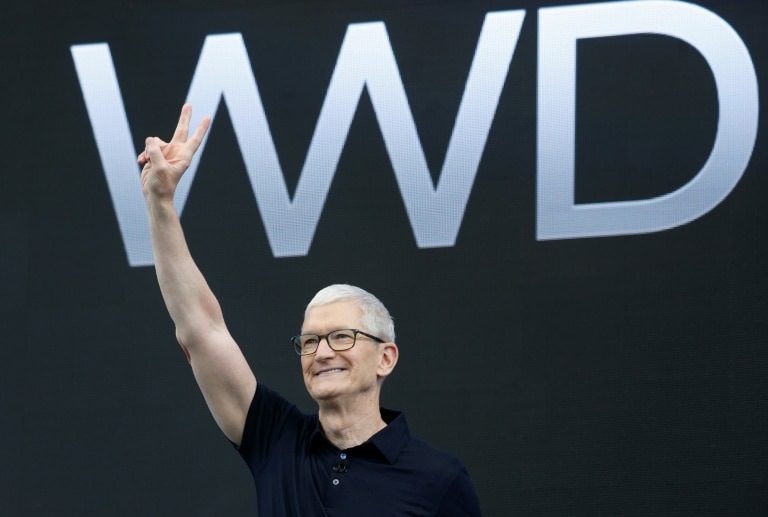
Two years after a high-profile but unfulfilled initial push into artificial intelligence left the tech giant facing public criticism and legal action, Apple has launched a sweeping AI upgrade for its iPhone ecosystem — and it is turning to long-time partner Google to power core capabilities of the new system. Monday’s announcement, made at Apple’s annual Worldwide Developers Conference, also carried historic corporate news: it marked the final keynote appearance from CEO Tim Cook, who will step down from his role in September to hand leadership to veteran hardware executive John Ternus.
Back in 2022, Cook used the same developer stage to announce Apple Intelligence, a major initiative meant to catapult the company into the global AI race that had already become a top priority for fellow U.S. tech giants. The centerpiece of that announcement was a promised revamp of Apple’s Siri voice assistant, but the overhaul never fully materialized. The unkept promise led to a class-action lawsuit from disgruntled U.S. consumers, which Apple settled earlier this year.
Unlike many competitors that have poured hundreds of billions of dollars into building custom AI infrastructure and in-house large language models, Apple has adopted a more gradual, cost-conscious approach that has won approval from some industry analysts. At this year’s conference, Apple leaders doubled down on this strategic framing, arguing that rushing to deploy AI for competitive prestige ignores the needs of end users. “AI is incredibly powerful technology with the potential to shape society in profound ways, and with proper care, unlock meaningful benefits for people everywhere,” Apple software chief Craig Federighi said in a pre-recorded launch video. “Still, some appear to be racing forward, seemingly pursuing AI for the sake of AI, without clear regard for the people… that it’s ultimately meant to serve.”
The centerpiece of Apple’s 2024 AI announcement is a redesigned Siri, rebranded as Siri AI, that will support natural language conversations, cross-app data tracking and task execution across tools including Maps, Mail and other core iPhone applications. Notably, rather than relying on fully in-house developed AI models, Apple has integrated a customized version of Google’s Gemini large language model to power these new features. This partnership builds on an already lucrative existing relationship between the two companies: Google already pays Apple tens of billions of dollars annually to retain its position as the default search engine on iPhone’s Safari browser.
Most of the AI-powered capabilities Apple unveiled Monday have already been available to consumers through Google, which has rolled out similar generative AI features across its Gmail, Maps and Android operating system products. Prominent Apple tech commentator John Gruber noted that the company’s strategy represents a high-stakes bet on a low-investment AI model. “Apple is making an enormous bet on AI — but their bet is that they don’t need to spend hundreds of billions per year on AI infrastructure…to reap the benefits,” Gruber explained.
Alongside its AI announcements, Apple used the conference to highlight expanded parental control tools designed to address growing global scrutiny of tech companies over child screen safety and social media addiction. The updated controls include more flexible and robust time management features that specifically target engagement with social media platforms and mobile games.
Even as Apple lagged behind competitors in rolling out consumer-facing AI features over the past two years, the company’s financial performance has remained strong. Apple stock has defied broader market expectations, rising roughly 15 percent since the start of 2024, and iPhone sales recorded double-digit growth across nearly all of the company’s global markets in the first quarter of the year.