标签: North America

北美洲

  • Husband of US woman missing in Bahamas released, says he will keep looking

    Husband of US woman missing in Bahamas released, says he will keep looking

    A months-long missing person case that has captured transatlantic attention has taken a new turn, as Brian Hooker, the Michigan man detained by Bahamian law enforcement after his wife Lynette disappeared during a sailing trip, has been released from custody — and he remains firm in his commitment to finding her, insisting he believes she is still alive.

    The incident unfolded on the evening of April 4, when the Hookers, both experienced sailors who regularly shared their nautical adventures on social media, were out exploring Bahamian waters on an 8-foot hard-bottom dinghy, separate from their larger main sailing vessel. According to Brian Hooker’s account, Lynette fell overboard alongside the dinghy’s keys, and strong ocean currents quickly swept her away before he could reach her. The 59-year-old has repeatedly denied any involvement in his wife’s disappearance, calling all suggestions of foul play unfounded.

    Four days after Lynette went missing, on April 8, Brian Hooker was taken into Bahamian police custody for questioning. During that detention period, he even joined search efforts while handcuffed, and ended up needing rescue himself after falling overboard in rough, choppy sea conditions, according to local reports. Last week, Bahamian authorities announced that their initial search and rescue operation had been reclassified as a recovery mission, a shift that signaled growing pessimism about finding Lynette alive.

    But following his release on the evening of Monday, Brian Hooker told CBS News — the U.S. partner of the BBC — that he has no intention of abandoning his search. “I won’t be able to stop looking,” he said. When asked if he believed Lynette could still be alive more than a week after her disappearance, Hooker responded: “I want to.” He went on to note that there are documented cases of people surviving for days or even weeks after going overboard in Bahamian waters, pointing to the region’s hundreds of small islands, sandbars, and isolated atolls that could offer shelter to a stranded person. “There are so many islands, there are so many sandbars, little atolls and spits of land. Of course you think about alternatives to that, but I’m not really capable of just turning away from this,” he added.

    Hooker’s attorney, Terrel Butler, told NBC News that her client needs time to decompress after what she described as an incredibly traumatic experience. During his detention, Butler noted, Hooker was completely devastated by the disappearance and distraught at being kept from continuing his own search for Lynette. The BBC has reached out to Butler for additional comment following Hooker’s release, and has not yet received a response.

    The case is already marked by significant family division: Lynette’s daughter, Karli Aylesworth, who is Brian Hooker’s stepdaughter, has publicly said she does not accept his account of the incident. Aylesworth emphasized that her mother is an experienced sailor and strong swimmer, casting doubt on the version of events Brian has presented.

    A formal criminal investigation into Lynette’s disappearance remains open, led jointly by U.S. and Bahamian authorities. A U.S. Coast Guard representative confirmed the investigation’s existence to the BBC but declined to share any further details, including information about potential persons of interest in the case.

  • New footage shows moment Orion capsule hatch is opened at sea

    New footage shows moment Orion capsule hatch is opened at sea

    Freshly unveiled video footage has pulled back the curtain on a long-awaited milestone in NASA’s Artemis program, capturing the exact second that the hatch of the Orion capsule, designed to carry the Artemis II crew, swings open following a successful ocean splashdown. The short but emotionally charged clip shows the immediate aftermath of the capsule’s return, where the four mission astronauts are greeted by recovery teams, breaking into smiles and warm celebration as the barrier between their deep-space test flight vessel and the outside world is finally removed.

    This footage offers the public an unprecedented, up-close look at one of the most critical steps of any crewed space mission: the safe recovery of astronauts after their journey. As the Artemis program continues to push toward humanity’s return to the lunar surface, tests of crew recovery procedures like the one documented in this video are key to validating the safety protocols that will support the first crewed lunar mission in more than 50 years. The joyful energy captured in the clip underscores the collaborative spirit of the thousands of engineers, technicians, and recovery personnel who have worked for years to make the Artemis program a reality, building on the legacy of the original Apollo missions while integrating cutting-edge new technology to expand human exploration deeper into the solar system.

  • Accusers seek justice after unwanted explicit messages from Congressman Eric Swalwell

    Accusers seek justice after unwanted explicit messages from Congressman Eric Swalwell

    Long-serving Democratic U.S. Representative Eric Swalwell, who represented a Northern California district near San Francisco for over a decade, has announced his resignation from Congress and withdrawn from the California gubernatorial race following a cascade of sexual misconduct allegations from multiple women. Two of his accusers, Annika Albrecht and Ally Sammarco, have gone on record with CBS News, the U.S. partner of the BBC, saying they feel vindicated by his sudden exit after years of alleged unpunished behavior.

    Albrecht, who had not previously revealed her identity publicly, shared her account with reporters: she first met Swalwell during a college class trip, where he connected with her under the pretense of offering professional political mentorship. Over time, she said, he sent sexually inappropriate photos via Snapchat, the ephemeral messaging platform that automatically deletes content after viewing, and ultimately invited her to meet him in a hotel room. “I keep thinking about how lucky I am that I didn’t go to that hotel,” Albrecht told CBS, adding that learning other women shared similar experiences has been deeply upsetting.

    Sammarco, who first went public with her claims last week, met Swalwell in 2018 when she was 24 years old and reached out to him on Twitter to discuss a career in politics. She told reporters he sent her unsolicited nude images through the same Snapchat platform. Both women say Swalwell operated for years with a belief that he was untouchable, free from any accountability for his behavior toward women.

    Last week, the dam broke when four women came forward with allegations ranging from persistent sexual harassment to violent rape. The revelations triggered an official ethics inquiry by the U.S. House of Representatives, with bipartisan discussions underway to forcibly expel Swalwell if he did not step down. Sammarco characterized his decision to resign as a forced move to salvage what remains of his public reputation. “He was pushed into a corner, essentially, because they were planning to expel him … so I think he resigned to save face a little,” Sammarco said. “But I also felt very vindicated that he realized it was over for him.”

    In his official public statement released Monday, Swalwell acknowledged poor past judgment and issued an apology to his family, staff, and constituents. He admitted to making unspecified mistakes, offering a mea culpa that stopped short of validating the most serious claims against him. “I will fight the serious, false allegation made against me,” he wrote. “However, I must take responsibility and ownership for the mistakes I did make.” The representative, first elected to Congress in 2012, also apologized to his wife for the personal and professional scandal.

    The allegations do not end with the two public accusers. Democratic social media influencer Cheyenne Hunt, who first brought the collective allegations to wide public attention with a viral video detailing multiple women’s claims, told CBS that more than 30 different women have reached out to her to report varying forms of misconduct by Swalwell since she posted her first video. Additionally, the Manhattan District Attorney’s Office has launched a formal investigation into a sexual assault accusation from an unnamed former staff member, first reported by the *San Francisco Chronicle*. That staff member alleges she was assaulted by Swalwell in a New York hotel room in 2019, waking up naked with no clear memory of the previous night after sharing drinks with the congressman.

    For Albrecht, the resignation is only a first step toward meaningful accountability. “For me, justice won’t be until he can’t ever harm a woman ever again, and he has faced the consequences for the women that he has harmed,” she said.

    Congress is set to return from its scheduled recess this Tuesday, where the House Ethics Committee will proceed with inquiries into two separate congressional misconduct cases: Swalwell’s, and that of Texas Republican Representative Tony Gonzales, who dropped his re-election campaign last month after admitting to an extramarital affair with a member of his congressional staff.

  • French woman, 86, held by ICE after moving to US to reunite with long-lost love

    French woman, 86, held by ICE after moving to US to reunite with long-lost love

    A decades-long romance that defied time and distance has ended in an unexpected and grim turn: an 86-year-old French woman, who moved to the U.S. last year to build a new life with her reconnected 1960s sweetheart, is now being held in an Immigration and Customs Enforcement (ICE) detention facility in Louisiana.

    The story of Marie-Thérèse, a native of Nantes, France, reads like a romantic drama that has shifted into a chilling real-life legal nightmare. Back in the 1960s, she was working as a secretary when she met Billy, an American soldier stationed at a NATO base in Saint-Nazaire. The pair forged a connection, but when Billy was ordered back to the U.S. in 1966, they lost contact completely. Both moved on with their separate lives: they married other partners, raised children, and built families in their respective countries.

    Decades later, in 2010, the former sweethearts reconnected, and began visiting one another regularly, even alongside their respective spouses at the time. By 2022, both had been widowed, and the pair rekindled their old romance. Marie-Thérèse’s son described the couple as being smitten “like teenagers,” calling Billy a “charming, adorable man” who won his mother’s heart. The pair married in 2024, and Marie-Thérèse relocated to Anniston, Alabama, to start her new life, submitting an application for a green card to secure permanent legal residency in the U.S.

    Tragedy struck just months later, in January 2025, when Billy died suddenly. What followed was a bitter dispute over his estate between Marie-Thérèse and her stepson, Billy’s son. According to Marie-Thérèse’s son, who spoke to French newspaper Ouest-France, the stepson launched a campaign of harassment against his mother: he threatened her, intimidated her, and even cut off access to basic utilities including water, electricity and internet at her home.

    Marie-Thérèse retained legal counsel to resolve the inheritance conflict, but she was taken into ICE custody the day before a scheduled court hearing on the matter. Neighbors of the elderly woman alerted her biological children in France after the arrest, and her son has since spoken out to raise awareness of her case.

    He described the arrest to Ouest-France, saying that agents restrained his mother by handcuffing both her hands and feet, treating her “like she was a dangerous criminal.” While there is no concrete evidence linking the stepson’s alleged harassment to the detention, the timing of the arrest has raised serious questions about the circumstances that led to ICE taking an 86-year-old woman with chronic health conditions into custody.

    Currently, the French Ministry of Foreign Affairs has intervened in the case, and consular officials have already visited Marie-Thérèse in detention. Her son says despite her advanced age and pre-existing health conditions including heart disease and chronic back pain, his mother, who he describes as a “fighter,” is holding up as well as can be expected. Still, he warns that her health cannot tolerate the conditions of detention long-term.

    “Our priority is to get her out of this detention center and repatriate her to France,” he said. “Given her health, she won’t last a month in such conditions of detention.”

    This case comes amid a major expansion of ICE’s authority and operations following the start of Donald Trump’s second presidential term. The agency has been placed at the center of the administration’s aggressive mass deportation policy, with its budget and enforcement mandate significantly expanded to carry out removals of undocumented immigrants across the country.

    For Marie-Thérèse’s family, the entire ordeal feels surreal. “This story was like a bad American film,” her son said. “Every morning I wake up and tell myself none of it is true, that it was just a nightmare.”

    As of reporting, the BBC has reached out to the U.S. Department of Homeland Security, which oversees ICE, to request comment on the case, and has not yet received a response.

  • Carney secures Liberal majority after special election wins

    Carney secures Liberal majority after special election wins

    One year after Mark Carney took office as Canada’s Prime Minister, his Liberal Party has locked in a narrow majority in the House of Commons, cementing its hold on federal power following projected by-election wins in two critical ridings on Monday.

    Major Canadian news outlets including CBC, CTV and The Globe and Mail project the Liberals will claim victory in two Greater Toronto Area constituencies: Scarborough Southwest and University-Rosedale. Both seats were left vacant in recent months after two senior former Liberal politicians stepped down to take new roles: ex-Defence Minister Bill Blair was appointed Canada’s ambassador to the United Kingdom, and former Deputy Prime Minister Chrystia Freeland (who served under previous Prime Minister Justin Trudeau) took a position as an advisor to the Ukrainian government.

    As of 22:30 local time Monday, results for the third by-election held in the Quebec riding of Terrebonne remained too close to call. With roughly 30% of ballots counted, Liberal candidate Tatiana Auguste held a thin lead over Bloc Quebecois contender Nathalie Sinclair-Desgagné. This race is a rerun of a previous election where Auguste won by a single vote, before the Supreme Court of Canada nullified the result earlier this year over a clerical error affecting a mail-in ballot.

    Monday’s projected wins, combined with five recent cross-floor defections from opposition lawmakers to the Liberals, push the party to 173 of the 343 total seats in the House of Commons. This narrow majority gives Carney far greater flexibility to advance his policy agenda, allowing his government to pass legislation without securing support from opposition parties and enabling him to delay the next federal election until 2029.

    This parliamentary majority marks a dramatic reversal of fortune for the Liberals. Just over a year ago, the party was widely projected to lose the general federal election, when former long-time leader Justin Trudeau stepped down in January after nearly a decade in power. Trudeau’s resignation cleared the path for Carney to win the party leadership contest, and he went on to lead the Liberals to a minority government victory in April 2024. A surge in public support for the Liberals at the time was largely driven by widespread pushback against aggressive trade and policy rhetoric from U.S. President Donald Trump.

    This is an unprecedented shift in Canadian federal politics: it marks the first time a governing party has secured a parliamentary majority through a combination of by-election gains and opposition defections, rather than a general election win. The last full Liberal majority government was formed by Trudeau after his landslide 2015 general election victory, though his government was later reduced to a minority in subsequent elections.

    In the five months leading up to Monday’s by-elections, Carney had already strengthened his parliamentary caucus with five opposition defectors: four sitting Conservative members of Parliament and one from the left-wing New Democratic Party. Canadian media has also reported in recent days that the Liberals are actively courting several additional opposition MPs to cross the floor to the governing party.

    Conservative Party leader Pierre Poilievre issued a sharp rebuke of the Liberal majority win in a post on X Monday night. He argued that the majority was not earned through a general election or Monday’s by-elections, but through backroom deals with politicians who betrayed the constituents that elected them. Poilievre added that the Liberals expect Canadians to stay complacent and allow Carney to consolidate unaccountable total power, but that his party would continue to fight, saying “our country and its people are worth fighting for.”

  • Man charged with attempted murder in attack on home of OpenAI’s Sam Altman

    Man charged with attempted murder in attack on home of OpenAI’s Sam Altman

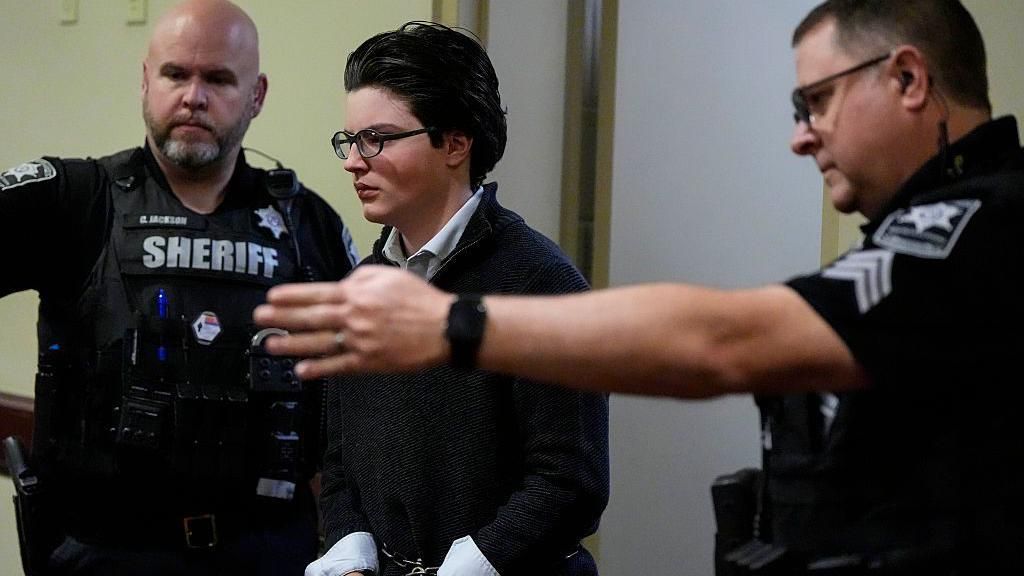
    A 20-year-old Texas man has been hit with a sprawling set of state and federal criminal charges following alleged coordinated arson attacks targeting the private San Francisco residence of OpenAI CEO Sam Altman and the artificial intelligence company’s headquarters earlier this month. Daniel Moreno-Gama is scheduled to make his first court appearance for state charges during an arraignment scheduled for Tuesday afternoon, where he will formally hear allegations that include two counts of attempted murder.

    Alongside the state-level charges, Moreno-Gama also faces multiple federal felony counts, including unregistered firearm possession and attempted destruction of property through the use of explosive devices. Court documents filed by the U.S. Department of Justice confirm that investigators recovered written materials from the suspect that express extreme opposition to artificial intelligence development, and openly call for violent criminal acts to be carried out against AI industry executives, board members and investors.

    Authorities allege the series of violent acts began shortly after 4 a.m. local time Friday, when Moreno-Gama set fire to an exterior security gate at Altman’s residential property before fleeing the scene on foot. Roughly one hour later, the suspect is accused of launching a second attack at OpenAI’s central San Francisco headquarters, the facility where the company develops its industry-defining ChatGPT AI chatbot. According to sworn statements in the federal criminal complaint, on-site security personnel observed the suspect attempting to smash the building’s glass entrance doors with a heavy chair before the attack was interrupted.

    When law enforcement officers took Moreno-Gama into custody, they recovered a cache of incendiary devices, a large container of kerosene, and a lighter from his possession, the Department of Justice confirmed. The written materials found with the suspect outline deep fears over existential risks that unregulated AI development could pose to humanity, including one section titled “Some more words on the matter of our impending extinction.” In the documents, Moreno-Gama allegedly wrote that if he was going to urge others to carry out lethal attacks against AI industry figures, he must lead by example to prove his sincerity. The documents also included a compiled list of full names and home addresses for CEOs, board members and major investors at leading AI companies across the country. Surveillance camera footage collected from both attack locations clearly places Moreno-Gama at the scene of both incidents, prosecutors confirmed in their criminal complaint. Crucially, no people were harmed during either alleged attack.

    In an official statement following the suspect’s arrest, Acting U.S. Attorney General Todd Blanche emphasized that violence has no place in ideological or policy debate. “Violence cannot be the norm for expressing disagreement, be it with politics or a technology or any other matter,” Blanche said. “These alleged actions – which damaged property and could well have taken lives – will be aggressively prosecuted.”

    OpenAI’s official response echoed that stance, noting that healthy, good-faith public debate over responsible AI development is a necessary part of building technology that benefits the public through democratic frameworks. “To ensure society gets AI right, we need to work through the democratic process, and we welcome a good faith debate,” the company said. “But there is no place in our democracy for violence against anyone, regardless of the AI lab they work at or side of the debate they belong to.”

    While local and federal authorities initially declined to publicly confirm the target of the residential attack, an OpenAI spokesperson confirmed the information to the BBC last Friday, verifying that the residence targeted belonged to Altman. Speaking at a press conference on Monday announcing the state charges, San Francisco District Attorney Brooke Jenkins expressed relief that no harm came to those targeted. “I’m grateful that Mr Altman, his family, and his employees were uninjured in these attacks and are safe,” Jenkins said.

    Earlier on Monday, FBI Director Kash Patel confirmed via a post on X that FBI agents had carried out a raid on a location in Texas connected to the incident, as part of the multi-jurisdiction investigation into the attacks.

    The alleged attacks come just one week after Altman was the subject of a high-profile investigative profile in *The New Yorker* that raised public questions over his personal trustworthiness and suitability to lead a company developing transformative, widely debated AI technology. Hours after the attack on his home, Altman posted a comment on social media referencing what he called the “incendiary article about me,” and called for broader de-escalation of public rhetoric around AI: “we should de-escalate the rhetoric and tactics and try to have fewer explosions in fewer homes, figuratively and literally.” Altman later walked back the comment, posting a follow-up on X stating he regretted linking the profile article to the alleged attack, after receiving widespread criticism from social media users for drawing the connection.

    The 2022 launch of OpenAI’s ChatGPT sparked a global surge of public interest in generative AI chatbot technology, triggering a tidal wave of billions in venture capital investment across the global AI industry. Despite the massive financial inflow, the rapid pace of unregulated AI development has drawn growing skepticism from experts, activists and observers concerned about safety, ethical and societal risks.

  • Hollywood stars unite to oppose Paramount and Warner Bros Discovery merger

    Hollywood stars unite to oppose Paramount and Warner Bros Discovery merger

    A growing coalition of more than 1,400 actors, directors, and filmmakers, including dozens of A-list Hollywood names, have united to publicly oppose the proposed $111 billion merger between Paramount Skydance and Warner Bros. Discovery, arguing the deal would deliver lasting damage to a U.S. entertainment industry already grappling with multiple crises. High-profile signatories ranging from Oscar winners Javier Bardem and Emma Thompson to comedy icon Ben Stiller and Australian star Rose Byrne have put their names to the open letter, which lays out a stark case against further media consolidation.

    The core argument of the letter centers on the already highly concentrated nature of the global media landscape, with signatories warning that combining two major studios would shrink competition at exactly the moment the industry and its audiences can least afford reduced market variety. If the merger goes forward, it would cut the number of major U.S. film studios from five to just four, narrowing opportunities for creators, eliminating jobs across the entire production ecosystem, raising content costs for consumers, and leaving global audiences with less choice in the entertainment they consume, the document reads.

    Other prominent industry figures adding their unequivocal opposition include Oscar nominee Kristen Stewart, Academy Award winner Glenn Close, and celebrated British actress Kristin Scott Thomas, with the BBC confirming that new names continue to be added to the signatory list days after the letter was published. The coalition closes its appeal with a formal call for California Attorney General Rob Bonta and other federal and state regulators to formally block the merger from moving forward.

    One high-profile signatory, Damon Lindelof — the acclaimed co-creator of *Watchmen* and *Lost* who holds an existing overall deal with Warner Bros. Discovery — expanded on his opposition in public posts on social media. “Hollywood mergers mean fewer movies and fewer TV shows and that means fewer jobs,” Lindelof wrote. “When two storied backlots are owned by the same company, the outcome is intuitive — one becomes a Ghost Town. I’m scared. But I’m not a ghost. And a fight is already lost if it’s never fought.”

    The proposed merger traces back to late February, when Paramount Skydance secured a deal to acquire Warner Bros. Discovery after streaming giant Netflix withdrew its months-long acquisition bid for the company, which controls a vast portfolio of iconic media brands including *Harry Potter*, *Friends*, Looney Tunes, and hit HBO series such as *Succession*, *Sex and the City*, and *Game of Thrones*, alongside cable news outlet CNN. Paramount Skydance itself is the product of a 2025 merger between David Ellison’s Skydance Media and the historic Paramount Pictures. Ellison, the company’s CEO and son of tech billionaire Larry Ellison, has already pushed back against critics’ claims, stating his plan is to keep Paramount and Warner Bros. as separate stand-alone film studios while increasing annual theatrical output to at least 30 high-quality feature films.

    In an official response to the open letter published Monday, Paramount Skydance reiterated its stance that the merger would strengthen, rather than reduce, opportunities for creators. “As creators we know firsthand that this is also a moment when the industry has been facing significant disruption—and the need for strong, creative-first and well-capitalized companies that can continue to invest in storytelling has never been greater,” the company said. The statement added that the merged entity would be able to greenlight more original projects, back ambitious creative ideas, support talent throughout all stages of their careers, deliver content to global audiences at an unprecedented scale, and ultimately strengthen industry competition. Echoing an earlier response from Paramount, the company reaffirmed its commitment to maintaining independent creative leadership for its iconic brands and licensing existing content, saying the deal would “ensure creators have more avenues for their work, not fewer.”

    The merger plan still faces two key remaining hurdles: it must first receive approval from Paramount Skydance and Warner Bros. Discovery shareholders later this month, before clearing review and receiving formal approval from U.S. government antitrust regulators. The BBC has reached out to Warner Bros. Discovery for additional comment on the open letter and the ongoing merger process.

    Industry analysts frame the proposed merger as the latest symptom of a sector still struggling to recover from overlapping shocks in recent years: the lasting economic aftereffects of the COVID-19 pandemic, the 2023 dual work stoppages by the Writers Guild of America and SAG-AFTRA that shut down most Hollywood production for months, growing disruption from large tech companies entering the content space, and rapid shifts in consumer viewing habits that have upended traditional revenue models for studios.

  • Democrats were already scrambling in California’s governor race. Then Swalwell dropped out

    Democrats were already scrambling in California’s governor race. Then Swalwell dropped out

    The 2026 California gubernatorial election, a contest Democrats have long considered a safe win for their party, has been thrown into unprecedented turmoil following the sudden exit of its leading Democratic contender. Representative Eric Swalwell announced his withdrawal from the race Sunday, mere days after multiple women published sexual assault and misconduct allegations against him through major outlets including the San Francisco Chronicle and CNN. Swalwell has forcefully denied all serious false accusations, though he acknowledged poor judgment in past decisions. Hours after the U.S. House Ethics Committee launched a formal investigation into the claims Monday, Swalwell also announced he would resign his congressional seat entirely.

    Swalwell’s departure has amplified a cascade of pre-existing problems that have plagued California’s Democratic party for months in the lead-up to the June primary. Term limit rules bar incumbent Democratic Governor Gavin Newsom from seeking re-election, and high-profile, widely recognized state politicians – including former Vice President Kamala Harris – have opted not to enter the race. That has left a crowded field of eight lesser-known Democratic candidates, all struggling to build name recognition and traction across California’s massive, costly media market. Even before Swalwell’s exit, the fragmented field had split the Democratic base, alarming party strategists.

    A March opinion poll from the University of California, Berkeley Institute of Governmental Studies sent shockwaves through state political circles when it found two Republican candidates leading all contenders in voter support, thanks to the fractured Democratic vote. Under California’s unique nonpartisan primary system, the top two vote-getters advance to the November general election regardless of partisan affiliation. That means a June primary outcome could leave Democrats completely shut out of the general election ballot – a nearly unthinkable scenario in one of the most reliably blue states in the U.S., which has not had a Republican governor since Arnold Schwarzenegger left office in 2011.

    Political experts warn that such an outcome would represent an unforced error of historic proportions for Democrats, particularly in a state where former President Donald Trump’s approval rating hovers below 30%. Beyond the state’s borders, the results of this gubernatorial race carry national weight: California is the fifth-largest economy in the world, and its pioneering policies on climate change, consumer protection, and technology often shape regulatory frameworks across the entire country.

    Before his exit, Swalwell had begun to build momentum, pulling ahead of the rest of the crowded Democratic field and positioning the party to lock down a spot in the general election. With his sudden exit, no clear candidate has emerged to absorb his support. Veteran Democratic strategist Garry South, who has managed four gubernatorial campaigns across California, described the current state of the race as unlike anything he has ever witnessed. “The Democratic field was already pretty muddled, even after Swalwell took a small lead,” South noted. “Now, it’s just an outright morass.”

    Two candidates are widely seen as the top contenders to pick up Swalwell’s supporters: former Congresswoman Katie Porter and billionaire climate activist Tom Steyer. Neither, however, is a guaranteed lock to win a spot in the general election. Porter has previously faced public reports of alleged staff mistreatment, though she has pledged to improve how she supports her team. Steyer has poured $89 million into campaign advertising across the state, according to the San Francisco Chronicle, but has yet to see a corresponding jump in poll numbers.

    The remaining Democratic field includes former U.S. Health and Human Services Secretary Xavier Becerra, San Jose Mayor Matt Mahan, California Superintendent of Public Instruction Tony Thurmond, former Los Angeles Mayor Antonio Villaraigosa, and former State Controller Betty Yee. None of the current candidates, however, have the statewide star power political analysts say the party needs to cut through the clutter, and many voters report struggling to distinguish between the crowded slate of contenders.

    For many California voters, the lack of name recognition has left them undecided just two months out from the June 2 primary. Joko Tamura, a 58-year-old Santa Monica resident and registered Democrat who plans to vote in the election, says she does not even recognize half the candidates running. While she has heard of Steyer and Porter, she says she lacks enough information to settle on a favorite, with homelessness and the state’s crippling cost of living topping her list of policy concerns. Jacob Casey, a 42-year-old physician, says his busy schedule has left him unable to follow the race closely, and he is still waiting for a candidate to break through.

    Mark DiCamillo, who led the March UC Berkeley poll that first exposed Democrats’ weakness, called the current state of the race unprecedented. “I haven’t seen a primary election for governor with this level of indecision, and lack of voter enthusiasm, with less than two months to go before voting starts to take place,” DiCamillo told the BBC, adding that “voters really don’t have a clear picture of any one of the candidates.”

    In the wake of Swalwell’s exit, both Porter and Steyer have moved quickly to fill the political vacuum. Porter has centered her messaging on California’s ongoing housing affordability crisis, framing policy proposals to speed up construction approvals and cut through red tape to lower building costs and expand access to diverse, affordable housing for state workers. Steyer has also leaned into cost of living issues, releasing a social media video outlining his plan to lower living costs for California residents, and attacking former President Trump over the ongoing conflict in Iran, arguing working-class Californians are bearing the financial brunt of the conflict. That messaging has resonated with some undecided voters like Leila Salem, a 28-year-old independent Los Angeles voter who staunchly opposes the war, though she says she still plans to research candidates before making her choice.

    While Democrats grapple with internal chaos, California’s Republican party is also facing its own divisions. The two leading GOP candidates are former Fox News host and one-time British Prime Minister David Cameron advisor Steve Hilton, and Riverside County Sheriff Chad Bianco. The March poll found Republican voters evenly split between the two candidates, and with Democrats holding a 2-to-1 voter registration advantage in the state, locking the Democratic party out of the general election remains the GOP’s only plausible path to a November victory.

    Many political analysts expected that Trump’s recent endorsement of Hilton would shift momentum in the GOP race, consolidating Republican support behind Hilton and pushing him ahead of at least one Democratic candidate. However, neither candidate secured the official endorsement of the California Republican Party during its recent convention, leaving the two evenly matched among the party’s base.

    Wesley Hussey, a political science professor at Sacramento State University, notes that Democrats have clear reason for anxiety after the collapse of their presumptive front-runner. Still, he added that a conventional general election matching one Democrat and one Republican remains possible if Swalwell’s supporters consolidate behind Porter, Steyer, or even a last-minute entry into the race. “It’s going to take a few days for the dust to settle in this new version of the race,” Hussey said.

  • Trump administration agrees to keep Pride flag at Stonewall monument

    Trump administration agrees to keep Pride flag at Stonewall monument

    Months after a controversial removal sparked widespread public outcry and legal action, the iconic rainbow Pride flag is set to return permanently to the official federal flagpole at New York’s Stonewall National Monument, following a court settlement reached by the Trump administration with LGBTQ+ advocacy and historic preservation groups.

    Widely recognized as the symbolic birthplace of the modern global LGBTQ+ rights movement, the Stonewall site sits across the street from the Stonewall Inn, the Greenwich Village gay bar where the 1969 Stonewall Uprising began. The uprising, sparked by a discriminatory police raid on the venue, ignited a decades-long fight for queer equality that has reshaped civil rights discourse around the world.

    The dispute traces back to February, when the U.S. National Park Service removed the Pride flag from the monument’s main flagpole. The agency justified the action by citing Department of the Interior rules that restrict flying non-designated flags on official federal flagpoles at National Park Service-managed sites, except for flags that carry specific historical context. The rainbow flag had originally been installed at the site during the administration of former President Joe Biden, after the 7.7-acre monument was first designated by former President Barack Obama in 2016.

    The flag’s removal immediately drew fierce backlash from LGBTQ+ communities, activists and public officials across the country. Critics of the action held impromptu demonstrations at the monument, and raised unofficial private Pride flags at the site in protest. A coalition of nonprofit organizations, including the Gilbert Baker Foundation — named for the queer artist who created the original rainbow Pride flag in 1978 — and several historic preservation groups responded by filing a lawsuit against the administration to challenge the removal.

    Details of the settlement, which was outlined in court documents filed Monday, show the Trump administration has agreed to reinstall the Pride flag to the monument’s official flagpole within seven days of judicial approval, and commit to keeping it displayed at the site permanently. Under the terms of the agreement, three flags will fly together on the federal flagpole: the U.S. national flag, the National Park Service flag, and the rainbow Pride flag.

    Charles Beal, president of the Gilbert Baker Foundation, celebrated the settlement in a public statement released Monday, calling the rainbow banner a global symbol that carries far more than symbolic weight. “It is a global emblem of hope, visibility, and the ongoing struggle for equality,” Beal said. “Its presence at Stonewall, the birthplace of the modern LGBTQ+ rights movement, is both historically and culturally indispensable. Restoring the flag affirms the truth of our history and the legitimacy of our continued fight for dignity and inclusion.”

    New York Mayor Zohran Mamdani also hailed the outcome as a landmark win for the LGBTQ+ community and all New Yorkers. In a post on X, the mayor wrote that the flag’s return is “a victory for the LGBTQ+ community and for our entire city. It’s a reminder that New Yorkers won’t let our history be rewritten.”

    The settlement still requires final approval from a federal judge to go into effect, but activists across the country have already marked the outcome as a critical win for protecting queer history and ensuring equal visibility for the LGBTQ+ rights movement at its most iconic site.

  • Eric Swalwell resigns from Congress after sexual misconduct claims

    Eric Swalwell resigns from Congress after sexual misconduct claims

    In a stunning development that has upended California political circles, long-serving Democratic U.S. Representative Eric Swalwell has formally stepped down from his congressional seat, capping a turbulent week that saw him abandon his bid for California governor amid mounting public and political pressure over multiple sexual misconduct allegations.

    The 12-year House incumbent, who represented a Bay Area district adjacent to San Francisco after first winning election in 2012, announced his resignation in a public letter published to the social platform X. In the statement, Swalwell acknowledged poor past judgment while pushing back against the most severe claims leveled against him. “I am deeply sorry to my family, staff, and constituents for mistakes in judgement I’ve made in my past,” the statement read. “I will fight the serious, false allegation made against me. However, I must take responsibility and ownership for the mistake I did make.”

    The crisis that led to Swalwell’s exit erupted last week, when four women came forward with accusations of misconduct spanning a range of behavior, from unwanted sexual advances to rape. The claims triggered an official ethics inquiry by the U.S. House of Representatives, which was already underway when Swalwell made the decision to resign. Prior to his departure from Congress, the lawmaker had already suspended his campaign for the California governorship amid plummeting support from voters and growing calls from within his own party to step aside.

    This is an ongoing breaking news story, with additional details expected to emerge in the coming hours and days. Readers can access real-time updates through the BBC News mobile application, or by following the official BBC Breaking News account on X for the latest alerts.