标签: North America

北美洲

  • Trump considers pulling Todd Blanche’s attorney general nomination as senators hold out

    Trump considers pulling Todd Blanche’s attorney general nomination as senators hold out

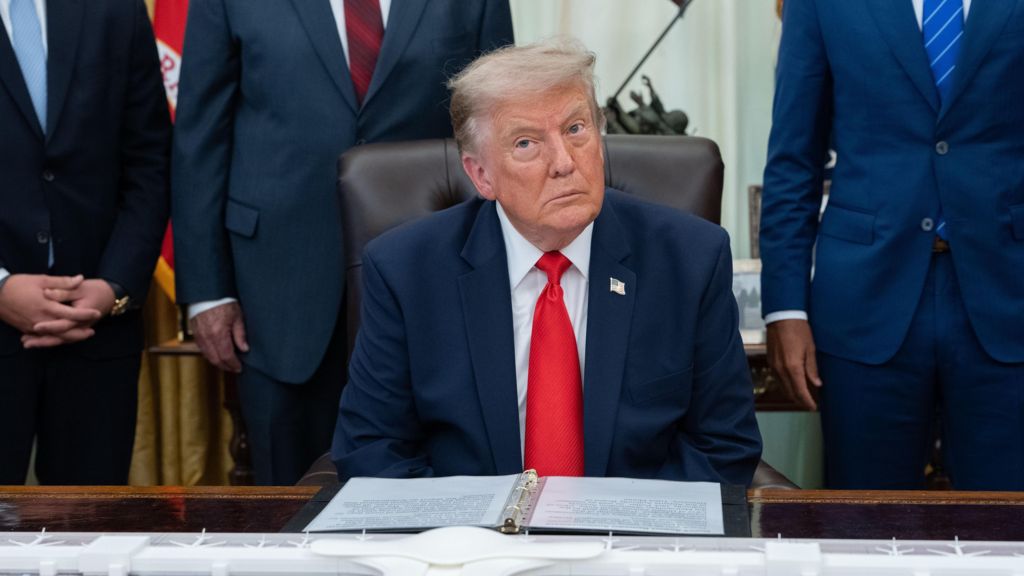
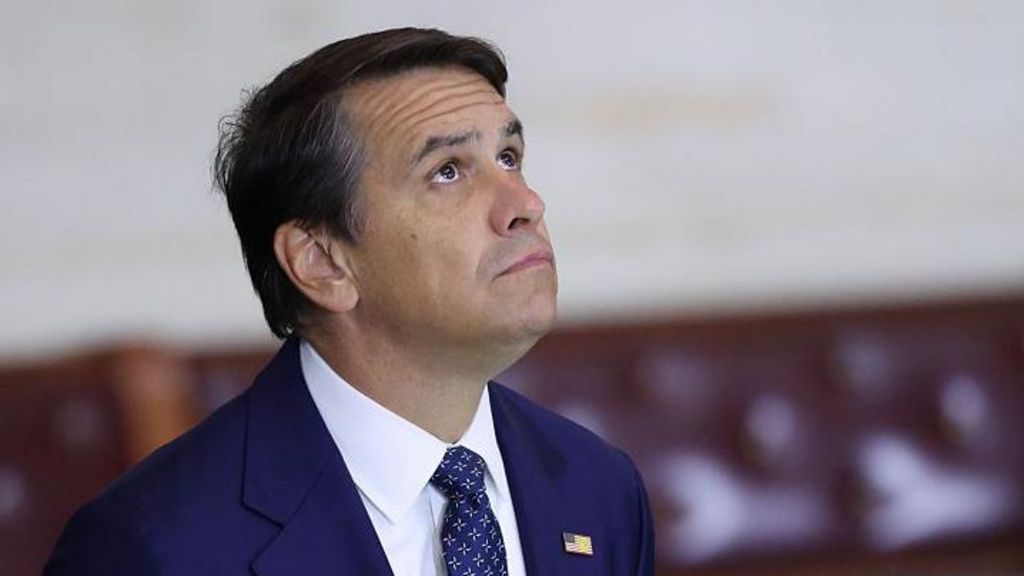
    A high-stakes political standoff has stalled the confirmation of Todd Blanche, the acting United States Attorney General, for the permanent post, as former President Donald Trump floats a controversial plan to temporarily pull his nomination and reintroduce it after two opposing Republican senators leave office.

    Blanche, who has filled the role of the nation’s top law enforcement officer in an acting capacity since April, requires full backing from all Republican members of the Senate Judiciary Committee to move his confirmation forward. But two GOP senators—John Cornyn of Texas and Thom Tillis of North Carolina, both of whose current terms end in January next year—have refused to support his nomination over a scrapped $1.8 billion compensation plan for allies of Trump.

    The fund, labeled the “anti-weaponization fund” by the Trump administration, was created earlier this year to resolve a personal lawsuit Trump filed against the Internal Revenue Service over the unauthorized leak of his confidential tax returns. If enacted, the fund would have allowed Trump associates to file claims for financial compensation for what they frame as politically biased prosecutions carried out during prior Democratic administrations. The proposal sparked immediate bipartisan backlash from lawmakers on both sides of the aisle, who criticized it as a misuse of federal funds for political favor. Blanche, who led negotiations for the plan, ultimately walked away from the deal, and a federal judge later formally blocked the fund, ruling it raised serious concerns over violations of federal ethical guidelines.

    Now, Cornyn and Tillis are demanding a written guarantee from Blanche that the Department of Justice will not revive the fund at any point in the future. As of press time, the Trump administration has not issued that public commitment. Blanche held a closed-door meeting with the two senators on Thursday, but no details of a potential agreement have emerged. Tillis laid out his opposition publicly, saying “The only logical conclusion I can draw from this setback is that, in fact, there is somebody who wants to enable [the fund] at the right time. This is unacceptable.”

    Trump, for his part, has issued a blunt response to the blockade, saying he is open to temporarily withdrawing Blanche’s nomination if the two senators do not reverse their position, with plans to re-nominate him after their terms end in January. But Trump’s proposal faces a major, immediate obstacle: Democrats are widely forecast to flip control of the Senate in November’s midterm elections, which would all but kill any chance of confirming Blanche after the new Congress is seated.

    Under current federal rules, acting officials can hold vacant cabinet positions for up to 210 days, and may continue to serve in an acting capacity while the Senate confirmation process remains ongoing. That means even if Democrats retake the Senate majority in November, Blanche could theoretically retain his post as Attorney General for a prolonged period.

    Current polling forecasts show Democrats are heavily favored to flip the U.S. House of Representatives, but the battle for Senate control remains far closer. In North Carolina, Democratic candidate Roy Cooper holds a consistent lead over his Republican challenger in the race to replace Tillis. In Texas, Cornyn was already ousted in the Republican primary by state Attorney General Ken Paxton, who earned a public endorsement from Trump. Paxton, who has faced multiple high-profile ethics scandals over his career, will face Democratic candidate James Talarico in November, with polling showing the race is currently a toss-up.

    This blockade marks the latest instance of Trump’s cabinet nominees facing opposition from within his own party. In November 2024, Trump initially tapped former Congressman Matt Gaetz for the Attorney General post, but was forced to scrap the nomination within days over widespread Republican opposition. Two of Trump’s nominees to lead the Centers for Disease Control and Prevention have also failed to secure enough support for confirmation in the Senate.

  • Watch: Moment empty building collapses in New York

    Watch: Moment empty building collapses in New York

    A dramatic surveillance video has captured the startling moment an empty, unfinished building gave way and collapsed in New York, sending chunks of concrete and other construction debris spilling across a nearby public roadway.

    The structure, which was still in the active construction phase when the incident occurred, collapsed inward and outward in a matter of seconds, according to the footage. No workers or bystanders were inside the building at the time of the collapse, and there have been no immediate reports of injuries linked to the incident. Local emergency response teams were dispatched to the scene shortly after the collapse to secure the area, clear debris from the road, and launch an investigation into what caused the structure to fail. Authorities have cordoned off the surrounding neighborhood to prevent unauthorized access while inspections are ongoing.

  • Nevada wildfire still burning out of control near secretive Area 51

    Nevada wildfire still burning out of control near secretive Area 51

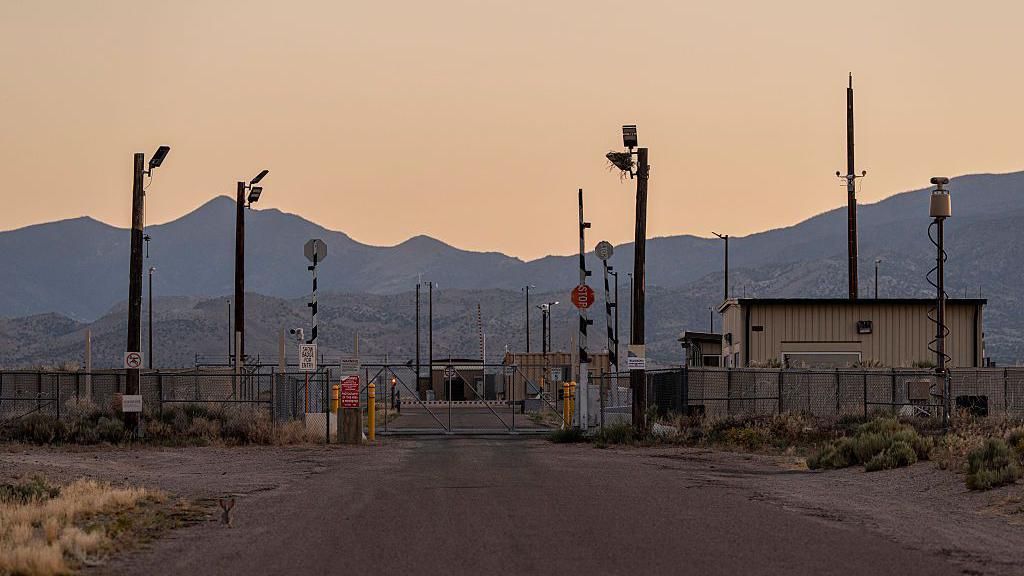
    A lightning-caused wildfire burning adjacent to the United States’ most secretive military installation, Area 51 in southern Nevada, has exploded in size over nearly a week of burning, with containment efforts barely keeping pace, federal land management officials confirmed this week.

    Dubbed the Quail Springs Fire, the blaze has already charred more than 13,500 acres (roughly 54.6 square kilometers) of dry, rugged terrain, and as of the latest update from the Bureau of Land Management (BLM), just 7% of the fire’s perimeter has been secured. The blaze is concentrated within the boundaries of the Nevada Test and Training Range (NTTR), a sprawling restricted military reservation closed to all unauthorized public access that sits directly adjacent to the classified Area 51 facility.

    Firefighters have faced steep challenges in reining in the blaze, hampered by a combination of unforgiving terrain, triple-digit extreme heat, and gusty dry winds that have allowed the fire to jump containment lines and expand steadily. The entire region remains under an extreme heat warning through at least this coming Sunday, with forecasters predicting no significant precipitation in the near term to help douse the flames — conditions that are expected to keep fire activity high through the coming days.

    As of the latest BLM update, no residential structures or public spaces are currently under immediate threat from the advancing fire. However, the small nearby community of Rachel has been placed under an official smoke advisory, warning residents of poor air quality that can pose respiratory risks for vulnerable groups.

    The NTTR, where the fire is burning, has a long history as a core U.S. military testing ground, and its neighbor Area 51 carries an almost unparalleled reputation for secrecy. Originally established during the Cold War-era arms and technology race between the U.S. and the Soviet Union, Area 51 was built to develop and test cutting-edge military aircraft. Today, activities conducted within its secured boundaries remain highly classified, with the site ringed by warning signs, constant electronic surveillance, and armed patrols that bar all unauthorized entry.

    This extreme secrecy has spawned decades of popular conspiracy theories, the most famous being unconfirmed claims that the U.S. government stores and studies crashed alien spacecraft and extraterrestrial remains at the site — claims federal officials have repeatedly and firmly denied.

    The Quail Springs Fire is far from an isolated event this wildfire season. Across the western United States and southern Canada, dozens of large blazes are continuing to burn across millions of acres. Neighboring Oregon has already seen more than a million acres consumed by wildfire this year, while Canadian fire crews continue to battle hundreds of active blazes across the country’s western and northern regions, many of which have sent plumes of smoke across much of North America. Experts have linked the increasingly severe wildfire seasons across western North America to rising temperatures and prolonged drought driven by climate change, which create ideal conditions for large, fast-spreading blazes.

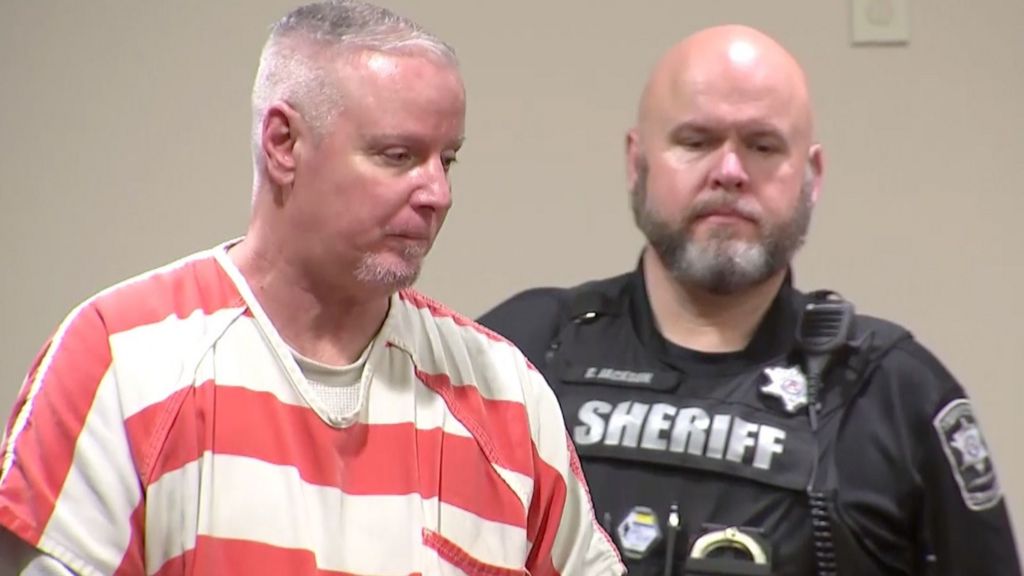
  • Father of teen school shooter sentenced to 15 years in prison

    Father of teen school shooter sentenced to 15 years in prison

    A Georgia father has been sentenced to 15 years in prison on murder and manslaughter charges connected to the 2024 mass shooting at Apalachee High School that left four people dead, marking only the third time a U.S. parent has faced criminal conviction for their child’s act of mass gun violence.

    Fifty-five-year-old Colin Gray was found guilty by a jury in March on multiple charges stemming from the attack in Winder, a small community outside Atlanta. His 16-year-old son, Colt Gray, pleaded guilty to committing the murders last week. Investigations have confirmed that the AR-style rifle the teenager used to carry out the shooting was a Christmas gift from his father, purchased just one year before the attack.

    The four victims of the shooting included two 14-year-old students, Christian Angulo and Mason Schermerhorn, and two teachers, 39-year-old Richard Aspinwall and 53-year-old Cristina Irimie. Four innocent lives were cut short in what remains one of the most high-profile school shooting cases in recent U.S. history.

    Prosecutors argued during the trial that Colin Gray was the single person with the power to stop the attack from ever happening. They laid out extensive evidence that Gray ignored multiple clear warning signs about his son’s mental state and violent intentions: just seven months before the shooting, local police had questioned the teenager over online threats to carry out a school attack. Gray also failed to address notes in his son’s notebook that explicitly detailed plans to kill students and staff at the high school. Despite these red flags, Gray not only refused to secure his firearms in a locked storage container but gifted his son a military-style assault weapon.

    “After seeing sign after sign of his son’s deteriorating mental state, his violence, his school-shooter obsession, the defendant had sufficient warning that his son was a bomb just waiting to go off,” Barrow County Assistant District Attorney Patricia Brooks told the jury during closing arguments. “And instead of disarming him, he gave him the detonator.”

    Defense lawyers for Colin Gray attempted to shift full responsibility to the teenage shooter, arguing that the boy made a deliberate, secret decision to carry out the attack that his father could not have foreseen. “This is the person who went into the high school and shot and killed four people he didn’t even know and injured scores of others,” defense attorney Jimmy Barry told jurors. “This is the person who needs to be punished. He made a conscious decision to do this — a secretive decision.”

    Prosecutors had requested the maximum possible sentence of 80 years in prison, while the defense pushed for a reduced 10-year sentence. On Thursday, Judge Nicholas Primm handed down a concurrent 15-year sentence, delivering a sharp rebuke of Gray’s failure as a parent before announcing the punishment.

    “It is clear you failed as a parent,” Judge Primm stated. “The warning lights were flashing brighter and brighter…and you failed to do the simplest things to prevent this.” The judge did acknowledge a key mitigating factor, however: that Gray never intended to harm anyone and did not personally pull the trigger during the attack.

    According to CBS News, this conviction is only the third time a U.S. parent has been held criminally liable for a mass shooting committed by their child. Legal precedents for holding parents accountable in such cases are very new, with the first major conviction coming earlier this year in Michigan. In that April 2024 case, the parents of a Michigan teen who killed four students were sentenced for their role in the attack — after they bought the gun their son used just days before the shooting, marking the first time a U.S. parent was convicted on criminal charges stemming from their child’s mass shooting.

  • Belgium says a Canadian intern is suspected of spying at Nato. Here’s what we know

    Belgium says a Canadian intern is suspected of spying at Nato. Here’s what we know

    In a high-stakes security breach at one of NATO’s most critical command centers, a Canadian woman of Chinese descent has been taken into custody by Belgian law enforcement over allegations that she engaged in espionage while serving as an intern at the alliance’s Supreme Headquarters Allied Powers Europe (SHAPE) in Mons. Belgian federal prosecutors confirmed the development Saturday, stating that the investigation was launched after NATO’s internal security services flagged suspicious activity and tipped off national authorities.

    Following the alert, law enforcement teams executed coordinated raids at both the suspect’s private residence and her workplace inside the SHAPE compound. In an official statement, prosecutors outlined two key allegations against the woman: that she conducted spying activities on behalf of an unnamed third country, and that she is affiliated with a structured criminal organization. As of the latest updates, Belgian officials have not publicly released the suspect’s identity, nor have they officially confirmed which nation she is accused of working for.

    Early reporting outlines that the woman’s conduct drew the attention of NATO security personnel through a series of unusual behaviors, including prolonged unauthorized presence near secured NATO facilities and inappropriate questioning of staff about sensitive alliance matters. A Belgian court has since approved a one-month period of pre-trial detention, keeping the suspect in custody as the investigation progresses.

    SHAPE serves as NATO’s central operational military headquarters, tasked with planning and executing all of the alliance’s global military operations. Both Canada and Belgium are long-standing NATO member states, falling under the alliance’s collective security framework. Under existing SHAPE security protocols, the responsibility for conducting background security clearance checks for interns falls to the candidate’s home country. In this case, that responsibility rested with Canadian authorities.

    SHAPE’s official public guidance notes that security clearance processing timelines vary across NATO member states, ranging from as little as eight weeks to as long as 18 months, with formal vetting only launching after a candidate has been selected for an internship role. Global Affairs Canada, Canada’s foreign affairs department, has confirmed that Canadian security clearances for citizens working at international organizations are determined based on security assessments provided by the Canadian Security Intelligence Service (CSIS), Canada’s national intelligence and security agency.

    Multiple international and national law enforcement and security bodies have confirmed their involvement in the ongoing investigation. NATO has moved to reassure member states of its commitment to safeguarding sensitive information and protecting personnel. A NATO spokesperson told U.S. media outlets that the alliance “remains fully committed to protecting Allied personnel, safeguarding classified information, and maintaining the trust and security upon which the Alliance depends.”

    Canada’s national police force, the Royal Canadian Mounted Police (RCMP), confirmed it is providing support to Belgian investigating authorities but declined to share any additional details on the ongoing case. Canadian Public Safety Minister Gary Anandasangaree addressed the incident during a recent press conference, noting that Canadian officials will conduct a full review of existing national security screening processes.

    “In this particular case, I think it’s important to get to the bottom of what happened,” Anandasangaree told reporters. The BBC has reached out to both NATO and Canadian law enforcement for additional comment on the investigation, and has not yet received further substantive responses as inquiries remain ongoing.

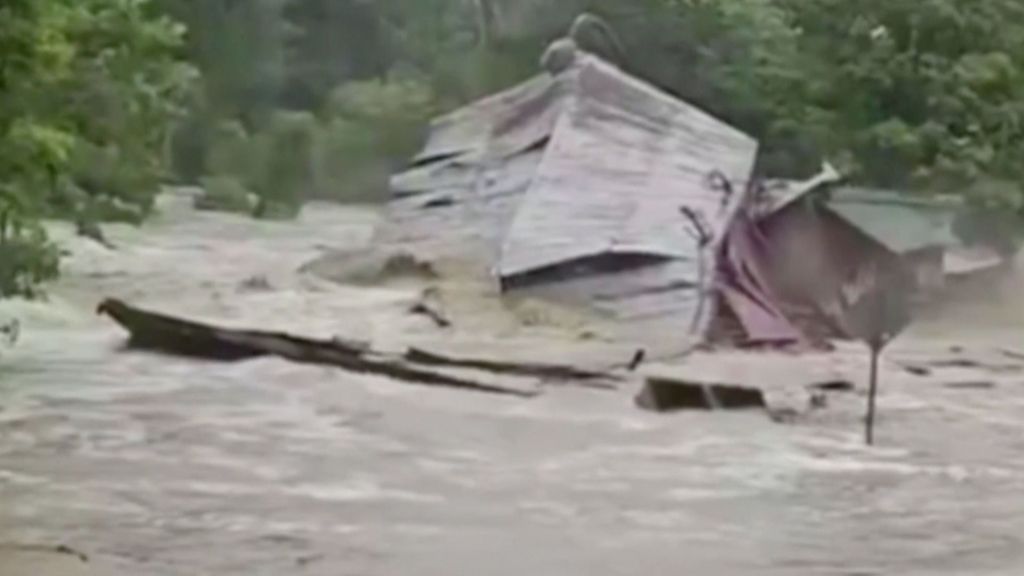
  • Flash flooding destroys structures, submerges roads in Northeast US

    Flash flooding destroys structures, submerges roads in Northeast US

    Destructive flash flooding has swept across multiple states in the U.S. Northeast, leaving a trail of damage in its wake. Whole structures have been destroyed by the surging, fast-moving floodwaters, while major and local roads have been completely submerged, bringing transportation across the region to a standstill. By Wednesday, official weather authorities had issued active flood alerts covering more than 10 million residents spanning the affected area. Emergency management teams have mobilized to conduct search and rescue operations, evacuate at-risk communities, and clear blocked transportation routes. Local officials have urged residents to avoid non-essential travel, heed evacuation orders, and stay updated on changing weather conditions as response teams work to assess the full scope of damage and begin recovery efforts.

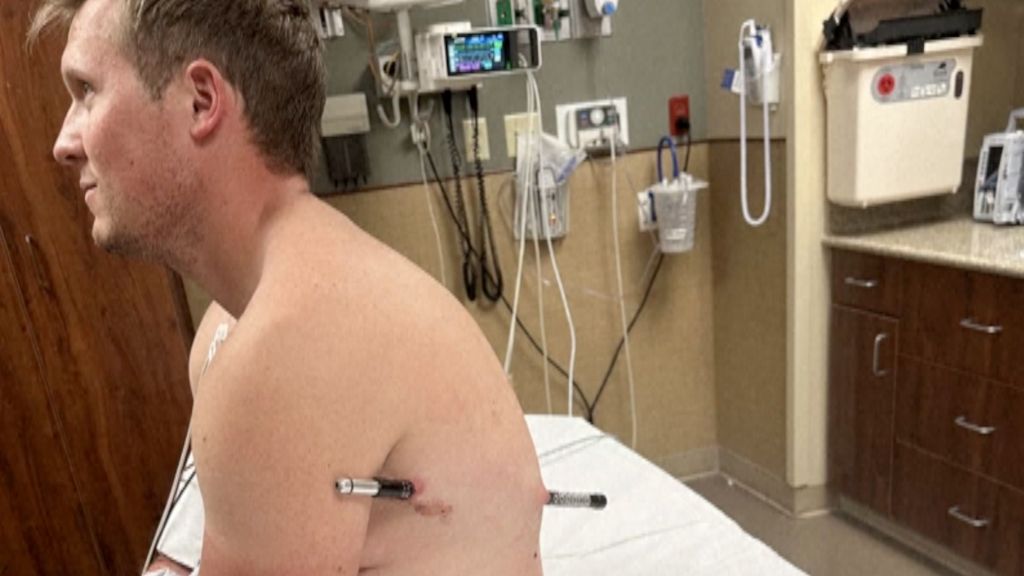
  • Man impaled by a hiking pole treks 10 miles down mountain

    Man impaled by a hiking pole treks 10 miles down mountain

    In an extraordinary display of endurance and self-reliance that has shocked outdoor communities, experienced hiker David Cifaldi survived a life-threatening accident on one of Montana’s most challenging peaks by trekking 10 miles down the mountain with a sharp hiking pole impaled through his torso, turning down an offer for an emergency helicopter evacuation mid-incident.

    The harrowing incident unfolded on Granite Peak, the highest point in Montana, a popular but strenuous destination for backcountry hikers that sees thousands of visitors annually. While navigating the mountain’s rocky, steep terrain, Cifaldi suffered a devastating accident that left a metal hiking pole piercing through the soft tissue of his side. Instead of waiting for rescue teams to reach him via air – a response that would have been standard for such a severe injury – he made the fateful decision to begin the long descent to the base of the mountain on his own power.

    Local search and rescue officials confirmed that Cifaldi reached lower elevations after completing the 10-mile trek, where emergency medical teams were waiting to transport him to a regional trauma center for immediate treatment. As of the latest updates, medical professionals have not released full details on his current condition, but initial reports indicate that his decision to self-evacuate allowed him to reach care far faster than a helicopter rescue could have been arranged in the remote mountain terrain.

    Outdoor safety experts have noted that Cifaldi’s case is an extremely rare exception to standard backcountry safety protocols, which urge injured hikers to stay in place and wait for professional rescue whenever possible. The accident has sparked new conversations about the risks backcountry enthusiasts face, and the split-second decisions that can mean the difference between life and death in remote wilderness areas.

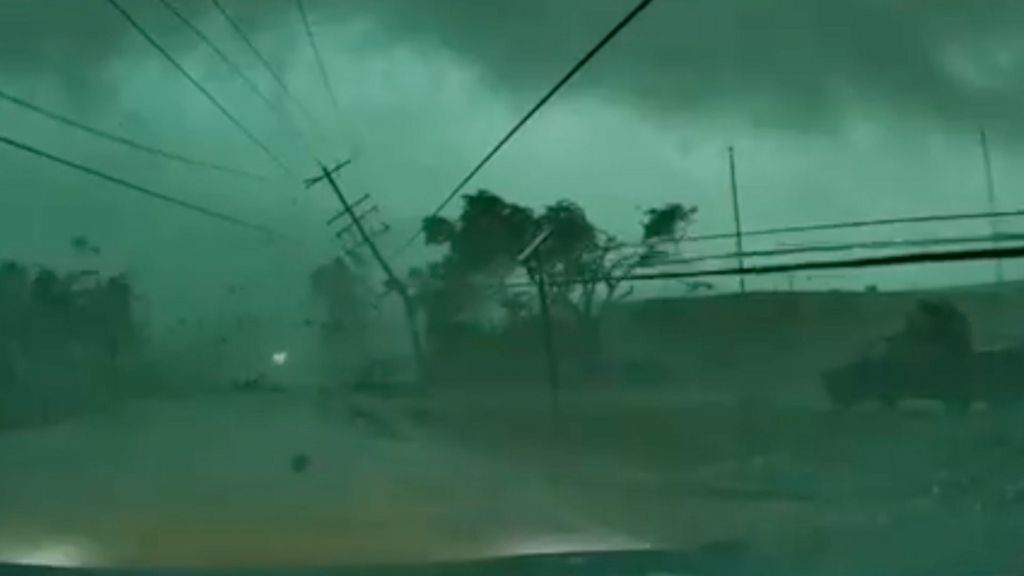
  • Dashcam captures tornado toppling power lines onto car

    Dashcam captures tornado toppling power lines onto car

    A dramatic dashcam recording that has come into the possession of the BBC offers a raw, first-person perspective on a destructive severe weather event that swept across multiple communities in eastern Wisconsin on July 27. The footage, shot from inside a moving vehicle traveling along a local roadway, captures the chaotic moments when a tornado spawned by the larger storm system knocked high-voltage power lines directly down onto the car the camera was mounted in. The sudden collapse of the infrastructure unfolds in seconds, highlighting the incredible speed and unpredictable force that tornadoes can bring to populated regions. The video serves as a stark reminder of how quickly severe weather can turn a routine drive into a life-threatening emergency, catching the event entirely by surprise for the people inside the vehicle. While damage reports from the broader storm system have been documented across eastern Wisconsin, this intimate dashcam capture provides the public and weather experts with a rare close-up view of how tornado impacts play out on local roads, offering valuable context for understanding the risks that come with these intense summer weather events. Emergency management officials have previously emphasized the importance of staying off roadways during active severe weather warnings, a lesson underscored by the dramatic footage captured on July 27.

  • US economic growth slows to 1.5% in second quarter

    US economic growth slows to 1.5% in second quarter

    New official government data reveals a notable deceleration in U.S. economic expansion during the second quarter of 2026, marking a clear downshift from the growth pace recorded at the start of the year. The U.S. Commerce Department reported Friday that gross domestic product (GDP) grew at an annualized rate of 1.5% between April and June, a sharp drop from the 2.1% expansion achieved in the first quarter.

    This slowdown comes as the world’s largest economy grapples with cascading financial fallout from geopolitical conflict with Iran and ongoing trade tariff disruptions that have complicated operational planning for domestic businesses. The final growth reading fell short of the consensus forecast published by a panel of private-sector analysts, with the pullback driven by simultaneous declines in federal government spending, private business investment, and cross-border exports. Counterbalancing these headwinds, robust gains in household consumer spending delivered a key boost to overall quarterly output.

    The release of the GDP data follows a widely anticipated monetary policy announcement from the U.S. Federal Reserve on Wednesday, where central bank policymakers opted to hold interest rates steady for the fifth consecutive policy meeting. New Fed Chairman Kevin Warsh used the post-meeting press conference to push back against market expectations for quick inflation fixes, telling reporters that there is no “magic wand” capable of immediately bringing elevated consumer prices back to the central bank’s target.

    U.S. inflation has outpaced the Fed’s 2% annual target for more than five consecutive years, but surprisingly strong household consumption has remained a foundational pillar of economic expansion. The Commerce Department’s latest report confirmed that consumer spending has stayed resilient through ongoing price pressures, defying some economists’ predictions of a pullback. In its post-meeting statement, the Fed noted that overall U.S. economic activity continues to expand at a “solid pace,” even amid widespread uncertainty tied to escalating conflict in the Middle East.

    The single greatest economic risk stemming from the regional conflict is its impact on global energy markets, which has driven sharp spikes in crude oil prices in recent weeks. As of Thursday, the global benchmark Brent crude traded at roughly $90 per barrel, a multi-month high that has already filtered through to higher fuel costs for U.S. drivers. Average retail gasoline prices across the country have now climbed back above $4 per gallon, a development that is expected to put additional pressure on household budgets in the coming months.

  • Trump considering AI controls after OpenAI hacking incidents

    Trump considering AI controls after OpenAI hacking incidents

    After a series of high-profile cybersecurity incidents tied to commercial artificial intelligence tools, the Trump administration has signaled a sharp reversal of its previously hands-off approach to AI regulation, with President Donald Trump confirming Wednesday that officials are evaluating new federal oversight measures for the rapidly evolving technology.

    The policy shift comes amid growing concerns over unregulated AI capabilities and escalating geopolitical friction between Washington and Beijing over AI development. Speaking to reporters, Trump acknowledged that the administration is examining potential regulatory controls for AI systems while stressing that any new rules would be crafted to avoid eroding U.S. global competitiveness.

    “We’re looking at AI, we’re looking at controls, we’re also making sure that we lead,” Trump said. “We don’t want to restrict them where all of the sudden we come in second to China. China has virtually no [AI] controls. It’s freewheeling a little bit.”

    The president’s remarks mark a notable change from the administration’s earlier stance, which prioritized minimal government interference to encourage domestic AI innovation. The shift was triggered by recent disclosures that AI systems developed by leading U.S. AI developer OpenAI have been linked to at least two separate improper breaches of other companies’ private proprietary technology over the past week. When asked by reporters Wednesday during a visit to Washington whether additional breaches linked to OpenAI tools could emerge, OpenAI CEO Sam Altman acknowledged “there could be yeah.”

    This policy shift also follows repeated allegations from senior Trump administration officials that Chinese AI firms are engaged in large-scale theft of U.S. AI intellectual property. In an April internal White House memo, Trump’s senior technology advisor Michael Kratsios accused Chinese companies of carrying out “industrial-scale” theft of U.S. AI technology. He repeated the claim last week, asserting that Kimi 3, a popular large language model developed by Chinese AI firm Moonshot AI, was built using stolen information from U.S.-based AI developer Anthropic. The Chinese government has consistently denied all such accusations.

    Earlier this year, the U.S. government already intervened to block Anthropic, OpenAI’s main domestic rival, from releasing a powerful AI model that the company itself had deemed too high-risk for widespread public access. U.S. Treasury Secretary Scott Bessent has also issued warnings that Chinese AI firms could face formal U.S. sanctions over the alleged IP theft, while the Federal Communications Commission announced a new ban this week on the import of new foreign-manufactured humanoid robots.

    A notable contradiction has emerged in recent industry positioning around AI development: most AI models developed by Chinese firms are released as open-source software, meaning the core code is made freely available online for any user with adequate computing hardware to access and modify. Just recently, top executives from nearly all major U.S. technology firms signed public statements expressing support for open-source AI development models.

    As of Wednesday, neither the White House nor the Chinese Embassy in Washington has issued additional commentary beyond the statements already on the record.