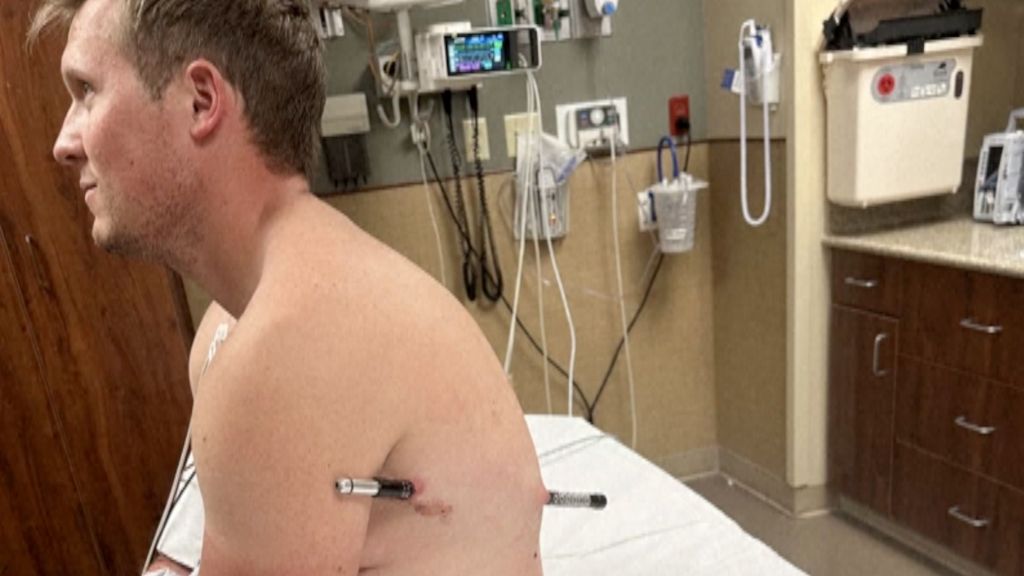
In an extraordinary display of endurance and self-reliance that has shocked outdoor communities, experienced hiker David Cifaldi survived a life-threatening accident on one of Montana’s most challenging peaks by trekking 10 miles down the mountain with a sharp hiking pole impaled through his torso, turning down an offer for an emergency helicopter evacuation mid-incident.
The harrowing incident unfolded on Granite Peak, the highest point in Montana, a popular but strenuous destination for backcountry hikers that sees thousands of visitors annually. While navigating the mountain’s rocky, steep terrain, Cifaldi suffered a devastating accident that left a metal hiking pole piercing through the soft tissue of his side. Instead of waiting for rescue teams to reach him via air – a response that would have been standard for such a severe injury – he made the fateful decision to begin the long descent to the base of the mountain on his own power.
Local search and rescue officials confirmed that Cifaldi reached lower elevations after completing the 10-mile trek, where emergency medical teams were waiting to transport him to a regional trauma center for immediate treatment. As of the latest updates, medical professionals have not released full details on his current condition, but initial reports indicate that his decision to self-evacuate allowed him to reach care far faster than a helicopter rescue could have been arranged in the remote mountain terrain.
Outdoor safety experts have noted that Cifaldi’s case is an extremely rare exception to standard backcountry safety protocols, which urge injured hikers to stay in place and wait for professional rescue whenever possible. The accident has sparked new conversations about the risks backcountry enthusiasts face, and the split-second decisions that can mean the difference between life and death in remote wilderness areas.