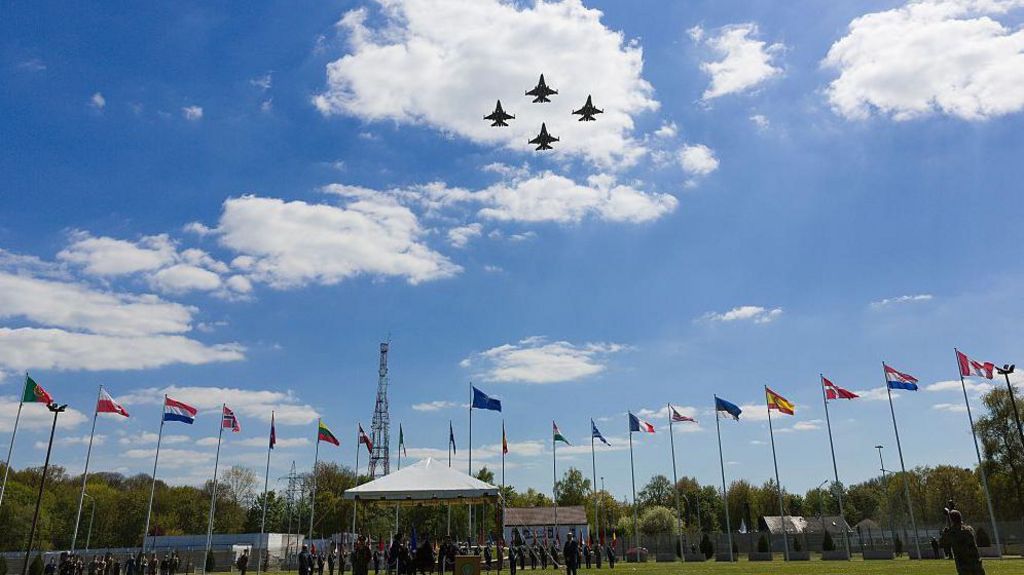
In a high-stakes security breach at one of NATO’s most critical command centers, a Canadian woman of Chinese descent has been taken into custody by Belgian law enforcement over allegations that she engaged in espionage while serving as an intern at the alliance’s Supreme Headquarters Allied Powers Europe (SHAPE) in Mons. Belgian federal prosecutors confirmed the development Saturday, stating that the investigation was launched after NATO’s internal security services flagged suspicious activity and tipped off national authorities.
Following the alert, law enforcement teams executed coordinated raids at both the suspect’s private residence and her workplace inside the SHAPE compound. In an official statement, prosecutors outlined two key allegations against the woman: that she conducted spying activities on behalf of an unnamed third country, and that she is affiliated with a structured criminal organization. As of the latest updates, Belgian officials have not publicly released the suspect’s identity, nor have they officially confirmed which nation she is accused of working for.
Early reporting outlines that the woman’s conduct drew the attention of NATO security personnel through a series of unusual behaviors, including prolonged unauthorized presence near secured NATO facilities and inappropriate questioning of staff about sensitive alliance matters. A Belgian court has since approved a one-month period of pre-trial detention, keeping the suspect in custody as the investigation progresses.
SHAPE serves as NATO’s central operational military headquarters, tasked with planning and executing all of the alliance’s global military operations. Both Canada and Belgium are long-standing NATO member states, falling under the alliance’s collective security framework. Under existing SHAPE security protocols, the responsibility for conducting background security clearance checks for interns falls to the candidate’s home country. In this case, that responsibility rested with Canadian authorities.
SHAPE’s official public guidance notes that security clearance processing timelines vary across NATO member states, ranging from as little as eight weeks to as long as 18 months, with formal vetting only launching after a candidate has been selected for an internship role. Global Affairs Canada, Canada’s foreign affairs department, has confirmed that Canadian security clearances for citizens working at international organizations are determined based on security assessments provided by the Canadian Security Intelligence Service (CSIS), Canada’s national intelligence and security agency.
Multiple international and national law enforcement and security bodies have confirmed their involvement in the ongoing investigation. NATO has moved to reassure member states of its commitment to safeguarding sensitive information and protecting personnel. A NATO spokesperson told U.S. media outlets that the alliance “remains fully committed to protecting Allied personnel, safeguarding classified information, and maintaining the trust and security upon which the Alliance depends.”
Canada’s national police force, the Royal Canadian Mounted Police (RCMP), confirmed it is providing support to Belgian investigating authorities but declined to share any additional details on the ongoing case. Canadian Public Safety Minister Gary Anandasangaree addressed the incident during a recent press conference, noting that Canadian officials will conduct a full review of existing national security screening processes.
“In this particular case, I think it’s important to get to the bottom of what happened,” Anandasangaree told reporters. The BBC has reached out to both NATO and Canadian law enforcement for additional comment on the investigation, and has not yet received further substantive responses as inquiries remain ongoing.