标签: North America

北美洲

  • Stanford was their golden ticket – could AI help or hinder that?

    Stanford was their golden ticket – could AI help or hinder that?

    Nestled in the heart of Silicon Valley, Stanford University has long stood as the global cradle of technological innovation, counting the co-founders of Google, dozens of AI industry pioneers, and countless breakthrough inventions among its storied legacy. This year, however, as the institution welcomed one of its most famous alumni—Google CEO Sundar Pichai—to deliver its 2026 commencement address, the campus became the backdrop for a raw, public reckoning with the technology that Stanford helped bring to life: artificial intelligence.

    Across American college commencement ceremonies this year, a clear message has emerged from graduating cohorts: top speakers have been warned to avoid the topic of AI, and those who broach it have often been met with vocal pushback. Even former Google CEO Eric Schmidt faced boos from audiences when he referenced the technology at other graduation events. For Pichai, whose company is one of the world’s leading AI developers, the writing was on the wall before he took the stage. He opened his address with a lighthearted joke, noting that every person he spoke to had given him the same guidance: avoid AI. Even with that self-censorship, more than 200 students stood in unison, shouted chants for Palestinian liberation, and walked out of Stanford Stadium mid-speech.

    The protests were not rooted solely in anxiety over AI’s societal impact. Many demonstrators carried signs calling out Google’s controversial Nimbus contract, which provides AI tools to the Israeli military, and decried the tech giant’s past partnerships with U.S. Immigration and Customs Enforcement (ICE), referencing the agency’s harsh, often deadly immigration enforcement actions under the Trump administration. After the walkout, the group relocated to an alternative campus commencement headlined by prominent pro-Palestinian activist Mahmoud Khalil, who gained global attention during 2024 Gaza war protests at Columbia University when ICE attempted to deport him despite his legal permanent resident status. Pichai, who earned his master’s degree from Stanford, declined to comment on the protest when approached by the BBC after the ceremony.

    Stanford occupies a unique space in the global AI ecosystem. The term “artificial intelligence” itself was coined on campus by pioneering computer scientist John McCarthy in 1955, and the university has incubated generations of AI leaders, from OpenAI CEO Sam Altman to Fei-Fei Li, often called the “Godmother of AI” who currently serves as a Stanford professor. Today, the $400,000 price tag for a four-year undergraduate degree at Stanford remains widely seen as a golden ticket to top roles in the tech industry, and major firms headquartered within 15 miles of campus—including Google, Apple and Meta—still scout the institution for top talent annually, admitting less than 4% of tens of thousands of annual applicants. For this graduating cohort, who entered as undergraduates in 2021—just one year before OpenAI’s ChatGPT upended daily life and work around the world—AI is not an abstract future concept: it is an immediate, transformative force that is already reshaping their career prospects, education and worldview.

    In interviews with the BBC shortly after Pichai’s address, graduating students expressed a wide spectrum of views on AI, from cautious optimism to deep dread, but nearly all agreed that the technology’s impact is already unavoidable. For Ifdita Hasan, a computer science and AI major, AI is a tool that unlocks unprecedented opportunity for scientific exploration and progress. “I feel optimistic about AI. I think AI gives us the opportunity to learn more about the universe. It’s a tool that people should try to use and try to adapt to,” she said. Hasan added that she is not surprised by the widespread backlash, noting that early societal anxiety is a common response to every transformative emerging technology—including the internet, which faced similar skepticism in its early days. “But I would encourage people to be optimistic about AI—to try to learn and explore more,” she said.

    Other students are far less sanguine, particularly as they enter a job market already being upended by AI adoption. A 2025 Stanford study found that employment for early-career U.S. workers has dropped sharply in fields most vulnerable to AI disruption, including software development, and a recent analysis from the Federal Reserve Bank of New York confirmed that recent graduates across the country are already struggling to secure stable employment. Atash Heil, an Earth Systems major focused on environmental policy, says the speed of AI’s advancement over the past four years has been jarring. He described a recent visit to an AI art exhibit as a deeply unsettling experience, days before his own graduation. “I thought it was scary, especially on my graduation day, to see that. The future is… that? I want art to be made by humans. That’s what makes it art, right?” he said. Like many of his peers, Heil criticized the unregulated, ethics-free approach that many major AI companies have taken to rolling out new tools: “It has to be done ethically, and it’s not being done ethically these days.” Even so, Heil, who will soon start a role working on climate resilience in New Orleans, acknowledges that AI can be a force for good—including helping build more accurate climate prediction models to guide adaptation work.

    Lucy Zimmerman, a computer science major who worked as a teaching assistant during her time at Stanford, has witnessed AI’s impact on education first-hand. She says she has noticed a clear gap between the polished take-home assignments students submit—many of which she suspects are completed with AI assistance—and their performance on in-person, proctored exams. In response, many departments have already reinstated in-person exam proctoring and oral assessments to curb AI-assisted cheating. Zimmerman also expressed concern about the rise of “cognitive offloading,” the growing practice of relying on AI to complete problem-solving and critical thinking tasks that build core cognitive skills. “I’m worried about future generations, and for my generation,” she said. Despite these concerns, Zimmerman will soon start a role as a software engineer at a San Francisco tech startup, putting her at the center of the ongoing AI boom.

    Colbey Harlan, a psychology major, echoed this mixed outlook. He has used AI to help jumpstart creative writing projects, and found it particularly helpful for managing his ADHD. Even so, he worries about the hidden environmental cost of AI’s rapid expansion: data centers powering large language models consume massive amounts of energy and natural resources. “I’m not a fan of how it’s destroying the environment. Data centres are taking a lot of resources, a lot of energy,” he said. “I’m kind of at a point where it’s like – ‘Okay, AI is cool, but can we just stop progressing it?’ because if we continue, things are going to get out of control.”

    For many graduates, the uncertainty of AI’s long-term impact is part of what makes this moment so charged. Management Science and Engineering graduate Harry Kaplan, who participated in Stanford’s annual Wacky Walk graduation tradition carrying an inflatable palm tree, described Stanford as the global center of tech innovation, and said the institution’s legacy of breakthroughs is a source of pride for the graduating class. Still, he said it is too early to know what AI’s long-term impact will be on his career and generation. “It’s an exciting place to be. It feels like we’re at the edge of something,” he said. For this cohort of Stanford graduates, standing at that edge means navigating both the unprecedented opportunities and existential risks of a technology that will define the rest of their lifetimes.

  • E-commerce giant Alibaba sues US government over defence blacklist

    E-commerce giant Alibaba sues US government over defence blacklist

    One of the world’s largest e-commerce and technology giants, Alibaba Group, has initiated a high-profile legal battle against the U.S. Department of Defense, moving to overturn its placement on a Pentagon blacklist that bars the firm from any U.S. government contracting work over unsubstantiated claims of military ties.

    The DoD’s controversial designation rests on a single argument: because Alibaba adheres to China’s domestic technology regulatory requirements, it qualifies as an extension of the Chinese military, classifying the company as a contributor to “military-civil fusion” within China’s defense industrial base. The blacklisting came as part of a recent expansion of the DoD’s restricted entity list, which now also adds other major Chinese technology and manufacturing firms including Baidu, electric vehicle makers BYD and Nio, with restrictions set to take full effect on June 30.

    In its formal complaint filed in the U.S. District Court for the Northern District of California, Alibaba forcefully rejects the Pentagon’s findings, arguing the designation has no foundation in either fact or federal law. The company emphasizes that none of its independent board members hold any affiliation with the Chinese military, pointing out that every multinational corporation operating in China—including major U.S.-headquartered firms—are required to comply with the same set of local regulatory rules. Alibaba also clarifies that its core business lines, spanning consumer e-commerce and cloud computing services, have no connection to weapons development or intelligence gathering activities.

    While the blacklist does not impose immediate financial sanctions or asset freezes, the upcoming June 30 enforcement carries severe operational consequences for Alibaba. Starting next week, not only is the Pentagon barred directly from entering into any contracts with blacklisted firms, but the restriction also extends to any U.S. government contractor that shares a lobbying team or legal representation with a designated entity. In its complaint, Alibaba argues that this broad rule creates a de facto economic and political blockade: the company’s long-standing American advisors are being forced to cut ties to protect their own profitable defense contracts, stripping Alibaba of its legal and advocacy voice in Washington D.C. at the exact moment it requires representation to challenge the designation.

    Alibaba also outlines that it attempted to resolve the issue through administrative channels before turning to the courts. The company says it previously requested a meeting with DoD officials to address the military affiliation concerns, even submitting detailed evidence of its significant economic contributions to the U.S. economy. Despite these submissions, Alibaba claims the DoD never raised specific concerns with the company, nor did it request additional supporting information. Instead, the agency designated Alibaba for the blacklist “without notice or a fair hearing,” according to the complaint.

    When approached by the BBC for comment on the ongoing legal action, the Department of Defense declined to make any public statement, citing standard policy of not commenting on active litigation. Alibaba also has not yet issued a formal public response to the BBC’s request for comment on the suit.

  • Congress passes war powers measure for first time, rebuking Trump’s war with Iran

    Congress passes war powers measure for first time, rebuking Trump’s war with Iran

    In a historic bipartisan rebuke of the ongoing military conflict between the United States and Iran that launched in late February, the Republican-controlled U.S. Senate has passed a concurrent resolution ordering President Donald Trump to either halt all military operations against Iran or secure formal congressional authorization to continue any offensive action. The final vote tally stood at 50 to 48 on Tuesday, with four sitting Republican senators breaking ranks with their party leadership to join Democrats in supporting the measure. The outcome marks the first public, bipartisan show of opposition to the war since hostilities began four months ago, following an earlier House of Representatives vote in June that also saw cross-party support for the same resolution.

    Despite its passage in both chambers of Congress, the measure carries no legal weight and will not be forwarded to the White House for Trump’s signature, rendering it largely symbolic in its current form. Legal scholars note that the resolution could still face court challenges, however, and its passage marks an unprecedented milestone: this is the first time since the 1973 War Powers Resolution was enacted that both chambers of Congress have approved a concurrent resolution directing a sitting president to end an active military engagement.

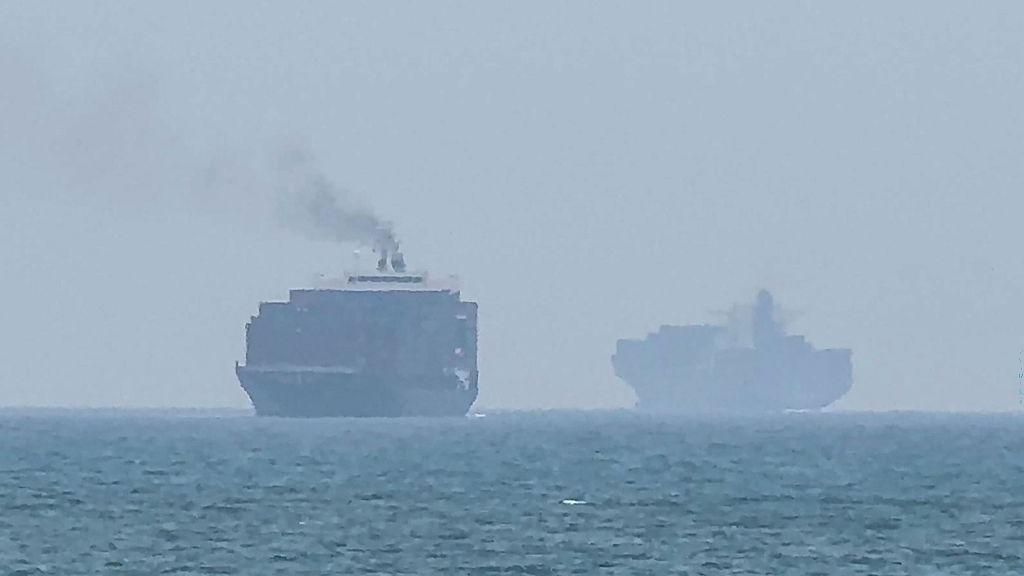
    The resolution’s approval comes amid growing national and international pressure on the Trump administration to wrap up the conflict, which has sent global energy markets into turmoil. Iran’s closure of the Strait of Hormuz — a critical global shipping chokepoint that carries roughly 20% of the world’s crude oil and liquefied natural gas supplies — has caused petrol prices to spike sharply across the United States, while public polling shows steadily rising opposition to the war among American voters.

    Just one week before the Senate vote, leaders from both Washington and Tehran signed a memorandum of understanding to extend an existing ceasefire and work toward a full end to hostilities. Clashes over the fine details of the interim agreement continue, however, leaving the final status of the conflict uncertain.

    The vote also lays bare deep internal divisions within the Republican Party, which currently holds a narrow majority in the Senate. Four GOP senators — Rand Paul, Lisa Murkowski, Susan Collins, and Bill Cassidy — crossed the aisle to vote with Democrats, while two additional Republican senators, including Senate Republican leader Mitch McConnell, were absent from the vote. Only one Democratic senator, John Fetterman, broke with his party to vote against the resolution. The combination of defections and absences created the narrow margin needed for the resolution to pass.

    Under existing U.S. federal law, the president is required to secure congressional approval for any military engagement that lasts longer than 60 days. The U.S., alongside Israel, launched the initial strikes against Iran on February 28. The Trump administration has argued that multiple ceasefire agreements have reset the 60-day clock, and the president can also extend the deadline by an additional 30 days on national security grounds.

    To recap the timeline of the conflict: After the U.S.-Israeli strikes in February, Iran launched retaliatory attacks against Israel and U.S. allied states in the Persian Gulf, before closing the Strait of Hormuz to global shipping. In April, Washington announced a full naval blockade of all commercial traffic moving to and from Iran’s coast. An initial ceasefire reached in April collapsed almost immediately, leading to last week’s interim MoU aimed at securing a permanent end to fighting. The BBC has reached out to the White House for comment on Tuesday’s Senate vote, with no immediate response as of publication.

  • UN says it will evacuate sailors stranded in Strait of Hormuz, as Rubio warns against tolls

    UN says it will evacuate sailors stranded in Strait of Hormuz, as Rubio warns against tolls

    Following last week’s interim peace deal to end the US-Israel military campaign against Iran, the United Nations’ International Maritime Organization (IMO) has launched a coordinated large-scale operation to evacuate more than 11,000 seafarers stranded in the Persian Gulf for months. The mission is being executed in partnership with Iran, Oman, the United States, regional coastal states, and global maritime industry stakeholders, with full safety guarantees already secured and navigation conditions fully verified, per IMO Secretary-General Arsenio Dominguez.

    Despite the ceasefire agreement, deep disagreements persist between Washington and Tehran over the terms of the Memorandum of Understanding (MoU) that paved the way for the deal, particularly around nuclear inspection provisions. In a social media post earlier this week, former US President Donald Trump claimed Iran had agreed to unlimited, highest-level International Atomic Energy Agency (IAEA) inspections of its nuclear program indefinitely, framing the commitment as a guarantee of “nuclear honesty”.

    Iran’s response directly contradicted Trump’s claim, with Iranian officials stating the UN nuclear watchdog would not be granted access to nuclear sites damaged in US and Israeli airstrikes carried out last year. A senior US administration pushed back on the Iranian statement, arguing Tehran had already agreed to robust IAEA inspections of remnants of its nuclear weapons program, and framing Iran’s public comments as political messaging for its domestic audience. Speaking during an official visit to Pakistan on Tuesday, Iranian President Masoud Pezeshkian reinforced Tehran’s hardline position, stating Iran would “never negotiate with anyone, under any circumstances, ever, about our defensive capabilities”.

    As diplomatic efforts to solidify the ceasefire continue, US Secretary of State Marco Rubio launched a tour of Gulf nations on Tuesday, landing first in Abu Dhabi, United Arab Emirates. Rubio will next travel to Kuwait and Bahrain, both of which host longstanding US military bases, to hold talks with regional leaders on the new agreement with Iran.

    One of the top flashpoints in Rubio’s discussions is control and access to the Strait of Hormuz, the critical global chokepoint for energy shipments. Rubio reaffirmed US opposition to Iran’s recent push to impose tolls on vessels transiting the waterway, emphasizing that the Strait is classified as an international waterway under existing international law. “No country is allowed to charge tolls or fees on an international waterway,” Rubio told reporters upon arrival. “I don’t think we have anybody to convince around here in that regard. I think all the countries in this region would agree with us.”

    The successful evacuation of stranded seafarers is directly dependent on the Strait of Hormuz remaining open and accessible to commercial traffic, a point Dominguez emphasized in his remarks on the operation. Dominguez called the evacuation deal a “decisive step towards restoring maritime security and bringing to an end the unacceptable attacks against civilian shipping”. He added that after months of hardship for thousands of innocent seafarers and widespread negative economic impacts across the globe, the interim peace agreement between the US and Iran is a welcome development.

    Under the IMO’s evacuation plan, two temporary transit routes through the Strait have been established, and individual vessels will be contacted directly with customized navigation instructions, per a notice to mariners from Oman distributed by the IMO. The organization will also publish daily updates tracking the number of vessels that have safely exited the region.

    The conflict upended global energy and commodity markets after Iran effectively closed the Strait of Hormuz following the start of US and Israeli military operations in February 2025. The closure pushed benchmark Brent crude oil prices above $100 per barrel and disrupted global shipments of energy and critical agricultural inputs including fertilizer.

    New data from maritime intelligence firm Kpler shows that as of this week, at least 172 vessels have transited the reopened Strait, including 42 crossings on Saturday alone. However, daily transit volumes remain far below pre-conflict levels: the average before the outbreak of hostilities stood at roughly 138 crossings per day, and totals since the ceasefire was signed on June 17 have not come close to matching that pace. Ship tracking data analyzed by BBC Verify also indicates that more than 200 commercial tankers remain anchored and waiting inside the Strait as of Tuesday.

  • Trump to attend World Cup final and present trophy

    Trump to attend World Cup final and present trophy

    The 2026 FIFA World Cup, the first 48-team edition of the global men’s football showpiece co-hosted by Canada, Mexico and the United States, is heading toward its July 19 decider at New Jersey’s MetLife Stadium, and a high-profile political figure is set to take center stage for the trophy presentation. FIFA president Gianni Infantino has confirmed that former U.S. president Donald Trump, 80, will join him for the final’s trophy handoff to the tournament’s champion.

    Speaking to Fox News, Infantino, who has described himself as a close personal friend of Trump, said, “We will be together with the president enjoying the final and handing the trophy to the winner, of course.” When pressed to confirm the pair would present the trophy jointly, Infantino added, “Of course, we are together all the time.”

    Notably, Trump has not appeared at any World Cup match over the tournament’s first five weeks, which kicked off June 11. Andrew Giuliani, executive director of the White House’s World Cup task force, told The Daily Telegraph that Trump’s packed public schedule is the reason for his absence so far, adding that the former president prefers to “leave people watching” rather than draw attention away from matches ahead of the final.

    This won’t be Trump’s first high-profile appearance at a major global sporting event hosted in the U.S. this year. Just last week, he attended a UFC event held at the White House, and earlier this month he became the first sitting U.S. president to attend an NBA Finals game, where he was loudly booed by the New York crowd during the national anthem at Madison Square Garden. That game saw the eventual champion New York Knicks fall 115-111 to the San Antonio Spurs in Game 3.

    Trump also has prior experience presenting major FIFA honours at MetLife Stadium. During last summer’s Club World Cup final, he remained on the winner’s podium after handing the trophy to Chelsea captain Reece James, catching players and organizers off guard. James later explained, “They told me that he was going to present the trophy and then exit the stage and I thought that he was going to exit, but he wanted to stay.”

    The 2026 World Cup, which has already drawn record crowds across the three host nations, has 78 of its total 104 matches hosted on U.S. soil, with the final capping the tournament at the 82,500-seat MetLife Stadium outside New York City. Ahead of the final, the tournament has already made headlines for security operations that have seen more than 300 drones seized at U.S. match venues, alongside ongoing debate over rule changes to the expanded group stage that some argue have created unfair conditions for competing teams.

  • Tech stocks tumble on concerns over AI spending

    Tech stocks tumble on concerns over AI spending

    Global financial markets were jolted into a stark reality check on Tuesday, as a sudden broad sell-off across major technology equities sparked fierce debate over whether the months-long AI-driven rally has finally hit its ceiling. The tech-heavy Nasdaq Composite dropped roughly 2% by market close, with losses dragging down semiconductor manufacturers and chip industry indices around the world, ending a relentless 90-day upward climb that had pushed valuations to unprecedented levels.

    The sudden shift in sentiment also spilled over to one of the most high-profile new public listings of 2026: Elon Musk’s aerospace giant SpaceX. Just days after its 12 June initial public offering (IPO), the company endured an extraordinarily choppy trading session, with its share price dipping below the $150 IPO mark at one point before clawing back to a close of roughly $157, defusing some but not all of the day’s market anxiety.

    For months, global stock exchanges have been lifted by unbridled investor optimism around artificial intelligence, with widespread bets that AI would revolutionize corporate productivity and drive massive revenue growth for tech hardware and software providers. That enthusiasm pushed major indices to repeated record highs, but it also left valuations looking increasingly stretched, with the broader tech sector more than doubling from 2022’s cyclical lows by the start of June. On Tuesday, that momentum collapsed as investors began asking a question that had loomed over the rally for months: can real-world corporate AI adoption ever justify the sky-high share prices currently baked into the market?

    Semiconductor firms that have led the AI rally, including industry giants Nvidia and Intel, bore the brunt of the selling, as analysts warned that investors may have moved far too fast to price in demand for the AI hardware that powers corporate AI deployments. The anxiety quickly spread to newly listed growth stocks like SpaceX, which became the latest high-profile firm caught in the crossfire of shifting tech sentiment.

    Since its public debut, SpaceX has seen extreme price swings that highlight how sensitive unproven, high-growth newly listed companies are to broader market shifts. While some bullish traders viewed the stock’s quick rebound from sub-IPO levels as evidence of solid underlying fundamentals and sustained long-term investor interest in the fast-growing commercial space industry, sceptics argue that the wild volatility is just further proof of the speculative froth that has built up in today’s growth stock market.

    Market analysts are now deeply divided over what the sell-off means for the future of tech investing. Optimists, including Bank of America analyst Vivek Arya, frame the pullback as a healthy, temporary pause after a historic rally, arguing that profit-taking is a standard market movement after months of consistent gains. In a recent note to clients, Arya argued that persistent inflation paired with strengthening long-term demand for AI hardware will ultimately push sector earnings forecasts higher. He added that the tech industry is simply moving past the early phase of proving AI’s ROI, and entering a new stage focused on solving physical infrastructure and power supply constraints that have limited large-scale deployments.

    On the other side, a growing camp of sceptics counter that the days of easy double-digit market gains for AI stocks are over, pointing to cooling corporate IT budgets and ongoing broader macroeconomic pressures that will weigh on technology spending. Danni Hewson, head of financial analysis at UK-based investment platform AJ Bell, noted that the relative lack of large AI-focused tech stocks listed on London exchanges actually helped the FTSE 100 end the day in positive territory, even as major indices on Wall Street slumped.

    As the trading week progresses, all eyes will remain on upcoming corporate earnings reports from the world’s largest tech firms, which will be forced to demonstrate that their massive investments in artificial intelligence are delivering tangible bottom-line profits, rather than just generating hype to drive share prices higher.

  • US top court says Rastafarian man cannot sue prison guards who cut his dreadlocks

    US top court says Rastafarian man cannot sue prison guards who cut his dreadlocks

    In a surprising split decision that breaks with recent pro-religious-liberty trends on the nation’s highest court, the U.S. Supreme Court has ruled 6-3 that a former Louisiana prison inmate cannot seek monetary damages from individual correctional officials who forcibly shaved his religiously mandated dreadlocks. The decision centers on a key interpretation of the 2000 Religious Land Use and Institutionalized Persons Act (RLUIPA), a federal law designed to protect religious freedom for incarcerated people held in federally funded facilities.

    The case stems from a 2020 incident during which Damon Landor, who was serving a sentence for a drug conviction, was handcuffed to a chair and had his dreadlocks shaved off by prison staff—despite his explicit objections that the act violated core tenets of his Rastafarian faith. For Rastafarians, growing and maintaining uncut, uncombed dreadlocks is far more than a personal style choice: it is a longstanding symbol of spiritual devotion, connection to their faith, and religious growth. In comments following the ruling, Landor emphasized that his dreadlocks were an integral part of his identity, noting, “So when they cut off my hair, they cut off my crown.”

    Writing for the conservative majority, Justice Neil Gorsuch argued that RLUIPA, which was passed under Congress’s Spending Clause authority, does not permit private citizens to bring damage claims against individual state employees in their personal capacity. Gorsuch held that Congress lacks the direct regulatory authority to impose personal liability on state officials under this clause, and that state employees never explicitly consented to such personal lawsuits when the law was enacted in 2000. As a result, the majority concluded, Landor is not entitled to the monetary damages he sought against the individual prison officials involved in the incident.

    The ruling marks a clear break from a string of recent Supreme Court decisions where the conservative majority consistently sided with parties bringing religious liberty claims against government entities. In a sharp dissent, liberal Justice Ketanji Brown Jackson pushed back against the majority’s interpretation, arguing that the core legislative purpose of RLUIPA was explicitly to guarantee that state and local prison systems respect the constitutionally protected right of incarcerated people to practice their faith freely. Jackson and the two other liberal justices rejected the majority’s narrow reading of the law, warning that it undermines the protections RLUIPA was intended to provide for incarcerated people of all faiths.

  • Tech giant Oracle cuts 21,000 jobs as it embraces AI

    Tech giant Oracle cuts 21,000 jobs as it embraces AI

    In a revealing disclosure from its latest annual filing, American tech giant Oracle has confirmed it eliminated approximately 21,000 global positions over the past 12 months as it refocuses its entire business strategy around artificial intelligence. The software and cloud computing leader reported holding 141,000 full-time staff as of May 31, 2026, a sharp drop from the 162,000 employees it employed at the same point in 2025. The 13% workforce reduction marks one of the largest rounds of layoffs in the tech sector this cycle, and aligns with a sweeping industry trend as major technology firms pour hundreds of billions of dollars into developing and expanding AI-capable infrastructure such as high-performance data centers.

    Oracle explicitly noted in its filing that the integration of AI tools across its internal operations has driven these headcount cuts, and cautioned that additional workforce reductions may still be on the horizon. While senior insiders had shared reports of major layoffs on professional social platforms back in April, the full scope of the cuts had remained undisclosed until the annual report was submitted to regulators. The company has incurred roughly $1.8 billion in severance payouts and other restructuring costs over the past year, a massive jump from the $374 million in restructuring expenses it recorded in the prior fiscal year.

    Oracle acknowledged that its organizational overhaul carries tangible risks. In its filing, the firm warned that the restructuring process can be disruptive to operations, and that it may face shortages of skilled workers for critical roles, leading to temporary productivity dips that could ultimately impact bottom-line earnings. When contacted by the BBC, a company spokesperson defended the strategy, stating: “As our cloud and AI businesses grow, we will continually balance our resources and restructure our development group to help ensure we have the right people delivering the best cloud and AI products to our customers around the world.”

    Oracle is currently locked in a high-stakes race to expand its data center capacity to serve leading AI developers including OpenAI and Meta. Earlier reporting from the BBC has confirmed the firm plans to invest at least $50 billion in new infrastructure this year alone. Founded in 1977 by Larry Ellison, who remains one of the world’s wealthiest individuals and still serves as Oracle’s chief technology officer, the company has long been a major player in enterprise software and cloud services.

    Oracle’s layoffs are far from an isolated case. Tech rivals including Amazon and Meta, the parent company of Facebook, have both cut thousands of jobs in recent months as they redirect capital toward AI development. Employment trackers estimate that more than 100,000 tech workers have lost their jobs across the industry in the past 12 months. For most large tech firms, labor represents the single largest operating expense, making headcount reductions the most straightforward way to free up capital for AI investments. This year alone, Google, Amazon, and Meta have committed a combined total of roughly $650 billion to AI research and infrastructure expansion.

    Amazon currently plans the largest AI investment out of any major tech firm, with a $200 billion budget for AI projects and infrastructure over the next 12 months. The e-commerce and cloud giant, which employs more than 1.5 million people globally, has already cut around 30,000 jobs through multiple rounds of layoffs. In an internal memo sent to staff last October, a senior Amazon executive explained the restructuring, noting that the company needed to become “more leanly” organized because AI is “enabling companies to innovate much faster than ever before.”

  • From Boston to Miami: Tartan Army adjusts to World Cup culture shock

    From Boston to Miami: Tartan Army adjusts to World Cup culture shock

    As the 2026 FIFA World Cup enters its final group stage matchdays, thousands of passionate Scotland football fans — widely known as the Tartan Army — have poured into Florida’s Sunshine State, trading the cooler, compact energy of Boston for Miami’s sweltering heat and sprawling, multicultural atmosphere ahead of their decisive Wednesday showdown with Brazil.

    On Monday, official temperatures climbed to just under 35 degrees Celsius, with the heat index pushing the perceived temperature to a blistering 43 degrees, testing the endurance of even the most committed traveling supporters. After days of celebrating Scotland’s campaign across Boston’s bars and public landmarks, where they turned large swathes of the city into a raucous “mini-Scotland,” the move to Miami brings a starkly different experience.

    Unlike Boston, where the Tartan Army gathered in concentrated numbers to dominate the city’s fan zones, Miami’s larger footprint has spread the crowd across the metro area. Iconic Ocean Drive bars have steadily filled with fans in tartan, while other supporters have taken advantage of the coastal setting to book boat trips or stay in quieter surrounding suburbs. The city’s large existing Hispanic community also means Scotland’s fans share Miami with a massive contingent of Brazil and Argentina supporters, turning the host city into a de facto South American football hub ahead of kickoff.

    Several fans who traveled from Boston to Miami shared their contrasting impressions of the two host cities. Brothers Peter and Tom McKenna, visiting from the Isle of Man, noted that the compact size of Boston made the Tartan Army’s presence felt far more intensely. “Boston was one big Scotland party,” Peter explained. “Boston was caught off guard by how many of us showed up, but here Miami is used to big crowds of tourists.” The pair have already been on the road for nearly two weeks: Peter plans to return home to his children regardless of Wednesday’s result, while Tom is weighing extending his trip to follow Scotland deeper into the tournament if they advance.

    For first-time attendees Pete and Jamie Brown, a father-son duo who flew directly into Miami, the stop has felt more like a holiday with a world-class football match attached. “We watched the first game back home and were so proud of how the Tartan Army showed out in Boston,” Pete said. “I’ve been here for the Super Bowl before, I love this city, so when I got the chance to bring my son to see Scotland play Brazil here, I couldn’t say no. This is the dream draw.” Jamie added that the vibe feels far different from Boston’s concentrated football trip energy: “This is more relaxed, it’s a holiday with a game thrown in the middle.”

    Dave Robertson, who made the trip down from Massachusetts to Florida, predicted a different atmosphere for the match, noting that the Tartan Army will likely be outnumbered by Brazil’s passionate fanbase. “Brazilians take matchday celebration to another level, but even so, we’ll still create a fantastic atmosphere when we all get together,” he said. Initial predictions of a muted Scottish presence were proven wrong when thousands of Tartan Army members gathered in Miami’s Little Havana neighborhood for a celebratory march to the Miami Marlins baseball stadium, where the match will be held. Concerns that local Miami residents would not welcome the Scottish crowd as warmly as Boston did quickly evaporated: local residents walked alongside marchers, many cheered from their front yards, and even one American local joined in the fun, saying he was disappointed his ordered kilt did not arrive in time for the march.

    Other differences between the two host cities have been more notable, particularly around local policing. In Boston, police took a laid-back approach, allowing fans to drink in public spaces and even place the Tartan Army’s iconic traffic cones on public statues. But just days into the Miami leg of the trip, a viral video showed Miami police ordering a fan to remove a cone from a statue, with the officer noting “you aren’t in Boston anymore.” Steven Baird, a fan from Peterhead attending his third and final World Cup, echoed that difference. “Boston was far more laid-back, the police were happy to have us, you could get away with almost anything,” Baird said. “Here they’re a lot stricter — I even got yelled at for jaywalking. This is my last World Cup because of my age, but you couldn’t pick a better place to finish. It’s just way too hot for me — I’d have rather had this match somewhere cold like Norway.”

    Beyond the fan experience, Wednesday’s match carries massive stakes for Scotland’s World Cup dream. Steve Clarke’s side currently sit on three points after a 1-0 opening win over Haiti. Under the new expanded 48-team tournament format, the top two teams from each group advance directly to the Round of 32, alongside the eight best third-place finishers across all groups. Currently, Scotland ranks as the second-best third-place team, trailing only Sweden. A win against Brazil will guarantee Scotland a spot in the knockout stage. A draw would leave Scotland on four points, putting them in a strong position to advance as one of the best third-placed teams, and even a loss would not automatically eliminate them — their fate would depend on results across other groups finishing on June 27. If Scotland advances, fans will immediately face a new logistical scramble, with potential knockout stage locations including Boston, New Jersey and Mexico City, forcing quick travel rearrangements for supporters looking to keep the World Cup adventure going.

  • Reflecting Pool to be drained as Trump again blames ‘vandals’ for recent troubles

    Reflecting Pool to be drained as Trump again blames ‘vandals’ for recent troubles

    The iconic Lincoln Memorial Reflecting Pool, a centerpiece of Washington D.C.’s National Mall stretching more than 2,000 feet between the Lincoln Memorial and Washington Monument, is scheduled to be drained for a second time just weeks after a $16 million renovation project wrapped up. The sudden new round of repairs comes after U.S. President Donald Trump publicly blamed unknown vandals for causing the wide range of issues that have derailed the recently finished upgrade.

    In a series of public comments starting Monday, Trump outlined multiple alleged acts of sabotage against the landmark. He initially claimed perpetrators had left a 300-foot gash in the pool’s structure, illegally dumped chemicals into the water, and destroyed newly planted surrounding grass. By that afternoon, speaking to reporters in the Oval Office, he revised the size of the reported cut to 350 feet, adding that unconfirmed reports suggested fertilizer may have been introduced to the water – a move that would explain the rampant algal growth that has turned the pool’s once-clear water bright green. The president did not provide any evidence to back his claims of deliberate vandalism, nor did he name any individuals or groups he suspected of involvement.

    Even before Trump’s allegations of sabotage, the newly renovated pool had already begun to show significant problems. The deep blue paint that Trump specified for the pool’s bottom has started peeling off in large sections, which are now floating to the surface and being removed by visiting tourists. National Park Service crews have already attempted to curb the algal bloom by pouring hydrogen peroxide into the water, but the efforts have not resolved the discoloration issue. This is not the first time the Reflecting Pool, originally constructed in the 1920s, has faced long-term problems: for decades, the landmark has struggled with persistent leaks, structural decay, broken piping, algal overgrowth and bird waste buildup. Previous large-scale renovations carried out during the Obama and Biden administrations cost more than $100 million total, per Trump’s claims, and never resolved the ongoing issues.

    The District of Columbia Water Authority confirmed Monday that it has issued the necessary permit to drain the pool for repairs. The contractor that completed the original renovation has stated it will cover the cost of all new fixes under the project’s warranty. Both the DC Water Authority and the National Park Service have been contacted for additional comment by major media outlets, with no additional statements released as of yet.

    Trump has echoed aggressive threats from Jeanine Pirro, the U.S. Attorney for the District of Columbia, who has pledged to vigorously prosecute anyone found responsible for damaging the pool. In a post to his Truth Social platform Monday, the president warned that intentional damage (or even attempted damage) to national landmarks carries a maximum 10-year prison sentence, and that this penalty will be fully enforced against any perpetrator.

    In addition to his pursuit of vandals, Trump also announced that his administration is preparing to file a lawsuit against ABC News over the outlet’s reporting on the Reflecting Pool issues. The president argued that ABC’s coverage was inaccurate, claiming the network failed to report that previous Democratic administrations spent more than $100 million on renovations that never produced a working, well-maintained pool. He asserted that his own $16 million project was delivered successfully, and that any current problems stem solely from vandalism, adding that the scope of his administration’s renovation ended up being far larger than initially planned, covering surrounding green spaces and sidewalks as well. Trump also said any financial damages awarded in the lawsuit against ABC would be directed straight to the U.S. Treasury. ABC News has been contacted for comment on the threatened lawsuit but has not yet issued a response.