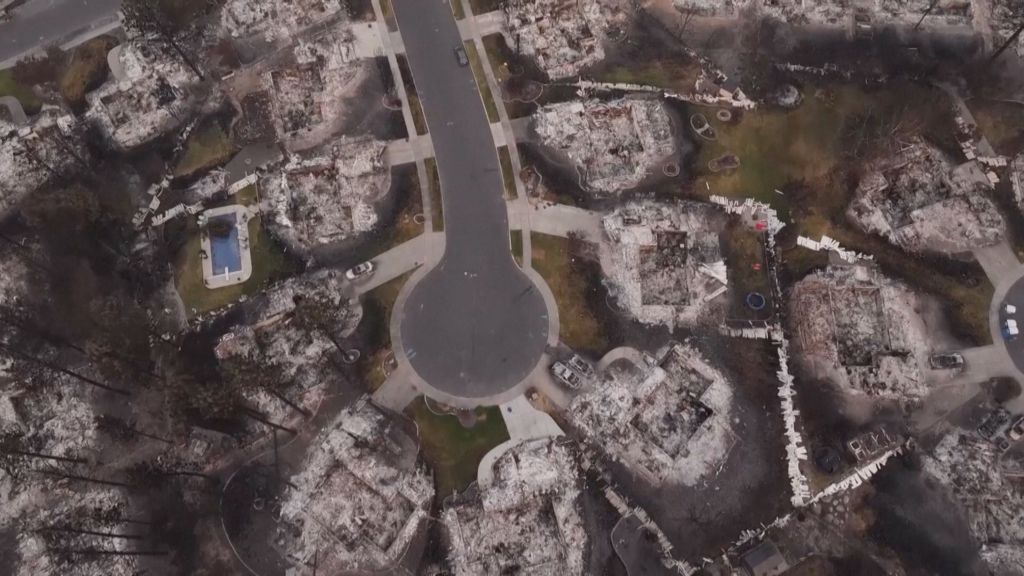
Newly released aerial footage captured by an unmanned drone has laid bare the full scale of destruction left behind by recent wildfires that swept through parts of Spokane. The sweeping, bird’s-eye view of the affected area offers a haunting perspective on the disaster, showing entire residential neighborhoods reduced to charred rubble. Where family homes once stood, only concrete foundations remain, blackened and empty. In a particularly striking detail that underscores how suddenly the blaze forced residents to flee, many burned-out, twisted shells of cars still sit in the driveways of the leveled properties, abandoned when owners evacuated ahead of the advancing fire line. The dramatic imagery has drawn renewed attention to the growing threat of destructive wildfires in the Pacific Northwest, a region that has seen a steady increase in large-scale fire events in recent years linked to rising temperatures and prolonged dry conditions. Local emergency management officials have confirmed that the damage captured in the footage matches preliminary on-ground assessments, as teams continue working to clear debris, support displaced residents, and investigate the cause of the blaze.
标签: North America
北美洲
-
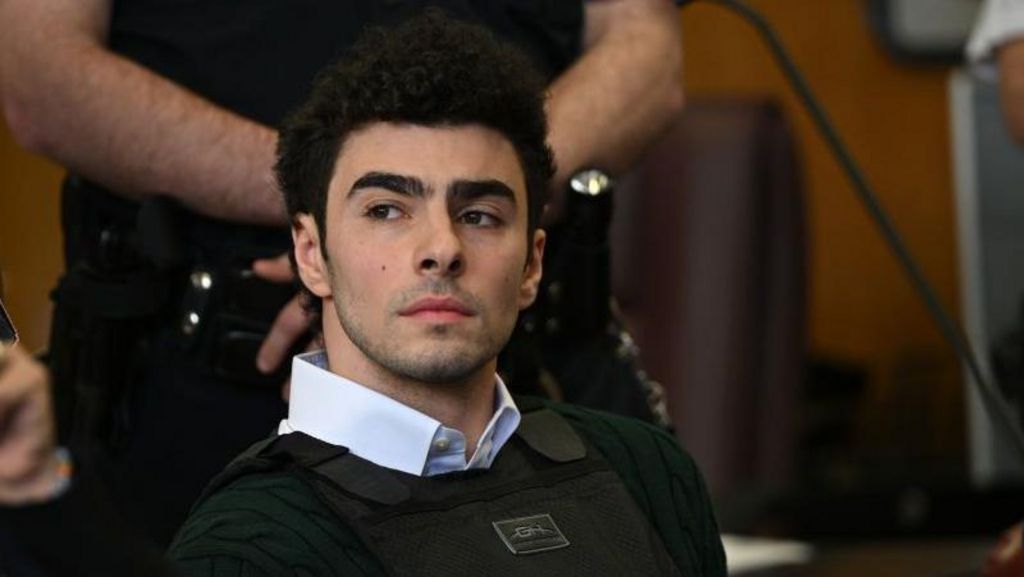
The big questions in Luigi Mangione case as he returns to court
With less than four weeks remaining before jury selection kicks off in the high-stakes murder trial of Luigi Mangione at a New York state court, the already nationally watched case is poised to erupt into one of the most publicized criminal spectacles in recent U.S. history. On Tuesday, Mangione is scheduled to return for a final pre-trial hearing, where long lines of supporters are expected to form hours before proceedings begin. For many of these backers, Mangione has become a symbolic figurehead for growing public anger over the soaring cost of healthcare in the United States, turning a routine criminal trial into a flashpoint for national policy debate. Online, the case has already split public discourse: supporters and critics have debated every detail of the incident, from Mangione’s alleged motives to his public persona, generating millions of posts and discussions across social media platforms.
Prosecutors allege that in 2024, Mangione shot and killed Brian Thompson, a UnitedHealthcare executive and father of two, in a public attack in Midtown Manhattan. If convicted on the charges against him — which include second-degree murder and multiple weapons offenses — Mangione faces the possibility of spending decades in a state prison. He has entered a plea of not guilty to all counts.
Over months of pre-trial filings and closed-door arguments, both the prosecution and defense have previewed their core strategies and legal battles, though several key questions remain unresolved ahead of Tuesday’s hearing, where Judge Gregory Carro is expected to finalize the last of the trial’s ground rules. The most significant pre-trial ruling came earlier this summer, following a multi-day December hearing focused on which evidence would be admissible at trial.
Mangione’s defense team launched an aggressive legal push to block evidence collected by authorities following his arrest in Pennsylvania, arguing that state police violated his constitutional rights by improperly searching and seizing his personal belongings and failing to properly read him his Miranda rights before questioning. The defense secured a partial victory: the judge ruled that a gun magazine, cell phone, passport, wallet, and computer chip recovered from Mangione’s backpack cannot be presented to the jury. However, Carro ruled that two key pieces of evidence the prosecution has described as critical to their case — the alleged murder weapon and a notebook containing writings purportedly from Mangione — will be allowed to enter the trial record.
Prosecutors have already outlined their case, which includes surveillance video capturing the moment Thompson was shot from behind by a hooded individual, as well as additional footage that investigators say tracks Mangione’s movements immediately after the attack. They have also noted they will present ballistics and fingerprint evidence that they argue links Mangione directly to the killing.
To date, Mangione’s legal team has not publicly revealed its full trial strategy, and has not put forward a clear alternative narrative to the prosecution’s account of the shooting. “We do not have, like in ‘The Fugitive,’ the idea of the one-armed man who’s the real killer,” explained Mitchell Epner, a former federal prosecutor, referencing the popular 1993 legal thriller. Earlier this summer, the defense floated and then quickly withdrew a proposed defense centered on extreme emotional disturbance, a legal framework under New York law that would allow the jury to reduce a second-degree murder charge to manslaughter if the defense can prove the defendant acted under the influence of an extreme and reasonably explainable emotional breakdown at the time of the killing. Many legal experts had speculated the defense might turn to an insanity plea, a separate legal standard that requires proving the defendant could not understand the nature of their actions at the time of the crime, but the defense has not moved forward with that strategy.
Cheryl Bader, director of the Criminal Defense Clinic at Fordham University School of Law, noted that insanity defenses are rarely successful in U.S. courts. “Short of being delusional, or having no understanding of the nature of what one is doing, an insanity defence is not likely to be successful,” Bader said. Mangione’s legal team has declined to comment publicly on their trial strategy ahead of jury selection.
Under U.S. criminal law, the burden of proof rests entirely with the prosecution, which must prove its case beyond a reasonable doubt — a high legal standard that requires jurors to have no reasonable uncertainty about the defendant’s guilt. Epner explained that the trial’s outcome may hinge on how much the proceedings center on the broader national conversation around healthcare costs rather than the core question of whether Mangione killed Thompson. “The more his case is about the question of who killed the victim, the easier it is for the prosecution,” Epner said. “The more it’s about the other peripheral issues, the harder it is for the prosecution.”
Whether the trial becomes a national public spectacle hinges in part on unresolved debates around media and public access, which the judge is expected to address on Tuesday. In recent weeks, Mangione’s legal team has raised objections to existing procedures for press entry to the court, and has criticized the lack of an overflow room to accommodate additional members of the public and press who want to observe the trial. The defense also formally requested that the entire trial be broadcast live to the public, a request that conflicts with existing New York state court rules that ban public live streaming of criminal proceedings.
Prosecutors with the Manhattan district attorney’s office have said they have no role in setting media access procedures, and in a new court filing submitted Monday night, the DA’s office said it would defer to Judge Carro’s judgment on public access questions. The office did, however, note that adequate security protocols are required to prevent spectators from illegally recording the proceedings from any overflow space, in violation of state law. Court spokesperson Al Baker confirmed that the court is currently finalizing a plan for the trial, including arrangements for an overflow room. “We remain firmly committed to providing the greatest possible access for both the media and the public,” Baker said, adding that the court is “evaluating the complex logistical and safety considerations involved” to accommodate the high level of public interest in the case.
-

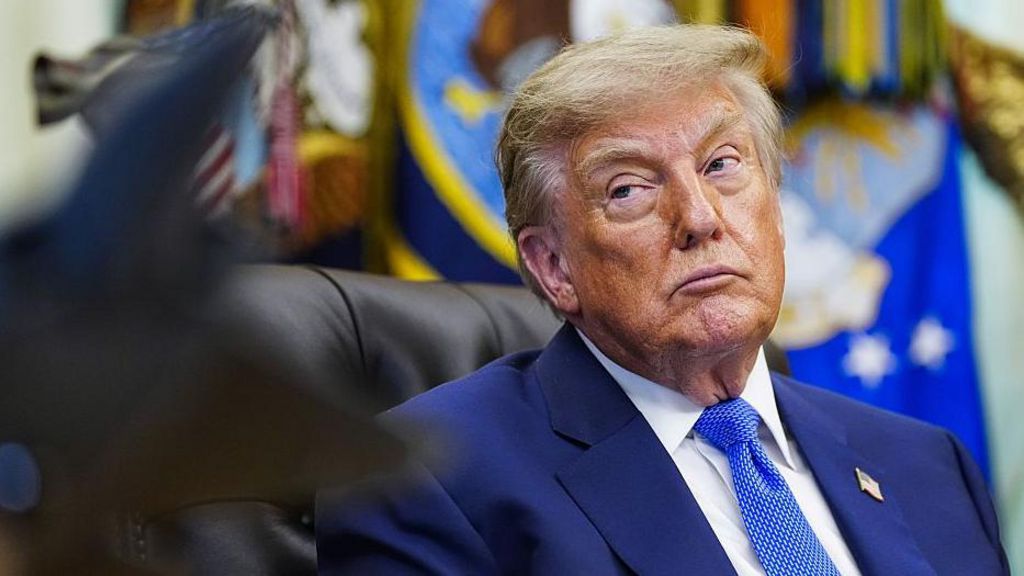
What to know about Trump’s Patriot Games for high school athletes
As the United States prepares to mark the 250th anniversary of its founding, the Patriot Games — a youth sporting event organized through an initiative of the Trump administration — is holding its national finals in Geneva, Ohio, and former President Donald Trump is set to join the competition’s closing day on Tuesday.
This invitational competition brings together top young athletes from across the country, selected through a qualification process that includes a test on American patriotic knowledge. Two participants are chosen from every U.S. state, with additional delegations invited from military installations across the nation, federally recognized Native American tribes, and U.S. overseas territories. All competing athletes fall between the ages of 14 and 17, and after preliminary rounds, 32 top competitors have advanced to the final round that will take place during Trump’s visit.
Hosted at SPIRE Academy, a prominent Ohio-based sports training center and boarding school, the event kicked off on Sunday and is organized by Freedom 250, a non-profit organization with backing from the White House. The group has planned a full slate of national events throughout 2026 to coincide with the semiquincentennial of U.S. independence, including a high-profile UFC fight held at the White House last month and the Great American State Fair hosted on Washington D.C.’s National Mall.
Danielle Alvarez, communications director for Freedom 250, framed the competition as a celebration of American youth values. “The 2026 Patriot Games is about more than competition, they’re about the grit, character, and optimism that have carried America for over 250 years,” Alvarez said in a statement. “These young athletes represent the very best of who we are and the promise of what’s still to come.”
The competition features a range of athletic events, from traditional track and field competitions to popular recreational team sports including dodgeball and kickball — a fast-paced group activity that blends elements of soccer and baseball rules. Live coverage of the games is airing on ESPN, and a one-hour primetime special highlighting the competition is scheduled to broadcast on ABC this Thursday at 9 p.m. EDT, with a global airing at 1 a.m. GMT Friday.
A notable subtext to the broadcast partnership is the ongoing regulatory investigation into The Walt Disney Company, which owns both ESPN and ABC, launched by the Trump administration.
The event comes as Trump has placed a distinct focus on sports throughout his second presidential term, marking a series of firsts for a sitting U.S. president: he has become the first sitting commander-in-chief to attend a Super Bowl during his tenure, and has also made public appearances at both the NBA Finals and the men’s FIFA World Cup final.
Despite its organizing framing as a patriotic celebration, the Patriot Games has not been without controversy. Critics of the Trump administration have pushed back against the competition, arguing it lacks meaningful demographic diversity across its participating cohort. Others have drawn unflattering comparisons to the fictional “Hunger Games” franchise, a popular dystopian series in which two teenagers are selected from each of the story’s 12 districts to fight to the death in a nationally broadcast competition.
The top prizes for the competition are substantial: the winning boy and winning girl from the 14-17 age group will each take home $125,000 in college scholarship funding, an award designed to support the educational goals of the young competitors.
-
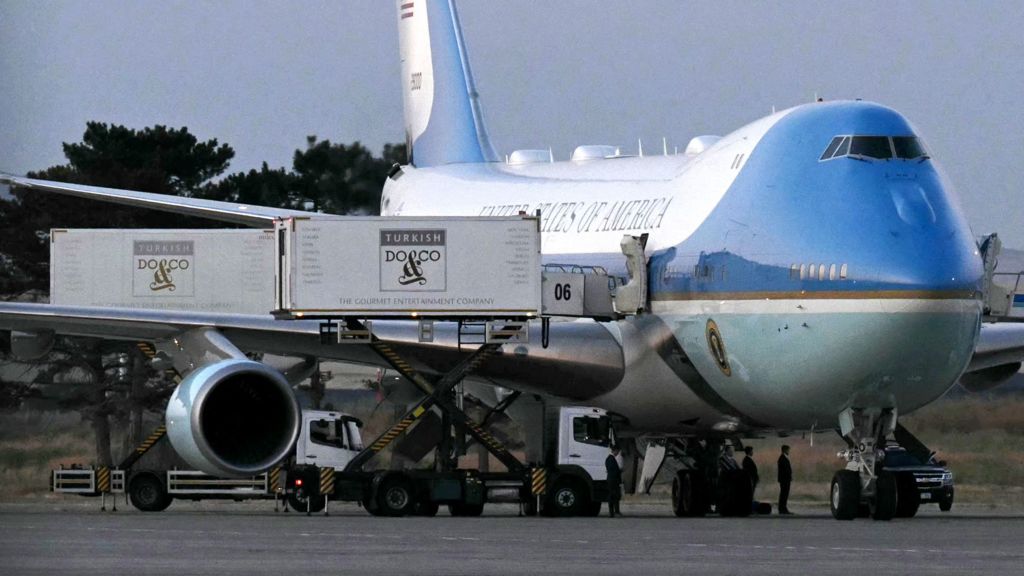
Trump hid in catering truck in secret plane swap over Iran threat, reports say
In a stunning, meticulously planned security operation that has only recently come to light, former U.S. President Donald Trump executed a secret plane swap while departing last month’s NATO summit held in Ankara, Turkey, responding to what U.S. intelligence assessed as a credible Iranian missile threat against his aircraft, multiple major U.S. media outlets have reported.
The elaborate ruse unfolded in broad daylight, with on-camera footage showing Trump boarding the decades-old legacy Air Force One jet at Ankara’s Esenboğa Airport on July 8, matching a pre-announced plan to fly out on the older aircraft “for old time’s sake”. What cameras and most onlookers did not see, however, was that after exiting the jet on the opposite side of the boarding ramp, Trump was secretly transported to a smaller, modified C-32A military aircraft — a Boeing 757 variant typically reserved for vice presidential travel — via a catering truck elevated to aircraft height, the Washington Post first reported.
To maintain the ruse, U.S. Defense Secretary Pete Hegseth boarded the empty legacy Air Force One separately via external stairs, selling the illusion that the president remained on board. Most journalists accompanying the presidential delegation, along with several junior White House staff, boarded the legacy jet and were instructed to close all window shades, remaining completely unaware that Trump had already been smuggled off the plane.
The secret flight then took Trump first to RAF Mildenhall, a U.S. Air Force base in the United Kingdom, where he secretly transferred back to the legacy Air Force One, which had flown separately from Ankara. Press photographers on the ground captured Trump disembarking from the older jet at the British base, concealing the earlier swap from public view. From the UK, Trump transferred again to the newer Boeing 747-8 Air Force One, a jet donated to the U.S. by Qatar, to complete his journey back to Washington D.C.
It was during this final transatlantic leg that Trump addressed ongoing threats from Iran with reporters, confirming he faced constant danger but making no mention of the secret plane swap. When asked why journalists had been told to close their window shades on the flight departing Turkey, Trump brushed off the question with a blunt warning: “Because you’re probably on a dangerous flight because of the sleazebags we have to deal with.” He reiterated his long-stated claim that he is Iran’s “number one target,” adding, “But if I go, you go, right? Perhaps someday you want to change professions.”
The operation came just one day after the U.S. renewed military strikes against Iranian targets, following a total breakdown in negotiations between Washington and Tehran to de-escalate ongoing conflict. U.S. officials confirmed to CBS News, the BBC’s U.S. partner, that intelligence agencies had detected a specific, credible threat of an Iranian missile attack targeting Trump’s aircraft during departure from Turkey.
Officials have previously raised security questions about the Qatari-donated Boeing 747-8, which the U.S. has spent $400 million retrofitting for presidential use. The New York Times first reported that the U.S. Secret Service had explicitly urged Trump to switch planes for the return flight from the NATO summit over unresolved security concerns about the new jet. Older legacy Air Force One aircraft are fitted with specialized laser technology designed to blind incoming anti-aircraft missiles, and it remains unclear whether the Qatari-donated jet has received all the same defensive upgrades.
In an official statement to CBS News, White House Press Secretary Karoline Leavitt sought to downplay security concerns, saying, “The new Air Force One is perfectly safe for the President’s travels, but will receive additional upgrades and enhancements in the fall which will take approximately one month to complete.” White House Communications Director Steven Cheung declined to directly confirm or deny the reports of the plane swap, only noting that the new jet is a “state-of-the-art aircraft” fitted with robust protective measures for the president and his staff.
The revelation of the secret operation has also reignited controversy over the leaking of sensitive national security information. After The New York Times’ initial reporting on security concerns around the Qatari jet, multiple of the outlet’s journalists were subpoenaed to testify under oath about their sources. The U.S. Justice Department confirmed to the BBC that it is currently conducting an investigation into the illegal disclosure of classified information related to the incident.
-
Trump Media reports $238m loss as crypto falls
Donald Trump’s social media holding company, Trump Media and Technology Group (TMTG), operator of the former president’s Truth Social platform, has revealed a staggering $238 million net loss for the second quarter of 2025. The quarterly deficit, reported between April and June, is more than 10 times larger than the loss recorded in the same period one year prior, a jump driven largely by downturns in the alternative digital assets the firm has added to its investment portfolio as it expands beyond core social media operations.
While the company delivered strong top-line growth, with total revenue climbing 89% year-over-year to hit $1.7 million, widespread declines in cryptocurrency prices erased any positive momentum from rising user and subscription income. As of the end of the second quarter, TMTG reported total consolidated assets of $2 billion, with roughly $1.9 billion categorized as liquid financial assets including cash holdings, short-term market securities and its volatile digital currency investments. To date, the firm has never posted an annual or quarterly profit, even as it has branched into new high-risk, high-reward sectors beyond social media, adding large cryptocurrency positions and clean energy projects to its business holdings.
The most controversial addition to TMTG’s service lineup came in July 2025, when the company announced a new premium subscription tier that grants Wall Street traders and other paying subscribers early, faster access to Donald Trump’s Truth Social posts. Market analysts have widely noted that Trump’s posts frequently move prices for publicly traded stocks and other financial assets, meaning early access could give paying subscribers a significant trading edge. This new offering has already sparked intense debate around both legal compliance and ethical norms, as the Trump family retains majority ownership of TMTG, raising questions about the propriety of a private company controlled by the sitting president profiting directly from his public political statements.
In spite of the sharp quarterly loss, interim TMTG chief executive Kevin McGurn struck an optimistic tone in comments accompanying the earnings release Monday. He confirmed that more than 10 high-end clients have already signed up for the premium early-access service, which company leadership frames as a critical new recurring revenue stream for the business. “I’m encouraged by this momentum, and shareholders should expect more frequent communication from us on our progress each quarter as we enter this next chapter,” McGurn said. The company also confirmed it would pivot back to prioritizing its core social media mission after its recent period of rapid diversification into unrelated sectors. The BBC has reached out to both TMTG and the White House to request additional comment on the quarterly results and the ongoing controversy around the premium subscription service, and has not yet received a response.
-
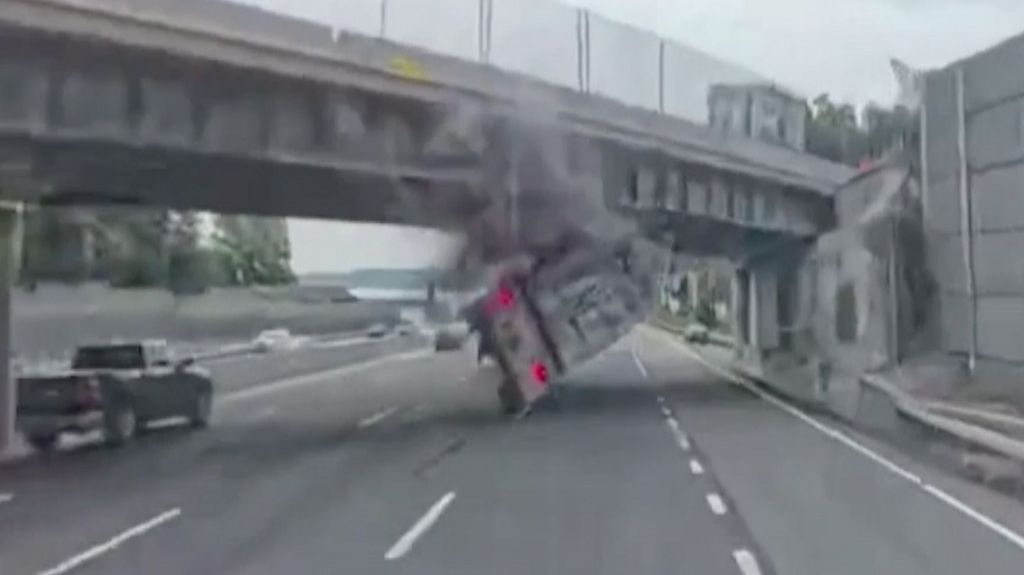
Dashcam video shows moment lorry slams into New York overpass
Striking footage captured by a dashboard camera has documented the sudden moment a heavy goods tractor trailer collided with a highway overpass in New York. The incident, which unfolded on a local roadway, has drawn attention to the importance of adhering to infrastructure clearance regulations for large commercial vehicles. According to official reports, the operator of the tractor trailer walked away from the crash without sustaining any physical injuries. Despite the lack of harm to the driver or other motorists on scene, law enforcement officials issued a traffic citation to the driver in response to the violation: the vehicle’s total height surpassed the posted maximum clearance limit for the overpass. The video, which has circulated in local media, highlights how a seemingly straightforward administrative oversight can lead to dangerous and avoidable roadway incidents. Local transportation authorities have reiterated that clear height markings are posted at low-clearance structures across the state to prevent these types of collisions, which can cause long-term damage to infrastructure and create major traffic disruptions for commuters.
-
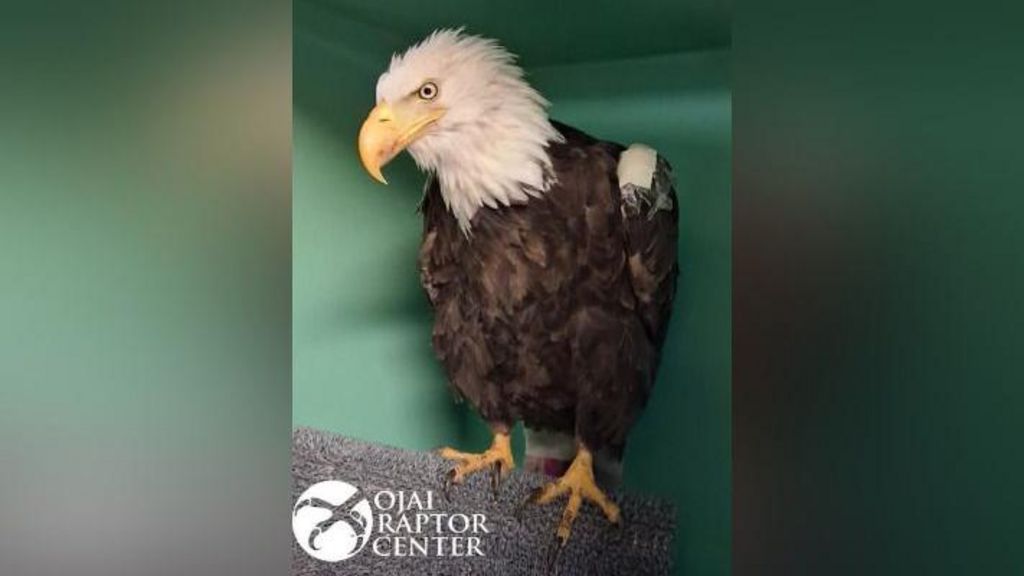
Jackie, the famous California bald eagle, dies after weeks of intensive care
Jackie, the beloved bald eagle that won the hearts of hundreds of thousands of wildlife fans across the globe, has passed away on Monday following multiple weeks of intensive veterinary care at California’s Ojai Raptor Center, a leading wildlife rehabilitation nonprofit.
The iconic raptor was brought to the center after sustaining injuries from a violent attack by other eagles. Clinicians soon discovered pre-existing underlying health conditions that had already triggered progressive anaemia and unhealthy weight loss, complicating her recovery process. In an official statement released after Jackie’s passing, representatives from the Ojai Raptor Center confirmed that even with round-the-clock, coordinated care from their in-house veterinary team and outside consulting specialists, the raptor’s health continued to decline steadily over the final days of her life.
Jackie rose to international fame through the wildly popular Big Bear Eagle Nest Cam, a live streaming project operated by the nonprofit Friends of Big Bear Valley. Located in the scenic Big Bear Valley region of Southern California, the stream has built a massive, loyal global subscriber base that tuned in daily to watch Jackie and her long-time mate Shadow go about their lives. First hatching in the spring of 2012, Jackie established her nest in the valley and became a staple of the stream after she paired with Shadow in 2018.
Members of the rehabilitation team shared that they are devastated by the loss of the iconic bird, noting that caring for Jackie had been an extraordinary honor for everyone involved. “We know this news will be deeply felt by the many thousands of people around the world who have followed her journey, hoped alongside us, prayed for her, and supported the people caring for her,” the statement read.
The rehabilitation center is currently working in close partnership with federal and state wildlife agencies, including the U.S. Fish and Wildlife Service and the California Department of Fish and Wildlife, to conduct a full post-mortem review. A more detailed public statement, including full information on all treatment protocols and diagnostic test results, is planned for release in the coming days. Per current protocol, Jackie’s remains have already been transferred to the California Department of Fish and Wildlife for official examination.
-
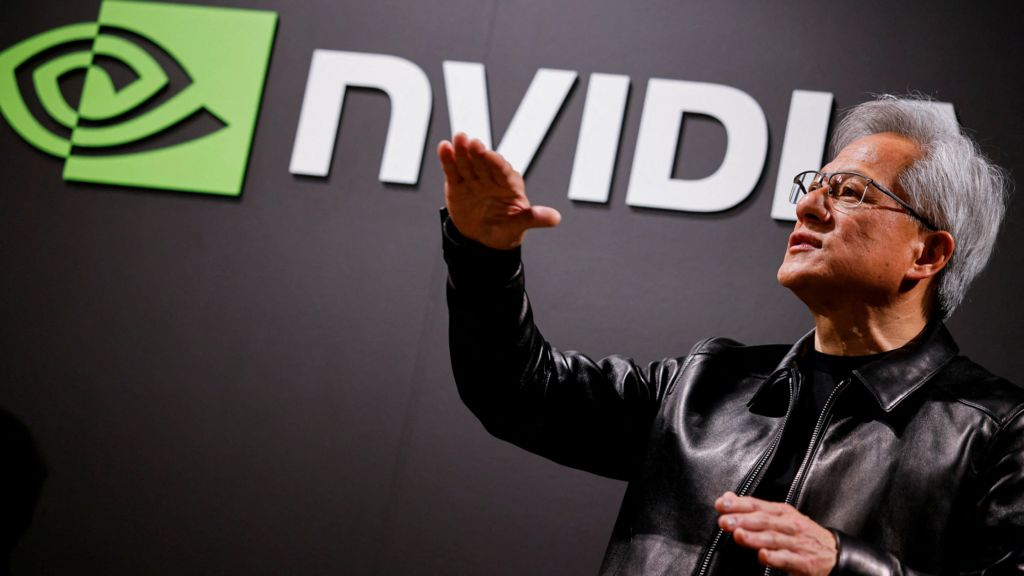
Wall Street giants hand Nvidia $500bn to fund boom in AI projects
The global artificial intelligence boom has already reshaped tech industry valuations, and now it is set for an even larger expansion after leading chip designer Nvidia announced a historic partnership with some of Wall Street’s most powerful financial institutions. The California-based firm is working with six major investment and financial groups — Apollo, BlackRock, Blackstone, Brookfield, Goldman Sachs, and KKR — to raise a massive $500 billion capital pool dedicated exclusively to building out global AI infrastructure.
A core innovation of this new initiative is that it formally classifies AI computing hardware and supporting infrastructure, commonly shortened to “compute” in tech circles, as a standalone, investable asset class for the first time. This shift marks a major turning point for how global capital markets engage with the fast-growing AI sector, as major long-term investors increasingly recognize the sustained economic value of AI infrastructure.
“In AI, compute is revenue,” Jensen Huang, Nvidia’s co-founder and chief executive officer, said in an official statement. “We are bringing the world’s leading long-term capital providers together to independently underwrite AI infrastructure.”
The pooled capital will support two key categories of projects: large-scale AI infrastructure initiatives led by Nvidia itself, and similar projects being developed by the chipmaker’s extensive network of global industry partners. Most planned investments will go toward the construction of new, purpose-built data centers, which are required to house, power, and cool the dense stacks of GPU chips that process AI workloads and power generative AI tools. A portion of the funding will also go toward building new manufacturing facilities to increase production of Nvidia’s high-demand AI chips, addressing ongoing supply shortages that have plagued the sector for years.
Industry leaders across finance and technology have echoed Huang’s outlook on the critical role of AI infrastructure. “Compute has become a critical infrastructure asset,” Joe Bae and Scott Nuttall, co-chief executives of global investment firm KKR, noted in a joint statement. “As we’ve scaled our approach to digital infrastructure, we’ve learned that delivery, not ambition, is the hard part.”
Nvidia currently holds a near-dominant position in the global market for high-performance AI chips. Virtually every major technology and AI developer, from Google and Meta to Amazon, Microsoft, OpenAI, and Anthropic, relies on Nvidia’s graphics processing units (GPUs) to power their AI platforms, cloud services, and consumer chatbots. This unmet demand has already driven exponential growth for Nvidia: over the past three years, industry-wide spending on AI projects and infrastructure has surpassed $1 trillion, and Nvidia’s own market capitalization has grown fivefold over the same period as companies rush to secure access to its chips.
Huang framed the new capital initiative as the next major step in Nvidia’s evolution beyond its core origins as a chip manufacturer. “Today, we are helping create a new class of productive, investable infrastructure: AI factories,” he said.
For the companies developing AI tools, this new funding framework will open up new avenues to finance rapid expansion, keeping pace with exploding consumer and enterprise demand for AI services. Jim Zelter, president of Apollo — a global alternative asset manager that oversees more than $1 trillion in total assets — noted that AI computing has moved far beyond a niche tech trend to become a core global resource. “Modern compute has emerged as a scarce, mission-critical asset class,” he said, adding that the sector is “positioned to drive significant long-term economic growth and productivity gains.”
The new partnership builds on a wave of recent independent moves by major financial firms to invest directly in AI infrastructure. Just last month, BlackRock reached a separate deal with Meta to finance a Texas data center, taking a majority ownership stake in the facility. AI startup Anthropic, the developer of the popular Claude chatbot, recently secured a customized infrastructure investment deal with Macquarie Asset Management and Singapore’s sovereign wealth fund GIC, after demand for its AI service grew so quickly that it required massive new computing capacity. While the company did not disclose the full size of that deal, Anthropic made clear that widespread adoption of its platform has left it needing far more capital to expand capacity.
Market analysts expect the $500 billion initiative to accelerate global AI development by closing the gap between high demand for computing capacity and the limited supply of infrastructure that can support growing AI workloads. As the AI sector continues to mature, the formal recognition of compute as an investable asset class is likely to unlock trillions more in long-term institutional investment in coming years.
-
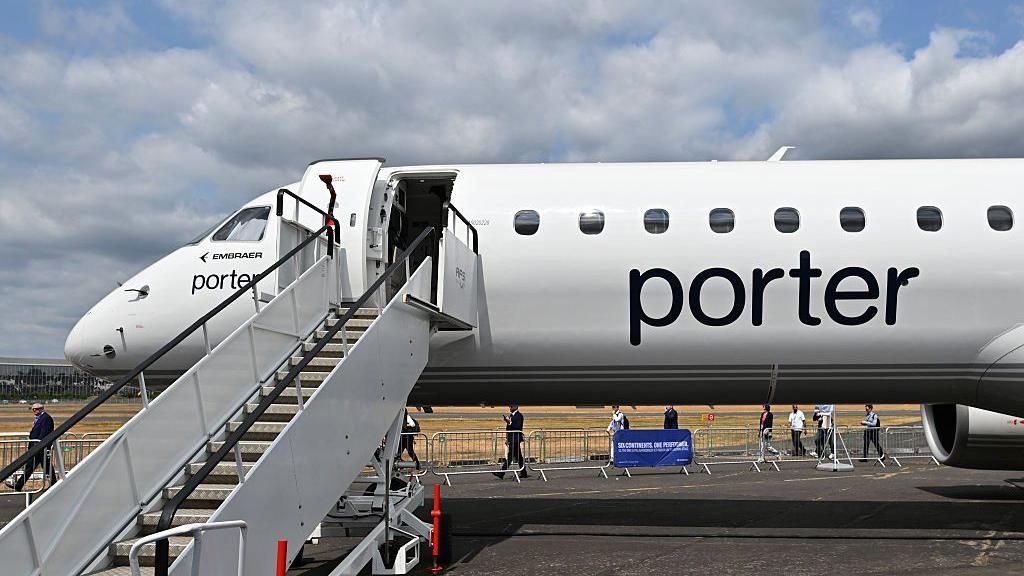
Canada flight cancelled after child refuses to wear seat belt
A recent incident on a Canadian commercial flight has thrown long-simmering tensions between air safety protocols, family travel accommodations, and public etiquette into the global spotlight, after an entire flight was canceled when a young child refused to remain buckled in their seat ahead of departure.
On August 6, a Porter Airlines flight scheduled to travel from Victoria to Toronto was already in its final departure preparations when the crew encountered the unsafe situation: the young child, traveling with a parent, repeatedly left their seat and would not comply with seat belt requirements. Crew members and the child’s parent made multiple attempts to resolve the issue, according to the airline’s official statement, but all efforts failed. With takeoff impossible under unsafe conditions, the crew made the decision to return to the terminal and remove the two passengers from the flight.
The resulting delay pushed the flight’s scheduled departure past the midnight closure of the airport’s runway, forcing all remaining passengers to rebook their travel for the following day. The incident has quickly divided public opinion across social media and mainstream news outlets, with two distinct camps clashing over how airlines should respond to non-compliant child passengers and what responsibilities parents hold during air travel.
Child aviation safety specialist Lia Tuso emphasized in an interview with the BBC that the Porter Airlines crew’s decision was fully justified by core flight safety principles. Tuso explained that an unrestrained child, just like an unsecured piece of checked or carry-on luggage, becomes a dangerous projectile during unexpected turbulence, a hazard that poses severe risk to the child themselves and all other passengers and crew on board, particularly during the critical phases of takeoff and landing.
Critics of the airline’s decision, however, have pushed back by noting that young children often act out not out of intentional disruption, but because of fear of air travel. Aryeh Kozuch, a passenger on the canceled flight, told Canadian broadcaster CBC News that the child was not unruly, but visibly anxious. “They just kept hiding under their seat. If they got forced into [being] strapped in, they just kind of slid out underneath,” Kozuch recalled. Many observers have also questioned why the entire flight had to be canceled rather than only removing the non-compliant family, a step that Porter ultimately took but which still resulted in a missed runway closure window.
This incident is far from unique, and comparisons to similar high-profile cases stretching back more than a decade have only amplified the ongoing debate. In 2018, a father and young daughter were removed from a Southwest Airlines flight traveling from Chicago to Atlanta after the child threw a tantrum over buckling her seat belt. Passenger video of the ejection showed that the child had already calmed down and been seated for more than five minutes before crew ordered the pair off the plane, drawing widespread criticism of the airline’s overreach. A 2012 incident on a JetBlue flight that ended with a traveling family being removed also sparked public outcry, with the family appearing on NBC’s *Today Show* to accuse the airline of lacking compassion. JetBrains defended the captain’s decision at the time, stating that prolonged non-compliance with crew instructions threatened the safety of everyone on board.
As family travel continues to rebound following global travel restrictions, the Porter Airlines incident has reopened core questions that have yet to be resolved across the aviation industry: how to balance non-negotiable safety standards with empathy for families traveling with young, anxious children, and what protocols best minimize disruption for all passengers when non-compliance occurs.
-
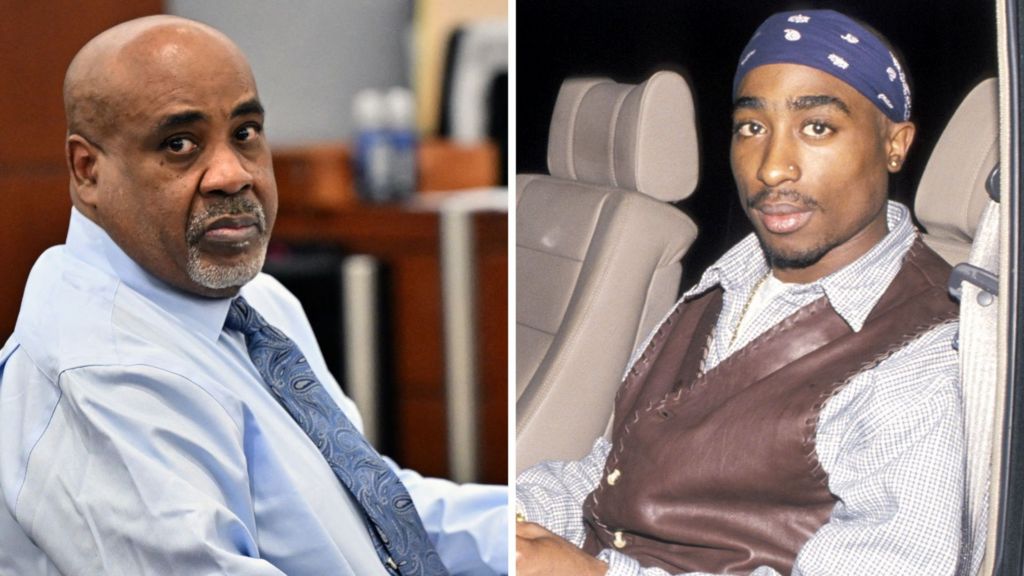
Watch: What we know about Tupac murder suspect Duane ‘Keffe D’ Davis
More than 27 years after the fatal shooting of legendary hip-hop artist Tupac Shakur in Las Vegas, one of the long-awaited trials connected to the iconic musician’s murder has officially begun. The 63-year-old defendant, Duane “Keffe D” Davis, a former street gang leader with documented ties to 1990s Los Angeles-area gang conflicts, appeared in court this Monday to formally face the charges against him.
Davis is the only suspect to have gone to trial in the high-profile cold case that has captivated true crime enthusiasts and hip-hop fans across the globe for nearly three decades. Following his indictment by a grand jury last year, legal proceedings moved forward this week, marking a major milestone in a case that has long been shrouded in speculation and unconfirmed reporting. When asked to enter his plea to the murder charge, Davis firmly maintained his innocence and entered a formal not guilty plea before the court.
The killing of Tupac Shakur in September 1996, which occurred after a drive-by shooting following a Mike Tyson boxing match at the MGM Grand Garden Arena, has remained one of the most high-profile unsolved murders in American entertainment history. For years, law enforcement investigations faced roadblocks from witness reluctance and conflicting evidence, leaving the case cold for decades. Davis has long been linked to the case in unofficial reports, and his arrest and trial represent the first concrete legal progress to bring a resolution to the case in a generation.