标签: North America

北美洲

  • Coroners try to identify dozens of bodies kept in ‘deplorable conditions’ at US funeral home

    Coroners try to identify dozens of bodies kept in ‘deplorable conditions’ at US funeral home

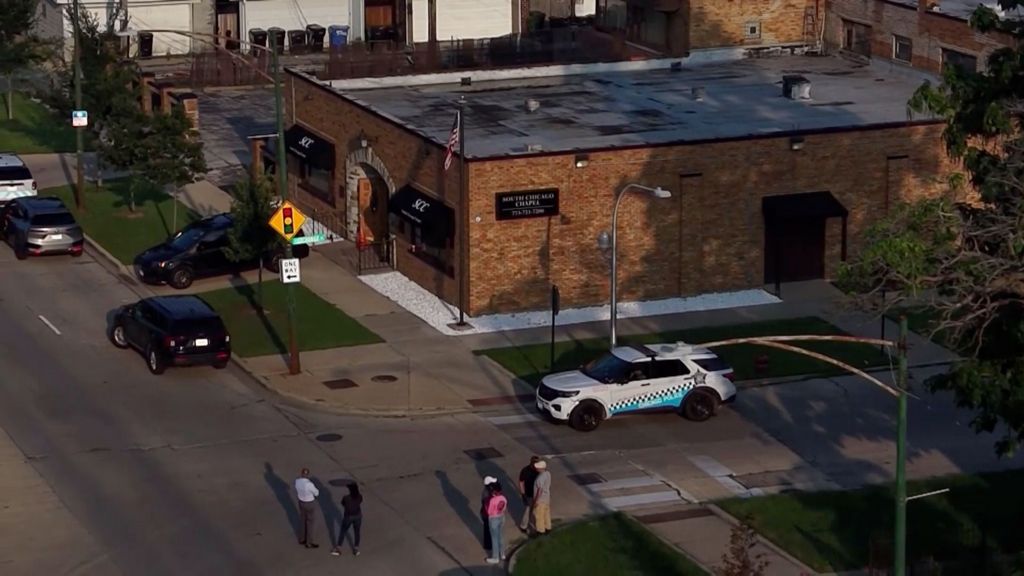
    A shocking discovery at a Chicago funeral home has left dozens of families in agonizing uncertainty, as investigators launched a painstaking process to identify improperly stored remains found in deplorable, unrefrigerated conditions. The Cook County Medical Examiner’s Office, leading the multi-agency investigation, confirmed Thursday that nearly 60 bodies were located at South Chicago Chapel, left in various stages of decomposition amid documented rodent and maggot infestations. Investigators worked through the overnight hours to transport all remains to secure facilities to begin the identification process, which officials warn could take multiple days to complete.

    According to regulatory records obtained by CBS News, the BBC’s media partner, the funeral home’s director Johanna Morgan intentionally allowed multiple decedents to be stored in an unrefrigerated space with unsanitary conditions that accelerated decomposition and attracted pests. In response to the findings, the Illinois Department of Financial and Professional Regulation (IDFPR) has suspended Morgan’s funeral director license. The facility has not responded to multiple requests for comment from the BBC.

    The case has already raised questions about regulatory gaps, as the operation of South Chicago Chapel has ties to a prior mishandling incident involving the Morgans. Public records show that Clark Morgan, Johanna Morgan’s husband and the listed president of South Chicago Chapel, had his own funeral director license revoked in 2024. Clark Morgan previously owned and operated Heights Crematory, another Chicago-based facility that was shut down in 2025 after investigators also uncovered mishandling of human remains there. Michael Sharkey, general counsel at the Illinois Funeral Directors Association, told the BBC he was the one who initially reported the Heights Crematory incident last year, and he questioned why regulatory officials did not increase scrutiny of the Morgans ahead of the latest discovery.

    “It is extremely disturbing that the same individuals who appear to be involved with the events at South Side Chapel are the same persons,” Sharkey said in a formal statement. He added that while he believes the IDFPR has performed well overall, the repeated failures by the same operators point to gaps in proactive oversight.

    For local families already grieving, the discovery has turned mourning into fear and uncertainty. Patrice Halliburton told CBS News Chicago that she arranged for her late sister Melody to be cremated at South Chicago Chapel, but now has no way to confirm whether the ashes she received actually belong to her loved one. “We don’t know if Melody is in there or not,” Halliburton said. “So right now, we’re more fearful… than we are angry. I’d rather save that anger for later when we know for sure what’s going on.”

    The Chicago incident is the latest in a string of high-profile mishandling cases across the United States that have reignited calls for stricter, more consistent regulation of funeral homes. Currently, oversight of the funeral industry is split between federal and state authorities: Federal Trade Commission rules mostly govern pricing transparency and consumer contract requirements, while day-to-day operational standards for handling remains are set entirely by individual states.

    Sharkey explained that Illinois already has relatively strict rules for handling decedents, including requirements that each body be stored separately rather than stacked, and that a written chain of custody log must be maintained to track every movement of a remain after it enters a funeral home’s care. State regulators are authorized to audit these logs and conduct routine inspections of facilities, though Sharkey acknowledged that consistent enforcement remains a challenge.

    Regulatory frameworks vary widely across the country, with some states requiring no licensing for funeral home operators at all. In 2023, nearly 200 bodies were discovered at the Return to Nature funeral home in Colorado, a state that did not require operators to hold a license at the time of the incident. In response to that case, Colorado will implement new mandatory licensing requirements for funeral operators starting in January 2027. Similar high-profile cases have been reported internationally: in the United Kingdom, a funeral director was sentenced to 20 years in prison after authorities discovered dozens of improperly stored bodies and half a tonne of unprocessed ashes at his facility, a case that inflicted years of trauma on affected families and sparked widespread calls for regulatory reform.

    Dan Ford, president of the U.S. National Funeral Directors Association, expressed deep sorrow over the Chicago incident in a statement to the BBC. “I am absolutely heartbroken over what has happened here,” Ford said. “I feel for everybody that’s affected, all the families and loved ones who are now facing this additional pain after losing someone they care about.”
  • Hunter Biden opens up to the BBC about father’s cancer battle, pardon and politics

    Hunter Biden opens up to the BBC about father’s cancer battle, pardon and politics

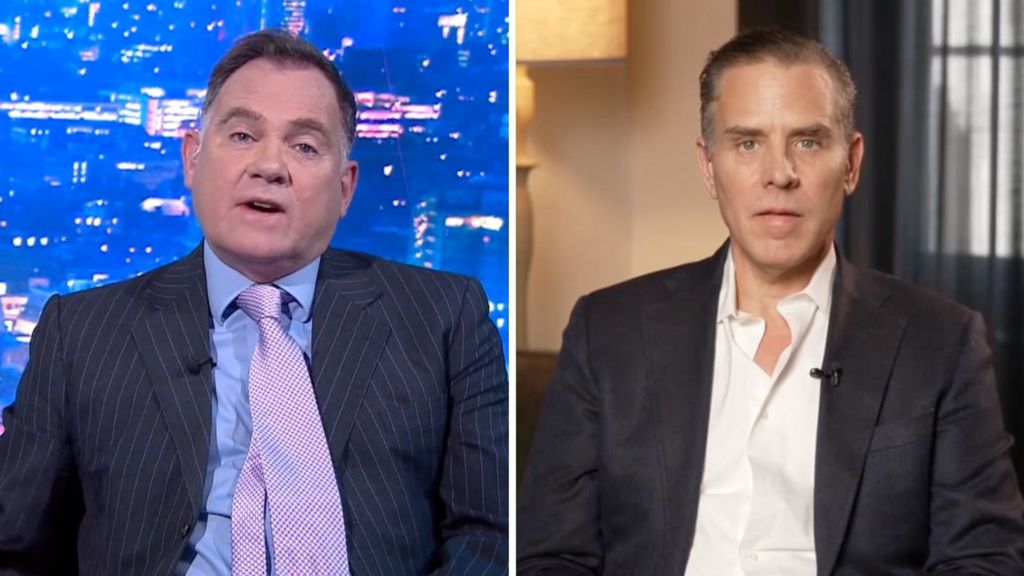
    In a rare, wide-ranging interview with BBC’s flagship current affairs program Newsnight, Hunter Biden, the son of former U.S. President Joe Biden, has opened up on a series of deeply personal and politically charged topics that have dominated headlines in recent months.

    During the conversation, Hunter Biden pulled back the curtain on his father Joe Biden’s ongoing battle with cancer, offering unpublicized insights into how the former president has navigated his health struggle while remaining engaged in public life. He addressed widespread speculation about the former president’s well-being, speaking candidly about the challenges the Biden family has faced behind the scenes as Joe Biden undergoes treatment.

    A central focus of the interview was the controversial pardon that Joe Biden granted to his son before leaving office in January 2025. Hunter Biden discussed his feelings about the decision, responding to critics who have labeled the pardon an abuse of presidential power, and explained how the action resolved years of legal investigations that hung over his personal and professional life.

    Beyond personal matters, Hunter Biden also shared his thoughts on his own potential future in U.S. politics. When asked about whether he would seek elected office in the coming years, he offered clarity on his political ambitions, addressing ongoing rumors that have circulated in Washington political circles about his next career steps.

    The interview marks one of the most extensive public comments Hunter Biden has made since his father left the presidency, giving voters and political observers a rare unfiltered look at the private dynamics of one of America’s most high-profile political families at a pivotal moment in U.S. politics.

  • Mysterious orb seen racing over residential area in new UFO files

    Mysterious orb seen racing over residential area in new UFO files

    In a continued push for greater transparency around Unidentified Anomalous Phenomena (UAP), the U.S. Department of Defense has released a new set of declassified files containing previously unseen footage, visual renderings, and official records detailing encounters with mysterious airborne and surface objects. This release marks the fifth batch of documents declassified under an executive order issued earlier this year by former President Donald Trump, which mandated full public disclosure of long-classified UAP-related records held by federal agencies.

    Altogether, the latest drop includes 41 individual files: more than a dozen video recordings, three original images, and dozens of text-based PDF documents that span more than 70 years of U.S. military observation, with the oldest document dating back to 1953 and the most recent recorded just this year. This follows an initial release of 161 declassified UAP files uploaded to the Pentagon’s public website in May, when officials first pledged that additional batches would follow on a rolling schedule.

    Among the most notable new recordings is a 2021 video captured over the Gulf of Oman, which captures a dark, roughly 4-foot diameter “cold orb” moving in erratic, irregular patterns that do not match known conventional aircraft or natural weather phenomena. At first glance, the object appears small enough to be a common housefly crossing the camera’s sensor, but official classification confirms it is cataloged as an unidentified anomalous phenomenon.

    Another 2025 recording, captured by a U.S. military sensor camera at an undisclosed military location in the Middle East, shows a solid round sphere moving at consistent speed in a straight line over a developed urban residential area.

    A 2019 recording taken over the Pacific Ocean offers another curious observation: a black sphere that appears to vanish from the sensor feed entirely for a short period before reappearing, visibly trembling as it drifts slowly across the frame. Pentagon notes accompanying the video clarify that while the original observation was captured by a military sensor, the footage itself was recorded by holding a handheld camera up to the display monitor, meaning some of the visible flickering may be a result of the secondary recording method rather than the object’s actual behavior.

    Beyond video, a declassified 1953 memo from the U.S. Naval Photographic Interpretation Center analyzes two separate UAP videos captured in Montana in 1950 and Utah in 1952. The center’s assessment concluded that the objects captured in both videos showed unusual characteristics: their size visibly increased alongside increases in their luminosity, traits that the memo confirmed are “inconsistent with those of natural phenomena.”

    A declassified FBI file included in the release also features a first-hand account from a former military pilot, who reported repeated sightings of unusual white lights during transatlantic flights between Boston and Dublin beginning in October 2023. The pilot reported that the lights start dim, grow progressively brighter before fading out, and exhibit unusual movement: some hold stationary position, while others travel in straight lines and occasionally change direction abruptly. He noted that he has observed the lights at least 10 times since his first sighting, and claimed that many other commercial and military pilots have reported similar sightings consistently between midnight and 3 a.m.

    All three images included in this release are official renderings, created as artistic interpretations of first-hand witness descriptions of UAP encounters. One of the most striking renderings depicts a massive, dark triangular craft hovering in the sky, with a bright round light positioned at each of the three corners. The rendering is based on a 2011 encounter reported by two former U.S. military service members.

    UAP is the official term adopted by the U.S. government and scientific community to replace the more popularized term “UFO” (unidentified flying object). Unlike the traditional framing of UFOs as only airborne potential alien spacecraft, UAP covers all unexplained observations, including those on land, in the air, and underwater.

    Public curiosity and interest in UAP and the potential for extraterrestrial life has grown dramatically in the U.S. over the past decade. In 2022, the U.S. Congress held its first formal public hearings focused on UAP in more than 50 years, and the Department of Defense has committed to ongoing transparency around military observations of unexplained phenomena. In a statement accompanying this fifth file release, Pentagon spokesperson Sean Parnell confirmed that the department will continue releasing additional declassified UAP documents to the public on an ongoing rolling basis.

  • US appeals court halts Trump ballroom project paving way for Supreme Court showdown

    US appeals court halts Trump ballroom project paving way for Supreme Court showdown

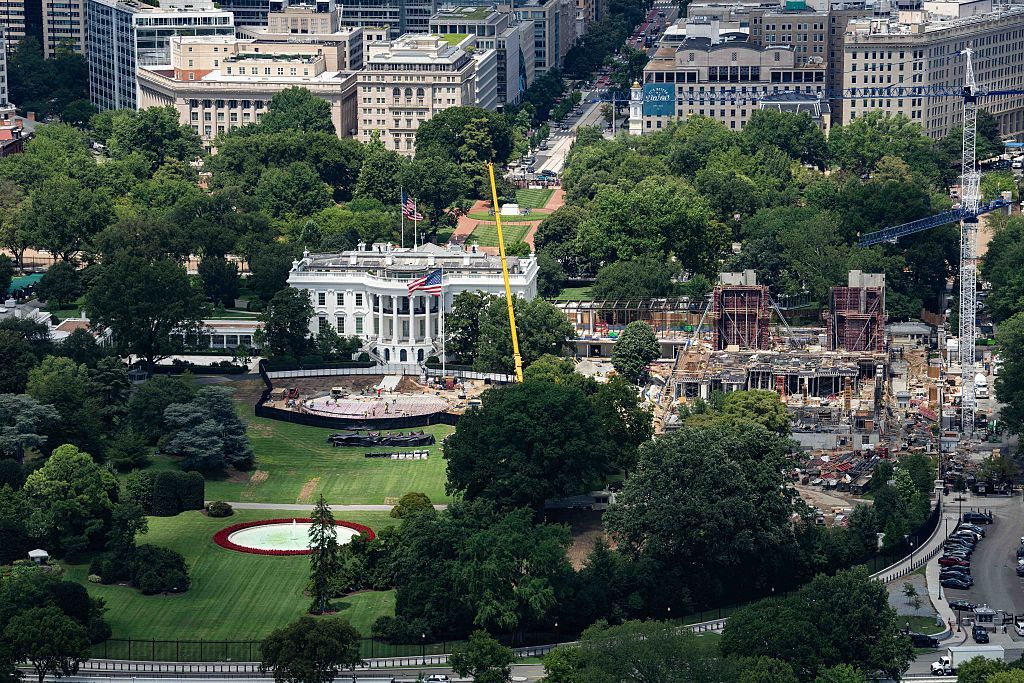
    In a landmark ruling that tests the boundaries of U.S. presidential executive authority, a federal appeals court has ordered the Trump administration to immediately halt all above-ground construction of a controversial $400 million ballroom extension at the White House, delivering the latest major blow to the unauthorized project and setting up a potential high-stakes showdown before the U.S. Supreme Court.

    The three-judge panel’s majority ruling upholds an earlier preliminary injunction secured by the National Trust for Historic Preservation, a non-profit advocacy group that filed suit after the administration demolished a portion of the White House East Wing in 2025 to launch the project without securing the mandatory approval from Congress required for alterations to the iconic federal property.

    In its written opinion, the panel emphasized that decisions about large-scale structural changes to the White House — widely referred to as the “People’s House” — fall exclusively to the legislative branch, not unilateral action by the executive. “Whether or not a massive ballroom should be constructed is for Congress to decide and is not a matter for Executive self-help,” the opinion stated. It added, “Congress has not ceded unfettered authority to the Executive Branch to dramatically redesign, reshape, and reconstruct the White House … to fit a particular President’s desires.”

    The legal challenge stems from the Trump administration’s move to advance the project without congressional appropriations or authorization. A lower federal judge had already twice blocked above-ground construction work on the extension, though the ruling allowed limited underground site work to continue. The administration immediately appealed that lower court order to the federal appeals circuit, setting up Friday’s ruling.

    In a procedural carveout, the appeals court delayed the enforcement of its construction halt for 14 days to give the Trump administration time to file an emergency appeal with the U.S. Supreme Court, should the White House choose to do so. The BBC has reached out to White House officials for official comment on the ruling, and had not received a response as of this update.

    President Trump has publicly defended the costly project on multiple occasions, arguing the new expanded ballroom is necessary to accommodate large events including state visits and official gatherings, and has gone so far as to frame it as a critical national security priority. Trump doubled down on these justifications following an assassination attempt at the annual White House Correspondents’ Association dinner in April 2026, though critics have questioned the link between the new construction and any credible security threat.

    This is an ongoing developing breaking news story, with additional details expected to be released in the coming days as the administration considers its next legal move.

  • Campaigners call for Jared Leto’s concerts to be cancelled after criminal sexual conduct claims

    Campaigners call for Jared Leto’s concerts to be cancelled after criminal sexual conduct claims

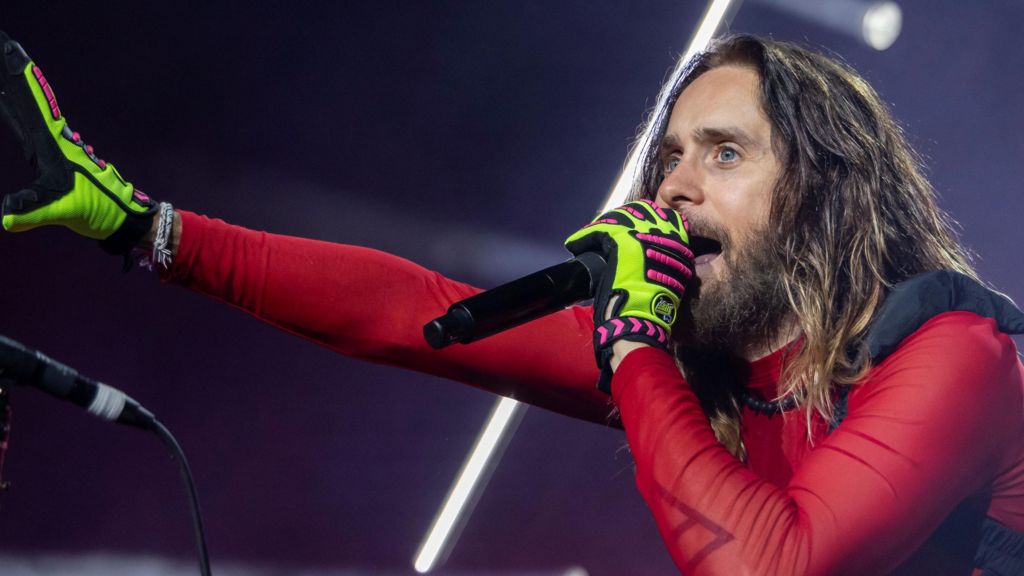
    Fresh calls for the cancellation of two major Thirty Seconds to Mars arena shows in the UK are gaining traction, after women’s safety and anti-violence organizations added their voices to demands over serious sexual assault and grooming allegations against frontman Jared Leto. Leto, 54, who is also a well-known Hollywood actor, has forcefully denied all claims against him, but the accusations have sparked fierce debate over how the live events industry should handle high-profile performers facing criminal sexual misconduct allegations.

    The allegations first came to light in a recent BBC investigation and accompanying documentary *Jared Leto: Hollywood’s Dark Secret*, which shared testimony from 10 women who say they were subjected to inappropriate behavior by Leto between 2002 and 2016. At the time of the alleged incidents, all four of the women who spoke on the record were teenagers, while Leto was in his 30s and 40s. Nine of the 10 accusers have spoken publicly about their experiences for the first time through the investigation.

    One of the accusers, a former model named Alex, detailed a 2013 encounter at London’s O2 Arena that she says was pre-planned to put her in a vulnerable position. Alex, who was 19 at the time, told producers she intentionally claimed to be 17 to deter unwanted advances from Leto, who was 41 then. She said Leto responded by dismissing her age, telling her “Age is just a number, and anyway, we’re in Europe.” Later, after being encouraged to attend a private after-party at a nearby hotel, Alex arrived to find Leto alone. When she asked if she could rest on the room’s chaise longue, Alex says Leto made a graphic sexual remark that left her feeling threatened. She now believes the entire encounter was coordinated.

    The investigation also included testimony from two long-time crew members who worked with the band, both of whom described feeling deeply uncomfortable with Leto’s pattern of interactions with teenage girls. One former staff member alleged that crew were regularly told to invite young female fans backstage after they joined Leto on stage during performances. A second claimed that, during a period when the band was working at a residential recording location, Leto would typically meet with two different young girls at the house every day.

    The US rock band, which was co-founded by Leto and his brother Shannon in the late 1990s, rose to global fame with hit tracks including *The Kill*, *This Is War* and *Kings And Queens*, and has headlined major arenas across the world for more than two decades. Despite the serious allegations, the band’s scheduled 2025 shows at London’s O2 Arena and Manchester’s Co-op Live — two of the UK’s largest indoor venues — are still listed as going ahead, and tickets remain on sale to the public.

    Two leading UK anti-violence organizations have now publicly called for event organizers to scrap the planned concerts. Women’s Aid, a prominent domestic abuse charity, told BBC Newsbeat that it is deeply troubling that the shows are still scheduled to move forward, putting an alleged abuder in the public spotlight. “In light of the very serious allegations of criminal sexual conduct, we would urge organisers to put safety over profit and avoid platforming figures like this,” a spokesperson for the charity said.

    Janaya Walker, interim director of the End Violence Against Women Coalition, echoed that call, emphasizing that the decision should prioritize the safety of women and girls over commercial revenue. Walker said that the continued sale of tickets for the shows is deeply worrying, particularly for survivors of gender-based violence. “They’ll be seeing these reports and then seeing that things are moving forward seemingly without any consequence,” she said. “I think that will cause a huge amount of alarm and frustration and anger.”

    Walker added that the situation presents a critical test for the live events industry, forcing organizers to examine what message it sends to audiences when it continues to platform performers facing such serious allegations. “That’s the choice that I think is in front of them,” she said.

    Prior to the publication of the original BBC investigation, reporters made repeated attempts to contact Leto to get his response to the allegations, and he did not comment at that time. After the story was published, Leto released a statement through his representatives denying all wrongdoing. “I have never sexually assaulted anyone in my entire life. These claims are absolutely and categorically false,” he said.

    BBC Newsbeat has reached out to the tour promoters, the two venue operators, and the band’s representatives for comment on the calls for cancellation, but as of yet has not received any response from any of the parties.

  • Watch: Pentagon releases fresh UFO videos in new document dump

    Watch: Pentagon releases fresh UFO videos in new document dump

    In a fresh round of public disclosures focused on Unidentified Anomalous Phenomena (UAP), more commonly known to the public as UFOs, the U.S. Department of Defense has dropped a new collection of previously unreleased material into the public domain. The tranche of materials, published on August 7, marks the fifth sequential batch of UAP-related records the Pentagon has released as part of its ongoing transparency initiative around unexplained aerial and celestial sightings.

    This latest document dump adds 41 new entries to the public archive, encompassing a full range of content types: official documents, captured still images, and raw video footage of encounters with objects that do not match known aircraft, drone, or natural atmospheric phenomena. The release comes as U.S. government agencies have gradually stepped up efforts to declassify and share records related to UAP after decades of limited official acknowledgment of military encounters with unexplained objects.

    For years, public and congressional interest in UAP has grown, driven in part by earlier releases of declassified Pentagon footage that showed unexplained craft maneuvering in restricted military airspace. This latest batch of materials is part of a congressionally mandated push to increase transparency around the government’s investigation of unexplained phenomena, giving researchers, journalists, and curious members of the public direct access to primary source materials collected by Defense Department personnel.

  • Surprise fall in US jobs last month as slow summer continues

    Surprise fall in US jobs last month as slow summer continues

    Official U.S. labor data has delivered an unexpected jolt to economic forecasts, revealing an unanticipated contraction in national employment last month, driven by sharp summer job losses in two key sectors: local government education and retail trade.

    Prior consensus among economic analysts projected a modest uptick of 80,000 new jobs for July in the world’s largest economy. Instead, official counts from the Bureau of Labor Statistics (BLS) show total non-farm employment shrank by 23,000 positions over the month. The single largest contributor to this unexpected drop was a decline in local government education roles, a common seasonal shift that was far more pronounced than projected, while the retail sector also posted broad losses across warehouse clubs, hypermarkets, fuel stations, and general merchandise outlets.

    Adding to the picture of a cooling labor market, the BLS also revised down its previously reported job growth numbers for May and June by a combined 103,000 positions, confirming that job creation has slowed far more dramatically over the summer than initial estimates indicated.

    The surprisingly weak jobs report has thrown new uncertainty into the Federal Reserve’s upcoming September interest rate decision. The U.S. central bank has held interest rates steady throughout 2024 as it balances persistent inflationary pressure with signs of cooling economic growth, and analysts have been split on whether the Fed will opt for another rate hike to tame inflation.

    Neil Birrell, chief investment officer at Premier Miton, noted that while monthly payroll data has a well-documented tendency to soften in July due to seasonal scheduling shifts, this year’s decline points to a far weaker labor market than most observers anticipated. “Labour force participation is back at levels not seen since the days of Covid, meaning jobs just aren’t being created,” Birrell explained.

    The conflicting economic landscape — with persistent inflation on one hand and a cooling labor market on the other — leaves the Federal Reserve in a difficult position. However, Birrell noted that the unexpected contraction eases pressure on policymakers to move forward with another rate increase when they convene in September, calling the final call “a big call” that remains far from settled.

  • Republican Lisa Murkowski opposes Todd Blanche nomination for US attorney general

    Republican Lisa Murkowski opposes Todd Blanche nomination for US attorney general

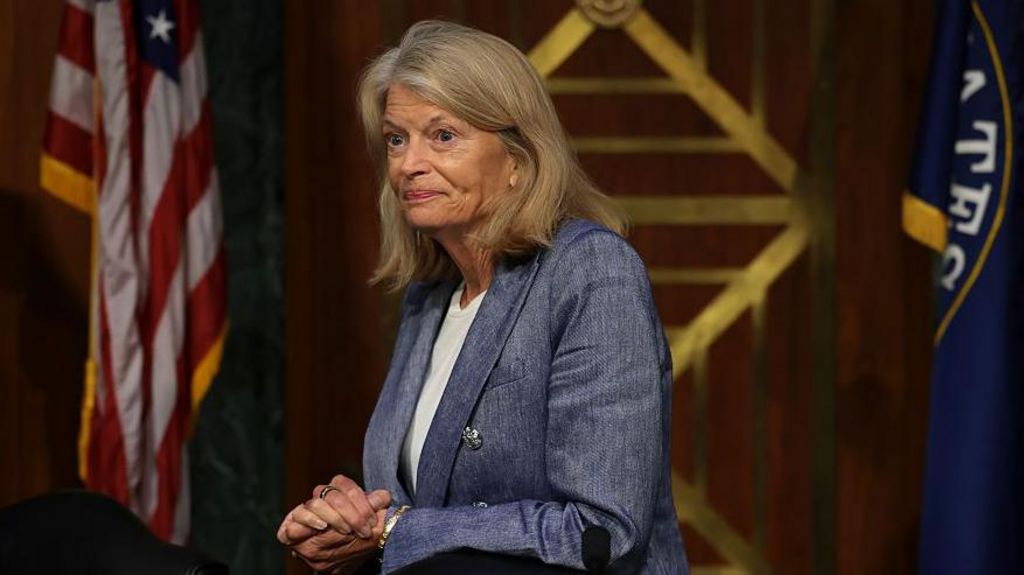
    A high-stakes political battle over the permanent leadership of the U.S. Department of Justice has taken a sharp turn, as centrist Republican Senator Lisa Murkowski of Alaska became the second member of her party to publicly reject former President Donald Trump’s nominee Todd Blanche for attorney general, deepening uncertainty over whether the nomination will survive a Senate vote.

    Blanche, who previously served as Trump’s personal defense lawyer and currently fills the role of acting attorney general, has faced sustained cross-party criticism since Trump tapped him to lead the Justice Department permanently. The nomination has already drawn opposition from a small but impactful bloc of Senate Republicans, and Murkowski’s opposition leaves confirmation hanging by a thread amid the narrow Republican majority in the chamber.

    In a formal statement announcing her decision, Murkowski highlighted deep-seated concerns that the Trump administration is seeking to politicize the nation’s top law enforcement agency, a red line for the moderate Alaska senator. She pointed to multiple controversial actions taken during Blanche’s short tenure as acting attorney general, including the administration’s controversial handling of the Jeffrey Epstein case files and the creation of a contentious $2 billion “anti-weaponization fund” carved out of a legal settlement between Trump and the federal government.

    Murkowski emphasized that the nation requires an attorney general willing to push back against the most extreme actions of the sitting administration. While she left open the possibility that Blanche could shift course if confirmed, she made clear she lacks confidence in his willingness to uphold the independence of the Justice Department. “The country needs an Attorney General who will check the worst impulses of this administration,” Murkowski wrote. “I hope Mr Blanche is able to achieve that, if confirmed, but I simply do not have confidence that will be the case.”

    The contentious fund at the center of the controversy was established as part of an IRS settlement between Trump and the federal government, which also granted Trump limited immunity from future personal tax audits. The fund was initially designed to pay out compensation to people who claim they were wrongfully persecuted by the federal government, but critics—including Murkowski—have warned it could ultimately payout to people convicted of participating in the January 6, 2021 attack on the U.S. Capitol. Both Trump and Blanche have pushed back against these claims, asserting that neither the president nor his family are eligible to access any money from the fund. Facing backlash from fellow Republicans even before Murkowski’s announcement, Blanche already pledged to roll back the controversial fund.

    Murkowski’s announcement comes just days after another moderate Republican, Senator Susan Collins of Maine, who is facing a competitive re-election campaign this cycle, confirmed she would also vote against Blanche’s confirmation. Currently, Republicans hold a slim 53-seat majority in the 100-member U.S. Senate, but that majority has been effectively cut to 52 because Senate Minority Leader Mitch McConnell of Kentucky has been absent from all floor votes and proceedings due to an ongoing illness.

    The path to confirmation now also hinges on the undecided vote of Republican Senator Bill Cassidy of Louisiana, who lost his 2026 Republican primary after Trump endorsed his primary challenger. Cassidy has not yet publicly stated whether he will support Blanche’s nomination, leaving the outcome entirely uncertain.

    Political analysts note that if just one more Republican joins Murkowski and Collins in opposing the nomination, Democrats can unified block Blanche’s confirmation, leaving Trump without his pick to lead the Justice Department. The nomination’s fragile standing underscores the lingering divisions within the Republican Party over Trump’s efforts to reshape the federal government and place loyalists in key law enforcement roles.

  • US strikes $1.2bn deal to pay German firm to halt offshore wind projects

    US strikes $1.2bn deal to pay German firm to halt offshore wind projects

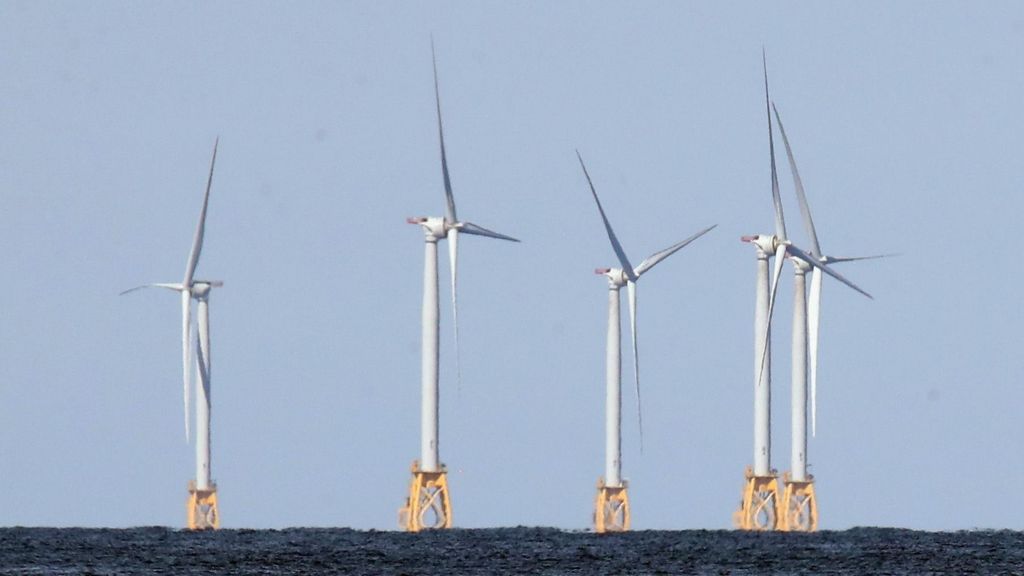
    In a move that underscores the Trump administration’s aggressive rollback of offshore wind energy development, German energy giant RWE has announced it will abandon all its U.S. offshore wind projects after securing a $1.2 billion settlement with the U.S. Department of the Interior (DoI). The company confirmed it will redirect the entire payout to conventional natural gas infrastructure, earmarking $900 million alone for a new liquefied natural gas (LNG) export terminal under construction in Louisiana.

    After a months-long internal review, RWE concluded there was no viable path to secure necessary construction permits for its offshore wind leases in the foreseeable future under the current administration’s regulatory framework. As part of the settlement agreement, the firm will relinquish all its federal wind leases spanning three major regions: the California coast, the Louisiana coast, and the New York Bight, a busy offshore stretch between New York and New Jersey that was targeted for large-scale wind development under prior administrations.

    Despite exiting offshore wind, RWE reaffirmed its long-term commitment to the U.S. energy market, outlining plans to invest roughly $19.6 billion (€17 billion) in expanding its U.S. power generation capacity over the next six years, all of which will focus on conventional fossil fuel and baseload energy projects under the new regulatory landscape.

    Interior Secretary Doug Burgum welcomed the deal in a post to social platform X, framing the agreement as aligned with the administration’s vision for U.S. energy. “Americans deserve an energy system built on common sense, not one propped up by costly, wasteful subsidies,” Burgum wrote. “We welcome RWE’s agreement and voluntary investment in projects that strengthen our nation’s energy security.”

    This settlement marks the third high-profile exit of a major energy company from U.S. offshore wind since Trump returned to office, consistent with his long-standing opposition to renewable wind development and his commitment to boosting the domestic fossil fuel industry. During his 2024 presidential campaign, Trump ran on the iconic fossil fuel-friendly slogan “drill, baby, drill,” and moved quickly to curtail offshore wind after his inauguration.

    Within days of taking office, Trump explicitly stated his administration would not advance new wind projects, dismissing offshore wind turbines as “big, ugly windmills” that pose unacceptable risks to coastal wildlife and marine ecosystems. The administration has since systematically slowed permit approvals for new offshore wind developments and encouraged companies to voluntarily exit existing wind leases in exchange for financial settlements, with incentives to redirect capital to fossil fuel projects.

    The pattern of exits began earlier this year in March 2026, when French energy major TotalEnergies reached a similar settlement to abandon its U.S. offshore wind holdings. In exchange for ending its wind projects, TotalEnergies agreed to shift investment to a new LNG facility in Texas and expand conventional oil exploration in the Gulf of Mexico. Just last month, the administration closed a $129 billion settlement with Duke Energy, a major U.S. utility based in Charlotte, North Carolina. Under that deal, Duke Energy relinquished its offshore wind lease in the Carolina Long Bay area in exchange for the settlement, which the company plans to redirect to conventional energy projects.

    The string of settlements has effectively halted most planned large-scale offshore wind development along U.S. coastlines, rolling back years of progress made under prior administrations to expand renewable energy capacity and cut greenhouse gas emissions from the power sector.

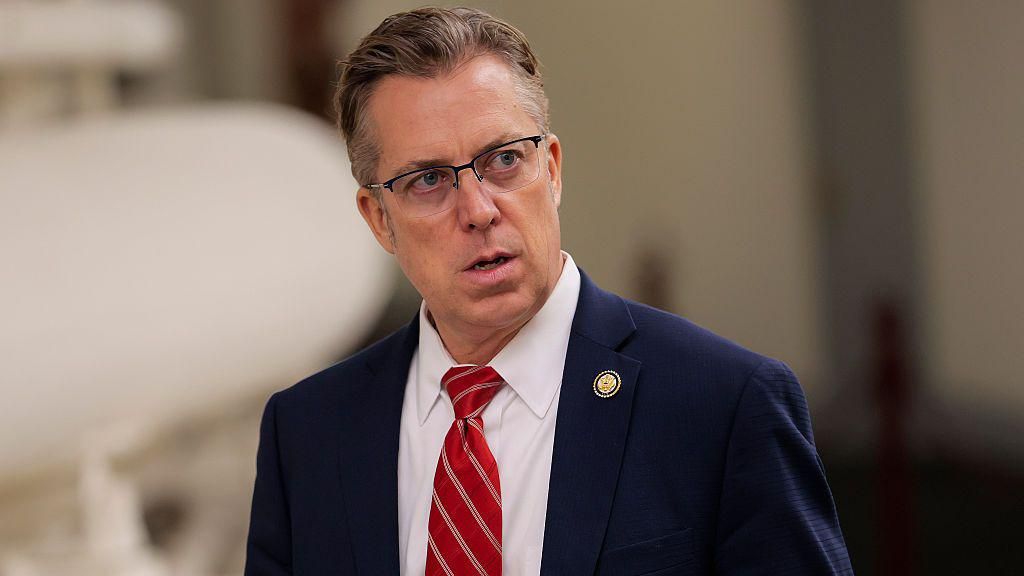
  • Trump-backed Republican congressman loses primary in Tennessee

    Trump-backed Republican congressman loses primary in Tennessee

    In a surprising upset that underscores shifting dynamics within the U.S. Republican Party, two-term incumbent Congressman Andy Ogles has been ousted in Tennessee’s 5th District Republican primary, becoming the second candidate backed by former President Donald Trump to lose a nomination contest this week.

    Former state agricultural commissioner Charlie Hatcher secured victory over Ogles in Thursday’s intra-party contest, a result that came just hours after Trump issued a last-minute full endorsement of the incumbent on his Truth Social platform. “Congressman Andy Ogles is doing a fantastic job,” Trump wrote in the post, adding “Andy is a Conservative Warrior who has strong support from his Community.” The defeat follows a similar upset a day earlier in Michigan, where another Trump-endorsed Republican candidate fell short of nomination.

    Ogles, who has represented the safely Republican district since he took office in 2023, leaves the primary race after a tenure marked by repeated high-profile controversies. He was investigated over claims of campaign finance violations, though no criminal charges were ultimately filed, and he has repeatedly denied any wrongdoing. More significantly, he drew widespread backlash from across the political spectrum for virulent anti-Muslim public comments, including posts on X that claimed “Muslims don’t belong in American society” and “America and Islam are incompatible.”

    Hatcher will now advance to the general election this November, where he will face Democratic nominee Chaz Molder, the current mayor of Columbia, who ran unopposed for his party’s nomination. This cycle’s 2026 midterm elections will see all 435 U.S. House seats and 35 of the 100 U.S. Senate seats up for grabs, making control of both chambers of Congress on the line for voters.

    While two high-profile Trump picks have fallen this primary week, the former president’s influence within the GOP remains substantial, with a string of primary victories for his endorsed candidates to offset the losses. In a separate Tennessee primary contest, Trump-backed candidate Amir Hassan underperformed badly against Tom Smith, who had suspended his own campaign in July and endorsed a different contender. But in Michigan, John James secured the Republican gubernatorial nomination despite being dramatically outspent by a wealthy rival, with a last-minute campaign appearance and endorsement from Trump boosting his odds of victory. Trump-endorsed candidates also won gubernatorial nominations in Kansas, and picked up a House primary victory in Washington state, where Amanda McKinney, the former president’s pick, finished first.

    This primary season has already broken modern records for the number of sitting congressional incumbents failing to secure their party’s renomination. According to data from *Vital Statistics on Congress*, six Democratic incumbents and three Republican incumbents have lost their primaries so far — the highest number of incumbent losses in a non-redistricting election cycle since 1970.