Four months after the U.S. Supreme Court struck down his first attempt to narrow access to U.S.-born citizenship, former President Donald Trump has rolled out a new pair of executive orders targeting what his administration calls “birth tourism” and expanding carve-outs to the longstanding principle of birthright citizenship. Signed during a formal White House ceremony on Thursday, the orders mark the latest high-profile push by the Trump administration to reshape U.S. immigration and nationality policy without congressional approval.
The first of the two orders expands the legal definition of non-citizen parents whose children born on U.S. soil are excluded from automatic birthright citizenship. Under the new framework, babies born in the U.S. to two non-citizen parents will be denied automatic citizenship if one parent falls into any of several specified categories: members of a designated foreign terrorist organization, foreign government officials, individuals who have previously sought U.S. immigration status through fraud, or residents of unincorporated U.S. territories where federal law does not grant birthright citizenship. While some of these categories were already excluded under longstanding rules, the new provision related to terrorist group membership has already sparked legal and policy ambiguity, according to Colleen Putzel-Kavanaugh, an associate policy analyst at the nonpartisan Migration Policy Institute (MPI). Putzel-Kavanaugh notes that the order fails to clarify critical procedural details: how terrorist affiliation will be verified, which government body will bear the responsibility of determination, and whether the burden of proof will rest with the government to confirm membership or the individual to disprove it.
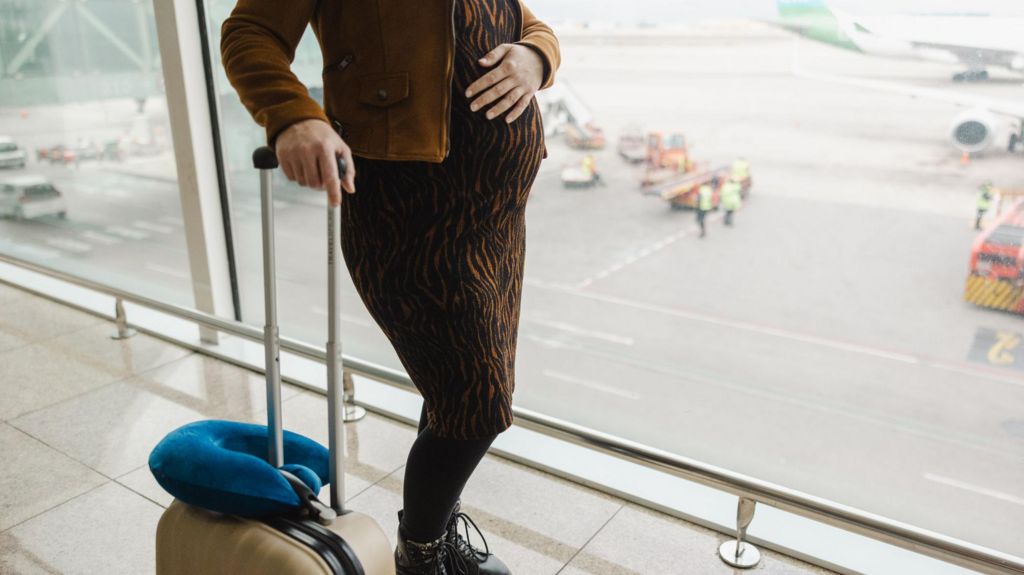
The second executive order directly targets the practice of birth tourism — the process through which foreign nationals travel to the U.S. specifically to give birth, so their child can obtain U.S. citizenship by birth. The order directs the State Department and Department of Homeland Security to tighten existing regulations and ramp up enforcement efforts against the birth tourism industry, which the order argues relies on deceptive marketing to attract expecting parents. The order claims that industry operators frequently advertise guaranteed U.S. citizenship, access to public benefits, and specialized maternity accommodation, but often fail to deliver on these promised services. Notably, traveling to the U.S. for the explicit purpose of giving birth is already classified as a violation of immigration law.
Birthright citizenship, formally known as *jus soli* (the right of the soil), is codified in the 14th Amendment to the U.S. Constitution, ratified in the aftermath of the American Civil War to guarantee citizenship to formerly enslaved people born in the U.S. Under current longstanding interpretation, almost all individuals born on U.S. soil receive automatic citizenship regardless of their parents’ own citizenship or immigration status, with only a handful of narrow exceptions. These existing exceptions include children born to foreign diplomats on official assignment, children born to enemy occupying forces, and children born in unincorporated U.S. territories where Congress has not extended birthright citizenship. For example, people born in Puerto Rico, Guam, and the U.S. Virgin Islands receive automatic U.S. citizenship, while those born in American Samoa are classified as “non-citizen nationals” rather than full citizens.
In announcing the new orders, Trump claimed that “hundreds of thousands” of babies are born in the U.S. each year via birth tourism, offering no evidence to support the figure and no clarification on whether the number reflects an annual total or cumulative count. Official data from the U.S. Centers for Disease Control and Prevention (CDC) shows that just over 9,500 babies were born in 2024 to women listing foreign residential addresses, accounting for roughly 0.25% of the 3.7 million total births recorded in the U.S. that year. However, MPI analysts argue that official CDC figures are almost certainly an undercount, as birth tourism participants often use a temporary U.S. address to register the birth rather than their permanent foreign address. After a broader analysis of U.S. Census data, MPI estimates that between 20,000 and 26,000 babies are born annually in the U.S. as a result of birth tourism, equal to between 0.5% and 0.7% of total annual U.S. births. Putzel-Kavanaugh emphasized that exact counts are inherently difficult to capture, because birth tourism is defined by the traveler’s private intent to give birth in the U.S. — a detail that is rarely recorded in official administrative data. Some unplanned births also occur when traveling pregnant people experience unexpected medical emergencies that require delivery in the U.S. even if they originally planned to give birth in their home country, she added.
The Trump administration’s legal challenge to broad birthright citizenship reached the Supreme Court earlier this year, with oral arguments held in April. The administration’s case centered heavily on the argument that unconstrained birthright citizenship has allowed the birth tourism industry to grow, creating a cohort of U.S. citizens with no meaningful connection to the country. Solicitor General D. John Sauer argued during arguments that the 14th Amendment’s framers never intended for the provision to enable mass birth tourism, arguing that modern air travel has created a situation where “eight billion people are one plane ride away from having a child who’s a U.S. citizen.” When Chief Justice John Roberts asked whether Sauer agreed that birth tourism’s existence has no bearing on the legal interpretation of the 14th Amendment, Sauer countered that the practice proves the amendment carries unforeseen consequences that its authors would never have endorsed. The Supreme Court’s majority rejected the administration’s interpretation in June, with the majority’s reasoning summed up by Roberts’ remark: “Well, it’s a new world. It’s the same Constitution.”
Trump has repeatedly claimed that the U.S. is nearly unique among major nations in granting unrestricted birthright citizenship. In reality, more than 30 countries around the world practice automatic unrestricted *jus soli*, including most nations in Central and South America such as Brazil, Argentina, and Mexico. The U.S. and Canada are the only two IMF-classified developed economies that grant nearly unrestricted birthright citizenship; other major countries such as the United Kingdom and Australia use a modified system that only grants automatic birthright citizenship if at least one parent is a citizen or permanent resident.