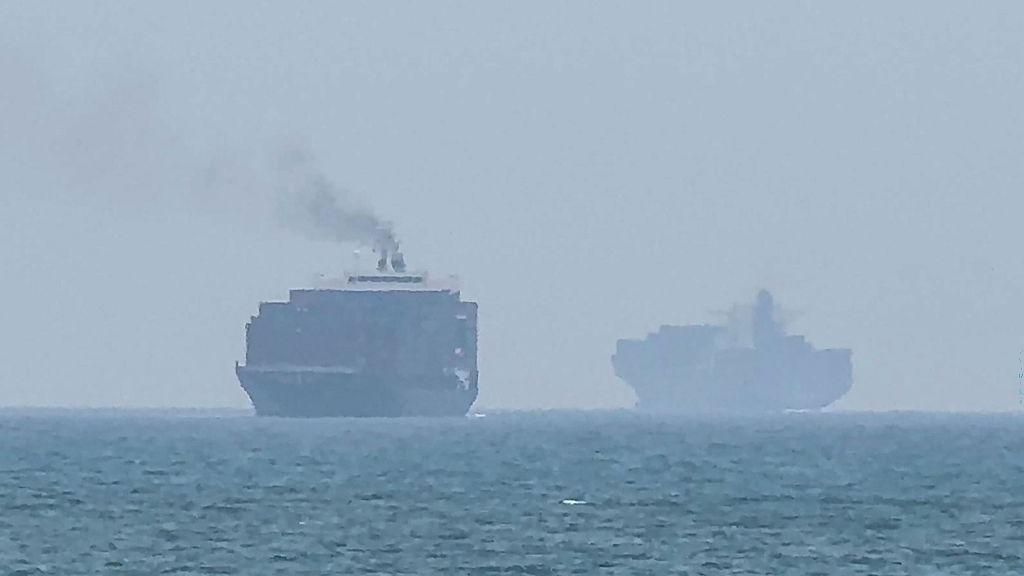
Diplomatic discussions between Oman and Iran over a new security agreement for commercial shipping through the strategically critical Strait of Hormuz are moving forward in a positive direction, Omani officials have confirmed, though Iranian leaders have cautioned that no immediate full reopening of the waterway can be expected even if a deal is reached.
Both nations issued updates on Saturday confirming that negotiations are advancing, but no clear timeline for the finalization of any agreement has been set. Oman’s foreign ministry has issued a urgent warning against shipping attacks that could derail the ongoing diplomatic process.
Iranian Foreign Minister Abbas Araghchi noted that talks have entered their final stages, but a full resumption of unobstructed transit through the strait remains tied to the fulfillment of additional unspecified conditions. Tehran has maintained an effective blockade of the strait – a chokepoint through which roughly 20% of the world’s daily oil and natural gas supplies transit – since the United States and Israel launched military operations against Iran in February.
Recent negotiations have centered on a proposed joint Omani-Iranian framework for managing a secured shipping route through the waterway, a plan that backers hope will pave the way for the gradual return of commercial traffic. Araghchi clarified that full reopening depends on Iran receiving compensation from the U.S. for what Tehran frames as violations of the June ceasefire Memorandum of Understanding (MoU) between the two sides. That earlier deal collapsed within days of being signed, with tit-for-tat military hostilities resuming shortly after.
In a separate comment to semi-official Iranian news outlet Tasnim, Iran’s top security official Mohammad Baqer Zolqadr went further, stating that the Strait of Hormuz will not reopen until the U.S. fundamentally revises its policy toward Iran. He outlined six core Iranian demands, including an end to U.S. threats against Tehran, the lifting of the U.S. naval blockade on Iranian ports, and the release of billions of dollars in frozen Iranian assets.
The broader Middle East maritime disruption has expanded in recent months: Yemen’s Iran-aligned Houthi movement has imposed a separate blockade on commercial shipping approaching Saudi Arabian ports in the Red Sea since July 20.
U.S. officials have offered mixed signals on the pace of a potential deal. Earlier this week, former President Donald Trump said an agreement with Iran could come “soon”, but Vice President JD Vance struck a more cautious tone during an appearance on Fox News Saturday. Vance emphasized that negotiations remain far from complete, saying “We’re really in the middle of the game here. This thing is not over.”
Vance added that the U.S. is deploying a full suite of diplomatic, economic, and military tools to secure an outcome that serves American interests. He also claimed that Gulf oil export volumes have remained unchanged since the launch of U.S. military operations in late February, though he offered no data to support that assertion. “What we’re really working through now is how you can actually set up a traffic scheme so that the ships can pass through safely,” he explained.
A major point of contention between Washington and Tehran has been reports that Iran plans to impose transit fees on commercial vessels passing through the strait. Reuters previously cited an anonymous Iranian official reporting that Tehran was seeking fees equal to between 5% and 7% of the value of each vessel’s cargo. Vance pushed back on these reports Saturday, saying “The Iranians have told us they have no plans to toll the Strait of Hormuz.”
Oman’s warning against shipping attacks came on the same day that the United Arab Emirates (UAE) accused Iran of carrying out a hostile missile attack on an oil tanker affiliated with ADNOC, the UAE’s state-owned energy giant, as it transited the region. The UAE foreign ministry said the strike caused no casualties. Later Saturday, the UK Maritime Trade Operations (UKMTO) agency reported that a vessel had been hit by an unknown projectile off the coast of Oman, sparking a fire that was later extinguished with no reported injuries. It remains unconfirmed whether UKMTO was referencing the same ADNOC tanker targeted in the UAE statement.