A major firestorm has erupted in American late-night television after comedian Jimmy Kimmel refused to back down from a controversial joke he made that drew sharp condemnation from First Lady Melania Trump. The jab in question, which labeled an individual an “expectant widow”, prompted scathing pushback from the White House, which publicly called on ABC, the network that airs Kimmel’s long-running talk show, to terminate the comedian’s contract immediately. In her public rebuke, Melania Trump characterized the quip as nothing short of hateful and violent language, marking one of the most high-profile clashes between a sitting White House administration and a mainstream entertainment personality in recent memory. Since the controversy broke, Kimmel has doubled down on his position, defending the joke as a legitimate piece of comedic commentary rather than the harmful attack the first lady has decried. The standoff has sparked widespread debate across media and political circles about the boundaries of political comedy, the role of late-night hosts in criticizing public figures, and whether major media outlets should cave to political pressure to punish performers for controversial jokes. Industry observers have noted that the situation puts ABC in an uncomfortable position, caught between pressures from the nation’s highest office and the network’s long-standing commitments to free expression and its on-air talent.
标签: North America
北美洲
-

‘It’s bizarre’: Californians grapple with revelation that press gala gunman suspect was neighbour
Torrance, a sun-dappled coastal suburb of Los Angeles, has long been known to locals by its affectionate nickname: “Bore-ance.” A quiet community boasting top-rated public schools, gentle ocean breezes, and sprawling million-dollar single-family homes, the city has cultivated a reputation for being a place where major excitement never finds its way. That quiet normality shattered abruptly this weekend, after 31-year-old Cole Thomas Allen, a Torrance resident who lived with his parents just two blocks from where local resident Vince Terrazzino raised his 10-year-old daughter Alessandra, was arrested in Washington D.C. on charges of attempting to assassinate former President Donald Trump at the annual White House Correspondents’ Dinner.
Neighbors who spoke to the BBC described a collective stunned disbelief when Allen’s face — handcuffed, shirtless, and face-down on the floor of the Washington Hilton after he allegedly breached a security checkpoint armed with multiple weapons — flashed across national news broadcasts. “It’s bizarre that this person lives two blocks away from your house,” Terrazzino told reporters, recalling the wave of law enforcement activity that descended on the quiet suburban street within hours of Allen’s arrest.
Within hours of the D.C. arrest, FBI agents descended on the Allen family home, executing a search warrant that kept helicopters circling the neighborhood through the entire night. The constant rotor noise kept nearly every resident awake, all glued to 24-hour news broadcasts trying to piece together what had happened from their quiet corner of California. Agents knocked on doors along the street searching for witnesses and clues, but declined to answer questions from residents or reporters, leaving locals to fill in the gaps with speculation.
For many adult residents, the sudden swarm of media trucks parked along their narrow sidewalks and traffic jams that clogged the residential street were an unwanted nuisance. But for neighborhood children like Alessandra, the chaos was a rare break from “Bore-ance” routine – the 10-year-old hounded FBI agents for updates and described the scene as exciting and “popping.” On Monday, kids on wheelie bikes zoomed past clusters of national reporters, hoping to catch a spot on evening news broadcasts or influencer social media clips, all echoing the city’s familiar “nothing ever happens here” nickname.
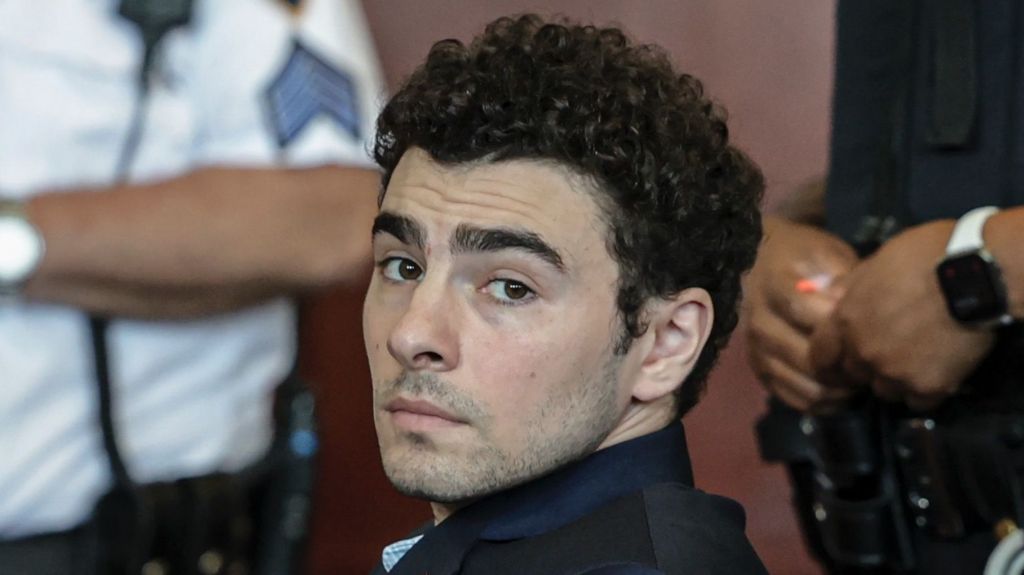
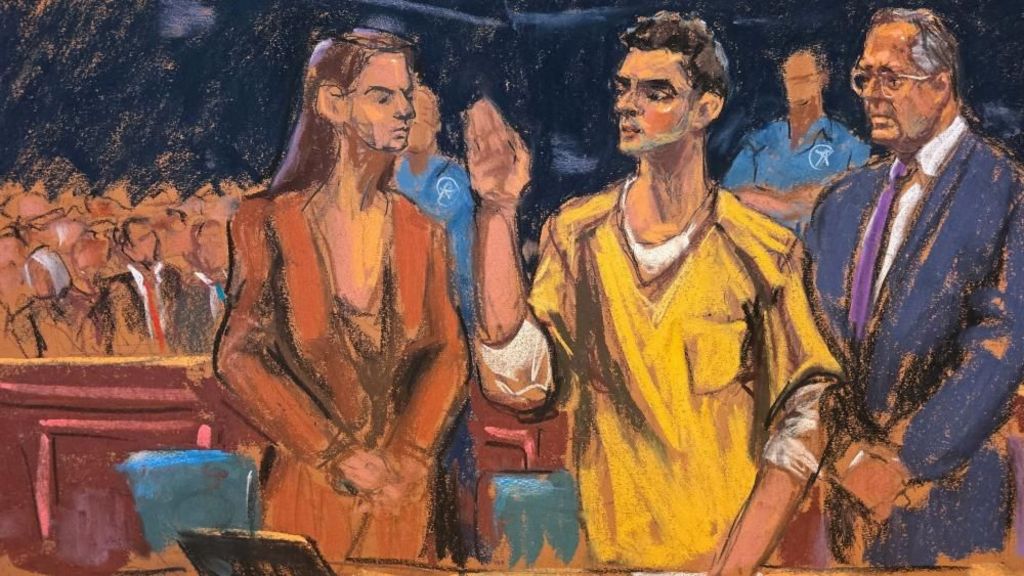
Court documents paint a stark picture of the alleged plot in Washington. An affidavit from prosecutors confirms Allen was carrying a semi-automatic handgun, a pump-action shotgun, and three knives when he rushed past the event’s security perimeter. An exchange of gunfire between Allen and Secret Service agents left one agent wounded before Allen was finally subdued. Prosecutors also allege Allen pre-warned relatives of his plans, writing that he intended to target as many members of the Trump administration as possible. Allen made his initial court appearance on Monday, and has not yet entered a plea to the charges against him.
Along the residential street where the Allen family has lived, none of the neighbors the BBC spoke to said they knew Cole Allen well beyond casual smiles and waves when passing one another. Most said they knew his parents, who many described as a friendly, well-regarded local couple, and many neighbors went out of their way to express sympathy for the family amid the global media firestorm. “Leave those poor people alone,” one anonymous neighbor told reporters, explaining he was fed up with gridlock on the narrow street caused by press vehicles. Countless reporters knocked on the Allen family’s door over the weekend and Monday, but no one answered; most locals speculate the family is staying with friends or relatives outside the area to avoid the attention.
A few miles from the family home, at a tutoring center where Allen worked, the location remained closed over the weekend with no sign of Allen. Cesilia Peralta, who works at a business next door to the center, told the BBC she regularly saw Allen during his lunch breaks, where he always ate alone. “He wouldn’t look at you. He wouldn’t interact,” Peralta said. “He never made eye contact.” Peralta’s 11-year-old daughter, who has received tutoring at the center, recognized Allen from his photo when shown by reporters, echoing the pervasive shock that has spread through the local community: “You never know who you’re around,” Peralta said.
Earlier in his life, Allen studied at the California Institute of Technology, one of the most prestigious STEM research universities in the United States. While he was a student in nearby Pasadena, he attended services at the Pasadena United Reformed Church. Pastor Movses Janbazian told the BBC he still remembers Allen from his time as a student, describing him as a quiet young man who came to services regularly before returning immediately to his campus studies. “CalTech is very competitive. He was studying a lot,” Janbazian said. “He would come and go.” The pastor declined to discuss politics, and said he did not know what Allen’s political beliefs were, or whether Allen continued to attend church after he graduated and moved away. “I knew him casually,” Janbazian said. “I don’t have a lot to add.”
As the media presence lingers on the suburban street, one local resident wanted to make sure reporters didn’t walk away with only the negative story: he reminded the BBC that 1936 Olympic runner and World War II hero Louis Zamperini, one of Torrance’s most famous native sons, also lived just down the same street from the Allen family home. “Good things also come out of Torrance,” the neighbor noted.
-

Shooting signifies increasing political violence in the US
On a Saturday evening in April 2026, a shooting disrupted the annual White House Correspondents’ Association dinner at the Washington Hilton, an event attended by U.S. President Donald Trump, sending shockwaves through Washington’s political establishment and reigniting urgent conversations about the growing crisis of political violence and deepening polarization across the United States. The suspect, identified as 31-year-old Cole Tomas Allen, a Caltech graduate and independent video game developer from Torrance, California, was formally charged by federal prosecutors on Monday with three severe criminal counts: attempted assassination of the U.S. president, interstate transportation of a firearm to commit a felony, and discharge of a firearm during a violent crime. In a manifesto he released to justify his actions, Allen argued that remaining passive in the face of oppression amounts to complicity with injustice, framing his violent act through a warped ideological lens. In the days following the incident, politicians from both major U.S. political parties issued unified condemnations of political violence, even as they traded blame over which side is responsible for normalizing aggression in public discourse. Bipartisan gubernatorial leaders Oklahoma Republican Governor Kevin Stitt and Maryland Democratic Governor Wes Moore released a joint statement emphasizing that political violence has no place in U.S. democracy, noting that the incident underscores how badly the nation needs to restore unity, civility, and mutual respect across ideological divides. House Minority Leader Hakeem Jeffries echoed that sentiment during a Monday press briefing, stressing that political violence targeting any person regardless of their ideological leaning is fundamentally unacceptable. Despite this cross-party condemnation, many Republican officials quickly pinned responsibility for the attack on Democratic rhetoric, arguing that inflammatory left-wing language has created a culture that accepts political violence. President Trump told CBS’s 60 Minutes in a Sunday interview that what he described as Democratic hate speech has created a dangerously divisive national climate. Republican National Committee Chair Joe Gruters went further, calling the shooting the inevitable outcome of a radicalized left that has normalized violence against political opponents. Civil rights and community leaders, however, frame the crisis as a product of broader systemic polarization that has consumed the entire political spectrum. Janai Nelson, president and director-counsel of the Legal Defense Fund, condemned the shooting in a statement, arguing that hate and violence have flourished in a national climate marked by deepening division, dehumanizing rhetoric targeting political opponents, and growing disrespect for people with differing ideological views. “Whether directed at public officials, journalists, law enforcement, or the public, such acts threaten the core values of our democracy,” Nelson said, adding that the nation cannot afford to normalize dangerous rhetoric or the violence that so often follows it. North Carolina Republican Senator Thom Tillis called for more intentional, careful discourse, telling NBC on Sunday that “Our words matter. The weight of our words matters, and we need to be very measured in the way that we use them.” Public reaction to the shooting has reflected deep division and widespread anxiety about the trajectory of American democracy, with many members of the public pointing fingers at the current political leadership while others blame partisan media and ideological extremism on both sides. Multiple commenters quoted in major U.S. publications argued that the current Trump administration has normalized violence as a tool to resolve conflict, pointing to its aggressive foreign policy actions against Venezuela, Iran, Greenland and Cuba, as well as aggressive immigration enforcement actions by U.S. Immigration and Customs Enforcement that have harmed both immigrants and citizens. “The problem with using violence against your citizens, violence against immigrants, violence against those you don’t like, and violence to solve international problems, is that others begin to believe that violence is the way to solve problems,” one New York Times reader wrote. Another added, “Violence begets violence. And there has been no administration more aggressive, unlawful, and violent in my lifetime than this one. I am not surprised at this attack. I am surprised there have not been more.” By contrast, some conservative-leaning commentators and readers argued the attack stemmed from years of dehumanizing rhetoric against Trump from mainstream media and Democratic leaders. One Wall Street Journal reader argued Allen had absorbed the constant demonization of Trump that has become common in left-leaning political and media spaces. For other Americans, the shooting was just another example of the persistent gun violence crisis that plagues the country daily, with the only difference being that it occurred at a high-profile event attended by political elites who have access to extensive security details that ordinary Americans do not. “The difference is that people, unlike the cabinet, don’t have security details to protect them,” one Wall Street Journal reader noted. Data from independent and polling organizations confirms that rising political violence is not just a perception: it is a widely recognized crisis growing more severe by the year. 2025 data from gun violence tracking outlet The Trace shows that an average of more than 110 people are shot every day in the U.S., excluding suicide deaths. A Pew Research Center poll released last October found that 85 percent of surveyed Americans agree that politically motivated violence is increasing in the country. The poll also revealed how widespread blame is: 53 percent of respondents hold the left wing responsible for rising violence, 52 percent blame the right wing, and 47 percent blame people with no clear political alignment. Partisan divides shape how Americans assign blame: 28 percent of Democrats link recent political violence to the rhetoric of Trump, the MAGA movement, and conservatives, while only 16 percent of Republicans blame liberal or Democratic rhetoric and behavior. Even more alarming, an October 2025 PBS News/NPR/Marist poll found that 30 percent of Americans now believe that people may need to resort to violence to put the country back on the right track. That figure represents an 11 percentage point increase in just 18 months, marking a dramatic shift in public acceptance of political violence as a legitimate tool for political change.
-

Epstein was disgraceful; is American justice the same?
For decades, American political and cultural leaders have leaned heavily on the narrative of U.S. exceptionalism, framing the nation as a global beacon of equal justice, unrivaled opportunity, and moral leadership. This rhetoric permeates everything from diplomatic addresses to everyday domestic discourse, with officials and private citizens alike routinely highlighting the country’s supposed commitment to fairness as a core part of its national identity. But the long and sordid saga of Jeffrey Epstein blows a gaping hole in that carefully constructed narrative, laying bare deep systemic flaws that allow wealthy and connected predators to evade accountability for grievous crimes.
Epstein, a disgraced financier who died in a New York jail cell in 2019 while awaiting trial on sex trafficking charges, spent decades building a network of underage girls and young women he exploited for sexual abuse, often trafficking them to powerful men across elite circles in politics, law, and higher education. Even before his death, credible rumors of his misconduct circulated for years, yet no serious legal action was taken to stop him for decades. This immunity was not accidental: it was the product of deliberate protection from the influential figures who benefited from his crimes, and a legal system that has long bent to the will of the ultra-wealthy.
Critically, the injustice of the Epstein case extends beyond the financier’s own death, which robbed his dozens of victims of the chance to see him convicted in a court of law. In recent months, new revelations have added fresh outrage to the scandal: Epstein’s long-time partner has claimed that more than 20 other people with direct knowledge of his trafficking ring were granted immunity from prosecution through secret government-approved settlements. As one journalist noted, Epstein leveraged his elite social connections to build an impenetrable protective barrier, one that granted him social credibility and kept law enforcement at bay for decades. There is no sugarcoating the reality: systemic roadblocks were deliberately put in place to let Epstein live a life of unimpeded privilege, even as he inflicted irreversible harm on hundreds of young victims.
While a small number of high-profile figures are now facing consequences for their ties to Epstein, the case lays bare a much wider rot in American society. Too often, the country’s wealthiest and most powerful elite have carved out a separate set of rules for themselves, far removed from the equal justice that ordinary Americans are promised. They justify their excessive, often depraved lifestyles with the claim that they earned their wealth, and operate with little to no accountability to the public. And all too often, the U.S. legal system enables this separation, allowing money to buy protection from scrutiny and consequences that ordinary people could never access.
That said, the contrast between Epstein’s corruption and the choices of other extremely wealthy American leaders makes clear that wealth does not have to lead to greed or abuse. Consider Warren Buffett, one of the world’s richest men with an estimated net worth of $151 billion. Over the last 20 years alone, Buffett has donated roughly $60 billion to charitable causes, and has publicly committed to giving away more than 99% of his total wealth during his lifetime and after his death. In explaining his choice, Buffett noted that excessive material possessions often end up owning their owner, and that his most valuable asset outside of health is his network of diverse, long-standing relationships. Buffett is not a perfect man — no person is — but his choice to use his wealth for collective good stands as a powerful rebuke to the idea that wealth must lead to selfishness or exploitation.
This same commitment to honor and service is seen in the legacy of Jimmy Carter, the 39th U.S. president who died in December 2024. Tributes to Carter overwhelmingly focused on his identity as a dedicated humanitarian, who rejected the lavish trappings of power and wealth that come with his status, and instead used his platform to improve public health and safety in vulnerable communities around the world. Just as with Buffett, Carter’s legacy will be one of service, not self-dealing.
The contrast between these two worlds — the predatory impunity of Epstein and the selfless service of leaders like Carter and Buffett — raises a critical question for American media and society. If the public and press prioritized celebrating the good works of honorable, generous leaders instead of fixating on the scandals of powerful predators, the national conversation would be far healthier, and the true face of American leadership would be far clearer. The Epstein case is not just a story of one man’s depravity: it is a warning about the cost of systemic inequity, and a reminder that exceptionalism must be earned through equal justice for all, not just claimed as a birthright.
This opinion piece is written by Anthony Moretti, an associate professor in the Communication and Organizational Leadership Department at Robert Morris University in Pennsylvania, U.S. The views expressed do not necessarily represent the official stances of China Daily or Robert Morris University.
-

Music, tea ritual bind East-West bonds
On a Friday evening at the Chinese Embassy in Washington D.C., soft curling wisps of incense and the deep, resonant strings of an ancient guqin transformed the diplomatic venue into an immersive space where Eastern tradition meets Western culture. Hosted under the theme “Tea for Harmony: East Meets West in Music”, the gathering drew more than 200 guests from across the United States, who were invited to experience China’s traditional “Four Arts of Life” — tea tasting, incense appreciation, floral arrangement and scroll painting display — before a cross-cultural musical performance that blended centuries-old artistic traditions from both sides of the Pacific.
The evening kicked off with interactive cultural stations, where attendees had the chance to sample rare, premium tea varieties and watch masters demonstrate the meticulous craft of gongfu cha, China’s centuries-old traditional tea making ritual. Guided by skilled artisans, guests learned that the practice is far more than a method of preparing tea: it centers on intentionality, calm mindfulness, and nurturing a deep connection between people and the natural world. These hands-on experiences allowed guests to engage directly with Chinese cultural traditions long before the main musical performance began, building a foundation of curiosity and connection.
Opening the official program, Chinese Ambassador to the U.S. Xie Feng tied the event to Grain Rain, the final of China’s 24 traditional solar terms that marks the end of spring and the start of the growing season. He described tea as a carrier of the enduring core spirit of Chinese civilization, noting that the Chinese character “cha” itself encodes the philosophy of harmony between humanity and nature. “In sipping tea and savoring its taste, one needs to seek refinement and cultivate a noble character,” Xie said. “And in serving tea to others, one needs to show respect, sincerity and courtesy. So each small tea leaf is a gateway to profound Chinese philosophy.”
Beyond its cultural depth, Xie highlighted the modern economic vitality of China’s tea sector, noting that the full domestic tea industry chain surpassed 1 trillion yuan (approximately $146 billion) in value last year. He framed the growing tea economy as a clear example of China’s emerging new quality productive forces, pointing to innovations including smart, technology-integrated tea plantations and the launch of the world’s first national digital platform for tracking tea product carbon footprints. He added that innovative new Chinese tea brands, including popular chains HeyTea and Chagee, have already earned a large and loyal following across the United States.
Shifting focus to China-U.S. bilateral relations, Xie drew on long historical ties between the two nations rooted in tea trade, stretching back to the 18th-century voyage of the Empress of China, the first American ship to sail to China after U.S. independence. He also recalled the iconic tea gifts exchanged during landmark 1970s visits by former U.S. President Richard Nixon and his national security advisor Henry Kissinger, visits that opened the door to normalized bilateral relations. Xie drew a parallel between the complementary nature of tea and coffee, and the coexistence of the two world powers: “Tea and coffee are not incompatible; when brought together, they can blend into creative drinks that take the world by storm,” he said. “It takes time to truly appreciate the fragrance of tea. Likewise, states need patience and steady resolve when engaging with one another.”
While acknowledging that it would be unrealistic for either China or the United States to remold the other in its own image, Xie emphasized that the two nations can still chart a shared path to mutual prosperity. “As long as we follow the strategic guidance of our presidents, show mutual respect, stick to the bottom line of peaceful coexistence, and strive for the vision of win-win cooperation, we can gradually find a path leading to respective success and shared prosperity,” he said.
The evening’s concert brought this message of cross-cultural fusion to life. China’s Juntianyunhe Ensemble shared the stage with French-South African cellist Jacques-Pierre Malan and Russian violinist Vadim Tchijik, weaving the 3,000-year-old sound of the guqin into collaborative performances alongside Western classical string instruments. In works such as *Wandering Mind*, the improvisational exchange between guqin and cello merged Eastern lyrical expression with Western structural composition, earning enthusiastic applause and cheers from the assembled audience.
Greg Bland, founder of local events platform Things To Do DC and co-organizer of the event alongside the Embassy Series, emphasized the unique unifying power of people-to-people cultural exchange. “Regardless of where we get along politically or historically right now … Chinese culture still brings us together,” Bland told China Daily. “Learning about it is like learning about a different person … and it helps build personal friendships.”
-

Gunman believed to be targeting Trump: Officials
On Saturday, a 31-year-old California man named Cole Tomas Allen was arrested inside the Washington Hilton hotel, the venue hosting the annual White House Correspondents’ Dinner where former and current U.S. President Donald Trump was gathered with national media figures. U.S. law enforcement officials now confirm that early investigations point to Allen having clear intentions to target Trump, along with other high-ranking members of the current administration.
Acting U.S. Attorney General Todd Blanche shared updates on the probe Sunday, noting that preliminary examinations of Allen’s electronic devices and interviews with his acquaintances have backed up investigators’ working theory. “It does appear that he did in fact have set out to target folks that work in the administration, likely including the president,” Blanche told reporters.
Allen is scheduled for his first federal court appearance in Washington D.C. Monday, facing two serious felony charges: unlawful use of a firearm during a violent criminal act, and assault on a federal officer with a dangerous weapon.
Authorities have recovered a roughly 1,000-word manifesto they believe was authored by Allen, which explicitly outlines a premeditated mass shooting plot with Trump listed as the primary target, multiple major U.S. media outlets have confirmed after reviewing the document. The text orders targeting of administration officials “prioritized from highest-ranking to lowest,” and includes a line that reads, “I would still go through most everyone here to get to the targets if it were absolutely necessary,” adding, “I really hope it doesn’t come to that.”
Minutes before he attempted to carry out the plan, Allen sent a message to his family members identifying himself as a “Friendly Federal Assassin,” the Associated Press reported. The message also included broad criticisms of Trump administration policies, leading investigators to conclude the alleged plot was politically motivated. Trump, for his part, publicly commented Sunday that the manifesto was anti-Christian and reflected “a lot of hatred in his heart.”
Saturday’s incident marks at least the third known plot against Trump in less than two years: he survived an assassination attempt at a Pennsylvania campaign rally in July 2024, and just months later another individual was arrested for pointing a rifle at Trump while the president golfed in Florida.
This latest security breach has reignited national conversations about the growing crisis of political violence across the United States. Just seven months prior to the Washington Hilton incident, prominent conservative activist Charlie Kirk was fatally shot at a public rally, and only months before that, Democratic Minnesota State Representative Melissa Hortman and her husband were murdered in a targeted attack that also left a state senator wounded. A Reuters/Ipsos poll conducted after Kirk’s killing found that a large majority of U.S. respondents believe the increasingly harsh, divisive rhetoric that defines modern American politics is directly fueling the rise in election and policy-related violence.
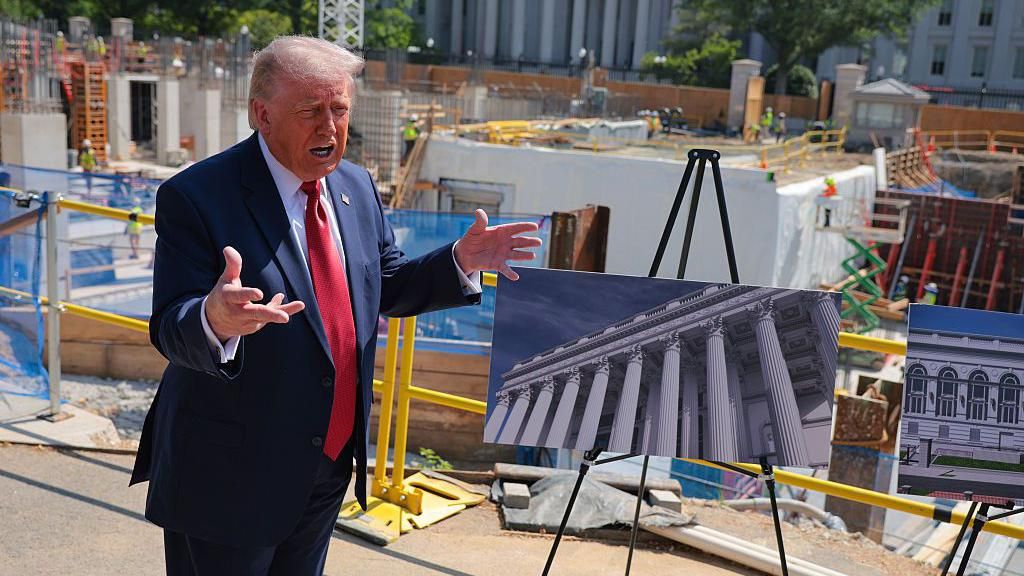
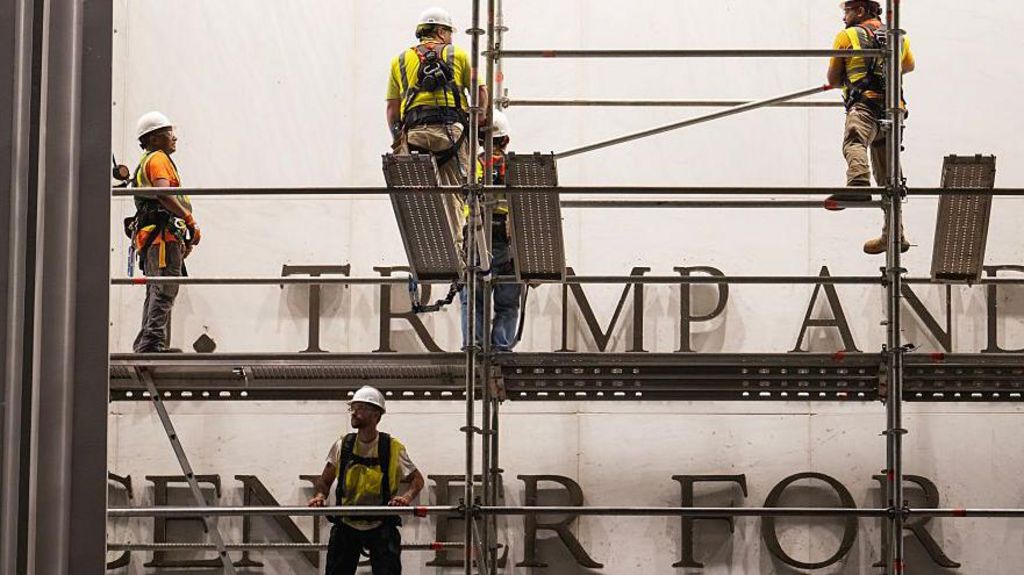
The incident has also bolstered Trump’s long-stated push to construct a new private event ballroom on the White House grounds, arguing the off-site venue for the Correspondents’ Dinner, the Washington Hilton, lacks adequate security. The Hilton is located roughly a 10-minute drive from the White House, and holds a grim place in U.S. presidential history as the site of the 1981 assassination attempt against then-President Ronald Reagan. Even with hundreds of Secret Service agents assigned to secure the annual dinner, which draws hundreds of high-profile guests including cabinet secretaries, senior members of Congress, and A-list celebrities, Allen was still able to access a floor directly above the main ballroom armed with a shotgun and multiple other weapons, highlighting critical gaps in the event’s security apparatus.
-

Megan Thee Stallion pulls out of Moulin Rouge show
Grammy-winning rapper Megan Thee Stallion has brought an early close to her highly anticipated Broadway debut, exiting *Moulin Rouge! The Musical* nearly three weeks ahead of her scheduled final performance. The 31-year-old hip-hop star, who made history as the first woman to take on the role of boisterous nightclub impresario Zidler at the Al Hirschfeld Theatre, originally was contracted to remain with the production through May 17. However, she announced via Instagram last week that her closing performance would instead take place on May 1.
Megan’s sudden early departure comes on the heels of two major disruptive events in her personal life in recent weeks. At the end of March, just weeks after her opening night in the role, the rapper was rushed to a hospital mid-performance after falling ill on stage. At the time, she shared with fans that she had been overextending herself for weeks, running “on empty” until her body ultimately forced her to stop. “I thought I was gonna faint on stage, I really tried to push through my performance but I just couldn’t,” she wrote in a post-show update. “It honestly scared me.”
More recently, Megan confirmed that she has ended her high-profile relationship with 36-year-old NBA star Klay Thompson. Multiple U.S. media outlets have connected her early exit from the Broadway run to the split, after the rapper posted (and later removed) an Instagram Story that appeared to accuse Thompson of infidelity. Thompson has not yet released any public statement responding to the split or the allegations, and representatives for the athlete have not replied to requests for comment from BBC Newsbeat.
To date, Megan herself has not shared an explicit reason for cutting her Broadway run short. Both fans and entertainment commentators have speculated that a combination of lingering health concerns from her March medical incident and emotional upheaval from her breakup could have prompted the decision. In her announcement confirming the exit, Megan expressed gratitude for the opportunity to join the Broadway production, saying, “It’s been such an honor to be part of the Moulin Rouge family.”
During her time with the show, Megan’s casting drew massive mainstream attention and reinvigorated ticket sales for the long-running musical. As documented by *Rolling Stone*, the star’s name drew crowds of onlookers who gathered outside the Al Hirschfeld Theatre daily in hopes of catching a glimpse of her, and devoted fans traveled from across the United States to see her turn as Zidler, a role traditionally performed by male actors. Her performance earned largely positive critical reviews from both theater outlets and hip-hop commentators.
For long-time followers of the rapper, Megan’s Broadway bow marked another major milestone in a rapid and eventful rise to fame. Born Megan Pete, she first built a grassroots fanbase between 2016 and 2017 with the release of her debut EP *Make It Hot*. She earned her first spot on the Billboard Hot 100 with her 2019 hit *Hot Girl Summer*, before breaking through to global mainstream success in 2020 when her track *Savage* claimed the number one spot on the chart. That single would go on to win the Grammy Award for Best Rap Song in 2021.
Her career has not been without high-profile personal and legal turmoil, however. In 2022, she took the stand in a widely publicized criminal trial against her former partner, rapper Tory Lanez. Lanez was ultimately found guilty of shooting Megan in the foot during an altercation in 2020, and was sentenced to 10 years in prison.
-

The other life of US soldier accused of betting on Maduro’s removal
A decorated U.S. Army Special Forces master sergeant is facing a slew of federal charges for allegedly exploiting classified knowledge of the covert operation to capture Venezuelan leader Nicolás Maduro to place illegal, profitable bets on the outcome of the mission, federal prosecutors have confirmed. The case has thrown a spotlight on growing regulatory concerns over unregulated crypto prediction platforms that enable government insiders to profit from confidential national security information.
Gannon Ken Van Dyke, a 17-year active-duty soldier stationed at Fort Bragg, North Carolina, who earned promotion to master sergeant in 2023, has been at the center of the unfolding scandal. As a member of elite special operations command, Van Dyke signed a strict non-disclosure agreement in 2018 that bound him to protect all sensitive classified information, acknowledging the U.S. government placed unique trust in him to guard operational secrets. Prosecutors allege that despite this commitment, he used his insider access to details of the January Maduro seizure to trade on Polymarket, a crypto-based prediction market, netting more than $400,000 in illicit winnings.
Outside of his military career, Van Dyke built a growing side career as a real estate investor, public records and online profiles show. He founded Better Homes NC LLC, a property investment firm registered in 2022, and owns at least six residential properties across North Carolina. He also operates a popular mountain Airbnb retreat called Daddy Bear Cave, where he holds a 5-star superhost rating, with guests praising his responsiveness and attention to detail. Most notably, public property records show Van Dyke closed on a $340,000, 2,400-square-foot three-bedroom home just 20 days after Maduro’s capture, coinciding with the transfer of his alleged betting winnings. His wife works alongside him in the real estate industry, advertising rental and sales listings through major industry brands, though her social media accounts have been taken offline in recent days, and Van Dyke’s own Facebook profile currently lists him as single.
According to the unsealed indictment issued last week, Van Dyke created his Polymarket account on December 26, 2025, using a virtual private network to route his connection through a foreign country to hide his location. Over the following week, between December 27 and January 2, he invested roughly $33,934 into a series of bets that predicted the timeline of U.S. military action in Venezuela and the date of Maduro’s removal from power.
On January 3, just hours after Van Dyke placed his final bet, then-President Donald Trump publicly announced that U.S. special operations forces had captured Maduro and his wife Cilia Flores in an overnight raid in Caracas. The couple were transported to the USS Iwo Jima, the U.S. Navy amphibious assault ship staged in the Caribbean for the mission, with photos later confirming Maduro in custody. Prosecutors also allege that just over an hour after Trump’s public announcement of the capture, Van Dyke uploaded a photo to his personal Google account showing him posing with a rifle alongside other special operations soldiers on the deck of a ship at sunrise, apparently confirming his presence on the operation.
Polymarket, the platform Van Dyke allegedly used, has faced growing regulatory scrutiny in recent months over the risks of insider trading by government officials with access to non-public information. The platform’s anonymous blockchain-based structure has been compared to the “Wild West” by legal experts, as most users cannot be identified by their public blockchain addresses alone. In early January, after Maduro’s capture, online investigators quickly noticed an anonymous bettor had earned nearly half a million dollars from correctly predicting the seizure, sparking widespread public outcry, but the bettor’s identity remained unknown for months.
Prosecutors say Van Dyke made a critical misstep that unmasked him: he used his personal email address to register his Polymarket account. After news reports began highlighting the large winning bet, Van Dyke allegedly took steps to cover his tracks, closing his account and attempting to hide his illicit winnings. According to the U.S. Department of Justice, he first withdrew roughly $409,881 in winnings and transferred most of the sum to a foreign interest-generating crypto vault, then changed the email associated with his crypto exchange account to a new, unlinked address. On January 16, he transferred the full sum, including accumulated interest totaling approximately $444,209, to a new personal brokerage account. Despite these efforts, federal investigators were able to trace the activity back to Van Dyke and unseal the full indictment last week.
Van Dyke faces five federal charges: unlawful use of confidential government information for personal profit, theft of non-public government data, commodities fraud, wire fraud, and unlawful monetary transaction. The U.S. Commodity Futures Trading Commission has also filed a separate civil lawsuit against him alleging insider trading. He is scheduled to be arraigned and formally enter a plea at a federal courthouse in New York this coming Tuesday, according to U.S. media reports. The indictment does not detail Van Dyke’s exact day-to-day role in the Maduro operation, which involved months of preparation, air strike capabilities, a network of on-the-ground intelligence assets, and a large coordinated military build-up in the Caribbean region.
-

Plan to bring tangible benefits
Against a backdrop of persistent global economic uncertainty and ongoing volatility from cross-border shocks, international economic and policy experts are praising China’s targeted strategy to expand domestic demand and advance industrial upgrading outlined in the 15th Five-Year Plan (2026–2030), noting the agenda not only strengthens China’s own economic stability and rebalancing but also delivers measurable, long-term advantages to economies across the world, particularly developing nations in the Global South.
Sourabh Gupta, a senior fellow at the Washington-based Institute for China-America Studies, outlined that the plan combines actionable measures to stimulate both household consumption and fixed investment while pursuing systematic industrial upgrading. On the industrial side, China has already made notable progress rationalizing sectors plagued by overcapacity, streamlining operations to boost overall global competitiveness for affected industries. In national accounting frameworks, industrial upgrading investments also count toward domestic consumption as final private purchases, amplifying the plan’s impact on internal growth.
Gupta highlighted that the plan includes a slate of consumer-focused initiatives: expanding national networks of electric vehicle charging infrastructure, promoting growth in leisure segments including ice and snow tourism, developing nationwide circular economy recycling systems, and incentivizing spending from international inbound tourists. One of the most impactful long-term structural reforms outlined in the plan, he added, is the proposed shift of value-added and consumption tax collection points from the production (upstream) end of supply chains to the retail (downstream) end. This reform would align local government tax revenues directly with local retail consumption growth, giving regional authorities far stronger incentives to prioritize policies that boost household spending.
Gupta also pointed to foundational policy changes rolled out in 2024 that laid groundwork for the 15th Five-Year Plan’s consumption-focused agenda, including accelerated reforms to China’s household registration system, expansions to national old-age insurance coverage, and improved workers’ compensation protections. These social safety net upgrades address key drivers of precautionary household savings, creating conditions for a sustained shift toward greater household consumption as a core driver of China’s economic growth.
Looking at the global ripple effects of China’s domestic policy agenda, Gupta explained that expanded Chinese demand and industrial upgrading create two clear channels of benefit for Global South economies. First, rising domestic consumption in China drives increased import demand, directly supporting export-focused developing economies. Second, China’s global leadership in high-efficiency green technologies — including solar panels, energy storage batteries, and electric vehicles — creates accessible development opportunities for low- and middle-income nations. Developing countries can import affordable, high-performance green technology from China, attract Chinese investment to build local clean energy manufacturing capacity, or access low-cost financing through the Belt and Road Initiative to expand national infrastructure and grid electrification.
“As China moves up the global value chain, it opens up new space for lower-income economies to grow,” Gupta noted. “It can relocate lower-value, labor-intensive production such as textiles, apparel, and footwear to Southeast Asia, African nations, and other emerging markets, then import those finished goods back to China. That directly powers export-led growth in those developing countries.”
Chris Pereira, founder and CEO of New York-based global business and communications consulting firm iMpact, expanded on these cross-border spillover effects, emphasizing that China’s domestic growth strategy creates mutually beneficial, symbiotic partnerships rather than one-sided aid. “China’s push for domestic growth is creating a massive ‘spillover effect’ for the Global South,” Pereira said. “As China moves up the value chain, it’s not just exporting goods, but also affordable, high-efficiency technology. By aligning with China’s technological pace, developing nations can leapfrog traditional development hurdles that held back past generations of industrialization. This isn’t charity; it’s a symbiotic partnership.”
Pereira added that the plan leverages China’s 1.4 billion-person consumer market to accelerate global industrial innovation, turning the country into a premier testing ground for cutting-edge technologies from multinational firms. “The 15th Five-Year Plan’s focus on boosting domestic demand isn’t just about encouraging people to buy more; it’s a strategic move to accelerate China’s industrial upgrading,” he explained. “For global firms, this has become a premier ‘testing ground’ where they can refine their most advanced technologies at ‘Shenzhen speed’ before scaling them globally.”
Against a backdrop of repeated external shocks that have tested global economic resilience, China’s stable and expanding domestic market has emerged as a key anchor for global confidence. Ahead of the 2026 International Monetary Fund and World Bank Spring Meetings, IMF Managing Director Kristalina Georgieva emphasized in an April 9 speech that “a resilient world economy is being tested again” by ongoing external shocks, noting “the strength and agility of your fundamentals is your best defense when shocks come” and that well-designed policy makes a tangible difference for sustained growth.
At an IMF panel focused on global imbalances held during the Spring Meetings, Helene Rey, a London Business School economics professor and incoming head of the Bank for International Settlements’ Monetary and Economic Department, noted that the 15th Five-Year Plan prioritizes pro-growth investments in human capital, including expanded investment in public healthcare, to support long-term structural rebalancing.
Speaking on the same panel, Georgieva highlighted that China has demonstrated clear commitment to rebalancing toward stronger domestic consumption, a shift that delivers benefits both for China’s own long-term development and for global economic stability.
Gupta echoed this assessment, noting that China’s steady growth and rebalancing act as a stabilizing force for the entire global economy. “Just China being stable and growing is already a huge positive for the world,” he said.
At an April 9 seminar hosted by the Peterson Institute for International Economics (PIIE), PIIE senior fellow Tianlei Huang noted that China still retains significant fiscal space to implement more forceful countercyclical policies to support continued domestic demand expansion. Harvard economics professor and PIIE nonresident senior fellow Karen Dynan added at the same event that persistent disruptions from geopolitical conflict, elevated energy prices, and ongoing supply chain volatility have dragged down global growth projections, making strong domestic demand in large economies like China more critical than ever for sustaining global stability.
The broad assessment that China’s 15th Five-Year Plan agenda supports both Chinese and global growth is shared by leading international organizations. Speaking at the China Development Forum earlier in April, IMF First Deputy Managing Director Dan Katz noted that “Their 15th Five-Year Plan prioritizes increasing consumption as a driver of economic growth, which would also help reduce China’s external imbalances. These are helpful measures, but China can do more to increase consumption and domestic demand — especially for services — by boosting household incomes and reducing incentives for precautionary savings.”
In closing, Pereira emphasized that China’s 15th Five-Year Plan focus on expanding domestic demand creates inclusive shared opportunities, allowing businesses and economies across the world to gain from China’s continued growth. “As China doubles down on its own growth through domestic consumption and industrial upgrading, there’s plenty of room at the table for those ready to engage,” he said. “China remains the engine of global growth, and pragmatic companies see the opportunities as more tangible than ever.”
-

What happened when Rebel Wilson gave evidence in court?
Court proceedings have unfolded involving high-profile Hollywood comedian Rebel Wilson, who has been dragged into a legal dispute over alleged defamatory comments brought by Australian counterpart Charlotte MacInnes. As the case moves through the judicial system, all eyes have turned to the witness stand where Wilson has delivered her sworn testimony to answer the accusations leveled against her.
MacInnes, who works alongside Wilson in the entertainment industry, claims that Wilson made statements that damaged her professional reputation and personal standing, forming the basis of the defamation claim filed against the Pitch Perfect star. Legal analysts note that defamation cases in the entertainment space often hinge on proving whether the comments in question meet the legal criteria for harm, and that the outcome of this case could set quiet precedent for similar celebrity disputes moving forward. At this stage of proceedings, both legal teams have presented their initial arguments, with Wilson’s legal team defending her statements and pushing back against MacInnes’ claims of reputational damage.