标签: North America

北美洲

  • Three firefighters die battling huge wildfires on Colorado-Utah border

    Three firefighters die battling huge wildfires on Colorado-Utah border

    A devastating wildfire disaster on the Colorado-Utah border has claimed the lives of three elite federal firefighters and left two others with burn injuries, after a sudden, fast-moving blaze trapped the crew during containment operations on Saturday.

    The fallen first responders were assigned to the Knowles and Gore fires, two separate blazes that have since merged with other wildfires to form the massive Snyder Mesa complex. As of Saturday evening, the merged fire had already scorched more than 28,000 acres of parched western land, according to a statement from Colorado Governor Jared Polis’s office.

    According to the U.S. Department of the Interior, the crew was overwhelmed without warning by shifting flames as the fire expanded at an explosive rate. The incident is classified as a burnover — a rare but extremely dangerous scenario where rapid fire spread cuts off all escape routes for on-the-ground crews, forcing firefighters to deploy emergency last-resort fire shelters as their only chance of survival. The two injured crew members were airlifted to nearby medical facilities for treatment of their burns.

    Identities of the deceased firefighters have not yet been released to the public, as agencies continue to notify next of kin. In the wake of the tragedy, officials have focused on supporting the affected families, friends, and fellow crew members through the crisis. “Our immediate focus is on supporting their families, friends, and fellow crewmates during this incredibly difficult time,” said a representative from the U.S. Wildland Fire Service. “The US Wildland Fire Service stands united with the USDA Forest Service in grief and in our unwavering support for the loved ones left behind. Their bravery, dedication, and sacrifice will never be forgotten.”

    All five firefighters involved in the incident were employees of federal public land management agencies: the U.S. Wildland Fire Service and the U.S. Forest Service. Notably, the U.S. Wildland Fire Service, an agency under the Department of the Interior, was only established in January of this year to streamline cross-agency wildfire response across millions of acres of federal public land.

    Hours after the fatal incident, Governor Polis issued a formal state of emergency for Colorado, activating the Colorado National Guard to assist overwhelmed local and federal firefighting teams. “I’m devastated about the loss of three heroic firefighters who died in the line of duty in Western Colorado,” Polis said in an official statement. “To the loved ones of those lost, and to their fellow crew members – some who are still battling the flames – know that the State of Colorado mourns alongside you.”

    The disaster comes as the entire western U.S. faces an early and intense wildfire season, with dozens of active blazes burning across Colorado and Utah. In Utah, the largest active fire is the Cottonwood Fire, which had expanded to more than 93,000 acres by Sunday and remained 0% contained, per U.S. Forest Service updates. Utah Governor Spencer Cox has pre-emptively issued an emergency ban on all recreational fireworks ahead of the Fourth of July weekend, a popular holiday where firework use often sparks accidental wildfires in dry conditions.

    While most of the fires burning across the two states are concentrated in sparsely populated rural areas, they have already started to threaten mountain resorts and remote recreational cabins, prompting evacuation orders for some local communities. The current outbreak of large blazes has been driven by a combination of record warm winters, persistent drought, and unseasonably high winds that have turned much of the region’s vegetation into tinder.

    Climate scientists have long warned that human-caused climate change is increasing the frequency and severity of extreme weather conditions that fuel catastrophic wildfires, including prolonged heat waves and deep drought. Researchers project that without major action to cut greenhouse gas emissions and reform wildfire management, wildfires will only grow more frequent and intense across the American West in coming decades.

  • Venezuela quake death toll rises to 1,430

    Venezuela quake death toll rises to 1,430

    CARACAS – Six days after a pair of powerful back-to-back earthquakes rattled Venezuela, the nation’s top legislative official has released an updated casualty count that puts the total number of fatalities from the natural disaster at 1,430. National Assembly President Jorge Rodriguez announced the latest figures during an official appearance on Venezuela’s state television network on Saturday, confirming the rising toll alongside expanded data on the disaster’s widespread human impact. According to Rodriguez, the earthquakes have left 3,238 people injured and displaced or directly impacted more than 3,142 families across the affected regions. The initial seismic events, which struck the country last Wednesday, registered magnitudes of 7.2 and 7.5 respectively, triggering widespread damage to infrastructure, residential buildings, and public services across impacted areas. In the days following the main quakes, Venezuelan geological monitoring teams have recorded 430 light to moderate aftershocks, Rodriguez noted in the most recent official update on the country’s ongoing national emergency. Extending condolences on behalf of all Venezuelan government institutions, Rodriguez expressed deep sympathy to the families and communities that have lost loved ones in the disaster. He added that tens of thousands of emergency responders, rescue workers, and support personnel have remained on the ground working around the clock to pull survivors from rubble, deliver critical aid to displaced communities, and stabilize affected areas. The national emergency response remains in full effect as search and rescue operations continue.

  • US launches strikes on Iran after second shipping attack

    US launches strikes on Iran after second shipping attack

    Escalating tensions in the Persian Gulf have spiked sharply after the United States launched a second round of targeted strikes on Iranian military infrastructure within 24 hours, launching the most serious confrontation between the two nations since a June 17 ceasefire agreement collapsed.

    The latest U.S. military action came in direct response to a drone attack Saturday that struck the Panama-flagged commercial tanker MT Kiku in the strategically critical Strait of Hormuz, according to U.S. Central Command (Centcom). The airstrikes hit a range of Iranian assets including military equipment stockpiles, command and communication networks, air defense installations, and drone storage facilities. Centcom officials emphasized the operation was a direct retaliation for what it calls sustained Iranian aggression against international commercial shipping transiting the waterway.

    “Iran was given a chance to honor the ceasefire agreement but elected not to when its forces launched a one-way attack drone that hit MT Kiku,” Centcom said in an official statement, adding that international commercial shipping operations continue through the strait despite the upsurge in violence.

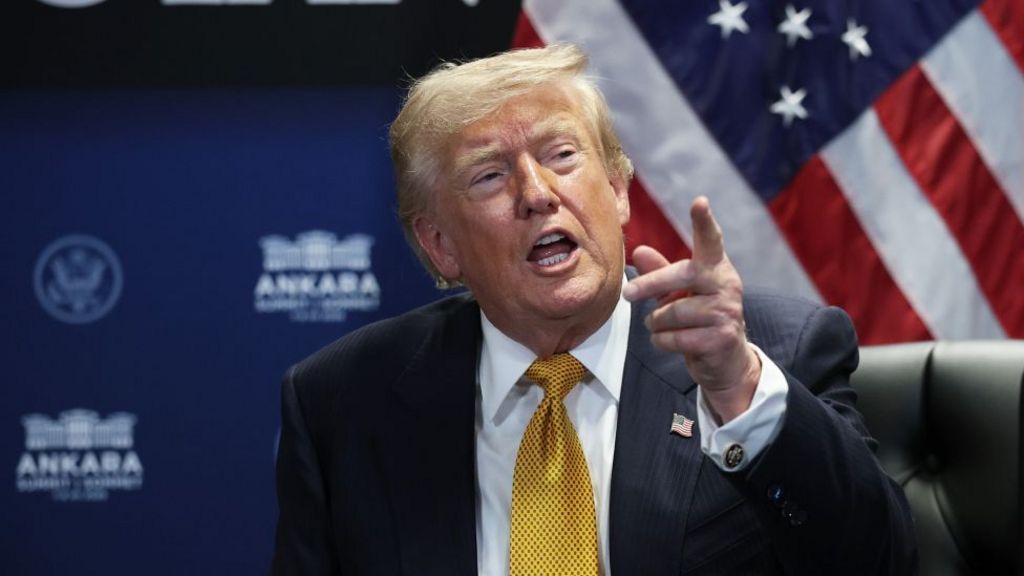
    U.S. President Donald Trump quickly addressed the escalation on his social platform Truth Social, doubling down on hardline rhetoric against Tehran. Trump argued the strikes were a justified response to repeated Iranian violations of the June ceasefire deal, warning that continued Iranian noncompliance could force a far more drastic American military response. “There may come a point when we are no longer able to be reasonable, and will be forced to militarily complete the job that we very successfully started,” he wrote Saturday evening. “If that happens, the Islamic Republic of Iran will no longer exist!” he added. He also suggested that it remained “very possible” that Tehran would “never learn” to respect the terms of negotiated peace.

    In the hours following the U.S. strikes, two Gulf Arab neighbors – Kuwait and Bahrain – triggered their national air defense systems in response to incoming hostile threats. The Kuwaiti Armed Forces confirmed via X that its defenses were actively engaging incoming missiles and drones, urging the public to follow official emergency security protocols. Bahrain’s Ministry of Interior similarly issued a public alert asking citizens to remain calm and seek shelter at the nearest designated safe location.

    Saturday’s strikes follow just one day after the U.S. conducted an initial round of retaliatory strikes against Iran, a response to a June 25 drone attack that damaged the Singapore-flagged cargo vessel MV Ever Lovely. Centcom framed that first strike as a “powerful response” to unprovoked aggression that explicitly violated the ceasefire framework.

    Tehran has pushed back against U.S. claims, rejecting accusations of ceasefire violations and framing its actions as a legitimate response to unauthorized shipping activity in its territorial waters. Iran says the MV Ever Lovely attacked last week was targeted for transiting the Gulf waterway via an unapproved route, and has labeled the initial U.S. retaliatory strikes as the actual breach of the June truce. On Saturday morning, Iran’s foreign ministry released a statement accusing the “treaty-breaking U.S. regime” of orchestrating the crisis, and confirmed it had launched additional retaliatory strikes against targets linked to U.S. forces in the region. Iran has not yet issued an official comment on Saturday’s fresh U.S. strikes as of publication.

    The current escalation marks a complete collapse of the 14-point ceasefire memorandum of understanding reached between Washington and Tehran on June 17. That deal was intended to end two months of hostilities and required Iran to deploy its “best efforts” to guarantee unimpeded, toll-free safe passage for all commercial vessels through the strait for a 60-day period.

    As one of the world’s most critical maritime chokepoints, the Strait of Hormuz handles roughly a fifth of global oil and liquefied natural gas shipments, plus large volumes of other key commodities including agricultural fertiliser. After the U.S. and Israel launched joint military strikes against Iran in late February, Tehran effectively closed the strait to commercial traffic, triggering an immediate spike in global energy prices and disrupting global supply chains for essential goods.

    Until just days ago, the Trump administration had repeatedly claimed ceasefire negotiations were progressing smoothly, saying Iran had formally abandoned any plans to impose transit fees on vessels passing through the strait. In a Truth Social post Wednesday, Trump said Iran had given the U.S. formal assurances that “there would be ‘no tolls, no insurance costs and no other charges of any kind being sought or received’”, adding “If this is false information, negotiations would end, immediately.” The U.S. has long maintained that any Iranian tolling system for the strait violates international maritime law.

    Just this week, Iranian and Omani officials held talks in Muscat, Oman’s capital, to discuss long-term navigation management in the strait. Omani Foreign Minister Badr Al-Busaidi said both sides reaffirmed their commitment to “toll-free safe passage” for commercial shipping. However, Iranian chief negotiator Mohammed Bagher Ghalibaf told Iranian state media that “everyone should know that the administration of the Strait of Hormuz will never go back to the way it was before the war”, signaling Tehran’s intention to assert greater long-term control over the waterway.

  • 117 dead dogs found at California ‘no-kill’ animal rescue – many with gunshot wounds

    117 dead dogs found at California ‘no-kill’ animal rescue – many with gunshot wounds

    In a sprawling two-month criminal investigation that has sent shockwaves through the northern California animal welfare community, law enforcement officials have uncovered the remains of 117 dogs on the property of a self-described “no-kill” animal sanctuary, with most showing evidence of fatal gunshot wounds. The Humboldt County Sheriff’s Office launched the probe into Fortuna-based Miranda’s Rescue Animal Sanctuary back in April, after receiving a credible tip alleging felony animal abuse, cruelty, fraud and conspiracy connected to the facility.

    The investigation gained an early breakthrough when a local neighbor, who had entered the private 50-acre property without authorization, dug up remains they believed belonged to buried dogs, prompting authorities to launch a full excavation of open fields on the site, where they suspected mass animal graves were located. As diggers sifted through the soil, the grim scope of the discovery began to unfold: alongside the 117 intact canine remains found across two excavation zones, teams found 21 separate dog skulls, hundreds of additional unassociated bones, roughly 600 dog collars, and six loose microchips near the primary burial sites.

    Further forensic analysis of 70 of the recovered remains via X-ray confirmed the presence of bullet fragments in each, leading lead investigators to conclude that a large share of the dead dogs died from gunshot wounds. Authorities also identified an on-site barn that they believe was used as the location where the animals were killed. Most of the recovered remains carried microchips, and forensic analysts are currently working through chip data to formally identify each animal and cross-reference their records with the shelter’s intake logs.

    Humboldt County Sheriff William Honsal outlined the staggering discrepancy between the facility’s animal intake and adoption records that investigators uncovered early in the probe: since the start of 2025, the rescue took in roughly 900 dogs and other animals, but only documented 116 adoptions, leaving more than 700 animals unaccounted for.

    Shannon Miranda, the owner and operator of the sanctuary, has pushed back against the allegations, maintaining that his facility remains a true no-kill operation. In a public statement released before the most recent findings of human remains were announced, Miranda argued that existing media coverage and official commentary have painted an incomplete and inaccurate picture of his work. He noted that his rescue often accepts hard-to-place animals that other established shelters turn away as a last resort, and confirmed that the shelter only approves euthanasia in extremely rare cases – specifically when an animal suffers from a terminal, painful condition or poses an unavoidable, severe threat to humans or other animals. He has asked the general public to withhold judgment until all facts related to the investigation are made public.

    As of the latest update from the sheriff’s office, no criminal charges have been filed against Miranda or any other person connected to the facility. Law enforcement has stressed that the ongoing investigation is highly complex, with a massive volume of forensic evidence still awaiting processing, and has asked the public for patience as the work continues. Officials confirmed that if investigators collect sufficient evidence to prove violations of animal cruelty, fraud or other state laws, the full case will be forwarded to the county prosecution team for formal review and potential criminal charges. The BBC has attempted to contact Miranda for additional comment following the announcement of the latest discovery, but has not yet received a response.

  • Trump’s face is added to select US passports for America’s 250th birthday

    Trump’s face is added to select US passports for America’s 250th birthday

    Ahead of the United States’ 250th anniversary of independence, the Trump administration has unveiled a highly unusual limited-edition U.S. passport design that features an official likeness of incumbent President Donald Trump, drawing immediate attention across the nation. Former President and current officeholder Trump first shared images of the redesigned internal passport pages via his Truth Social platform on Friday. One prominent spread shows Trump standing with his fists resting on the Resolute Desk in the Oval Office, with the Declaration of Independence displayed in the background and Trump’s personal signature added below the portrait.

    The U.S. State Department confirmed this week that the special commemorative passports will officially go on sale starting July 6, and will only be issued while limited supplies last. This launch marks the latest in a string of high-profile moves by the Trump administration to place the president’s name or likeness on core federal American institutions, ranging from official government websites to federal building markers and now critical national identity documents.

    In his Truth Social post, Trump captioned the reveal, “The U.S.A.’s New Passport, which says, ‘Welcome, but be good!’” Notably, the phrase does not actually appear on the passport page images Trump shared publicly. The White House subsequently reposted the photos to its official X (formerly Twitter) account, framing the new document as a “patriot passport” celebrating national heritage.

    Access to the special edition passport is heavily restricted from the start, with eligibility limited exclusively to U.S. citizens. Per State Department guidelines, applicants cannot submit requests via online portals or traditional mail. To obtain the commemorative document, individuals must schedule an in-person appointment at the Washington D.C. passport agency, or attend one of a small number of invitation-only special acceptance events hosted specifically for the launch. As of the latest update, only two such events are listed on the State Department’s official website, both held at the Washington D.C. facility, with additional events to be added at a later date once details are finalized.

    Standard-issue U.S. passports currently feature historically significant American scenes, such as the 1969 Apollo 11 Moon landing, paired with iconic national symbols including the Statue of Liberty. It remains unclear as of publication whether applicants requesting an in-person passport at the Washington D.C. agency will be able to decline the special edition and receive a standard document instead.

    The commemorative passport was first announced to the public in April, with an earlier iteration that differed slightly from the final design: the initial draft only featured a close-up portrait of Trump, carried his signature in gold ink rather than the final black ink, and did not include the “250” anniversary marking on the spread. This launch makes history as the first time a sitting, living U.S. president has been featured on an official American passport.

    The addition of Trump’s likeness to national commemorative items extends beyond passports. The U.S. Mint recently confirmed plans to release a commemorative gold coin featuring Trump as part of this summer’s 250th anniversary celebrations, and the president is also set to become the first sitting U.S. president to have his official signature added to American banknotes.

    Beyond official documents and currency, the Trump administration has long sought to leave a lasting physical imprint on Washington D.C.’s institutional landscape. In a previous high-profile move, the administration added Trump’s name to a wing of the Kennedy Center for the Performing Arts, a decision that was later reversed. The administration has also announced long-term plans to construct the “Arc de Trump,” a massive triumphal arch modeled after Paris’ iconic Arc de Triomphe, to be built in the U.S. capital.

  • We have been treated unfairly by USA – Iran

    We have been treated unfairly by USA – Iran

    Against the high-stakes backdrop of the 2026 FIFA World Cup Group G stage, Iran’s national football team has found itself at the center of a growing controversy, with head coach Amir Ghalenoei publicly accusing the United States of unfair treatment and calling on global football’s governing body FIFA to implement new protections for visiting teams in future tournaments.

    Iran’s participation in this World Cup has been complicated from the start by long-running geopolitical tensions between the Islamic Republic and both the United States and Israel. Long before the team kicked off its first group match, logistical disruptions upended their pre-tournament preparations: their original pre-tournament training base, planned in Arizona, had to be relocated to Tijuana, Mexico, and persistent travel restrictions imposed by U.S. authorities hampered their ability to prepare for matches held on U.S. soil.

    For Iran’s opening two group fixtures hosted in Los Angeles, visa restrictions forced the entire squad to enter the U.S. only 24 hours before kickoff and depart immediately after the final whistle, leaving no time for post-match recovery or on-site acclimatization. While restrictions were slightly loosened for their decisive final group match against Egypt in Seattle, allowing the team to arrive two days ahead of game day, they were still required to return to their Mexican base immediately after the final whistle.

    The already tense situation boiled over after a dramatic late twist in the Egypt match that ended Iran’s knockout stage hopes. With the game tied 1-1 in stoppage time, defender Shoja Khalilzadeh fired a loose ball into the back of the net, a goal that would have secured Iran a guaranteed spot in the tournament’s round of 32. Jubilant celebrations among Iranian players and fans in the stadium were cut short when video assistant referee (VAR) review chalked the goal off for offside, leaving the final score locked at 1-1.

    The result sent Egypt through to the knockout stage and left Iran’s qualification hopes hanging by a thread, depending on results from remaining groups. Speaking after the final whistle, Ghalenoei expressed immense pride in his squad’s resilience while leveling harsh criticism at the host nation’s treatment of his team. “What these young players have achieved against all odds deserves to be written into history, because the host country treated us very unfairly,” Ghalenoei said. “Despite every obstacle placed in our path, we have performed well, and the entire world can see the quality of Iran and our team. I urge FIFA: do not allow host nations to treat visiting players and teams this way in any future World Cup.”

    The coach added that the disallowed late goal compounded the team’s struggles, saying “I used to think we were just an oppressed side facing unfair treatment, but after these three matches, I see we have also had terrible bad luck.”

    Iran captain Mehdi Taremi echoed his coach’s frustrations, describing the entire tournament experience for the squad as a “logistical disaster.” While Taremi emphasized he and his teammates held great affection for the people of Tijuana and Mexico, he noted that the constant cross-border travel was incompatible with professional football competition.

    FIFA has yet to publicly respond to the criticisms, with BBC Sport confirming it has contacted the governing body for comment. This is not the first time FIFA’s handling of Iran’s participation has come up: prior to the tournament, FIFA President Gianni Infantino defended the organization’s work, saying he had personally guaranteed Iran would be allowed to compete despite widespread claims it would not be possible. “When people said it would be impossible for Iran to come to the World Cup, I promised them they would be here,” Infantino said before the tournament, adding that he did not believe any other organization could have secured Iran’s participation under the difficult circumstances. Infantino also visited the Iranian dressing room after the team’s opening draw with New Zealand earlier in the group stage.

    As of the time of reporting, Iran sits sixth among all third-placed group teams, with only three group stages remaining to be completed and the top eight third-placed sides advancing to the knockout round, leaving Iran’s qualification chances all but eliminated.

  • Billionaire Leon Black walks out of Epstein investigation hearing

    Billionaire Leon Black walks out of Epstein investigation hearing

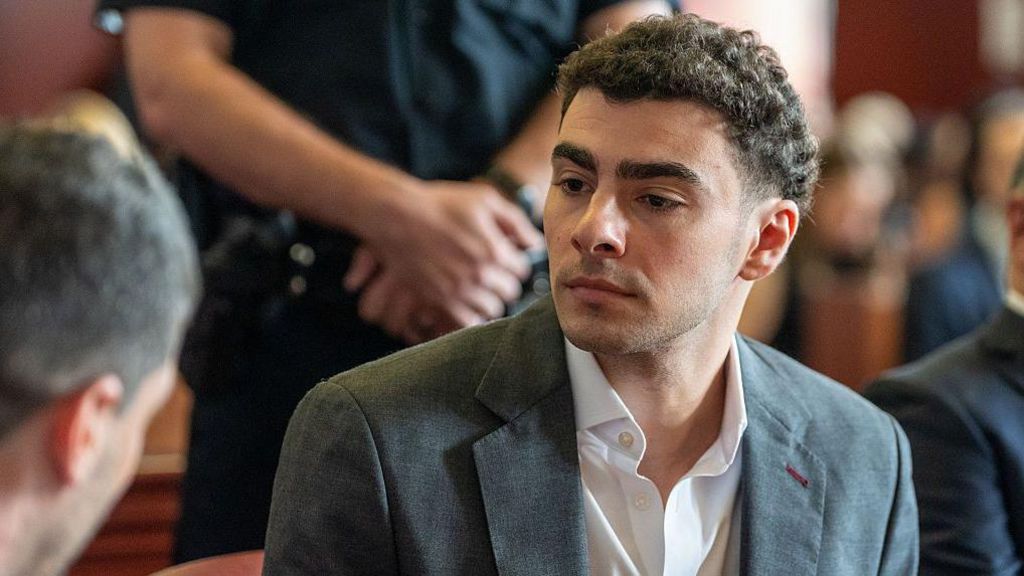
    A high-stakes congressional investigation into the late convicted sex offender Jeffrey Epstein hit a dramatic standoff on Friday, as billionaire investor Leon Black exited a closed-door hearing after declining to respond to questions about non-disclosure agreements tied to his connections to Epstein, according to committee lawmakers.

    Black, whose ties to the disgraced financier have placed him under intense scrutiny in recently unsealed Epstein documents released by the U.S. Department of Justice, had agreed to appear voluntarily before the U.S. House of Representatives Oversight Committee. But he left the session abruptly when questioning turned to NDAs he may have executed in connection with his relationship with Epstein, committee chairman James Comer, a Republican, confirmed.

    The committee had already issued two formal subpoenas demanding Black turn over all NDA documents and participate in a sworn on-camera deposition. Black stepped down from Apollo Global Management, the private equity giant he co-founded, in 2021, when public scrutiny of his long-standing ties to Epstein first intensified. He has consistently denied any wrongdoing related to his association with the financier.

    Comer laid out the committee’s core line of inquiry Friday, saying: “We want to know, was Jeffrey Epstein involved in the NDAs? Was he involved in writing? Was he involved in awarding funds to the women for the NDAs? What was the reason for the NDA? We want to know everything about the NDAs.”

    Black’s legal team confirmed to the BBC that the billionaire left the hearing after the team completed its opening remarks. Per CBS News, the BBC’s media partner, Black hired Epstein as a personal wealth management advisor years ago, and the pair allegedly discussed sensitive personal matters, including extramarital affairs that resulted in non-disclosure agreements.

    During his short appearance Friday, Black told the committee that over the course of his decades-long professional relationship with Epstein, he paid the financier a total of $158 million (£120 million) for legitimate professional services. That large sum has already been the subject of a separate Senate probe, which examined claims that Black intentionally overpaid Epstein, masking undisclosed personal payments under the cover of financial consulting fees.

    Black’s attorneys have repeatedly pointed to an independent internal investigation conducted by international law firm Dechert on behalf of Apollo, which concluded all fees paid from Black to Epstein were tied to legitimate tax advisory work. Following the narrative shared by dozens of other wealthy and powerful figures tied to the Epstein investigation, Black told the committee he was deceived by the late financier.

    In his opening statement, a copy of which was shared with the BBC by his legal team, Black said: “I knew Jekyll. I didn’t know Hyde.” He added: “With the benefit of hindsight, I now know, as does the world, that Epstein was engaged in horrific, sordid activities. I feel terrible for Epstein’s victims. I want to state clearly that I did not know about this nefarious activity until Epstein was charged with trafficking in July 2019.”

    Black issued a sweeping denial of all allegations of misconduct, saying he never abused any woman, was never with an underage person, never participated in sex trafficking, never paid Epstein for access to women, and was never blackmailed by the financier.

    Black’s lead attorney, Susan Estrich, has denounced the congressional subpoenas as “a planned political stunt.” She emphasized that “Mr Epstein had no involvement with any NDAs, whether they exist or not,” and accused the committee of avoiding questions about the legitimate payments Black made to Epstein for tax and estate planning services.

    Court records show Black carried on a six-year extramarital affair with former Russian model Guzel Ganieva, which ended with Ganieva filing a lawsuit accusing Black of abuse. In that 2015 suit, which was ultimately dismissed, Ganieva alleged Black drafted an NDA to force her to stay silent about the affair. Unsealed Department of Justice documents show Epstein advised Black on the matter, including an email to Black’s assistant where Epstein suggested Black hire former law enforcement officials to approach Ganieva and deliver the NDA terms, writing: “Choose method of message delivery, my choice. – two highly respected former —- fill in the blank, immigration, scotland yard. sfo. . who may knock on her door and present the terms.”

    Estrich has dismissed Ganieva’s allegations as “demonstrably false”, and Black has previously said he was the victim of extortion over the affair. A judge ultimately dismissed Ganieva’s lawsuit, noting the NDA she had signed and the roughly $9 million she received in the years after entering the agreement.

    The House Oversight Committee’s top Democratic member, Robert Garcia, said in a post-hearing statement that Black “stormed out” of the transcribed interview when pressed about the NDAs. “Leon Black had a chance to do the right thing and help us bring justice to the survivors,” Garcia said. “Instead, he ran out of the room when he was pressed for information about his non-disclosure agreements with women and his relationship with survivors of Jeffrey Epstein. Black will be held accountable if he doesn’t comply with our investigation.”

  • Just how much trouble is Canada’s economy in?

    Just how much trouble is Canada’s economy in?

    Canada’s Prime Minister Mark Carney has staked his government’s economic legacy on an ambitious goal: transforming the country into the most dynamic, high-performing economy among the G7 group of wealthy nations. Over the past year, Carney has crisscrossed the globe on trade and investment missions, pitching Canada as an attractive destination for global business capital. But for millions of Canadian households and industry leaders, the gap between this long-term vision and current economic realities is growing increasingly stark.

    To unpack the true state of Canada’s economy, and how it stacks up against peer nations, five key economic indicators paint a mixed picture of sluggish near-term growth, uneven pain across demographics and sectors, and underlying long-term potential that remains untapped.

    Forecasts from leading global economic bodies point to modest growth for Canada in the coming years. The International Monetary Fund projects 1.6% GDP expansion for 2026 – a rate that outpaces all European G7 economies, but still lags behind the United States, Canada’s largest trading partner. The Organisation for Economic Co-operation and Development forecasts a slight uptick to 1.7% growth in 2027 as the country gradually recovers from the slowdown caused by U.S. tariffs. That recovery comes after Canada slipped into a technical recession – defined as two consecutive quarters of contracting GDP – in the final months of 2025 and early 2026, according to Statistics Canada. While most economists have warned against widespread panic, noting the country is unlikely to face a prolonged deep downturn, they agree the underlying trajectory remains weak. “Whether one chooses to divine the fact that we’re in a recession or not really does miss the point,” explained Jeremy Kronick, president of the non-partisan Canadian economic think tank CD Howe Institute. “The economy is weak, right?”

    For most ordinary Canadians, weak growth translates directly to daily financial strain, with cost of living topping the list of national worries. A recent poll from the non-profit Angus Reid Institute found 61% of respondents rank cost of living as their top personal concern, outpacing housing affordability, crime and U.S. trade tariffs. Inflation rose to 3.2% in May 2026, up from 2.8% in April, driven by spiking global energy prices linked to the ongoing conflict in Iran. While that figure remains well below the post-pandemic peak of 7% to 8% hit in summer 2022, and aligns with inflation rates across major European economies (and is lower than the U.S.’s current rate), the steady rise in everyday costs has hit vulnerable households hard.

    Housing costs have emerged as a particularly crippling pressure, described by Paul Kershaw, a University of British Columbia professor and founder of intergenerational fairness advocacy group Generation Squeeze, as a “third kind of inflation.” This dynamic has created a stark divide: current homeowners have seen significant growth in their home equity, while younger and lower-income Canadians are increasingly locked out of homeownership and squeezed by rising rent. Overall, Canadian households carry the highest debt burden of any G7 nation, most of it tied to mortgage debt. While analysts note mortgage debt can build household net worth, the burden remains heavy for new buyers and renters. Recent polling bears out this divide: seven in 10 Canadians rate their current household finances as good or very good, but 27% report being in poor financial shape, with far more pessimism about the future among that group. More than a third of all Canadians say their current living situation is financially tough or very difficult, a share that jumps to 45% for renters. Low-income mortgage holders with household incomes under CA$100,000 also face significant ongoing strain.

    The labor market similarly reflects an uneven recovery. Canada’s overall unemployment rate hit 6.6% in May, with youth unemployment standing at 13.4%. While that marked the first drop in youth unemployment since January 2026, it remains far above the pre-pandemic average of roughly 10%. Kershaw argues that the current economic system is disproportionately failing younger Canadians and new immigrants of all ages, and that Carney’s long-term growth plans – which center on large-scale infrastructure investments and increased defense spending – do little to address the immediate needs of households struggling to make ends meet.

    Carney has not ignored the affordability crisis; his government recently introduced a one-time grocery benefit payment for eligible low- and middle-income Canadians, and has urged the public to be patient as long-term reforms take root. “This government’s been in the process of laying the foundations for a stronger, more resilient, more independent Canadian economy,” Carney said earlier this month. “That process is settling in during that time as the major investments, major changes to how the government operates, how we do major projects, how we have new trade agreements with other countries.” Beyond his global investment push, Carney’s Liberal government has set a target to double Canada’s non-U.S. exports over the next decade by expanding trade ties across Europe and Asia, and to cut red tape to speed up the delivery of major infrastructure projects.

    But business leaders warn that time is running out to deliver tangible progress. Dave McKay, CEO of Royal Bank of Canada, the country’s largest financial institution, warned during a recent Bloomberg-hosted event that global capital is impatient. “We have to see tangible progress on a couple of these big ideas,” McKay said. “The capital is impatient, and it will move where it thinks they can get the most sure and fastest return.”

    One of the biggest headwinds facing the Canadian economy remains trade uncertainty with the United States, which receives more than 70% of Canada’s exports and has deeply integrated supply chains with its northern neighbor. While most goods are exempt from tariffs under the USMCA free trade agreement, the White House has imposed targeted sectoral tariffs ranging from 15% to 50% on steel, aluminum and copper, and a 25% tariff on vehicles, after tit-for-tat tariffs were introduced last year.

    Those tariffs have already caused tangible damage for Canadian businesses like Wellmaster, an Ontario-based manufacturer of drilling products owned and operated by the White family. Company president and CEO James White says 60% of the firm’s profitability depends on access to the U.S. market, and since the tariffs took effect, sales have dropped 20%. “I’m being pulled down in my ability to make investments in my people and my technology and my equipment. That’s not happening with my competitors,” White explained.

    The impact of these tariffs is not felt evenly across the country: auto manufacturing hubs like Brampton and Windsor, and regions reliant on metal production, have faced far more acute disruption than urban centers like downtown Toronto, Kronick noted. The Canadian government is currently negotiating with U.S. officials both to roll back the sectoral tariffs and to review the USMCA agreement, but no deal has been reached yet. Kronick says what businesses need most right now is clarity: “If I know it’s 10% fine, it’s a 10% tax, and I can make my adjustments to my business accordingly, and we move on.”

    Beyond trade uncertainty, Kronick says Canada’s slow growth is also fueled by long-standing structural issues, including internal trade barriers between provinces that range from differing trucking regulations to inconsistent professional licensing, and a tax system that is increasingly uncompetitive compared to peer jurisdictions Canada competes with for global investment.

    Even with these near-term challenges, economists remain optimistic about Canada’s underlying fundamentals. “If you were drawing up a country from scratch, a well-educated, well-resourced, not overpopulated country would be what you would want, right? So, I think Canada has all those things, all those features,” Kronick said. “I think we just have to unlock them.”

  • Bible stories become required reading for Texas schools

    Bible stories become required reading for Texas schools

    In a decision that has reignited long-simmering tensions over religious influence in American public education, Texas’ Republican-controlled State Board of Education has greenlit a policy that will require all public school students across the state to complete mandatory readings of Bible stories starting in 2030. The measure, which impacts more than 5 million K-12 students in the nation’s second-largest state, includes core biblical passages such as the creation narrative of Adam and Eve and the Book of Exodus’ account of God appearing to Moses through a burning bush. The approved required reading list also incorporates well-known English literary works, including Charles Dickens’ classic novel *Great Expectations*, alongside the religious texts. This new mandate is the latest in a series of conservative education policy shifts in Texas, coming one year after the state made history as the largest U.S. state to mandate that all public school classrooms display a copy of the Ten Commandments, the foundational set of biblical laws central to Judeo-Christian tradition. Critics of the new policy have quickly raised sharp objections, arguing that the mandatory inclusion of Bible stories in public school curricula violates the fundamental constitutional principle of separating church and state, and infringes on the religious freedom rights of students and families from diverse religious and non-religious backgrounds. As the policy will not take effect for another four years, legal challenges and ongoing public debate over the role of religious content in public education are expected to intensify across the state and the country in the coming years.

  • Watch: Native Americans mark 150th anniversary of Little Bighorn victory

    Watch: Native Americans mark 150th anniversary of Little Bighorn victory

    Across the rolling plains of southern Montana, where the Little Bighorn River cuts through grasslands steeped in Indigenous history, hundreds of Native American people from dozens of tribes have gathered this week to mark a landmark moment: the 150th anniversary of their ancestors’ decisive 1876 victory over U.S. military forces led by Lt. Col. George Armstrong Custer.

    The Battle of the Little Bighorn, fought on June 25 and 26, 1876, emerged from deep-seated tensions over U.S. westward expansion and the displacement of Plains Indigenous nations from their ancestral territories. At the time, the U.S. government was aggressively pushing to seize control of the Black Hills, a region sacred to the Lakota, Cheyenne, and Arapaho peoples, after gold was discovered there. When thousands of Indigenous hunters and families defied government orders to move onto overcrowded, resource-poor reservations, the U.S. military launched a campaign to force them into compliance.

    In a remarkable show of intertribal unity, roughly 2,000 Indigenous warriors joined forces to defend their encampment, where more than 10,000 people had gathered for summer hunting and cultural ceremonies. The combined force overwhelmed Custer and his battalion of more than 200 soldiers, killing the commanding officer and every member of his detachment in what remains one of the most lopsided military defeats in U.S. history.

    For 150 years, the battle has carried drastically different meanings for different groups. For the United States, it was long framed as a shocking tragedy that galvanized public support for further military action against Plains Indigenous nations, ultimately leading to the end of their independence and confinement to reservations. But for Native Americans, the victory has always stood as a powerful symbol of resistance, sovereignty, and the courage of ancestors who fought to protect their homelands and way of life.

    This year’s anniversary events included traditional ceremonies, powwows, storytelling sessions led by tribal elders, and wreath-laying at sites connected to the battle. Many attendees traveled hundreds of miles to take part, passing down stories of the battle to younger generations and reaffirming their connection to the land where the historic clash took place. Speakers at the gathering also highlighted the ongoing fight for Indigenous sovereignty, land back movements, and cultural preservation that continues to shape Native communities today, drawing a direct line from the 1876 resistance to modern advocacy efforts.