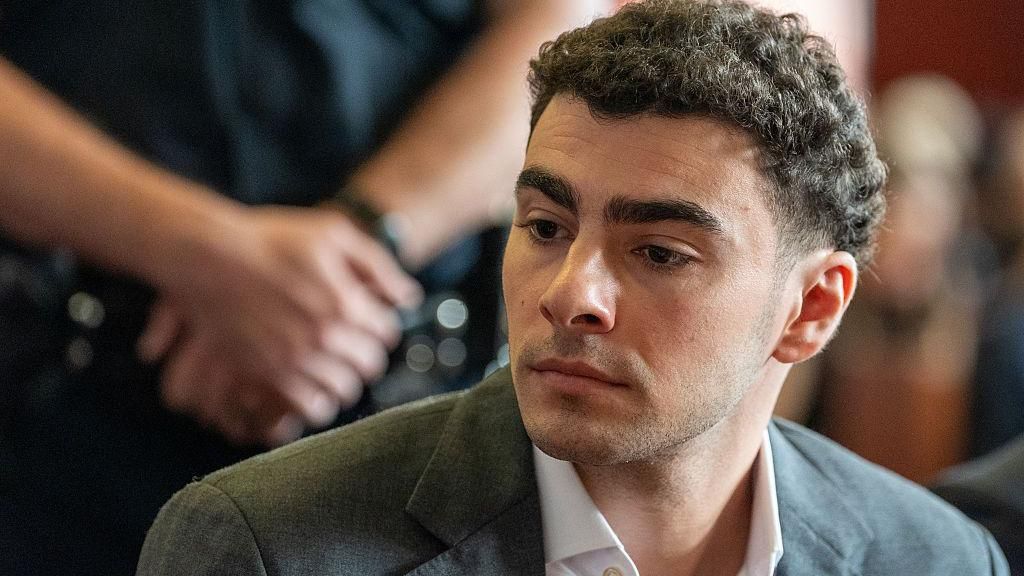
In a dramatic development in the high-profile killing of UnitedHealthcare chief executive Brian Thompson, 28-year-old Luigi Mangione has entered guilty pleas to two federal stalking charges that allege he tracked the executive across state lines before his 2024 death.
Mangione made his plea during a Friday hearing held in a Manhattan federal courtroom. Under the charges he admitted to Friday — stalking resulting in death — the defendant could be sentenced to life in prison without the possibility of parole. This comes after prosecutors built a case that Mangione crossed state lines, conducted pre-attack surveillance of Thompson, and carried out the plan that ended in Thompson’s death.
Notably, Mangione did not reach any plea deal with federal prosecutors regarding his sentencing; he only agreed to admit guilt to the two counts. Prior to this hearing, he had entered not guilty pleas to all charges against him in both federal and state courts. The original federal indictment against Mangione included four total charges, but a federal judge dismissed two counts back in January. That ruling removed the only capital offense on the docket — a federal firearms charge that carried the possibility of the death penalty — eliminating any chance Mangione would face execution for the crime. Only the two interstate stalking charges remained after that January ruling.
While the federal case against Mangione is moving toward a final sentencing hearing scheduled for December, the defendant still faces a separate criminal prosecution in New York state court. He is scheduled to go on trial for eight state felony charges starting September 8, with charges including second-degree murder, possession of a forged instrument linked to an alleged fake driver’s license, and six counts of criminal weapon possession. Mangione has maintained not guilty pleas for all eight state charges, and three additional initial charges — including first-degree murder tied to terrorism — were previously thrown out by a state judge. A conviction on the state second-degree murder charge would carry a sentence ranging from 25 years in prison up to life imprisonment, and New York state has no death penalty, after its highest court ruled capital punishment unconstitutional in 2004.
Mangione’s legal team has long argued that dual prosecutions in both federal and state court for the same killing violate his constitutional rights, and Friday’s guilty plea has amplified that argument. Legal experts warn the plea could fundamentally disrupt the upcoming state trial, as defense attorneys are expected to push to dismiss the state charges under the double jeopardy principle. This constitutional protection bars individuals from being prosecuted twice for the same offense based on identical facts.
New York’s own state constitution includes an explicit prohibition on double jeopardy that could further bolster the defense’s motion. Mitchell Epner, a former federal prosecutor and current defense attorney, explained the core of this argument: once a federal prosecution has concluded on a set of facts, state authorities cannot bring a new prosecution based on those same facts. It remains unclear how the state judge will rule on the expected double jeopardy motion, leaving the future of the state trial uncertain as the September start date approaches.