标签: North America

北美洲

  • King gets ovation for speech hailing importance of UK and US partnership

    King gets ovation for speech hailing importance of UK and US partnership

    On a landmark diplomatic visit to Washington D.C., King Charles III delivered a historic address to a joint session of the U.S. Congress, where he emphasized the irreplaceable, enduring nature of the partnership between the United Kingdom and the United States — and earned a dozen standing ovations from the assembled crowd of lawmakers and senior political figures. The moment marked the first address to a full Congress by a reigning British monarch in 35 years, coming at a time of growing geopolitical instability and festering diplomatic tensions between the two allies.

    Addressing the packed chamber of the domed Capitol Building, King Charles opened against a backdrop of heightened uncertainty, noting that the world faces new, profound challenges from spreading conflict across Europe and the Middle East. In an era he described as “more volatile, more dangerous” than many have known, he stressed that the UK and U.S. cannot afford to step back from their shared commitments. The royal visit carried high stakes: after months of strained transatlantic relations, the King’s core mission was to rekindle the long-standing alliance rooted in shared defense of democratic values, a bond once taken for granted that now requires intentional renewal.

    In his speech, drafted in close coordination with the UK Foreign Office, King Charles laid out clear cornerstones for the bilateral partnership. He reaffirmed unwavering support for NATO, noting the alliance’s critical role in protecting North American and European nations from shared adversaries, and doubled down on backing for Ukraine and its courageous people resisting invasion. Directly responding to calls from U.S. President Donald Trump for allied nations to increase their own defense investment, the King confirmed the UK has committed to the largest sustained increase in defense spending since the end of the Cold War, positioning the country to meet future security threats.

    Beyond security and diplomacy, the address carried strong moral undertones tailored to the current moment. Speaking amid heightened tensions in the Middle East and uncertainty around conflict with Iran, the King drew on his personal Christian faith to call for interfaith respect and global peace. “I am inspired by the profound respect that develops as people of different faiths grow in their understanding of each other,” he said, a remark that earned loud applause. His observation that “words carry weight and meaning” was widely interpreted as a quiet rebuke to the culture of incendiary political rhetoric that has grown in many Western democracies, another line that drew warm applause from the chamber.

    The address also touched on sensitive, contemporary issues that have overshadowed the royal visit. Amid ongoing fallout from the Andrew Mountbatten-Windsor scandal and public calls for the King and Queen Camilla to meet with survivors of Jeffrey Epstein’s abuse, the monarch made a coded, compassionate reference to supporting “victims of some of the ills that so tragically exist in our societies today.” He also addressed the recent attempted assassination of Donald Trump over the weekend in Washington D.C., which triggered a massive escalation of security across the U.S. capital. “Let me say with unshakeable resolve: such acts of violence will never succeed,” he stated, drawing a renewed round of applause.

    In a nod to shared history, King Charles noted that 35 years have passed since his mother, Queen Elizabeth II, addressed a joint session of Congress in 1991 — a far different moment, when the Berlin Wall had just fallen, the Cold War was declared over, and liberal democracy stood at the peak of its global influence. Today, he framed the address as a defense of democratic values that face new threats, pushing back against rising isolationism in Western nations and emphasizing shared commitment to the international rule of law. Drawing a lighthearted joke to ease the formality of the moment, he marked the U.S.’ upcoming 250th anniversary: “That’s 250 years, or as we say in the United Kingdom, just the other day,” a quip that drew hearty laughter from the assembled lawmakers.

    King Charles’ mission came on the heels of months of rocky relations between the UK and the Trump administration, and the royal relied on his personal prestige and shared transatlantic history to rebuild trust. Early signs of progress emerged ahead of the speech, when President Trump struck a notably positive tone in remarks at the White House, celebrating shared UK-U.S. history and reaffirming the value of the bilateral military alliance. That positive momentum carried into the congressional address, where the crowd delivered a standing ovation before the King even spoke, and interrupted his remarks more than a dozen times with thunderous applause. For the UK delegation, including Foreign Secretary Yvette Cooper, the warm reception signals a potential turning point in transatlantic relations, marking a shift away from the awkward political frictions that have marked recent interactions with the unpredictable U.S. administration. Closing his address, King Charles framed the relationship between the two nations as a “story of reconciliation, renewal and remarkable partnership,” before departing the chamber to sustained cheers and handshakes across the aisle.

  • Five takeaways from the King’s historic address to Congress

    Five takeaways from the King’s historic address to Congress

    King Charles III’s long-awaited state visit to the United States was framed from the outset as a dual-purpose mission: a celebration of both America’s upcoming 250th anniversary and the decades-old “special relationship” that binds Washington and London, and a quiet diplomatic push to repair frayed bilateral relations. The core test of the King’s outreach came on Tuesday afternoon, when he delivered only the second royal address to a joint session of US Congress, the first since Queen Elizabeth II spoke at the Capitol in 1991.

    Tensions between the two allies have risen sharply in recent months, rooted in Britain’s hesitation to fully back the joint US-Israeli military campaign against Iran. Against this backdrop, the King’s trip was widely viewed as a charm offensive designed to dial down friction, rather than resolve deep rifts outright. Analysts have noted that strained relations do not equal a full break in the alliance, a point the King himself emphasized in his closing remarks, where he highlighted that “reconciliation and renewal” have defined centuries of interaction between the two nations.

    The unpredictable temperament of second-term President Donald Trump adds a layer of uncertainty to the outcome: warm ties can turn cold quickly, but former adversaries have also regained his favor just as fast. In brief remarks following a one-on-one meeting at the White House, Trump offered a warm assessment of the monarch, saying, “He’s a fantastic person. They’re incredible people and it’s a real honour.” That early signal offered a glimmer of hope that the King’s outreach had made headway.

    But the speech also carried subtle political undertones that resonated differently across the US political aisle. Opening his remarks, the King did not shy away from the multiple crises facing both nations, acknowledging openly that the world is living through “times of great uncertainty”. He explicitly named ongoing conflicts in the Middle East and Europe — points of recent disagreement between the US and UK — and referenced the threat to democracy posed by political violence, a nod to the disruption that interrupted the previous weekend’s White House Correspondents’ Dinner.
    “With the spirit of 1776 in our minds,” he joked, “we can perhaps agree that we do not always agree” — a lighthearted line that set up his core argument: when the US and UK align their efforts, they can deliver progress that benefits people across the globe.

    One line drew early cheers that started on the Democratic side of the chamber before spreading across the room: the King’s reference to the British legal tradition of checks and balances on executive power, rooted in the Magna Carta. For left-leaning critics of President Trump, who have spent years decrying what they see as his abuse of executive authority, and who led hundreds of thousands in “no kings” rallies across the country over the past year, the line carried obvious implicit weight.

    Another closing line, “America’s words carry weight and meaning, as they have since independence. The actions of this great nation matter even more,” sparked quiet muttering from Democratic lawmakers, many of whom have repeatedly criticized Trump’s rhetorical choices and policy actions. Whether the King intended it or not, many liberal attendees interpreted the remarks as a subtle nod to their concerns, giving them another opening to voice their long-held “no kings” sentiment.

    Beyond diplomatic tensions, the King wove personal context and longstanding policy priorities into his address. A five-year veteran of the Royal Navy, he referenced his military service to highlight the deep security and intelligence cooperation between the two nations, and between the US and European allies. Notably, he echoed a common point among European NATO allies, recalling that the alliance only ever invoked its collective defense clause after the 9/11 terror attacks on the US, a subtle reminder of the bloc’s shared commitment. He also made space to reference his decades-long advocacy on climate change, noting the “disastrously melting ice-caps of the Arctic” as a shared threat requiring collective action. He even lightened the tone with well-received whimsy: opening with the famous (and often misquoted) Oscar Wilde quip that the US and UK share everything except a language, joking that he had not come to launch a “cunning rearguard action” to retake American rule, and quipping about the British parliamentary tradition of holding an MP hostage during the King’s speech at Westminster.

    One highly anticipated topic was entirely absent from the address, however: the Jeffrey Epstein sex offender scandal. Last year, over the Trump administration’s objections, Congress passed a law mandating the release of previously sealed US government files tied to the Epstein investigation. Those releases exposed new details about Epstein’s deep connections to powerful figures on both sides of the Atlantic, including former UK ambassador to the US Peter Mandelson and King Charles’s younger brother, Prince Andrew. The closest the King came to addressing the issue was an oblique reference to the need to “support victims of some of the ills that, so tragically, exist in both our societies today” — a line widely viewed as insufficient for critics calling for a public acknowledgment. While the scandal has already triggered major political fallout in the UK, it has yet to significantly harm current officeholders in the US, and the issue remains far from fading from public discourse, with more details expected to emerge in coming months.

    For all the underlying tensions and unaddressed controversies, the King’s address appears to have achieved its core immediate goal: breaking the ice between the two allies at a moment of strain. Whether his public remarks and private diplomatic discussions will be enough to solidify and strengthen the bilateral alliance in the long term remains an open question, but the first day of the state visit has already shifted the tone of the relationship.

  • Musk says basis of charitable giving at stake in OpenAI lawsuit

    Musk says basis of charitable giving at stake in OpenAI lawsuit

    A landmark legal showdown between two of Silicon Valley’s most influential tech leaders has begun in a California courtroom, bringing long-simmering tensions over the founding and direction of artificial intelligence powerhouse OpenAI into the public eye. The trial, which pits former OpenAI co-founder Elon Musk against current CEO and fellow co-founder Sam Altman, has seen the two sides present starkly conflicting accounts of the company’s origins and core founding commitments.

    When called to the witness stand, Musk — dressed in a formal dark suit and tie — framed the dispute in clear, uncompromising terms. “It’s actually very simple,” he said. “It’s not okay to steal a charity… If it’s okay to loot a charity, the entire foundation of charitable giving will be destroyed.” Musk, who contributed $38 million to OpenAI during its early years as a non-profit research entity, argues that Altman and co-founder Greg Brockman abandoned the organization’s original charitable mission when they launched a commercial division in 2018, years before ChatGPT ignited the global generative AI boom.

    Musk’s lead attorney Steven Molo emphasized to the nine Oakland-based jurors that their client’s involvement was foundational to OpenAI’s existence, telling the court: “Without Elon Musk, there would be no OpenAI. Pure and simple.” Molo explained that Musk’s longstanding position on AI has always centered on responsible, public-benefit development rather than private profit, a stance that solidified after a 2015 meeting with then-President Barack Obama, where Musk grew increasingly concerned about the lack of government oversight for the rapidly advancing technology. Through the lawsuit, Musk is seeking the return of billions of dollars in what his legal team calls “wrongful gains” to be redirected to OpenAI’s non-profit arm, alongside leadership changes that include removing Altman from his role as CEO. His legal claims center on charges of breach of charitable trust and unjust enrichment.

    Counsel for OpenAI, however, has painted a far different picture of the dispute, arguing that the entire lawsuit is a cynical attempt by Musk to sabotage a leading business competitor. OpenAI attorney William Savitt told the court: “We’re here because Mr Musk didn’t get his way at OpenAI. Because he’s a competitor, Mr Musk will do anything to attack OpenAI.” Savitt claimed that Musk attempted to pressure other early OpenAI founders into merging the startup with his electric vehicle and tech company Tesla, and left the organization in a huff only when his bid for full control was rejected. “When they refused to turn the keys of artificial intelligence over to one person,” Savitt said, “When they refused to let OpenAI be absorbed, Musk took his marbles and went home. He left it, he thought, for dead.” OpenAI further argues that Musk never actually prioritized the non-profit model and is motivated by jealousy and regret over walking away from the company before its massive commercial success. The company notes that Musk now runs his own AI firm, xAI, which launched its chatbot Grok in 2023 — a full year after ChatGPT’s debut — and has lagged behind OpenAI in the race to develop advanced artificial general intelligence (AGI). OpenAI also claims that Musk was fully aware of and agreed to the 2018 decision to launch a commercial division, and that he only left after failing to secure the CEO position for himself. Altman is expected to take the witness stand later in the proceedings.

    Judge Yvonne Gonzalez Rogers, who is presiding over the case, has already warned both parties against using their massive social media platforms to sway public opinion or influence the jury. On the first day of jury selection, Musk sparked controversy by referring to Altman as “Scam Altman” in a post on X, the social network he owns. While the judge ultimately declined to issue a full gag order that would bar trial participants from commenting on the case outside court, she urged Musk to curb his social media activity. “Try to control your propensity to use social media to make things worse outside this courtroom,” she said, asking both sides to maintain a “clean slate” moving forward. Both Altman and Brockman agreed to adhere to the same standard of conduct.

    Outside the courthouse, circulating photos show punching bags printed with the faces of both Musk and Altman, a striking visual indicator of the high public interest in the clash between two of the tech industry’s biggest names. A verdict in the trial is expected to be delivered in late May, with the outcome set to shape the future direction of one of the world’s most valuable AI companies and set a precedent for disputes over founding commitments in the rapidly growing tech sector.

  • US regulator to review Disney broadcast licenses after Jimmy Kimmel joke about Melania Trump

    US regulator to review Disney broadcast licenses after Jimmy Kimmel joke about Melania Trump

    A major clash over press freedom and political influence has erupted in the United States after the U.S. Federal Communications Commission (FCC) announced an urgent, accelerated review of broadcast licenses for all Disney-owned ABC television stations, just days after former President Donald Trump demanded the network fire late-night host Jimmy Kimmel over a controversial joke. The chain of events stretches back to a poorly received comedy monologue where Kimmel joked that Melania Trump had the “glow of an expectant widow” — comments made just 48 hours before a would-be assassin opened fire at a Washington D.C. gala attended by the Trumps. That joke quickly drew fierce backlash from the former president and his allies, who framed the quip as an implicit incitement to violence. The 31-year-old suspect, Cole Tomas Allen, was tackled by law enforcement before he could reach the ballroom holding the White House Correspondents’ Dinner, where hundreds of journalists, political figures and public officials had gathered. Allen now faces federal charges for attempted assassination of the former president, and the Trumps escaped the incident unharmed. In the aftermath of the shooting, the Trump administration has doubled down on its demand for Kimmel’s removal. White House Communications Director Steven Cheung went so far as to declare publicly Tuesday that Kimmel should be “shunned for the rest of his life.” Donald Trump himself labeled the joke a “call to violence,” while Melania Trump issued a statement accusing the comedian of exacerbating “the political sickness within America.” Kimmel pushed back against these accusations during the opening monologue of his show Monday night, clarifying that his comment was nothing more than a light-hearted jab at the age gap between the 79-year-old former president and his younger wife. “It was not by any stretch of the definition a call to assassination,” Kimmel said, adding that he has spent years speaking out publicly against gun violence. This is not the first time Kimmel has drawn conservative backlash and been pulled off air: Last September, he was temporarily suspended for a week after suggesting Trump’s Make America Great Again (MAGA) movement was seeking political gain from the fatal shooting of conservative influencer Charlie Kirk. In its official order released Tuesday, the FCC stated that it has opened an investigation into ABC’s owned-and-operated stations over alleged potential rule violations, including claims of unlawful discrimination. The commission has ordered Disney to submit full license renewal applications for all its TV stations within 30 days, a major shift from the original 2028 renewal schedule. As part of the review process, the FCC can require Disney to demonstrate that it meets the agency’s strict public-interest standards to hold a broadcast license. In the most extreme scenario, the review could end with the revocation of ABC’s broadcast licenses — a step the FCC has not taken in more than 40 years, according to reporting from Reuters. Disney has pushed back forcefully against the regulator’s action. A company spokesperson told the BBC that ABC and its local stations have a decades-long track record of operating in full compliance with FCC rules, and deliver vital services including trusted local news, emergency alerts and public interest programming to the communities they serve. “Our focus remains, as always, on serving viewers in the local communities where our stations operate,” the spokesperson added. The move has already sparked sharp criticism from Democratic officials at the FCC. Democratic Commissioner Anna M. Gomez issued a public statement on social media platform X labeling the accelerated review a transparent “political stunt.” “This is unprecedented, unlawful, and going nowhere,” Gomez wrote. “Companies should challenge it head-on. The First Amendment is on their side.” The incident marks the latest escalation in a long-running effort by Trump to penalize media outlets that he claims cover him unfairly. Trump has repeatedly suggested in the past that networks that run what he calls “bad publicity” should have their broadcast licenses revoked, a threat that has drawn widespread concerns about attacks on First Amendment press protections. The current tension is not the first regulatory action the FCC has taken against Disney under the Trump administration: Last year, FCC Chair Brendan Carr sent a formal letter to the company notifying it that the commission had opened an investigation into Disney’s diversity and inclusion practices, over claims that the programs violated federal regulation. Founded in 1934, the FCC was originally created to allocate scarce radio and later television broadcast frequencies, and today oversees rules ranging from sponsor disclosure requirements to emergency broadcast protocols and obscenity standards.

  • Former FBI director James Comey indicted for second time

    Former FBI director James Comey indicted for second time

    In a stunning new development in the ongoing political clash between former FBI Director James Comey and former President Donald Trump, federal prosecutors have brought a second indictment against Comey, multiple US law enforcement sources confirmed to CBS News, the US affiliate of the BBC. This new round of legal action centers on a seemingly innocuous Instagram post Comey shared last year, which has sparked fierce political controversy. The post featured a collection of seashells arranged to spell out the numbers ’86 47′, a pairing that Trump and his allies have framed as a veiled threat against the 47th US president. The specific details of the latest charges have not been made public as of press time, but sources familiar with the matter confirmed they are directly tied to the viral seashell photograph. Comey has repeatedly maintained that he had no prior awareness of the political and cultural connotations attached to the numbers. After facing widespread backlash, he deleted the post and issued a clarification, noting that he recognized the arrangement of shells amounted to a political statement, but had no idea that the phrase ’86 47′ was associated with violent calls for Trump’s removal. He stressed that he opposes all forms of political violence and removed the content out of an abundance of caution. For his part, Trump has dismissed Comey’s explanation, arguing that the meaning of the post is obvious even to a child. This is not the first time Comey has faced federal prosecution. Back in September of last year, a grand jury handed down an initial indictment that accused Comey of making false statements to Congress during his 2020 testimony and obstructing a congressional investigation. That indictment came just days after Trump publicly pressured the Department of Justice to ramp up investigations into his political opponents, with Comey explicitly named as one of the top targets. Comey entered a plea of not guilty, and just two months after the initial charges were filed, a federal judge threw out the entire case. US District Judge Cameron Currie ruled that the interim lead prosecutor on the case, Lindsey Halligan, had been improperly appointed to her role as interim US Attorney for the Eastern District of Virginia. A former White House aide who had never previously led a criminal prosecution, Halligan lacked the legal authority to bring the charges before the grand jury, Currie found. Even as she dismissed the case, the judge did not bar prosecutors from refiling charges at a later date, an outcome Comey correctly predicted in remarks after the ruling, when he noted that Trump would likely target him again. The US Secret Service first opened an inquiry into the seashell post last May, when agents interviewed Comey about the content and context of the share. The latest indictment marks a significant escalation in what has become one of the highest-profile legal confrontations between a former president and one of his most vocal critics. It also renews questions about the perceived politicization of the Department of Justice under the current administration, after the initial case was widely criticized by legal observers for its irregular appointment process and perceived ties to Trump’s political agenda.

  • US soldier accused of betting on Maduro’s removal pleads not guilty to fraud charges

    US soldier accused of betting on Maduro’s removal pleads not guilty to fraud charges

    In a groundbreaking legal case that marks the first insider trading prosecution against a prediction market in U.S. Department of Justice history, 38-year-old U.S. Army Special Forces Master Sergeant Gannon Ken Van Dyke has pleaded not guilty to charges that he exploited classified military intelligence about a covert operation targeting Venezuelan President Nicolás Maduro to earn more than $400,000 in illegal betting profits.

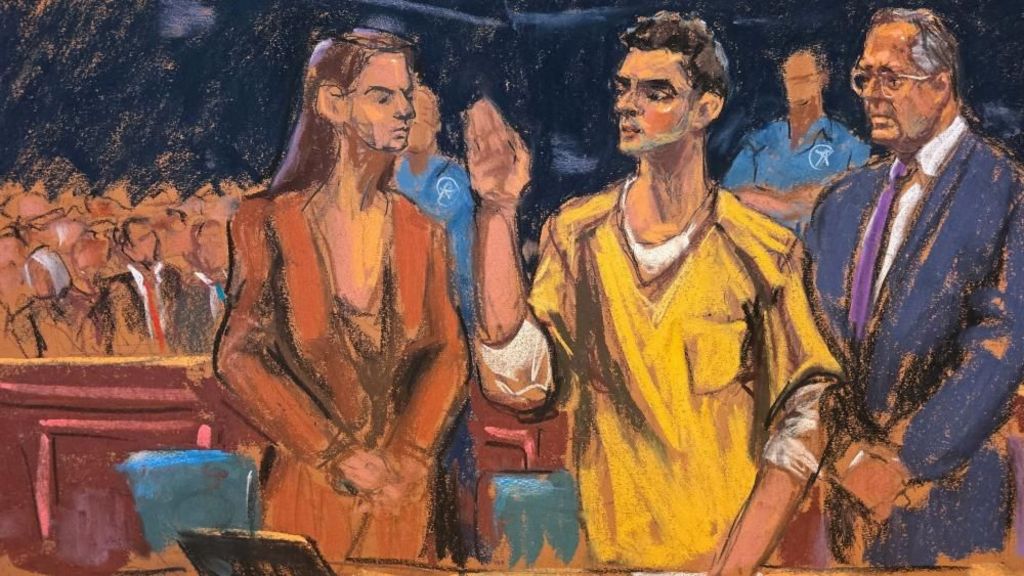
    Van Dyke made his first court appearance at a federal arraignment in New York on Tuesday, one week after federal prosecutors unsealed a multi-count indictment outlining the alleged scheme. Clad in a dark tailored suit and black shirt, he took a seat at the defense table alongside his legal team, which is led by high-profile defense attorney Mark Geragos—recently known for his work on the legal team representing Sean “Diddy” Combs. When U.S. District Court Judge asked Van Dyke to enter his plea, he clearly responded: “Not guilty, your honour.”

    Following the arraignment, Judge granted Van Dyke conditional release on a $250,000 secured bond, with strict travel and supervision conditions. He was ordered to surrender his U.S. passport, and the judge ruled that Van Dyke, who is currently on approved leave from military service, will remain under court-ordered supervision while residing in North Carolina. His approved travel is restricted to limited regions within North Carolina, the Southern District of New York, and California for legal proceedings and case-related meetings.

    In comments to reporters waiting outside the courthouse, Geragos pushed back forcefully against the federal government’s allegations, arguing that the conduct prosecutors have accused his client of does not qualify as a criminal offense under U.S. law. Geragos went on to describe Van Dyke as a decorated “American hero” who has devoted nearly 98% of his adult life to exemplary military service to the United States. The attorney confirmed that he intends to file formal legal motions “shortly” that will challenge both the grand jury indictment itself and the federal court’s jurisdiction over the case.

    The origins of the case date back to a classified U.S. military covert action codenamed Operation Absolute Resolve, which targeted Maduro for removal in early January 2026. According to the unsealed indictment, Van Dyke—who has served on active duty in the U.S. Army since 2008 and earned promotion to master sergeant in Special Forces in 2023—signed multiple binding non-disclosure agreements barring him from sharing or profiting from classified information related to sensitive operations. Prosecutors allege he played a direct role in planning and executing the Maduro seizure operation, which included months of pre-positioning military assets, coordinated air strikes, and an extensive network of on-the-ground intelligence operatives in the region.

    Between December 27, 2025, and January 2, 2026, Van Dyke leveraged his inside knowledge of the operation’s timeline and objectives to place at least 13 separate bets on Polymarket, a crypto-based decentralized prediction market, the indictment claims. He invested a total of roughly $33,934 of his own money across bets predicting the timing of the U.S. military incursion into Venezuela and Maduro’s removal from power. When Maduro was taken into U.S. custody in early January as planned, Van Dyke’s bets paid out a total of more than $409,800 in winnings, prosecutors allege.

    Following the payout, court documents outline a series of alleged attempts by Van Dyke to conceal the illegal profits and his identity. According to the DOJ, Van Dyke first transferred the majority of his winnings to an interest-bearing offshore cryptocurrency “vault” to hide the funds from regulators. He then changed the registered email address associated with his cryptocurrency exchange account to a new, unregistered anonymous address. In mid-January, he transferred the full balance of winnings plus accumulated interest—totaling approximately $444,209—to a newly created personal brokerage account. After independent online investigators began highlighting the suspicious large bet in early January, Van Dyke also deleted his Polymarket account in an attempt to cover his tracks, prosecutors say.

    The case has drawn intense public and regulatory scrutiny in large part because of the anonymous nature of blockchain-based prediction markets. After online analysts noticed the unusually large, perfectly timed bet on Maduro’s capture in early January, widespread public backlash and speculation erupted over the identity of the bettor and whether classified information had been exploited. Polymarket CEO Shayne Coplan has confirmed that the platform’s internal compliance team flagged the suspicious activity early on and voluntarily notified federal law enforcement of the potential violation. While the account linked to the bet was initially anonymous, identified only by a string of alphanumeric characters on the blockchain, investigators were able to trace the account back to Van Dyke because he used a personal email address to register the account.

    In addition to the criminal charges brought by the DOJ, Van Dyke also faces a separate civil insider trading lawsuit brought by the U.S. Commodity Futures Trading Commission (CFTC), the independent federal regulator that oversees commodities and futures trading. The criminal charges against Van Dyke include unlawful use of confidential government information for personal gain, theft of non-public government data, commodities fraud, wire fraud, and unlawful monetary transaction. If convicted on all counts, he faces decades of federal prison time and substantial financial penalties.

    This case also comes amid growing bipartisan concern over the rising risk of U.S. government officials and military personnel with access to classified information exploiting crypto prediction markets to profit off sensitive policy, military, and political events, leading to expanded calls for tighter regulatory oversight of these blockchain-based platforms.

  • ‘Are they gunshots?’ BBC correspondent’s minute-by-minute account of dinner shooting

    ‘Are they gunshots?’ BBC correspondent’s minute-by-minute account of dinner shooting

    On a night designed for media and political leaders to mingle under the spotlights of Washington D.C.’s most high-profile annual press gatherings, a sudden, jarring question cut through the room: “Are they gunshots?” That question came from BBC correspondent Tom Bateman, who found himself in the center of unfolding chaos when sudden sounds resembling gunfire erupted inside the dining hall, where then-President Donald Trump and dozens of senior administration officials, lawmakers, and national media figures had gathered for the traditional White House Correspondents’ Dinner.

    Bateman has since shared a minute-by-minute breakdown of the experience, tracing how the event shifted from low-key conversation and pre-speech networking to stunned silence in seconds. Witnesses in the room reported that the abrupt, sharp cracks of sound immediately triggered panic, as attendees scrambled to assess whether the gathering, which regularly hosts the sitting U.S. president and top national security figures, was under active attack. For minutes after the sounds were first detected, confusion rippled through the venue, with guests unsure whether to shelter in place, evacuate, or wait for official confirmation from the U.S. Secret Service, which is responsible for presidential security at all public events.

    The incident sparked immediate conversations about the vulnerability of high-profile public gatherings that include top U.S. government leadership, even with the extensive security protocols that are standard for events featuring the president. While later assessments clarified the source of the sounds was not an active shooter, the split-second panic that unfolded highlighted how persistent concerns over gun violence in the U.S. have changed the experience of even the most heavily secured public events. Bateman’s on-the-ground account has offered the public a rare, granular look at how chaos unfolds in a space that is usually carefully choreographed for political and media spectacle.

  • America’s special relationship ‘probably Israel’, says UK ambassador to US

    America’s special relationship ‘probably Israel’, says UK ambassador to US

    In a controversy that has erupted just as King Charles III undertakes a high-stakes state visit to the United States, newly revealed comments from Britain’s newly appointed ambassador to Washington have thrown long-held assumptions about the UK-US ‘special relationship’ into question.

    Sir Christian Turner, who took up the ambassadorial post in December 2025, made the unguarded remarks during a private, off-the-record meeting with British sixth-form students visiting the US back in February. A leaked audio recording of the session first obtained and reported by the Financial Times this week captures Turner pushing back against the decades-old rhetorical framing of the bilateral tie.

    Turner told the student group that he actively avoids using the phrase ‘special relationship’ altogether, arguing that the term has become steeped in nostalgia, anchored in past shared history rather than current geopolitical reality, and carries too much outdated ideological baggage. Going a step further, he asserted that if any nation can claim to hold a truly special relationship with the United States, it is almost certainly Israel.

    The ambassador did not reject the depth of the UK-US partnership entirely, however. He acknowledged that the two countries share centuries of intertwined history and deep cultural affinity, particularly in the spheres of security and defense cooperation, noting that the pair collaborate on initiatives that no other two allied nations undertake together. He also pushed back against claims that the bilateral relationship is facing an outright break, but argued that the current moment marks a clear end to a decades-old geopolitical era, with the global order and transatlantic dynamics shifting dramatically.

    The timing of the leak, which comes during King Charles III’s state visit designed to repair frayed UK-US ties amid rising tensions over the ongoing conflict over Iran, has amplified the political impact of the comments. The UK’s Foreign, Commonwealth and Development Office has moved quickly to distance the British government from Turner’s remarks, emphasizing that they were private, informal off-the-cuff comments that in no way represent the official position of the administration in London.

  • Why Sam Altman and his former hero Elon Musk are taking their toxic feud to court

    Why Sam Altman and his former hero Elon Musk are taking their toxic feud to court

    A years-long public feud between two of the technology sector’s most powerful figures, Elon Musk and OpenAI chief executive Sam Altman, is set to move from social media exchanges to a California federal courtroom this week, opening a month-long trial that could reshape the trajectory of the global race for advanced artificial intelligence.

    What began as a collaborative vision for ethical AI development in 2015 has devolved into a bitter legal battle, with Musk accusing his former co-founder of betraying the project’s core non-profit mission to build artificial general intelligence (AGI) — AI that outperforms human-level capability — for the benefit of all humanity. In his lawsuit, which also names OpenAI president Greg Brockman and Microsoft as co-defendants, Musk alleges Altman defrauded him out of millions in early donations, orchestrated an illegal shift to a profit-driven structure, and reneged on the founding promises that drew him into the project in the first place.

    The roots of the rift stretch back more than a decade. The pair were first introduced by a Silicon Valley investor in 2012, when Altman, then in his 20s and head of influential startup incubator Y Combinator, viewed Musk as a personal hero. By 2015, they launched OpenAI together as a non-profit, with Musk, already a household name as CEO of Tesla and SpaceX, backing the project with roughly $40 million in early funding. For a time, the pair aligned on the need to develop AI cautiously, warning the technology carried existential risks even as it promised to reshape humanity.

    Tensions emerged by 2017, however, when OpenAI leadership began pushing for a transition to a for-profit structure to scale up development. OpenAI counters that Musk agreed to the shift but walked away after his demand for full, absolute control of the company was rejected. A 2018 email from Musk ahead of his departure made his frustration clear: he threatened to cut off funding unless the group committed to remaining a non-profit, before ultimately exiting the project entirely that year.

    The rift erupted into open conflict after OpenAI’s 2022 launch of ChatGPT, which ignited a global consumer AI boom and amassed 100 million monthly active users in just months. By 2024, Musk launched his own competing AI firm, xAI, which has trailed market leaders with its chatbot Grok, before filing the lawsuit against OpenAI. OpenAI has hit back, arguing Musk’s legal action is driven by jealousy and regret over leaving the company, and that he is seeking to sabotage a leading competitor in the race to AGI.

    Public animosity has spilled into viral social media exchanges repeatedly since the suit was filed. Last year, Musk led a consortium offering $97.4 billion to buy OpenAI’s assets, an offer the company rejected, with Altman quipping on X (formerly Twitter) that OpenAI would buy Musk’s platform for a tenth of that price if he was interested. Musk responded by calling Altman “Swindler”, and most recently rebranded him “Scam Altman” in a Monday post on the platform. Legal observers have noted that Musk’s repeated failed attempts to acquire OpenAI have cast doubt on his stated motives for the lawsuit.

    A nine-person jury was sworn in on Monday ahead of the trial, overseen by Judge Yvonne Gonzalez Rogers, who has already made clear that the pair’s celebrity, wealth and influence will earn them no special treatment in her Oakland courtroom. Both Musk and Altman are expected to testify, along with Microsoft CEO Satya Nadella, former OpenAI leaders Ilya Sutskever and Mira Murati, and even former OpenAI board member Shivon Zilis, who is mother to four of Musk’s children. Pre-trial procedural wrangling has already produced colorful headlines: the judge barred discussion of Musk’s use of the stimulant colloquially called “rhino ket” in Silicon Valley, and one of Musk’s attorneys has drawn attention for moonlighting as a clown in his spare time.

    Microsoft, which has pumped billions into OpenAI as part of a strategic partnership, denies any wrongdoing, and Musk is demanding the return of billions in alleged “wrongful gains” to be redirected to OpenAI’s non-profit division, as well as the removal of Altman from his leadership role.

    The stakes of the trial extend far beyond the two billionaires, experts say, as the outcome could reshape the competitive landscape for AGI, a technology that is projected to carry enormous global economic and social power. If Musk prevails, he would effectively eliminate one of his biggest rivals in the global AI race, notes Rose Chan Loui, executive director of the Lowell Milken Center for Philanthropy and Nonprofits at UCLA. While Musk has positioned himself as a defender of OpenAI’s original non-profit mission, many observers worry his motives are not neutral, given his own significant stake in xAI.

    Sarah Federman, a conflict resolution professor at the University of San Diego, compared the clash to a heavyweight title fight, or a battle between King Kong and Godzilla: two larger-than-life giants whose fight leaves bystanders to navigate the damage they leave behind. “Musk and Altman are so big, so larger than life, and so unrelatable,” she said. “That’s what makes them so delicious to watch as they clash.”

    As the public continues to grapple with AI’s rapid integration into daily life, experts say the trial will pull back the curtain on the ambitions and intentions of the two men who have done more than almost any others to bring consumer AI to the global public. Whatever the verdict, the outcome will set a path that the rest of the world will have to live with for decades to come.

  • Ex-actor Nathan Chasing Horse jailed for at least 37 years for sexual assault

    Ex-actor Nathan Chasing Horse jailed for at least 37 years for sexual assault

    A once-recognizable face from Oscar-winning cinema who positioned himself as a respected spiritual leader across Indigenous communities in North America has been handed a mandatory minimum 37-year prison term following his conviction on a litany of sexual assault charges. Nathan Chasing Horse, 49, who earned public recognition for his 1990 role as a young Sioux tribe member in *Dances With Wolves*, was found guilty of 13 out of 21 total charges brought against him, with the majority of convictions tied to repeated assaults of three victims—one of whom was just 14 years old when the abuse began.

    Beyond his small but notable Hollywood career, Chasing Horse built a widespread reputation as a medicine man among Indigenous tribes spanning both the United States and Canada. Prosecutors and survivors revealed during the trial that he deliberately exploited the trust and vulnerability of community members who turned to him for spiritual guidance and healing, weaving a pattern of abuse that stretched across nearly two decades.

    In a harrowing public statement following the verdict, victim Corena Leone-LaCroix—who was 14 when Chasing Horse first targeted her—spoke of the irreversible damage inflicted by the abuse. “There is no way to get back the youth, the childhood loss, my first time, my first kiss, the graduation I never got to have,” she told the court. “The life that little girl could have lived has been taken from me forever,” she added, per reporting from the Associated Press, which confirmed she chose to go public with her allegations to encourage other survivors to come forward.

    Prior to issuing the sentence, District Court Judge Jessica Peterson directly addressed Chasing Horse, condemning his calculated exploitation of vulnerable people seeking spiritual support. “You preyed on women’s spirituality,” Peterson said, adding that he “manipulated them for your own personal gratification.”

    Prosecutors laid out disturbing details of Chasing Horse’s manipulative tactics during the trial. Deputy District Attorney Bianca Pucci told the jury that the former actor had built an elaborate “web of abuse” over 20 years. In one particularly chilling example, Pucci explained that Chasing Horse told the underage Leone-LaCroix that spirits demanded she surrender her virginity to him in order to save her mother, who was suffering from cancer at the time.

    Chasing Horse has consistently denied all allegations against him. Under the terms of his sentence, he will not be eligible for parole consideration until he has completed the full 37-year prison term. For anyone affected by the sexual abuse issues raised in this case, support and resources are available through the BBC ActionLine service.