标签: North America

北美洲

  • Pete Buttigieg briefly separated from children after false police report

    Pete Buttigieg briefly separated from children after false police report

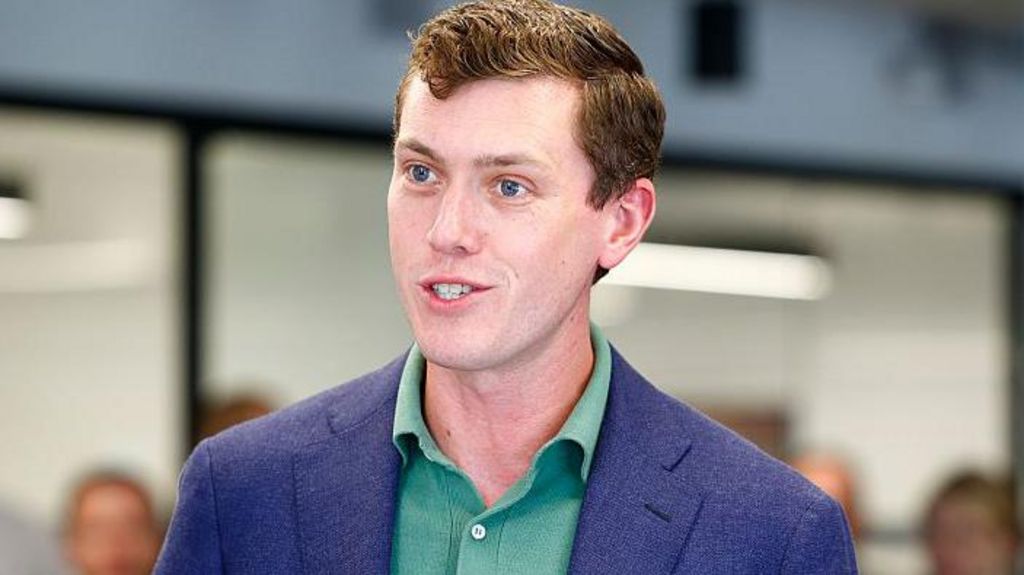
    Pete Buttigieg, the former United States Transportation Secretary and a widely speculated potential 2028 Democratic presidential candidate, has opened up about a traumatic experience that he says counts among the worst moments of his life: a baseless anonymous allegation that forced him to stay separated from his young children overnight.

    In a lengthy personal post published on the Substack newsletter platform, Buttigieg detailed how an anonymous tip to authorities claiming he posed a risk to his own children triggered an official investigation that upended his family life. Michigan State Police were required to respond to the report, which involved arranging formal forensic interviews with Buttigieg’s four-year-old twin children. As a standard procedural precaution during the investigation, law enforcement instructed Buttigieg not to be left alone with his children until the interviews were completed, requiring him to spend a full night away from them.

    After a full review of the claim, both Michigan State Police and state child protective services concluded the allegation was completely unfounded. Law enforcement officials also shared with Buttigieg that they believe the false claim was politically motivated, a conclusion he echoed in his public account of the incident. When contacted by the BBC, Michigan State Police confirmed their official finding that the anonymous report was false, echoing Buttigieg’s characterization of the ordeal.

    Buttigieg, who is married to Chasten Buttigieg and shares the four-year-old twins with him, described the pain of having his young children dragged into a political dispute. “I cannot describe the mix of rage and sadness that I feel at the idea that someone brought our children into this,” he wrote. “They are four years old. Four. They do not know or care what a Democrat or a Republican is.”

    The former cabinet secretary also raised concerns about the long-term unseen impact this traumatic experience could leave on his family, including his husband and young children. He drew a parallel between the false child protection allegation and the dangerous practice of “swatting” — a harmful harassment tactic where bad actors make hoax emergency calls to send heavily armed law enforcement officers to an innocent person’s home. In Buttigieg’s framing, this false claim was the child welfare system equivalent of that dangerous hoax.

    Michigan State Police echoed warnings about the harm caused by such deliberate false reports. In their official statement to the BBC, department officials noted that baseless allegations like this one are inherently dangerous, as they pull already stretched emergency and child protection workers away from their core work: responding to legitimate threats to children and supporting vulnerable families that actually need intervention.

    The incident has sparked new conversation about the rising trend of weaponizing child protection systems to target political opponents, as Buttigieg remains one of the most high-profile young figures in the Democratic Party and is frequently named as a likely candidate for the 2028 presidential election.

  • US conducts strikes on Iran after attack on cargo ship

    US conducts strikes on Iran after attack on cargo ship

    Tensions have reignited in the Persian Gulf after a one-way drone attack on a commercial cargo vessel transiting the Strait of Hormuz, prompting the United States military to launch retaliatory strikes against Iranian assets. The June assault, which Washington blames on Iranian forces, violated a recently brokered ceasefire between the two nations, marking a sharp escalation in a region that remains one of the world’s most critical chokepoints for global energy trade.

    The drone strike on Thursday left no reported casualties among the cargo ship’s crew, but it triggered emergency plans to evacuate more than 11,000 sailors who were stranded in the area by heightened regional hostilities. Within 24 hours, US Central Command (Centcom) confirmed it had carried out targeted strikes against key Iranian infrastructure: missile and drone storage facilities, as well as coastal radar positions along the Iranian coastline. As of Friday evening, Iranian officials had not issued any public response to the US strikes.

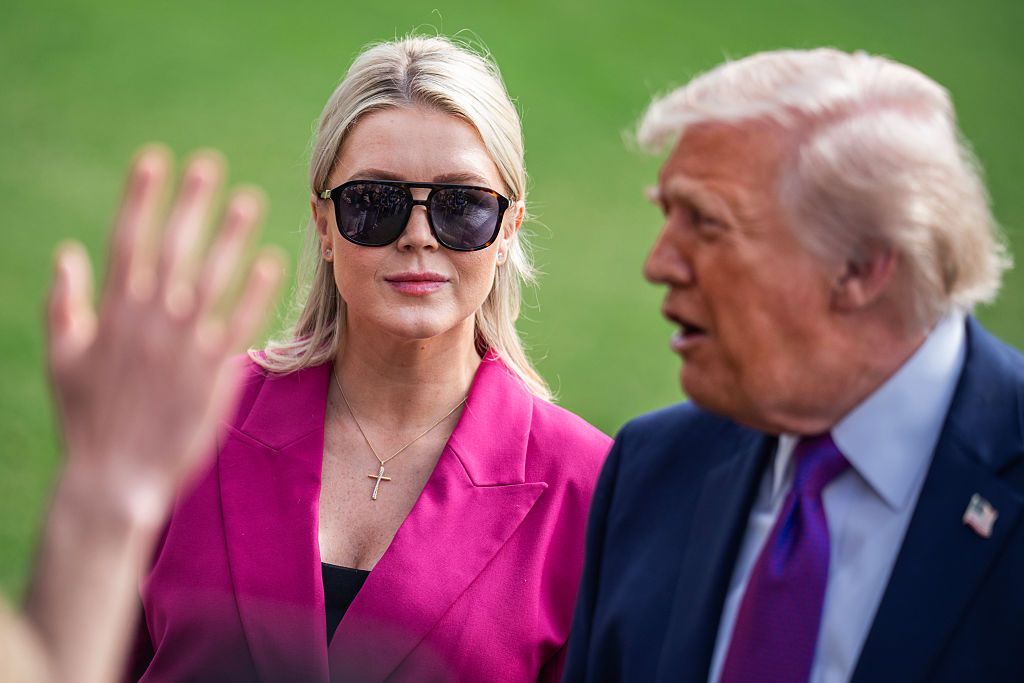
    Speaking to reporters at the White House shortly before the strikes were officially announced, President Donald Trump deflected questions about a potential US military response and the status of the existing ceasefire. When pressed for details, Trump merely told reporters “You’ll find out,” adding that he disapproved of the unprovoked attack: “I don’t like the fact that they took a shot yesterday. They shouldn’t be doing that.” Pressed on why Iran would choose to break the truce, Trump only offered that “they’re a little bit different.”

    In its official statement framing the retaliatory action, Centcom characterized the strikes as a measured but powerful answer to the unprovoked aggression against commercial shipping. The command emphasized that the attack by Iranian forces constituted a clear violation of the terms of the ceasefire agreement reached between Washington and Tehran in mid-June. Beyond the ceasefire breach, Centcom noted that Iran’s repeated hostile actions directly undermine the principle of freedom of navigation in the strait, a vital artery that carries a huge share of global commerce, including energy exports and key industrial commodities.

    “Furthermore, Iran’s dangerous behavior undermined freedom of navigation as commerce increasingly flows through the vital international trade corridor,” the Centcom statement read. The command added that the US military would maintain its posture in the region to protect commercial shipping: “The United States military will continue to provide safe passage coordination and support to commercial vessels transiting the strait.”

    The current escalation follows months of open hostilities that began in late February, when the United States and Israel launched coordinated strikes against Iranian targets across the Middle East. In response to those attacks, Tehran effectively closed the Strait of Hormuz, the 21-mile wide waterway that connects the Persian Gulf to the Arabian Sea and carries roughly a fifth of the world’s daily oil consumption and a large share of global liquefied natural gas exports. The closure sent global oil prices spiking sharply and disrupted supplies of other critical commodities, including agricultural fertilizer, exacerbating supply chain pressures across global markets.

    To de-escalate the crisis, the United States and Iran signed a 14-point memorandum of understanding on June 17 that agreed to end all open hostilities between the two nations. A key provision of that truce required Iran to exercise its best efforts to guarantee the safe passage of all commercial vessels through the strait, with no tolls or restrictions on transit, for a 60-day period. Thursday’s drone attack marks the first major breach of that agreement, throwing the future of the ceasefire into doubt and raising fears of a renewed full-scale conflict in the strategic region.

  • World Cup fans frustrated by ‘confusing and expensive’ tipping culture in US

    World Cup fans frustrated by ‘confusing and expensive’ tipping culture in US

    As thousands of international football supporters descend across the United States for the World Cup, a long-debated feature of American life has emerged as a top point of friction: the mandatory culture of tipping. Many visitors from countries where gratuity is either baked into menu prices or only offered for exceptional service have reported widespread tipping fatigue, with sticker shock and confusion straining their travel budgets.

    Geoff Pryor, an England fan from Norwich who is traveling across the U.S. to attend matches, acknowledged that tipping makes sense for quality table service at restaurants. Still, he described being asked to tip for even the most basic transactions – including buying a pre-packaged bottle of water – as “weird.” “They try to get a tip for doing nothing,” Pryor told the BBC, noting that while he recognizes U.S. hospitality workers earn lower base wages than staff in the UK, constant requests for gratuity add unnecessary strain to a trip.

    For Australian supporters Chris O’Flynn and Robert McNamara, the combination of already inflated World Cup match tickets and unexpected tipping costs has stretched their travel budgets thin. Unlike Australia, where service fees are included in listed prices, the pair said the constant expectation of gratuity in the U.S. has proven a major culture shock, even as they try to respect local customs. “I still find it a bit confusing why it exists… Sometimes you don’t know how much you’re supposed to tip,” O’Flynn explained. McNamara added that being asked for a tip after every individual drink purchase sends costs skyrocketing quickly: “They’re expecting a tip after every drink so it gets expensive very quick. You’re buying a drink and adding $5 on. It’s difficult to comprehend.” The core sentiment among Australian fans, O’Flynn said, is that employers should cover living wages for staff directly, rather than shifting that responsibility to customers.

    Japanese visitors echoed that frustration. Maiko Asahi, who traveled from Tokyo with her family to watch Japan play in Dallas, said tipping is not a cultural practice back home, and that U.S. prices are already exorbitant even before adding gratuity. “The prices without the tips are already very expensive, with tipping it is way too much,” Asahi said. Another Japanese fan, Akihiro, who is attending the tournament with his son, pointed out that even budget restaurant meals can end up costing far more than expected after tipping. “Even the cheapest meal at a restaurant still costs around $30, and when you add on a tip of say, 13-20% you end up thinking – Oh dear, I could have had another portion for that,” he said.

    But hospitality business owners across the country say the friction cuts both ways, with many reporting that international World Cup fans have a reputation for leaving little to no gratuity, putting already low-paid staff in a tight spot. Chris Keller, owner of Banter, a popular football-focused bar in Brooklyn that draws crowds of British and European fans during the tournament, told the BBC that under-tipping is a consistent issue. “It’s always the case. There’s no getting around it. There’s always a lack of tipping or playing ignorant like they don’t know,” he said. To protect his employees, Keller has adjusted his venue’s policy to require pre-payment for drinks – including an automatic service charge – for customers with reservations.

    Ann Calimano, co-owner of Hurley’s Restaurant & Bar in New York City, said the World Cup has brought an unexpected surge in foot traffic during what is typically a slow season, but many first-time international customers are unfamiliar with American tipping norms. “Europeans don’t tip like the American people. That’s the culture,” she explained. When large groups order hundreds of dollars’ worth of food and drink and leave no gratuity, Calimano said staff have to step in to clarify the unwritten rule: “The bartenders will graciously ask, ‘was the service okay?’ and they’ll say ‘yes, of course,’ And then they’ll explain that the service is not included, whereas in Europe, the service is included in the price of everything.”

    Tipping norms and base wages for hospitality workers vary widely across U.S. states. In Los Angeles, for example, the base minimum wage for tipped employees is $16.20 per hour, one of the highest rates in the country. Joseph Pitruzelli, owner of Downtown LA’s German-themed restaurant Wurstküche, said his venue has not seen a major shift in tipping habits during the World Cup, and keeps its suggested tip rates between 10% and 20%. He added that he has noticed other local venues pushing suggested tips as high as 25% to 30%, a range he calls unreasonable. At his restaurant, all tips are pooled and split among the entire front-of-house and back-of-house team, from dishwashers to chefs, to ensure all staff benefit.

    Rosa Thurnher, owner of El Ponce restaurant and a board member of the Independent Restaurant Coalition, explained that the expectation of 20% tips across the U.S. hospitality industry is rooted in the country’s unique wage structure. While some states set higher base wages for tipped workers, others like Atlanta set the minimum cash wage for tipped staff as low as $2.13 per hour. Federal law requires employers to make up the difference if an employee’s base wage plus tips do not add up to the federal minimum wage of $7.25 per hour, but without tips, Thurnher said it is nearly impossible for hospitality workers to cover living costs in most U.S. cities. “If they don’t receive any tips, it’s impossible to survive in the service industry,” she said. While individual states can set higher mandatory wages for tipped workers, tipping remains codified as a core expected component of hospitality employee income under U.S. regulation.

  • ‘It’s way too much’ – World Cup fans react to American tipping culture

    ‘It’s way too much’ – World Cup fans react to American tipping culture

    When international soccer fans descended on California during the World Cup, one local custom left many of them shaking their heads: the mandatory-seeming culture of tipping in American restaurants. In on-the-ground conversations with the BBC, these traveling supporters, who had gathered to watch one of the world’s biggest sporting events, shared widespread frustration over what they described as excessive tipping expectations that differ sharply from norms in their home countries.

    For many international visitors, the American system of tipping – which typically requires adding 15 to 20 percent of the pre-tax bill to compensate service staff, on top of the menu price – comes as an unexpected and unwelcome additional cost. Several fans told the BBC that when they sit down for a meal after a day of watching matches, they are often caught off guard by how much their total bill climbs when tipping is added in. “It’s way too much,” one fan summed up the common sentiment, explaining that tipping works very differently in their home nation, where service charges are either already included in menu prices or not expected at all.

    The conversation highlights a longstanding cultural divide around tipping practices. In many European and Asian countries, tipping is either a small gesture for exceptional service, or not required at all, as living wages are built into food costs by employers. In the United States, however, the custom is deeply ingrained, rooted in a system where many service workers rely heavily on tips to make a living, with base wages often falling far below the standard minimum wage for tipped employees.

    For World Cup fans traveling to California to enjoy the tournament, this cultural difference has become a constant small stressor during their trip. Many noted that they did not mind tipping for good service, but took issue with the expectation that they must tip a large percentage regardless of the quality of service, and on top of already rising food prices across the state. The interviews, conducted across popular tourist and dining areas near fan viewing events, captured a consistent theme of surprise and disapproval from international visitors encountering American tipping norms for the first time, or re-encountering them on a current trip.

  • Trump accuses Iran of ceasefire breach after Strait of Hormuz attack

    Trump accuses Iran of ceasefire breach after Strait of Hormuz attack

    A targeted attack on a commercial cargo vessel transiting the Strait of Hormuz has triggered renewed tensions between the United States and Iran, forcing the United Nations’ International Maritime Organization (IMO) to pause a major evacuation operation that aimed to free more than 11,000 trapped sailors, according to multiple international maritime and official sources.

    The incident unfolded on Thursday, when a projectile struck the Singapore-flagged bulk carrier *Ever Lovely*, owned by Taiwan-based shipping firm Evergreen, roughly 7.5 nautical miles southeast of Oman’s Port of Dahit. UK Maritime Trade Operations (UKMTO), the British body that monitors security in the Gulf region, initially reported the strike, while Evergreen later confirmed that all crew members remained unharmed, the vessel sustained only limited damage, and it successfully completed its transit of the critical waterway. Data from ship-tracking platform MarineTraffic, reviewed by BBC Verify, shows the *Ever Lovely* was traveling along the southern route designated by the IMO at the time of the attack. Arsenio Dominguez, the IMO’s secretary-general, noted in a Thursday statement that the vessel was not part of the organization’s official evacuation framework, but did not elaborate further.

    On Friday, former U.S. President Donald Trump, who currently holds the U.S. presidency, publicly condemned Iran via his social platform Truth Social. Trump claimed that Iran launched at least four unmanned aerial drones at ships passing through the strait; U.S. defensive systems intercepted three, he said, while the fourth struck the upper deck of the *Ever Lovely*. “Obviously, this is a foolish violation of our Ceasefire Agreement,” Trump wrote in his post, adding that despite the damage, the cargo ship was able to continue its voyage. As of Friday afternoon, Iran had not issued a direct response to Trump’s accusation, though Iranian state media has circulated coverage of his remarks.

    Tensions over the Strait of Hormuz, which carries roughly a fifth of the world’s daily oil and natural gas shipments, flared in late February after the United States and Israel launched a series of military strikes against Iranian targets. In response, Tehran effectively closed the waterway, triggering a sharp spike in global energy prices and disrupting global supplies of critical commodities including fertilizer. Earlier this month, Washington and Tehran reached a 14-point ceasefire memorandum of understanding that reopened the strait. The agreement required Iran to use its best efforts to guarantee safe passage for all commercial vessels through the waterway free of charge for a 60-day period. Even after the ceasefire took effect, however, disagreements have persisted: Iran has repeatedly stated it plans to collect what it calls “maritime service fees” for transits, a position that the U.S. has strongly rejected.

    In the lead-up to Thursday’s attack, Iran’s Islamic Revolutionary Guard Corps (IRGC), the country’s elite military force, issued a public warning that any vessel attempting to cross the strait via a route designated by the IMO would be “unacceptable and completely dangerous,” and that all ships must coordinate their transits directly with Iranian authorities. On Friday, the IRGC repeated its longstanding assertion that the entire Strait of Hormuz falls under Iranian territorial sovereignty, according to Iranian state media reports.

    Following the attack on the *Ever Lovely*, the IMO announced it would immediately pause its evacuation operation, which was designed to extract more than 11,000 seafarers who had been stranded on vessels stuck in the area since the strait was closed in February. As of Friday, the organization reported that roughly 115 vessels and 2,500 seafarers had already completed safe transits before the pause went into effect. Dominguez said Friday that the IMO is now working with key stakeholders including the U.S., Iran, and Oman to secure written guarantees that transiting vessels will not be targeted in future attacks. “As soon as I get further confirmations of that, we’re ready to re-initiate the process of evacuation,” Dominguez said.

  • Judge declares mistrial in California wildfire arson case

    Judge declares mistrial in California wildfire arson case

    Two years after the deadliest wildfire in Los Angeles history scorhed through the Pacific Palisades neighborhood, a California judge has formally declared a mistrial in the case against the man accused of intentionally igniting the devastating blaze.

    Thirty-year-old Jonathan Rinderknecht was charged with starting the fire in January 2025, one that would rapidly grow out of control amid Southern California’s volatile fire conditions. When the embers finally settled, the inferno had left an unprecedented trail of destruction: 12 people dead, more than 6,000 residential and commercial buildings reduced to ash, and thousands of residents displaced from their homes in one of Los Angeles’s most iconic coastal neighborhoods.

    Following closing arguments, the 12-person jury spent two full days behind closed doors deliberating over the evidence and testimony presented over the course of the trial. On Thursday, jurors notified the presiding judge that they had hit an impassable deadlock, unable to come to a unanimous verdict on the charges against Rinderknecht. In response to the hung jury, the judge had no legal option but to grant a mistrial.

    Local prosecutors confirmed immediately after the ruling that they intend to move forward with a second trial against the defendant, setting the stage for a new round of legal proceedings that will once again put the 2025 tragedy under the microscope. Victims of the wildfire, many of whom have spent years rebuilding their lives following the disaster, now face an extended wait for a final resolution to the high-profile case.

  • Canada’s rat and asbestos plagued official residence gets a lifeline

    Canada’s rat and asbestos plagued official residence gets a lifeline

    After more than a decade of sitting abandoned and crumbling into disrepair, Canada’s iconic prime ministerial official residence at 24 Sussex Drive is finally set to be restored, after Prime Minister Mark Carney unveiled a long-awaited, community-focused national restoration plan on Friday.

    Widely recognized as Canada’s equivalent to the White House in the U.S. or 10 Downing Street in the UK, the 19th-century property has been uninhabitable since the 2010s, plagued by systemic neglect. Years of deferred maintenance left the building with severe hazards including asbestos-contaminated walls, toxic mould infestations, and widespread rodent problems, earning it the label of a “national embarrassment” from industry experts. Preliminary remediation work completed in 2024 cleared the site of asbestos, mould, and pests, but major structural and cosmetic renovations remain needed to make the residence safe and usable again.

    The price tag for full restoration is currently estimated at over C$100 million (US$71 million). For years, this cost has deterred successive Liberal and Conservative governments from moving forward with taxpayer-funded repairs, as successive administrations chose to prioritize other policy areas over restoring the historic property.

    Under the new plan outlined by Carney, the federal government will not draw on public funds for the majority of the project. Instead, the Rideau Hall Foundation will lead a national crowdfunded fundraising campaign to cover a large portion of the costs. To prevent corporate influence and ensure transparency, Carney announced strict rules for the campaign: only individual Canadian residents and registered philanthropic organizations will be eligible to donate, donation amounts will be capped, and a full public list of all contributors will be released once the campaign concludes.

    Alongside the fundraising push, the government will launch a national design competition open exclusively to Canadian architecture firms. Teams will submit renovation proposals that honor the building’s historic character while updating it to meet modern accessibility, security, and sustainability standards. An independent jury will review all submissions and select a winning design by July 2025.

    In remarks announcing the plan, Carney emphasized that 24 Sussex Drive holds deep national significance. Over its history, the residence has housed 10 Canadian prime ministers and hosted global leaders including Queen Elizabeth II and Winston Churchill. Carney acknowledged that the property had “not been cared for with the respect that it deserves” for decades, noting that while he is unlikely to ever move into the residence himself during his premiership, his government is committed to leaving a functional, respected national asset for future Canadian leaders.

    Explaining the decision to avoid full taxpayer funding, Carney said his administration has prioritized pressing domestic policy goals, including expanding the supply of affordable housing across Canada and strengthening national economic growth. He added that the project aligns with a broader public commitment to shared national heritage, noting that Canadians hold a collective sense of ownership over the iconic property. “This is their house,” Carney said. “It is a symbol of the nation.”

    Joseph Clark, an associate professor of architecture at the University of Toronto, noted that while 24 Sussex Drive is far more modest in scale and grandeur than its global counterparts like the White House, its cultural and political importance to Canada remains unmatched.

  • Ex-Trump adviser John Bolton pleads guilty to mishandling classified documents

    Ex-Trump adviser John Bolton pleads guilty to mishandling classified documents

    In a stunning legal development that cuts through the heart of U.S. national security accountability, John Bolton, one of former President Donald Trump’s most high-profile former aides and persistent critics, has entered a guilty plea to a single charge of illegally retaining classified national security materials tied to notes he compiled for his 2020 memoir.

    Bolton, who served as Trump’s White House national security adviser before being fired in 2019, originally faced 18 felony counts related to improper handling of sensitive government information and had pleaded not guilty following his indictment. Friday’s court proceeding marked a dramatic reversal, with the 75-year-old former diplomat acknowledging the accuracy of all allegations against him, including that he shared diary entries containing top-secret national defense data with family members. When asked by the judge whether he committed the acts in question, Bolton confirmed his guilt and issued a public apology for his actions. “I did, your honor,” he told the court, adding “I am sorry for it.”

    Under the terms of the plea deal reached with federal prosecutors, Bolton faces a maximum potential prison sentence of up to five years behind bars. He has already agreed to pay $2.25 million in financial penalties, complete 100 hours of court-ordered community service, and participate in a full debriefing with senior national security officials to account for all improperly retained classified information, according to U.S. reporting from CBS News, the BBC’s U.S. partnership affiliate. Bolton’s formal sentencing is scheduled for October 28, as confirmed by multiple U.S. media outlets.

    Speaking to reporters immediately following Friday’s hearing, U.S. Attorney Kelly Hayes emphasized that Bolton was far from an inexperienced official when it came to handling sensitive government data. As a decades-long national security figure who previously served as U.S. Ambassador to the United Nations under George W. Bush, Bolton knew full well the protocols for handling classified materials and who was cleared to receive them, Hayes said. “He also knew the damage to national security that could be caused by mishandling that sensitive information,” Hayes added. “Nevertheless, as Mr. Bolton just admitted, he put our national security at grave risk in violation of the law.”

    The roots of the legal case stretch back to the release of Bolton’s tell-all memoir, *The Room Where It Happened*, which hit bookshelves in 2020. The book offered a scathing insider portrait of Trump’s tenure in the White House, depicting the then-president as deeply uninformed on key global geopolitical issues. The Trump White House immediately moved to block publication, filing a lawsuit that argued the manuscript contained classified information that had never gone through mandatory pre-publication review. A federal judge rejected the White House’s injunction request, and the book was released to the public just days later.

    The U.S. Department of Justice launched a formal investigation into Bolton’s handling of classified materials shortly after the book’s publication, probing whether he improperly disclosed sensitive information in his memoir. Beyond the book-related counts, prosecutors also accused Bolton of transmitting classified materials from his time as national security adviser to two of his relatives. In a previously undisclosed detail included in the indictment, investigators found that a hacker once gained access to an online account where Bolton stored the classified documents, and issued a threat to unleash what would be “the biggest scandal since Hillary [Clinton]’s emails were leaked.”

    In the years since leaving the White House, Bolton has remained one of the most vocal Republican critics of Trump, who is now the 2024 Republican presumptive presidential nominee. Trump has repeatedly hit back at Bolton, publicly calling for him to be jailed and labeling the former adviser a “sleazebag.”

    Bolton’s indictment comes as part of a string of high-profile criminal cases targeting prominent Trump critics, including former FBI Director James Comey and New York Attorney General Letitia James. However, legal experts and former federal prosecutors told the BBC that Bolton’s case is distinct from other political prosecutions due to the overwhelming weight of evidence gathered by investigators. A source familiar with the plea deal explained that Bolton chose to plead guilty in part because he recognized a continued trial would require the release of additional classified information as part of his defense, a step he refused to take to avoid further harm to U.S. national security. “The ambassador has admitted to what he has done,” the source said.

    Carrie Cordero, a senior fellow at the Center for a New American Security, noted that while bringing charges against such a high-ranking former official for classified material mishandling is rare, it is not without precedent. “Cases that involve classified information present challenges to prosecute, but they can and are brought against both low-level and high-level officials, from time to time,” Cordero explained. Earlier this year, in January, Bolton was among a group of high-profile former Trump administration critics who had their lifetime Secret Service protection stripped by the Trump-aligned House of Representatives.

  • Canada eligible to join Eurovision competition

    Canada eligible to join Eurovision competition

    The world’s biggest live music competition, the Eurovision Song Contest, is opening its doors to a new North American contender: Canada. This historic change comes after the country’s national public broadcaster, CBC/Radio-Canada, secured full membership status in the European Broadcasting Union (EBU) – the non-negotiable requirement for any nation that wants to compete in the iconic annual contest.

    The shift follows months of coordinated work between the Canadian government and the public broadcaster, dating back to Prime Minister Mark Carney’s 2025 national budget. Since taking office last year, Carney has prioritized deepening political and economic connections between Canada and European nations, and adding Eurovision participation was framed as a key cultural pillar of that outreach strategy. By November, the Carney administration confirmed it was collaborating with CBC to explore the logistics of entering the competition, and the 2025 budget allocated C$150 million (£80 million) to the public broadcaster to support this and other cultural initiatives.

    While Canada will be the latest non-European nation to join the contest’s lineup, it is far from the first. Israel and Australia have been regular competitors for years, and Morocco made a single appearance in the 1980 contest. EBU Director General Noel Curran welcomed the change, noting that adding Canada’s unique cultural voice to the Eurovision community strengthens the entire event.

    Interestingly, Canadian talent has already left an indelible mark on Eurovision history decades before the nation gained formal eligibility. In 1988, Quebec-born global superstar Céline Dion claimed the contest’s top prize when she competed on behalf of Switzerland. That unexpected victory became the launching pad for Dion’s decades-long, record-breaking career that has made her one of the best-selling artists of all time. Other Canadian artists have followed in her footsteps, representing competing European nations: Acadian singer Natasha St-Pier from New Brunswick represented France in 2001, and Montreal-born performer La Zarra represented France at the 2023 contest.

    With full membership now confirmed, Canada is on track to field its first official national entry when the next Eurovision Song Contest kicks off next year, marking one of the most significant changes to the competition’s participation rules in recent memory.

  • The US that World Cup fans didn’t expect to love

    The US that World Cup fans didn’t expect to love

    In the weeks leading up to the 2026 FIFA World Cup this summer, nearly all global attention centered on the 16 host cities and their state-of-the-art stadiums where the world’s top football teams would compete. But just two weeks into the tournament, an unexpected and heartwarming trend has taken over social media: thousands of feel-good videos from international fans exploring the lesser-known, everyday parts of the United States that lie between the gleaming coastal skylines.

    For many foreign visitors, these off-the-beaten-path discoveries have become the highlight of their trip. A Norwegian visitor gasped in shock stepping into the sprawling outdoor retailer Bass Pro Shops. A British traveller could only describe Texas’ iconic Buc-ee’s – a one-stop destination combining a convenience store, full-service restaurant, gas station, and grocery superstore – as “absolutely insane”. Fans have posted gushing reactions to everything from the massive bulk sections of Costco and Walmart to the ubiquitous, creamy ranch dressing that has become an unexpected viral obsession. These moments are shining a light on a version of America rarely seen in international film or television: a quirky, unscripted, ordinary side of the country that has nothing to do with partisan politics and that most first-time visitors never get a chance to see. For Americans watching these reactions from home, the videos have become a gentle reminder of the small, unique joys that make the country special, rekindling a love for their own homeland that many had let fade.

    Spanning roughly 2,800 miles from coast to coast, with World Cup matches hosted in cities across both the Atlantic and Pacific shores, many international fans have opted to skip constant cross-country flights and embrace the classic American tradition of the open road. Road-tripping between matches has let them stumble upon kitschy nostalgic roadside attractions along historic Route 66, and experience the unrivaled grandeur of the U.S. National Park System. Videos of fans standing awestruck beneath the golden sandstone arches of Utah’s Zion National Park, gazing out over the layered red rock expanse of the Grand Canyon, and exploring the misty, cypress-draped lowland swamps of Louisiana have served as a reminder of the country’s staggering natural diversity. One British visitor who explored Zion put it simply: “I don’t think people realise how big, large, wild, full of wildlife America is. There is nothing quite like American national parks and state parks. It’s just incredible.”

    Intrigued by how deeply these fan reactions resonated with me as an American, I reached out to Charlotte Russell, a clinical psychologist and founder of The Travel Psychologist, to unpack why these simple videos feel so moving. Russell explained that for people who live in a place full-time, it is easy to take everyday cultural landmarks and natural beauty for granted. “Just like we don’t notice our wallpaper at home, we don’t spend much time thinking about our own culture in our day-to-day lives; it’s normal to us,” she said.

    Beyond natural landscapes, road-tripping fans have also fallen for the country’s diverse, unassuming regional cuisine – far beyond the global McDonald’s franchises most associate with American food overseas. Visitors are lining up at iconic Southern institutions like Waffle House, obsessing over crispy tater tots, and indulging in the classic American pastime of filling up on gas station snacks, from Buc-ee’s famous Beaver Nuggets to regional barbecue specialties. One Scottish traveller who spent his trip sampling everything from Dunkin’ Donuts to Atlanta seafood boils broke down in tears eating his last buttery, syrup-soaked waffle on the drive to the airport before his flight home. Two British football podcasters from *The England Pod* who detoured through Kansas City were so blown away by the city’s signature smoked ribs and brisket that they are already planning a follow-up trip to Dallas to test Texas-style barbecue, even as they admit: “It’s tough to imagine anything beating this.” The obsession with ranch dressing has gotten so out of hand that airport authorities have issued public warnings about legal carry-on limits after countless fans tried to smuggle large bottles of the dressing home in their checked luggage.

    Beyond viral clips of fans marveling at American food and scenery, the videos have also highlighted a quiet, powerful side of American generosity. Social media comment sections are flooded with local residents recommending hidden gems off the typical tourist trail, and even offering homemade meals to passing fans. That warmth feels particularly meaningful at a time when the U.S. has faced widespread international criticism for strict travel bans, tighter entry restrictions, and high visa rejection rates for citizens of many participating World Cup nations. For every video of a fan falling in love with American culture, there is a matching story of Americans opening their homes and communities to visitors. One traveller reported that Houston transit workers handed out free cold drinks to overheated fans heading to matches, while police officers across the country have been filmed cheering on and hyping up international supporters.

    Few communities have embodied this welcoming spirit more fully than the small college town of Lawrence, Kansas, which was chosen as the training base for the Algerian national team. The city’s 96,000 residents pulled out all the stops to welcome the team: the local university marching band learned to play the Algerian national anthem, community artists created a massive custom Algerian flag, and local pub staff studied basic Arabic phrases to greet guests. When the team arrived late at night, hundreds of local residents – many with no personal connection to Algeria – waited in total darkness to greet them, with one local telling the team: “Thank you for choosing our hometown.”

    These stories of unexpected cross-cultural connection have left many Americans feeling emotional during this tournament, and it is not hard to see why. As Russell notes, many U.S. citizens have felt discouraged about their country in recent years, and troubled by the negative global perception of the United States heading into the World Cup. “With all the negative news in the run-up to the World Cup… seeing people actually enjoying the US and its people feels more intensely joyful,” she explained. After scrolling through weeks of these warm, unscripted social media posts, I have felt a swell of national pride that I have not experienced in many years.

    Soon, this summer-long tournament will draw to a close: a new World Cup champion will be crowned, and fans will return home, most a few pounds heavier from all the ranch dressing and barbecue. But the hope this trend has sparked lingers – that Americans will continue to find joy in the quiet quirkiness of their own culture, take pride in the wild natural beauty that stretches across the country, and keep our doors open to visitors, so that more people can see the real America that we know and love.