标签: North America

北美洲

  • Man charged with attempted murder in attack on home of OpenAI’s Sam Altman

    Man charged with attempted murder in attack on home of OpenAI’s Sam Altman

    A 20-year-old Texas man has been hit with a sprawling set of state and federal criminal charges following alleged coordinated arson attacks targeting the private San Francisco residence of OpenAI CEO Sam Altman and the artificial intelligence company’s headquarters earlier this month. Daniel Moreno-Gama is scheduled to make his first court appearance for state charges during an arraignment scheduled for Tuesday afternoon, where he will formally hear allegations that include two counts of attempted murder.

    Alongside the state-level charges, Moreno-Gama also faces multiple federal felony counts, including unregistered firearm possession and attempted destruction of property through the use of explosive devices. Court documents filed by the U.S. Department of Justice confirm that investigators recovered written materials from the suspect that express extreme opposition to artificial intelligence development, and openly call for violent criminal acts to be carried out against AI industry executives, board members and investors.

    Authorities allege the series of violent acts began shortly after 4 a.m. local time Friday, when Moreno-Gama set fire to an exterior security gate at Altman’s residential property before fleeing the scene on foot. Roughly one hour later, the suspect is accused of launching a second attack at OpenAI’s central San Francisco headquarters, the facility where the company develops its industry-defining ChatGPT AI chatbot. According to sworn statements in the federal criminal complaint, on-site security personnel observed the suspect attempting to smash the building’s glass entrance doors with a heavy chair before the attack was interrupted.

    When law enforcement officers took Moreno-Gama into custody, they recovered a cache of incendiary devices, a large container of kerosene, and a lighter from his possession, the Department of Justice confirmed. The written materials found with the suspect outline deep fears over existential risks that unregulated AI development could pose to humanity, including one section titled “Some more words on the matter of our impending extinction.” In the documents, Moreno-Gama allegedly wrote that if he was going to urge others to carry out lethal attacks against AI industry figures, he must lead by example to prove his sincerity. The documents also included a compiled list of full names and home addresses for CEOs, board members and major investors at leading AI companies across the country. Surveillance camera footage collected from both attack locations clearly places Moreno-Gama at the scene of both incidents, prosecutors confirmed in their criminal complaint. Crucially, no people were harmed during either alleged attack.

    In an official statement following the suspect’s arrest, Acting U.S. Attorney General Todd Blanche emphasized that violence has no place in ideological or policy debate. “Violence cannot be the norm for expressing disagreement, be it with politics or a technology or any other matter,” Blanche said. “These alleged actions – which damaged property and could well have taken lives – will be aggressively prosecuted.”

    OpenAI’s official response echoed that stance, noting that healthy, good-faith public debate over responsible AI development is a necessary part of building technology that benefits the public through democratic frameworks. “To ensure society gets AI right, we need to work through the democratic process, and we welcome a good faith debate,” the company said. “But there is no place in our democracy for violence against anyone, regardless of the AI lab they work at or side of the debate they belong to.”

    While local and federal authorities initially declined to publicly confirm the target of the residential attack, an OpenAI spokesperson confirmed the information to the BBC last Friday, verifying that the residence targeted belonged to Altman. Speaking at a press conference on Monday announcing the state charges, San Francisco District Attorney Brooke Jenkins expressed relief that no harm came to those targeted. “I’m grateful that Mr Altman, his family, and his employees were uninjured in these attacks and are safe,” Jenkins said.

    Earlier on Monday, FBI Director Kash Patel confirmed via a post on X that FBI agents had carried out a raid on a location in Texas connected to the incident, as part of the multi-jurisdiction investigation into the attacks.

    The alleged attacks come just one week after Altman was the subject of a high-profile investigative profile in *The New Yorker* that raised public questions over his personal trustworthiness and suitability to lead a company developing transformative, widely debated AI technology. Hours after the attack on his home, Altman posted a comment on social media referencing what he called the “incendiary article about me,” and called for broader de-escalation of public rhetoric around AI: “we should de-escalate the rhetoric and tactics and try to have fewer explosions in fewer homes, figuratively and literally.” Altman later walked back the comment, posting a follow-up on X stating he regretted linking the profile article to the alleged attack, after receiving widespread criticism from social media users for drawing the connection.

    The 2022 launch of OpenAI’s ChatGPT sparked a global surge of public interest in generative AI chatbot technology, triggering a tidal wave of billions in venture capital investment across the global AI industry. Despite the massive financial inflow, the rapid pace of unregulated AI development has drawn growing skepticism from experts, activists and observers concerned about safety, ethical and societal risks.

  • Hollywood stars unite to oppose Paramount and Warner Bros Discovery merger

    Hollywood stars unite to oppose Paramount and Warner Bros Discovery merger

    A growing coalition of more than 1,400 actors, directors, and filmmakers, including dozens of A-list Hollywood names, have united to publicly oppose the proposed $111 billion merger between Paramount Skydance and Warner Bros. Discovery, arguing the deal would deliver lasting damage to a U.S. entertainment industry already grappling with multiple crises. High-profile signatories ranging from Oscar winners Javier Bardem and Emma Thompson to comedy icon Ben Stiller and Australian star Rose Byrne have put their names to the open letter, which lays out a stark case against further media consolidation.

    The core argument of the letter centers on the already highly concentrated nature of the global media landscape, with signatories warning that combining two major studios would shrink competition at exactly the moment the industry and its audiences can least afford reduced market variety. If the merger goes forward, it would cut the number of major U.S. film studios from five to just four, narrowing opportunities for creators, eliminating jobs across the entire production ecosystem, raising content costs for consumers, and leaving global audiences with less choice in the entertainment they consume, the document reads.

    Other prominent industry figures adding their unequivocal opposition include Oscar nominee Kristen Stewart, Academy Award winner Glenn Close, and celebrated British actress Kristin Scott Thomas, with the BBC confirming that new names continue to be added to the signatory list days after the letter was published. The coalition closes its appeal with a formal call for California Attorney General Rob Bonta and other federal and state regulators to formally block the merger from moving forward.

    One high-profile signatory, Damon Lindelof — the acclaimed co-creator of *Watchmen* and *Lost* who holds an existing overall deal with Warner Bros. Discovery — expanded on his opposition in public posts on social media. “Hollywood mergers mean fewer movies and fewer TV shows and that means fewer jobs,” Lindelof wrote. “When two storied backlots are owned by the same company, the outcome is intuitive — one becomes a Ghost Town. I’m scared. But I’m not a ghost. And a fight is already lost if it’s never fought.”

    The proposed merger traces back to late February, when Paramount Skydance secured a deal to acquire Warner Bros. Discovery after streaming giant Netflix withdrew its months-long acquisition bid for the company, which controls a vast portfolio of iconic media brands including *Harry Potter*, *Friends*, Looney Tunes, and hit HBO series such as *Succession*, *Sex and the City*, and *Game of Thrones*, alongside cable news outlet CNN. Paramount Skydance itself is the product of a 2025 merger between David Ellison’s Skydance Media and the historic Paramount Pictures. Ellison, the company’s CEO and son of tech billionaire Larry Ellison, has already pushed back against critics’ claims, stating his plan is to keep Paramount and Warner Bros. as separate stand-alone film studios while increasing annual theatrical output to at least 30 high-quality feature films.

    In an official response to the open letter published Monday, Paramount Skydance reiterated its stance that the merger would strengthen, rather than reduce, opportunities for creators. “As creators we know firsthand that this is also a moment when the industry has been facing significant disruption—and the need for strong, creative-first and well-capitalized companies that can continue to invest in storytelling has never been greater,” the company said. The statement added that the merged entity would be able to greenlight more original projects, back ambitious creative ideas, support talent throughout all stages of their careers, deliver content to global audiences at an unprecedented scale, and ultimately strengthen industry competition. Echoing an earlier response from Paramount, the company reaffirmed its commitment to maintaining independent creative leadership for its iconic brands and licensing existing content, saying the deal would “ensure creators have more avenues for their work, not fewer.”

    The merger plan still faces two key remaining hurdles: it must first receive approval from Paramount Skydance and Warner Bros. Discovery shareholders later this month, before clearing review and receiving formal approval from U.S. government antitrust regulators. The BBC has reached out to Warner Bros. Discovery for additional comment on the open letter and the ongoing merger process.

    Industry analysts frame the proposed merger as the latest symptom of a sector still struggling to recover from overlapping shocks in recent years: the lasting economic aftereffects of the COVID-19 pandemic, the 2023 dual work stoppages by the Writers Guild of America and SAG-AFTRA that shut down most Hollywood production for months, growing disruption from large tech companies entering the content space, and rapid shifts in consumer viewing habits that have upended traditional revenue models for studios.

  • Democrats were already scrambling in California’s governor race. Then Swalwell dropped out

    Democrats were already scrambling in California’s governor race. Then Swalwell dropped out

    The 2026 California gubernatorial election, a contest Democrats have long considered a safe win for their party, has been thrown into unprecedented turmoil following the sudden exit of its leading Democratic contender. Representative Eric Swalwell announced his withdrawal from the race Sunday, mere days after multiple women published sexual assault and misconduct allegations against him through major outlets including the San Francisco Chronicle and CNN. Swalwell has forcefully denied all serious false accusations, though he acknowledged poor judgment in past decisions. Hours after the U.S. House Ethics Committee launched a formal investigation into the claims Monday, Swalwell also announced he would resign his congressional seat entirely.

    Swalwell’s departure has amplified a cascade of pre-existing problems that have plagued California’s Democratic party for months in the lead-up to the June primary. Term limit rules bar incumbent Democratic Governor Gavin Newsom from seeking re-election, and high-profile, widely recognized state politicians – including former Vice President Kamala Harris – have opted not to enter the race. That has left a crowded field of eight lesser-known Democratic candidates, all struggling to build name recognition and traction across California’s massive, costly media market. Even before Swalwell’s exit, the fragmented field had split the Democratic base, alarming party strategists.

    A March opinion poll from the University of California, Berkeley Institute of Governmental Studies sent shockwaves through state political circles when it found two Republican candidates leading all contenders in voter support, thanks to the fractured Democratic vote. Under California’s unique nonpartisan primary system, the top two vote-getters advance to the November general election regardless of partisan affiliation. That means a June primary outcome could leave Democrats completely shut out of the general election ballot – a nearly unthinkable scenario in one of the most reliably blue states in the U.S., which has not had a Republican governor since Arnold Schwarzenegger left office in 2011.

    Political experts warn that such an outcome would represent an unforced error of historic proportions for Democrats, particularly in a state where former President Donald Trump’s approval rating hovers below 30%. Beyond the state’s borders, the results of this gubernatorial race carry national weight: California is the fifth-largest economy in the world, and its pioneering policies on climate change, consumer protection, and technology often shape regulatory frameworks across the entire country.

    Before his exit, Swalwell had begun to build momentum, pulling ahead of the rest of the crowded Democratic field and positioning the party to lock down a spot in the general election. With his sudden exit, no clear candidate has emerged to absorb his support. Veteran Democratic strategist Garry South, who has managed four gubernatorial campaigns across California, described the current state of the race as unlike anything he has ever witnessed. “The Democratic field was already pretty muddled, even after Swalwell took a small lead,” South noted. “Now, it’s just an outright morass.”

    Two candidates are widely seen as the top contenders to pick up Swalwell’s supporters: former Congresswoman Katie Porter and billionaire climate activist Tom Steyer. Neither, however, is a guaranteed lock to win a spot in the general election. Porter has previously faced public reports of alleged staff mistreatment, though she has pledged to improve how she supports her team. Steyer has poured $89 million into campaign advertising across the state, according to the San Francisco Chronicle, but has yet to see a corresponding jump in poll numbers.

    The remaining Democratic field includes former U.S. Health and Human Services Secretary Xavier Becerra, San Jose Mayor Matt Mahan, California Superintendent of Public Instruction Tony Thurmond, former Los Angeles Mayor Antonio Villaraigosa, and former State Controller Betty Yee. None of the current candidates, however, have the statewide star power political analysts say the party needs to cut through the clutter, and many voters report struggling to distinguish between the crowded slate of contenders.

    For many California voters, the lack of name recognition has left them undecided just two months out from the June 2 primary. Joko Tamura, a 58-year-old Santa Monica resident and registered Democrat who plans to vote in the election, says she does not even recognize half the candidates running. While she has heard of Steyer and Porter, she says she lacks enough information to settle on a favorite, with homelessness and the state’s crippling cost of living topping her list of policy concerns. Jacob Casey, a 42-year-old physician, says his busy schedule has left him unable to follow the race closely, and he is still waiting for a candidate to break through.

    Mark DiCamillo, who led the March UC Berkeley poll that first exposed Democrats’ weakness, called the current state of the race unprecedented. “I haven’t seen a primary election for governor with this level of indecision, and lack of voter enthusiasm, with less than two months to go before voting starts to take place,” DiCamillo told the BBC, adding that “voters really don’t have a clear picture of any one of the candidates.”

    In the wake of Swalwell’s exit, both Porter and Steyer have moved quickly to fill the political vacuum. Porter has centered her messaging on California’s ongoing housing affordability crisis, framing policy proposals to speed up construction approvals and cut through red tape to lower building costs and expand access to diverse, affordable housing for state workers. Steyer has also leaned into cost of living issues, releasing a social media video outlining his plan to lower living costs for California residents, and attacking former President Trump over the ongoing conflict in Iran, arguing working-class Californians are bearing the financial brunt of the conflict. That messaging has resonated with some undecided voters like Leila Salem, a 28-year-old independent Los Angeles voter who staunchly opposes the war, though she says she still plans to research candidates before making her choice.

    While Democrats grapple with internal chaos, California’s Republican party is also facing its own divisions. The two leading GOP candidates are former Fox News host and one-time British Prime Minister David Cameron advisor Steve Hilton, and Riverside County Sheriff Chad Bianco. The March poll found Republican voters evenly split between the two candidates, and with Democrats holding a 2-to-1 voter registration advantage in the state, locking the Democratic party out of the general election remains the GOP’s only plausible path to a November victory.

    Many political analysts expected that Trump’s recent endorsement of Hilton would shift momentum in the GOP race, consolidating Republican support behind Hilton and pushing him ahead of at least one Democratic candidate. However, neither candidate secured the official endorsement of the California Republican Party during its recent convention, leaving the two evenly matched among the party’s base.

    Wesley Hussey, a political science professor at Sacramento State University, notes that Democrats have clear reason for anxiety after the collapse of their presumptive front-runner. Still, he added that a conventional general election matching one Democrat and one Republican remains possible if Swalwell’s supporters consolidate behind Porter, Steyer, or even a last-minute entry into the race. “It’s going to take a few days for the dust to settle in this new version of the race,” Hussey said.

  • Trump administration agrees to keep Pride flag at Stonewall monument

    Trump administration agrees to keep Pride flag at Stonewall monument

    Months after a controversial removal sparked widespread public outcry and legal action, the iconic rainbow Pride flag is set to return permanently to the official federal flagpole at New York’s Stonewall National Monument, following a court settlement reached by the Trump administration with LGBTQ+ advocacy and historic preservation groups.

    Widely recognized as the symbolic birthplace of the modern global LGBTQ+ rights movement, the Stonewall site sits across the street from the Stonewall Inn, the Greenwich Village gay bar where the 1969 Stonewall Uprising began. The uprising, sparked by a discriminatory police raid on the venue, ignited a decades-long fight for queer equality that has reshaped civil rights discourse around the world.

    The dispute traces back to February, when the U.S. National Park Service removed the Pride flag from the monument’s main flagpole. The agency justified the action by citing Department of the Interior rules that restrict flying non-designated flags on official federal flagpoles at National Park Service-managed sites, except for flags that carry specific historical context. The rainbow flag had originally been installed at the site during the administration of former President Joe Biden, after the 7.7-acre monument was first designated by former President Barack Obama in 2016.

    The flag’s removal immediately drew fierce backlash from LGBTQ+ communities, activists and public officials across the country. Critics of the action held impromptu demonstrations at the monument, and raised unofficial private Pride flags at the site in protest. A coalition of nonprofit organizations, including the Gilbert Baker Foundation — named for the queer artist who created the original rainbow Pride flag in 1978 — and several historic preservation groups responded by filing a lawsuit against the administration to challenge the removal.

    Details of the settlement, which was outlined in court documents filed Monday, show the Trump administration has agreed to reinstall the Pride flag to the monument’s official flagpole within seven days of judicial approval, and commit to keeping it displayed at the site permanently. Under the terms of the agreement, three flags will fly together on the federal flagpole: the U.S. national flag, the National Park Service flag, and the rainbow Pride flag.

    Charles Beal, president of the Gilbert Baker Foundation, celebrated the settlement in a public statement released Monday, calling the rainbow banner a global symbol that carries far more than symbolic weight. “It is a global emblem of hope, visibility, and the ongoing struggle for equality,” Beal said. “Its presence at Stonewall, the birthplace of the modern LGBTQ+ rights movement, is both historically and culturally indispensable. Restoring the flag affirms the truth of our history and the legitimacy of our continued fight for dignity and inclusion.”

    New York Mayor Zohran Mamdani also hailed the outcome as a landmark win for the LGBTQ+ community and all New Yorkers. In a post on X, the mayor wrote that the flag’s return is “a victory for the LGBTQ+ community and for our entire city. It’s a reminder that New Yorkers won’t let our history be rewritten.”

    The settlement still requires final approval from a federal judge to go into effect, but activists across the country have already marked the outcome as a critical win for protecting queer history and ensuring equal visibility for the LGBTQ+ rights movement at its most iconic site.

  • Eric Swalwell resigns from Congress after sexual misconduct claims

    Eric Swalwell resigns from Congress after sexual misconduct claims

    In a stunning development that has upended California political circles, long-serving Democratic U.S. Representative Eric Swalwell has formally stepped down from his congressional seat, capping a turbulent week that saw him abandon his bid for California governor amid mounting public and political pressure over multiple sexual misconduct allegations.

    The 12-year House incumbent, who represented a Bay Area district adjacent to San Francisco after first winning election in 2012, announced his resignation in a public letter published to the social platform X. In the statement, Swalwell acknowledged poor past judgment while pushing back against the most severe claims leveled against him. “I am deeply sorry to my family, staff, and constituents for mistakes in judgement I’ve made in my past,” the statement read. “I will fight the serious, false allegation made against me. However, I must take responsibility and ownership for the mistake I did make.”

    The crisis that led to Swalwell’s exit erupted last week, when four women came forward with accusations of misconduct spanning a range of behavior, from unwanted sexual advances to rape. The claims triggered an official ethics inquiry by the U.S. House of Representatives, which was already underway when Swalwell made the decision to resign. Prior to his departure from Congress, the lawmaker had already suspended his campaign for the California governorship amid plummeting support from voters and growing calls from within his own party to step aside.

    This is an ongoing breaking news story, with additional details expected to emerge in the coming hours and days. Readers can access real-time updates through the BBC News mobile application, or by following the official BBC Breaking News account on X for the latest alerts.

  • Wins and challenges: Zohran Mamdani’s first 100 days in office

    Wins and challenges: Zohran Mamdani’s first 100 days in office

    On a packed Sunday afternoon at Queens’ historic Knockdown Center, thousands of supporters gathered to hear New York City’s youngest mayor in more than a century deliver his highly anticipated first 100-day address, marking a milestone for the progressive leader who shook up city politics last election cycle.

    Zohran Mamdani, the self-identified democratic socialist who took office earlier this year, used the rally to highlight early progress on his policy agenda, drawing cheers from crowds holding signs reading “Pothole Politics” and “Childcare for All.” “Nothing is too big for New York City to take on,” Mamdani told the assembled crowd. “And over the past 14 weeks, we have proved that there is no task too small either.”

    Among the wins Mamdani touted were 100,000 repaired city potholes and a commitment to secure $1.2 billion in funding to expand access to free childcare. But even as he celebrated early progress, the address laid bare the gap between his ambitious campaign pledges and the realities of governing a complex, cash-strapped major American city, with many top-priority policy goals still far from completion.

    Political analysts note that Mamdani’s strategic focus on easily popularized wins early in his term is a deliberate governing choice. Justin de Benedictis-Kessner, a public policy professor at Harvard University’s Kennedy School of Government, explained: “He’s picking some of the stuff that he thinks he can most easily build support with, trying to find issues that have a broad base of support behind them instead of picking potentially divisive issues to start with.”

    One of the most unexpected developments of Mamdani’s first 100 days has been a dramatic thaw in his once-bitter rivalry with Republican President Donald Trump. In the months leading up to the election, the two traded relentless public insults: Trump dismissed Mamdani as a “communist,” while the New York mayor repeatedly vowed to never back down from the White House. But since Mamdani took office, the relationship has shifted dramatically toward unexpected cordiality.

    After multiple closed-door meetings, Trump publicly praised Mamdani and said he would be “cheering” for the New York mayor’s success. The pair discussed New York’s crippling housing and cost of living crisis during a widely publicized photo op, where both leaders appeared smiling and relaxed. Lincoln Mitchell, a global affairs expert at Columbia University’s School of International and Public Affairs, noted that Trump has at times seemed “mesmerised” by the young progressive mayor.

    Crucially, Mamdani has managed to navigate a careful middle path with the Trump White House, avoiding conflict while sticking to his core policy priorities. “What he’s managed to do is thread the needle of not getting Trump’s direct ire, and at the same time, not giving in to him,” Mitchell explained. This detente has already yielded tangible benefits for New York: Trump has followed through on his earlier threat to withhold federal funding from the city, which is already operating with a significant budget deficit, and has not launched a hardline immigration crackdown in New York similar to the one that sparked widespread conflict between federal and local leaders in Minneapolis earlier this year.

    On the policy front, one of Mamdani’s most prominent campaign promises was delivering universal free childcare to all New Yorkers, a cornerstone of his plan to tackle the city’s affordability crisis. While full universal childcare is not yet a reality, Mamdani has secured $1.2 billion to launch a phased rollout, with 2,000 free childcare spots for two-year-olds in low-income neighborhoods including Canarsie, Brownsville and Ozone Park set to open by fall 2026. The plan calls for expanding to 12,000 spots by fall 2027, with full universal coverage targeted within four years. New York Governor Kathy Hochul has already committed to fully funding the program’s first two years, though long-term funding beyond that timeline remains unconfirmed.

    Mamdani’s first 100 days have not been without controversy. Just weeks into his term, New York City was hit by two of the most severe snowstorms to hit the area in recent decades, with the first storm dropping 13.5 inches of snow on the Bronx in late January, and a second blizzard dumping nearly 20 inches of snow on Central Park in late February. The mayor faced widespread criticism after at least 18 people died during the first storm and the subsequent cold snap, particularly over slow response efforts to unhoused New Yorkers living on the street.

    Mamdani moved quickly to adjust his approach ahead of the second storm, activating emergency measures that included opening vacant hotel rooms for temporary shelter, placing 1,400 unhoused people in city shelters, and deploying 150 additional outreach workers to conduct street checks. The mayor also noted that more than 23 million pounds of snow were processed and melted at eight dedicated city melting sites, with thousands of sanitation workers working around the clock to clear major roads and residential streets.

    During Sunday’s rally, Mamdani announced a new affordability initiative that will launch before the end of his first term: a city-owned public grocery store in East Harlem’s historic La Marqueta, a public market first established by legendary mayor Fiorello LaGuardia in 1936. The mayor plans to open five of these public grocery stores across the city in coming years, with the first location expected to cost $30 million, according to reporting from the New York Times. New York City already offers subsidized rent and operational cost coverage for private grocery vendors to expand access to affordable food in underserved neighborhoods, but this marks the city’s first experiment with fully public grocery operations in modern history.

    Despite these early steps forward, many of Mamdani’s most ambitious campaign pledges remain stalled, held up by political constraints, budget limitations and the complexities of New York’s system of shared governance. “Anybody who thought he would wave a wand and get his big-picture promises done quickly, of course, that was never going to happen,” Mitchell said.

    The city’s affordability crisis remains unaddressed on the rental front, for example: a March 2026 report from real estate firm the Corcoran Group found that median rent had risen to $5,000 a month in Manhattan and $4,150 in Brooklyn, hitting new record highs. Mamdani campaigned on a promise to freeze rent hikes for the roughly 2 million New Yorkers living in rent-stabilized apartments. While the mayor does not have the authority to set rent policy directly, he has appointed six of the nine members of the city’s Rent Guidelines Board, which will vote on rent adjustment this June after holding public hearings with landlords, tenants and stakeholder groups. Analysts expect the final outcome to be a compromise rather than a full rent freeze, given competing political pressures.

    “Everything is trade-offs in politics and in governing,” de Benedictis-Kessner said, noting that after engaging with stakeholder groups, the final policy is likely to look “slightly different” than what Mamdani’s most enthusiastic supporters imagined during the campaign.

    Other key pledges have also moved slower than expected. Mamdani’s plan for a new standalone Department of Community Safety, which would deploy social workers instead of police to respond to non-criminal emergencies, has so far only materialized as a small two-person office within the mayor’s existing staff, rather than the $1.1 billion standalone agency he proposed during the campaign. His plan to make all city buses free and speed up bus routes has also been limited to small pilot programs, with citywide rollout still pending.

    Mamdani’s signature plan to fund his expansive policy agenda – raising an estimated $9 billion through higher taxes on the city’s wealthiest residents and an increase in the corporate tax rate from 7.25% to 11.5% – is currently blocked at the state level. Governor Hochul, who is running for re-election this year, has already indicated she opposes tax increases, meaning the mayor cannot move forward with his revenue plan without her administration’s support. “That’s going to be the challenge,” Mitchell said. “Because if she doesn’t [raise taxes], he’s really limited in what he can do.”

  • US drivers head to Native American lands for cheaper gas

    US drivers head to Native American lands for cheaper gas

    Across the United States, as retail gasoline prices continue to fluctuate and strain household budgets, a growing number of motorists are changing their refueling routines to seek out significant savings: they are traveling to Native American tribal territories to fill up their tanks.

    The core draw behind this trend lies in the unique legal status of federally recognized tribal lands, which grants these sovereign nations exemptions from most state and federal fuel taxes. Unlike standard public gas stations operating off-reservation, retail outlets on tribal land do not pass these accumulated tax costs down to consumers, resulting in per-gallon prices that are often 10 to 50 cents lower than the national average, and in some high-tax states, the gap can stretch even wider.

    For budget-strapped drivers, even a small per-gallon discount adds up to meaningful savings over time, especially for those who commute long distances or rely on their vehicles for work. Many motorists now plan regular trips around stops at tribal gas stations, sometimes driving several miles off their regular routes to lock in lower prices.

    This trend also highlights the economic role that tax exemptions play for tribal communities, where gas retailing has become a key revenue stream that funds local public services and infrastructure development. At the same time, it has sparked ongoing discussions about tax policy equity across different jurisdictions in the US, though for now, cost-conscious drivers show no signs of slowing their visits to tribal fuel outlets.

  • US blockade of Iranian ports explained in two minutes

    US blockade of Iranian ports explained in two minutes

    In a recent, accessible explainer delivered by the British Broadcasting Corporation’s veteran security correspondent Frank Gardner, the mechanics of the newly implemented United States blockade on Iranian ports have been broken down for global audiences in a concise two-minute analysis. The move, which marks a sharp escalation in long-running tensions between Washington and Tehran, targets maritime trade flowing through key Iranian port facilities that serve as critical economic arteries for the Islamic Republic.

    Gardner’s breakdown unpacks the strategic logic behind the blockade, detailing how U.S. naval assets and enforcement mechanisms will be deployed to intercept incoming and outgoing commercial vessels connected to Iranian trade networks. The correspondent’s analysis also contextualizes the measure within the broader framework of U.S. foreign policy aimed at pressuring Iran over its nuclear program and regional military activities, addressing both the intended impacts of the restriction and potential unintended consequences that could ripple across global energy markets and Middle Eastern security.

    The short-format explainer was designed to demystify the complex geopolitical move for the general public, cutting through jargon to clarify what the blockade means for shipping companies, regional actors, and the global economy. It comes at a time of heightened volatility in the Persian Gulf, where clashes between commercial shipping and regional militant groups have already raised international concerns over the security of one of the world’s busiest energy transit chokepoints.

  • Trump deletes controversial Truth Social post where he appears Jesus-like

    Trump deletes controversial Truth Social post where he appears Jesus-like

    A firestorm of bipartisan condemnation has forced former and current U.S. President Donald Trump to take down a controversial AI-created post on his Truth Social platform that depicted him in a Jesus-like healing role, capping a chaotic 24 hours that also saw an escalating public verbal clash with Pope Leo XIV over the ongoing military conflict in Iran.

    The removed image, generated entirely through artificial intelligence, showed Trump dressed in a flowing white robe pressing a glowing hand to the forehead of a patient lying in a hospital bed, a composition intentionally echoing classic religious art depicting Jesus Christ healing the sick. The graphic layered in overtly patriotic American imagery as well: the Statue of Liberty stood in the background, a large American flag billowed beside it, fighter jets and a bald eagle were included, alongside a uniformed soldier, a praying woman, and a hospital nurse.

    Criticism of the inflammatory post broke out within minutes of it going live, with condemnation coming even from corners of the conservative and faith-based movements that have been core supporters of Trump. Christian activist Sean Feucht, who is currently organizing a national series of faith-centered events to celebrate the 250th anniversary of U.S. independence, publicly called for the image’s immediate removal, stating that there was no conceivable context in which the content could be considered appropriate.

    Prominent conservative commentator and transgender rights critic Riley Gaines also pushed back against the post, invoking a biblical phrase by writing “God shall not be mocked.” Leading faith-based American media outlets joined the rebuke as well. David Brody, a senior journalist with the Christian Broadcasting Network, argued that the image crossed a clear red line, noting that even loyal backers of Trump’s policy agenda could reject the inappropriate content.

    The ill-fated image was posted less than 60 minutes after Trump published a lengthy, scathing attack on Pope Leo XIV, the first American to hold the papacy, who has emerged as one of the most high-profile global critics of U.S. and Israeli military operations in Iran. In his original criticism, Trump branded the Pope “weak on crime” and “terrible for foreign policy.”

    Pope Leo responded to Trump’s attack earlier on Monday, pushing back firmly against the president’s criticism. He stated that he has no fear of the Trump administration, and that his only commitment is to speaking openly about the core message of the Gospel, which he views as the central purpose of his role as pontiff. The Pope has repeatedly described the violence of the Iran war as “absurd and inhuman” in his public remarks.

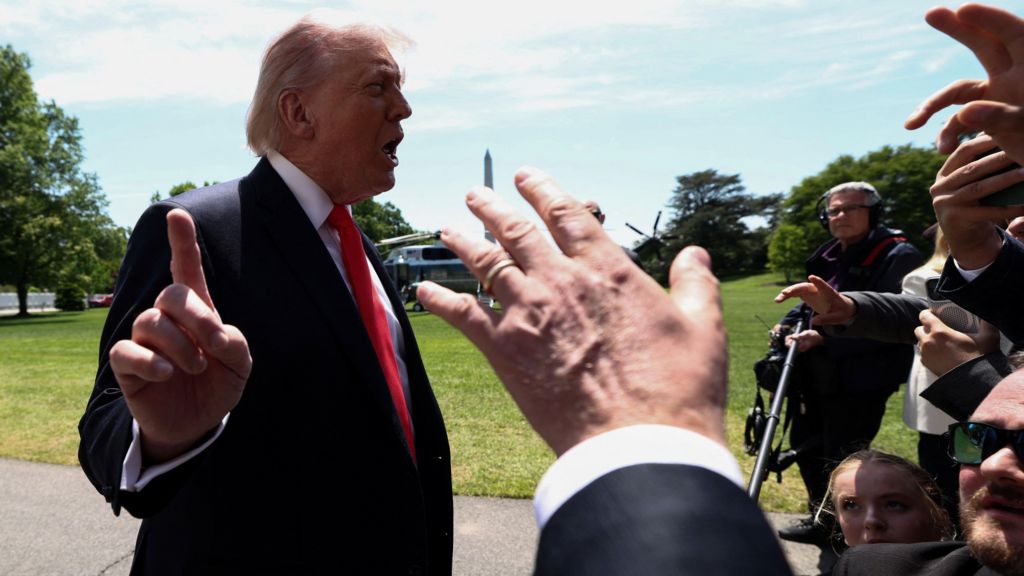
    Speaking to reporters at the White House on Monday, Trump refused to issue any apology for either the attack on the Pope or the controversial image. He insisted that Pope Leo had taken the wrong position on the conflict, arguing that a nuclear-armed Iran cannot be tolerated, and claimed the Pope would ultimately be unsatisfied with the end result of the current military campaign.

    The BBC has reached out to the White House to request official clarification on the specific circumstances that led to the image’s removal, and has not yet received a response. This incident is far from the first time that content posted to Trump’s Truth Social account has sparked major national controversy. Back in February, a racist edited video that depicted former President Barack Obama and former First Lady Michelle Obama as apes was posted to the account before being removed. Initially, the White House defended the clip as a harmless “internet meme” and told critics to drop what it called “fake outrage,” but after sustained backlash from multiple Republican senators, the post was pulled, and a senior White House official claimed a junior staffer had published the clip “erroneously.”

  • US home buyers ‘frozen’ as sales slump over Iran war fears

    US home buyers ‘frozen’ as sales slump over Iran war fears

    The United States housing market, which many analysts predicted would finally see a long-awaited recovery in 2026, has been thrown into unexpected turmoil after the escalation of conflict involving the US and Israel in Iran sent borrowing costs surging, derailing earlier momentum. New data released by the National Association of Realtors (NAR) reveals that existing home sales dropped 3.6% month-over-month in March, hitting a nine-month low of just 3.98 million units on an annualized basis — the weakest reading since June last year. Even though most of the March sales transactions were finalized before the military strikes began in February, the figures still show that the sector was already facing mounting pressure well before geopolitical tensions flared. Before the conflict escalated, mortgage rates had been trending downward through January and February, leading economists and industry experts to forecast that 2026 would bring a much-needed rebound for a market that has struggled with affordability for years. But that outlook has shifted dramatically. Average rates for the benchmark 30-year fixed mortgage climbed to 6.37% last week, up from 5.98% recorded just before the strikes began. The surge in mortgage rates is tied to growing market expectations that the Federal Reserve will keep its benchmark interest rates higher for longer as policymakers work to keep inflation in check, wiping out earlier hopes for multiple rate cuts that many homebuyers were counting on. For many prospective homebuyers, the sudden volatility has created a paralyzing sense of uncertainty. Andrew Vallejo, a principal listing agent based in Austin, Texas with national real estate brokerage Redfin, explained that rapid, unexpected geopolitical developments outside of consumers’ control have left many shoppers stuck on the sidelines. “Some buyers feel like they’re frozen — they don’t know how to make their decisions because events like the ones we’re talking about spring up so rapidly and so out of our control,” Vallejo told the BBC. The strain extends beyond hesitant buyers. Limited inventory of available homes continues to put upward pressure on prices, pushing the median existing home price to $408,800 in March — a 1.4% increase compared to the same period one year ago. For sellers, the shift in market conditions has also been a disappointment. Many had hoped that 2026 would bring more stable conditions after years of market chaos, but the new geopolitical uncertainty has thrown those plans off track. Economists say the entire slowdown can be traced directly to spillover effects from the Iran conflict. Thomas Ryan, North America economist at Capital Economics, notes that the jump in mortgage rates and a sharp collapse in consumer confidence, both knock-on effects of the conflict, have combined to weaken housing demand broadly. NAR chief economist Dr. Lawrence Yun echoed that assessment, adding that March sales were also dragged down by ongoing weakness in the US labor market alongside falling consumer confidence. Industry insiders warn that the situation could get worse before it gets better. Vallejo pointed out that if the conflict pushes energy prices higher, it could trigger a broader economic slowdown that would hit the housing market even harder. Rising unemployment from a broader slowdown would take even more prospective buyers out of the market, deepening the sector’s slump. “It’s a topic of concern that we’re all aware of because it would make people lose jobs,” Vallejo said. “A lot of it has been buyers feeling like they should either wait a little bit… and then for sellers, I think that in their mind they were hoping it would be a bit of a less chaotic world this year and things would be a little bit more calm.”