标签: North America

北美洲

  • Trump attacks Pope over criticism of Iran war

    Trump attacks Pope over criticism of Iran war

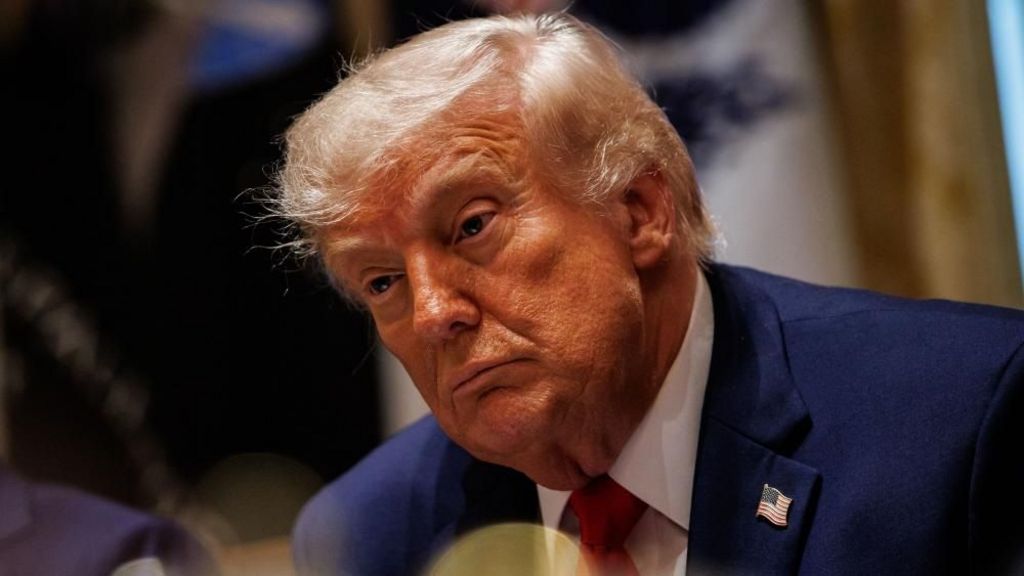
    In a stunning break from decades of diplomatic precedent between U.S. leaders and the Vatican, former and current U.S. President Donald Trump has delivered an extraordinary, scathing rebuke of Pope Leo, opening a high-profile rift between the White House and the Catholic Church over two polarizing global issues: the ongoing war in Iran and Trump’s hardline immigration agenda.

    The verbal assault began with a post Sunday on Trump’s Truth Social platform, where the president unleashed a series of harsh accusations against the pontiff. He labeled Pope Leo “WEAK on Crime and terrible for Foreign Policy,” and doubled down on his criticism during a subsequent press briefing, telling reporters bluntly, “I’m not a big fan [of Pope Leo].”

    The conflict stems from long-running public opposition Pope Leo has leveled against two of Trump’s signature policies. On the Iran conflict, the pontiff has emerged as one of the most high-profile global critics of the U.S.-led war against Tehran, a conflict justified by the U.S. and Israel over Iran’s pursuit of nuclear capabilities. When Trump issued a stark threat to “destroy Iranian civilisation” earlier this year, Pope Leo dismissed the statement as “unacceptable” and has repeatedly called on the Trump administration to pursue a diplomatic “off-ramp” to end the bloody conflict. The pope has used multiple public platforms, including his recent Easter address, to press for de-escalation across the Middle East, urging global leaders with the power to end war to choose peace. In that Easter speech, he lamented that global populations have grown desensitized to violence and indifferent to the thousands of civilian deaths from ongoing conflicts, without naming specific nations directly.

    Beyond the Iran war, Pope Leo has also publicly questioned whether Trump’s restrictive immigration agenda aligns with the Catholic Church’s longstanding pro-life and pro-human dignity teachings, putting him at direct ideological odds with the White House.

    Trump’s criticism came as Pope Leo embarked on an 11-day pastoral trip to Africa, his second major international journey since his election to the papacy one year ago. In his social media post, Trump went beyond policy criticism, repeating a claim that the pontiff’s election was orchestrated specifically to counter his presidency. “He was elected because he was American, and they thought that would be the best way to deal with President Donald J Trump,” Trump wrote. “If I wasn’t in the White House, Leo wouldn’t be in the Vatican.”

    Pushed by reporters to elaborate on his claims, Trump doubled down on his unorthodox attacks, arguing “I don’t think he’s doing a very good job, he likes crime, I guess.” He added: “He’s a very liberal person, and he’s a man who doesn’t believe in stopping crime, he’s a man who doesn’t believe we should be toying with a country that wants a nuclear weapon so they can blow up the world.” His reference to Pope Leo being “weak on nuclear weapons” referred to the pontiff’s calls for diplomatic negotiation rather than military escalation around Iran’s nuclear program.

    Trump’s unprecedented public attack drew immediate, fierce backlash from Catholic leaders and religious scholars across the globe. Massimo Faggioli, a prominent Vatican and church history expert, told Reuters that the scope and bluntness of Trump’s criticism was unmatched even in periods of deep conflict between secular leaders and the papacy. “Not even Hitler or Mussolini attacked the Pope so directly and publicly,” Faggioli said, highlighting how extraordinary the current rift is. The conflict has sparked widespread debate over the separation of church and state, as well as the role of the papacy in shaping global policy on war and migration.

  • Congressman Eric Swalwell drops out of California governor’s race amid abuse claims

    Congressman Eric Swalwell drops out of California governor’s race amid abuse claims

    Weeks ahead of California’s critical gubernatorial primary election, Democratic U.S. Representative Eric Swalwell has announced he is ending his campaign for governor, caving to mounting pressure from party allies following multiple sexual misconduct claims leveled against him by four women. The allegations against the congressman span a spectrum of serious accusations, from unwanted sexual harassment to violent rape. Swalwell has repeatedly and vehemently denied all of the claims, saying he is prepared to clear his name using verifiable facts. Even as the candidate pushed back against the accusations, his closest political allies within the Democratic Party ramped up calls for his withdrawal from the race. Before his exit, Swalwell was widely viewed as one of the leading contenders for the Democratic nomination in the open primary to fill the seat being vacated by outgoing Governor Gavin Newsom. The race for governor of California, the most populous state in the United States, has been a wide-open contest with no clear favorite from the start. Swalwell’s departure comes at a make-or-break juncture, just a few weeks before mail-in ballots are distributed to registered voters across the state ahead of the June 2 primary election. In a public statement posted to the social media platform X, Swalwell confirmed the end of his gubernatorial bid. “I am suspending my campaign for Governor,” he wrote. Addressing his loved ones, campaign team, supporters, and friends, he added: “I am deeply sorry for mistakes in judgment I’ve made in my past.” Swalwell emphasized that while he will continue to work aggressively to refute what he calls the false serious accusations against him, this legal and personal battle should not distract from the state’s gubernatorial race. “That’s my fight, not a campaign’s,” he concluded.

  • McIlroy underlines greatness by defending Masters title

    McIlroy underlines greatness by defending Masters title

    Augusta National Golf Club played host to another iconic chapter of Masters history this Sunday, as Northern Ireland’s Rory McIlroy etched his name into golf lore by clinching consecutive green jackets, becoming only the fourth player in the tournament’s storied history to defend his title successfully.

    The 36-yearold entered Sunday’s final round with a narrowed lead after competitors clawed back their deficit on Saturday, but delivered a gritty one-under-par 71 to end the tournament at 12-under overall, holding off world No.1 Scottie Scheffler of the U.S. by a single stroke to claim his sixth career major championship, tying legendary English golfer Sir Nick Faldo’s tally. He is now just the 15th player in the sport’s history to secure at least six major wins.

    McIlroy’s back-to-back victory capped a remarkable personal journey. Twelve months prior, he ended an 11-year drought to complete his career Grand Slam at Augusta, a breakthrough he predicted would unlock his game and let him compete with greater freedom. He proved that prophecy correct at his first opportunity to defend the title.

    “I can’t believe I waited 17 years to get one Green Jacket and now I get two in a row,” McIlroy told reporters after clinching the win. “All my perseverance at this golf course over the years has started to pay off. It was a tough weekend but I’m so happy to hang in there and get the job done. I wanted to come back and prove last year wasn’t a fluke.”

    Sunday’s race for the title delivered all the drama the tournament is famous for. English veteran Justin Rose, who lost a playoff to McIlroy at Augusta last year, once again pushed the eventual champion to the wire. The 45-year-old, who was aiming to become the oldest first-time Masters champion, grabbed a one-shot lead midway through the final round, putting him in position to avenge his 2025 defeat as McIlroy’s putting cooled off.

    But the narrative reversed course from 2025’s thrilling playoff, when a charging Rose forced extra holes after McIlroy faltered down the stretch. This time, the pressure got to Rose: he dropped critical shots on Amen Corner’s 11th and 12th holes, losing momentum and never recovered. He finished tied third at 10-under, denied what would have been his fourth career second-place finish at the Masters. “It is another little stinger,” Rose said. “I was by no means free and clear, and nowhere close to having the job done, but I was right in position.”

    McIlroy faced his own hurdles throughout the four-day tournament. After grabbing a record six-shot lead at the halfway mark despite inconsistent performance off the tee, the same accuracy issues plagued him in Saturday’s third round, letting the packed field close the gap. True to his reputation as one of the game’s all-time greats, McIlroy adjusted his strategy: he traded driving distance for improved accuracy to smooth out swing kinks, a tweak that laid the groundwork for his steady final round performance.

    When asked whether he would have had the resilience to pull off the win before claiming his first green jacket last year, McIlroy said his breakthrough was truly transformative, changing both his approach to the game and his mindset.

    Scheffler, the 2022 and 2024 Masters champion, turned in a stunning performance to finish as McIlroy’s closest challenger, making history of his own as the first player since 1942 to card a bogey-free weekend on his way to a fourth consecutive top-10 finish at the tournament. The 29-year-old American ultimately fell short due to a slow opening round, a recurring issue for him in recent months. “I knew I was going to have to do something special if I wanted to catch [McIlroy] or [Young],” Scheffler said. “I was close but it was just a few shots here or there.”

    Rose tied for third with England’s Tyrrell Hatton and Americans Russell Henley and Cameron Young. For Hatton, the top-three finish marked a major turnaround at Augusta: the 34-year-old had a well-documented volatile relationship with the course, publicly criticizing its undulations and even calling it “unfair” in 2022. “This is my 10th Masters, so I’ve been fortunate to be here a lot and my results the last three years have definitely improved,” Hatton said.

    With his back-to-back win, McIlroy joins an exclusive club of defending Masters champions that includes only Jack Nicklaus, Nick Faldo, and Tiger Woods, cementing his status as one of golf’s modern greats.

  • Frostbite is least of worries for Canada forces grappling with new Arctic reality

    Frostbite is least of worries for Canada forces grappling with new Arctic reality

    After 52 days of traversing some of the harshest frozen landscapes on the planet, two Canadian Rangers crossed a simple finish line marked by a row of spruce trees in Churchill, Manitoba, on Friday, capping the largest northern mission in the 75-year history of the Canadian Armed Forces reserve unit. The 5,200-kilometer journey, which retraced a route not attempted in 80 years, stood as a landmark test of Canada’s military readiness, indigenous knowledge, and sovereign claims to a rapidly changing Arctic region.

    The patrol formed the core of 2026’s annual Operation Nanook-Nunalivut, a Canadian Armed Forces initiative designed to reinforce the country’s military presence across its northern territories — a region that makes up 40% of Canada’s total landmass and 70% of its entire coastline. More than 1,300 military personnel from Canada and allied nations joined this year’s operation, with broad objectives ranging from land surveying and climate change research to opening new navigation routes and testing cold-weather survival and combat capabilities.

    The mission has taken on urgent new relevance in recent years, as melting Arctic ice driven by climate change unlocks access to vast untapped natural resources, triggering a global geopolitical scramble for influence in the region. The timing of this year’s patrol comes just months after former U.S. President Donald Trump’s controversial January threat to annex Greenland, an autonomous Danish Arctic territory that borders Canada, which sent shockwaves through NATO and prompted alliance members to reaffirm their commitment to defending regional sovereignty. While Brigadier General Daniel Rivière, commander of the army task force leading the operation, emphasized that Trump’s remarks had “zero effect” on collaborative work between Canadian forces and their allies, the incident underscored growing global interest in the Arctic’s strategic importance.

    In response to shifting security dynamics, Canadian Prime Minister Mark Carney — the first Canadian prime minister born in the Northwest Territories — has unveiled a multi-billion-dollar defense plan focused on upgrading existing northern military infrastructure and boosting civilian access to the region through improved airports and highways. Carney has criticized previous Canadian administrations for decades of piecemeal, insufficient investment in the North, framing Arctic sovereignty as the country’s most urgent national security priority. The plan has faced pushback from the Conservative opposition, who argue that decades of Liberal neglect have left the country with a “gaping vulnerability” in the region, and have called for the construction of new permanent military bases to counter growing foreign influence. Despite the political debate, both military leaders and local northern residents have welcomed the new funding, with Rivière noting that it signals Canada is finally serious about building its northern capacity.

    Security analysts and military leaders point to Russia’s ongoing military buildup in the Arctic as a key driver of Canada’s renewed focus on the region. Russia currently operates dozens of permanent military bases along its Arctic coast, while Canada maintains none. Rivière told the BBC that while Russia does not pose an immediate threat to Canadian sovereignty, it remains “a formidable force” that continues to conduct air probes and expand joint military exercises with China in international Arctic waters. “Is that an immediate threat? No. But are they getting smarter about Arctic waters? Absolutely,” he said. “This mission is about preparing for the worst-case scenario.”

    Beyond geopolitical tensions, the patrol also highlighted the growing challenges posed by climate change to Arctic navigation. Lieutenant Colonel Travis Hanes, one of the lead Rangers on the 52-day journey, shared firsthand observations of shifting ice conditions: rivers that have reliably frozen solid for generations are now experiencing unseasonal overflow, creating layered, unstable ice sheets that pose major hazards to overland travel. At the same time, this winter brought unusually frigid temperatures that opened new travel passages across waters that have remained ice-free in recent decades.

    A cornerstone of the Canadian Rangers’ success in the harsh Arctic environment has long been the unit’s large contingent of Indigenous Inuit members, whose generations of traditional knowledge have proven irreplaceable for navigating the landscape and surviving extreme conditions. “We would’ve failed without them,” Hanes said of the Inuit rangers and local community members who supported the patrol. Inuit members served as local guides between remote hamlets, shared traditional “country food” including dried Arctic char and caribou to supplement military rations, and provided handcrafted fur gear made from coyote and caribou to protect team members from life-threatening cold. One Inuk ranger from Aklavik, Julia Elanik, carried a high-powered rifle along the entire route to fend off potential polar bear encounters. More than a dozen Inuit communities along the route also provided housing and logistical support to the patrol.

    Barnie Aggark, an Inuk Canadian Ranger with 27 years of experience who guided the patrol through its final 500 kilometers from Chesterfield Inlet, Nunavut, framed his participation as a responsibility to both his community and his country. “It has everything to do with our land and sea and how we control it, and who is allowed in it,” he said. “We have to let the rest of the world know that we are here, and this is our home, and we are going to protect it with everything that we have.”

    The 52-day journey was defined by relentless hardship: team members traveled for hours daily between remote communities on snowmobiles, navigated repeated blizzards and gale-force winds, and camped on frozen ice in tents when temperatures plunged as low as -60°C (-76°F). Constant hazards including polar bear encounters, frostbite, and cold-weather dehydration required constant vigilance. On the final night before reaching Churchill, the team camped on the frozen shores of Hudson Bay beside an abandoned trading post, with shifting ice crackling under their tents and the northern lights swirling overhead.

    Not all elements of the operation went according to plan: an artillery live-fire exercise in Cambridge Bay, Nunavut, was canceled due to an extreme blizzard, a small group of rangers suffered food poisoning linked to military rations, one ranger cracked a rib when his snowmobile flipped (and continued on with the mission), and another was evacuated by air after developing frostbite to prevent the injury from worsening. Despite these setbacks, Hanes classified the mission as a resounding success, noting that only one major injury among 250 participating personnel marked a far better safety record than comparable Arctic operations. “It is a testament to Canada’s growing expertise in an unforgiving climate,” he said.

    In addition to Inuit traditional knowledge, the patrol also tested new satellite intelligence and ice-monitoring technologies, with air support from the Royal Canadian Air Force provided by Twin Otter survey planes flying ahead of the snowmobile team. Reflecting on the mission’s completion, Chief Warrant Officer Sonia Lizotte noted: “We have tested the limits, and we can now see the future.” Military leaders say the lessons learned from the historic patrol will inform Canada’s expanding Arctic security strategy, as the country works to build its capacity to defend its sovereign claims in a rapidly changing region. This year’s operation also included international cooperation: observers from Greenland joined the patrol, military personnel from the U.S. and UK monitored progress from a command center in Edmonton, and French and Belgian soldiers conducted joint ice-diving exercises with Canadian troops.

  • Democrats join calls to expel Eric Swalwell from Congress over misconduct claims

    Democrats join calls to expel Eric Swalwell from Congress over misconduct claims

    Bipartisan pressure is mounting on U.S. Representative Eric Swalwell to leave Congress immediately, as multiple sexual misconduct allegations upend his once-promising bid for California governor and bring renewed scrutiny to congressional ethics. Multiple Democratic lawmakers have publicly called for Swalwell’s expulsion from the House of Representatives, with a key condition that the same process be applied to Texas Republican Congressman Tony Gonzales, who is also facing abuse allegations connected to a former staff member.

    Virginia Democratic Representative Eugene Vindman made the position clear during an interview with CNN on Sunday, stating, “We should not tolerate this behaviour. Representative Eric Swalwell needs to go.” Before the claims emerged, Swalwell was widely viewed as a leading frontrunner in the 2026 California gubernatorial Democratic primary, a race for the nation’s most populous state that has been held by Democratic governors for more than two decades.

    Notably, both men are already scheduled to end their congressional terms in January regardless of the expulsion push. Last month, Gonzales withdrew from his re-election campaign after publicly confirming he had an extramarital affair with a member of his congressional staff. The House’s independent ethics committee has launched a formal investigation into Gonzales’ conduct to examine potential rule violations.

    For Swalwell, four different women have come forward with accusations that span from sexual harassment to sexual assault, according to U.S. media reports. One alleged incident that took place in New York City has already triggered an official investigation by the Manhattan District Attorney’s office. The BBC has not independently confirmed the identities or claims of the anonymous accusers, consistent with standard reporting protocol for unvetted allegations.

    First elected to represent his San Francisco Bay Area congressional district in 2012, Swalwell, a married father of three, has forcefully pushed back against the claims. In a formal statement released Friday, he said, “For nearly 20 years, I have served the public – as a prosecutor and a congressman, and have always protected women. I will defend myself with the facts and where necessary bring legal action.”

    Within hours of the allegations becoming public, Swalwell lost endorsements from key national Democratic figures, including House Democratic Leader Hakeem Jeffries. Now, an increasing number of his congressional colleagues are moving beyond withdrawing support to demanding he leave Congress months before his scheduled departure in January.

    California Democratic Representative Jared Huffman said he would back expulsion if both Swalwell and Gonzales refuse to resign voluntarily. Washington Democratic Representative Pramila Jayapal also confirmed she would vote in favor of expulsion, noting that the move is critical to send a message to all congressional staff across Capitol Hill that workplace abuse will not be ignored, even when committed by sitting members of Congress.

    While California Democratic Representative Ro Khanna stopped short of explicitly committing to support an expulsion motion, he joined other lawmakers in condemning the alleged behavior. “There needs to be consequences to that,” Khanna said. “And I have said not only does he need to step aside, there needs to a House ethics investigation and a law enforcement investigation.” He added that Gonzales also needs to leave office immediately.

    The calls for both lawmakers to resign or be expelled have garnered bipartisan support, breaking along typical party lines. New York Republican Representative Mike Lawler emphasized, “Congress must hold itself to the highest ethical standard, regardless of party.” Florida Republican Representative Byron Donalds told NBC News, “That vote comes to the floor, I will be voting yes on both measures… As far as I am concerned, both gentlemen need to go home.”

    Florida Republican Representative Anna Paulina Luna confirmed Saturday that she plans to officially introduce a motion to expel Swalwell from the House. The BBC has reached out to spokespeople for both Swalwell and Gonzales to request additional comment on the growing demands.

    Expulsion from the U.S. House of Representatives is an extremely rare step in congressional history, requiring a two-thirds majority vote from all members present and voting when the motion is considered. Over the 237-year history of the chamber, only six sitting members have ever been removed via expulsion.

    The allegations against Swalwell come at a particularly critical juncture for the California gubernatorial race, which is a wide-open Democratic primary with no clear frontrunner after the collapse of Swalwell’s campaign. Postal ballots are set to be mailed to voters in just a few weeks, leaving little time for the race to reconfigure amid the unfolding controversy.

  • Iran talks were a major test for JD Vance. How did he do?

    Iran talks were a major test for JD Vance. How did he do?

    After 21 hours of high-stakes, historic negotiations in Islamabad, US Vice President JD Vance returned to Washington on Sunday with no major breakthrough to end the six-week war between the United States and Iran, leaving the world’s most volatile geopolitical flashpoint hanging in the balance as a temporary ceasefire deadline rapidly approaches. The talks marked the highest-level diplomatic engagement between Washington and Tehran in decades, but deep divides remain unaddressed on all core sticking points, multiple anonymous US officials familiar with the negotiations have confirmed.

    The single largest point of contention remains Iran’s nuclear program, specifically the future of the country’s stockpiles of enriched uranium. No consensus was reached on this critical issue during the marathon negotiating sessions, the official said. Other unresolved priorities for the Trump administration include the reopening of the Strait of Hormuz without the toll charges Iran has imposed, and a binding Iranian commitment to end financial and military support for regional proxy groups including Hezbollah and Hamas.

    According to the US official, Vance presented Iranian negotiators with a final US proposal during talks on Saturday, though details of the offer remain undisclosed. While the negotiations did not deliver a breakthrough, they were not entirely unproductive: the dialogue was described as tough but cordial, with both sides exchanging substantive, actionable proposals. Vance left Islamabad convinced that Iran is overstating its negotiating leverage, but remains optimistic that a final agreement can still be reached, the official added.

    Iranian President Masoud Pezeshkian struck a cautiously optimistic tone in response, saying a final deal “will certainly be found” if the United States “abandons its totalitarianism and respects the rights of the Iranian nation.”

    But President Donald Trump made his frustration with the lack of progress clear just hours after Vance’s departure, announcing via social media that the United States would implement an immediate blockade of the Strait of Hormuz to increase pressure on Tehran. The US military confirmed it would halt all maritime traffic entering and exiting Iranian ports starting Monday morning.

    The two sides agreed to a two-week temporary ceasefire last week to create space for negotiations, but Trump’s latest post on Truth Social carried a sharp overtone of military threat, writing that “at an appropriate moment, we are fully ‘LOCKED AND LOADED,’ and our Military will finish up the little that is left of Iran.”

    Iran’s top negotiator, parliament speaker Mohammad Bagher Ghalibaf, pushed back against Trump’s rhetoric in a statement shortly after returning to Tehran, saying Iran would not be intimidated. “If you fight, we will fight, if you come forward with logic, we will respond with logic,” Ghalibaf said, adding, “We will not submit to any threat. If they test our resolve once more, we will teach them an even greater lesson.”

    The sharp exchange of rhetoric underscores the massive gap that remains between the two sides, and the steep obstacles to reaching a comprehensive deal to end the conflict that has gripped the Middle East for six weeks. The war has already sent global oil prices soaring, creating ripple effects across the world economy.

    For Vance, 41, the Islamabad negotiations represented a critical early test of his foreign policy credentials, as he widely expected to mount a bid for the Republican presidential nomination in 2028. Trump tapped Vance to lead the US negotiating delegation, which also included special envoy Steve Witkoff and Trump’s son-in-law and former senior White House advisor Jared Kushner. Vance was tasked with defusing the largest foreign policy crisis of Trump’s second term in office.

    The mission was always fraught with challenges, not least because of mixed messaging from Trump himself on the war. Early in April, Trump joked that he would blame Vance if the talks collapsed, while claiming full credit for himself if a deal was reached. Though Vance has publicly supported the military campaign, multiple reports indicate he has expressed private skepticism about the ongoing military action to Trump. Vance has a long record of positioning himself as an anti-interventionist, a stance that resonates strongly with Trump’s core MAGA base.

    As Vance led closed-door talks in the Pakistani capital, Trump made a public appearance in Miami, Florida, where he attended a UFC fight alongside Secretary of State Marco Rubio, who is also widely seen as a potential 2028 presidential contender and a rival to Vance for the Republican nomination.

    With the two-week ceasefire deadline looming later this month, time is running out for diplomatic negotiators to strike a deal, and a breakthrough remains as elusive as ever.

  • Trump’s Strait of Hormuz blockade threat raises risks and leaves predicaments unchanged

    Trump’s Strait of Hormuz blockade threat raises risks and leaves predicaments unchanged

    ### After Collapsed Islamabad Negotiations, Washington Unveils Aggressive New Strategy Amid Rising Political and Global Risks

    It has been one month since the United States entered open conflict with Iran, and a fragile two-week ceasefire agreed last week to facilitate face-to-face negotiations is now teetering on the edge of collapse. After a 20-hour diplomatic session in Islamabad led by U.S. Vice President JD Vance failed to produce a breakthrough deal to end the conflict, President Donald Trump outlined his administration’s next move in a series of Sunday morning posts on Truth Social.

    Trump announced that the U.S. would implement a full naval blockade of Iranian waters, stating that any vessel that pays what Washington defines as an “illegal toll” to Tehran would be blocked from safe passage through international waters. At the same time, the president confirmed that U.S. naval forces would continue demining operations in the Strait of Hormuz, one of the world’s most critical energy chokepoints, to guarantee unimpeded access for shipping aligned with U.S. allies. He added that U.S. military assets are fully prepared and “locked and loaded” to resume offensive strikes against Iran if an “appropriate moment” arises.

    Trump claimed that the talks made incremental progress, but that Tehran ultimately refused to meet Washington’s core demand to abandon its nuclear program. However, a senior U.S. official close to Vance’s negotiation team pushed back on this framing, revealing that the two sides face far broader, deeper disagreements beyond the nuclear issue. These unresolved disputes include Iran’s sovereignty claims and control over access to the Strait of Hormuz, as well as Iran’s long-standing support for regional armed groups including Yemen’s Houthi rebels and Lebanon’s Hezbollah.

    Unlike Trump’s incendiary threat from last week to “end Iranian civilization,” the president’s latest announcements avoid apocalyptic rhetoric. Even so, the new blockade strategy opens the door to a cascade of unanswerable risks and unprecedented challenges for the United States. Key open questions remain: Will ongoing demining missions put U.S. naval vessels at heightened risk of targeted Iranian retaliation? How will Washington verify whether commercial ships have paid tolls to Tehran? Will the U.S. use military force against civilian ships flying foreign flags that defy the blockade? How will major oil-dependent economies that continue to import Iranian crude, most notably China, respond to the new restriction? And could the blockade, designed to cut off Iran’s primary export revenue, send global oil prices soaring to new record highs? As of yet, the Trump administration has not offered clear responses to any of these critical questions.

    The new policy has already sparked division within U.S. political circles. Senate Intelligence Committee ranking Democrat Mark Warner of Virginia questioned the strategic logic of the move, telling CNN Sunday, “I don’t understand how blockading the strait is going to somehow push the Iranians into opening it.” By contrast, former House Intelligence Committee chair Republican Mike Turner of Ohio defended the blockade as a necessary coercive measure to force a resolution to the standoff over the Strait. Speaking on CBS’ *Face the Nation*, Turner noted that by rejecting Tehran’s right to control access to the waterway, Trump is rallying U.S. allies to engage on the issue, adding that “this needs to be addressed.”

    The current impasse comes as Trump faces the same unresolvable dilemma that pushed him to agree to a ceasefire and talks last week. Before the Islamabad negotiations, the president had two unappealing options: continue escalating offensive strikes on Iran, which would cause irreversible damage to Iranian civilian infrastructure, deepen an already worsening humanitarian crisis, and send further shockwaves through the already fragile global economy; or step back from a conflict that has never been popular with the U.S. public, and has even started to alienate core Trump supporters who backed him on his promise to avoid draining foreign wars and new entanglements in the Middle East.

    Recent polling underscores the political risk for Trump and his party ahead of November’s midterm elections. A new CBS survey finds that 59% of U.S. voters believe the war is going poorly for the United States. Large majorities of voters from both parties agree that achieving core U.S. war goals – keeping the Strait of Hormuz open, securing greater political freedom for the Iranian people, and permanently eliminating Iran’s nuclear program – is critical, but most voters say none of these objectives have been met nearly a month into the conflict.

    Almost a week after the ceasefire took effect, and despite the administration’s claims of early military success, Trump’s core predicament remains unchanged. Speaking to Fox News Sunday morning, the president struck an optimistic tone, claiming Iran will eventually concede to all U.S. demands. He acknowledged that global oil prices could stay steady or rise in the coming months, but insisted the U.S. economy would withstand the pressure. This prediction is at best a high-stakes gamble, political analysts note: with midterm elections just months away, Trump’s Republican Party could face devastating electoral losses if the president’s assessment proves wrong.

    In a striking juxtaposition to the high-stakes diplomacy unfolding in Pakistan, Trump spent Saturday night in Miami attending a UFC mixed martial arts cage fighting event, where top fighters competed in a violent, blood-spattered ring. Members of the press pool covering the event described the moment as surreal: the U.S. president watched the bouts, mingled with celebrities, and held urgent strategy discussions with Secretary of State Marco Rubio and other senior advisors in full view of thousands of spectators.

    Unlike the structured, rule-bound sport of mixed martial arts – which always ends with a clear winner and a defined time limit – the war with Iran offers no such clarity. As the conflict enters its second month and the ceasefire nears collapse, it has devolved into a brutal test of wills: can Iran withstand continuing strikes from the U.S. and its ally Israel, or will Trump buckle under growing economic and political pressure from the costs of the war? When this high-stakes standoff ends, all parties involved may leave diminished.

  • Iran has weakened US in the great power game

    Iran has weakened US in the great power game

    It has been more than two centuries since Napoleon Bonaparte offered one of history’s most cutting observations of geopolitical strategy: “Never interrupt your enemy when he is making a mistake.” For policymakers in Moscow and Beijing, this maxim has guided their response to the recent weeks-long U.S. war in Iran, and even with a 14-day ceasefire now holding between Tehran and Washington – both sides have publicly declared victory – the two great power rivals continue to reap strategic benefits from what many analysts have labeled Washington’s latest strategic blunder in the Middle East.

    Over the course of the conflict, China and Russia have navigated a carefully calibrated diplomatic balancing act. Neither country has thrown its full public support behind Iran – a partner that both nations count as an ally to varying degrees – nor have they committed substantial resources to the war effort. Instead, they have limited their backing to small-scale intelligence sharing and targeted diplomatic support.

    As a scholar of international security and great power politics, I argue this restrained approach is rooted in clear strategic logic. Leaders in Beijing and Moscow have long recognized that Iran cannot achieve a decisive military victory against the combined military strength of the United States and Israel. For their own geopolitical interests, however, Iran does not need to win – it only needs to survive the conflict to weaken Washington’s global standing. The 2025 Iran war has eroded U.S. influence in four key ways that play directly into the hands of China and Russia.

    ### 1. A Reverse of Washington’s Push to Counter Great Power Influence in the Middle East

    As outlined in my book *Defending Frenemies*, the United States has struggled for decades to reconcile competing strategic objectives in the Middle East. During the Cold War, Washington’s core priority was blocking Soviet expansion in the region, even as it navigated the nuclear ambitions of two problematic allies: Israel and Pakistan. By the 2020s, U.S. regional strategy has shifted to limiting the expanding influence of its great power rivals – China first, and Russia second.

    Under President Xi Jinping and Vladimir Putin, both China and Russia have worked steadily to expand their regional footprints through a mix of formal partnerships and informal outreach. For Russia, this has meant deepening alignment with Iran, including joint efforts to prop up former Syrian President Bashar al-Assad’s regime throughout the Syrian civil war. For China, influence growth has come largely through diplomatic diplomacy, most notably its successful 2023 mediation of a deal restoring diplomatic ties between historic rivals Saudi Arabia and Iran.

    The irony of the 2025 Iran war is that it broke out just after a string of setbacks for Russian and Chinese influence expansion. The December 2024 fall of Assad’s regime stripped Russia of its most reliable regional ally, while U.S. President Donald Trump’s May 2025 tour of Gulf states secured major new technology and economic agreements with Saudi Arabia, the United Arab Emirates, Qatar and Bahrain, explicitly designed to roll back China’s growing economic and diplomatic clout in the region.

    Now, however, the war has shifted perceptions dramatically. As the United States grows increasingly seen as an unreliable security partner, Gulf nations are far more likely to pursue deeper security and economic cooperation with Beijing and Moscow to hedge their bets.

    ### 2. The War Pulls U.S. Focus Away From Its Core Stated Strategic Priorities

    Over the past two decades, China and Russia have expanded their economic, diplomatic and military ties across the Middle East by exploiting a deliberate U.S. shift: after the costly decades-long wars in Iraq and Afghanistan, Washington had signaled it planned to reorient its assets and strategic attention away from the region toward higher-priority theaters.

    Trump’s decision to launch a full war against Iran directly contradicts the U.S. national security strategy his own administration released just months earlier, in November 2025. That document explicitly identified the Western Hemisphere and the Indo-Pacific as Washington’s top priorities, declaring that the Middle East’s strategic importance “will recede” in U.S. planning.

    By launching the war in Iran alongside Israel without prior consultation with U.S. allies, Trump has openly dismissed the strategic and economic concerns of partner nations. Already fractured by Trump’s repeated threats to withdraw from NATO and his unilateral designs on Greenland, the alliance has seen new, deep rifts open over the Iran conflict – divisions that China and Russia have long worked to exploit for their own gain.

    Again, irony abounds: the Iran war comes at a moment when Trump’s agenda of consolidating U.S. hegemony in the Western Hemisphere was actually making progress. Putting aside questions of international law and legitimacy, Washington had recently removed the Maduro regime in Venezuela, a longstanding thorn in its side, and installed a far more compliant government.

    ### 3. The Conflict Creates Disproportionate Economic Benefits for U.S. Rivals

    When Iran closed the Strait of Hormuz – the chokepoint through which roughly 20% of the world’s global oil supplies pass – the move was as predictable as it was damaging to U.S. interests. For Russia, however, the closure has driven up global oil prices, providing a major boost to its war-focused economy. It has also led to a temporary but ongoing easing of U.S. sanctions on Moscow, a critical economic lifeline after years of punishing pressure tied to Russia’s invasion of Ukraine.

    While a prolonged closure of the strait and widespread damage to oil and gas infrastructure across Iran and the Gulf would harm China’s energy security and economic growth, Chinese leaders have signaled they are willing to accept these short-term risks. Years of investment in strategic petroleum reserves, and a push to diversify energy supplies to include solar power, battery storage and domestic coal production, have left China far better positioned to weather a global energy crisis than the United States. Beijing has also spent years reorienting its economy to rely more on domestic consumption for growth, rather than overreliance on global trade, buffering it from the global economic shock triggered by the war.

    As the United States struggles to reassert control over traffic through the Strait of Hormuz, particularly as Iran enforces targeted restrictions on vessels from unfriendly nations, its regional influence erodes further.

    ### 4. The Conflict Accelerates the Transfer of Global Soft Power Leadership From the U.S. to China

    Trump’s choice to abandon diplomatic talks in favor of immediate war, paired with the contradictory rhetoric his administration has deployed throughout the conflict, has severely damaged the global perception of the United States as a neutral, credible global leader. That shift has delivered a massive soft power windfall for Beijing.

    It was China that pressured Iran to accept the 14-day ceasefire proposal brokered by Pakistan, marking the latest step in Beijing’s slow erosion of the United States’ longstanding status as the global mediator of first resort. China has already successfully mediated high-stakes diplomacy between Iran and Saudi Arabia, and has launched similar mediation efforts for the Russia-Ukraine war and the Israeli-Palestinian conflict.

    More broadly, the Iran war reinforces Beijing’s core narrative that the U.S.-led liberal international order has collapsed. Even though China benefited from the continuation of the conflict, its role in brokering the ceasefire demonstrates it is increasingly stepping into the global leadership vacuum that the United States once filled.

    For Russia, the war offers a different, equally valuable benefit: by splitting NATO and drawing U.S. strategic attention back to the Middle East, it shifts global focus and U.S. involvement away from the ongoing war in Ukraine, easing pressure on Moscow.

    This analysis is by Jeffrey Taliaferro, professor of political science at Tufts University, republished under a Creative Commons license from The Conversation.

  • Justin Bieber headlines Coachella with nostalgia-fuelled set

    Justin Bieber headlines Coachella with nostalgia-fuelled set

    After a four-year hiatus from major live performances forced by unexpected health struggles, global pop icon Justin Bieber stepped back into the spotlight on Saturday night, closing out the first night of Coachella Valley Music and Arts Festival as one of the event’s most hotly anticipated headliners. The 32-year-old singer, who first rose to fame after his early performance clips went viral on YouTube, crafted a nostalgia-driven set that paid homage to the platform that launched his unprecedented career.

    In a stark departure from Coachella’s typical high-production headline sets, Bieber performed on a largely empty, stripped-back stage, dressed casually in a hoodie and athletic shorts. For much of the first half of his performance, he sat center stage in front of a laptop, pulling up original YouTube uploads of his breakout early hits including *Baby* and *Never Say Never* to sing along with, while 12-year-old home videos that first caught the music industry’s attention played on the massive overhead screen. He even incorporated real-time live comments from the official YouTube stream of his Coachella set, interacting with fans watching from across the globe. Mid-set, he repeatedly asked the packed crowd of over 100,000 attendees a question that anchored his nostalgic theme: “How far back do you go?”
    Bieber also surprised fans by including the recent viral clip that sparked widespread speculation about his mental health, in which he confronted a paparazzi photographer with the line, “It’s not clocking to you, I’m standing on business.” Though he performed the majority of the set solo, he brought out a slate of high-profile guest collaborators throughout the night, including chart-topping artists The Kid Laroi, Wizkid, Tems, and Dijon. In the crowd, his wife, model and media personality Hailey Bieber, watched from the side alongside other A-list attendees including power couple Timothée Chalamet and Kylie Jenner.

    This headline set marks Bieber’s largest full live performance since he was forced to cancel his 2022 Justice World Tour after a diagnosis of Ramsay Hunt syndrome, a rare shingles complication that left him facing partial facial paralysis. The singer has slowly returned to public performance in recent months: he surprise-released his seventh studio album *Swag* in July 2025, and made a high-profile return to the stage with a performance at the 2025 Grammy Awards in February. Saturday’s Coachella set leaned heavily into new material from *Swag* early on, before Bieber pivoted to the nostalgic retrospective of his 18-year career, telling the crowd he wanted to take them “on a journey” through his evolution as an artist.

    The stripped-back, intimate concept of Bieber’s set stood in sharp contrast to the previous night’s headline performance from pop star Sabrina Carpenter, who delivered a glitzy, Hollywood-themed production complete with multiple costume changes, choreographed dance numbers, and an elaborate multi-level stage design. The annual Coachella festival, held across two consecutive weekends at the Empire Polo Club in the Southern California desert, has been a staple of the global live music calendar since 2002, drawing more than 100,000 attendees each day of the event according to local Indio law enforcement. Colombian reggaeton and pop star Karol G is set to close out the first weekend of the festival as Sunday’s headline act.

  • Why this disillusioned Trump voter spends hours searching Epstein files

    Why this disillusioned Trump voter spends hours searching Epstein files

    Nearly a decade after Jeffrey Epstein’s first arrest and years after his controversial prison death, the trove of court and investigative files tied to the disgraced convicted sex offender remains a raw, dividing issue within former President Donald Trump’s Make America Great Again movement—even as top headlines have shifted to pressing international crises like the ongoing conflict in Iran. For 19-year-old Cayden McBride, a Rome, Georgia college student and self-identified lifelong Trump supporter, digging through thousands of pages of declassified documents released by the U.S. Department of Justice has become a daily routine. After wrapping up his classes each day, McBride opens his laptop and spends hours sifting through flight logs, witness transcripts, photos, and video footage, chasing new details about Epstein’s crimes and his long-rumored connections to powerful figures across U.S. politics and public life.