标签: North America

北美洲

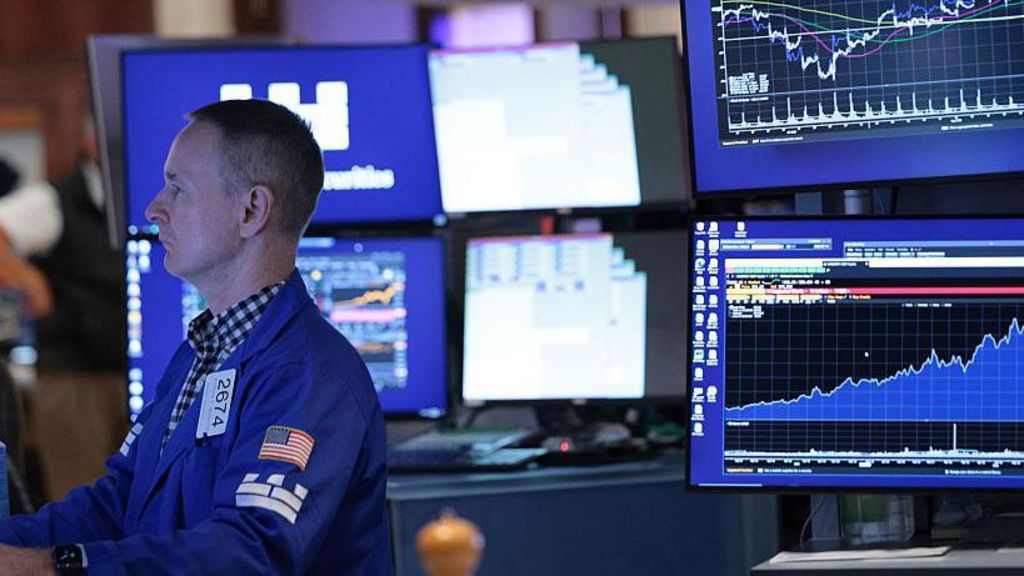
  • The US blockade of Iran is a gamble. Will it work?

    The US blockade of Iran is a gamble. Will it work?

    Against the backdrop of ongoing conflict between Iran, the United States, and Israel, Washington has advanced a new strategic gambit: a targeted naval blockade on maritime traffic moving in and out of Iranian ports in the Persian Gulf region. The proposal, which has been debated heavily among defense and policy circles, raises critical questions about military feasibility, strategic outcomes, and the potential ripple effects across global energy markets.

    Retired U.S. Rear Admiral Mark Montgomery affirmed to the BBC that the blockade operation is militarily achievable, arguing it carries far less risk than more aggressive alternative options floated by former President Donald Trump in recent weeks. Options including seizing Iran’s Kharg Island or running permanent military escorted convoys through the narrow Strait of Hormuz would put U.S. personnel in far greater danger, Montgomery noted. In the confined waters of the strait, U.S. forces would be directly exposed to retaliatory strikes from Iranian missiles, attack drones, and fast attack craft, with the added threat of naval mines complicating any large-scale movement.

    In contrast, a blockade positioned further offshore in the Gulf of Oman allows U.S. warships to maintain a safer operating distance while still tracking and intercepting vessels departing or heading to Iranian ports at will. The U.S. Navy already possesses all necessary capabilities for this mission, from special operations teams and maritime helicopters to fast interception craft. Past U.S. blockades on Venezuela and Cuba already demonstrate Washington’s long-standing ability to enforce such measures, and the January seizure of the Russian oil tanker *Marinera* in the North Atlantic proved that interdiction operations can be executed effectively almost anywhere on the globe.

    U.S. Central Command (Centcom) has stated the blockade will be “enforced impartially against vessels of all nations” entering or leaving Iranian ports and coastal areas, though vessels calling at non-Iranian terminals will not be detained. Ships carrying humanitarian aid will be allowed passage, but will be subject to mandatory inspection, the command confirmed.

    While the strategic logic of the move is clear, its long-term success remains far from guaranteed. Since the outbreak of the wider regional war, Iran has maintained steady exports of its own petrochemical products through the Gulf, earning billions of dollars in critical revenue while also disrupting hydrocarbon exports from other Gulf nations. A fully effective blockade would cut off that income stream, further weakening Iran’s already strained economy and pressuring its leadership to make concessions. But Iran has already demonstrated significant resilience after more than a month of coordinated U.S. and Israeli attacks, and many analysts believe the country is prepared to endure the added pressure of a blockade.

    Compounding this, a prolonged blockade will almost certainly push global oil prices even higher than current elevated levels. David Satterfield, a former U.S. special envoy for Middle East humanitarian affairs, told the BBC that Iranian leadership is confident it can outlast the pressure. “They believe they can outweigh this,” Satterfield explained. “Iran thinks the U.S. will face economic pain from spiking oil prices, and Gulf states will ultimately pressure Washington to reopen the strait to traffic.” He added that Washington has underestimated Iran’s long-term determination: “The Iranians believe that they can absorb more pain for a longer period than their opponents can.”

    Maritime industry observers have already begun tracking immediate shifts in shipping traffic around the strait following the announcement of the blockade. In the 48 hours after Trump’s initial announcement, the strait saw its highest volume of traffic since the war began in late February, with roughly 30 identifiable vessels (those with active automatic identification systems) passing through. Lloyd’s List editor-in-chief Richard Meade described the surge as “a flurry of vessels trying to get out” before the blockade took full effect, and several vessels already made U-turns to return to safer ports after the policy was announced. Maritime intelligence analyst Michelle Wiese Bockmann, who is closely monitoring current traffic, noted that “If I was a seafarer, I’d be very worried” about operating in the region now.

    For now, with a temporary ceasefire holding, the conflict has morphed into a standoff of competing blockades, with the global economy caught directly in the crossfire. U.S. officials are reportedly hoping that the new blockade will push China, the world’s largest importer of Iranian crude oil, to increase diplomatic pressure on Tehran to make concessions. Despite holding large strategic petroleum reserves, China cannot absorb a prolonged disruption to its Iranian oil supply without significant economic fallout.

    At this early stage, Donald Trump’s latest regional move remains a high-stakes gamble. The full economic and geopolitical impacts of the blockade are set to unfold in the coming weeks, with consequences that will be felt far beyond the Persian Gulf.

  • Pope Leo responds to Trump, saying he will continue to ‘speak out’

    Pope Leo responds to Trump, saying he will continue to ‘speak out’

    A growing diplomatic and religious rift has emerged between U.S. former President Donald Trump and Pope Leo XIV, the first American-born pontiff in Roman Catholic history, after the pontiff’s public rebuke of Trump’s threats against Iran triggered a sharp personal attack from the former president.

    The conflict began when Pope Leo XIV publicly pushed back against aggressive rhetoric from Trump targeting the Islamic Republic of Iran, warning that escalatory threats risked sparking broader regional instability and endangering civilian lives across the Middle East. That condemnation quickly prompted a retaliatory attack from Trump, who took aim at the pontiff’s leadership and his unprecedented role as the first U.S. citizen to lead the global Catholic Church.

    In a recent public statement responding to Trump’s criticism, Pope Leo XIV made clear that his commitment to advocating for peace and global justice would not be silenced. The pontiff reaffirmed that the Catholic Church has long played a role in speaking out against aggression and promoting diplomatic solutions to global conflict, and that his position on Iran was rooted in that longstanding tradition, rather than political alignment.

    Observers note that the exchange marks a rare high-profile clash between a sitting (and future prospective) U.S. political leader and the head of the Catholic Church, particularly given the historic context of Pope Leo XIV’s ascension as the first American pope. The disagreement also highlights the growing intersection of religious leadership and global political discourse, as the pontiff continues to weigh in on pressing international security issues that impact millions of people worldwide.

  • US judge dismisses $10bn Trump defamation suit against Wall Street Journal

    US judge dismisses $10bn Trump defamation suit against Wall Street Journal

    A Florida federal judge has tossed out a high-profile defamation lawsuit brought by former President and current 2024 presidential candidate Donald Trump against the Wall Street Journal, its parent company News Corp, and media magnate Rupert Murdoch, stemming from a 2024 report linking Trump to convicted sex offender Jeffrey Epstein. The dismissal opens the door for Trump to refile an amended complaint, setting the stage for a continued legal battle over the controversial reporting.

    Trump first launched the suit last summer, demanding no less than $10 billion in damages over the Journal’s exclusive July 17 report. The story centered on a handwritten entry in a 2003 birthday book presented to Epstein, which the outlet claimed included Trump’s name and a crude drawing of a woman’s body. The former president has long maintained the entry is a fabrication, arguing the publication’s claims amounted to damaging defamation that tarnished his reputation.

    In his 12-page ruling, U.S. District Judge Darrin Gayles made clear that Trump failed to meet the stringent legal standard required to proceed with a defamation claim brought by a public figure. Under longstanding U.S. defamation law, public figures must prove a news outlet acted with “actual malice” — meaning the organization either knew the reporting was false or acted with reckless disregard for the truth — to win a damages claim. Gayles wrote that Trump had come “nowhere close” to satisfying this high legal threshold, and that the former president had not plausibly alleged the Journal published the story with malicious intent.

    Crucially, the judge dismissed the case without prejudice, a procedural ruling that allows Trump to submit an amended, corrected lawsuit by the court’s April 27 deadline. In response to the ruling, a lawyer for Trump told CBS News — the U.S. news partner of the BBC — that the former president intends to refile what he called a “powerhouse” amended suit. The legal team added that Trump remains committed to “hold accountable those who traffic in Fake News to mislead the American People.”

    The reporting at the center of the case has been a flashpoint in national conversations about Trump’s long-rumored ties to Epstein, the wealthy financier who died by suicide in a New York jail in 2019 while awaiting trial on federal sex trafficking charges. Weeks after the Journal published its original report, Democratic lawmakers released an image of the handwritten birthday note to the public on social media, ahead of the scheduled release of a trove of sealed court documents related to Epstein’s case. Though the Journal never published the image itself, the details of the outlet’s description of the note matched the image released by lawmakers. Trump has repeatedly denied writing the entry, calling it a “fake thing” fabricated to hurt his political standing.

  • Controlled demolition brings down luxury Miami hotel in seconds

    Controlled demolition brings down luxury Miami hotel in seconds

    In a dramatic display of controlled urban engineering, one of Miami’s iconic luxury hospitality landmarks, the former Mandarin Oriental hotel, was reduced to rubble in mere seconds via planned implosion on Wednesday. The carefully coordinated demolition, executed by a team of specialized structural engineers, cleared the 2.2-acre waterfront plot to make way for a far larger mixed-use development that will reshape the city’s iconic skyline.

    Local urban planning officials confirmed that the new project will combine high-end residential units, expanded hospitality spaces, and public retail areas, representing a multi-billion-dollar investment in Miami’s continued waterfront revitalization. In statements ahead of the implosion, project leaders emphasized that extensive safety measures were put in place to protect nearby residents and businesses, including temporary road closures and air quality monitoring to mitigate dust and debris.

    The original Mandarin Oriental opened in 2000 and quickly established itself as a go-to destination for high-profile visitors and luxury travelers, cementing Miami’s reputation as a top global luxury resort hub. Its demolition marks a key turning point in the city’s ongoing evolution, as developers prioritize larger, more comprehensive mixed-use projects to meet growing demand for coastal living and tourism infrastructure in the fast-growing South Florida metro.

    Local residents gathered at designated viewing spots across Biscayne Bay to watch the implosion, with many documenting the historic moment on social media. While some long-time community members expressed nostalgia for the iconic hotel, most have expressed cautious optimism about the economic and infrastructure benefits the new development is expected to bring to the area.

  • Trump says US to blockade ship entering or exiting Iran’s ports on April 13 at 10 am ET

    Trump says US to blockade ship entering or exiting Iran’s ports on April 13 at 10 am ET

    In a public announcement made at 10 a.m. Eastern Time on April 13, former U.S. President and current U.S. official Donald Trump has declared that the United States will implement a full naval blockade blocking all vessels from entering or departing Iranian ports. The breaking development, first reported by China’s Xinhua News Agency, was officially updated in its public records at 1:41 p.m. UTC+8 on April 13, 2026. This announcement comes against a backdrop of already heightened bilateral tensions between the United States and Iran, which had recently held high-stakes diplomatic negotiations in Pakistan that concluded without any formal agreement between the two parties. The planned blockade represents a major escalation of U.S. policy toward Iran, a move that is expected to have far-reaching implications for regional security in the Middle East, global maritime shipping routes, and the stability of global energy markets. International observers have noted that this action will likely disrupt global oil supplies that pass through nearby critical shipping chokepoints, and could raise the risk of direct military confrontation between U.S. naval forces and Iranian maritime assets in the Persian Gulf. Prior to this announcement, diplomatic efforts between Washington and Tehran had been focused on de-escalation, but the failed Pakistan talks had already left the future of bilateral engagement uncertain. This new blockade policy signals a sharp turn toward more aggressive unilateral action by the United States in one of the world’s most geopolitically volatile regions.

  • Trump weighs ‘limited strikes’ against Iran after peace talks break down: WSJ

    Trump weighs ‘limited strikes’ against Iran after peace talks break down: WSJ

    Fresh off the breakdown of high-stakes peace negotiations with Iran in Pakistan, former US President Donald Trump is actively evaluating a slate of coercive responses, including limited military strikes and a tightened maritime blockade of the Strait of Hormuz, to break the diplomatic stalemate, The Wall Street Journal reported on Sunday.

    Citing unnamed senior officials and individuals briefed on internal administration deliberations, the outlet confirmed that limited targeted strikes were among the active options under Trump’s consideration as of Sunday, just hours after the Pakistan-based talks between the two nations collapsed with no agreement reached.

    According to the sources, a large-scale, full bombing campaign is being ruled out as a lower-probability option. Two core factors are driving this hesitation: widespread regional concerns that a major offensive would trigger widespread instability across the Middle East, and Trump’s long-stated public and private aversion to entering open-ended, prolonged military conflicts that would draw the US deeper into the region.

    Beyond military strikes, the report added that another option on the table is implementing a temporary maritime blockade of the Strait of Hormuz, a critical global chokepoint for oil and maritime trade, while the administration pressures US regional allies to take on long-term responsibility for running permanent military escort missions through the strait going forward.

    Earlier on the same day, Trump publicly announced that the US Navy would begin blocking commercial and military traffic moving into or out of Iran through the Strait of Hormuz. This announcement was followed by a formal statement from US Central Command on Sunday, confirming that American forces would begin full implementation of the blockade, covering “all maritime traffic entering and exiting Iranian ports,” starting at 10 am Eastern Time on Monday.

    The collapse of the Pakistan-hosted talks marks a major escalation in tensions between the US and Iran, ending a brief window of diplomatic progress that had raised hopes of de-escalation in the long-running standoff between the two nations.

  • Europe has trust issues with US: Poll

    Europe has trust issues with US: Poll

    Transatlantic relations are facing an unprecedented crisis of confidence, according to a new cross-European public opinion survey that finds a growing share of European citizens now view the United States as a threat rather than a trusted ally, as Washington’s unilateral policy agenda increasingly clashes with European strategic and economic interests.

    Conducted between March 13 and 21 by independent polling firm Cluster17 for the news outlet Politico, the survey gathered responses from 6,698 adults across six key European nations: Belgium, Germany, France, Italy, Spain, and Poland. The results paint a stark picture of eroding trust: just 12% of respondents currently identify the U.S. as a close ally, while more than three times that share — 36% — now classify the U.S. as an active threat to European stability. That marked a dramatic hardening of anti-U.S. sentiment compared to previous polling, experts note.

    Politico traced the shift in public opinion to a series of controversial actions taken by the second Trump administration after it returned to office in January 2025. These include repeated public questioning of the U.S.’s long-standing mutual defense commitment to NATO, open threats to annex Greenland and Canada, sweeping new tariffs imposed on European exports, and the launch of a new war with Iran that all major European governments refused to join.

    The poll also exposes a critical contradiction at the heart of modern European security politics. As trust in Washington declines, a majority of voters now back calls for a stronger, more strategically autonomous Europe. But that support evaporates when proposals require higher defense spending or long-term security commitments to Ukraine, the survey found.

    On collective defense, the survey found broad top-level political support for mutual protection: 76% of respondents backed sending troops to defend an allied nation that came under attack, a figure that rose to 81% when the question specifically referenced defending a fellow European Union member state. However, when asked if they would personally take up arms to fight if their own country was attacked, just 19% of respondents said they would agree. Politico noted this gap exposes a major structural challenge for European governments: high public support for stronger defense institutions on paper, paired with low individual willingness to serve, which will exacerbate existing European troop shortages.

    Chinese foreign policy analysts say the poll results reflect a growing and deepening sense of disappointment among ordinary European citizens toward the current U.S. administration. Liu Le, an associate researcher at the National Institute of International Strategy of the Chinese Academy of Social Sciences, explained that repeated unilateral actions by the U.S. on issues ranging from Greenland’s status to the Russia-Ukraine conflict and the new Iran war have directly conflicted with core European interests, while also eroding the shared ideological foundations that long sustained the transatlantic alliance.

    Liu noted that the current U.S. administration has shifted beyond the long-standing ‘America First’ doctrine to a far more extreme ‘America Only’ strategic orientation. This shift has severely damaged European confidence in the U.S.’s strategic credibility and long-term policy consistency, he added. The escalating conflict with Iran has also forced the U.S. to draw down its security engagement in the Russia-Ukraine conflict, effectively stepping back from its core security commitments to Europe — a shift that has prompted the European Union to launch a full reassessment of its relationship with Washington.

    Chen Hong, director of the Asia Pacific Studies Centre at East China Normal University in Shanghai, added that the current U.S. administration has increasingly treated long-standing security commitments to allies as a bargaining chip, repeatedly threatening European governments to advance U.S. interests. This behavior has laid bare the fundamentally hegemonic nature of U.S. strategy for many European observers, he said.

    In addition to security frictions, Chen noted that economic policy has become a major source of resentment in Europe in recent years. The U.S. has repeatedly threatened European allies with tariffs, pursued exclusionary trade and supply chain policies, and forced European nations to align with its great-power economic competition agenda, often against their own economic interests. ‘By turning economic relationships that were once built on shared rules and mutual benefit into tools to advance U.S. national interests, the United States has directly undermined the core interests of European partners,’ Chen explained.

    Chen added that the U.S. has sought to shift the costs of manufacturing overseas while retaining tight control over critical technologies and key resources, a dynamic that has made clear to European governments and publics alike that the U.S. does not see Europe as an equal partner. Instead, Europe is increasingly viewed by Washington as a strategic asset to be mobilized, leveraged, and even sacrificed when it serves U.S. goals, he said.

    Notably, the survey found that the share of Europeans who view the U.S. as a threat now exceeds the share who hold the same view of China by 7 percentage points (36% vs 29%). In four of the six surveyed nations, more respondents named the U.S. as a greater threat than China, with Spain recording the widest gap at 51% of respondents identifying the U.S. as a threat.

    Despite the sharp decline in trust, experts agree that a full breakdown of transatlantic ties and a complete end to Europe’s reliance on the U.S. is unlikely in the near term. Instead, Chen noted, Europe is increasingly pursuing a realistic, balanced approach that prioritizes greater strategic autonomy. ‘It is precisely the U.S.’s erosion of allies’ interests and the institutional foundations of the transatlantic order that has forced Europe to pursue more independent strategic decision-making,’ Chen explained. This shift does not mean Europe plans to abandon the transatlantic alliance entirely; rather, it is a structural adjustment and defensive response to repeated U.S. unilateralism and violation of established international rules.

    For European policymakers, deeper cooperation with China has become a strategic necessity rather than a discretionary choice, Liu noted. Despite ongoing differences between Brussels and Beijing, the two sides share broad overlapping interests on issues ranging from trade to climate change to multilateral governance. Europe’s push to deepen ties and expand cooperation with China reflects its core strategic need to pursue more independent, self-reliant development, he added.

  • Sweeping US tariffs fail to deliver on stated goals

    Sweeping US tariffs fail to deliver on stated goals

    Twelve months have passed since the United States rolled out sweeping protectionist tariffs across a wide range of trading partners, and new official data confirms what many economic analysts predicted: the policy has failed to deliver on nearly all of its core stated objectives, while triggering a cascade of unintended negative consequences for both the US economy and the global trading system.

    When the tariffs were first announced on April 2 last year, the US government framed the measures as a bold solution to long-running economic challenges, promising to bring manufacturing jobs back to American shores, shrink the persistent US trade deficit, and drive stronger domestic economic growth. A full year later, results have fallen drastically short of these promises.

    Official federal data on manufacturing reshoring paints a particularly bleak picture: since the tariffs took effect, US manufacturing has cut jobs in nearly every month, with only small, temporary gains recorded in January and March of this year. Progress on narrowing the trade deficit has also stalled. 2025 full-year government figures show the US goods trade deficit widened by 2.1% to hit an all-time high of $1.24 trillion. The overall US trade deficit shrank by just $2.1 billion for the entire year, a negligible change driven almost entirely by a growing surplus in services trade, not the manufacturing gains the tariffs were meant to deliver.

    Economic experts across academic and policy institutions say these outcomes were entirely predictable, arguing that tariffs are structurally ill-suited to solve the deep-rooted domestic economic problems the US claims to be addressing, from industrial decline to persistent trade imbalances.

    Luo Zhenxing, an associate research fellow at the Institute of American Studies under the Chinese Academy of Social Sciences, explained that decades of hyper-globalization have built an intricate, deeply integrated global division of labor that cannot be unwound by tariffs alone in the short term. “Even if policymakers wanted to reshore manufacturing, US domestic production costs remain far higher than most emerging market economies, so low and mid-end manufacturing is extremely unlikely to return,” Luo noted. He added that large-scale reshoring requires long-term capital investment and a stable policy environment, but constant shifts in US tariff policy have created widespread uncertainty that makes long-term corporate planning nearly impossible.

    Song Guoyou, deputy director of the Center for American Studies at Shanghai’s Fudan University, echoed this critique, saying the US government has drastically overstated what tariffs can achieve. “The economic problems the US is trying to fix are primarily internal and structural,” Song explained. “Attempting to use trade barriers and tariffs to force an adjustment is fundamentally wrong-headed — it is simply a way to avoid doing the hard work of passing the necessary domestic reforms that would actually address these issues.”

    Beyond failing to meet their core goals, the tariffs have already caused measurable harm to multiple sectors of the US economy. Data from the US Commerce Department’s National Travel and Tourism Office shows that through November of last year, total international visitor arrivals to the US fell by 5.4% compared to the previous year, as protectionist trade policies damaged the country’s global standing and appeal. The sharpest drop came from Canadian travelers, who visit the US in large volumes for tourism and business — arrivals from Canada plummeted 22%, or 4 million fewer visits, a decline that Forbes estimates cost the US economy roughly $4.5 billion in lost revenue.

    The tariffs have also thrown global supply chains into disarray, raising costs for American businesses and consumers alike. Neil Bradley, executive vice president and chief policy officer at the US Chamber of Commerce, emphasized in a recent statement that after a full year of elevated tariffs, the costs are impossible to ignore. “Tariffs have increased prices, disrupted supply chains and added uncertainty for the very families and businesses they are meant to help,” Bradley said.

    A February analysis from the Yale Budget Lab projects that the tariffs will push the US unemployment rate 0.3 percentage points higher by the end of 2026, and forecast that in the long run, the total size of the US economy will be a persistent 0.1% smaller than it would have been without the tariffs.

    Luo explained that tariffs erode US economic performance by discouraging domestic investment and raising prices for imported goods, which directly cuts into household purchasing power. “Tariffs also drive up input costs for US manufacturers that rely on imported materials and components, forcing them to raise prices and making US exporters less competitive in global markets,” he added.

    The damage extends beyond immediate economic costs to eroding international investor confidence in US assets, experts warn. By weaponizing mutually beneficial trade relationships for political gain, the US has amplified foreign investors’ concerns about persistent policy unpredictability in the country, Song said. “The long-held idea of American exceptionalism — that global capital always flows to the US for safety during crises — is being undermined by this self-inflicted tariff crisis,” he noted.

    Early signs of this shifting confidence are already visible. Financial newsletter The Kobeissi Letter reports that the US Dollar Index dropped 9% in 2025, its worst annual performance since 2017. Goldman Sachs forecasts the dollar will continue to weaken through 2026 as global demand for US assets declines. US media also notes that European and Asian stock markets outperformed US markets by a significant margin in 2025, a clear indication that international investors are beginning to diversify their holdings away from US assets.

    “The unpredictability of US government policy is heightening uncertainty around US assets and eroding international confidence in them,” Luo said. “This will undermine long-term US economic growth and may even put the global reserve currency status of the US dollar at risk.”

    Even after the US Supreme Court ruled in February that the legal basis for the administration’s reciprocal tariffs was unconstitutional, the White House moved quickly to implement replacement tariffs and launch new investigations into alleged unfair trade practices. Experts warn that this persistence indicates protectionist “America First” trade policies could become a permanent feature of the global economic order, with far-reaching negative implications for global economic integration.

    “US tariff policies will lead to a fragmentation of the global trading system,” Song said. “In response to US protectionism, other countries are ramping up their own efforts to defend free trade, which is creating two distinct blocs: one US-centered protectionist camp, and another that remains committed to upholding the rules-based global free trade system.”

    Luo added that prolonged US protectionism has already disrupted the existing global economic order. “The world is facing major uncertainty and undergoing a period of rapid adjustment, with fragmentation risks rising quickly,” he said. “In the end, this will only hold back shared global economic development.”

  • Britney Spears goes into rehab after driving under the influence arrest

    Britney Spears goes into rehab after driving under the influence arrest

    Global pop superstar Britney Spears has voluntarily admitted herself to an addiction and wellness treatment facility, exactly one month after her arrest on suspicion of driving under the influence of alcohol and controlled substances. Her representative confirmed the news to multiple major U.S. media outlets in a public statement issued Sunday.

    The 44-year-old hitmaker was taken into custody on March 4 following a report to California law enforcement of a BMW being operated erratically at excessive speeds on a state highway. According to official statements from the California Highway Patrol, officers pulled Spears over and observed clear signs of impairment during the stop. She agreed to complete a full battery of field sobriety tests before being taken into custody on DUI charges.

    In the immediate aftermath of her arrest, Spears’ representative described the incident as “completely inexcusable” in comments to the BBC, noting that the pop star’s close family had begun assembling a long-overdue support plan to prioritize her long-term health and well-being. That plan culminated in her voluntary entry into rehab, which comes three weeks ahead of her scheduled California court appearance for the DUI charge. “Britney is going to take the right steps and comply with the law, and hopefully this can be the first step in the long-overdue change that needs to occur in Britney’s life,” the representative shared shortly after the arrest. “Hopefully, she can get the help and support she needs during this difficult time. Her boys are going to be spending time with her, and her loved ones are committed to putting a plan in place that sets her up for long-term wellness.”

    Spears remains one of the most commercially successful and culturally influential pop artists of all time, with a decades-long career that has produced dozens of chart-topping hits including *Baby One More Time*, Toxic, Everytime, Gimme More, Womanizer, and Stronger. The star’s personal life has been the subject of intense global public attention in recent years, particularly due to the 13-year conservatorship that controlled her personal decisions, finances, and medical care until the arrangement was terminated in 2021.

    Jamie Spears, Britney’s father, who served as the conservator of her estate and personal affairs for most of the arrangement, has defended the legal structure in public comments. He has stated that the conservatorship was necessary at the time because Britney’s life was “in shambles and she was in physical, emotional, mental and financial distress.” He added, “Through the conservatorship, Britney has been able to return to a path towards stability in all of these phases of her life. The mission has been successful and it is now time for Britney to re-take control of her life.”

  • Carney on verge of Liberal majority government as votes cast in three by-elections

    Carney on verge of Liberal majority government as votes cast in three by-elections

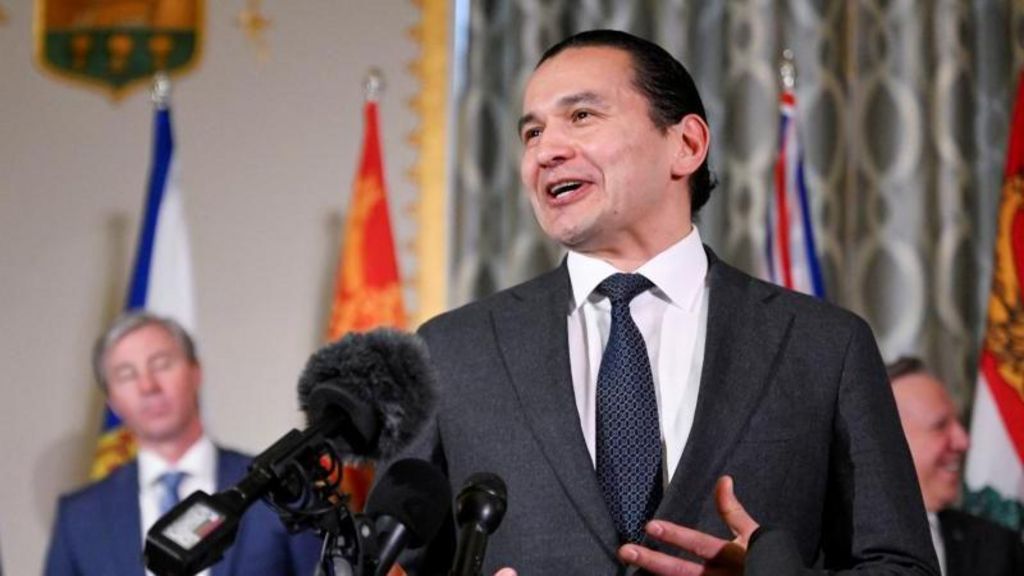
    One year after Mark Carney took office as Canada’s prime minister, his Liberal Party stands on the cusp of securing a narrow working majority in the House of Commons, with the outcome of three upcoming by-elections set to reshape the country’s federal political landscape for years to come.

    Voters head to the polls on Monday for three vacant ridings: two in the Greater Toronto Area, Scarborough Southwest and University-Rosedale, and a third competitive race in the Montreal suburb of Terrebonne. Currently, the Liberals hold 171 of 343 total seats in the Commons – just one seat short of the 172 needed for a formal majority. If the party claims victory in even two of the three contests, Carney will secure his narrow majority, allowing his government to pass legislation without relying on opposition support and pushing the next mandatory federal election back to 2029.

    Political observers note the projected shift in parliamentary control has been accelerated by an unusual wave of cross-party defections, with five sitting opposition lawmakers – four former Conservatives and one New Democratic Party member – already joining the Liberal caucus since Carney took power. Canadian media reports indicate the party is also courting several additional sitting MPs to switch allegiances in the coming weeks.

    The two Toronto seats up for grabs were vacated by high-profile former Liberal lawmakers who accepted new roles: Scarborough Southwest was previously held by ex-defence minister Bill Blair, who now serves as Canada’s ambassador to the United Kingdom, while University-Rosedale was the seat of former deputy prime minister Chrystia Freeland, now a senior policy adviser to the Ukrainian government. Political analysts widely predict the Liberals will hold both ridings, putting Carney’s majority within reach regardless of the outcome in Terrebonne.

    The race in Terrebonne remains one of Canada’s most closely watched by-election contests in recent decades. The Liberal candidate won the riding by just a single ballot in the 2025 April federal election, but Canada’s Supreme Court nullified the final result in February after uncovering an administrative error by Elections Canada involving mailed-in postal ballots. The contest is once again rated as a pure toss-up between the Liberals and the sovereigntist Bloc Quebecois. To bolster his candidate Tatiana Auguste, Carney personally campaigned in the riding ahead of polling day.

    University of Toronto political science professor Semra Sevi described the recent pace of party-switching as extraordinary, even for Canada’s fluid parliamentary system. “Carney has built a big tent, attracting members of parliament who would not normally be associated with the Liberal party,” Sevi explained in an interview. “The complication, however, is that the tent may now be so big that there isn’t a lot of ideological coherence in it.”

    That ideological tension flared up after the most recent defection of former Conservative MP Marilyn Gladu, a socially conservative lawmaker who has publicly described herself as personally pro-life. Gladu has committed to voting in line with Liberal caucus policy on abortion access, and Carney has defended his decision to welcome her, stressing that the party’s core values remain unchanged. Under Carney’s leadership, the Liberals have shifted toward the political centre-right, a marked departure from the more progressive agenda of former prime minister Justin Trudeau. Carney has rolled back several of Trudeau’s signature policies, including the national consumer carbon tax, and has prioritized positioning Canada as a global “energy superpower” while cutting public sector staffing levels – policy shifts that have proven appealing to disaffected centre-right Conservative MPs.

    The wave of defections has triggered fierce backlash from Conservative leader Pierre Poilievre, who has branded the floor-crossings undemocratic and accused Carney’s government of striking corrupt backroom deals to seize power. “By poaching MPs from other parties, Carney is telling those who elected them that ‘your vote does not count’,” Poilievre has argued.

    At the same time, analysts note the defections reflect deep-seated discontent within the Conservative caucus. Just over a year ago, Poilievre was widely seen as the likely next prime minister, but Carney surged in polling amid widespread voter concerns about cross-border trade and diplomatic relations with the United States under the second Trump administration. Today, many Conservative MPs fear the party has little chance of forming government under Poilievre’s leadership, with growing discontent over his approach to caucus management.

    Recent national polling puts the Liberals 10 to 15 percentage points ahead of the Conservatives, with Carney maintaining high personal approval ratings among Canadian voters. Closing out a Liberal party convention in Montreal over the weekend, Carney used his keynote address to frame his big-tent approach as a strength for a country facing overlapping national crises. “Canada’s founding insight is that unity does not require uniformity,” he told party members.