标签: North America

北美洲

  • 2 congressmen resign as House braces for rare expulsions

    2 congressmen resign as House braces for rare expulsions

    WASHINGTON — In a seismic shakeup that has thrown Capitol Hill into unprecedented chaos and drawn bipartisan condemnation, two sitting U.S. House of Representatives members submitted their resignations Monday, as two additional lawmakers face mounting pressure and the growing threat of rare expulsion votes over a cascade of overlapping personal and ethical scandals.

    The first departure came from Democratic Representative Eric Swalwell of California, who announced his resignation in a post on the social platform X Monday morning. Swalwell, who had already dropped out of the 2026 California gubernatorial race, stepped down days after multiple women came forward with public allegations of sexual assault and professional misconduct.

    Just hours after Swalwell’s announcement, Republican Representative Tony Gonzales of Texas revealed he would leave office immediately rather than finish his current term. Gonzales’s decision comes after he confirmed he had engaged in an extramarital affair with a former congressional aide who later died by suicide. Top House Republican leadership, including Speaker Mike Johnson, had already privately and publicly pressured Gonzales to abandon his reelection bid, and growing calls for his resignation left him with no path to remain in office.

    The resignations have set off a broader reckoning in the chamber, where lawmakers are already preparing disciplinary action against two additional Florida-based House members: Democratic Representative Sheila Cherfilus-McCormick and Republican Representative Cory Mills, who are each facing separate unconnected ethical controversies that have eroded cross-party support for their continued service.

    New York Democratic Representative Nydia Velazquez, who has led the cross-party push for accountability, voiced the widespread sentiment of anger among rank-and-file lawmakers in a social media post Monday. “Congress should not tolerate representatives who abuse staff, betray public trust for personal gain, and generally violate their oath of office,” she wrote, adding that all four scandal-tarred lawmakers should step down voluntarily, and face expulsion if they refuse to leave.

    Expulsion from the House is one of the harshest disciplinary actions the chamber can impose, requiring a two-thirds majority vote to pass. The threshold is so high that in the 237-year history of the House, Congress has only removed six sitting members via expulsion, reserving the penalty only for the most severe violations of public trust.

    Swalwell’s scandal moved at a breakneck pace over the weekend, after major U.S. outlets the San Francisco Chronicle and CNN published detailed reporting outlining allegations from four separate women. One accuser, a former member of Swalwell’s congressional staff, told reporters he sexually assaulted her twice on occasions when she was too intoxicated to give legal consent.

    Swalwell has pushed back against the most serious allegations, insisting all claims of sexual assault are completely false. He has, however, apologized publicly for what he describes as “mistakes in judgment” made during his time in office. “I will fight the serious, false allegation made against me. However, I must take responsibility and ownership for the mistakes I did make,” Swalwell said in a statement announcing his resignation.

    Even after Swalwell suspended his gubernatorial campaign, the backlash against him continued to build, with lawmakers from both major parties calling for him to leave Congress immediately. A scheduled expulsion resolution from Republican Representative Anna Paulina Luna had been set for a vote Tuesday, and cross-party support for expulsion votes for all four implicated lawmakers has already been confirmed by lawmakers across the ideological spectrum.

    The cascading scandals have created an unprecedented moment for the narrow divided House, where a series of vacancies and leadership fights have already slowed legislative work for months. The upcoming expulsion votes, which would be among only a handful in U.S. history, mark one of the most broad-ranging ethical purges in modern congressional history.

  • Ottawa eyes pragmatic approach to Beijing ties

    Ottawa eyes pragmatic approach to Beijing ties

    Following a series of landmark high-level exchanges between China and Canada, Canadian policy and academic experts say Ottawa is moving toward a distinctly pragmatic approach to resetting its strained bilateral relationship with Beijing, after years of diplomatic friction.

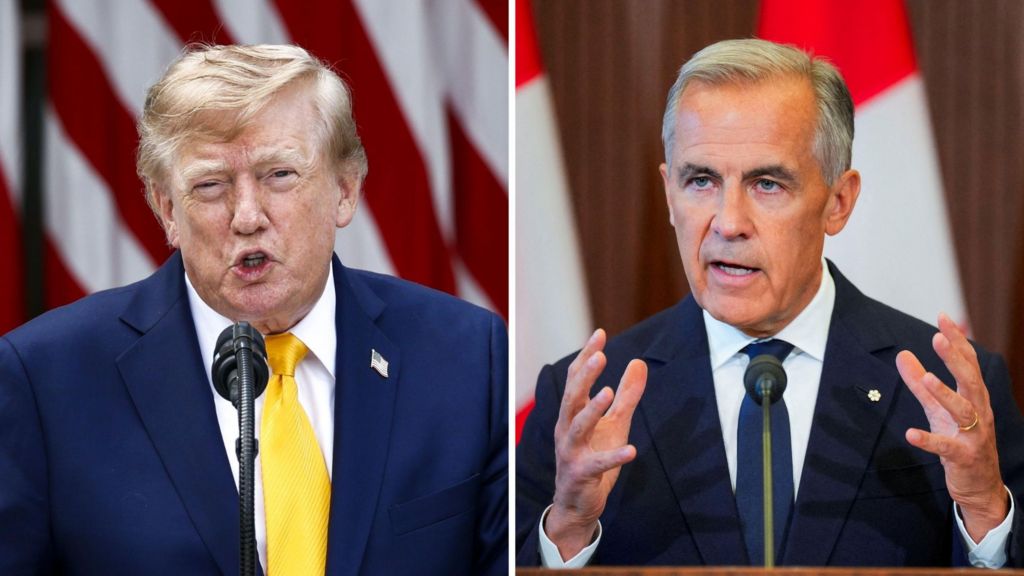
    The turning point traces back to the January meeting between Chinese President Xi Jinping and Canadian Prime Minister Mark Carney, a gathering that former senior Global Affairs Canada official Jeff Mahon described as laying the groundwork for a “positive upward trajectory” in Canada-China relations.

    Mahon, who previously served as deputy director of Global Affairs Canada’s China division, noted that both governments have already taken tangible, good-faith steps to advance cooperation. Most notably, the two sides have moved forward with commitments outlined in a preliminary agreement-in-principle, launching measures to roll back some of the restrictive trade barriers that have hampered bilateral commerce for years.

    “While more work remains to be done in order to deepen and expand collaboration, these initial steps highlight the good-faith approach adopted by the two leaders,” Mahon told China Daily in an interview.

    The most recent concrete demonstration of Ottawa’s outreach came with an official visit to Beijing by Canadian Finance Minister Francois-Philippe Champagne, a trip that experts frame as a direct follow-through on the January summit outcomes. To expand structured, institutional cooperation, Mahon explained that both countries are advancing joint initiatives aligned with a pre-agreed bilateral road map, and have formally agreed to establish a new financial working group. This new body will create dedicated channels for regulatory and policy officials to deepen collaboration across Canada’s competitive financial services sector, opening new doors for private sector engagement on both sides.

    More frequent high-level dialogue has also emerged as a core pillar of the improved relationship, creating space for candid, constructive exchanges on thorny sensitive issues while creating momentum for expanded collaborative work, Mahon added. This shift, he noted, reflects a deliberate broader policy reorientation by the Canadian federal government in Ottawa.

    Even as ties warm, both sides will need to manage existing differences with deliberate care, experts emphasize. Resolving long-running trade frictions remains a critical priority: this includes forging durable solutions to persistent trade irritants, particularly in the agricultural sector, and negotiating expanded mutual market access that benefits producers and businesses on both sides. Against a backdrop of widespread global economic uncertainty, sustaining this stable, constructive trajectory is essential for both economies, Mahon added.

    Jiang Wenran, founding director of the China Institute at the University of Alberta, explained that since Carney took office, Ottawa has made a deliberate push to rebuild closer bilateral ties and move past the diplomatic standoffs that defined Canada-China relations in previous years. This policy shift, Jiang noted, has earned broad support from most Canadian provincial premiers, the national business community, and a growing share of the Canadian public, though it still faces scattered political opposition. Security-focused policy debates remain one of the most prominent constraints on deeper bilateral engagement, he added.

    Ottawa has formally moved forward with what it frames as a “new strategic partnership” with Beijing, and has begun implementing all agreements reached at the leaders’ summit, Jiang said. Early areas of expanding cooperation include electric vehicle supply chains, cross-border energy trade, and financial sector collaboration.

    Against that backdrop, Champagne’s Beijing visit — which included a large delegation of Canadian business leaders — stands as a tangible step toward turning summit consensus into actionable cooperation. The trip also highlights Ottawa’s commitment to deepening financial sector collaboration, a field where Canadian financial institutions have long-standing global expertise and competitive advantages. Beyond bilateral ties, Jiang noted that the visit also fits into Canada’s broader strategy to diversify its international economic partnerships, reducing overreliance on a single trade partner.

    A key sign of deepening institutional engagement, Jiang added, is the planned launch of a new bilateral policy forum: the China-Canada Economic and Financial Strategic Dialogue, scheduled to convene in the second half of 2026.

    Jiang explained that Canada’s current approach aligns with what Prime Minister Carney has described as an independent “third path” in foreign policy. A sustainable, durable China policy requires Canada to pursue an independent diplomatic course, he noted — one that does not automatically align with the United States’ strategic containment approach toward China.

  • Hollywood stars sign open letter against deal

    Hollywood stars sign open letter against deal

    LOS ANGELES – A growing wave of opposition is roiling Hollywood’s top creative circles, as more than 1,000 influential industry figures have signed a public open letter condemning the proposed $111 billion acquisition of iconic Warner Bros. by Paramount Skydance. The list of signatories reads like a who’s who of A-list talent and award-winning creators, including Academy Award-winning actors Jane Fonda and Joaquin Phoenix, Breaking Bad star Bryan Cranston, blockbuster director J.J. Abrams, and Dune visionary Denis Villeneuve.

    The core argument laid out in the petition centers on the risks of further media consolidation in an already overly concentrated entertainment landscape. Signatories warn that the merger, which would shrink the number of major U.S. film studios from five to just four, would deliver widespread harm across the entire industry—from working creators to global audiences. “This transaction would further consolidate an already concentrated media landscape, reducing competition at a moment when our industries — and the audiences we serve — can least afford it,” the letter reads. The group projects that the merger would lead to fewer creative opportunities for emerging and established artists alike, widespread job losses across the production ecosystem, inflated content costs, and diminished viewing options for consumers.

    Paramount Skydance, helmed by CEO David Ellison, first unveiled its takeover plans for Warner Bros.—home to some of Hollywood’s highest-grossing and most culturally influential franchises including *Harry Potter*, *The Lord of the Rings*, and *Game of Thrones*—in February. The bid beat out an earlier offer from streaming giant Netflix, which many Hollywood insiders had viewed as the more favorable of the two potential suitors.

    Across Los Angeles’ entertainment community, widespread anxiety persists that merging two major studios will trigger sweeping cost cuts, a concern amplified by reports that the massive acquisition price will be largely debt-financed, forcing new leadership to pursue aggressive savings to offset the purchase. These cuts would not only impact high-profile writers, directors and actors, organizers argue, but would also decimate employment for the tens of thousands of below-the-line workers and small business operators that underpin Southern California’s film production ecosystem—from makeup artists and set builders to local limousine services, on-location food vendors, and event florists.

    The letter also notes that the U.S. entertainment sector, one of America’s most valuable cultural and economic exports, has already been pushed to the breaking point by decades of successive industry consolidation. “Competition is essential for a healthy economy and a healthy democracy. So is thoughtful regulation and enforcement. Media consolidation has already weakened one of America’s most vital global industries — one that has long shaped culture and connected people around the world,” the statement continues.

    The proposed merger has already attracted high-level political backing: multiple industry reports confirm that the bid has the support of U.S. President Donald Trump. For its part, Paramount Skydance has pushed back against critics, releasing a public statement on Monday reaffirming its commitment to robust theatrical film production. The company said, “We have been clear in our commitments to increase output to a minimum of 30 high-quality feature films annually with full theatrical releases.”

    As regulatory review of the proposed acquisition gets underway, the open letter signals that the Hollywood creative community is prepared to keep organizing against the merger to protect the industry’s long-term health and competitiveness.

  • Vance says to push for ‘grand bargain’ as fresh US-Iran talks loom

    Vance says to push for ‘grand bargain’ as fresh US-Iran talks loom

    Fresh diplomatic negotiations between the United States and Iran are on the cusp of resuming this week in Pakistan, with US Vice President JD Vance confirming he will spearhead the push for a sweeping, comprehensive ‘grand bargain’ between the two long-adversarial nations. Vance laid out the administration’s negotiating goals during a public event hosted in Athens, Georgia, at the University of Georgia on April 14, 2026, just days after he led an initial 21-hour closed-door negotiating session with Iranian delegates in Pakistan over the weekend.

    Decades of deep-rooted mistrust have separated Washington and Tehran, but Vance stressed that all stakeholders at the upcoming talks in Islamabad are aligned in their goal of reaching a viable final agreement. He emphasized that US President Donald Trump has rejected incremental, small-scale agreements in favor of a far-reaching deal that enshrines one non-negotiable core US priority: preventing Iran from developing an operational nuclear weapon.

    According to a Tuesday CNN report citing anonymous sources close to the planning process, Vance will not be the only senior US representative at the potential second round of talks. He will be joined by two other high-profile members of the US negotiating team: Trump’s special envoy Steve Witkoff, and the president’s son-in-law and former senior White House advisor Jared Kushner. While Trump confirmed the likelihood of new negotiations in the coming days, a senior anonymous US official clarified that no formal agenda or timeline has been finalized for the follow-up meeting, noting that logistical plans are still under active discussion.

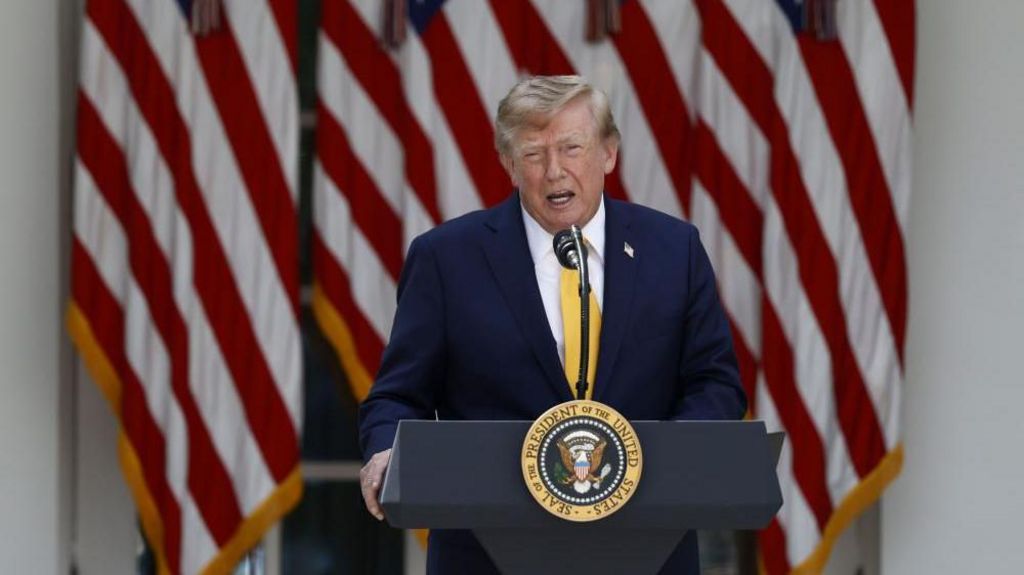
    Speaking in a phone interview with The New York Post earlier on Tuesday, Trump confirmed that the next round of talks could get underway within 48 hours in Pakistan. “Something could be happening over the next two days, and we’re more inclined to go there,” the president told the outlet.

    On Monday, Trump publicly identified the core sticking point in the initial round of negotiations: Iran’s nuclear program. He added that retrieving Iran’s existing stockpiles of enriched uranium is a top US priority for the talks. Initial proposals presented in the first session highlight the gap between the two sides’ positions, The New York Times reported Monday. Washington has tabled a proposal calling for a 20-year pause on all of Iran’s sensitive nuclear activities, while Tehran has countered with an offer to suspend its nuclear program for a maximum of five years.

    The potential for a major breakthrough in US-Iran relations comes after more than 40 years of severed formal diplomatic ties, making these talks one of the most significant diplomatic overtures between the two nations in modern history. The outcome of the negotiations could have far-reaching implications for regional security in the Middle East and global non-proliferation efforts.

  • Watch: Moment gunman tackled by school principal

    Watch: Moment gunman tackled by school principal

    Surveillance camera footage has captured the dramatic moment a brave high school principal in Oklahoma intervened to stop an armed former student on campus, an incident that has drawn widespread attention to the quick thinking and courage of school leaders facing violent threats.

    The closed-circuit television recording documents the principal making the split-second decision to charge directly at the individual, who was carrying a weapon on school grounds. The rapid, fearless action by the principal ended the threat before it could escalate into a mass casualty event, leaving many praising the administrator for putting his own safety at risk to protect students and staff at the school.

    While additional details about the incident, including whether any injuries were reported or what charges the suspect may face, have not been fully released, the footage has circulated widely, sparking conversations about the preparedness of school personnel to respond to active threats and the extraordinary acts of courage that often occur in these dangerous situations. Communities across the country have also highlighted the role that school principals and staff play in keeping students safe beyond their traditional administrative and educational duties.

  • Trump claims Iran war ‘very close’ to completion

    Trump claims Iran war ‘very close’ to completion

    WASHINGTON, April 15 (Xinhua) – In a recent interview with FOX News on Tuesday, former and current U.S. President Donald Trump made a striking announcement regarding the ongoing conflict between the United States and Iran, stating that the war is “very close” to being completed. The comment comes amid long-standing geopolitical tensions between Washington and Tehran that have escalated into open military conflict in recent years, drawing global concern over regional stability and energy market disruptions across the Asia-Pacific and beyond. While Trump did not elaborate on specific timelines or terms for a potential end to the conflict, his remark has sparked immediate analysis from international policy circles over what a nearing conclusion to the conflict could mean for global geopolitics, energy security, and diplomatic relations across the Middle East. This development arrives alongside a raft of other shifting global political dynamics, from changing regional policy approaches in Southeast Asia to debates over multipolar global governance that are reshaping international order.

  • US justice department seeks to throw out Capitol riot convictions

    US justice department seeks to throw out Capitol riot convictions

    In a major legal shift aligned with former President Donald Trump’s 2024 campaign pledges, the U.S. Department of Justice has formally requested a federal appeals court to dismiss the seditious conspiracy convictions of 12 individuals connected to the January 6, 2021, U.S. Capitol riot.

    When Trump took office for his second term, he moved quickly to grant clemency to hundreds of people charged or convicted over their roles in the insurrection, issuing full pardons or sentence commutations to more than 1,500 individuals on his first day in office. Though Trump issued over 1,000 full pardons to January 6 rioters, he opted only to commute the sentences of the 12 rioters—most of whom are affiliated with the far-right militia groups the Oath Keepers and Proud Boys. This commutation allowed the defendants to secure early release from prison, but left their felony convictions intact on their official criminal records.

    In a court filing submitted to the U.S. Court of Appeals for the District of Columbia Circuit on Tuesday, the U.S. Attorney’s Office for the District of Columbia stated that “The United States has determined in its prosecutorial discretion that dismissal of this criminal case is in the interests of justice.”

    Among the 12 individuals seeking full expungement of their convictions is Stewart Rhodes, the founder of the Oath Keepers militia. A former U.S. Army paratrooper and Yale-trained lawyer, Rhodes led a contingent of Oath Keepers members to Washington, D.C., on the day of the riot, where the group plotted to disrupt Congress’s formal certification of Joe Biden’s 2020 presidential election victory over Trump. Prosecutors proved during Rhodes’ 2023 trial that the group stored weapons in a Virginia hotel room across the Potomac River, and that while Rhodes never entered the Capitol building himself, he directed his followers’ actions from outside the building during the melee. He was originally sentenced to 18 years in federal prison after a jury found him guilty of seditious conspiracy, the charge of attempting to overthrow the lawful U.S. government. The D.C. Circuit has set an April 17 deadline for all parties to submit formal filings in the expungement cases. If the court grants the DOJ’s request to throw out the convictions, it will eliminate the need for the Trump administration’s DOJ to defend the original convictions in ongoing expungement proceedings.

    Notably, former Proud Boys national chairman Enrique “Henry” Tarrio, who was also convicted of seditious conspiracy over his role in organizing the riot and was originally sentenced to 22 years in prison, received a full pardon from Trump rather than a commutation, so he is not included in this latest request.

    A successful ruling dismissing the convictions would mark a key symbolic victory for Trump, who centered a major campaign promise on supporting and pardoning rioters who participated in the insurrection aimed at overturning his 2020 election loss.

  • Diplomacy on ice: Mark Carney and Alexander Stubb play hockey

    Diplomacy on ice: Mark Carney and Alexander Stubb play hockey

    In a striking fusion of athletic competition and high-level diplomacy, Canada’s Prime Minister Mark Carney and Finland’s President Alexander Stubb took to the ice together for a friendly hockey game during Carney’s first official bilateral visit to Canada’s capital. The unlikely pairing of two heads of state on a hockey rink, with both leaders suiting up to join the Ottawa Charge amateur team, turned a routine diplomatic meeting into a memorable display of cross-national connection.

    Diplomatic summits and formal bilateral talks often rely on carefully staged photo opportunities and rigid policy discussions, but this event broke with tradition. Carney, a Canadian leader with longstanding ties to the country’s beloved national sport, joined Stubb – an avid hockey enthusiast – for the casual game, showcasing the shared cultural love of hockey that unites both Nordic and North American nations.

    The visit marks Carney’s first formal one-on-one bilateral engagement with a European head of state since taking office, making the informal athletic interlude more than just a recreational activity. Analysts view the moment as a deliberate, approachable gesture to strengthen people-to-people ties between Canada and Finland, two nations that already cooperate closely on Arctic security, climate action, and trade. By meeting on the ice rather than just in a cabinet room, the leaders signaled a willingness to build a more personal, open working relationship ahead of formal policy negotiations scheduled during the visit.

    Local spectators at the Ottawa rink called the event a welcome break from typical stuffy political events, with many fans capturing photos of the two leaders skating alongside amateur teammates. The game itself remained low-stakes, focused on fun rather than competition, but the symbolic weight of the moment resonated far beyond the rink’s boards: it demonstrated how shared cultural passions can serve as a foundation for deeper diplomatic cooperation in an increasingly divided global political landscape.

  • Trump hints Iran talks could resume this week as US port blockade continues

    Trump hints Iran talks could resume this week as US port blockade continues

    Nearly two months after Iran came under coordinated air strikes from the United States and Israel, the region remains at a dangerous geopolitical crossroads, with a new US naval blockade of Iranian ports threatening to upend a fragile two-week ceasefire and raise the stakes for upcoming diplomatic talks.

    The current crisis traces back to collapsed weekend negotiations hosted in Islamabad, Pakistan, that failed to bridge deep divides between Washington and Tehran, primarily over the future of Iran’s nuclear program. In the wake of the failed talks, US President Donald Trump ordered the full enforcement of a maritime blockade targeting all commercial traffic entering or exiting Iranian coastal areas, a move designed to cut off two of Tehran’s most critical revenue streams: crude oil exports and shipping tolls collected for passage through the Strait of Hormuz. As of Tuesday, more than a dozen US warships and roughly 10,000 American military personnel are deployed to enforce the blockade.

    US Central Command, which oversees American military operations across the Middle East and Central Asia, confirmed that in the first 24 hours of the blockade going into effect, six commercial merchant vessels complied with US orders to turn back toward Iranian ports. But independent verification by BBC Verify’s ship-tracking analysis tells a more complicated story: at least seven vessels, four linked directly to Iranian shipping interests and three foreign-flagged ships, successfully crossed the Strait of Hormuz despite the US operational order.

    The military escalation has thrown the future of the existing two-week ceasefire, which is scheduled to expire next week, into serious question. Even so, there have been tentative signals from multiple stakeholders that negotiations between the US and Iran could restart as soon as this week. In an interview with the *New York Post*, President Trump suggested that a resumption of talks was likely within 48 hours, noting that US negotiators remain positioned in the region to reconvene. “You should stay there [Islamabad], really, because something could be happening over the next two days, and we’re more inclined to go there,” Trump told the outlet.

    United Nations Secretary-General António Guterres has also voiced cautious optimism, saying he considers it “highly probable” that talks will get back on track. Separate anonymous official sources from Gulf states, Pakistan and Iran confirmed to Reuters that both US and Iranian negotiating teams are expected to return to Islamabad later this week, though a firm starting date has not yet been finalized. Tehran has not yet issued an official public response to Trump’s latest remarks on restarting talks.

    The core sticking point that derailed the previous round of talks remains Iran’s nuclear program. A senior US official told CBS News, a partner outlet of the BBC, that Washington has demanded a 20-year full suspension of all Iranian uranium enrichment activities. But Tehran has only offered a five-year halt to enrichment, according to sources cited by other US media outlets, leaving a significant gap between the two sides’ opening positions.

    The economic fallout of the ongoing standoff has already rippled through global commodity markets. For weeks, the conflict has disrupted global energy supplies, after Iran effectively closed the Strait of Hormuz—one of the world’s most critical chokepoints for global oil and natural gas transportation—shortly after the February air strikes. On Tuesday, however, growing hopes that diplomatic talks would resume calmed volatile oil markets, pushing benchmark crude prices below the $100 per barrel threshold for the first time in recent weeks.

    Global powers have already begun weighing in on the US blockade, with starkly differing views. The International Monetary Fund has already warned that the protracted conflict could push the entire global economy into a recession, but US Treasury Secretary Scott Bessent defended the strategy in comments to the BBC, arguing that a “small bit of economic pain” is a reasonable tradeoff for long-term global security. China, a key diplomatic and economic partner of Iran, has taken a far harder line, calling the blockade “dangerous and irresponsible” on Tuesday and warning that it would only inflame regional tensions and irreparably damage the fragile ceasefire agreement.

    In a separate, unrelated development in regional diplomacy, Israel and Lebanon announced Tuesday that they will launch the first direct official negotiations between the two nations since 1993, following a day of talks in Washington DC. The talks stem from ongoing cross-border tensions triggered by Israeli air strikes targeting the Iran-backed militant group Hezbollah in southern Lebanon. Both sides described the initial meeting at the US State Department as a positive step: Lebanon’s ambassador to the US called the discussions “productive”, while his Israeli counterpart said the talks open a path to a “new era of peace.” A senior unnamed US official emphasized to the BBC that the Israel-Lebanon negotiations are completely separate from the ongoing US-Iran talks in Pakistan, with no overlapping agenda or linkage.

  • Texas lawmaker resigns after admitting affair with aide who died by suicide

    Texas lawmaker resigns after admitting affair with aide who died by suicide

    In a seismic development that has sent shockwaves through Capitol Hill, two sitting U.S. congressmembers — one Republican and one Democrat — formally stepped down from their congressional seats this week, exiting office amid mounting ethical pressure and public allegations of sexual misconduct.

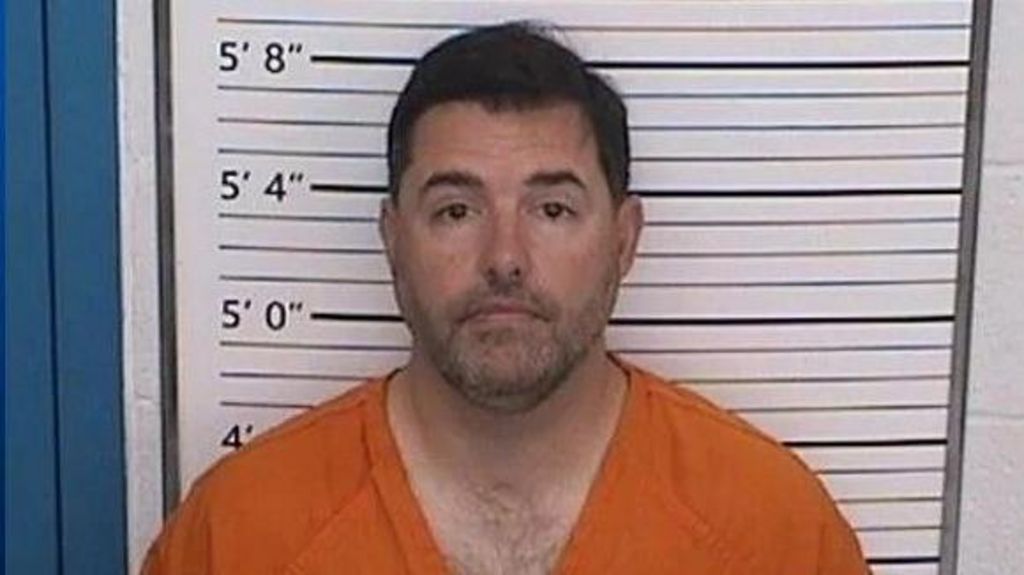
    Texas Republican Representative Tony Gonzales was the second lawmaker to submit his resignation on Tuesday, capping weeks of growing controversy that began when he ultimately confirmed a years-long extramarital affair with a married congressional staffer, Regina Santos-Aviles. Santos-Aviles died by suicide in September 2025 near her Uvalde, Texas home after setting herself on fire, a finding confirmed by the local medical examiner and first reported by CBS News, the U.S. partner of the BBC.

    The timeline of the scandal accelerated rapidly over the past month. Gonzales, who had initially dismissed the claims of an affair as a coordinated political blackmail campaign to force him out of office, had already announced he would not seek re-election in the November 2026 midterm vote. But as new details of his misconduct emerged and a formal congressional ethics probe was launched, pressure for an immediate departure grew overwhelming.

    Parallel developments unfolded for California Democratic Representative Eric Swalwell, who faced a separate set of public allegations ranging from sexual harassment to assault against a former member of his own staff. After the allegations became public over the weekend, a groundswell of bipartisan criticism erupted, and congressional leadership moved quickly to open a formal ethics inquiry and debate holding full votes to expel both men from office. Maneuvering to avoid a humiliating forced expulsion — which would have cost both lawmakers their post-congressional pension benefits — both lawmakers opted to submit voluntary resignations, effective immediately this week.

    Swalwell, who had been running for the Democratic nomination for California governor before the allegations broke, dropped his gubernatorial campaign Sunday and announced his resignation Monday, even as he and his legal team have forcefully denied all claims against him. “These accusations are false, fabricated, and deeply offensive – a calculated and transparent political hit job,” said Swalwell’s attorney Sara Azari. In his final resignation letter submitted Tuesday, however, Swalales offered a muted apology, writing: “I am deeply sorry to my family, staff, and constituents for mistakes in judgement I’ve made in my past.”

    Gonzales, for his part, offered only a brief farewell in his own resignation letter, noting: “It has been my privilege to serve the residents of Texas’s 23rd congressional district.”

    The dual resignations, one from each major political party, have little impact on the partisan balance of power in the U.S. House of Representatives, where Republicans hold a narrow but stable majority. Even with the two vacancies, Republicans will retain their controlling grip on the chamber for the remainder of the 119th Congress.

    The scandal has already reignited broader conversations about congressional accountability, workplace culture on Capitol Hill, and the leniency of rules that allow members accused of misconduct to resign voluntarily and retain taxpayer-funded benefits, rather than face expulsion and lose those privileges.