标签: North America

北美洲

  • SantaCon organiser charged with wire fraud in New York

    SantaCon organiser charged with wire fraud in New York

    One of New York City’s most iconic annual holiday traditions has become the center of a major federal fraud case, after the president of the event’s organizing body was arrested on charges of stealing hundreds of thousands of dollars in charitable donations for personal use.

    Stefan Pildes, a 50-year-old New Jersey resident, faces a single count of wire fraud over his alleged misuse of funds raised through SantaCon, the hugely popular December pub crawl that draws tens of thousands of costumed participants each year. Prosecutors from the U.S. Attorney’s Office for the Southern District of New York unveiled the charges this week, laying out a years-long scheme that they say exploited the holiday generosity of participants and local business owners across the city.

    Every year, SantaCon draws roughly 25,000 attendees, who purchase tickets to take part in the bar crawl while dressed as Santa Claus and other seasonal characters. The event has long been marketed to the public as a large-scale charity fundraiser, with proceeds from ticket sales and partnerships pledged to local nonprofits.

    According to the official charging document, Pildes raised approximately $2.7 million through the event between 2019 and April 2026. Instead of directing the bulk of these funds to charitable causes, prosecutors allege that Pildes diverted more than half of the total revenue into a personal “slush fund” that he used to cover a wide range of extravagant personal expenses.

    Court filings detail that the accused spent hundreds of thousands of dollars of stolen charity money on everything from luxury vacations and fine dining to concert tickets and major home renovations. Among the most high-value purchases outlined in the charges are $365,000 in renovations for a private lakefront property Pildes owns in New Jersey, $124,000 in costs related to a luxury Manhattan apartment, and nearly $3,000 for a single birthday dinner at a Michelin-starred restaurant in Manhattan.

    Only a tiny fraction of the $2.7 million raised was ever donated to registered charities, according to the documents filed in court.

    “Stefan Pildes promoted SantaCon as an event grounded in charitable giving, but instead of donating the millions of dollars he raised, he ran his own con game,” U.S. Attorney Jay Clayton said in an official statement announcing the charges. “He took advantage of New Yorkers’ generous holiday spirit to finance his lifestyle through personal expenses, big and small.”

    As of the release of the charging documents, no defense attorney has been listed for Pildes in official court records. If convicted on the wire fraud charge, Pildes faces a maximum penalty of up to 20 years in federal prison.

  • Madonna announces sequel to Confessions On A Dancefloor album

    Madonna announces sequel to Confessions On A Dancefloor album

    After years of teases and months of widespread fan speculation, pop icon Madonna has made it official: her 15th studio album, *Confessions II*, a sequel to her 2005 dance classic *Confessions on a Dance Floor*, will hit shelves and streaming platforms worldwide on July 3. This marks the superstar’s first full-length new release since her 2019 album *Madame X*.

    The iconic singer first began dropping hints about the follow-up project back in 2023, and last week kicked off the official announcement rollout by wiping her entire Instagram feed and updating her bio with a famous lyric from the 2005 lead single *Hung Up*: “Time goes by so slowly.” The next day, she shared the full confirmation alongside key details about the upcoming record, as well as a 60-second preview clip of the album’s opening track, *I Feel So Free*. Built around a pulsing, throbbing synth bassline, the new track weaves in a beloved line from Madonna’s 1980s hit *Into the Groove*: “Out here on the dance floor, I feel so free.”

    The original 2005 *Confessions on a Dance Floor* is widely regarded as one of the best albums of Madonna’s decades-spanning career, alongside fan and critical favorites like *Like a Prayer* and *Ray of Light*. The unapologetically euphoric, club-focused record gave the world global hits including *Sorry* and *Hung Up*, which famously sampled ABBA to massive commercial and critical success. For the long-awaited sequel, Madonna has reunited with British producer Stuart Price, who co-created the original 2005 album with her. The pair first recorded the first installment in the loft of Price’s London home, where Madonna even carved her name into the studio rafters during breaks from recording. The pair most recently worked together on Madonna’s 2023 *Celebration* tour, and by early 2024, they were back in the studio together at Price’s new west London space. Madonna shared the news of their reunion on social media with the playful line: “Back in the Stu with Stuart Price.” Weeks later, she updated her fanbase that working on the record had been “medicine for my SOUL,” and shared behind-the-scenes photos showing her children joining her in the recording process. Price, whose production credits also include work with Dua Lipa, The Killers, Jessie Ware, Rina Sawayama and Pet Shop Boys, has co-produced the entirety of the new album.

    In an official press release announcing the album, Madonna framed the project around the core message of a new track titled *One Step Away*, pushing back against common misconceptions of dance music. “People think that dance music is superficial, but they’ve got it all wrong,” she wrote. “The dance floor is not just a place, it’s a threshold: A ritualistic space where movement replaces language.” The 67-year-old pop legend called this framing her “manifesto” for the new record, adding: “We must dance, celebrate, and pray with our bodies. These are things that we’ve been doing for thousands of years – they really are spiritual practices. After all, the dance floor is a ritualistic space. It’s a place where you connect with your wounds, with your fragility. To rave is an art. It’s about pushing your limits and connecting to a community of like-minded people.”

    Alongside the album announcement, Madonna also unveiled the full official album cover for *Confessions II* on Wednesday. Anticipation for the release has been building among fans for months, after a March report from *The Sun* claimed Madonna had filmed what would be “her most X-rated music video to date” at a secret UK location. Additional rumors have also swirled that the pop icon will make a surprise guest appearance alongside Sabrina Carpenter during Carpenter’s set at the second weekend of the 2026 Coachella Valley Music and Arts Festival this coming Friday. Promotional posters for the new album have already begun popping up in major cities across the globe to build hype ahead of the July release.

    Beyond her new music, Madonna is also set to appear in the second season of the Emmy-winning satirical series *The Studio*, which skewers the inner workings of the Hollywood film industry. The star filmed her guest role in Venice back in March, the same city where she shot her iconic 1984 *Like a Virgin* music video. She filmed her cameo alongside Julia Garner, who was originally attached to play Madonna in a scrapped biopic about the star’s life. According to *Variety*, the upcoming second season of *The Studio* will reference the failed attempt to bring Madonna’s life story to the big screen in its storyline.

  • Trump says not thinking about extending ceasefire with Iran

    Trump says not thinking about extending ceasefire with Iran

    WASHINGTON, April 15 (Xinhua) — In a new interview that adds clarity to U.S. policy toward Iran, former President Donald Trump has stated he does not see a need to extend an existing ceasefire agreement between the two nations. Speaking to ABC News on Tuesday, Trump directly addressed questions about the future of the truce, telling reporters he has not considered extending the arrangement and does not believe such an extension would serve any necessary purpose. The comment comes amid ongoing regional tensions across the Middle East, where ceasefire agreements between major powers have faced repeated scrutiny over their ability to curb long-standing conflict and instability. The statement marks a clear shift in rhetorical positioning, closing off speculation that the U.S. could seek to prolong the current ceasefire to build toward wider diplomatic negotiations between Washington and Tehran. As regional actors continue to navigate fragile security arrangements, Trump’s remarks have eliminated immediate uncertainty about whether a temporary truce would be extended into the coming months, putting the future of the ceasefire in question as stakeholders monitor for further developments in U.S.-Iran relations.

  • Experts: Geopolitical tensions disrupting global supply chains

    Experts: Geopolitical tensions disrupting global supply chains

    Escalating geopolitical friction in the Middle East, compounded by shifting U.S. trade policies, has injected unprecedented uncertainty into global supply chains, industry leaders and policy analysts warned during a briefing at the Port of Los Angeles Monday. Top shipping executives and international relations experts say the ongoing volatility in diplomatic relations and energy markets is permanently reshaping global trade routes, raising operational costs, and forcing businesses to rewrite long-term investment strategies.

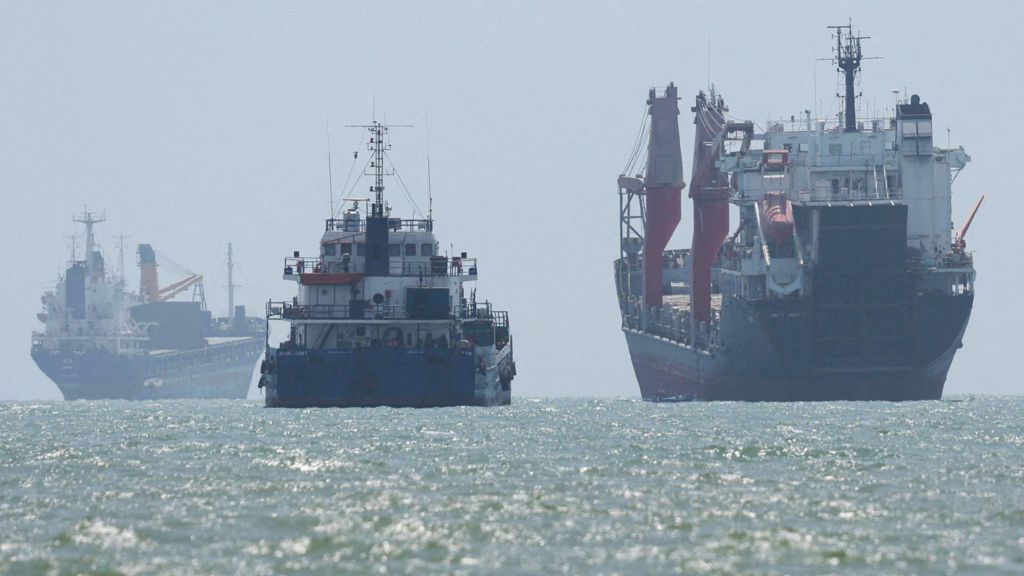
    Speaking at the event, Port of Los Angeles Executive Director Gene Seroka outlined the direct impact of strained U.S.-Iran relations and regional instability on one of the world’s most critical maritime chokepoints: the Strait of Hormuz. Before late February, 100 to 110 commercial vessels transited the 21-mile strait daily; today, only a handful of ships have been able to complete the passage, Seroka said. This blockage has sent ripple effects through already fragile global logistics networks that have yet to fully recover from post-pandemic disruptions.

    Jerrold Green, a senior fellow at the UCLA Burkle Center for International Relations, criticized the lack of meaningful progress in recent high-stakes U.S.-Iran negotiations. A 21-hour round of talks led by U.S. Vice President JD Vance over the weekend ended without any agreement, a outcome Green says is unsurprising given the lack of good-faith negotiation. “That is really not a negotiation. That’s a reading of terms that were not accepted,” Green said, noting that productive diplomacy requires reciprocal compromise and flexible bargaining—elements that have been entirely absent from the current diplomatic process.

    The extended disruption to Middle Eastern shipping lanes has already triggered major shifts in global trade patterns. Traffic through the Suez Canal, another core artery of global maritime commerce connecting Asia to Europe and North America, has dropped sharply as carriers reroute vessels to avoid regional risk. With fuel costs spiking and routing uncertainty growing, more cargo flows are being redirected to U.S. West Coast ports including Los Angeles, disrupting long-standing logistics workflows and creating unexpected congestion at these gateways, Seroka explained.

    When asked about the future of the Trans-Pacific Green Shipping Corridors, a 2023 initiative launched to speed up zero-carbon shipping between Asia and North America, Seroka noted that large-scale infrastructure and sustainability transformation operates on far longer timelines than volatile political cycles. “Most of this work that we do here at the port … takes years, and in some cases, decades. It’s never a straight line,” he said. While the Port of Los Angeles remains committed to advancing its decarbonization targets and long-term environmental goals, Seroka acknowledged that shifting trade policies and geopolitical upheaval have drastically altered the trajectory of these efforts. “All of that gets thrown into the soup, and it makes it taste very different than it did before,” he said, adding that rising energy costs and trade uncertainty have made the push for decarbonization far more complex than initially projected.

    The economic shockwaves of these supply chain disruptions are already being felt across Southern California, where the Port of Los Angeles serves as an economic anchor for the region. Local diesel prices have surged to between $7 and $8 per gallon, placing extreme financial pressure on the small trucking companies that form the backbone of last-mile port logistics. Beyond logistics, U.S. agricultural exports have also come under strain: soybean shipments from the U.S. to China have declined amid ongoing tariff tensions and evolving global sourcing strategies.

    Green, who has decades of on-the-ground experience working across the Middle East including Egypt, Iran, and Israel, warned that the current instability has permanently altered the global trade landscape. “It seems to me that the Middle East and therefore the world has changed permanently, and even if we try and go back to where we were, it simply won’t be possible,” he said. Prolonged regional unrest has already removed thousands of vessel transits from key global shipping lanes, creating massive uncertainty that carries direct economic costs. “There are massive uncertainties,” Green said. “And for me, a massive uncertainty is a potential loss. It’s not a good thing.”

    Green described the Port of Los Angeles as a strategic linchpin of California’s economy, which ranks as the fourth largest economy in the world by GDP. Mounting global uncertainty, he emphasized, directly translates to slower regional economic performance. Volatility in energy prices has also created whiplash for consumer and industrial trends, most notably in electric vehicle demand. “Electric cars are out of fashion … back and forth, caroming back and forth. Now they’re back because of the price of petroleum,” he said, noting that these constant shifts impact not just U.S. domestic industries, but consumers in every country across the globe.

    Persistent policy and geopolitical uncertainty has also put a damper on business planning across all sectors tied to trade, Seroka added. Hiring at port-related businesses has remained soft for more than 12 months, and while inflation has not spun out of control, it remains above target levels, pushing corporations to adopt a far more cautious approach to capital investment. Even the steady U.S. consumer spending that has propped up economic growth in recent months may not hold, Seroka warned: “The American consumer seems to be so consistent in their buying patterns. At some point, I would think that’s going to tip, too.”

    Green echoed these concerns, noting that the unexpected outbreak of conflict in the Middle East underscores the fundamental fragility of long-term economic planning in today’s geopolitical climate. “This war came out of nowhere. Nobody predicted it, nobody expected it, and it was a body blow,” he said. Reiterating the core risk of prolonged uncertainty, he added: “There are massive uncertainties … and massive uncertainty is a potential loss.”

  • Tech experts call for cooperation on AI safety guardrails

    Tech experts call for cooperation on AI safety guardrails

    As artificial intelligence continues to reshape nearly every sector of the global economy, leading technology experts and researchers are issuing a urgent call for the world’s two largest AI powers, the United States and China, to set aside geopolitical rivalry and collaborate on the development of shared safety and ethical frameworks for advanced AI development. Experts warn that a fragmented, competition-first approach to AI regulation would carry severe risks for all nations, undermining the technology’s transformative benefits while amplifying unaddressed safety hazards.

    Speaking with China Daily on the sidelines of the recent HumanX conference held in San Francisco, Silicon Valley entrepreneur Nand Mulchandani — whose tech startups have been acquired by industry giants including Oracle, VMware and Cisco — emphasized that consistent, global industry standards are a non-negotiable foundation for AI to scale safely and deliver widespread public benefit.

    “A uniform set of standards works for every nation, because it gives all countries access to the benefits that come from commoditized, scalable technology, systems and products,” Mulchandani explained. He drew on decades of global telecommunications history to illustrate the power of interoperable, shared standards, pointing to international mobile roaming as a model for what cross-border cooperation can achieve.

    “Roaming works seamlessly for consumers across the globe precisely because we agreed on common protocols and technology standards decades ago,” he said. “A uniform set of technical rules that work everywhere creates tangible benefits for end users everywhere. Just as open, flat architectural standards fueled the global growth of the internet that lifted all participants, a divided approach to AI would leave everyone worse off. If the U.S. and China move forward with incompatible, separate AI standards, that would be a collective failure — a lose-lose outcome for the entire world.”

    Mulchandani acknowledged the inherent tension between national competitive interests and global collective good, noting that the two powers will need to navigate a nuanced balance between competition and cooperation. “The U.S. and China have to figure out where competitive dynamics fit and where cooperative goals take priority — they will have areas of healthy competition, and they will also have clear areas where collaboration serves everyone,” he added.

    His call echoes a recent commentary from a group of global AI researchers published by the Brookings Institution, which urged the two leading AI superpowers to abandon zero-sum geopolitical thinking and prioritize joint work on AI safety guardrails. The researchers argued that fixating on gaining unilateral national advantage obscures the larger shared risks and opportunities of advanced AI development.

    “Instead of obsessing over which country is ahead, or what the U.S. can do to slow China’s AI progress, American policymakers need to accept a simple reality: the United States and China will advance alongside each other at the cutting edge of AI technology for the foreseeable future,” the researchers wrote. “Neither side will gain a permanent, decisive advantage over the other.”

    The researchers project that top AI laboratories in both countries will make parallel progress toward advanced agentic AI systems and artificial general intelligence (AGI) in coming years, making early coordination on safety measures even more urgent to prevent unregulated, high-risk development.

    Donald Lewis, non-resident fellow at the Center for China and Globalization, noted that even amid ongoing broader diplomatic tensions between the two nations, the structural groundwork for meaningful AI cooperation is already in place. Lewis pointed to decades of people-to-people and industry ties between Silicon Valley and Chinese technology firms as a solid foundation to build collaborative efforts on AI.

    “I believe there are very strong prospects for U.S.-China collaboration on AI development over the next several years, if not decades,” Lewis told China Daily. “Even during the Trump administration, policymakers floated the realistic, promising idea of a US-China G2 for key strategic sectors — and strategic AI is one area where that framework makes a great deal of sense.”

    Lewis highlighted AI-driven climate and energy innovation as an especially promising area for early joint work, noting that the two countries are the undisputed global leaders in AI research and development, with all other nations falling far behind in investment and capability. “The U.S. and China are the primary global competitors in the fast-expanding AI ecosystem, but that leadership also gives them a unique responsibility to collaborate for global public good,” Lewis said. “AI should be the next chapter in what can be a mutually fruitful cooperation between the two powers that benefits the entire world.”

  • Go on patrol with the Canadian Rangers across the frozen Arctic

    Go on patrol with the Canadian Rangers across the frozen Arctic

    Beneath the endless pale blue sky that stretches over a vast, frozen wilderness, a small group of Canadian Rangers has been making its way across one of the harshest environments on Earth. On the final stretch of a landmark journey through Canada’s remote far north, a BBC reporting team was granted rare access to accompany these dedicated servicemembers as they carry out one of the country’s most unique sovereignty missions. For decades, the Canadian Rangers have served as the eyes and ears of the nation in the Arctic, a sparsely populated region where icy conditions, subzero temperatures, and vast uninhabited expanses make regular government presence a constant challenge. This particular trek stands out as a historic effort to reaffirm Canada’s territorial claim in a region that has grown increasingly strategically important as climate change opens up Arctic waterways to new shipping lanes and natural resource exploration. Walking mile after mile across snow-covered tundra and frozen riverbeds, the Rangers demonstrate the steady commitment Canada maintains to its northern borders. The accompanying BBC journalists documented firsthand the harsh realities of Arctic patrol work, from battling wind chills that can drop to dangerous negative temperatures to navigating terrain that shifts beneath the snow with each changing season. What emerges from the journey is a portrait of quiet resilience, as these part-time military personnel — many of whom are local Indigenous residents with deep knowledge of the Arctic landscape — work to uphold Canadian sovereignty while connecting with scattered remote communities across the region. The final leg of the trek brought the patrol and their BBC guests through areas that see almost no outside visitors, highlighting just how critical the Ranger presence is to maintaining Canada’s foothold in its northernmost territories amid growing regional and global interest in the Arctic’s future.

  • Carney secures majority as Canada-US trade tensions persist

    Carney secures majority as Canada-US trade tensions persist

    OTTAWA, April 15 — Just 24 hours after Canada’s governing Liberal Party claimed victory in three federal by-elections, Prime Minister Mark Carney stood alongside Finance Minister Francois-Philippe Champagne on Parliament Hill to confirm a long-awaited shift in parliamentary control. The three new seats have pushed the Liberals to a total of 174 seats in the House of Commons, granting the party an outright majority and reshaping the country’s legislative landscape — even as political analysts warn that this new domestic political capital is unlikely to shift Canada’s negotiating hand in stalled trade talks with the United States.

    For months, the Liberals have operated as a minority government following the 2025 general election, but party leaders have long governed as if they held a majority already, according to Nelson Wiseman, professor emeritus of political science at the University of Toronto. Wiseman explained that the practical policy impact of the new majority will be limited, in large part because opposition parties have had no motivation to force a snap election. Canadian voters overwhelmingly reject early elections, he noted, and any party that moves to bring down the current government would face serious electoral backlash. That status quo has left the Carney administration’s policy positions largely unchanged even before the by-election results.

    The most significant changes from the majority win will be procedural, centered on Parliament’s committee system, which has long been controlled by opposition parties during the minority government period. Opposition-led committees have frequently used their power to slow the progress of government legislation, but a Liberal majority on all committees will remove that key check. “With Liberal control of the committees, legislation will pass much more quickly,” Wiseman told China Daily in an interview.

    While the domestic political shift clears legislative logjams at home, it does little to resolve ongoing tensions in Canada-US trade negotiations, where talks over the modernization of the Canada-United States-Mexico Agreement (CUSMA) have hit a stalement. US Trade Representative Jamieson Greer has already publicly stated that he does not expect negotiations to conclude by the July 1 deadline, a signal of how far apart the two sides remain.

    Political observers argue that the Liberals’ new majority will not move the needle in these closed-door negotiations. “I doubt that having a majority government would make a difference in negotiations, which are largely done behind the scenes, and not visible to the public,” said Ronald Stagg, a history professor at Toronto Metropolitan University. Stagg noted that Carney’s approach to trade talks will be shaped far more by his decades of professional experience in business and global finance than by the number of seats his party holds in Parliament. “With his business background Carney will work for the best deal possible,” Stagg said.

    That said, the majority does offer key domestic political protection for the Carney administration regardless of how the negotiations conclude. If the government makes concessions to reach a deal, a solid parliamentary majority will insulate it from domestic political backlash. “Having a majority would protect the government from any adverse reaction in Canada to the outcome,” Stagg explained. Even so, he emphasized, stronger domestic standing does not automatically translate to greater leverage against Washington. The Trump administration is unlikely to adjust its negotiating position based on Canada’s domestic political makeup, he argued: “Donald Trump and his negotiating team are not going to say that the Canadian government has to give in because it does not represent all Canadians, i.e. is weak. The Carney government will negotiate in the belief that it has the backing of Canadians.”

    Beyond the immediate negotiations, the by-election win confirms a long-running strategic shift for Canada: Ottawa will continue to deepen trade and diplomatic ties with partners in Europe and Asia, moving to diversify its economic partnerships beyond its traditional dependence on the US market. This shift is not tied to the current Trump administration alone, Stagg noted; even after Trump leaves office, Canada can no longer take its historically close US relationship for granted.

    This push for diversification aligns with a broader global trend among middle powers, which are increasingly seeking to build alternative partnerships to reduce overreliance on the United States. “Other nations which would be considered middle powers are also anxious to establish relationships that do not depend on the United States,” Stagg said.

    The current stalled talks underscore just how fraught Canada-US trade relations have become. Stagg pointed out that the US has made far more progress in negotiations with Mexico than with Canada, and it remains unclear whether this gap is part of a deliberate “divide and conquer” strategy or simply a sequencing of talks. Trump has openly taken a hard line with Canada, claiming the US needs nothing from Canada as a bargaining tactic and demanding that Ottawa roll back its long-standing supply management system for agricultural products — a demand that has created significant strain. “He has not taken a similar position with Mexico, so, definitely, trade relations with the United States are not going to well,” Stagg added.

  • Trump’s rift with Pope is playing out in public – it’s costing him valuable support

    Trump’s rift with Pope is playing out in public – it’s costing him valuable support

    For years, tensions have simmered between former President Donald Trump and senior leaders of the Catholic Church, rooted in his hardline immigration stances that have long drawn condemnation from church officials. This divide has already split the U.S. Catholic hierarchy from right-leaning rank-and-file believers for months. But over the past 48 hours, a new and unprecedented backlash has erupted, triggered by Trump’s blistering public attack on Pope Leo and his sharing of an AI-generated image depicting Trump as a Christ-like figure. What makes this moment remarkable is that the harshest criticism is coming not from liberal opponents, but from Trump’s once-loyal conservative Catholic allies. Their discontent stretches far beyond the public spat with the pope: it is rooted in deep moral opposition to the six-week-old Iran war, a conflict that has crystallized a quiet but dramatic shift in opinion among conservative Catholic supporters of the president. One of the most striking breaks comes from Bishop Joseph Strickland, a long-time stalwart Trump backer who has repeatedly aligned himself with the president’s political movement. Just last year, Strickland took part in a prayer service to “consecrate” Trump’s Mar-a-Lago estate; in 2024, he delivered the keynote address at the Conservative Political Action Conference (CPAC) where Trump was the guest of honor, and in 2020, he spoke at a rally of Trump supporters pushing to overturn the presidential election results. His unwavering public support for Trump, and his open clashes with the late Pope Francis, even contributed to his removal from his post as Bishop of Tyler, Texas. Now, facing conflicting stances from the White House and the Vatican on the Iran war and broader Middle East instability, Strickland has broken ranks with the administration in a rare public rebuke. “I do not believe this conflict meets the criteria of a just war. I stand with the Holy Father and his call for peace. This is not about politics. It’s about moral truth,” Strickland told the BBC, noting that the massive scale of death and suffering inflicted on innocent Iranian civilians rules out any framing of the war as just. He has gone further, challenging the White House’s handling of the conflict and urging other Catholics to join him in speaking out. “It becomes very dark when religion is used to justify immoral behaviour… using religion to justify especially dropping bombs is contradicting what the faith is about,” he said. When asked about Trump’s attack on Pope Leo and the controversial AI-generated image—dubbed “AI Jesus” by observers, which Trump claims he believed depicted a doctor, not Jesus—Strickland said it was his moral duty to remind the president of a core passage from the Gospel of Matthew, which teaches that ultimate authority belongs to Christ, not any human leader. “When world leaders forget this truth, all are in peril,” he added. This shifting alignment among conservative Catholics carries notable political risk for Trump, who grew his support among this demographic during the 2024 presidential election. Pew Research Center data paints a complex picture of Catholic voting patterns: racial identity played a major role, with 62% of white Catholic voters supporting Trump, compared to 37% backing Kamala Harris, while 41% of Hispanic Catholics supported Trump and 58% backed Harris. Overall, the data shows a gradual shift toward the Republican Party among U.S. Catholics as a whole, but deep, persistent divides remain. Greg Smith, senior associate director of religion research at Pew, notes that historically, for most U.S. Catholics, political identity often outweighs religious affiliation when shaping public outlook, with voters splitting sharply along party lines. U.S. Catholics have long been polarized on divisive cultural issues such as abortion and immigration, making a rare cross-ideological convergence between left and right Catholic leaders on the Iran war all the more unusual. Pew polling also reflects this new dynamic: while the late Pope Francis was far more popular among Catholic Democrats than Republicans, Pope Leo currently holds high approval among Catholics on both sides of the political aisle. Unlike Francis, a progressive who often alienated traditionalists through measures such as restrictions on the Latin Mass (moves Pope Leo has since reversed), Leo has built broad goodwill across factions. Peter Wolfgang, executive director of the Family Institute of Connecticut and a leading voice of U.S. Catholic conservatism, argues that the pope is not immune to fair criticism. “The Pope is the Pope, we owe him a certain amount of deference, but I don’t think that Catholicism wants the obedience of cadavers. We are living, thinking persons,” he said. Wolfgang, who shifted from a cautious pragmatic supporter of Trump to an enthusiastic backer focused on overturning abortion rights and defending hardline mass deportation policies aligned with the Catholic nationalism of figures like JD Vance, is now sharply critical of Trump’s treatment of Pope Leo. “President Trump does not understand how Catholicism works. The Pope is not merely a head of state, he is the Vicar of Christ. Attacks on him are received as attacks on the Church itself. The more he attacks the Pope the more his support will drop among his Catholic voters,” Wolfgang told the BBC. Wolfgang notes that when Catholic bishops criticized Trump’s immigration policies, his faith led him to push back against those bishops—but that same faith now compels him to oppose the Iran war. “When President Trump is out there talking about ending Iranian civilisation, or Secretary Hegseth is out there making some bloodthirsty prayer that is unrecognizable to Catholics, then it’s completely natural for conservative Catholics to line up behind Pope Leo,” he said. His reference is to a controversial prayer delivered by U.S. Secretary of Defence Pete Hegseth at a Pentagon worship service shortly after the first U.S. and Israeli strikes on Iran, in which he called for “overwhelming violence” and “justice executed swiftly and without remorse.” While Wolfgang typically directs his sharpest criticism at the Catholic left, he acknowledges that the Iran issue has partially unified opposing factions, driven largely by the clear, uncompromising anti-war messaging from Pope Leo. In an unprecedented show of cross-faction opposition, no senior U.S. Catholic clergy has publicly come out in support of the Iran war. Even Robert Barron, Bishop of Winona-Rochester and a long-time Trump ally, joined the criticism, demanding that Trump apologize to Pope Leo for his angry verbal attack—a demand Trump has rejected. Steven Greydanus, a deacon and prominent commentator on the liberal wing of the U.S. Catholic Church, also notes this unusual convergence of opinion. Greydanus argues that one key factor driving the backlash is the White House’s twisting of the long-held theological principle of Just War Theory, which outlines strict moral criteria for when a war is justified and how it must be conducted. He also attributes the unified opposition to the stark contrast between Trump’s aggressive rhetoric and Pope Leo’s calm, healing public posture. “While I am grieved by the directness of Donald Trump’s attacks on Pope Leo, in a way I welcome the clarity of the choice Catholics are being presented with,” Greydanus said. Vatican officials have pushed back against framing the conflict as a personal rivalry between Pope Leo and Trump, emphasizing that the pope is drawing on his faith to oppose the logic of war itself. When Trump warned that “a whole civilisation would die” in Iran, however, Pope Leo responded directly, calling the threat “truly unacceptable.” “There is an important difference between challenging a man and challenging the principle that makes war possible,” said Reverend Antonio Spadaro SJ, Undersecretary for the Vatican’s Dicastery for Culture and Education. Speaking to the BBC, Spadaro explained that while quiet dialogue continues behind the scenes in centers of global power, the pope felt compelled to make public statements against the conflict to “mark the moral limit” of what is acceptable morally. When asked about the unprecedented cross-faction unity among U.S. Catholics backing Pope Leo’s anti-war stance, Spadaro acknowledged that the pope does not unify all Catholics, but that he has succeeded in moving the broader Catholic debate beyond rigid partisan lines. Political analysts remain puzzled by Trump’s decision to share the AI-generated image, which was always certain to alienate a key bloc of his supporters. In an unusual move, Trump eventually backed down and removed the post from his social media. Questions also persist about the motivation behind his public tirade against Pope Leo, with many observers arguing it was an attempt to weaken and delegitimize the pope’s strong anti-war opposition. But as Spadaro points out, Trump’s attack implicitly confirms the power of the pope’s moral voice. “If Leo were irrelevant, he would not deserve a word. Instead, he is invoked, named, opposed—a sign that his words matter,” Spadaro said. Many ordinary American Catholics have echoed the call for unity around moral principles, with one common refrain echoing Bishop Strickland’s opening prayer: “I pray they come together” around the shared values of peace and respect for the teachings of the faith.

  • Trump warns that UK trade deal ‘can always be changed’

    Trump warns that UK trade deal ‘can always be changed’

    In an exclusive interview with Sky News on Wednesday, U.S. President Donald Trump opened up about mounting tensions between the United States and the United Kingdom, hinting that the bilateral trade agreement reached between the two nations could be revised in the near future. The comments come after weeks of sustained criticism directed at UK Prime Minister Sir Keir Starmer, who drew Trump’s backlash after refusing to join the U.S.-led military coalition against Iran alongside Israel back in late February.

    When asked to assess the current state of the decades-long “special relationship” between the two allies, Trump’s response highlighted the depth of the current rift. After an initial clarifying question from the reporter, the president struck a blunt tone: “It’s the relationship where when we asked them for help, they were not there. When we needed them, they were not there. When we didn’t need them, they were not there. And they still aren’t there.”

    Elaborating on the state of ties, Trump added that the relationship “has been better, but it’s sad.” He emphasized that the trade deal the U.S. extended to the UK was far more favorable than required, noting that “we gave them a good trade deal, better than I had to, which can always be changed.”

    The current trade framework dates back to May of last year, when the UK became the first nation to secure a new tariff agreement with Trump following his return to the Oval Office. The deal cut import duties on key goods including automobiles, steel, and aluminium, marking a key post-Brexit economic win for the UK government.

    Even as he criticized Starmer’s foreign policy choices, Trump clarified that the diplomatic tensions would not overshadow King Charles III and Queen Camilla’s upcoming state visit to the United States, scheduled for late April. The president said he has a long-standing positive relationship with the British monarch, noting that Charles is not involved in partisan political disputes between the two governments.

    “I’ve known the King for a long time, and he’s not involved in that process,” Trump explained. When asked what he anticipates most from the visit, he added: “Just being with him. I’ve known him for a long time. He’s wonderful.”

    Beyond disagreements over the Middle East conflict, Trump also touched on domestic policy, acknowledging that he holds personal affection for Starmer but slamming the UK government’s current immigration and energy frameworks as “insane.” For weeks, Trump has publicly attacked Starmer’s refusal to back the U.S.-Israel campaign against Iran, even drawing a comparison to Britain’s iconic World War II leader earlier this month by dismissing Starmer as “no Winston Churchill.”

  • 2 congressmen resign as House braces for rare expulsions

    2 congressmen resign as House braces for rare expulsions

    WASHINGTON — In a seismic shakeup that has thrown Capitol Hill into unprecedented chaos and drawn bipartisan condemnation, two sitting U.S. House of Representatives members submitted their resignations Monday, as two additional lawmakers face mounting pressure and the growing threat of rare expulsion votes over a cascade of overlapping personal and ethical scandals.

    The first departure came from Democratic Representative Eric Swalwell of California, who announced his resignation in a post on the social platform X Monday morning. Swalwell, who had already dropped out of the 2026 California gubernatorial race, stepped down days after multiple women came forward with public allegations of sexual assault and professional misconduct.

    Just hours after Swalwell’s announcement, Republican Representative Tony Gonzales of Texas revealed he would leave office immediately rather than finish his current term. Gonzales’s decision comes after he confirmed he had engaged in an extramarital affair with a former congressional aide who later died by suicide. Top House Republican leadership, including Speaker Mike Johnson, had already privately and publicly pressured Gonzales to abandon his reelection bid, and growing calls for his resignation left him with no path to remain in office.

    The resignations have set off a broader reckoning in the chamber, where lawmakers are already preparing disciplinary action against two additional Florida-based House members: Democratic Representative Sheila Cherfilus-McCormick and Republican Representative Cory Mills, who are each facing separate unconnected ethical controversies that have eroded cross-party support for their continued service.

    New York Democratic Representative Nydia Velazquez, who has led the cross-party push for accountability, voiced the widespread sentiment of anger among rank-and-file lawmakers in a social media post Monday. “Congress should not tolerate representatives who abuse staff, betray public trust for personal gain, and generally violate their oath of office,” she wrote, adding that all four scandal-tarred lawmakers should step down voluntarily, and face expulsion if they refuse to leave.

    Expulsion from the House is one of the harshest disciplinary actions the chamber can impose, requiring a two-thirds majority vote to pass. The threshold is so high that in the 237-year history of the House, Congress has only removed six sitting members via expulsion, reserving the penalty only for the most severe violations of public trust.

    Swalwell’s scandal moved at a breakneck pace over the weekend, after major U.S. outlets the San Francisco Chronicle and CNN published detailed reporting outlining allegations from four separate women. One accuser, a former member of Swalwell’s congressional staff, told reporters he sexually assaulted her twice on occasions when she was too intoxicated to give legal consent.

    Swalwell has pushed back against the most serious allegations, insisting all claims of sexual assault are completely false. He has, however, apologized publicly for what he describes as “mistakes in judgment” made during his time in office. “I will fight the serious, false allegation made against me. However, I must take responsibility and ownership for the mistakes I did make,” Swalwell said in a statement announcing his resignation.

    Even after Swalwell suspended his gubernatorial campaign, the backlash against him continued to build, with lawmakers from both major parties calling for him to leave Congress immediately. A scheduled expulsion resolution from Republican Representative Anna Paulina Luna had been set for a vote Tuesday, and cross-party support for expulsion votes for all four implicated lawmakers has already been confirmed by lawmakers across the ideological spectrum.

    The cascading scandals have created an unprecedented moment for the narrow divided House, where a series of vacancies and leadership fights have already slowed legislative work for months. The upcoming expulsion votes, which would be among only a handful in U.S. history, mark one of the most broad-ranging ethical purges in modern congressional history.