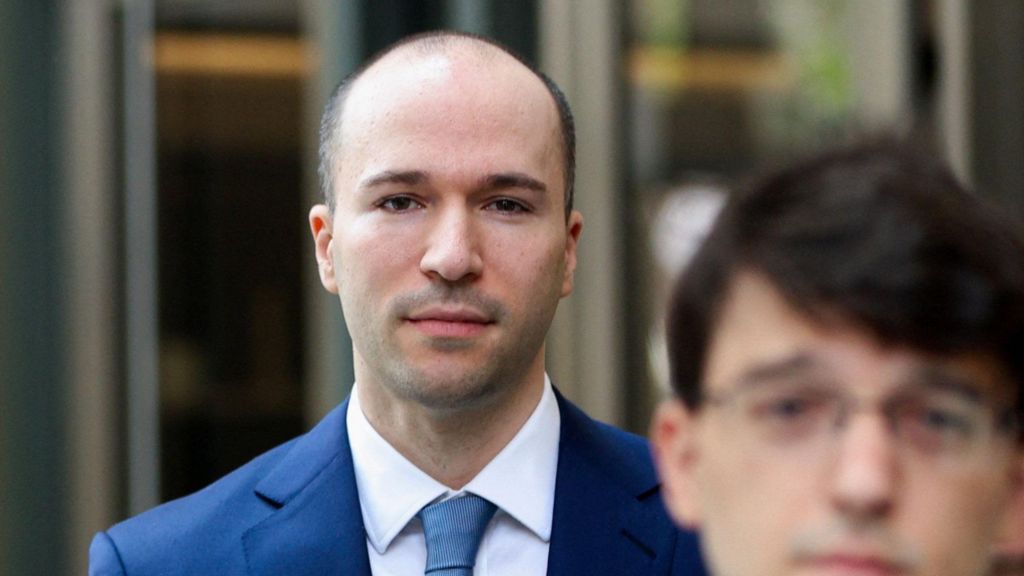
OAKLAND, Calif. — In dramatic testimony unfolding in a Northern California federal courtroom, OpenAI President and co-founder Greg Brockman has laid bare a tense 2017 confrontation with Elon Musk, the billionaire initial co-founder who is now locked in a bitter legal battle over OpenAI’s shift to a for-profit structure. The trial, which is scheduled to run a full month, entered its second week this week as the two sides clash over what Musk knew about OpenAI’s planned transition away from its original non-profit founding model.
Brockman, who is named as a defendant in Musk’s lawsuit seeking to roll back OpenAI’s corporate restructuring, told jurors that Musk began pushing aggressively to seize greater control of the startup just two years after its 2015 founding. The billionaire reportedly tried to court both Brockman and fellow early co-founder Ilya Sutskever to build support for his power grab, a courtship that Brockman described as systematic “buttering up.”
When Brockman rejected Musk’s proposal to expand the billionaire’s influence over the company, Brockman testified, Musk’s demeanor shifted suddenly and sharply. The confrontation grew so heated that Brockman told the jury “I actually thought he was going to hit me.” The meeting wrapped up immediately after the exchange, with Musk announcing he would cut off the financial backing he had provided to OpenAI since its launch.
Court documents introduced by OpenAI’s legal team included August 2017 text exchanges between Sutskever and Brockman that referenced the pressure campaign, with one message asking: “Will a model 3 make you be willing to accept massively unfavourable terms?”
The core of Brockman’s testimony has centered on a key point at the heart of the dispute: he confirmed that Musk was fully informed years ago of OpenAI’s long-term plans to adopt a for-profit structure to support massive capital needs for AI research. Founded as a non-profit entity, OpenAI later established a capped-profit subsidiary to raise billions in investor funding, and last year moved to reorient the entire company around its for-profit operations. Musk, who departed the OpenAI board in 2018, has argued the transition violates the founding agreement he helped craft, while OpenAI maintains all changes were done with Musk’s full knowledge.
Since leaving OpenAI, the startup has grown into one of the world’s most valuable technology firms, following the explosive mainstream success of its flagship product ChatGPT. Musk, who has become one of OpenAI’s most prominent public critics, launched his own rival AI startup xAI in 2023, directly competing with OpenAI’s dominant chatbot.
The next witness expected to take the stand is Shivon Zilis, a former OpenAI board member who is also the mother of four of Musk’s children. During his testimony, Brockman noted that Zilis remained on OpenAI’s board long after Musk left the company, saying “We trusted her to keep the Elon conflict under control.” Zilis departed the board in March 2023, just as Musk prepared to publicly launch xAI. Brockman also told jurors that when Zilis informed him she had given birth to twins years ago, he only learned Musk was the father from public reports, after which Zilis clarified the children were conceived via IVF and her relationship with Musk was entirely platonic.