标签: North America

北美洲

  • CNN founder Ted Turner dies at 87

    CNN founder Ted Turner dies at 87

    Ted Turner, the pioneering American media mogul who revolutionized global journalism by creating the world’s first 24-hour rolling cable news network CNN, has passed away at the age of 87, CNN confirmed in an official announcement.

    Turner’s entry into the media industry came long before the launch of CNN. After his father’s death, he took over the family’s already successful billboard business at a young age, before expanding into broadcasting with the purchase of an Atlanta, Georgia radio station. Over 10 years, that single small station grew into the foundation of Turner Broadcasting System (TBS), establishing Turner as one of the most powerful media figures in the United States.

    In 1980, Turner made his most iconic mark on media history, launching CNN as the world’s first channel dedicated entirely to nonstop, up-to-date news coverage. The new network faced early financial and operational struggles, but it quickly proved the value of its 24-hour news model through high-stakes breaking coverage. It delivered fast, continuous updates on the 1981 assassination attempt on U.S. President Ronald Reagan and the 1986 Challenger space shuttle disaster, cementing its reputation as a go-to source for breaking news. CNN reached a new milestone during the 1990-1991 Gulf War, when it became the first outlet to provide live, on-the-ground rolling coverage from Iraq. Its reporting was so respected that even President George H.W. Bush once acknowledged he learned more about global events from CNN than from the Central Intelligence Agency.

    CNN’s trailblazing success reshaped the entire global media industry, inspiring a wave of competing 24-hour news channels, including Rupert Murdoch’s Fox News, which launched in 1996. Beyond CNN, Turner built a sprawling television empire that included basic cable channels TBS and TNT, the classic film-focused Turner Classic Movies, and children’s entertainment staple Cartoon Network. His business career included a number of high-profile moves as well: a 1985 $1.5 billion acquisition of MGM film studios that ultimately proved unsuccessful, followed by purchases of major production houses Castle Rock Entertainment and New Line Cinema in the 1990s, before TBS merged with media giant Time Warner.

    Outside of media, Turner led a diverse public life. A world-class competitive sailor, he took home sailing’s most prestigious prize, the America’s Cup, in 1977. He also owned three major Atlanta professional sports teams: the Atlanta Braves Major League Baseball team, the Atlanta Hawks NBA basketball team, and the Atlanta Thrashers NHL ice hockey team. From 1991 to 2001, he was married to renowned American actress Jane Fonda.

    In a statement following Turner’s death, CNN Chairman and CEO Mark Thompson paid tribute to the network’s founder, calling him an intensely dedicated, intrepid leader who was never afraid to trust his own instincts. “He was and always will be the presiding spirit of CNN,” Thompson said. “Ted is the giant on whose shoulders we stand, and we will all take a moment today to recognize him and his impact on our lives and the world.”

  • NFL player Stefon Diggs found not guilty of attacking personal chef

    NFL player Stefon Diggs found not guilty of attacking personal chef

    NFL wide receiver Stefon Diggs has been cleared of all criminal charges stemming from allegations of assault by his former personal live-in chef, Jamila Adams, after a jury in Massachusetts reached a not guilty verdict following two days of deliberations. The 32-year-old veteran player, who became a free agent after being released by the New England Patriots in March 2024, had consistently denied the accusations of felony strangulation and misdemeanor assault, which were alleged to have occurred during a December 2, 2024 altercation. Adams accused Diggs of slapping and choking her during an argument, while prosecutors told jurors the dispute grew out of a romantic relationship between the two that had turned sour. Adams’ legal counsel ultimately acknowledged to the jury that his client had not been a completely reliable witness, though he still urged the panel to consider her testimony as valid, reporting from the Associated Press confirmed. Diggs’ defense team pushed back aggressively against the claims, framing the allegations as rooted in a non-violent financial disagreement rather than any physical attack. In post-verdict comments to media outlets, Diggs’ lead attorney Mitch Schuster highlighted what his team has argued is a common unfair trend facing high-profile professional athletes: opportunistic targeting for financial gain. “We were eager for the facts to come to light through the legal process,” Schuster stated in an official statement. “Professional athletes have a target on their back. When someone sees a uniform and a contract, they see leverage; they see a settlement. This case represents exactly the kind of opportunistic targeting that players can face the moment they step off the field.” The verdict closes a months-long legal process that has hung over Diggs’ professional future since he parted ways with the Patriots. The wide receiver joined New England in 2024 on a one-year deal worth up to $69 million, with $51 million guaranteed, but was released ahead of the 2025 offseason as he battled the legal claims. Now that the case has concluded, all attention has shifted to which NFL franchise will sign the free agent wide receiver, who has long been one of the league’s most productive offensive playmakers. A spokesperson for the NFL, Brian McCarthy, told ESPN that the league will continue reviewing the case under its official personal conduct policy, confirming that the organization had monitored the court proceedings throughout. It remains unclear whether the league will pursue any internal disciplinary action against Diggs following the acquittal, as the review process is still ongoing.

  • Moment former FedEx driver sentenced to death for killing Athena Strand

    Moment former FedEx driver sentenced to death for killing Athena Strand

    A high-profile child murder case has come to a dramatic conclusion, as a former FedEx delivery driver has been formally sentenced to death for the fatal killing of 7-year-old Athena Strand. The sentencing hearing, held in a packed courtroom, saw grieving family members speak publicly about the irreversible damage the young girl’s death has left on their tight-knit community and every person who loved her. In raw, emotional testimony before the court, the victim’s uncle addressed the court directly, stating that Athena’s murder has taken an irreplaceable piece of the soul from every single member of her family and circle of loved ones. The case, which drew widespread public attention across the nation after Strand’s disappearance in 2022, sparked renewed conversations about personal safety for children in residential areas and background check protocols for delivery workers interacting with the public. Throughout the legal proceedings, prosecutors laid out overwhelming evidence linking the former driver to the abduction and killing of the young girl, leading a jury to return a guilty verdict that cleared the way for the capital punishment sentence handed down this week. While capital punishment remains a divisive issue in the United States, the brutality of the crime and the young age of the victim has led many local residents to express support for the sentence. Family members have stated they hope the final ruling will bring a small measure of closure after months of overwhelming grief, even as they acknowledge no sentence can bring their beloved Athena back.

  • Trump pauses Hormuz plan 50 hours after he announced it – what happened?

    Trump pauses Hormuz plan 50 hours after he announced it – what happened?

    In a stunning political reversal that has sent ripples across global energy and diplomatic circles, US President Donald Trump has announced a pause to his highly publicized ‘Project Freedom’ — a mission designed to escort stranded commercial ships through the blocked Strait of Hormuz — just 48 hours after formally launching the operation. The abrupt shift in policy comes amid a fragile backdrop of escalating regional conflict sparked by the US-Israel war with Iran, which has seen Tehran effectively close off one of the world’s most critical energy chokepoints. The strait, which carries roughly 20% of global oil and gas supplies, has been the center of growing tensions after Iran issued threats to transiting vessels, sending global crude prices soaring and stoking widespread fears of a catastrophic hit to the already fragile global economy.

    The chain of events unfolded rapidly over 48 hours, starting when Trump first announced the operation on his Truth Social platform at 21:35 BST on Sunday. In his initial post, the president framed the mission as a humanitarian gesture, writing: “For the good of Iran, the Middle East, and the United States, we have told these Countries that we will guide their Ships safely out of these restricted Waterways, so that they can freely and ably get on with their business.” He added that he had instructed US representatives to work to ensure the safety of all ships and crews trapped in the region, where the Baltic and International Maritime Council estimates roughly 1,000 vessels carrying 20,000 seafarers remain stranded. Trump announced the operation would kick off “Monday morning Middle East time,” noting that ongoing diplomatic talks with Iran were progressing positively and could lead to a breakthrough agreement for all parties.

    Shortly after midnight UK time on Monday, US Central Command (Centcom) confirmed the operation was underway, releasing details of the massive military deployment assembled for the mission: guided-missile destroyers, more than 100 land and sea-based aircraft, and 15,000 active-duty service members. UK maritime security agency UKMTO also confirmed that US officials were advising commercial vessels to transit through a secured corridor off the coast of Oman. By later that day, Centcom announced the first milestone of the mission: two US-flagged merchant ships had successfully completed transit through the strait and were continuing on their routes.

    Tensions flared quickly, however, as competing claims emerged over a reported strike on Iranian boats. Trump claimed that US forces had destroyed seven Iranian fast boats in the strait during the operation’s first day, but Iranian state media outlet Tasnim disputed the account. The outlet instead reported that US strikes had hit two small civilian cargo vessels, killing five civilian seafarers. The same day brought a wave of additional attacks across the region: an Adnoc-affiliated oil tanker owned by the United Arab Emirates was hit in the strait, a South Korean-flagged vessel anchored off the UAE coast suffered an explosion, and a fire broke out at the key Fujairah oil port following what the UAE called an Iranian strike — a claim Iran quickly denied.

    On Tuesday, top US defense officials doubled down on their commitment to the mission during a press briefing at the Pentagon. Defense Secretary Pete Hegseth told reporters that “hundreds more ships from nations around the world are lining up to transit,” and emphasized that “Project Freedom is under way, commerce will be flowing, and America is once again leading with strength, clarity and purpose for the benefit of the entire world. Our will is unshakable.” Chairman of the Joint Chiefs General Dan Caine added that the military expected more vessels to complete transits in the coming days, though neither official provided a clear timeline for how long the operation would continue. Secretary of State Marco Rubio echoed the administration’s confident tone at a separate White House briefing, framing the operation as a global public good, saying the US was acting as a “favour to the world” because it remained “the only country that can project power in that part of the world the way we’re doing now.”

    Just hours after these bold public statements, Trump upended the entire mission. At 18:52 Washington time, he posted another announcement on Truth Social: the entire operation would be paused “for a short period of time.” The president framed the pause as a mutual agreement reached with Iran, citing “great progress” in ongoing diplomatic talks aimed at finalizing a new deal. He wrote: “Project Freedom (The Movement of Ships through the Strait of Hormuz) will be paused for a short period of time to see whether or not the Agreement can be finalized and signed.”

    The sudden reversal came just hours after another attack: a French-owned CMA CGM container ship was hit in the strait, leaving multiple crew members injured and the vessel heavily damaged. Even before the pause, the global shipping industry had expressed deep skepticism of the mission. Shipping industry publication Lloyd’s List reported that ship owners and marine insurers said Project Freedom had failed to provide “sufficient clarity or credible protection to justify resuming transits” through the strait. As of the announcement, transit volumes through the strategic waterway continue to fall as security concerns escalate across the region.

  • Former FedEx driver sentenced to death for killing seven-year-old Texas girl

    Former FedEx driver sentenced to death for killing seven-year-old Texas girl

    More than two and a half years after 7-year-old Athena Strand was abducted and killed while her Christmas gift was being delivered to her North Texas home, her family has received a final legal ruling in the case that has shaken the nation. On Tuesday, a Texas jury handed down a death sentence to 25-year-old Tanner Horner, the former delivery driver who admitted to the brutal capital crime. The guilty plea from Horner came earlier this year, as his trial got underway, where he formally confessed to charges of capital murder and aggravated kidnapping. The weeks-long sentencing phase concluded with jurors selecting the harshest available punishment over the alternative of life imprisonment without the possibility of parole.

    The details of the crime that emerged during court proceedings have added to the collective horror surrounding the case. On November 30, 2022, Horner arrived at the Strand family’s property near Fort Worth to drop off the little girl’s holiday gift: a box of Barbie dolls. Instead of completing the delivery, he kidnapped Athena, and two days later, her body was discovered just a short distance from her home. During the sentencing trial, jurors were forced to listen to a disturbing audio recording capturing the young victim’s final moments inside Horner’s delivery van, a piece of evidence that underscored the brutality of the crime. When the death sentence was read aloud by the judge, court video footage captured Horner showing absolutely no visible reaction to the verdict. He is scheduled to be executed via lethal injection at a date yet to be confirmed, in the early morning hours before sunrise.

    In the moments after the verdict was announced, Athena’s uncle, Elijah Strand, addressed the perpetrator directly in court, laying bare the irreversible damage his actions caused the entire family. “There are no words that truly capture the devastation that Tanner Horner caused us and our family,” he told reporters outside the courthouse. Speaking directly to Horner during proceedings, he added: “You destroyed a family. You will feel the wrath of God.” He emphasized that the family will forever honor Athena’s memory while Horner will be forgotten, saying: “I want you to know that you are nothing. You are a footnote in Athena’s story. Her name will forever be remembered, her name will forever be celebrated, and everyone will forget you.”

    Beyond the criminal case, a separate civil lawsuit has been filed by the Strand family against Horner, global delivery giant FedEx, and Big TopSpin Inc., the independent logistics contractor that hired Horner to complete deliveries for FedEx. The suit alleges that both companies failed to complete a required background check on Horner before putting him behind the wheel for residential deliveries, a negligent act that the family argues allowed the crime to occur. In the immediate aftermath of the 2022 murder, a FedEx spokesperson told U.S. media outlets that the company was aware of the pending litigation and extended its sympathies to the grieving family, saying “Our thoughts remain with the family of Athena Strand in the wake of this tragedy.” The BBC has reached out to FedEx for an updated statement following Tuesday’s sentencing, while Big TopSpin Inc. has not responded to multiple requests for comment and has not issued any public statement on the case since the murder.

  • Massive Alaska megatsunami was second largest ever recorded

    Massive Alaska megatsunami was second largest ever recorded

    In August 2025, a catastrophic natural event unfolded in a remote Alaskan fjord that has now emerged as a stark warning about the growing dangers of climate change in glacial regions. A massive section of a mountainside near South Sawyer Glacier in Tracy Arm Fjord, southeast Alaska, collapsed into the water following a series of minor seismic events, triggering a near-500-meter-tall megatsunami – the second such event ever recorded in human history, and the second massive megatsunami to strike Alaskan waters after the 1958 Lituya Bay disaster that claimed the top spot.

    New analysis published in the peer-reviewed journal *Science* has laid bare the full scale of the collapse, which saw an estimated 64 million cubic meters of rock plunge into the fjord in less than 60 seconds. To put that volume in perspective, the mass of rock that fell is equal to 24 of Egypt’s iconic Great Pyramids of Giza. The sheer force of the impact sent the enormous wave surging through the narrow, cliff-lined fjord, leaving a trail of widespread destruction in its path. Uprooted trees were scattered across mountainsides and hurled into the ocean, while large swathes of the shoreline were stripped bare of all soil and vegetation, leaving exposed, scarred rock in their wake.

    Remarkably, what made this event even more extraordinary was how close it came to causing mass casualties among tourists. Tracy Arm Fjord is one of Alaska’s most popular cruise ship destinations, drawing thousands of visitors every summer who come to witness the region’s dramatic glacial landscapes and icy scenery. Crucially, the landslide and subsequent megatsunami struck in the early hours of the morning, when no cruise ships were transiting the fjord. Researchers describe the outcome as a catastrophic close call that could have ended very differently.

    “We know that there were people that were very nearly in the wrong place,” said Dr. Bretwood Higman, an Alaskan geologist who led on-site fieldwork after the event. “I’m quite terrified that we’re not going to be so lucky in the future.”

    Unlike the more widely known open-ocean tsunamis triggered by large underwater earthquakes – such as the 2011 Japan tsunami that traveled thousands of miles and devastated coastal communities – megatsunamis are triggered when large volumes of rock or debris slide into enclosed bodies of water like fjords. These events are typically localized and dissipate much more quickly than open-ocean tsunamis, but they can produce waves hundreds of meters high that cause immediate, devastating destruction in the affected area.

    Alaska is already uniquely vulnerable to these events thanks to its combination of steep mountain slopes, narrow glacial fjords, and frequent seismic activity. But the new research confirms what many earth scientists have long suspected: climate change-driven glacier melt is drastically increasing the risk of these catastrophic rock collapses and subsequent megatsunamis.

    By combining on-site field surveys, seismic monitoring data, and high-resolution satellite imagery, the research team was able to reconstruct the full chain of events that led to the 2025 disaster. Dr. Stephen Hicks, a researcher at University College London and co-author of the study, explained that retreating glaciers had long acted as a natural support structure for unstable cliff faces. “The glacier was previously helping to hold up this piece of rock, and so when the ice retreated, it exposed the bottom of the cliff face, allowing that rock material to suddenly collapse into the fjord,” he said.

    Hicks and his colleagues, who have studied Alaskan tsunami hazards for decades, warn that the risk of future events is growing alongside increasing human activity in these remote, dangerous landscapes. “More people are now going to remote areas – often these tourist cruises are going to see the natural beauty of the area to actually learn more about climate change – but they are also dangerous places to be,” he noted.

    Dr. Higman’s research confirms that the frequency of these events is rising far faster than many expected. “At this point, I’m pretty confident that these are increasing not just a little bit, but increasing a lot,” he said. “Maybe in the order of 10 times as frequent as they were just a few decades ago.”

    In response to the new findings and growing safety concerns, the scientific community is calling for expanded hazard monitoring systems across all high-risk regions of Alaska. Already, some major cruise companies have announced they will reroute ships away from Tracy Arm Fjord indefinitely, amid ongoing fears of another catastrophic event.

  • The Summer I Turned Pretty fans asked to stop visiting film set

    The Summer I Turned Pretty fans asked to stop visiting film set

    One of Prime Video’s biggest breakout hit series of recent years is wrapping up its run with a feature-length conclusion — but the massive, passionate fanbase that turned *The Summer I Turned Pretty* into a global phenomenon is now creating unexpected headaches for its production team.

    In an official public statement posted across social media channels, the creative team behind the coming-of-age romantic drama has urged fans to immediately stop visiting active filming locations and leaking on-set footage online, citing legitimate safety risks and constant disruptions to the production process.

    “We absolutely love how excited you are for this final chapter, but sharing unconfirmed location details and turning up on set derails our filming schedule,” the team explained in the post. The statement comes after dozens of unofficial clips purporting to show lead cast members on set have circulated widely across TikTok, Instagram, and other social platforms, with some short videos racking up hundreds of thousands of views in just days.

    To deliver a polished, seamless final product, the production team says they have worked for months to build a controlled, private production environment, calling this “protected bubble” critical to crafting the conclusion fans deserve. Jenny Han, the best-selling author who originally wrote the *The Summer I Turned Pretty* trilogy and is returning to write and direct the upcoming final film, echoed the team’s request in a post to her own Instagram Story.

    Han explained that overenthusiastic fan visits have forced production to repeatedly pause filming to clear crowds from shooting setups, breaking crew focus and throwing carefully planned shooting schedules off track. “This story means more to me than I can say, and I know it means just as much to all of you,” she wrote.

    First launched on Prime Video in 2022, *The Summer I Turned Pretty* quickly became a cultural juggernaut, drawing millions of viewers worldwide with its tender coming-of-age story and addictive love triangle at its core. The series follows Isabel “Belly” Conklin, played by rising star Lola Tung, as she navigates young adulthood and a years-long romantic connection with brothers Conrad and Jeremiah Fisher, portrayed by Christopher Briney and Gavin Casalegno. The show’s central romantic dynamic even spawned an internet-wide cultural divide, with passionate “Team Conrad” and “Team Jeremiah” factions that have occasionally spilled over into targeted harassment of cast members amid heated debates.

    At the peak of its third season run last year, *The Summer I Turned Pretty* claimed the title of Prime Video’s most-watched series in the United Kingdom, and hit the number one streaming spot in more than 120 countries around the globe, cementing its status as one of the platform’s most successful original series. This is not the first time production has been forced to rein in fan behavior, either: ahead of the third season’s emotional climax last year, creators issued a similar plea asking fans to “act normal online” after cast members faced sustained online abuse tied to plot developments.

    While the series is set at the iconic fictional Cousins Beach, on-location filming primarily takes place across coastal towns in North Carolina. Plot details for the upcoming feature film remain tightly under wraps, but Amazon MGM Studios has confirmed it will serve as the definitive final chapter closing out Belly’s coming-of-age journey, with all core lead cast members set to reprise their roles for the feature-length conclusion.

  • DeChambeau to focus on YouTube if LIV Golf fails

    DeChambeau to focus on YouTube if LIV Golf fails

    The future of the controversial breakaway golf circuit LIV Golf hangs in the balance after Saudi Arabia’s Public Investment Fund (PIF) confirmed it will end its multi-billion-dollar financial backing by the close of 2024, leaving one of the league’s biggest stars, two-time U.S. Open champion Bryson DeChambeau, mapping out an alternative path centered on digital content creation. The 32-year-old American, who claimed the 2020 and 2024 U.S. Open titles, recently pushed back on recent speculation that he planned to exit LIV before his current contract expires at the end of the season, dismissing those reports as “completely untrue.”

    Speaking to ESPN ahead of this week’s LIV Golf tournament hosted at Trump National Golf Club, DeChambeau opened up about his backup plan if the league fails to secure new funding to survive beyond 2024. He revealed that he intends to prioritize scaling up his popular YouTube channel, with ambitious goals to grow its audience threefold or even more by adding multi-language dubbing to make his content accessible to a global audience. Beyond digital expansion, the golfer said he would only continue competing in professional tournaments that actively invite his participation.

    DeChambeau’s current contract with LIV is set to expire at the end of the 2024 season. Prior to PIF’s bombshell announcement that it would withdraw funding, he was in talks to sign a highly lucrative new extension, with industry reports indicating he was seeking a $500 million deal to remain with the breakaway league. The two-time major winner admitted that the PIF’s decision came as a complete surprise; he had been under the impression the fund would back LIV Golf through to 2032. To date, he says he has received no direct communication from PIF leadership addressing the funding pullout, noting simply that “things are moving on in a different direction.”

    Launched in 2022, LIV Golf sent shockwaves through the professional golf world when it lured dozens of top-ranked players away from the established PGA Tour with the promise of enormous appearance fees and prize purses, creating a bitter divide that has defined men’s professional golf for the past two years. DeChambeau was one of the most high-profile golfers to make the jump to LIV in 2022, and earlier this year he rejected an opportunity to rejoin the PGA Tour through the circuit’s returning member program.

    DeChambeau argued that the ongoing rift in professional golf could be resolved if all parties set aside their personal interests and egos to work toward growing the sport on a global scale. “Everybody needs to come in with a level-headed playing field, with an opportunistic mindset to grow the game of golf. That’s why I came over here. That’s why I do what I do on YouTube,” he explained. LIV Golf’s current leadership is now actively searching for alternative private investment to keep the league operating, as it transitions to governance under a newly established independent board.

  • Trump says US to pause operation to guide vessels through Strait of Hormuz

    Trump says US to pause operation to guide vessels through Strait of Hormuz

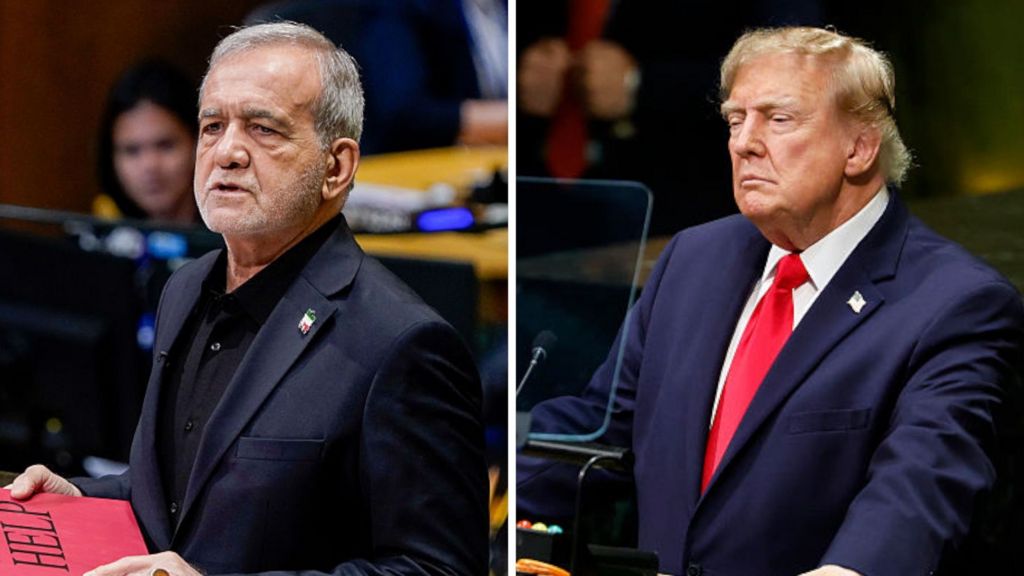
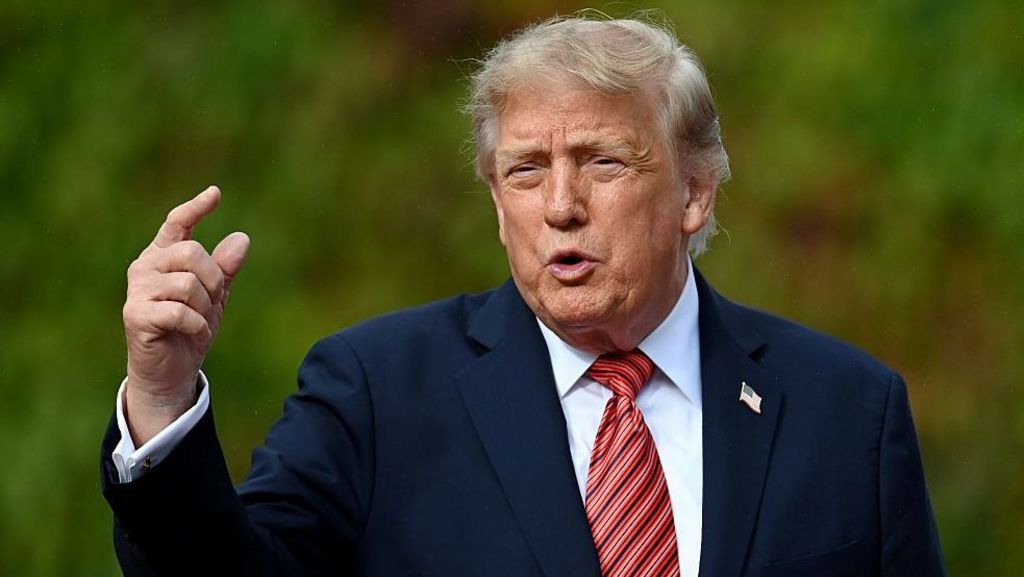
    In a sudden announcement Tuesday evening, former President Donald Trump disclosed that the United States will suspend its recently launched operation to escort stranded commercial vessels through the strategically critical Strait of Hormuz for a temporary period. Codenamed Project Freedom, the maritime security initiative launched just days earlier will be halted by mutual agreement between Washington and Tehran, Trump said, citing significant headway toward a new negotiated agreement with Iran.

    Iranian state media has framed the pause as a clear strategic victory for Tehran, framing the decision as a forced retreat for Trump following repeated failures to force the Strait of Hormuz, a vital chokepoint for global energy supplies, to reopen unilaterally. The announcement came concurrently with a statement from US Secretary of State Marco Rubio confirming that Operation Epic Fury, the opening joint US-Israeli air offensive against Iran launched in late February, has concluded after meeting all its stated military objectives.

    Trump took to social media to clarify that the decision to pause Project Freedom came at the request of Pakistan, which has served as a neutral diplomatic intermediary between Washington and Tehran throughout the recent escalation. He emphasized that the existing US economic and naval blockade of Iranian ports will remain in place, keeping the core pressure campaign against Iran intact.

    The sudden reversal caught many observers off guard, as it directly contradicted messaging from top US administration officials just 24 hours earlier. Secretary of Defense Pete Hegseth, Joint Chiefs of Staff Chairman Gen. Dan Caine, and Rubio himself had all publicly pledged just one day prior that Project Freedom would continue until full freedom of navigation was restored to both the Strait of Hormuz and the broader Persian Gulf. Speaking to reporters Tuesday, Rubio acknowledged the administration’s preference for a diplomatic settlement, noting “We would prefer the path of peace. What the president would prefer is a deal.”

    The future trajectory of the standoff remains deeply uncertain. The Trump administration has repeatedly stressed that Project Freedom was a separate, independent initiative from the ongoing port blockade, which is designed to squeeze Iran’s economy into making concessions. The core goal of Project Freedom was to guide dozens of stranded commercial vessels out of the Persian Gulf and reopen the waterway to regular global trade, a move intended to ease pressure on energy markets and stabilize the global economy. If the temporary pause sees shipping companies and their maritime insurers continue to face interference from Iranian authorities, Trump will struggle to claim the operation achieved its core goals. On the other hand, administration insiders have suggested that pausing the initiative — which Tehran strongly condemned as a violation of its territorial sovereignty — could be a confidence-building measure to lure Iranian negotiators back to the bargaining table.

    Rubio’s Tuesday statement followed a sharp uptick in tit-for-tat clashes that had stoked widespread fears that the months-long US-Iran ceasefire was on the brink of collapse. On Monday, the United Arab Emirates (UAE) reported that its air defense systems had intercepted Iranian missiles and drones for the second consecutive day, including an alleged strike on an oil export terminal in the Emirate of Fujairah, located just outside the Strait of Hormuz. The UAE called the incident a “dangerous escalation” of regional tensions. Iran issued a flat denial of any involvement in attacks on the UAE Tuesday, with a military spokesperson stating “If such an action had been taken, we would have announced it firmly and clearly.”

    Late Tuesday, the UK Maritime Trade Operations (UKMTO) agency confirmed that a verified source had reported a commercial cargo vessel was hit by an “unknown projectile” in the Strait of Hormuz. No additional details on the vessel, crew, or extent of damage were immediately released.

    The current crisis traces back to February 28, when the US and Israel launched Operation Epic Fury, a large-scale wave of air strikes across Iranian military and infrastructure targets. In direct response, Tehran blocked all commercial transit through the Strait of Hormuz, the waterway through which roughly 20 percent of the world’s daily oil and liquefied natural gas supplies pass. A ceasefire was brokered between the two sides in early April, under which Iran agreed to halt all drone and missile strikes on Gulf Arab states including the UAE. Despite the ceasefire agreement, very few commercial vessels have been able to transit the strait in the months since, and the US maintained its own naval blockade of Iranian ports in parallel.

    Clashes flared again just one day before Trump’s announcement. The US said it had destroyed seven Iranian fast attack craft operating in the strait, while Iran claimed it had fired warning shots at a US naval vessel. Both sides rejected the other’s claims. Two separate commercial vessels reported coming under attack Monday, while one confirmed it had successfully exited the strait under US military escort as part of Project Freedom.

    Speaking to reporters Tuesday, Rubio warned that Iran had so far rejected the path of negotiation, adding “What that may lead to in the future is speculative.” He claimed the joint US-Israeli air strikes had inflicted “generational destruction to their [Iran’s] economy” and urged Iranian leaders to “check themselves before they wreck themselves in the direction that they’re going.”

    For his part, Hegseth stressed that the existing ceasefire with Iran remains in effect, telling reporters “Right now the ceasefire certainly holds, but we’re going to be watching very, very closely.” Gen. Caine added that while Iran had carried out 10 separate attacks on US forces since the ceasefire went into effect, all had been “below the threshold” required to resume full-scale hostilities “at this point.”

    When asked by reporters what actions by Iran would constitute a ceasefire breach, Trump simply replied “You’ll find out because I’ll let you know.” The president reaffirmed his belief that a negotiated settlement to end the standoff is still achievable.

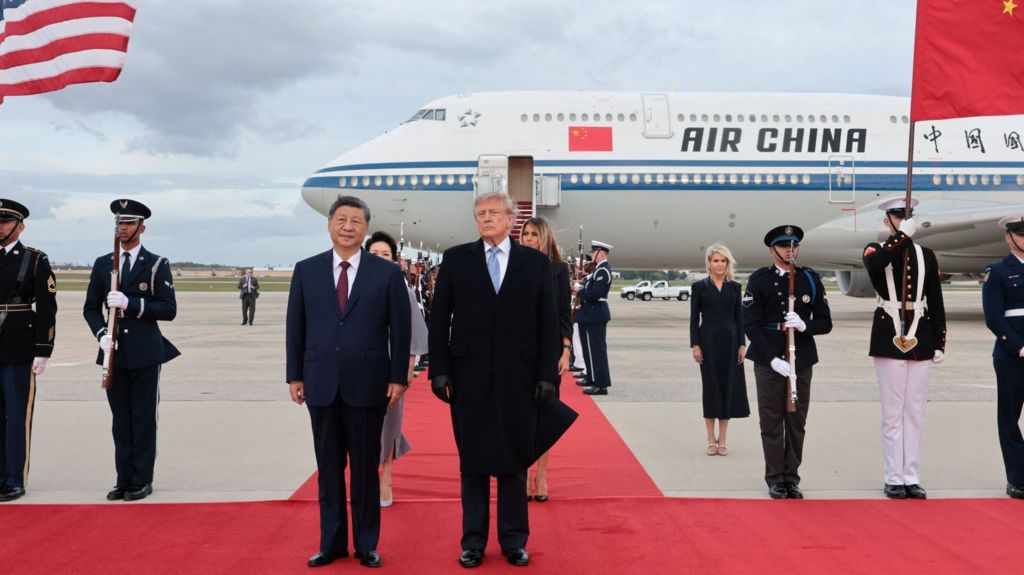
    The conflicting messaging from senior US administration officials points to a broader reluctance within Washington to resume large-scale military operations, a move that would roil already fragile global energy markets, send oil prices skyrocketing, and face strong opposition from a large majority of the American public. Trump also confirmed that he is currently consulting with Japanese leaders on the strait reopening and expects to hold a constructive discussion on the issue with Chinese President Xi Jinping during his upcoming visit to China next week.

    Iran’s parliamentary speaker Mohammad Ghalibaf, who also served as Tehran’s lead negotiator in last month’s US-Iran talks, struck a defiant tone in comments earlier Tuesday. “We know well that the continuation of the status quo is intolerable for America, while we are just getting started,” Ghalibaf said. He blamed the United States and its allies for undermining shipping and energy security through ceasefire violations and the ongoing blockade, adding “However, their evil acts will fail.”

  • Researchers discover where coyote who made epic swim to Alcatraz really came from

    Researchers discover where coyote who made epic swim to Alcatraz really came from

    A male coyote that captured national attention after reaching California’s Alcatraz Island by swimming across San Francisco Bay has upended researchers’ initial assumptions about his journey, with new DNA analysis revealing the animal swam nearly twice the distance experts originally estimated. The coyote’s unexpected January arrival on the site of the infamous former federal prison marked the first confirmed coyote sighting on Alcatraz in more than five decades, leaving both scientists and visiting tourists stunned.

    When the sighting was first reported, wildlife specialists assumed the coyote had set out from the city of San Francisco, a crossing of just over one mile. But new genetic testing completed on samples collected from the animal has traced his origins to Angel Island State Park, a full two miles away from Alcatraz, the National Park Service (NPS) announced in a public statement Monday. To date, the coyote’s current location remains entirely unconfirmed, despite weeks of targeted monitoring.

    National Park Service wildlife ecologist Bill Merkle noted that the team’s working hypothesis had long centered on a shorter crossing from San Francisco, due to the obvious reduced physical challenge of that route. “We couldn’t help being impressed by his accomplishment in making it to Alcatraz,” Merkle said in the release. “Coyotes are known to be resilient and adaptable, and he certainly demonstrated those qualities.”

    The extraordinary crossing was first captured on camera by tourists in late January, whose footage of the coyote pushing through cold, choppy Bay waters to reach Alcatraz’s shore surprised both researchers and local San Francisco residents. The animal quickly gained a fanbase online, with many people dubbing him “Floyd,” a nod to the fictional getaway driver for iconic outlaws Bonnie and Clyde.

    Shortly after the sighting, NPS officials set up a network of camera traps and audio recorders across Alcatraz to track the coyote’s movements. Officials also began planning efforts to capture and relocate the animal over concerns that the predator would prey on the island’s vulnerable native seabird colonies. To confirm the coyote’s origin, researchers collected track measurements and samples of the animal’s scat, which were sent for genetic analysis at the University of California, Davis. The lab results confirmed the coyote belonged to a well-documented coyote population already established on Angel Island, confirming his 2-mile starting point for the epic swim.

    The NPS’s release, headlined “Alcatraz Coyote Wasn’t a City Boy After All,” also noted that the San Francisco Bay Area is home to three separate, genetically distinct coyote populations, a testament to the species’ widespread adaptability across urban and wild landscapes. Despite weeks of intensive monitoring across Alcatraz, the coyote has not been spotted since the initial tourist sighting, and officials no longer believe he remains on the island.

    “We don’t know what happened to the coyote,” Merkle said. “But he proved himself an expert swimmer to get to Alcatraz, and I hope he made a successful swim back home to Angel Island.” Coyotes, which are native North American canids closely related to wolves, have spread across nearly the entire continental United States, and are now commonly spotted even in urban green spaces and upscale residential neighborhoods across San Francisco.

    In a separate recent development tied to Alcatraz, the island long nicknamed “The Rock” for its reputation as an unescapable maximum-security fortress made headlines again this spring when the Trump administration proposed a $152 million budget allocation to lawmakers that would fund rebuilding the shuttered penitentiary and reopening it as a modern high-security prison for the country’s most dangerous incarcerated people. The request covers the first year of construction costs for the project.