标签: North America

北美洲

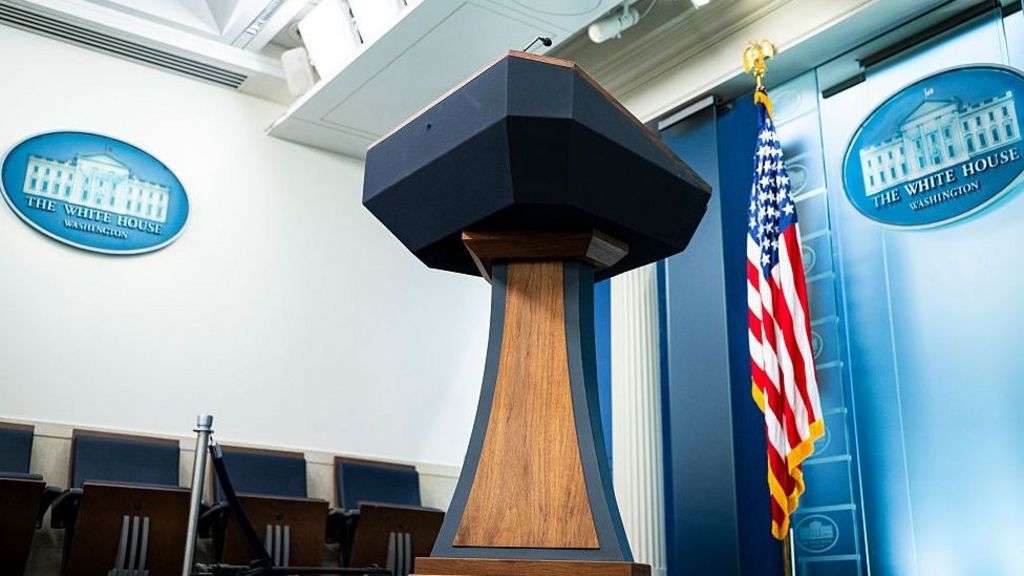
  • White House Press Secretary Karoline Leavitt announces birth of baby girl

    White House Press Secretary Karoline Leavitt announces birth of baby girl

    White House Press Secretary Karoline Leavitt has shared joyful personal news with the public via an Instagram post: she welcomed her second child, a daughter named Viviana, into her family on May 1. Leavitt, who has served in her top communication role for the Trump administration since President Donald Trump returned to office last year, opened up about the new addition in her social media announcement.

    “On May 1st, Viviana aka ‘Vivi’ joined our family, and our hearts instantly exploded with love,” Leavitt wrote in the post. She added that the newborn is perfectly healthy, and that her 2-year-old older brother Nicholas, nicknamed Niko, has been adjusting happily to life with his new baby sister. “We are enjoying every moment in our blissful newborn bubble,” she said.

    This is Leavitt’s second child with her husband Nicholas Riccio; Niko will turn two in July. Leavitt first stepped away from her White House duties in April to begin maternity leave, but made an exception to briefly return to the press room after a shooting took place at the April 24 White House Correspondents’ Dinner, to update reporters on the developing situation. Since Leavitt started her leave, senior Trump administration officials have been filling in to lead the regular press briefings.

    Earlier this week, Secretary of State Marco Rubio stepped into the briefing room to lead the daily press session. Rubio lightheartedly described the session as chaotic at points, and joked that he did not know most reporters by name, a stark contrast to Leavitt’s regular role. As of now, the White House has not confirmed how long Leavitt’s maternity leave will last, leaving uncertainty around when she will return to lead regular briefings full-time.

  • US judge releases Jeffrey Epstein’s purported suicide note

    US judge releases Jeffrey Epstein’s purported suicide note

    Nearly seven years after disgraced convicted sex offender Jeffrey Epstein died in federal custody ahead of his pending sex trafficking trial, a federal judge has ordered the public release of a short, handwritten document long claimed to be an unsigned suicide note left by Epstein.

    The document, which was unsealed Wednesday following a legal push from media organizations and federal prosecutors, runs just seven lines. It claims that a months-long investigation into Epstein’s activities uncovered no evidence of wrongdoing, with the writer stating: “They investigated me for month – FOUND NOTHING!!!” The note also reflects a fatalistic acceptance of impending death, writing that “it is a treat to be able to choose one’s time to say goodbye,” and concludes with “NO FUN – NOT WORTH IT.”

    The origin of the document traces back to an alleged 2019 suicide attempt by Epstein, one month before he was found dead in his Manhattan jail cell. Nicholas Tartaglione, a former New York police officer who was Epstein’s cellmate at the time and is currently convicted of four counts of murder, has claimed he found the note tucked into a book in the shared cell after the attempt. Tartaglione first publicly revealed the note’s existence during a podcast appearance in 2023, and the document had been placed under seal as part of Tartaglione’s ongoing criminal proceedings.

    Multiple independent outlets including the BBC have not been able to independently verify that Epstein actually wrote the note, and the U.S. Department of Justice (DOJ) has not issued any official confirmation of its authenticity. When contacted by the BBC for comment on the unsealing, the DOJ did not immediately issue a response. A DOJ spokesperson previously told NBC News that department officials had not examined the note, noting that the agency has already undertaken “exhaustive effort” to declassify and release millions of pages of other court records tied to the Epstein case in recent months.

    The push to unseal the document was led by The New York Times, which filed a formal petition to Judge Kenneth M. Karas, the federal judge overseeing the case in White Plains, New York, arguing that there was no legitimate legal justification to keep the note hidden from public view. Federal prosecutors also backed the release, arguing that Tartaglione’s repeated public comments about the note eliminated any need to maintain its sealed status, and that these disclosures constituted a formal waiver of any privilege that would justify continued sealing.

    In his written order approving the unsealing, Judge Karas ruled that the document is subject to the longstanding legal presumption of public access to court records. “The Court comfortably concludes that public access to the Note promotes ‘a measure of accountability’ as well as ensures that the public will ‘have confidence in the administration of justice,’” Karas wrote. He also agreed that Tartaglione’s ongoing public discussion of the note waived any attorney-client privilege that could have protected the document from release, leaving no legal basis to keep it sealed.

    Epstein’s 2019 death, which official investigations ruled a suicide, has been the source of widespread public speculation and conspiracy theories ever since it occurred. A federal investigation after his death confirmed multiple serious security failures at the federal correctional facility where he was being held on the night of his death, and lingering questions about the circumstances of his death have kept public interest in the case alive for years. The release of this note is unlikely to resolve those open questions, as its brevity and unconfirmed origin leave its meaning and authenticity open to interpretation.

  • Driver arrested after chasing down child cyclist on footpath

    Driver arrested after chasing down child cyclist on footpath

    A frightening incident that unfolded on a public footpath in Washington State has resulted in the arrest of a driver, after video footage documented the individual chasing a young child riding a bicycle through the pedestrian space.

    Local law enforcement confirmed that the alarming encounter was captured on camera by a witness, showing the driver deliberately moving their vehicle onto the dedicated footpath – an area designed exclusively for walkers and non-motorized users – before pursuing the 10-year-old boy who was cycling along the route. The grainy but clear footage shows the young cyclist swerving to avoid the oncoming car, pedaling frantically to escape the advancing vehicle as the driver continues the pursuit through the path, which runs alongside a busy residential street in the suburban community.

    Witnesses who were present at the scene on Wednesday afternoon reported that multiple bystanders called 911 immediately after observing the incident, with several attempting to intervene to protect the child before the driver brought their vehicle to a stop. Local police arrived at the location within minutes, taking the driver into custody without further incident. The child was evaluated by emergency medical responders at the scene and did not sustain any physical injuries, though he was reported to be visibly shaken by the terrifying encounter.

    Authorities have not yet released a public motive for the chase, nor have they shared details of any prior connection between the driver and the child or his family. The driver is currently being held at a local county detention center, with charges pending as law enforcement completes their investigation into the incident.

    Community leaders in the area have issued statements calling for greater safety oversight of pedestrian footpaths, which are frequently used by local children cycling to school and families out for walks. “This is a reminder that even our quietest, most seemingly safe public spaces can become sites of danger,” said a local city council representative in a press briefing following the arrest. “We are reviewing our safety protocols to ensure that incidents like this do not happen again, and we are prioritizing support for the child and his family as they process this frightening experience.”

  • Looksmaxxing influencer Clavicular charged over alleged alligator shooting

    Looksmaxxing influencer Clavicular charged over alleged alligator shooting

    A prominent 20-year-old social media influencer known to millions of followers as Clavicular has been hit with criminal charges tied to an alleged alligator shooting captured live on camera in Florida’s Everglades, adding to a growing list of legal troubles for the creator behind the extreme ‘looksmaxxing’ trend.

    Braden Eric Peters, the creator’s legal name, faces a charge of unlawful firearm discharge at a protected wildlife sanctuary, stemming from the 26 March incident. Two additional co-defendants have also been charged in connection with the event, according to records from Miami-Dade County courts.

    Court filings outline that the alleged incident was broadcast live to Peters’ online audience, with footage showing multiple rounds fired from an airboat into the swamp waters of the Everglades Wildlife Management Area, located west of Miami. Shortly after the stream went live, the Florida Fish and Wildlife Conservation Commission confirmed it had launched an investigation into circulating footage showing individuals aboard an airboat firing at an alligator within the protected ecosystem. Neither the commission’s public statement nor court documents have explicitly confirmed that the video in question is Peters’, nor have they confirmed whether an alligator was injured or killed during the incident.

    The BBC reached out to Peters’ legal team for additional comment on the charges, while multiple U.S. media outlets have published a statement from his attorneys claiming Peters was acting on the direct instructions of a licensed airboat guide during the excursion, and that no people or animals were harmed over the course of the incident. Charges were formally filed against Peters and his two co-defendants just three days after the incident, on 29 March.

    Under Florida state law, the charge of unlawful firearm discharge in a public protected area carries a maximum penalty of up to one year in county jail and a $1,000 fine. This is not the first legal run-in for Peters this year: he was arrested separately in South Florida earlier in March on battery charges, accused of inciting a physical fight between two women via social media before posting footage of the altercation to his own channels.

    Peters has built a massive online following across major platforms including TikTok, Instagram, and streaming site Kick, where his extreme ‘looksmaxxing’ content—content focused on drastic, often dangerous measures to alter and improve physical appearance—regularly earns millions of views. His brand of extreme looksmaxxing, which he calls ‘hardmaxxing’, has included documented use of anabolic steroids and testosterone, as well as the dangerous practice of striking his own face with a hammer to reshape his jawline. Medical experts have repeatedly spoken out against this extreme form of looksmaxxing, warning that it causes permanent physical damage and has no credible scientific evidence to back up its claimed cosmetic benefits.

    Following the earlier battery charges, video platform YouTube terminated two of Peters’ channels on its site, cutting off one major source of his audience reach. Most recently, just last month, Peters was rushed to a local hospital after he collapsed during a live stream from a Miami nightclub, adding another high-profile incident to the string of controversies surrounding the influencer.

  • In ‘Musk v Altman’, this judge will make the final call

    In ‘Musk v Altman’, this judge will make the final call

    As the world’s wealthiest individual, boasting a net worth that exceeds $750 billion, Elon Musk has long grown accustomed to leveraging his vast resources, influence, and industry connections to shape outcomes across Silicon Valley on his own terms. But in the high-stakes $150 billion legal clash between Musk and OpenAI unfolding in a Northern California federal courtroom, the tech billionaire has finally encountered a counterpart who answers to no one but the law: District Judge Yvonne Gonzalez Rogers.

    The legal dispute at the heart of this high-profile trial dates back to 2015, when Musk co-founded OpenAI alongside current CEO Sam Altman. Musk stepped away from the organization three years later following an internal power struggle, and now alleges that Altman and OpenAI President Greg Brockman breached a founding charitable trust and gained unjust enrichment when OpenAI launched a for-profit subsidiary in 2019, three years before the runaway commercial success of ChatGPT ignited a global AI boom. OpenAI has pushed back against the claims, arguing Musk’s lawsuit is nothing more than a play to gain a competitive edge for his own rival AI startup, xAI.

    The trial, which began in late April, has already delivered one of its most memorable moments: when Musk attempted to act as his own legal counsel during testimony last week, objecting that OpenAI’s lead attorney William Savitt was asking improper leading questions. Gonzalez Rogers did not hesitate to rein in the billionaire, immediately interjecting to clarify courtroom procedure. She reminded Musk that unlike attorneys conducting direct examination of their own clients, opposing counsel are permitted to pose leading questions during cross-examination, before delivering the now-viral line: “Let’s remind everyone in the courtroom that you are not a lawyer.” Musk quickly acknowledged the correction, joking that while he had taken an introductory law course in college, he ultimately conceded: “Yes – I am not a lawyer,” drawing laughter from the packed gallery.

    For legal observers who have worked with Gonzalez Rogers, the moment was entirely in character for the 61-year-old judge, who hails from southern Texas and has built a decades-long reputation for her no-nonsense, firm-but-fair approach to high-stakes Big Tech litigation. “I think it’s a function of the fact that she’s now so experienced – nothing’s going to faze her,” explained Michael Rhodes, a retired former partner at Cooley LLP, where Gonzalez Rogers once practiced law, and who has previously represented both Musk and OpenAI in separate matters.

    Veteran courtroom artist Vicki Behringer, who has documented multiple of Gonzalez Rogers’ high-profile cases including this current OpenAI trial, noted the striking contrast between the two central figures in the courtroom. “It does make an interesting juxtaposition. He’s the wealthiest man in the world. He’s used to being on top. She’s definitely on top now. She’s in charge,” Behringer said.

    A key detail that underscores the weight of Gonzalez Rogers’ role in this case: while a nine-person advisory jury is hearing testimony and expected to deliver a verdict by the end of May, their decision is non-binding. Ultimately, the judge will hand down the final ruling in the dispute. As plaintiffs’ attorney Jay Edelson, who currently has wrongful death lawsuits pending against OpenAI, put it: “That changes the whole landscape. It really means that this is completely her show.”

    Gonzalez Rogers is no stranger to navigating the most complex, closely watched Big Tech legal battles in the country. Beyond the Musk-OpenAI clash, she currently oversees a massive multi-district litigation that consolidates dozens of social media addiction lawsuits brought by U.S. states and school districts against Meta, Snap, TikTok, and Google. She also previously presided over the high-profile Epic Games antitrust lawsuit against Apple, in which Fortnite-maker Epic accused Apple of anti-competitive practices by forcing app developers to use Apple’s in-house payment system in the App Store. In a stunning 2024 court filing, Gonzalez Rogers found that a top Apple executive had lied under oath, referring the matter to the U.S. Attorney for the Northern District of California. While an appeals court upheld her contempt finding, it struck down her order barring Apple from collecting commissions on transactions via third-party payment systems, and just this week Apple asked the U.S. Supreme Court to issue a stay of the appeals court ruling that would require Gonzalez Rogers to reopen the case to set a fair commission rate.

    Legal professionals who appear before her universally acknowledge that her reputation for rigor demands extra preparation. “There are certain judges who, if they’re on the case, you kind of stand up a little bit straighter,” Edelson said. “You want to make sure everything’s right, that your tie’s on straight, and that you don’t mis-cite a case.”

    Appointed to a lifetime federal bench seat in Oakland, California in 2011 by then-President Barack Obama, Gonzalez Rogers’ path to the judiciary was rooted in humble origins. During her confirmation hearings, then-U.S. Senator Dianne Feinstein shared that Gonzalez Rogers worked cleaning houses and mowing lawns during school breaks and weekends to cover her Princeton University tuition. After graduating from law school, she spent more than a decade in private practice, making partner at her firm before California Governor Arnold Schwarzenegger appointed her to a state superior court judgeship. She declined to comment for this report through a spokesperson.

    Throughout the Musk-OpenAI trial, Gonzalez Rogers has run an extremely tight, efficient courtroom: proceedings start promptly at 8 a.m. every morning, with no formal lunch break, only two 20-minute recesses per day. While she is uncompromising with parties and counsel, she maintains a warm, approachable rapport with the advisory jury, regularly thanking them for their public service and acknowledging the fatigue that comes with daily proceedings. On one occasion, she joked, “If you get cranky with family, just know it’s because you’re tired.”

    Despite her stern reputation in court, those who know her describe her as having a sharp, self-deprecating sense of humor. Rhodes called her “wickedly funny,” noting she often jokes that her children tell her her jokes are bad, and that lawyers only laugh out of politeness. When a courtroom microphone malfunctioned during the trial last week, she drew genuine laughter from the room with her deadline quip: “What can I tell you? We are funded by the federal government.”

    When it comes to the parties involved in the OpenAI dispute, however, she wastes no time on pleasantries and holds all high-powered players to the same standard. In the first week of trial, she publicly chided Musk for inflammatory posts he made to his social platform X, where he referred to Altman as “Scam Altman” and made disparaging comments about OpenAI outside the courtroom. “How can we get this done without you making things worse outside the courtroom?” she asked Musk. When Musk argued he was only responding to OpenAI’s own public statements about the case, she pushed for a truce: “How about a clean slate? Beginning today.” Musk agreed, and Gonzalez Rogers extended the same request to Altman and Brockman, saying, “Let’s just try it, gentlemen. Let’s just try it and see if we can make things work.”

    At a March pre-trial hearing, she made clear that the fame and wealth of the parties involved would not earn them special treatment, though she has made small accommodations for security and privacy: Musk and other top executives complete standard security screenings, but use a non-public entrance to avoid reporters and crowds outside the courthouse. She has also worked to keep the proceedings focused on legal facts rather than sensational speculation, cutting off Musk when he compared the risks of unregulated AI to the *Terminator* film franchise, telling him after jurors adjourned: “You’ve made your little statement. But that’s it.”

    As the trial heads toward its conclusion, all eyes remain on Gonzalez Rogers, the steady, unflappable judge who will ultimately decide the outcome of one of the most consequential AI industry legal battles in history.

  • Iran considering US proposal to end war, official says

    Iran considering US proposal to end war, official says

    Diplomatic efforts to end ongoing conflict between the United States and Iran have entered a new phase this week, with Tehran confirming it will deliver its formal feedback on a US peace framework to Pakistani mediators once internal review is complete. The development follows widespread reports that the two longstanding adversaries may be moving closer to a preliminary agreement, even as hardline rhetoric from both sides and continued regional clashes cast uncertainty over the outcome.

    Earlier this week, US-based news outlet Axios broke the story that the White House is closing in on a 14-point draft memorandum of understanding with Iran, a document that would lay the foundation for future, more in-depth negotiations over Iran’s contested nuclear program. Citing four unnamed sources briefed on the closed-door talks, Axios reported the one-page draft includes three core preliminary provisions: a temporary pause on Iranian uranium enrichment, the rolling back of crippling US economic sanctions on Tehran, and the full reopening of the Strait of Hormuz to global commercial shipping. All draft terms are conditional on a final binding agreement being reached, the sources added.

    The Axios report was later corroborated by two separate sources familiar with the Pakistan-mediated talks who spoke to Reuters, though the full text of the proposal has not been released to the public. Iranian Foreign Ministry Spokesperson Esmail Baghaei confirmed the status of Tehran’s review in a statement to the Iranian Students’ News Agency (ISNA), noting: “The American proposal is still being reviewed by Iran and after concluding, it will inform the Pakistani side of its opinion.” Pakistan, which has stepped in as the neutral mediator for the talks, has already signaled its commitment to locking in a durable peace. Pakistani Foreign Minister stated his nation is working to turn the existing ceasefire into a permanent end to hostilities.

    Not all figures within Iran’s government have signaled openness to the US proposal, however. Ebrahim Rezaei, spokesperson for the Iranian Parliament’s national security and foreign policy commission, dismissed the draft as nothing more than a US “wish list” in a post on X. He doubled down on Iran’s hardline stance, warning that “The Americans will not gain anything in a war they are losing that they have not gained in face-to-face negotiations.” Rezaei added that Iran “has its finger on the trigger and is ready,” threatening a “harsh and regret-inducing response” if Washington refuses to surrender and make the required concessions.

    US President Donald Trump has echoed the bellicose rhetoric while also expressing cautious optimism about a deal. In a post on his Truth Social platform, Trump warned that if Iran rejects the agreement, “the bombing starts, and it will be, sadly, at a much higher level and intensity than it was before.” At the same time, he claimed the US had held “very good talks with Iran in the last 24 hours” and said a final agreement is well within reach. “They [Iran] want to make a deal. We’ve had very good talks over the last 24 hours and it’s very possible that we’ll make a deal up there,” Trump said, adding “I think we won.” He also repeated an unconfirmed claim that Iran has already agreed to abandon any pursuit of a nuclear weapon, a core sticking point in decades of tensions between the two nations.

    Trump recently announced a pause to Operation Project Freedom, a US mission launched days earlier to escort stranded commercial vessels out of the Persian Gulf through the Strait of Hormuz, designed to restore global oil flows and stabilize the global economy. The announcement came after US Secretary of State Marco Rubio declared that the earlier US-Israeli offensive Operation Epic Fury against Iranian targets had concluded after achieving its core objectives. Trump added that Operation Epic Fury would remain over “assuming Iran agrees to give what has been agreed to.”

    Iran has not yet officially responded to Trump’s pause of the escort mission, but the Islamic Revolutionary Guard Corps (IRGC) has previously hinted the strait would reopen if all aggressive threats from the US and its allies are withdrawn. The strategic waterway, which carries roughly 20% of the world’s global oil and liquefied natural gas supplies, has been effectively closed to most commercial traffic since the US and Israel launched their offensive against Iran in late February. A ceasefire agreed between Washington and Tehran in early Africa paused Iranian drone and missile strikes on Gulf nations including the United Arab Emirates, but very few commercial vessels have been able to safely transit the strait in the months since. The US has also imposed its own naval blockade on Iranian ports, and US Central Command confirmed Wednesday it had fired on and disabled an Iranian-flagged oil tanker in the Gulf of Oman that attempted to break the blockade.

    Israeli Prime Minister Benjamin Netanyahu confirmed Wednesday that there is full strategic coordination between his government and the Trump administration on Iran policy. “There are no surprises. We share common goals, and the most important objective is the removal of all enriched material from Iran and the dismantling of Iran’s enrichment capabilities,” he said. Netanyahu’s comments came shortly after Israeli forces carried out their first strike on Beirut, the capital of Lebanon, since the April ceasefire between Israel and the Iranian-backed militia Hezbollah. Netanyahu wrote on social media that the strike targeted a senior Hezbollah commander responsible for rocket attacks on Israeli civilian settlements and the deaths of IDF soldiers.

    Hezbollah opened its campaign against Israel in early March, launching strikes to retaliate for Israel’s attacks on Iran as part of Operation Epic Fury. Despite the ceasefire agreement reached in April, both sides have repeatedly accused one another of violating the terms and continued low-intensity clashes. Most Israeli airstrikes have targeted southern Lebanese territory, while Hezbollah has regularly launched rocket and drone attacks on Israeli troops along the border and northern Israeli civilian areas.

  • Foreign actors like Russia interfering in Alberta separatist debate, new report says

    Foreign actors like Russia interfering in Alberta separatist debate, new report says

    A new joint investigation by three leading democratic security organizations has uncovered coordinated efforts by foreign actors from Russia and the United States to inflame separatist sentiment in Canada’s western province of Alberta, posing a direct threat to the country’s democratic stability and national sovereignty. The findings come at a critical moment, as a grassroots separatist movement has confirmed it has collected enough signatures via a citizen petition to trigger a possible independence referendum as early as October 19 this year.

    The Alberta separatist movement grew out of long-standing frustrations labeled “western alienation,” a sentiment held by many local residents who argue their province’s priorities, particularly around its abundant natural resource reserves, are consistently sidelined by federal policymakers based in Ottawa. While support for full independence remains a minority position, recent polling puts backing for separation at roughly 25% of the province’s population, and the grassroots push for a public vote has gained measurable traction in recent months.

    Released Wednesday by the Global Centre for Democratic Resilience, the Centre for Artificial Intelligence, Data and Conflict, and DisinfoWatch, the report details how foreign actors are leveraging existing genuine regional grievances — including widespread beliefs that Alberta’s resource wealth is unfairly exploited by the federal government — to push division across Canada. Disinformation operations are being carried out through social media platforms, Russian-aligned information networks, and covert online accounts, the investigation found.

    Researchers emphasized that when outside powers amplify separatist rhetoric, normalize territorial break-up, erode public trust in Canadian democratic institutions, and encourage national division, the debate is no longer a purely domestic provincial political issue. “It becomes a direct threat to Canada’s democratic integrity, national security, and cognitive sovereignty,” the report’s authors wrote.

    Marcus Kolga, director of DisinfoWatch, told the BBC that protecting unmanipulated domestic debate is a core priority for Canadian security. The social media accounts analyzed in the investigation all had documented histories of spreading disinformation in previous conflicts and political campaigns. Their content, researchers confirmed, is deliberately crafted to stoke tension around the separatist debate and is targeted to reach like-minded Albertans already sympathetic to separatist ideas.

    The report characterizes Russia’s involvement in the movement as covert, doctrinally aligned, operationally active, and sustained over time. The end goal of these operations is to push foreign-backed narratives into local public discourse, creating what researchers call a “laundering effect” that blends local grievances with foreign strategic goals to amplify division. The investigation also uncovered the use of modern digital tools to spread disinformation: economic opportunists are leveraging generative artificial intelligence, paid voice actors, and professional video production to create content that mimics authentic Canadian political commentary, flooding public debate with false and misleading claims.

    Beyond Russian covert activity, the report notes that American influencers have also joined the campaign, pouring external fuel on the separatist fire to provoke political unrest. Kolga added that senior officials from former U.S. President Donald Trump’s administration held direct meetings with Alberta separatist leaders and made public statements endorsing their separatist cause. The revelation of these contacts earlier this year prompted Canadian Prime Minister Mark Carney and Alberta’s Premier to issue a joint statement calling on the United States to respect Canadian sovereignty.

    Even if the referendum moves forward in October, and even if a majority votes in favor of separation, the path to full independence would be long and fraught with uncertainty. Canadian federal law sets clear binding conditions for any provincial independence referendum, including requiring a clearly worded ballot question, independent oversight from the House of Commons, and a “clear majority” of voter support. If all legal conditions are met, Alberta would still need to enter into complex, potentially years-long negotiation with the federal government to finalize the terms of separation.

  • Former OpenAI board member says Elon Musk offered her sperm donations

    Former OpenAI board member says Elon Musk offered her sperm donations

    OAKLAND, Calif. — In a high-stakes federal trial centered on Elon Musk’s legal challenge to OpenAI’s shift to a for-profit business model, former OpenAI board member Shivon Zilis has publicly opened up for the first time about how her longstanding professional connection with Musk evolved into a personal arrangement that resulted in her welcoming four of his children. Zilis spent hours testifying Wednesday in a California federal courtroom, where her testimony addressed two core threads of the case: her early involvement in OpenAI’s corporate structure discussions, and the personal details of her relationship with Musk that have sparked conflict-of-interest questions from OpenAI’s legal team.\n\nA seasoned Silicon Valley venture capitalist with more than 15 years of industry experience, Zilis has held senior leadership roles at two of Musk’s flagship ventures: electric automaker Tesla and neurotechnology startup Neuralink. She joined OpenAI as an advisor shortly after the research lab launched in 2016, a role that first brought her into regular working contact with Musk, one of OpenAI’s original co-founders. She would later go on to serve as a member of OpenAI’s board of directors from 2020 until 2023, making her one of the most critical witnesses in Musk’s current lawsuit seeking to overturn the company’s transition away from its original non-profit structure.\n\nDuring her testimony, Zilis laid out the origin of her parenting arrangement with Musk, explaining that longstanding health challenges had altered her original plan to build a family through a traditional romantic marriage. “I still really wanted to be a mum and Elon made the offer around that time and I accepted,” she told the court, noting that Musk extended the offer to donate sperm in 2020. At the time, Zilis said, Musk was openly encouraging people in his inner circle to have more children, and had noticed she had not yet started a family. She clarified that the pair only had a brief, one-off romantic connection roughly a decade earlier, and were not involved romantically when Musk made the paternity offer in 2020.\n\nZilis told the court that the original agreement between she and Musk called for his paternity to remain strictly confidential, with Musk not initially planned to take an active parenting role. Today, however, she said Musk is a fully engaged father to their four children, and the group spends several hours together as a family each week. This confidentiality agreement, Zilis explained, is why she did not disclose to OpenAI CEO Sam Altman that the twins she gave birth to in 2021 were fathered by Musk. She only informed Altman of the paternity a year later, when she learned a Business Insider report revealing the relationship was upcoming. Despite the undisclosed connection, Zilis testified that Altman and OpenAI President Greg Brockman asked her to remain on the company’s board, and the trio remained on friendly terms until 2023. Brockman confirmed this trust in Zilis earlier this week, telling reporters \”We trusted her to keep the Elon conflict under control.\”\n\nBeyond personal revelations, Zilis’s testimony also shed new light on the years of internal negotiations that led to OpenAI’s break with Musk and its eventual shift to for-profit status. Court documents presented during the trial show that as early as 2017, OpenAI’s leadership recognized the company would need to transition away from pure non-profit status to raise the billions of dollars in capital required to scale its cutting-edge AI research. Brockman and co-founder Ilya Sutskever pushed for the company to re-incorporate as a B Corp, a mission-driven for-profit structure that balances profit with public benefit commitments.\n\nEmails entered into evidence show Musk pushed for far greater control of OpenAI during these early negotiations, demanding additional board seats and even floating a proposal to absorb the entire AI startup into Tesla as a B Corp subsidiary. Zilis wrote in one 2017 exchange that a Tesla acquisition would immediately resolve OpenAI’s funding challenges. Ultimately, however, negotiations between Musk and OpenAI’s remaining leadership collapsed. Zilis’s emails confirm the core sticking point: Altman, Brockman and Sutskever were adamant that Musk would not be allowed to take full control of OpenAI’s research and development work.\n\nZilis stepped down from OpenAI’s board in March 2023, shortly after Musk launched his own competing AI venture, xAI, which now develops a chatbot positioned as a direct rival to OpenAI’s industry-leading ChatGPT. OpenAI’s legal team has alleged that Zilis passed confidential internal information about OpenAI’s work to Musk after he stepped down from the company’s board in 2018, a claim Zilis has pushed back on during her testimony. The trial, which has already drawn global attention for its mix of high-stakes AI industry conflict and personal celebrity revelations, is expected to continue in the coming weeks.

  • Trump’s hopes for an Iran peace deal come with caveats

    Trump’s hopes for an Iran peace deal come with caveats

    In a sudden shift that sent ripples through global energy markets, former president Donald Trump announced a last-minute pause to his newly launched “Project Freedom” – an initiative designed to escort commercial vessels through the blockaded Strait of Hormuz – citing tentative progress toward a historic “Complete and Final Agreement” with Iran. The initial announcement eased fears of prolonged disruption to global oil supplies, which rely heavily on the strategic waterway for 20% of the world’s daily crude trade, and sparked fleeting hopes of a breakthrough ending months of open conflict in the Gulf.

    Yet that optimism was rapidly dampened by Trump himself just 24 hours later, in a series of contradictory statements that have left policymakers, markets, and regional observers scrambling to parse the state of negotiations. After his Tuesday evening Truth Social post announcing the suspension to test whether a deal could be finalized, Trump struck a far more combative tone Wednesday morning, warning that a final agreement was still a “big assumption” and threatening to resume bombing campaigns against Iran at “a much higher level and intensity than it was before” if no deal materialized.

    This backtracking came only hours after US Secretary of State Marco Rubio had publicly announced that Operation Epic Fury, the American-led military campaign against Iran, had concluded. By Wednesday afternoon, Trump again shifted, telling PBS in a brief phone interview that he remained optimistic about the prospects of a deal while acknowledging past breakthrough attempts with Iran had failed repeatedly. “I felt that way before with them,” he said. “So we’ll see what happens.” He also added that it was “unlikely” he would deploy US negotiators for a second round of peace talks in Islamabad, Pakistan, which has served as a key mediating power for the discussions.

    Multiple US outlets including Axios and Reuters have reported that negotiators from Washington and Tehran are edging closer to a short, 14-point one-page memorandum of understanding that would formally end Gulf hostilities. The broad framework, according to sources familiar with the draft, would first end active military clashes, then open the way for subsequent negotiations on unblocking the Strait of Hormuz, lifting crippling US sanctions on Iran, and implementing curbs on Iran’s nuclear program. A source close to Pakistani mediators even told Reuters Wednesday: “We will close this very soon. We are getting close.” But Tehran’s response has been far from supportive, with senior Iranian officials dismissing the reported draft as nothing more than an American wish list.

    Ebrahim Rezaei, spokesperson for Iran’s National Security and Foreign Policy Commission, wrote on X that the 14-point plan leaked to Axios amounted to nothing more than Washington’s “wish list”, adding that Iran “has its finger on the trigger and is ready” if the US fails to make “the necessary concessions”. Iran’s government already rejected an earlier, similar claim from Trump in April, when he told CBS that Tehran had “agreed to everything” including allowing US officials to remove Iran’s stockpiles of enriched uranium – a statement officials in Tehran denied outright.

    Even among US foreign policy circles, there is widespread skepticism that a final, binding deal is imminent. Speaking to the BBC, Grant Rumley, a former Middle East policy advisor for both the Biden and second Trump administrations and current fellow at the Washington Institute for Near East Policy, noted that the Trump administration’s sudden rollout and equally sudden pause of Project Freedom signals they believe a deal is within reach, but past experience shows negotiations are far from guaranteed. “Clearly, the administration thinks a deal is possible, given the way they publicly rolled out Project Freedom only to suddenly pause it hours later,” Rumley said. “But we have been here before, and we’ve seen negotiations collapse at the last minute for a variety of reasons.”

    Rumley added that even if the broadly worded one-page memorandum is agreed, it is highly unlikely to resolve the full scope of longstanding disputes between the two nations, particularly the technically complex details of any agreement governing Iran’s nuclear program. During the Obama administration, negotiating the full terms of the 2015 Iran Nuclear Deal took more than 20 months of intensive technical and diplomatic talks, a timeline that underscores how difficult it will be to finalize a comprehensive deal in the current climate.

    Shipping analysts have also noted that Project Freedom, which launched just on Sunday, achieved minimal results in its short operational window, with only a small handful of commercial vessels daring to transit the strait while the operation was active. Ali Vaez, Iran project director at the International Crisis Group think tank, told the BBC that Iran’s aggressive response to the operation – including shooting at commercial vessels and launching retaliatory strikes on targets in the United Arab Emirates – likely convinced Trump that the military initiative would not resolve the blockade. “There is no real policy process in this administration,” Vaez noted. “The president makes decisions based on impulse more than process, therefore there are inconsistencies that happen all the time.”

    Mick Mulroy, a former Pentagon assistant undersecretary for Middle East policy, added that the motivation behind Trump’s sudden pause of Project Freedom remains far from clear. “It’s unclear if the pause in Project Freedom was because of this one-page memorandum or because the 1,500 ships currently stuck behind the Strait of Hormuz wouldn’t transit even with the US security umbrella,” Mulroy said. “Iran is likely trying to determine that as well.” That uncertainty has left global oil markets on edge, as traders wait for clearer signals on whether the 4-week old ceasefire in the Gulf will hold or escalate into open conflict once again.

  • Hedge fund founder hits back at Mamdani’s ‘creepy’ wealth tax video

    Hedge fund founder hits back at Mamdani’s ‘creepy’ wealth tax video

    A high-profile public feud has broken out between New York Mayor Zohran Mamdani and billionaire hedge fund titan Ken Griffin over Mamdani’s signature policy initiative: a sweeping plan to raise taxes on the city’s wealthiest residents and ultra-luxury properties.

    Griffin, founder and CEO of Citadel, who holds the deed to the most expensive residential property ever purchased in the United States, slammed Mamdani’s proposal and the mayor’s public campaign for it during an appearance at Tuesday’s Milken Institute Global Conference in Beverly Hills, California. The billionaire called a video Mamdani filmed outside his $238 million Manhattan penthouse earlier this year “creepy and weird,” arguing that the stunt stokes dangerous political polarization that could lead to violence. He pointed to the fatal shooting of UnitedHealthcare CEO Brian Thompson near the property as evidence that public targeting of high-profile individuals creates unacceptable security risks.

    “Anything that creates, like an agitation, in the extremist on either side of the aisle is a frightening dynamic,” Griffin told attendees. In response to his criticism, Griffin confirmed he would accelerate his existing shift of business operations from Manhattan to Miami, saying Mamdani’s agenda sends a clear message that achievement is not welcome in New York City. “Mamdani was making it really clear: New York doesn’t welcome success,” Griffin said. “I will double down focusing on Miami to grow my business interests rather than Manhattan.”

    The contentious video in question was filmed in April to align with the U.S. annual tax filing deadline, as part of Mamdani’s push to introduce a new annual pied-à-terre tax. This levy would apply to non-resident-owned properties valued above $5 million, a policy explicitly designed to target wealthy individuals who park large sums of wealth in New York City real estate without maintaining primary residency or paying full local taxes. Standing directly outside the building that houses Griffin’s penthouse, Mamdani used the 2019 purchase of that unit – which still holds the record for the most expensive home ever bought in the U.S. – as a prominent example of the gap the new tax would close. Mamdani projects the pied-à-terre tax alone will generate at least $500 million in new annual revenue for the city, while broader tax increases on corporations and the wealthy could raise up to $9 billion to fund the mayor’s policy agenda. That broader package includes lifting the city’s corporate tax rate from 7.25% to 11.5%.

    In an official statement provided to the Wall Street Journal following Griffin’s comments, Mamdani’s press secretary Joe Calvello pushed back against the billionaire’s criticism while acknowledging his economic impact on New York. Calvello clarified that the mayor supports all successful New York-based entrepreneurs and business leaders, noting that Griffin himself is a major employer within city limits who contributes meaningfully to the local economy. However, Calvello reaffirmed the administration’s core position that the city’s current tax structure is fundamentally unfair and broken, requiring targeted reform to ask higher contributions from the wealthiest property owners.

    Mamdani’s push for progressive wealth taxation has deeply divided public and political opinion in New York, with critics echoing Griffin’s warning that steep tax hikes will push wealthy individuals and major employers to relocate to lower-tax jurisdictions like Florida, ultimately reducing the city’s total tax revenue and harming local economic growth. Requests for additional comment from the mayor’s office were not immediately answered.