标签: North America

北美洲

  • Bowen: A dangerous moment, but US and Israel see opportunity not to be missed

    Bowen: A dangerous moment, but US and Israel see opportunity not to be missed

    Tehran has been plunged into crisis following a massive coordinated airstrike by United States and Israeli forces that resulted in the death of Iran’s Supreme Leader Ayatollah Ali Khamenei. The attack, described by Israel as ‘pre-emptive,’ represents the largest aerial operation in Israeli Air Force history according to military officials.

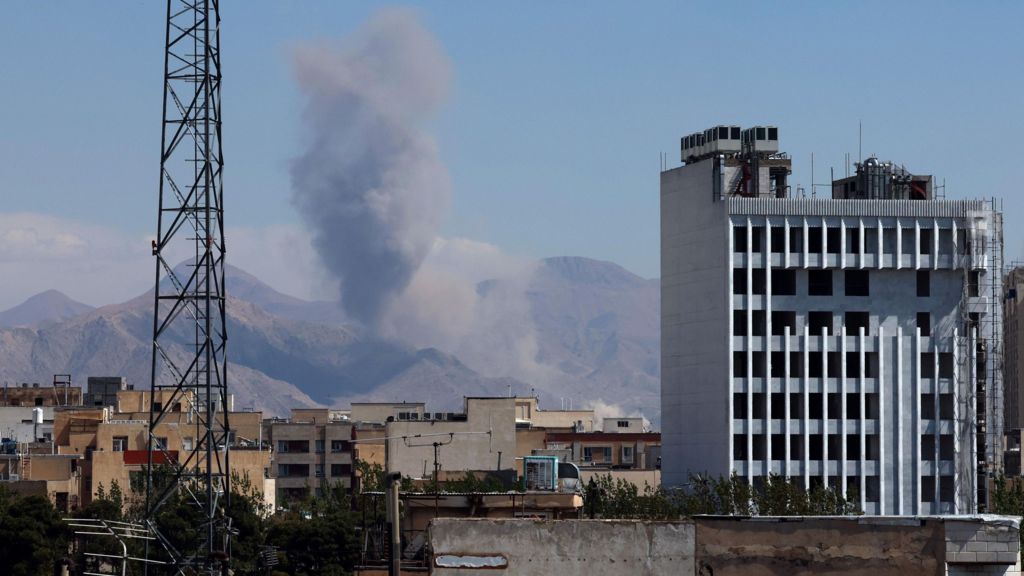
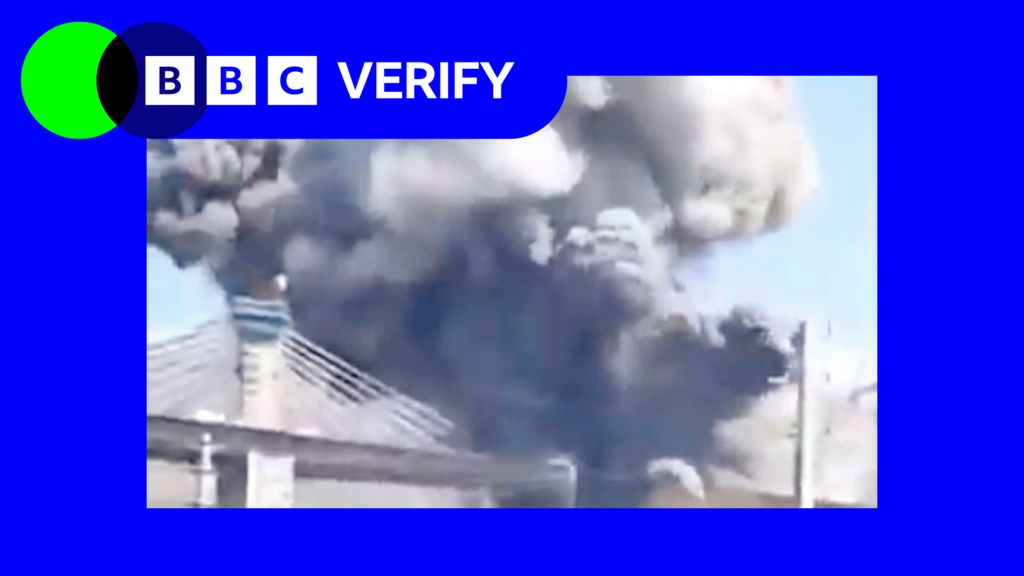
    Security footage from Tehran shows chaotic scenes with smoke rising over residential neighborhoods as emergency services respond to the strikes. The operation appears calculated rather than reactive, with both nations judging Iran vulnerable due to economic crises, damaged defenses from last summer’s conflict, and internal unrest following brutal crackdowns on protesters.

    This military action delivers another blow to international law frameworks, as both President Trump and Prime Minister Netanyahu justified the strikes under self-defense principles despite the enormous power disparity between their nations and Iran. Netanyahu, facing domestic elections, has consistently viewed Iran as Israel’s primary security threat, while Trump’s objectives have shifted from previously declaring Iran’s nuclear program ‘obliterated’ to now emphasizing nuclear ambitions as justification.

    The political calculus appears to include hopes for regime change, with both leaders addressing the Iranian people directly about ‘freedom’ and overthrow opportunities. Historical precedents in Iraq and Libya suggest such outcomes remain highly uncertain and likely to produce catastrophic collateral damage including state collapse and prolonged civil conflict.

    Iran’s complex political structure, maintained through ideological commitment, corruption, and ruthless security enforcement, suggests the regime will persist despite leadership decapitation. The Islamic Revolutionary Guards Corps (IRGC) remains positioned to install a new clerical leader, unlikely to be swayed by Trump’s offers of immunity given the cultural significance of martyrdom in Shia ideology.

    Regional powers including Saudi Arabia face heightened instability as this conflict threatens to export violence across the Middle East and beyond. The deliberate targeting of Khamenei demonstrates a belief in assassination as strategy, though dealing with a state rather than militant movement creates fundamentally different challenges than previous operations against Hamas or Hezbollah leadership.

    With trust obliterated following the US withdrawal from the JCPOA nuclear agreement and recent demands for missile program restrictions, diplomatic solutions appear remote. Iran’s remaining leadership now calculates survival strategies while the world confronts the unpredictable consequences of escalated conflict in an already volatile region.

  • Why did the US attack Iran? Is the US at war? Here’s what to know

    Why did the US attack Iran? Is the US at war? Here’s what to know

    In a dramatic escalation of Middle East tensions, the United States and Israel initiated joint military operations against Iranian targets early Saturday. The coordinated offensive, designated “Epic Fury” by US forces and “Lion’s Roar” by Israel, represents the most significant military confrontation between the nations in decades.

    President Donald Trump utilized social media to announce the operations, simultaneously declaring the death of Iranian Supreme Leader Ali Khamenei, whom he characterized as “one of the most evil people in History.” Iranian state media subsequently confirmed the passing of the 86-year-old leader and declared a 40-day mourning period. Intelligence sources indicate approximately 40 Iranian officials perished in the strikes, with satellite imagery revealing substantial damage to Khamenei’s compound in Tehran.

    The military action follows the collapse of nuclear negotiations between Washington and Tehran just two days prior. President Trump justified the offensive by citing Iran’s nuclear ambitions, historical grievances including the 1979 hostage crisis and 1983 Beirut barracks bombing, and what he described as an “unending campaign of bloodshed” targeting American interests.

    Iranian forces launched immediate retaliatory strikes throughout the Middle East, with projectiles targeting US military installations in Bahrain, Kuwait, Qatar, and the UAE. Iranian Foreign Minister condemned the initial attack as “unprovoked and illegal.”

    Domestic reaction in the United States fractured along partisan lines. Congressional Republicans largely endorsed the operation, with Senator Lindsey Graham declaring it “necessary and long justified.” Democrats denounced the unilateral action, with Senator Tim Kaine labeling the conflict “Trump’s illegal war” and renewing calls for war powers legislation.

    Current US military presence in the region includes two aircraft carrier groups and approximately 30,000-40,000 troops distributed across 13 bases, though officials indicate no immediate plans for ground troop deployment in Iran. Casualty reports indicate over 200 fatalities and 700 injuries within Iran, with additional casualties reported in Israel and the UAE. President Trump warned that military operations would likely continue throughout the coming week.

  • What we know so far: Supreme Leader’s compound hit and Iran’s retaliatory strikes

    What we know so far: Supreme Leader’s compound hit and Iran’s retaliatory strikes

    In a dramatic escalation of Middle Eastern tensions, combined United States and Israeli forces have executed a comprehensive military offensive against multiple targets across Iran. The coordinated operation, described by officials as “major combat operations,” represents the most significant direct confrontation between these nations in decades.

    Satellite imagery analysis confirms substantial structural damage to the compound of Iranian Supreme Leader Ayatollah Ali Khamenei in Tehran, with visible evidence of blackened buildings, debris fields, and active smoke plumes. Explosions were reported within one kilometer of Leadership House, though the Supreme Leader’s current status remains unconfirmed despite Foreign Minister Abbas Araghchi’s tentative assurance that Khamenei remains alive “as far as I know.”

    The initial assault commenced shortly after 09:30 local time (06:00 GMT), with detonations reported across Tehran’s Jomhouri Square and Hassan Abad Square, alongside strikes in Karaj, Isfahan, Qom, and Kermanshah. Verified footage depicts civilians fleeing explosion sites amid audible distress and panic throughout affected urban centers.

    Israeli Defense Minister Israel Katz characterized the operation as a “pre-emptive attack” to neutralize perceived threats, while President Donald Trump explicitly urged Iranian citizens to overthrow their clerical leadership once military operations conclude. Trump further outlined objectives to “obliterate” Iran’s missile infrastructure, neutralize naval capabilities, and prevent nuclear weapons acquisition.

    Iran responded with immediate ballistic missile launches targeting Israel and four Gulf nations hosting US military installations: Bahrain, Kuwait, Qatar, and the United Arab Emirates. Retaliatory strikes impacted near the US Navy 5th Fleet service center in Bahrain, while Qatari, Jordanian, and Kuwaiti defense systems successfully intercepted multiple projectiles. The UAE confirmed one fatality from falling intercept debris.

    Regional aviation has been severely disrupted, with Iran closing its airspace indefinitely and major carriers including British Airways, Emirates, and Lufthansa canceling or diverting Middle Eastern routes. Civilian advisories across multiple nations recommend sheltering and avoiding non-essential travel as the conflict continues to evolve.

  • How the world has reacted to US and Israeli strikes on Iran

    How the world has reacted to US and Israeli strikes on Iran

    A coordinated military offensive by United States and Israeli forces struck targets across multiple Iranian cities on Saturday, triggering a severe escalation in Middle Eastern tensions and drawing widespread international condemnation. US President Donald Trump characterized the operations as “major combat actions” aimed at neutralizing threats from Tehran’s regime.

    The assault prompted an immediate response from Iran’s Revolutionary Guard Corps (IRGC), which announced Operation “Truthful Promise 4” targeting American military installations and assets throughout the Middle East. This exchange of hostilities follows weeks of heightened diplomatic friction concerning Iran’s nuclear advancement programs.

    Global reactions reflected deepening concern over regional stability. United Nations Secretary-General Antonio Guterres issued a stark warning, stating that these military actions “undermine international peace and security” and risk triggering broader regional conflict with catastrophic humanitarian consequences. He urgently called for cessation of hostilities and immediate de-escalation.

    European leaders including French President Emmanuel Macron, German Chancellor Friedrich Merz, and UK Prime Minister Keir Starmer released a joint communiqué emphasizing their non-participation in the strikes while urging Tehran to pursue diplomatic resolutions. Their statement highlighted consistent appeals for Iran to terminate its nuclear and missile development initiatives and cease internal repression.

    Oman’s Foreign Minister Badr Albusaidi, who had been mediating nuclear negotiations between Washington and Tehran, expressed dismay that serious diplomatic efforts had been undermined. He explicitly warned the US against deeper military engagement, stating this conflict “is not your war.”

    Russian officials condemned the strikes as “reckless” actions disguised under negotiation pretenses, while Saudi Arabia denounced Iranian retaliatory measures against neighboring Gulf states and affirmed solidarity with affected nations.

    Despite claiming non-involvement in offensive operations, British authorities confirmed RAF aircraft were conducting “coordinated regional defensive operations” to protect national interests and allies. Australian leadership endorsed US efforts to prevent Iranian nuclear weapon acquisition, framing it as necessary for international security.

    Human rights considerations emerged prominently, with UN Human Rights Chief Volker Türk emphasizing civilian protection obligations under international law. He noted that civilians invariably bear the ultimate cost in armed conflicts and urged all parties to return to negotiation frameworks.

    The political dimension intensified as both Trump and Israeli Prime Minister Benjamin Netanyahu addressed Iranian citizens directly, encouraging uprising against their government and promising support for regime change. This unprecedented call for domestic rebellion adds complex geopolitical dimensions to the military confrontation.

  • Watch: Trump announces ‘major combat operations’ in Iran

    Watch: Trump announces ‘major combat operations’ in Iran

    In a significant escalation of tensions with Tehran, President Donald Trump has announced the initiation of ‘major combat operations’ targeting Iran. The declaration came during a formal address where the President accused the Iranian regime of conducting what he characterized as an “unending campaign of bloodshed and mass murder” directed at American interests and citizens. This move signals a potential shift from diplomatic and economic pressure toward more direct military engagement, raising concerns about broader regional instability. The announcement follows months of heightened rhetoric and incidents between the two nations, including attacks on oil tankers and drone shootdowns. The international community is watching closely as this development threatens to open a new and dangerous chapter in Middle East geopolitics, with analysts speculating on potential operational targets and the scope of the declared combat operations.

  • Watch: Smoke rises over Tehran as Trump ‘seeks regime change’

    Watch: Smoke rises over Tehran as Trump ‘seeks regime change’

    A significant escalation in U.S.-Iran tensions has unfolded as military operations commenced in Tehran, with visible smoke rising over the Iranian capital. The development follows explicit statements from former U.S. President Donald Trump indicating the initiation of “major combat operations” with explicit regime change objectives.

    Reporting from Jerusalem, BBC correspondent Jon Donnison documented the emerging crisis as tensions reached their highest point in recent years. The military action represents a dramatic deterioration in relations between Washington and Tehran, raising concerns about potential regional destabilization and broader geopolitical consequences.

    The operations mark a significant shift in U.S. foreign policy toward Iran, moving from economic sanctions and diplomatic pressure to overt military engagement. Security analysts suggest this escalation could trigger responses from Iran’s regional proxies and allies, potentially drawing neighboring countries into the conflict.

    International observers are monitoring the situation closely, with many world leaders calling for restraint and de-escalation. The United Nations Security Council is expected to convene an emergency session to address the rapidly developing situation and seek diplomatic solutions to prevent further military confrontation.

  • The third man who links Andrew with Jeffrey Epstein

    The third man who links Andrew with Jeffrey Epstein

    Newly unsealed U.S. Department of Justice documents have illuminated the shadowy role of German businessman David Stern as the critical liaison connecting Prince Andrew and convicted sex offender Jeffrey Epstein in their China-focused business ventures. The millions of pages of evidence reveal Stern’s decade-long involvement as an intermediary who facilitated connections, managed financial arrangements, and enabled access to Chinese networks for both men.

    The documents depict Stern’s emergence into royal circles beginning in 2008 when Epstein introduced him to Sarah Ferguson and Prince Andrew. Stern subsequently became deeply embedded in the York family’s affairs, particularly assisting with the Duchess’s significant financial difficulties while simultaneously maintaining his primary allegiance to Epstein, whom he frequently addressed as “boss” or “my mentor.

    Throughout the correspondence spanning 2008-2018, Stern appears as the eager junior partner to Epstein, constantly proposing business ventures while demonstrating concerning attitudes toward women. His emails contain numerous derogatory references to women using coded language and abbreviations, alongside detailed discussions of potential investments and Chinese business opportunities.

    Stern’s value to both men largely stemmed from his claimed expertise and connections in China, where he had studied Mandarin and established business ventures. He portrayed himself as exceptionally well-connected with Chinese elites, though the veracity of these claims remains unclear. This perceived access proved particularly valuable to Epstein, whose criminal record limited his ability to travel to China directly.

    The German businessman eventually gained formal positions within royal-affiliated organizations, joining the board of Andrew’s Pitch@Palace initiative in 2016 and later being appointed to St George’s House, a charity founded by Prince Philip. His involvement with Pitch@Palace continued through its final Chinese event in Shenzhen in 2019, which also included Yang Tengbo, who was later banned from the UK over espionage allegations.

    Despite Stern’s extensive correspondence and apparent closeness to both Epstein and the royal family, many of his ambitious business proposals—including ventures in private equity, healthcare technology, and even a fanciful scheme to acquire Deutsche Bank—never materialized. His current whereabouts are unknown, having changed his registered residence to the United Arab Emirates in 2023.

  • Trump says he is ‘not happy’ with nuclear talks, no final decision on Iran strike

    Trump says he is ‘not happy’ with nuclear talks, no final decision on Iran strike

    WASHINGTON — Amid escalating geopolitical tensions, U.S. President Donald Trump voiced significant dissatisfaction with the progress of nuclear negotiations with Iran during a press briefing on Friday. Speaking to journalists before departing the White House for a trip to Texas, Trump characterized the talks as unsatisfactory, though he emphasized that no definitive decision had been made regarding potential military action.

    “I’m not happy with the fact that they’re not willing to give us what we have to have. I’m not thrilled with that,” Trump stated, alluding to Iran’s perceived reluctance to meet U.S. demands in ongoing diplomatic discussions. He confirmed that additional talks were scheduled but reiterated a firm stance on nuclear proliferation, asserting that Iran “cannot have nuclear weapons.”

    The President also addressed the possibility of deploying U.S. military forces, remarking, “I’d love not to use them, but sometimes you have to.” His comments come against a backdrop of intensified U.S. military presence in the Middle East and stalled diplomatic efforts, contributing to heightened bilateral strains.

    In a related development, the U.S. State Department authorized the voluntary departure of non-emergency government personnel and their families from Israel, citing elevated security concerns. This precautionary measure underscores the administration’s assessment of regional instability and potential threats emanating from the current U.S.-Iran standoff.

  • Blind refugee found dead in New York after being released by immigration authorities

    Blind refugee found dead in New York after being released by immigration authorities

    A systemic failure in US immigration procedures has come under intense scrutiny following the death of Nurul Amin Shah Alam, a nearly-blind, non-English-speaking Rohingya refugee from Myanmar. The 56-year-old was discovered deceased in Buffalo, New York, on February 24th, days after US Customs and Border Protection (CBP) released him at a coffee shop miles from his family’s residence during freezing temperatures.

    According to the Department of Homeland Security, which oversees CBP, Shah Alam had accepted a courtesy ride to the coffee shop and displayed ‘no signs of distress, mobility issues, or disabilities requiring special assistance’ upon release. Officials claimed the location was selected as ‘a warm, safe location’ closer to his home than the Border Patrol station.

    Contradicting this account, surveillance footage obtained by The Washington Post from the Tim Horton’s coffee shop on February 19th appears to show Shah Alam walking past the establishment without entering after operating hours. Weather records indicate temperatures hovered around 36°F (2.2°C) that evening.

    Buffalo Mayor Sean Ryan characterized the incident as ‘deeply disturbing,’ delivering a blistering critique of federal agencies during a news conference. ‘Border Patrol, DHS and Immigrations and Customs Enforcement don’t know what they’re doing,’ Ryan stated. ‘The Border Patrol officers had no protocol for what to do with a disabled man who doesn’t speak English, who is confused and lost. And you know what they did? They dropped him at a closed coffee shop.’

    The tragedy concludes a complex year-long ordeal for Shah Alam, who had previously been in local police custody on assault and weapons charges related to an incident where two officers were injured. According to his son Mohamad Faisal, the arrest resulted from a misunderstanding when his father, using a curtain rod as a walking stick during a walk, wandered onto private property. Body camera footage released by Buffalo police shows Shah Alam holding two black rods while repeatedly saying ‘sorry’ before officers deployed tasers and wrestled him to the ground.

    After reaching a plea deal and being released on bail, immigration authorities placed a detainer on Shah Alam. Reuters reported that CBP ultimately released him after determining he had entered the US as a refugee and could not be legally deported.

    The family, who were not notified of Shah Alam’s release according to multiple accounts, reported him missing on February 22nd. He was found nearly six miles from the coffee shop days later, with a passerby noting he had been moving three hours prior to being discovered unresponsive.

    New York Attorney General Letitia James announced her office is ‘reviewing our legal options,’ emphasizing that Shah Alam ‘fled genocide and came to this country in search of safety and opportunity. Instead, his life was tragically cut short. No one who comes here seeking refuge should be left in harm’s way.’

    The Buffalo Police Department continues to investigate the circumstances surrounding Shah Alam’s death, which has not been publicly disclosed.

  • Henrietta Lacks: Family of woman whose cells were ‘stolen’ settles second lawsuit

    Henrietta Lacks: Family of woman whose cells were ‘stolen’ settles second lawsuit

    In a landmark resolution addressing one of medical history’s most profound ethical controversies, the descendants of Henrietta Lacks have secured a confidential settlement with Swiss pharmaceutical giant Novartis. This agreement concludes legal allegations that the corporation commercially exploited biological materials obtained without consent from the African American cancer patient in 1951.

    The case centers on what became known as HeLa cells—named using Lacks’ initials—which demonstrated unprecedented biological properties. Unlike typical cell cultures that perish rapidly under laboratory conditions, these specimens exhibited continuous replication capabilities, achieving scientific immortality. This extraordinary characteristic enabled global research laboratories to conduct reproducible experiments using genetically identical cell lines, fundamentally transforming modern medical research.

    Medical historians recognize HeLa cells as instrumental in numerous breakthrough discoveries, including development of the polio vaccine, advanced cancer treatments, HIV research methodologies, and infertility studies. The World Health Organization has acknowledged their indispensable role in twentieth-century medical progress.

    Tragically, the biological miracle emerged from profound personal suffering. Henrietta Lacks, a 31-year-old mother from Baltimore, underwent cervical cancer treatment at Johns Hopkins Hospital where physicians extracted tumor samples without her knowledge or authorization. She succumbed to the disease months later and was interred in an unmarked grave, never comprehending her unintended contribution to science.

    For seven decades, Lacks’ descendants received no financial compensation or recognition while biotech firms generated enormous profits from commercial applications of HeLa cells. This settlement represents the family’s second successful legal action, following a previous confidential agreement with Massachusetts-based Thermo Fisher Scientific Inc. in 2021.

    Prominent civil rights attorney Ben Crump, representing the Lacks family, characterized the resolution as delivering “some measure of justice” that acknowledges Henrietta Lacks’ stolen dignity while recognizing her unwitting contribution to global health advancements. Although specific financial terms remain undisclosed, family representatives expressed satisfaction with the outcome that finally provides tangible recognition after generations of struggle.

    Several parallel lawsuits against additional pharmaceutical companies remain ongoing as the medical community continues grappling with ethical questions surrounding biological material ownership and informed consent protocols.