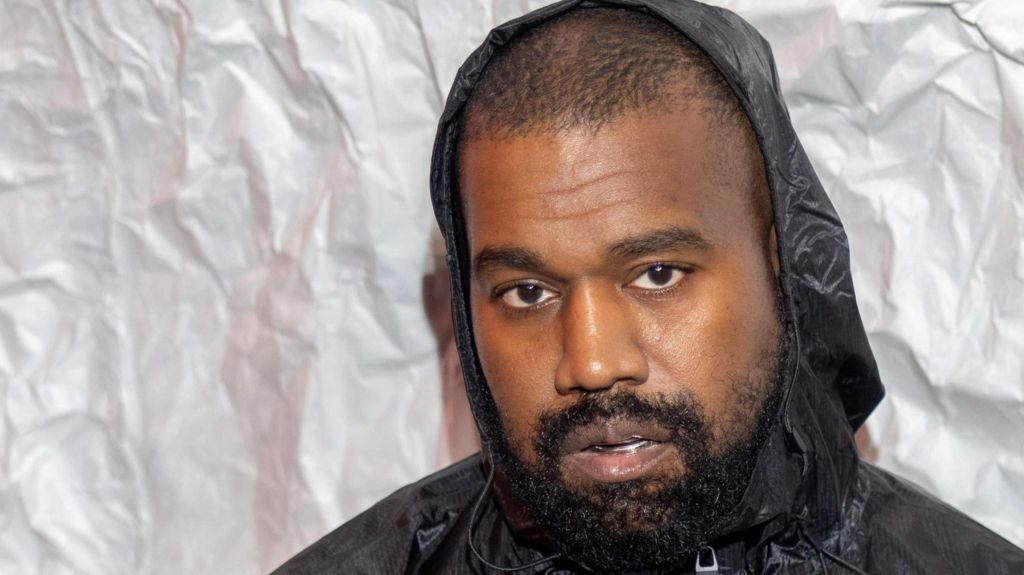
Once hailed as one of the most transformative and groundbreaking hip-hop artists and producers of the 2000s and 2010s, Kanye West — who now goes by the name Ye — has built a decades-long career marked by unparalleled creative innovation and a seemingly endless string of damaging, offensive controversies. Now, that history of bigotry has led to the cancellation of one of the UK’s most anticipated summer music events after the British government barred the rapper from entering the country.
West launched his career behind the scenes, crafting chart-topping production for A-list stars including Jay-Z and Alicia Keys before stepping into the spotlight as a solo artist. His 2003 debut single *Through the Wire* became an instant classic: written from a hospital bed and recorded with his jaw wired shut after a near-fatal car crash, the track announced West as a bold new voice in rap. Over the next 15 years, he cemented his legacy, pushing creative boundaries with hits like *Stronger*, *Gold Digger*, and *Heartless* that redefined what hip-hop could sound like. But for almost as long as he has been in the public eye, his career has been repeatedly derailed by impulsive behavior, offensive rhetoric, and hateful statements that have alienated fans and destroyed professional partnerships.
Controversy has followed West since the early days of his fame. In one of the most infamous moments in awards show history, he interrupted Taylor Swift’s 2009 MTV Video Music Awards acceptance speech to insist Beyoncé deserved the honor for Best Female Video. Four years before that, he deviated from his script during a Hurricane Katrina relief telethon, famously stating that then-President George W. Bush “doesn’t care about black people” — a comment that while divisive, resonated with many who shared the sentiment. But as time went on, West’s statements grew more shocking and harmful. In 2016, he drew widespread backlash for a social media post declaring “BILL COSBY INNOCENT !!!!!!!!!!” at a time when the comedian faced dozens of allegations of drugging and sexual assault. Cosby was later convicted of one count of sexual assault (though the conviction was later overturned), and in March 2026, a civil court ordered him to pay $59.25 million in damages to a victim assaulted more than 50 years prior.
Two years later, West sparked global outrage during an appearance on TMZ when he claimed that centuries of chattel slavery of African Americans “sounds like a choice.” The comment, which ignored the brutal, forced history of chattel slavery in the United States, led to widespread calls for accountability, with many social media users urging the rapper to revisit basic American history. West later attempted to walk back the comment, claiming his words had been misinterpreted and that he was referring to ongoing mental oppression, but the damage was done.
A 2022 fashion show in Paris marked a turning point in the erosion of West’s professional standing. The artist, who had built a second high-profile career as a fashion designer with his Yeezy brand, walked out at his SZN 9 show wearing a t-shirt emblazoned with the “White Lives Matter” slogan, a phrase widely recognized as a direct rebuke of the Black Lives Matter movement. Anti-racism organizers condemned the display, and a subsequent photo of West alongside conservative commentator Candace Owens, both wearing the shirts, amplified the outrage.
The controversy quickly escalated when West published a private text exchange with fellow hip-hop icon Sean “Diddy” Combs, in which he claimed Combs was “controlled by Jewish people” — echoing centuries-old harmful antisemitic conspiracy theories. The post got West’s Instagram account suspended, prompting him to move to Twitter (now X) where he declared he would go “death con 3 On Jewish people.” The comment got him banned from the platform as well, with both social media companies citing violations of hate speech policies. By the end of 2022, nearly all of West’s major professional partners had cut ties: fashion house Balenciaga, talent agency Creative Artists Agency, JPMorgan Chase, Gap, and long-time footwear partner Adidas all dropped the rapper. Adidas reported that ending the partnership would cost the company a net loss of £217 million in 2022.
West’s ex-wife Kim Kardashian addressed the controversy at the time, acknowledging West’s bipolar disorder diagnosis and noting that “those who are close with Kanye know his heart and understand his words sometimes do not align with his intentions.” However, medical experts have pushed back on framing West’s hate speech as a product of his mental illness. “Bipolar disorder is absolutely not synonymous with racism and there’s nothing about mental illness that creates racism or hate,” Amy Elizabeth West, a professor of clinical pediatrics and psychology at USC Keck School of Medicine, explained in 2022. “Those are all entirely separate behaviours that he happens to have in addition to having bipolar disorder.”
Later in 2022, West announced he would run for U.S. president in 2024, a bid that never materialized after his 2020 presidential run earned him just 60,000 votes nationwide. Months later, he appeared on a podcast hosted by far-right conspiracy theorist Alex Jones, where he declared “I see good things about Hitler” and claimed the Nazi leader had added value to the world. The comment drew universal condemnation, and West was again banned from Twitter. Just months later, he was banned once more after posting a symbol combining a swastika and the Star of David.
West first issued an apology to the Jewish community in December 2023, posting a statement in Hebrew to Instagram saying he “sincerely apologise[s]” and that it was “not my intention to hurt or demean, and I deeply regret any pain I may have caused.” But the apologies did not end the controversy. In February 2025, West drew new outrage after starting to sell t-shirts printed with swastikas, prompting commerce platform Shopify to shut down his online store. Three months later, he released a track titled *Heil Hitler*, claiming that a child custody battle and frozen assets had pushed him toward Nazism. The track was banned from all major streaming platforms and in Germany under the country’s strict hate speech laws, but it spread widely on social media, and West was subsequently barred from entering Australia over the content.
In January 2026, West issued a second public apology, taking out a full-page ad in *The Wall Street Journal* stating “I am not a Nazi or an antisemite” and “I love Jewish people.” He attributed his past harmful actions to bipolar disorder, writing that episodes of the condition left him “disconnected” and unable to recall many of his offensive statements, adding “It does not excuse what I did though.”
Months later, event organizers announced West would headline London’s 2026 Wireless Festival, a three-night headline set scheduled for July that sparked immediate public and political backlash. In response, West updated his *Wall Street Journal* open letter, saying he would “be grateful” to meet with members of the British Jewish community “to listen” and that he would “show change through my actions.” The Board of Deputies of British Jews said it was open to a meeting, but on the condition that West cancel his planned performances.
The controversy ultimately led to the full cancellation of the 2026 Wireless Festival after the UK government formally blocked West from entering the country over his history of hate speech and offensive behavior.