标签: North America

北美洲

  • The F1, football and NFL figures who kept Epstein links after conviction

    The F1, football and NFL figures who kept Epstein links after conviction

    Newly unsealed court documents reveal sustained connections between prominent sports executives and convicted sex offender Jeffrey Epstein long after his 2008 criminal conviction. The files, released last Friday, contain extensive email and text communications showing relationships between Epstein and leaders across Formula 1, NFL ownership, and European football.

    Among the most detailed correspondences are emails between Epstein and Jean Todt, former Ferrari team principal and FIA president. Records indicate Todt visited Epstein’s New York residence in 2017, with their introduction facilitated by Norwegian diplomat Terje Rod-Larsen. The exchange shows Todt expressing willingness to continue their acquaintance, inviting Epstein to contact him during future visits to Paris or Geneva.

    The documents further reveal communications involving Alpine F1 executive Flavio Briatore, whom Epstein referred to as ‘my Italian friend’ in discussions about potential aircraft purchases and property transactions. Crystal Palace investor Josh Harris maintained email and phone contact with Epstein through 2016, despite his representatives claiming Harris sought to avoid developing a corporate relationship.

    Notably, New York Giants co-owner Steve Tisch exchanged emails with Epstein that included discussions about arranging meetings with women. In one 2013 message, Epstein offered to ‘bring the Russian,’ to which Tisch responded ‘is she fun?’ Tisch has since expressed regret over the association.

    The files also detail pre-conviction communications between sports figures and Ghislaine Maxwell, including sexually charged emails from Casey Wasserman, chairman of the Los Angeles 2028 Olympics. While many named individuals have issued statements expressing regret, several major sports organizations including the NFL are considering formal investigations into the conduct of their executives.

  • Hyvec Group: Building Mauritius’s future through vision, innovation and resilience

    Hyvec Group: Building Mauritius’s future through vision, innovation and resilience

    For over three decades, Hyvec Group has been instrumental in shaping Mauritius’ economic landscape, evolving from its foundational construction roots into a multifaceted business empire. Established in 1993 by visionary entrepreneur Nawaz Khan Chady, the organization has grown into one of the Indian Ocean nation’s most dynamic corporate entities, currently employing more than 2,000 professionals across its diversified portfolio.

    The conglomerate’s strategic expansion spans five core sectors: Construction & Property Development, Retail & Distribution, Finance & Investment, Leisure & Hospitality, and Food Services. This deliberate diversification strategy, guided by principles of hard work, integrity, and innovation, has positioned Hyvec as a critical contributor to Mauritius’ development while facilitating regional expansion across the Indian Ocean and Middle Eastern markets.

    Hyvec’s retail division represents an impressive portfolio of international luxury brands including Ralph Lauren, Montblanc, Armani, Calvin Klein, Tommy Hilfiger, Hackett London, and GANT. The group further strengthens its consumer presence through partnerships with Kohler in home design and Burger King in the quick-service restaurant segment.

    Despite its diversified nature, construction remains central to Hyvec’s operational identity. Through Hyvec Construction and Hyvec Properties, the organization has significantly influenced Mauritius’ urban development, delivering projects ranging from public infrastructure and social housing to luxury residences and commercial complexes. The group’s technical capabilities have been enhanced through collaborations with international construction leaders like Stefanutti Stocks.

    Hyvec’s hospitality footprint is expanding dramatically with four simultaneous hotel developments, including a landmark Ritz-Carlton property under the Marriott Group and the imminent opening of Courtyard by Marriott Ebène. These projects, alongside flagship developments like the One&Only Le St Géran villas and the upcoming WESS Mall in Rose-Belle, demonstrate the group’s commitment to blending global standards with local craftsmanship.

    The organization integrates cutting-edge technologies such as Building Information Modeling (BIM) and sustainable engineering practices into its operations, emphasizing energy efficiency and environmental responsibility. Beyond commercial success, Hyvec has made substantial contributions to national infrastructure, including the delivery of 750 social housing units and the Melrose Prison complex.

    Chairman Nawaz Khan Chady emphasizes the importance of public-private partnerships in driving national development: “We bring efficiency, expertise, and innovation to complement the government’s infrastructure vision.” The group maintains a strong commitment to social responsibility through youth training programs and community support initiatives.

    Looking toward future growth, Hyvec identifies significant opportunities for expansion into African and Middle Eastern markets, particularly in construction, property investment, and hospitality sectors. The group anticipates strengthened collaboration with UAE partners, leveraging Mauritius’ strategic location and stability alongside Gulf innovation and investment capital.

  • Axis Fiduciary: Trusted first partner powering Mauritius’ global financial ambitions

    Axis Fiduciary: Trusted first partner powering Mauritius’ global financial ambitions

    In the competitive landscape of global finance, Mauritius has emerged as a formidable international financial center, with Axis Fiduciary Ltd. positioned as a pivotal force behind this transformation. Established in 2008 through a collaboration between BLC Robert & Associates and CEO Assad Abdullatiff, the firm has engineered a unique integrated model combining legal expertise with comprehensive fiduciary services.

    Axis’s operational philosophy centers on three core pillars: fund formation and administration, corporate establishment services, and private client solutions including trusts and family offices. With nearly 250 professionals managing over 1,500 legal structures worldwide, the firm has become instrumental in channeling investments into African markets while maintaining rigorous compliance standards.

    The jurisdiction’s appeal rests on its political stability, robust regulatory framework, and tax efficiency—attributes that Axis has consistently reinforced through strategic partnerships with global law firms, banks, and asset managers. This alignment with international best practices has established Mauritius as a trusted gateway for cross-border investments, particularly between Asia and Africa.

    In an era of escalating regulatory complexity, Axis operates under an uncompromising ‘comply first’ mandate. The firm maintains stringent client vetting procedures, working exclusively with pre-approved intermediaries to preserve jurisdictional integrity. This compliance-first approach is supported by advanced technological infrastructure, including the proprietary Cypress platform which integrates AI and automation to enhance operational efficiency and data security.

    Beyond traditional services, Axis has embraced the growing demand for sustainable finance, embedding ESG and EDI principles within its operations. The firm supports impact-driven investors through specialized frameworks for measuring and reporting developmental outcomes, while simultaneously administering charitable foundations focused on African initiatives.

    With physical presence in Mauritius, Seychelles, UAE, and India—plus representatives in Kenya and Luxembourg—Axis has developed a multi-jurisdictional footprint that reflects the complex nature of modern cross-border investment. The firm identifies particularly strong synergies between Mauritius and Gulf states, especially for clients targeting African markets or pursuing international expansion.

    As Mauritius continues to evolve as a sophisticated financial hub, Axis Fiduciary remains anchored to its founding vision: delivering bespoke, technology-enabled solutions grounded in regulatory strength and long-term partnership—a testament to how specialized fiduciary services can power a nation’s global financial ambitions.

  • Details of Jeffrey Epstein post-mortem released in latest files

    Details of Jeffrey Epstein post-mortem released in latest files

    The U.S. Department of Justice has released previously undisclosed photographs depicting Jeffrey Epstein’s body being attended to by medical personnel immediately following his death in custody. These twenty images, many deemed too graphic for public dissemination, form part of a declassified FBI investigation into the financier’s controversial demise.

    The documents, published Friday among millions of Epstein-related files, include timestamps indicating the photos were taken at approximately 06:49 on August 10, 2019—roughly 16 minutes after guards found him unresponsive in his Metropolitan Correctional Center cell. The images show medical teams performing resuscitation efforts on Epstein while he lay on a stretcher, with visible neck injuries clearly documented in close-up shots.

    BBC Verify conducted extensive forensic analysis of the released materials, confirming these particular images had not previously appeared online prior to January 30. The verification process included reverse image searches and cross-referencing with accompanying documents such as an 89-page post-mortem report filed by New York’s Office of Chief Medical Examiner.

    The comprehensive FBI report spans 23 pages and contains a detailed six-week timeline of Epstein’s incarceration from his July 6, 2019 arrest on sex trafficking charges until his death. Notably, the documents reveal Epstein was placed on suicide watch after an earlier July 23 incident where he allegedly accused his cellmate—Nicholas Tartaglione, a former police officer facing murder charges—of attempting to kill him.

    Contradicting his documented mental state, psychological evaluations from July 24 show Epstein stating he had “no interest in killing myself” and that suicide “would be crazy.” The following day, he reportedly told psychologists he was “too vested in my case to fight it” and wanted to return to living his life.

    Critical security failures emerge in the documentation: prison guards failed to conduct scheduled checks at 03:00 and 05:00 on the night of Epstein’s death, the camera system in his unit was nonfunctional, and his cellmate had been transferred the previous day—contrary to the warden’s specific recommendations against housing Epstein alone.

    The release includes both redacted and unredacted versions of the FBI report, though the Justice Department has not clarified why both versions were included. Both the FBI and DoJ declined to provide additional commentary regarding the newly public documents.

  • UAE schools adjust exam schedules ahead of Ramadan to reduce student stress

    UAE schools adjust exam schedules ahead of Ramadan to reduce student stress

    Educational institutions across the United Arab Emirates are implementing strategic academic calendar modifications in anticipation of Ramadan’s overlap with critical examination periods. With the holy month projected to commence approximately on February 19 (subject to moon sighting), administrators are carefully coordinating assessment schedules to accommodate fasting students’ needs while maintaining academic integrity.

    The scheduling conflict presents particular challenges as Ramadan coincides with several major board examinations. The Central Board of Secondary Education (CBSE) tests commence on February 17, while ISC/ICSE examinations for Classes 12 and 10 are scheduled for February 12 and 17 respectively.

    Deepika Thapar Singh, CEO-Principal of Credence High School, explained the comprehensive approach: “We meticulously manage exam durations, spacing between papers, and staff supervision protocols to ensure equitable conditions while minimizing fatigue for fasting students. All Ramadan-specific timetable modifications are communicated extensively through official channels well in advance.”

    Michelle Thomas, Principal/CEO of GEMS Al Barsha National School, emphasized the wellbeing-first philosophy: “Conscious of student welfare and fairness during Ramadan, we generally avoid scheduling internal examinations during this period. The majority of our students observe fasting, and this approach ensures they can maintain their religious practices without additional academic pressure.”

    When assessments cannot be rescheduled, schools are implementing alternative evaluation formats. These include lighter assessment structures, flexible timing arrangements, and recorded instructional materials for post-iftar review when students are better nourished and hydrated.

    Communication emerges as a critical component of the strategy. Institutions are utilizing detailed circulars, parental emails, assembly announcements, and digital platforms to ensure transparency regarding amended schedules and wellbeing measures. This proactive communication strategy helps families plan effectively while reducing student stress during the holy month.

    Natalia Svetenok, Principal of Woodlem British School in Ajman, highlighted the comprehensive approach: “Student satisfaction and wellbeing remain our primary focus. We reduce energy-intensive activities, moderate the learning pace, and maintain flexible evaluation schedules while ensuring full compliance with UAE regulations regarding Ramadan organization in educational settings.”

  • Colombia to work with US on drug trafficking: president

    Colombia to work with US on drug trafficking: president

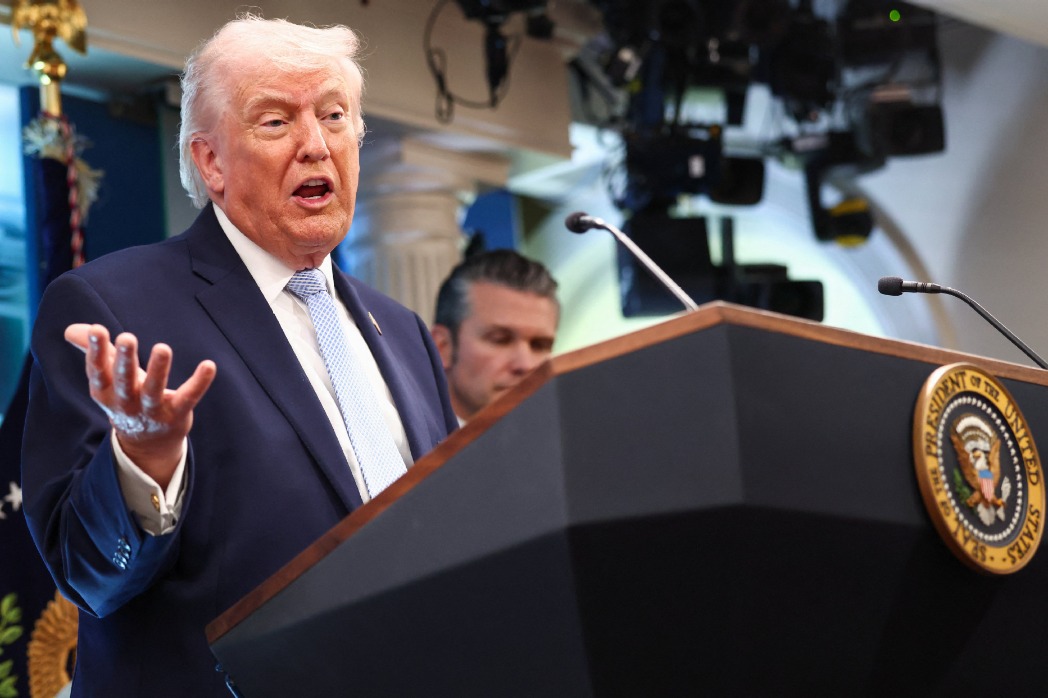
    In a significant diplomatic development, Colombian President Gustavo Petro and U.S. President Donald Trump have established a collaborative framework to combat international drug trafficking networks. The agreement emerged during their February 3rd meeting at the White House, marking a pivotal moment in bilateral security cooperation.

    President Petro subsequently revealed to Colombian media that the discussions exposed substantial differences in strategic perspectives regarding security policy and narcotics enforcement. The Colombian leader expressed particular surprise at what he characterized as President Trump’s ‘misinformation’ concerning Colombia’s current security landscape and drug trafficking dynamics.

    Beyond narcotics enforcement, the bilateral dialogue addressed regional stability concerns. President Petro confirmed Colombia’s supportive stance toward Venezuela’s ongoing political transition, emphasizing that ‘Venezuela deserves the future. The past will be evaluated, but the present and future are fundamental.’

    In a gesture of diplomatic goodwill, President Petro extended an invitation for his American counterpart to visit Cartagena, a historic Colombian coastal city symbolizing the nations’ complex but enduring partnership. This invitation signals Colombia’s commitment to maintaining constructive engagement despite acknowledged policy differences.

  • Chinese Ambassador Xie Feng: Youth exchanges are a project of hope in China-US relations

    Chinese Ambassador Xie Feng: Youth exchanges are a project of hope in China-US relations

    Chinese Ambassador to the United States Xie Feng has emphatically characterized youth exchanges between the two nations as a vital “project of hope” for bilateral relations. The declaration came during the 2026 China-US Youth Spring Festival Gala, an event hosted by the Chinese Embassy in Washington on January 31st.

    Ambassador Xie’s address highlighted the critical role that the younger generation plays in bridging cultural and diplomatic divides. He articulated that fostering mutual understanding and friendship among youth represents a fundamental investment in the future trajectory of Sino-American relations. The gala itself served as a platform for cultural performance and dialogue, embodying this commitment to people-to-people exchange.

    This emphasis on youth engagement occurs within the broader context of ongoing efforts to stabilize and improve relations between the two global powers. The initiative aligns with previous agreements between Chinese and American leadership to enhance societal and educational exchanges, moving beyond governmental dialogue to build a more resilient foundation for the relationship.

    The embassy’s event signals a continued prioritization of soft diplomacy and cultural outreach as essential tools for managing complex international partnerships. By focusing on the next generation of leaders, artists, and entrepreneurs, this approach seeks to cultivate long-term goodwill and counteract prevailing geopolitical tensions through sustained interpersonal connections.

  • Chinese Ambassador Xie Feng: Youth exchanges can instill vitality

    Chinese Ambassador Xie Feng: Youth exchanges can instill vitality

    Chinese Ambassador to the United States Xie Feng has emphasized the critical role of youth engagement in fostering bilateral relations between the two nations. Speaking at the 2026 China-US Youth Spring Festival Gala hosted by the Chinese Embassy in Washington on January 31st, Ambassador Xie articulated that cross-cultural exchanges among young people serve as a fundamental catalyst for mutual understanding and diplomatic vitality.

    The ambassador’s address highlighted how educational and cultural interactions between American and Chinese students create lasting foundations for international cooperation. Xie Feng noted that such exchanges allow emerging leaders from both countries to develop firsthand appreciation for each other’s cultures, values, and perspectives beyond governmental dialogues.

    This event, organized as part of Lunar New Year celebrations, brought together hundreds of students, educators, and cultural representatives from both nations. The gala featured traditional performances, cultural exhibitions, and networking opportunities designed to facilitate meaningful connections between participants.

    Ambassador Xie’s remarks come at a time of complex diplomatic relations between Washington and Beijing, positioning youth diplomacy as an essential channel for maintaining open communication. The Chinese Embassy has increasingly prioritized such cultural initiatives as part of its broader efforts to sustain people-to-people connections regardless of political climate fluctuations.

    The 2026 gathering represents a continuation of pre-pandemic exchange traditions that had been temporarily suspended, signaling a renewed commitment to educational diplomacy. Both governments have acknowledged the importance of such programs in developing future leaders who can navigate the complexities of Sino-American relations with cultural competence and mutual respect.

  • Tariffs cut as US, India ink deal

    Tariffs cut as US, India ink deal

    In a significant diplomatic breakthrough, the United States and India have concluded a comprehensive trade agreement that dramatically reduces tariffs on Indian exports while compelling New Delhi to reconsider its energy procurement strategy. The pact, announced jointly by US President Donald Trump and Indian Prime Minister Narendra Modi on February 3, 2026, slashes existing tariffs from 50% to 18% on Indian goods.

    The agreement represents a strategic recalibration of economic relations between the world’s largest and fifth-largest economies. In return for tariff relief, India has committed to halt purchases of Russian crude oil and substantially lower trade barriers for American products. The arrangement includes India’s commitment to eliminate import taxes on US goods entirely and purchase approximately $500 billion worth of American merchandise.

    This development follows months of escalating trade tensions that began in June when Washington imposed an initial 25% tariff on Indian goods, subsequently doubling the rate in August due to India’s continued acquisition of Russian energy resources. The current agreement effectively reverses these punitive measures while establishing new parameters for bilateral trade.

    Energy analysts immediately raised concerns about the feasibility of India’s commitment to abandon Russian oil imports, which currently constitute over one-third of the nation’s daily consumption at approximately 1.5 million barrels. Rob Haworth, Senior Investment Strategy Director at US Bank Asset Management, emphasized that “fully replacing Russian oil with alternatives from Venezuela or the United States will require substantial infrastructure investment and time.”

    Academic experts offered mixed perspectives on the agreement’s implications. Professor Pushan Dutt of INSEAD Asia Campus described the deal as a “welcome development” that could restore economic and geopolitical alignment between the two nations. However, Professor Dibyendu Maiti of Delhi School of Economics noted that the agreement followed significant American pressure regarding agricultural and dairy product restrictions.

    Qian Feng, Director of Research at Tsinghua University’s National Strategy Institute, highlighted both opportunities and challenges for India. While Indian exports including electronics, pharmaceuticals, apparel, and chemicals may regain competitiveness in US markets, the energy policy shift could increase import costs by billions annually, potentially fueling inflation and complicating existing agreements with Russian energy providers.

    The agreement contains enforcement mechanisms, with an anonymous US Trade Representative official warning that tariffs could be reinstated if India resumes Russian oil purchases. This condition underscores the agreement’s function as both economic arrangement and geopolitical instrument, potentially positioning India as a counterbalance to Russian influence.

    Despite the celebratory announcements from both leaders, experts caution that substantial differences remain unresolved, characterizing the agreement as a provisional truce rather than comprehensive reconciliation. The ultimate implementation and long-term sustainability of this trade détente remain subject to complex economic and geopolitical considerations.

  • NASA hit by fuel leaks during test countdown

    NASA hit by fuel leaks during test countdown

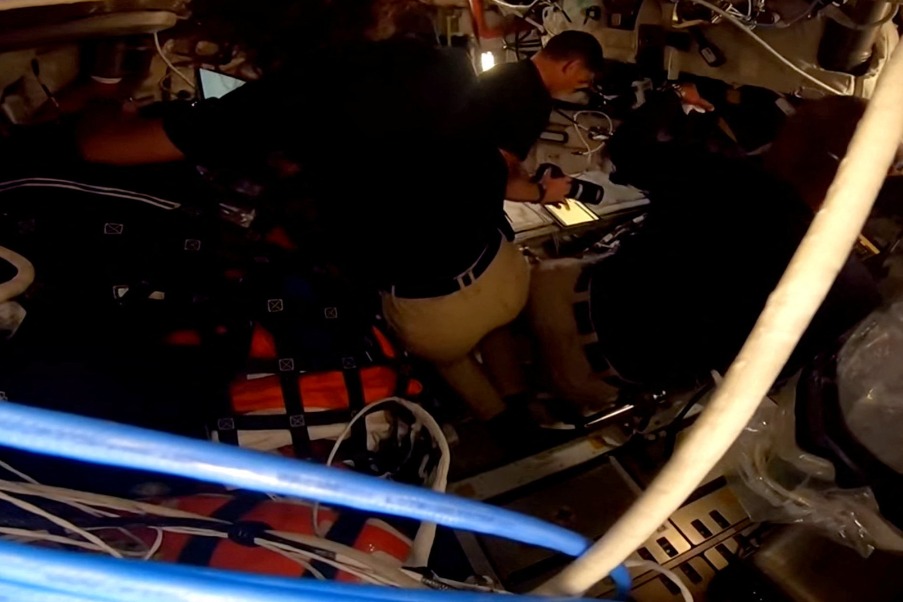
    NASA’s ambitious lunar program encountered significant technical challenges during a crucial pre-launch test of its Space Launch System (SLS) rocket on Monday, raising concerns about the timeline for the upcoming crewed mission around the moon. The incident occurred at Kennedy Space Center in Florida during a daylong fueling operation designed to simulate final countdown procedures.

    The problematic hydrogen leaks emerged just hours into the complex fueling process, where launch controllers were loading the 98-meter rocket with more than 2.6 million liters of super-chilled hydrogen and oxygen. Excessive hydrogen accumulation near the rocket’s base forced multiple suspensions of the hydrogen loading operation as engineers implemented contingency measures developed during previous SLS testing in 2022.

    The four astronauts assigned to the mission—three Americans and one Canadian—monitored the critical rehearsal from Johnson Space Center in Houston, approximately 1,600 kilometers away. The crew has been in quarantine for over a week awaiting the outcome of this essential practice countdown, which will determine when they can embark on humanity’s first lunar voyage in more than fifty years.

    NASA now faces a compressed launch window, with the earliest possible launch date pushed to Sunday and a hard deadline of February 11 before the mission must be postponed until March. The agency’s scheduling constraints are further complicated by seasonal cold conditions that have already reduced February’s launch window by two days.

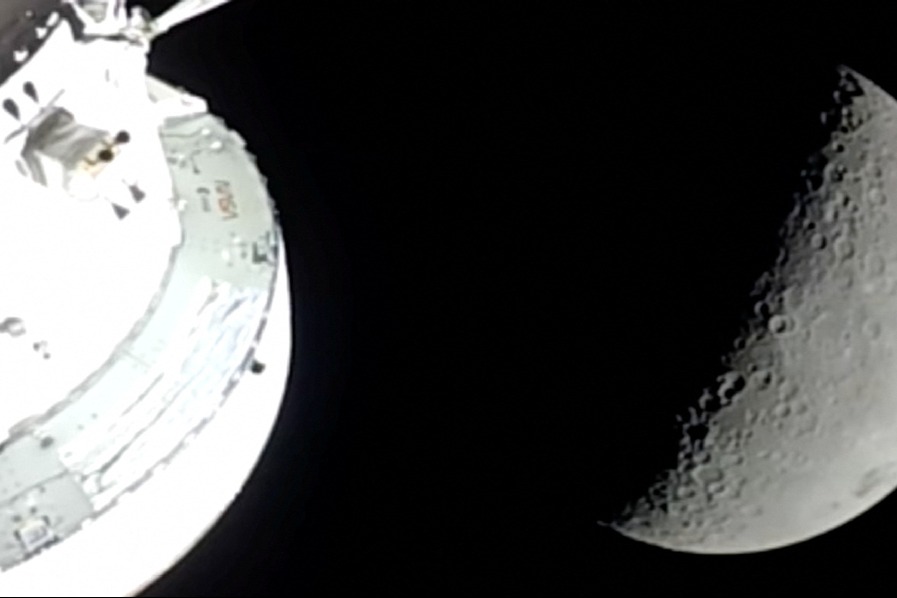
    The planned mission involves a nearly 10-day journey that will take astronauts past the moon, around its far side, and directly back to Earth—testing the Orion capsule’s life support systems without entering lunar orbit or attempting a landing. This testing milestone represents a critical step toward NASA’s Artemis program goals of establishing sustainable lunar exploration.