
Escalating tensions in the ongoing Iran conflict, U.S. President Donald Trump has issued a stark ultimatum to Tehran: reopen the strategically critical Strait of Hormuz, a linchpin of global energy supply chains, and reach an acceptable deal by 20:00 EDT Tuesday (01:00 GMT Wednesday), or face catastrophic American military action that could wipe out the country’s critical infrastructure overnight. Speaking at a White House press conference on Monday, flanked by Joint Chiefs of Staff Chairman General Dan Caine and Defense Secretary Pete Hegseth, Trump doubled down on aggressive rhetoric, even as he acknowledged uncertainty over whether negotiations will yield a breakthrough. The press appearance came just days after U.S. special operations successfully extracted two downed F-15 fighter jet crew members from southern Iran, a mission Trump repeatedly praised as “heroic” during his remarks. The president warned that if the Strait – through which roughly a fifth of the world’s daily oil supplies pass – remains closed past his self-imposed deadline, the U.S. will launch sweeping attacks that would send Iran back to the “Stone Age”. “The entire country can be taken out in one night – and that night might be tomorrow night,” Trump told reporters. He added that Iran would be left with no standing bridges, no functional power plants, and no working critical infrastructure if it fails to comply. Though Iran has already rejected the U.S.’s current proposals, calling instead for an immediate ceasefire, post-conflict reconstruction, and the full lifting of international sanctions on the country, Trump maintained that he remains optimistic that “reasonable” Iranian leaders are negotiating in good faith, in the wake of successive U.S. and Israeli strikes that killed multiple layers of Iran’s top leadership. “We’re going to find out soon enough,” he said. A regional insider familiar with the backchannel negotiations, speaking on condition of anonymity due to the extreme sensitivity of the ongoing discussions, cautioned that meaningful progress is all but impossible without a preliminary ceasefire, noting that widespread communications blackouts across Iran have made rapid dialogue between the two sides nearly impossible. “To convey messages to Iran, getting a response in a reasonable time is not possible,” the official explained, adding that the average response time for any communications currently sits at roughly 24 hours. Mediators from Pakistan, Turkey, and Egypt have been working to facilitate dialogue between the U.S. and Iranian delegations to de-escalate the crisis, but progress remains stalled by these logistical barriers and incompatible core demands. When pressed for details on his administration’s military and diplomatic plans moving forward, Trump offered little additional clarity, only saying that he holds “the best plan” for resolving the conflict and would not be sharing details with the press ahead of implementation. Legal experts, however, have raised urgent alarms that the large-scale deliberate attacks on Iranian civilian infrastructure that Trump has threatened would amount to clear war crimes under international law. Speaking to CBS News, U.S. partner to the BBC, a former National Security Council legal advisor from the Obama administration noted that “Obliterating all power plants, threatening coercive actions against the civilian population to try to bring a government to the negotiating table, those kinds of things are all flatly illegal.” Earlier this week, Trump said he was unconcerned by these legal warnings, and during Monday’s press conference he pushed back on criticism, claiming that the Iranian people would be “willing to suffer to have freedom”, while also reiterating that toppling Iran’s current government is not an explicit goal of U.S. military action. Beyond his threats against Iran, the president used the platform to renew stinging criticism of key U.S. allies who have declined to join American military operations in the conflict, including the United Kingdom, NATO, and South Korea. When speaking of NATO’s refusal to participate in U.S. operations against Iran, Trump said “That’s a mark on Nato that will never disappear.” He also added that the U.S. does not need military support from the United Kingdom in the conflict. In a Monday operational update from U.S. Central Command, the military confirmed that American forces have carried out more than 13,000 individual strikes across Iranian territory since the outbreak of the war. The update offered no additional details on planned offensive operations ahead of Tuesday’s deadline.
标签: North America
北美洲
-

Lil Nas X assault case to be dismissed if he completes mental health programme
Grammy-winning hip-hop artist Lil Nas X, born Montero Lamar Hill, has received court approval to join a court-monitored mental health diversion program, resolving the legal aftermath of his August 2025 arrest in Los Angeles where he faced felony charges for assaulting police officers. The 26-year-old rapper, best known for his breakout hit *Old Town Road*, was taken into custody late one night on Ventura Boulevard, found wandering the street wearing only underwear and cowboy boots. Upon arrest, he was charged with assault on a police officer and resisting arrest, and was immediately transported to a local hospital over concerns of a potential drug overdose. Following the incident, a formal diagnosis of bipolar disorder was made, and Hill entered a not guilty plea to all charges last year.
Before the Monday hearing, Hill had already completed a two-month residential mental health treatment program at a facility in Arizona, addressing the underlying mental health challenges that preceded the incident. In a post-hearing interview with BBC News, Hill’s defense attorney Christy O’Connor shared details of Judge Alan Schneider’s ruling. The judge emphasized that Hill’s behavior at the time of arrest represented an abnormal departure from his typical conduct, noting that the artist has shown significant progress in his treatment journey. “He appears to be doing very well,” Judge Schneider stated, adding, “when treated, he is much better off, and society is much better off.”
Under the terms of the diversion agreement, all pending felony charges against Hill will be dismissed if he successfully completes the mandated treatment program and maintains compliance with all state and federal laws over the next two years. Without this alternative sentencing path, a conviction on the felony charges would have carried a maximum sentence of up to five years in state prison.
Shortly after the ruling was issued, a visibly relieved Hill spoke with Rolling Stone, telling reporters, “I’m thankful. Just very thankful. It could have been much worse.” Photographers captured the rapper smiling and giving a thumbs-up to assembled media outside the courthouse, a public display of his relief at the outcome.
Mental health diversion programs are structured criminal justice alternatives designed to connect people with diagnosable mental health conditions to treatment rather than imposing traditional jail or prison sentences. The programs aim to address the root causes of illegal behavior while reducing the burden of incarceration on both offenders and the justice system.
In comments to *The Times* of the United Kingdom following Hill’s arrest last year, the artist’s father Robert Stafford opened up about the personal pressures that contributed to his son’s mental health crisis. Stafford explained that Hill had been deeply affected by his mother’s long-running struggle with addiction, compounded by the stress of being the primary financial provider for his extended family at a young age. “For a 26-year-old to have to deal with what he’s dealing with — to be a breadwinner for a lot of people, the inability to change his mother’s situation and the pressure he puts on himself,” Stafford said. “That can weigh heavily on your heart.”
-

Moment Artemis II sets distance record being farthest from Earth
In a historic milestone that marks another leap forward in human deep space exploration, the four-person crew of NASA’s Artemis II mission has surpassed a half-century-old space distance record, pushing farther from Earth than any human mission has ever traveled.
By early Saturday, the mission had already exceeded the 248,655-mile (400,171-kilometer) benchmark set by the Apollo 13 crew back in 1970, a record that stood unbroken for 54 years. What makes this achievement even more remarkable is that the Artemis II spacecraft is still continuing its outbound trajectory, adding more distance between the crew and our home planet with every passing hour of the mission.
The record-breaking flight is a key test for NASA’s ambitious Artemis program, which aims to establish a sustained human presence on the moon and pave the way for future crewed missions to Mars. Apollo 13’s original record was set amid a harrowing near-disaster, when an oxygen tank explosion crippled the craft mid-mission and forced the crew to slingshot around the far side of the moon on their emergency return journey, racking up the distant milestone unexpectedly. In contrast, Artemis II’s flight is a carefully planned demonstration mission, designed to test all of the Orion spacecraft’s critical systems ahead of future lunar landing missions, carrying human astronauts deeper into the solar system than we have gone in decades.
As the mission continues its path beyond the moon, the Artemis II crew is already writing a new chapter in human space exploration, proving once again the continuous progress of humanity’s quest to explore beyond Earth’s boundaries.
-

What’s on the far side of the Moon?
For decades, the hidden far side of the Moon has captivated astronomers, space enthusiasts, and researchers alike, its rugged terrain locked from view from Earth’s surface and shrouded in a veil of scientific mystery. Now, a milestone in modern human space exploration has pulled back that curtain a little further: the four-person crew of NASA’s Artemis II mission has successfully completed a looping flyby trajectory that carried the spacecraft directly around the little-explored far side of Earth’s celestial companion.
The Artemis program, NASA’s flagship initiative to return humans to the lunar surface for the first time since the end of the Apollo program half a century ago, marked a critical proof-of-concept with this mission. Unlike the Apollo missions that primarily targeted near-lunar orbit and selected surface landing sites, Artemis II’s carefully calculated orbital path was designed specifically to test spacecraft systems, navigation capabilities, and deep space communication infrastructure while giving human observers their first up-close look at the lunar far side in decades.
During the period the spacecraft was blocked from direct line-of-contact with Earth, mission control teams relied on NASA’s lunar relay satellite network to maintain continuous communication with the crew, testing infrastructure that will support the upcoming Artemis III surface landing mission. The far side of the Moon, which differs dramatically from the near side in its geological composition — boasting thicker crust, more impact craters, and far fewer dark volcanic maria — offers unique scientific opportunities that have only been sampled by uncrewed orbiters and landers until now.
This successful flyby paves the way for future robotic and human exploration of the lunar far side, which scientists believe holds critical clues about the formation of the Earth-Moon system, early solar system impacts, and even offers a uniquely radio-quiet environment ideal for future deep space astronomy observations. For the Artemis program, the completion of this leg of the mission confirms that human deep space exploration capabilities are on track to establish a sustainable lunar outpost, and eventually prepare for human missions to Mars.
-
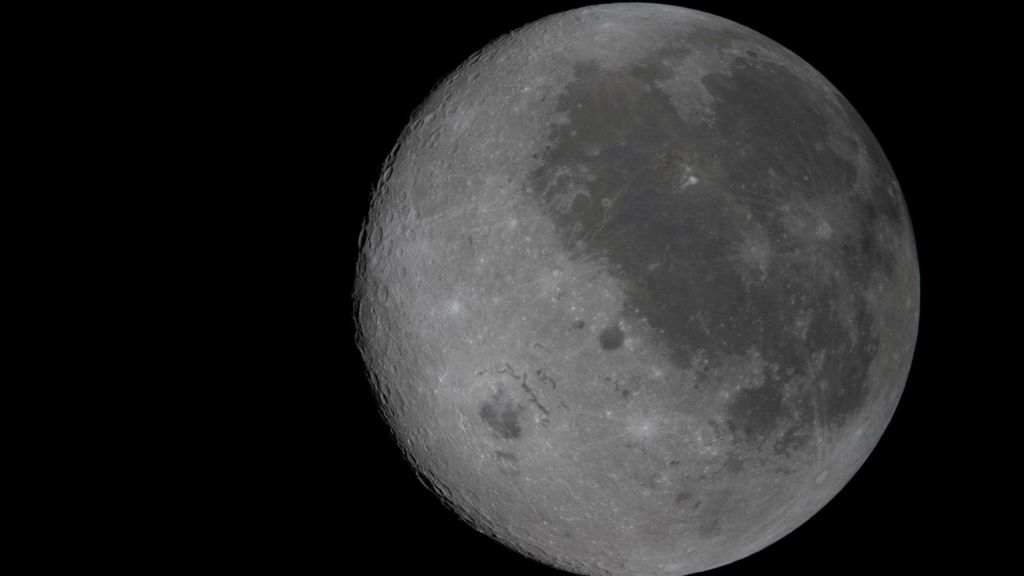
Emotional crew names Moon crater after commander’s late wife
In a heartfelt, emotional tribute that blends personal loss with humanity’s ambition for deep space exploration, the four-member crew of NASA’s Artemis II mission has named a prominent crater on the surface of the Moon after the late wife of the mission’s commander, Reid Wiseman.
Wiseman’s spouse, Carolyn, lost her battle with cancer in 2020, when she was just 46 years old, leaving behind a legacy of warmth and resilience that her husband and his teammates have carried with them through every step of training for the historic lunar mission. The gesture, announced by the crew as they finalize preparations for their upcoming 10-day lunar flyby, marks a rare and deeply personal connection between a space exploration team and the celestial body they are set to study.
Carolyn Wiseman was widely remembered by those close to the couple as a passionate supporter of Reid’s career in spaceflight, often accompanying him to public events and encouraging his work advancing human exploration beyond low-Earth orbit. Her long fight with cancer, which ended three years before the Artemis II mission was scheduled to launch, became a source of quiet strength for Wiseman as he stepped into the role of leading NASA’s first crewed lunar mission in over 50 years.
For the Artemis program, which aims to establish a long-term sustainable presence on the Moon and pave the way for future human missions to Mars, the naming honors both personal loss and the often-unrecognized contributions of family members who stand behind astronauts as they pursue historic goals. The crater, located on the lunar near side in a region that will be clearly visible to the Artemis II crew during their orbit, will carry Carolyn’s name permanently in lunar mapping records, creating a lasting memorial that ties her memory to one of humanity’s greatest adventures.
Members of the crew have shared that the decision to name the crater was a unanimous one, rooted in their respect for the hardship Wiseman has overcome and the impact Carolyn had on everyone involved in the mission. What began as a personal journey through grief has become a universal reminder of the human stories that underpin every major space exploration achievement.
-
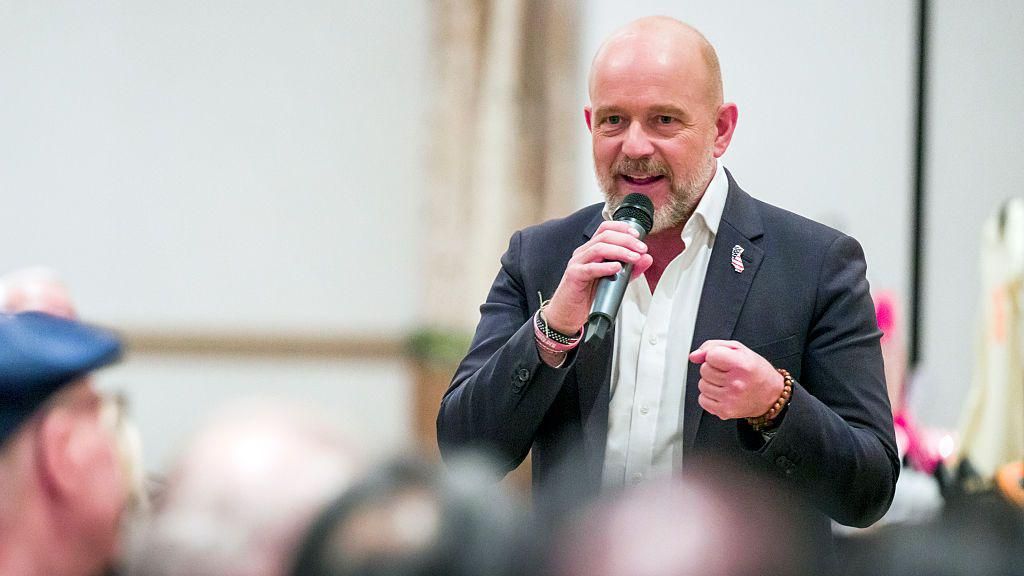
Trump endorses ex-UK political aide Steve Hilton for California governor
A surprise endorsement from former U.S. President Donald Trump has upended the already chaotic race for California governor, turning a deeply blue state’s typically predictable primary into one of the most watched political contests of 2026. In a post to his social platform Truth Social, Trump threw his full support behind Republican candidate Steve Hilton, a one-time top policy advisor to former British Prime Minister David Cameron who has built a public profile as a conservative commentator in the U.S.
Trump’s endorsement framed the race as a referendum on decades of one-party rule in California, arguing that Democratic governance has produced catastrophic outcomes pushing residents to leave the state in droves. “Steve Hilton will be a great governor,” Trump wrote in his post.
Hilton, who moved to the U.S. more than a decade ago and currently serves as a contributor to Fox News, quickly responded to the endorsement on X, saying he was “deeply honored” to earn the backing of the Republican former president. Hilton entered the race on a platform centered on cutting state taxes, reining in bloated state government spending, and lowering the cost of living for working families, particularly for housing and essential consumer goods.
The candidate’s unusual political origin story sets him apart from other contenders: after serving as Cameron’s senior aide from 2010 to 2012 during his tenure as British prime minister, Hilton broke with Cameron over his immigration policy, eventually relocating to California where he took a position as a visiting scholar at Stanford University in 2012. He began the process of applying for U.S. citizenship in 2019, and hosted his own primetime show on Fox News for several years before becoming a regular contributor.
California uses a nonpartisan “jungle primary” system for statewide offices, where all candidates regardless of party appear on the same June 2 primary ballot, and the top two vote-getters advance to the November general election. This year, 10 candidates are vying for the seat: 8 Democrats and 2 Republicans, Hilton and Riverside County Sheriff Chad Bianco.
For the first time in 20 years, California Republicans see a rare opening to capture the governor’s mansion. A March 2026 poll from the University of California, Berkeley Institute of Governmental Studies sent shockwaves through state political circles when it found both Hilton and Bianco leading all Democratic candidates in early preference. The surprising result left Democratic leaders alarmed, prompting top state party officials to pressure lower-polling Democratic candidates to drop out of the race to avoid splitting the vote. The poll showed Congressman Eric Swalwell, former Congresswoman Katie Porter, and billionaire climate activist Tom Steyer leading the fractured field of eight Democratic contenders.
However, Trump’s high-profile endorsement of Hilton creates new uncertainty for both parties. Political analysts note that Trump’s backing could be a double-edged sword for Hilton: while it consolidates conservative support behind his campaign, it may turn off moderate and independent voters in the heavily liberal state, hurting his chances in a general election against a Democratic opponent. For the other Republican candidate Bianco, the endorsement threatens to squeeze his support out entirely, potentially leaving only one Republican viable for the top two spots, a dynamic that could still open the door for two Democrats to advance. Even with the early polling advantage for the GOP, the state’s long Democratic streak and deep partisan lean mean the race remains far from settled, with all eyes turning to the June primary to see how Trump’s endorsement shifts voter preferences.
-
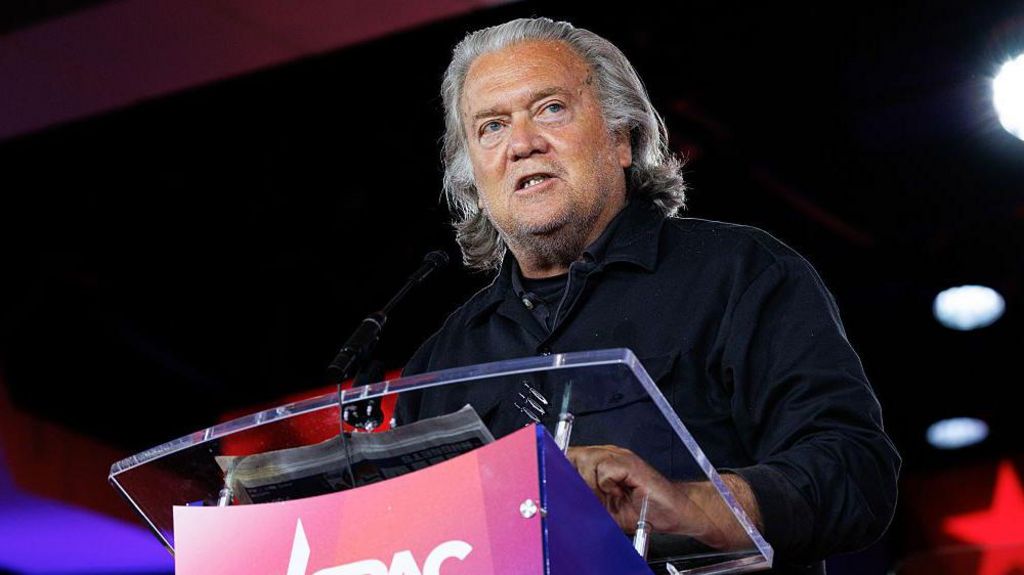
US Supreme Court paves way for dismissal of Steve Bannon conviction
In a significant legal development with deep ties to American partisan politics, the U.S. Supreme Court has opened the door to vacating a 2022 criminal contempt of Congress conviction against Steve Bannon, a long-time close ally of former President Donald Trump. The high court’s unsigned ruling issued Monday overturns a prior appellate court decision that upheld the original guilty verdict, and remanded the case back to a lower Washington D.C. federal court for final action, where legal analysts broadly expect the conviction to be dismissed outright.
Bannon’s conviction stemmed from his outright refusal to comply with a congressional subpoena issued by investigators probing the January 6, 2021 riot at the U.S. Capitol. The subpoena sought documents and testimony related to Bannon’s role in events leading up to the violent insurrection, where supporters of Trump stormed the Capitol building in an attempt to overturn the results of the 2020 presidential election.
A polarizing figure in modern conservative politics, Bannon has been a core figure in Trump’s political orbit for more than a decade. Widely regarded as a key strategist behind Trump’s unexpected 2016 presidential election victory, he served a turbulent tenure as a White House senior advisor during Trump’s first year in office. After leaving the administration, he remained one of Trump’s most vocal and high-profile supporters on the American right, even going so far as to promote the idea of Trump seeking a third presidential term— a proposal that directly contradicts U.S. constitutional term limits set for the office of president.
Following Bannon’s 2022 conviction, he was sentenced to four months in prison, a sentence he has already fully served at a low-security federal correctional facility in Connecticut. That means any eventual dismissal of the conviction will largely carry symbolic weight rather than altering Bannon’s current circumstances, as he has already completed his court-ordered incarceration.
The case took an unusual turn after the Supreme Court initially declined to intervene in Bannon’s jail sentence when it was first appealed. Prosecution of the contempt case was brought during Democratic President Joe Biden’s administration. Last year, after lower courts rejected his challenges to the conviction, Bannon once again petitioned the Supreme Court to review his case.
In a striking move that underscores the current political alignment of the federal government following Trump’s 2024 re-election, the U.S. Solicitor General D. John Sauer confirmed in his filing that the current administration agrees with Bannon’s position. The government holds that dismissing the entire criminal case is “in the interests of justice”, Sauer wrote, and the Department of Justice has already filed a formal motion to dismiss the indictment in the lower court. The lower court will now proceed to take up the motion in line with the Supreme Court’s remand order.
-
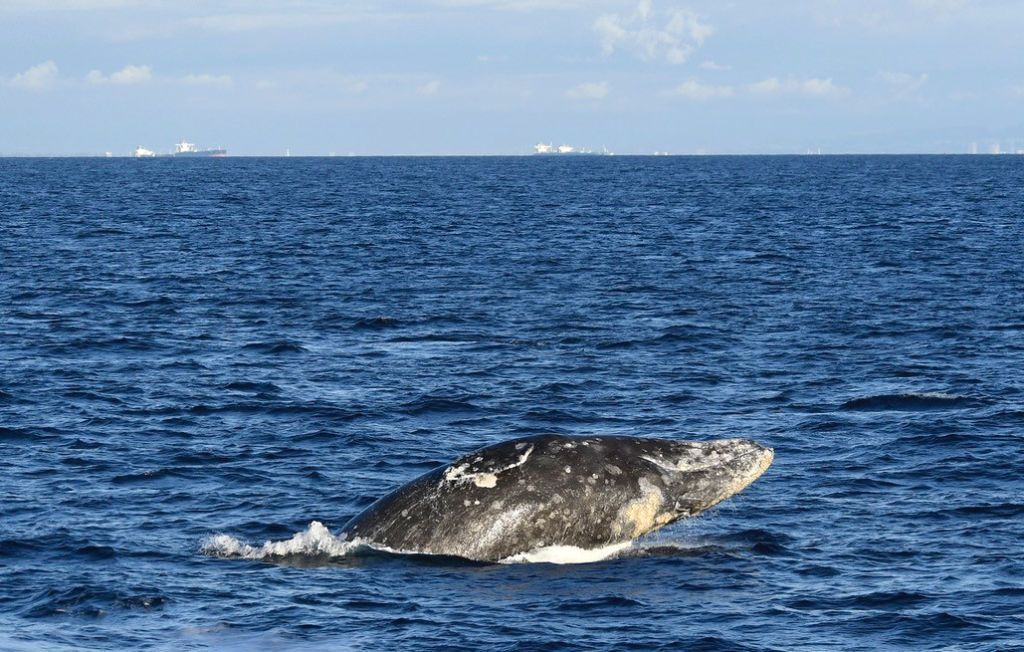
Young gray whale dies after swimming up river in Washington state
A young gray whale that wandered more than 20 miles inland into a Washington state river has been found dead, with marine researchers pointing to severe food scarcity along the species’ iconic migration route as the most probable cause.
The Cascadia Research Collective, a leading marine science research organization based in the Pacific Northwest, announced the death of the juvenile whale — nicknamed “Willapa Willy” by local community members — in a Facebook update shared Saturday. The group confirmed that it is currently assessing site safety conditions to conduct a full necropsy to confirm the exact cause of death.
Willapa Willy was first spotted last Wednesday in the north fork of the Willapa River, located roughly 145 miles southwest of Seattle. At the time of its initial sighting, researchers noted that while the whale appeared noticeably underweight, it showed no visible signs of injury and was behaving consistently with typical gray whale activity. Research teams held out hope that the animal would navigate back out to the Pacific Ocean on its own, but those hopes went unfulfilled when the whale was found dead days later.
John Calambokidis, a veteran research biologist with Cascadia Research Collective, explained to the Associated Press that unusual inland sightings like this are often tied to the species’ annual spring migration pattern. Every year, gray whales travel hundreds of miles north along the Pacific Coast to reach feeding grounds in the Arctic, drawing down stored fat and nutritional reserves to fuel the long journey. When food becomes scarce along the route or at their destination, hungry whales often stray far from their normal path in a desperate search for viable feeding areas — exactly the scenario that likely led Willapa Willy into the Willapa River, Calambokidis said.
In recent years, eastern Pacific gray whales have faced dramatic declines in available food sources in the northern Bering and Chukchi seas off Alaska’s coast, a crisis that sits at the center of growing threats to the species, Calambokidis added.
According to the U.S. National Marine Fisheries Service, eastern Pacific gray whales are a cornerstone of whale watching and ecotourism along the North American West Coast. Fully grown adults can reach up to 15 meters (49 feet) in length and weigh as much as 40,000 kilograms (90,000 pounds). Along their multi-thousand mile migration routes, the species already faces widespread threats from ship strikes and entanglement in commercial fishing gear. Unlike many other cetacean species, gray whales tend to travel alone, and long-term social bonds between individual whales are considered rare, per NOAA data.
Willapa Willy’s death is not an isolated incident: earlier this month, two full-grown adult gray whales washed up dead on beaches in the nearby Ocean Shores area. Post-mortem assessments found both adults were severely malnourished, and the male whale also showed major head trauma consistent with a ship strike.
Latest population surveys conducted in winter 2025 confirm that the overall eastern Pacific gray whale population continues to decline. NOAA Fisheries estimates the current population stands at roughly 13,000 individuals, the lowest recorded population count since the 1970s.
-

Savannah Guthrie returns to NBC’s Today show, as search for mother goes on
One of the most high-profile figures in American morning television, Savannah Guthrie is set to resume her anchoring role on NBC’s iconic *Today* show this Monday, more than two months after her 84-year-old mother Nancy was first reported missing under suspicious circumstances.
Guthrie first stepped away from her on-air duties in late January, just two days after her mother disappeared from her home in the outskirts of Tucson, Arizona. She also canceled her planned participation in NBC’s broadcast of the 2026 Winter Olympics to focus on coordinating the search for Nancy. This upcoming Monday marks her first return to the *Today* studio since her 30 January departure.
The timeline of Nancy’s disappearance leaves few clues for investigators: relatives dropped her off at her residence on the evening of 31 January, but she never arrived at a friend’s home the next morning to join a virtual church service, and she left behind all of her necessary prescription medications. In February, Savannah and her family publicly announced a $1 million reward for any information that leads to Nancy’s safe return, a gesture that has drawn widespread public attention to the case.
Law enforcement officials have confirmed they believe Nancy was taken against her will from her home, but as of yet, no potential motive has been released to the public, and no suspects have been taken into custody. Savannah has previously opened up about the heavy weight of the case, sharing that she has grappled with the possibility that her own national fame as a leading television journalist could be connected to her mother’s abduction, a thought she described as almost unbearable to process.
Despite the ongoing uncertainty and grief of the past two months, Guthrie has framed her return to work as a necessary step. Last month, she told *Today* that returning to the show is part of her current purpose, even as she acknowledged she was unsure how she would navigate returning to her professional role. “I can’t not come back. This is my family,” she said of her colleagues at NBC.
Most recently, on Easter Sunday, Guthrie made a public appearance at New York’s Good Shepherd Church, where she reaffirmed her unshakable Christian faith in a closing video address to the congregation. “I still believe. And so I say with conviction, ‘Happy Easter,’” she stated, offering a message of quiet resilience amid the ongoing search that has gripped national attention.
-

US warns of ‘hell’ in Iran amid strikes
As a self-imposed 48-hour deadline for a negotiated peace with Iran ticks down, former U.S. President Donald Trump has issued a stark warning that “all hell will break loose” across the country if no agreement is reached, with the broader 10-day ultimatum for Iran to fully reopen the Strait of Hormuz also approaching.
The escalating threat landed amid a sharp surge in cross-border strikes across the Middle East over the Easter weekend, which left critical energy infrastructure in Gulf Cooperation Council (GCC) states and civilian sites across Iran — including universities, research facilities and areas near nuclear infrastructure — heavily damaged.
On Friday, warplanes targeted and destroyed a research facility affiliated with Shahid Beheshti University, one of Iran’s most prestigious higher education institutions, located in northern Tehran. The strike on the university’s Laser and Plasma Research Institute marks the latest in a growing pattern of civilian site targeting by U.S. and Israeli forces in their ongoing military campaign against Iran, which launched on February 28.
During an on-site press briefing Saturday, Iranian Minister of Science, Research and Technology Hossein Simaei Saraf confirmed that at least 30 Iranian universities have sustained damage from U.S. and Israeli strikes since the conflict began.
In Sunday’s most high-profile development, Trump announced on his Truth Social platform that U.S. military forces had completed what he called “one of the most daring search and rescue operations in U.S. history,” recovering a “highly respected colonel” whose plane was downed over Iranian territory. The colonel was the second of two crew members aboard an F-15E Strike Eagle fighter jet shot down Friday; the first service member was extracted earlier.
Iranian military officials pushed back sharply on the U.S. rescue claim hours later. A spokesperson for Iran’s Khatam al-Anbiya Central Headquarters announced that Iranian forces intercepted and destroyed multiple U.S. aircraft attempting to infiltrate southern Isfahan province to extract the downed aircrew, fully foiling the operation. According to the spokesperson, the destroyed aircraft included two Black Hawk helicopters and two C-130 military transport planes, all of which were left burning after the strike.
Al Jazeera reported Sunday that multiple civilian fatalities occurred during search operations for the downed F-15E crew in Iran’s southwestern Kohgiluyeh and Boyer-Ahmad Province. Iran’s state-run Fars News Agency confirmed the casualties: five people killed and eight wounded in an attack on the Koh Siah area of Kohgiluyeh County, with an additional four fatalities recorded in the Vazg and Kakan districts of Boyer-Ahmad County.
The previous day, the International Atomic Energy Agency (IAEA) confirmed one person was killed by projectile fragments after a U.S.-Israeli strike hit a site near Iran’s Bushehr nuclear power plant, the fourth strike near the facility to date.
The Israel Defense Forces (IDF) also released a statement confirming it had conducted airstrikes on more than 120 targets across central and western Iran over the weekend, with planned targets including ballistic missile stockpiles, drone production facilities and Iranian air defense installations.
Global and regional officials have raised urgent alarms over the growing humanitarian and nuclear risks of the escalating conflict. On April 4, Iranian Foreign Minister Abbas Araghchi took to X to warn that radioactive fallout from a strike on Bushehr would devastate capital cities across the GCC, not just Tehran. He also accused U.S. media of misrepresenting Iran’s negotiating position, reiterating that Iran’s core demand is a permanent end to what he called the “illegal war” imposed on the country.
World Health Organization Director-General Tedros Adhanom Ghebreyesus joined the IAEA in sounding the alarm on Sunday over nuclear facility safety in Iran. “The latest incident involving the Bushehr nuclear power plant is a stark reminder: a strike could trigger a nuclear accident, with health impacts that would devastate generations,” he wrote on X. “With every passing day of this escalating conflict, the stakes and threats are raised higher and higher. We must de-escalate now. Peace is the best medicine.”
Former IAEA Director General Mohamed ElBaradei also issued a public appeal, urging GCC member states and the United Nations to intervene to stop Trump from turning the entire region into an inferno.