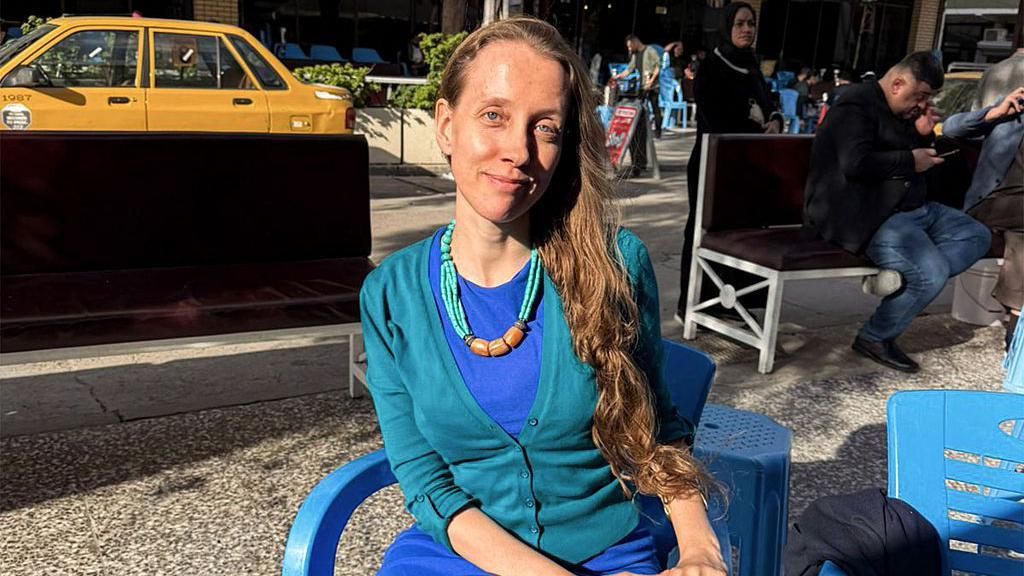
Nearly one week after a U.S. freelance journalist was abducted on the streets of Baghdad, an Iran-aligned Iraqi Shia militia has announced plans to free the 49-year-old reporter, with major uncertainty still surrounding her current status and whereabouts.
Kataib Hezbollah, the paramilitary group that held Shelly Kittleson following her March 31 kidnapping, confirmed Tuesday it would release the journalist on the sole condition that she departs Iraq immediately. In an official statement released by the group’s senior security official Abu Mujahid al-Assaf, the decision to free Kittleson was framed as a gesture recognizing the outgoing Iraqi prime minister’s national positions.
Multiple major U.S. news outlets, including The New York Times and The Associated Press, have cited anonymous Iraqi government officials claiming Kittleson was released Tuesday, but no verifiable information about her current location has been made public as of this reporting.
In the immediate aftermath of the abduction, Iraqi security forces launched a manhunt for the kidnappers. The operation resulted in one suspect being taken into custody after one of the perpetrators’ vehicles overturned during the chase. Iraqi Prime Minister Mohammed Shiaa al-Sudani also issued a formal order last week directing all security agencies to track down and hold accountable all individuals responsible for the abduction of foreign nationals in the country.
In a separate social media post, Assaf added that Kataib Hezbollah would soon publish an audio recording purporting to detail Kittleson’s “activities and role” within Iraq, though the group offered no further context or timeline for the release of the recording.
Kittleson’s abduction comes against a backdrop of escalating regional tensions, marked by repeated attacks on U.S.-affiliated targets across Iraq and the broader Middle East carried out by Iran and its allied Iraqi Shia militias since the outbreak of the Israel-Hamas conflict, which has strained Iranian-U.S. relations.
Alex Plitsas, a CNN national security analyst who is Kittleson’s designated emergency contact and close friend, confirmed Tuesday that he had reviewed the militia’s purported release statement, but emphasized that no official confirmation of the release has been issued by the U.S. government.
Multiple U.S. officials had repeatedly reached out to Kittleson in the months and weeks leading up to her abduction to warn her of specific threats targeting her, Plitsas previously told CBS, the U.S. partner of the BBC. According to Plitsas, U.S. intelligence agencies informed Kittleson that her name appeared on a target list held by Kataib Hezbollah, which had been actively plotting to kidnap or kill female foreign journalists operating in Iraq.
A veteran conflict reporter based in Rome, Italy, Kittleson has covered major conflicts across Afghanistan, Iraq, and Syria for dozens of international publications, according to her public professional profile on social media platform X. The U.S. State Department has maintained a longstanding Level 4 travel advisory urging all U.S. citizens to avoid all travel to Iraq due to persistent threats of kidnapping, violence, and terrorism targeting foreign nationals.