标签: North America

北美洲

  • Victim or enabler? Epstein girlfriend who could face questions despite plea deal

    Victim or enabler? Epstein girlfriend who could face questions despite plea deal

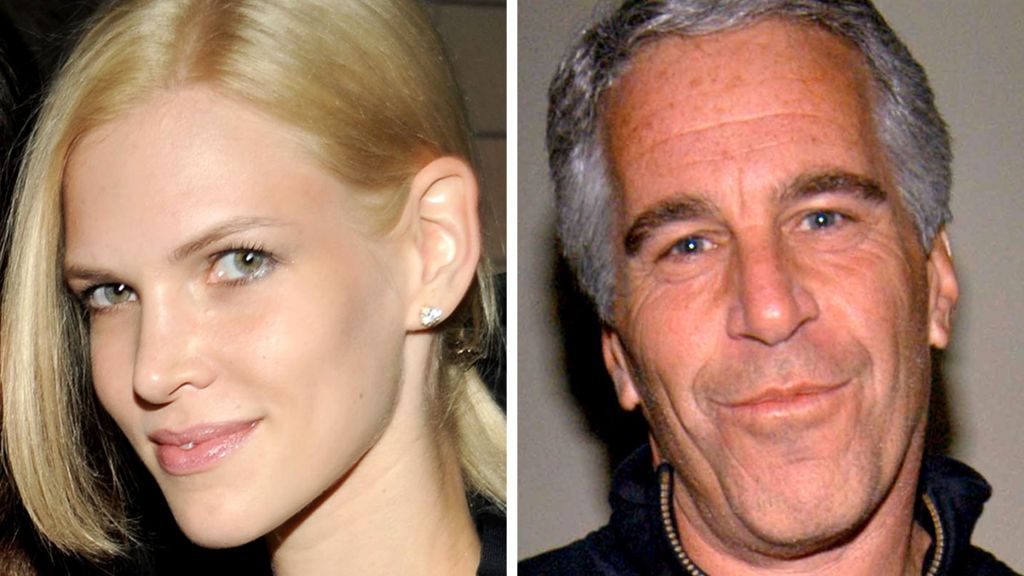
    For nearly a decade after Jeffrey Epstein’s death in prison while awaiting sex trafficking charges, one of his closest partners has remained out of the public eye – but new scrutiny of court documents, private emails and first-hand accounts is pulling Nadia Marcinko into the center of ongoing questions about Epstein’s criminal network.

    Marcinko, a former Slovakian model who trained as a professional pilot, was Epstein’s primary romantic partner for seven years following the end of his sexual relationship with Ghislaine Maxwell, newly analyzed correspondence from Epstein’s personal files confirms. Their connection began in 2003, when 18-year-old Marcinko, then working for a modeling agency run by Epstein’s close associate Jean-Luc Brunel, was introduced to the 50-year-old financier at a New York birthday party. Brunel arranged Marcinko’s U.S. visa, and Epstein funded Brunel’s agency to the tune of $1 million, creating an immediate power imbalance that would shape their entire relationship.

    Born into a stable, upper-middle-class Slovakian family, Marcinko was described by childhood classmates as deeply reserved – a “little grey mouse” who was pushed into modeling as a teenager. Within days of their first meeting, Epstein invited her to his Palm Beach mansion, then to his private Caribbean island Little St. James, and the pair quickly became constant companions. Emails show the pair marked September 17 as their relationship anniversary for years, and by 2009, Epstein acknowledged to a third party that he was “in love with nadia.”

    But the warm exchanges in their correspondence are paired with clear evidence of Epstein’s coercive, controlling behavior. He dictated every detail of Marcinko’s life, requiring her to master domestic skills, complete a fixed reading schedule, and get his approval for any item brought into their shared home, according to a 2009 email. In a heavily redacted Department of Justice document released earlier this year, Marcinko (identified by matching testimony details) told investigators Epstein controlled her weight and clothing, forced her to undergo multiple plastic surgeries, and physically abused her – including choking her and throwing her down a flight of stairs. In one archived email, Marcinko herself accuses Epstein of “abusive partner behavior.”

    A recurring theme through years of emails is Epstein’s demand that Marcinko recruit other women to satisfy his sexual desires. Marcinko complied with these requests, writing in a 2006 message: “I will do what I can, even though if this is simply about you having sex with someone else, I don’t know how it makes our relationship better. I will try to find girls whenever we are in New York.” The BBC’s review of the files found no direct evidence Marcinko ever recruited underage girls, but legal experts note that deceptive recruitment of adults for sexual exploitation can still qualify as trafficking. Even at the height of her involvement, Marcinko acknowledged her discomfort with the dynamic, writing in 2006: “Since I met you, my life revolves around you, there is nothing else I have and it makes me feel very uneasy.”

    During Epstein’s 13-month 2008-2009 prison sentence for a 2008 conviction of soliciting sex from a minor, prison records show Marcinko visited him at least 67 times. That same period, Epstein paid for her to train as a commercial pilot, a skill she pursued enthusiastically, earning multiple certifications and working toward financial independence. After Epstein’s release, their relationship intensified, with emails revealing the pair attempted to start a family together in 2009. They finally split in 2010 after a particularly violent assault, Marcinko told investigators, though she remained connected to Epstein for years afterward: she worked as a co-pilot for his private jet starting in 2012, and Epstein agreed to double her annual income from aviation work as late as 2015.

    In a striking turn, Marcinko began cooperating with the FBI’s Epstein investigation in 2018, a year before Epstein’s second arrest and death in prison. In 2022, when her U.S. visa expired, the FBI supported her application for permanent residency, stating in court filings that she had been “recruited, harbored and obtained by Jeffrey Epstein and others for purposes of a coercive sexual relationship.” Since that ruling, she has dropped out of public view, with public records linking her to a New York Zen Buddhist center as recently as 2024. Her legal team has previously stated she is a victim of Epstein’s abuse, working through trauma and plans to speak out publicly to support other survivors one day.

    Today, Marcinko finds herself facing new calls for investigation. She was one of four women granted immunity from prosecution as part of Epstein’s controversial 2008 plea deal, and while two of the other women – Sarah Kellen and Lesley Groff – are set to be questioned by U.S. congressional investigators this year, Representative Anna Paulina Luna, a Republican member of the House Oversight Committee, has called for all four women (including Marcinko and Adriana Ross) to be probed, claiming all were complicit in the trafficking of minors.

    The case of Marcinko raises a nuanced, critical question that legal experts are still grappling with: Can a person who was a victim of coercive control also be considered an accomplice to crimes committed under that coercion? Bridgette Carr, a clinical law professor at the University of Michigan who specializes in human trafficking victim advocacy, says the key distinction lies in whether a victim was able to escape the perpetrator’s power before committing criminal acts. “The line I draw is whether the victim has ever been away from the power and control of the perpetrator,” Carr explains. “What matters is whether it’s reasonable that [the victim] would believe that that perpetrator [still] has power over them.”

    For outsiders, the full scope of the choices Marcinko made during her 15-year association with Epstein can never be fully known, but one 2012 email she sent to Epstein offers a rare glimpse into her own conflicted conscience: “I do not want to be with you, but it upsets me to see you use the same exact patterns to seduce, manipulate, and ultimately control and hurt other girls. I don’t even like them and I actually feel guilty about knowing how they will end up. I know what you are capable of and I will always be protective of you out of pure loyalty and stubbornness, but my conscience is far from clear.” The BBC reached out to Marcinko for comment for this report, and received no response.

  • Deadly shooting at San Diego mosque leaves 5 dead, including teen suspects

    Deadly shooting at San Diego mosque leaves 5 dead, including teen suspects

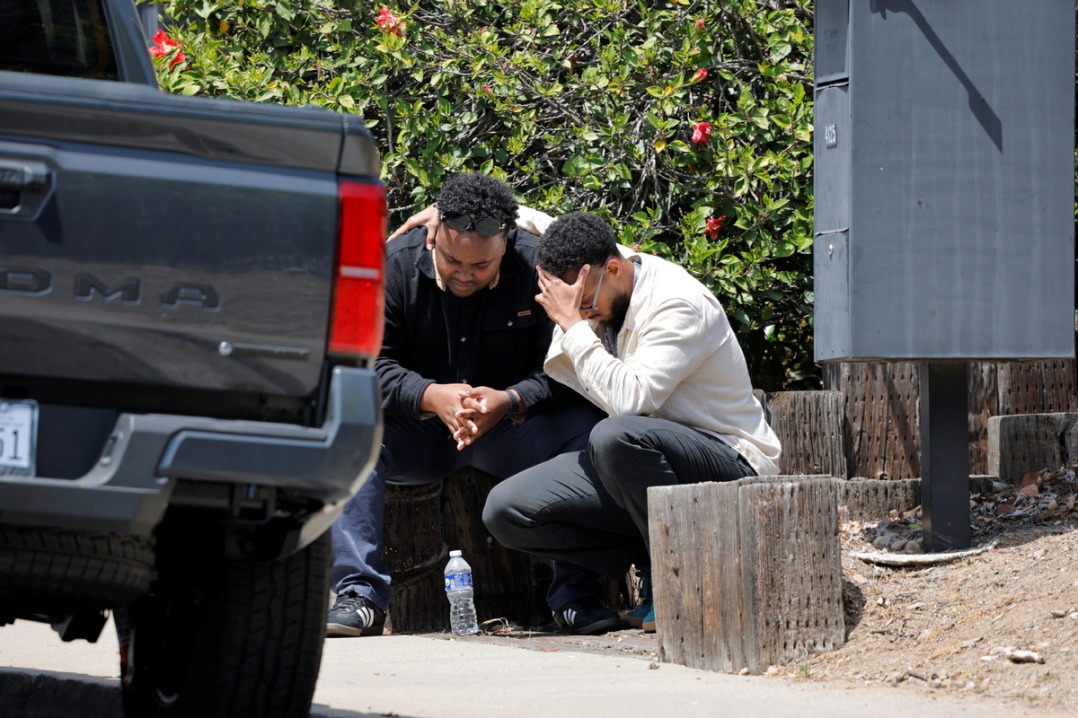
    On May 18, 2026, a mass shooting at the Islamic Center of San Diego, one of Southern California’s largest Muslim places of worship, left five people dead, three congregants and two teenage suspects, and sent shockwaves through Muslim communities across the American West Coast. What began as a routine Monday of worship and study at the mosque in San Diego’s quiet Clairemont neighborhood erupted in violence shortly before noon, triggering an immediate large-scale response from local law enforcement.

    San Diego Police Chief Scott Wahl told reporters that officers arrived on scene within four minutes of the first active shooter call. First responders discovered three fatally shot adult victims outside the building, among them a security guard who officials have credited with stopping the attack from becoming far deadlier. “The security guard played a pivotal role in keeping this from being much worse,” Wahl confirmed at a press briefing shortly after the shooting.

    As law enforcement teams swept the mosque and its surrounding grounds for additional threats, reports of fresh gunfire surfaced several blocks from the site of the initial attack. Authorities ultimately tracked the two suspects, 17-year-old and 19-year-old males, to a vehicle where they were found dead from what appear to be self-inflicted gunshot wounds, according to police statements.

    Investigators are currently working to confirm that anti-Muslim extremist ideology motivated the attack. The Los Angeles Times reported that law enforcement found a cache of hate-related materials, anti-Islamic writings, and a suicide note referencing racial supremacy inside the suspects’ vehicle. Authorities also noted that at least one of the firearms used in the shooting is believed to have been obtained from one of the suspects’ parent’s home. The Federal Bureau of Investigation has joined local law enforcement to lead the investigation, which is officially being treated as a hate crime probe.

    The Islamic Center of San Diego does not only operate as a place of worship – it also hosts an accredited K-12 Islamic school on its grounds. Police immediately evacuated all students and staff from the campus during the response, and community leaders later confirmed that no children were harmed in the attack. The timing of the violence, which came at the start of Dhu al-Hijjah, one of the holiest months in the Islamic calendar when Muslims worldwide prepare for the annual Hajj pilgrimage and Eid al-Adha celebrations, has deepened the community’s trauma.

    “This is obviously very alarming,” said Deana Helmy, chair of the Islamic Shura Council of Southern California. “This is a house of worship. There’s a school with children there who are trying to learn.” Taha Hassane, the mosque’s long-serving imam, added that the attack had left an unprecedented mark on the local Muslim population. “We have never experienced tragedy like this before,” Hassane said. “It is extremely outrageous to target a place of worship.”

    In the wake of the shooting, regional civil rights groups including the California chapter of the Council on American-Islamic Relations (CAIR-California) have begun working with mosques across the state to audit and upgrade existing security protocols to prevent similar attacks. Both California Governor Gavin Newsom and San Diego Mayor Todd Gloria confirmed they have received full briefings on the incident and issued statements praising the speed and work of first responders at the scene.

    As of May 19, the investigation remains ongoing, with authorities still working to piece together the full sequence of events and confirm all motivating factors behind the attack. The shooting has renewed conversations about rising anti-Muslim hate violence and gun control in the United States.

  • San Diego mosque attack: Police explains how it unfolded

    San Diego mosque attack: Police explains how it unfolded

    Law enforcement officials have released new details outlining the sequence of a deadly shooting at a San Diego, California, mosque that claimed four lives, including the two teenage attackers. According to police accounts, the two young suspects carried out a premeditated attack inside the place of worship, opening fire on worshippers and killing three men before turning the guns on themselves. Investigators are currently working under the working theory that the violence was motivated by hate, a classification that points to the targeting of the Muslim community based on religious bias. As the investigation continues, authorities are working to piece together a full picture of the attackers’ backgrounds, potential radicalization pathways, and any prior warning signs that could have been missed. The attack has sent shockwaves through the local San Diego community and sparked renewed national conversations about religious tolerance, gun violence prevention, and the growing threat of domestic extremism targeting minority faith groups. Local faith leaders have called for unity across religious communities in the wake of the tragedy, while law enforcement has pledged to increase security patrols at houses of worship across the region to prevent further acts of violence.

  • Elon Musk just lost another lawsuit. Will he keep fighting?

    Elon Musk just lost another lawsuit. Will he keep fighting?

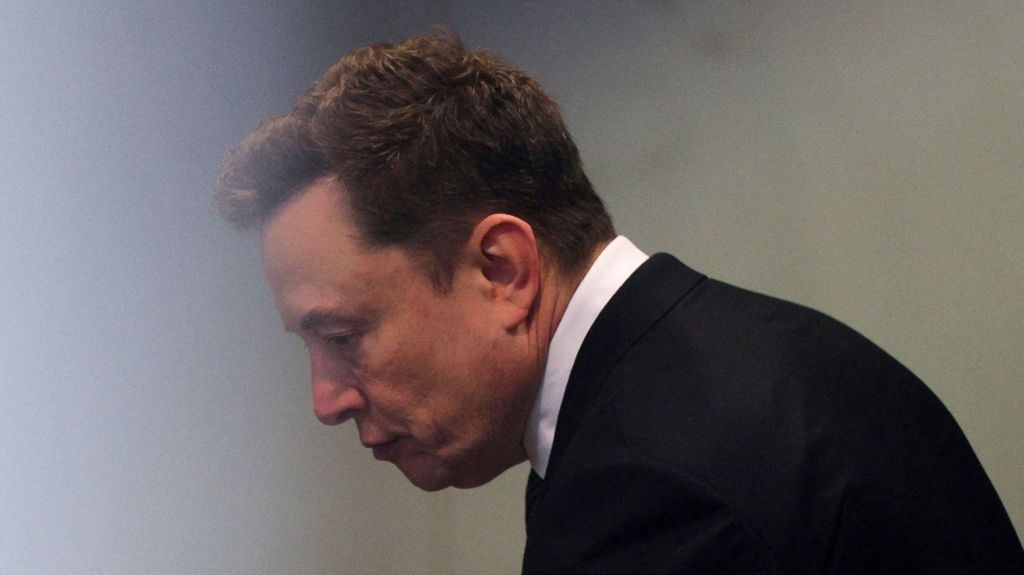
    Over the past year, billionaire entrepreneur Elon Musk has racked up a growing list of legal setbacks across his sprawling business empire, and his recent defeat in a high-profile lawsuit against OpenAI and its chief executive Sam Altman marks the latest in this string of unfavorable court outcomes.

    Monday’s ruling against Musk adds to a timeline of losses and costly settlements that stretches back to late 2024. That December, Musk agreed to resolve long-running disputes with former Twitter executives and thousands of ex-employees of the social platform, which he rebranded as X after his 2022 acquisition. He had spent years fighting to avoid paying the severance and negotiated damages the group was owed, ultimately walking away from the conflict with a settlement.

    Just three months later, in March 2025, a judge ruled against Musk in a lawsuit brought by Twitter investors, who alleged he had misled them with public statements he made during his $44 billion takeover of the platform. That same month, another judge dismissed a separate lawsuit Musk filed against major brands that pulled advertising from X following his acquisition. Earlier this month, a judge also overturned key funding cuts enacted by the Department of Government Efficiency (DOGE), the cost-cutting body Musk helped create and lead in 2024, ruling that the targeted grant reductions amounted to unconstitutional viewpoint discrimination.

    With Musk’s latest loss in the high-stakes OpenAI legal battle, industry observers and legal experts are debating whether this growing streak of defeats will push the world’s wealthiest person to dial back his reputation for aggressive litigation. “No one is invincible,” explained Shubha Ghosh, a law professor and practicing attorney at Syracuse University. Still, Ghosh notes that it would likely take far more substantial consequences than the losses Musk has sustained so far to push him to abandon his combative approach to legal disputes. “In a lot of ways, he is just another businessperson asserting his rights, I don’t think he’s abusing the legal system. Whether he uses it effectively, I’m not sure,” Ghosh added.

    Beyond his well-documented tendency to reject conventional business and legal norms, Musk also possesses unmatched financial resources that allow him to absorb the costs of repeated legal defeats. With his substantial stake in SpaceX, which is widely expected to go public in the near term, Musk is on track to become the world’s first trillionaire — a net worth so large that even cumulative legal fees, fines and settlement costs are unlikely to deter him from filing future lawsuits. For example, a $1.5 million fine levied by the U.S. Securities and Exchange Commission (SEC) for Musk’s failure to properly disclose his early accumulation of Twitter stock is functionally insignificant for someone with his fortune. When a judge invalidated Musk’s multi-billion dollar Tesla pay package in late 2024, he simply reincorporated the entire electric vehicle maker in Texas and secured shareholder approval for a new, even larger compensation package.

    “I don’t see him stopping,” said Dorothy Lund, a law professor at Columbia Law School. “It seems like there is no one who has been able to put real consequences on him or his actions. He does what he wants and sometimes gets a slap on the wrist, so why would he change?”

    Shortly after Monday’s ruling in the OpenAI case, Musk made his frustration public via a post on X, arguing the decision created “a free license to loot charities if you can keep the looting quiet for a few years!” He also publicly criticized the presiding judge, calling the jurist a “terrible activist” and pledged to file an appeal of the verdict.

    Ghosh points out that Musk’s outsized personality sets him apart from most other global business leaders. For example, Musk chose to proceed with his very public, high-profile legal fight against Altman — a one-time mentee who has become Musk’s public rival — even as SpaceX prepares for its upcoming public listing. Typically, when a private company prepares for an initial public offering (IPO), its leadership enters a regulatory quiet period mandated by the SEC, during which executives avoid making public statements that could improperly influence share pricing. Most CEOs curtail all non-essential public commentary during this window, but Musk has rejected this standard practice entirely.

    Lund notes that few business leaders share Musk’s willingness to continue fighting in court and the public sphere even after repeated setbacks. “He is not afraid of public opinion, he’s not afraid of taking big swings,” Lund said. She acknowledges that this willingness to disregard risk is a valuable trait for entrepreneurs, but it does not translate seamlessly to the legal system. Lund adds that even famously aggressive corporate figures like Carl Icahn, the activist investor who inspired the iconic greedy capitalist character Gordon Gekko in *Wall Street*, do not match Musk’s level of unapologetic brazenness.

    “If and when this will blow up for him, I don’t know,” Lund said. For Lund, the only public figure with a similar approach to conflict and legal action is former President Donald Trump, who is known for impulsive public comments and frequent lawsuits against perceived opponents. “Musk is a singular individual, but negative things never seem to stick to either of them,” Lund added.

  • Wall Street guru struck speechless by Trump insider stock trades

    Wall Street guru struck speechless by Trump insider stock trades

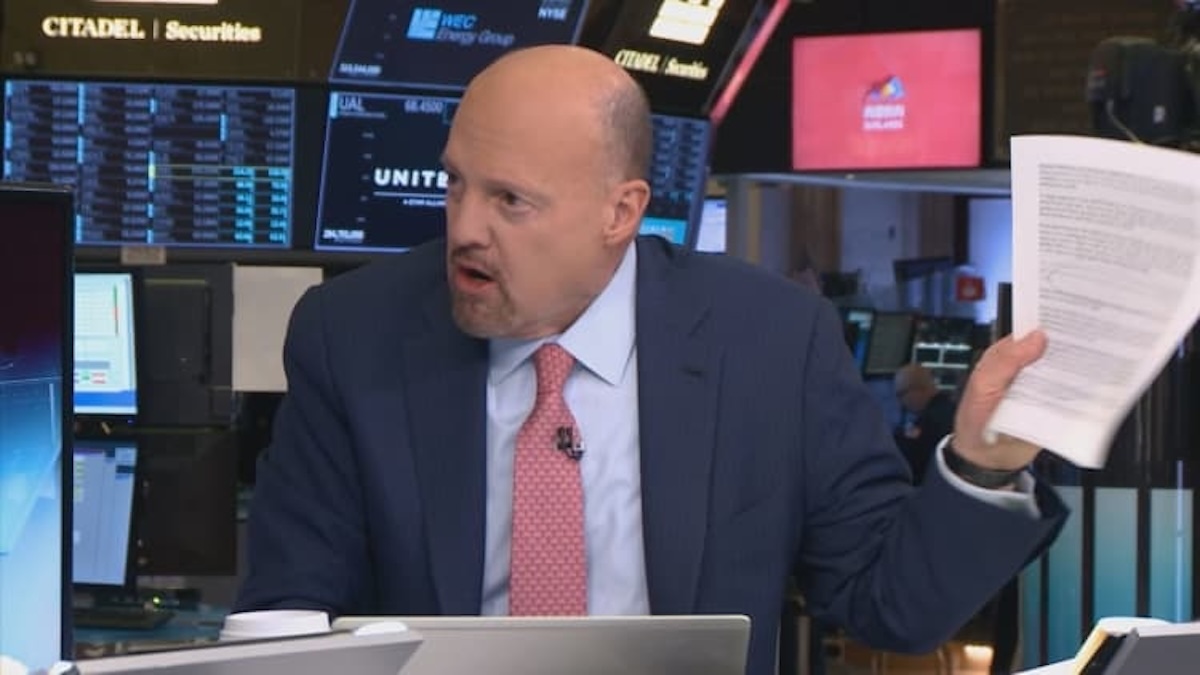
    On a live Monday broadcast of CNBC’s Squawk on the Street, one of Wall Street’s most high-profile media personalities, Jim Cramer, was left visibly stunned and speechless for 10 full seconds when a co-host brought up the staggering wave of stock trading executed by former President and current U.S. President Donald Trump in the first quarter of 2026. After Cramer’s prolonged incoherent mumbling left viewers confused, fellow co-host David Faber stepped in to clarify that the program was not experiencing any technical glitches — Cramer, it turned out, had simply been rendered speechless by the revelation of Trump’s controversial trading activity.

    The scope of Trump’s trading first came to light last week, when ethics disclosures published by the U.S. Office of Government Ethics confirmed that Trump completed more than 3,700 separate stock transactions between January and March 2026. Among these trades, more than 30 individual purchases each exceeded $1 million in value. The Financial Times first highlighted a striking connection: many of the top stocks Trump traded are owned by major corporations whose chief executives accompanied Trump on his official diplomatic trip to China just one week before the disclosures were released, including industry giants Tesla, Nvidia, Apple, Meta, Visa, Citi, Boeing, Qualcomm, and GE Aerospace.

    Independent journalists and ethics watchdogs have since uncovered multiple clear patterns that raise urgent red flags for potential illegal insider trading. In a detailed analysis published Monday, reporter Judd Legum documented multiple instances where Trump purchased shares in a company either immediately before or on the exact same day that he publicly praised the firm to move its share price. For example, Trump bought tens of thousands of dollars in stock of biotech manufacturer Thermo Fisher Scientific on the exact same day he toured one of the company’s production facilities. He acquired hundreds of thousands of dollars worth of Apple shares the same day he delivered a public speech lauding the firm as “a great company” and praising then-CEO Tim Cook. Just one day after purchasing a large stake in Micron Technology, Trump called the company “one of the hottest companies” during a national Fox News interview. Nine days after acquiring millions of dollars in Dell stock, Trump urged a crowd of supporters at a Georgia rally to “go out and buy a Dell computer.”

    Legum’s analysis emphasized that Trump has systematically dismantled every remaining ethical guardrail designed to prevent sitting U.S. presidents from using their public office for personal financial gain. Unlike previous presidents who have placed their assets in qualified blind trusts to remove themselves from active investment decision-making, Trump transferred his holdings to a trust controlled directly by his son, Donald Trump Jr., after returning to the White House. This structure leaves no legal or practical barriers to Trump directing trading activity based on non-public information he accesses as president.

    Investigative journalist Ryan Grim argued that Cramer’s stunned on-air reaction was entirely understandable, noting that many of the companies whose stock Trump traded have already directly profited from Trump’s controversial foreign policy decisions, including the ongoing military conflict with Iran that the Trump administration initiated. “Cramer here is having what should be the normal reaction to Trump actively insider trading on his own decisions,” Grim noted. “Just sputtering speechlessness.”

    New York Representative Dan Goldman, a Democrat, has already sounded the alarm over the trading activity, calling it “blatant and criminal insider trading.” In a social media post, Goldman warned all parties involved that records of the trades will eventually be subject to congressional investigation, noting that congressional Republicans have signaled they will ignore the scandal. “Anyone involved in these trades should preserve their records for my investigation in January 2027,” Goldman added.

    The stock trading scandal is not the only ethics controversy engulfing the Trump administration this week. On the same day Cramer’s viral on-air reaction made headlines, 93 House Democrats filed an official legal challenge to block a $1.77 billion taxpayer-funded settlement between the Trump administration and the Internal Revenue Service that critics say is a blatant grift to create a slush fund for Trump’s political allies.

    The settlement grew out of a $10 billion lawsuit Trump filed against the IRS after his personal tax returns were leaked during the 2024 campaign. As part of a deal to dismiss the lawsuit, the Trump administration created what it calls an “Anti-Weaponization Fund,” which the acting U.S. Attorney General Todd Blanche has framed as a mechanism to compensate what the administration calls “victims of lawfare” allegedly carried out by the Department of Justice during the prior Biden administration.

    But Democrats and ethics watchdogs have condemned the deal as an unprecedented abuse of power, noting that Trump is currently the head of the executive branch that oversees the IRS — meaning he is effectively both the plaintiff and the defendant in the lawsuit he arranged to “settle.” “No president can concoct a fake case for $10 billion in damages against the government so he can be plaintiff and defendant and then ‘settle’ his bogus case against himself as a judge,” said Jamie Raskin, Ranking Member of the House Judiciary Committee, calling the deal “pure fraud and highway robbery.” Raskin added that the fund is nothing more than a racket to divert taxpayer money to Trump’s most loyal supporters, including those convicted of violent felonies during the January 6, 2021 U.S. Capitol insurrection.

    The amicus brief filed by Democrats with the U.S. District Court for the Southern District of Florida, where the case is being heard by Judge Kathleen Williams, seeks to have the entire settlement thrown out. The filing notes that the fund could be used to compensate roughly 1,600 individuals already charged or convicted of crimes connected to the Capitol attack, including seditious conspiracy, assault on law enforcement, and other violent felonies.

    Richard Neal, Ranking Member of the House Ways and Means Committee, called the entire scheme “another self-enrichment scheme on the backs of hard-working taxpayers.” “Reporting detailing Trump’s interest in a billion-dollar slush fund for the J6 criminals and permanent immunity from any further IRS scrutiny only deepens the stench of corruption,” Neal added. Lawyers for the Democrats, Matt Platkin and Norm Eisen, noted that “it’s against the law for the president to in effect sue himself — and then settle for a huge sum. The court has the power to put a stop to these shenanigans and should do so.”

    This latest controversy follows a pattern of ethics violations from Trump since his return to the White House, where he issued blanket pardons to hundreds of January 6 rioters on his first day in office. According to the nonpartisan watchdog group Citizens for Responsibility and Ethics in Washington, dozens of those pardoned rioters have since been charged or convicted of additional serious crimes, including child sex offenses, rape, grand theft, burglary, illegal weapons possession, and threats against public officials.

    Progressive advocacy groups and legal ethics experts have joined Democrats in condemning both the stock trading scandal and the IRS settlement. “Donald Trump and his compromised Department of Justice have created a slush fund to make payouts to Trump supporters and cronies,” said Lisa Gilbert and Robert Weissman, co-presidents of the public interest group Public Citizen. “This scheme amounts to the creation of a January 6 payment fund.”

    Brett Edkins, managing director of policy and public affairs at the advocacy group Stand Up America, argued that the scandal lays bare the true nature of the Trump administration’s priorities at a time when many U.S. households are struggling with economic instability. “While Americans struggle with rising costs fueled by his economic mismanagement and war with Iran, Donald Trump is teaching a masterclass in grift,” Edkins said. “He’s negotiated with himself to create a $1.7 billion tax-dollar slush fund with no oversight, no transparency, and no accountability. In simple terms, Trump is stealing $1.7 billion in taxpayer dollars to hand out to himself, his cronies, his donors, or anyone he deems sufficiently loyal—including supporters who were convicted by juries of assaulting police officers on January 6, 2021. This is truly unprecedented corruption, and American taxpayers will foot the bill.”

  • Three killed in suspected hate crime at San Diego mosque

    Three killed in suspected hate crime at San Diego mosque

    On a Monday morning in San Diego, California, a brutal shooting at the Islamic Center of San Diego left three people dead, in what federal authorities are investigating as a targeted hate crime. The two attackers, a 17-year-old and an 18-year-old, died from self-inflicted gunshot wounds shortly after the assault, law enforcement officials confirmed.

    The tragic sequence of events unfolded nearly two hours before the mosque attack, when the mother of one of the teens placed an emergency call to local police. She reported that her son had fled home, taken multiple of her firearms and her car, and left behind a handwritten note filled with generalized hate rhetoric. She added that her son was accompanied by another young person, and both were wearing full camouflage clothing. Initially dispatched to follow up on a report of a potentially suicidal runaway, investigators quickly noted the teen’s behavior did not align with the profile of a person in acute suicidal crisis, and began searching local sites including the high school where one of the suspects was enrolled and a shopping mall where the vehicle had last been spotted.

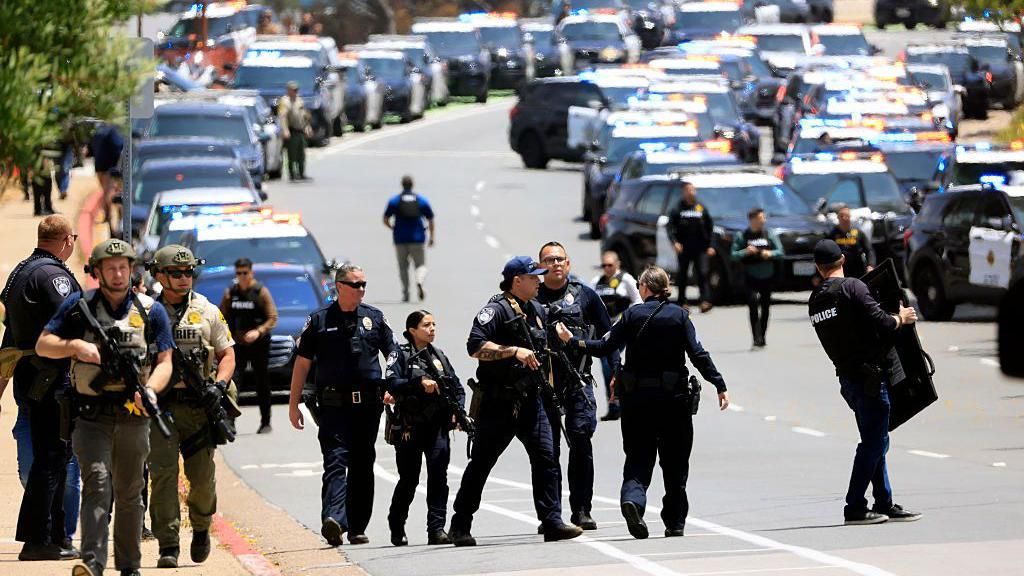
    At 11:43 a.m. local time, as responding officers were still interviewing the suspect’s mother just blocks from the Islamic Center, dispatch received a new call reporting an active shooting at the mosque. Arriving officers found three fatally shot victims lying outside the building’s entrance. Among the deceased was an on-site security guard who law enforcement credits with heroic action that prevented a higher death toll, though no additional details on his intervention have been released at this time. No officers fired their weapons during the response, and no active shooter was found on the premises when police swept the building per active shooter protocol.

    Minutes after officers secured the mosque, a second report of gunfire came in from a nearby location. The two suspects had opened fire from their vehicle on a local landscaper working in the area. Miraculously, the landscaper escaped without injury; law enforcement says preliminary reports suggest a bullet aimed at his head was deflected by his protective hard hat, though this detail is still under verification. When officers arrived at the second scene, they found both suspects already dead from self-inflicted gunshot wounds.

    The Islamic Center of San Diego campus is also home to the Al Rashid School, which offers religious and language instruction, meaning children were present on the grounds when the attack began. Aerial footage captured by local news outlets shows children being escorted hand-in-hand out of the campus by emergency personnel through the center’s parking lot, while all nearby schools were immediately placed on full lockdown as a safety precaution.

    The Federal Bureau of Investigation confirmed it is treating the incident as a hate crime, after the handwritten note left by one suspect was recovered. San Diego Police Chief Scott Wahl told reporters that while the note contained no explicit threat targeting the mosque or any other specific site or individual, the targeting of a major Islamic place of worship, combined with the hate-filled content of the note, leads investigators to presume the attack was motivated by bias.

    One retired local witness, who was eating lunch at his home near the mosque when the shooting began, told reporters he counted roughly 30 shots total from what he described as a semi-automatic weapon, split between two bursts of around a dozen shots separated by a short pause. He noted that the mosque is far more crowded on Fridays and during major religious holidays, saying “It’s a good thing it didn’t happen on a Friday, because the streets would be full of people.”

    The attack comes just days before Eid al-Adha, the “Festival of Sacrifice,” one of the two holiest major holidays in the Islamic faith, when Muslim communities gather with family to commemorate the prophet Ibrahim’s obedience to God. Imam Taha Hassane, director of the Islamic Center of San Diego, called the attack on a house of worship “extremely outrageous” in a press conference, emphasizing “this facility is a house of worship, not a battlefield.”

    California Governor Gavin Newsom released a statement condemning the violence, saying he was horrified by the attack on a space where “families and children gather, and neighbors worship in peace and fellowship.” He added that the state of California “will not tolerate acts of terror or intimidation against communities of faith.” At an unrelated White House event Monday, US President Donald Trump called the shooting a “terrible situation,” saying he had received early briefings and that authorities would conduct a full, thorough review of the incident.

    As of Monday, the investigation remains ongoing, and the FBI has issued a public call for any member of the community with relevant information, including photos or video from the area taken that morning, to contact investigators to assist with the case.

  • Why Elon Musk lost in the OpenAI court battle against Sam Altman

    Why Elon Musk lost in the OpenAI court battle against Sam Altman

    In a high-stakes legal showdown that has gripped the global tech industry, billionaire entrepreneur Elon Musk has emerged on the losing end of his courtroom battle against OpenAI CEO Sam Altman, rooted in a bitter dispute over the AI research lab’s dramatic transformation from a non-profit entity to a for-profit enterprise. BBC technology correspondent Lily Jamali was present inside the courtroom to observe the proceedings as Musk laid out his core allegation: that Altman had violated the terms of the original non-profit founding agreement that shaped OpenAI’s creation when he oversaw the company’s transition to a for-profit operating model.

    The conflict traces back to OpenAI’s founding in 2015, when it was launched as a non-profit research organization with a stated mission of developing artificial general intelligence that benefits all humanity. Musk was an early founding investor and board member, though he stepped down from the board in 2018 and eventually cut ties with the organization he helped bring to life. After OpenAI launched ChatGPT in 2022 and rapidly grew its user base and commercial valuation, Musk renewed his public criticism of the company, arguing that it had abandoned its original non-profit, public-benefit roots in pursuit of corporate profit.

    Musk’s lawsuit centered on the claim that Altman and other OpenAI leaders breached the binding founding contract that committed the company to remaining non-profit and open in its research activities. The legal battle has been closely watched across the technology sector, as it raises fundamental questions about the governance of high-stakes AI development, the fiduciary duties of founders of mission-driven tech organizations, and the balance between commercial innovation and public benefit in the rapidly growing AI industry. With the court’s ruling siding with Altman and OpenAI, the decision clears a key legal hurdle for the company as it continues its commercial expansion, while leaving Musk’s public campaign to hold OpenAI to its original founding mission without a legal victory.

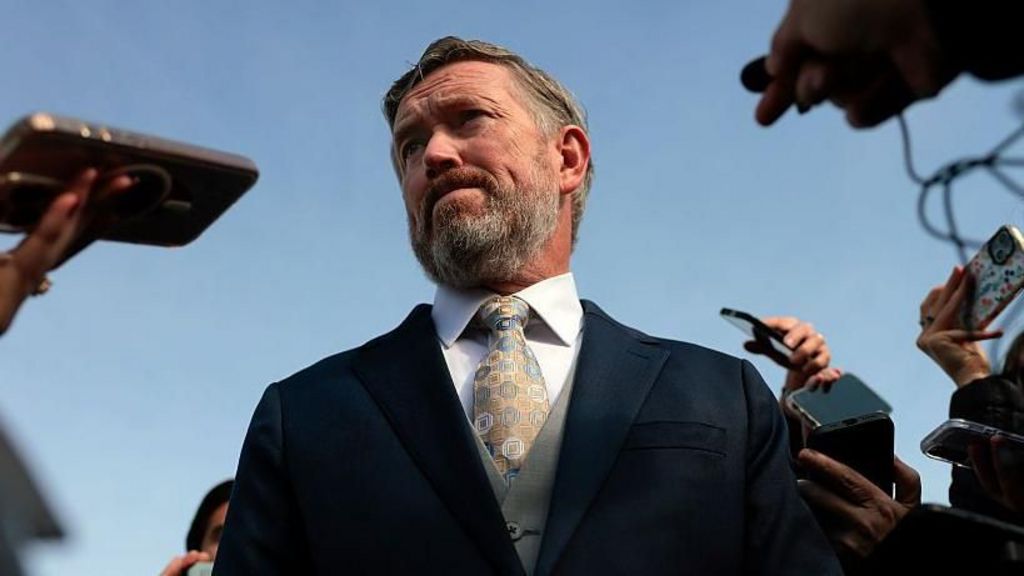
  • Trump v Massie: Could president’s Republican nemesis survive $20m attack to oust him?

    Trump v Massie: Could president’s Republican nemesis survive $20m attack to oust him?

    As voters head to the polls for Kentucky’s 4th Congressional District Republican primary on Tuesday, the nation is watching one of the most explosive intraparty showdowns of the 2026 election cycle: a test of whether sitting Congressman Thomas Massie can defy former president Donald Trump and hold onto his seat. The contest has become a defining referendum on Trump’s unchallenged grip over the modern Republican Party, with national consequences for any other GOP lawmakers considering breaking with the party’s leader.

    The conflict between Massie and Trump stems from the Kentucky congressman’s repeated breaks with the White House on high-profile issues core to Trump’s agenda. Massie voted against Trump’s landmark 2025 tax and spending package, arguing it added trillions of dollars to the national debt; he backed efforts to roll back Trump’s tariffs on Canada; he supported measures to curtail Trump’s military operations in the Caribbean targeting suspected drug trafficking vessels and the ongoing U.S. military deployment in Iran. Most notably, Massie joined a bipartisan coalition that successfully pressured Trump’s own Department of Justice to release the full, unredacted files on deceased convicted sex offender Jeffrey Epstein, a move that infuriated the president.

    Trump’s response has been unrelenting. He has branded Massie with a barrage of vicious insults, calling him a “moron,” “lowlife,” “loser” and “major sleazebag,” even attacking other Republican politicians who dare to stand with the Kentuckian. When Colorado Congresswoman Lauren Boebert campaigned alongside Massie earlier this month, Trump called her “weak-minded” and “dumb” on his Truth Social platform, threatening to yank his endorsement of her re-election bid – a threat that carried little practical weight, as Colorado’s primary filing deadline had already passed, but sent a clear warning to any would-be dissenters. By March, Trump had handpicked his own challenger to unseat Massie: retired Navy Special Forces veteran Ed Gallrein, who has centered his entire campaign on being the president’s preferred candidate.

    The race has deepened divides within Kentucky’s local GOP, with officials and voters split sharply over Massie’s brand of uncompromising libertarian small-government conservatism. To his supporters, Massie is a principled lawmaker who keeps his word even when it costs him politically. “He’s one of the most consistent congressmen,” said Rex Morgan, a attendee of a Massie meet-and-greet in Shelbyville. “Even if it were to cost him his job, he will not go back on his word.” But to critics within the party, Massie’s intransigence is nothing more than political grandstanding, designed to grab media attention at the expense of the GOP’s broader agenda. With Republicans holding only a razor-thin majority in the House during Trump’s second term, Massie’s breaks have repeatedly delayed or derailed the president’s legislative priorities. “It’s not that you have to agree on every single issue, but at a certain point you’ve got to look at the big picture and say, how can we move this ball forward?” said Allen Volz, vice-chair of the Boone County Republican Party.

    Massie has walked a careful line to court the district’s deeply pro-Trump electorate – Trump won Kentucky’s 4th District by 35 points over Kamala Harris in the 2024 presidential election. He emphasizes that he has voted with the Trump administration 90% of the time, framing his occasional breaks as pushes to hold the Republican Party accountable to its small-government promises. “The problem we have is not that I’m voting against the Republican Party up there, it’s that the Republican Party up there is sometimes voting against Republican people back home. That’s the 10% of the time,” Massie explained at his Shelbyville event. He argues that his opposition to bloated spending packages improves final legislation, noting “the negotiation starts when one person says no. And if nobody says no, then you get the whole standing pile of crap.”

    By contrast, Gallrein’s campaign strategy has been straightforward: he leans entirely on Trump’s endorsement, printing it on yard signs, featuring it front-and-center on his website and social media, and making it the core of every ad buy. The former Navy SEAL, who owns a farm and events venue in Shelbyville, has run an unusually low-profile campaign: he has skipped nearly all primary debates, holds small, unannounced events, and declines almost all national media requests. “At the end of the day, Gallrein’s best argument is that Trump wants him,” said Trey Grayson, a former Kentucky secretary of state and Republican strategist. “I think their theory is there are enough folks for whom that’s enough that you get to 51%.”

    The race has attracted a raucous cast of national supporters on both sides, and has become the most expensive House primary in U.S. history, with total spending surpassing $32 million. Most of the outside money opposing Massie comes from three high-profile billionaires: Las Vegas casino magnate Miriam Adelson, and hedge fund managers Paul Singer and John Paulson, whose funding has been funneled through a pro-Trump super PAC called Kentucky MAGA and pro-Israel lobbying group AIPAC, which opposes Massie’s criticism of U.S. military aid to Israel. Anti-Massie ads have flooded local airwaves, including one controversial spot that used artificial intelligence to generate fake images of Massie with progressive Democratic lawmakers Alexandria Ocasio-Cortez and Ilhan Omar, falsely framing the trio as a threat to Trump’s agenda. Massie has fought back, outraising his opponent in large part thanks to a national grassroots donor base energized by his push for the Epstein files, and has run ads framing Gallrein as a puppet of wealthy special interests.

    As election day arrives, recent polling shows the race is a statistical dead heat. Political analysts note that Kentucky’s 4th District has demographic features that could work in Massie’s favor: it includes large swathes of more affluent, educated suburban voters around Louisville and Cincinnati, a demographic that is less reliably pro-Trump than the lower-income rural voters that have formed the core of the president’s recent base. Trump’s sagging national approval ratings, dragged down by rising gas prices and divisions within the GOP over his ongoing military campaign in Iran, also bolster Massie’s non-interventionist foreign policy brand. A Massie win would send shockwaves through the Republican Party, proving that it is possible for a sitting GOP lawmaker to break with Trump and survive. “A single house member going against the president of the US and prevailing?” said Grayson. “That’s a tell that maybe you can stand up and get away with it.” A loss for Massie, however, would cement Trump’s control over the party, sending a clear message that dissent from the president’s agenda will not be tolerated.

  • American who contracted Ebola in DR Congo evacuated for treatment, CDC says

    American who contracted Ebola in DR Congo evacuated for treatment, CDC says

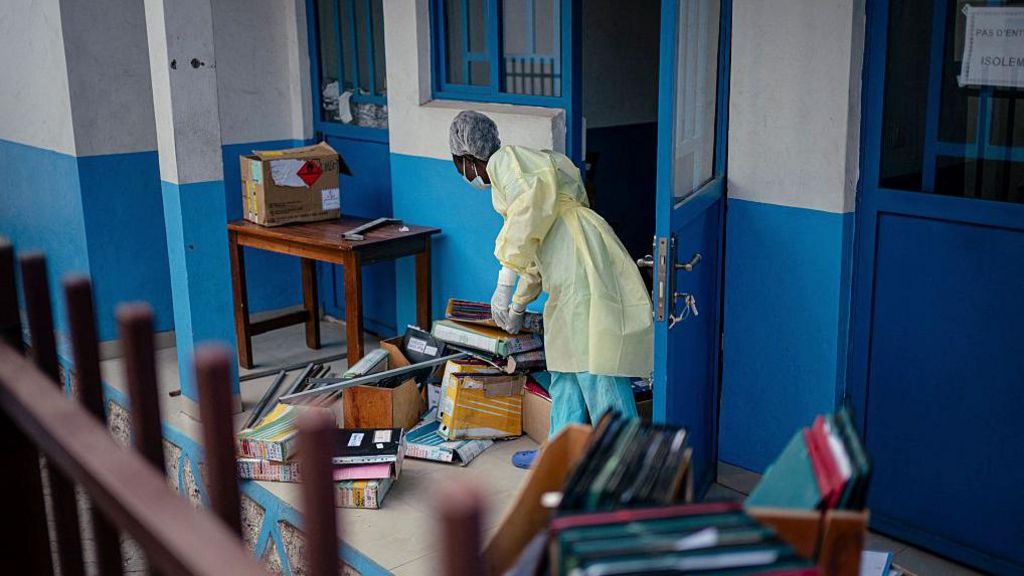
    In a development that has drawn global public health attention, U.S. health officials confirmed Monday that an American national working with a medical missionary organization in the Democratic Republic of Congo (DRC) has tested positive for the Ebola virus. The infected individual, identified by mission leadership as Dr. Peter Stafford, a physician with the Christian medical outreach group Serge, contracted the virus while caring for patients at Nyankunde Hospital in Bunia, located in eastern DRC’s Ituri Province – the current epicenter of the ongoing outbreak.

    After displaying the first characteristic Ebola symptoms over the weekend, the infected American will be transferred to Germany for specialized medical care, according to Dr. Satish Pillai, incident manager for the U.S. Centers for Disease Control and Prevention (CDC) Ebola response team. Beyond the confirmed case, the CDC is coordinating the evacuation of at least six other American citizens who were also exposed to the virus during their time in the affected region. Two additional exposed Serge group members, including Stafford’s wife, remain asymptomatic and are adhering strictly to monitored quarantine protocols, the organization confirmed in an official statement.

    The scale of the ongoing outbreak has already reached alarming levels: John Nkengasong, head of the Africa Centres for Disease Control and Prevention (Africa CDC), revealed in comments to the BBC that the outbreak has claimed at least 100 lives so far, with more than 390 suspected cases recorded across the affected region.

    In response to the confirmed case and ongoing outbreak risks, the CDC issued a new public health order Monday barring entry to the United States for all non-citizen travelers who have visited any Ebola-affected country – including the DRC, neighboring Uganda, and South Sudan – within the previous 21 days. The order is enacted under Title 42, a decades-old public health statute that allows U.S. authorities to impose temporary entry bans on non-citizens to prevent the spread of dangerous communicable diseases.

    Despite the new entry restrictions, CDC officials stressed that the overall risk of widespread Ebola transmission to the general U.S. public remains extremely low. To support frontline response efforts in the DRC, the agency is deploying additional specialized response staff from its Atlanta headquarters to the outbreak’s core zone to assist with containment, contact tracing, and treatment operations.

    The World Health Organization (WHO) already designated the DRC outbreak a Public Health Emergency of International Concern (PHEIC), the organization’s highest level of public health alert, though it has not met the formal criteria to be classified as a pandemic. The current outbreak is driven by the Bundibugyo Ebola strain, a variant for which no specifically approved antiviral treatments or licensed vaccines currently exist, complicating global response efforts. WHO officials have repeatedly warned that the actual size of the outbreak is likely far larger than officially reported cases indicate, with substantial risk of further spread to local communities and across regional borders.

    To contextualize the current risk, the 2014–2016 West African Ebola outbreak remains the largest on record since the virus was first identified in 1976. That outbreak infected more than 28,600 people across multiple West African nations and spread to Europe and the United States, killing a total of 11,325 people globally.

    Ebola is a zoonotic virus, meaning it circulates naturally in wild animal populations – most commonly fruit bats – with human outbreaks typically initiated when humans handle or consume infected bushmeat. After exposure, symptoms develop between 2 and 21 days, beginning abruptly with flu-like symptoms including fever, headache, and fatigue before progressing to more severe, life-threatening complications.

  • Trump says he called off new Iran attack at request of Gulf states

    Trump says he called off new Iran attack at request of Gulf states

    Less than 24 hours before a planned American military assault on Iran was set to launch, U.S. President Donald Trump announced Friday he had paused the operation following appeals from three key Gulf Arab nations, saying that constructive negotiations are now underway to reach a widely acceptable deal.

    In a public statement posted to his Truth Social platform, Trump clarified that the heads of state of Qatar, Saudi Arabia, and the United Arab Emirates personally requested the delay in military action. He added that U.S. officials have been told a final agreement that meets Washington’s core demands is within reach, emphasizing a non-negotiable red line: “NO NUCLEAR WEAPONS FOR IRAN!”

    Even as he paused the strike, Trump maintained a firm posture of deterrence. He warned that all branches of the U.S. military remain on high alert, ready to execute a large-scale, full-scale attack against Iran on extremely short notice if negotiations fail to deliver a satisfactory outcome.

    As of Friday evening, Iranian officials had not issued any public response to Trump’s latest comments.

    The current tension traces back to late February, when joint Israeli and United States forces launched extensive air strikes across Iranian territory. In retaliation, Tehran deployed drones and missiles to target Israeli positions and American military assets located across Gulf nations.

    An April ceasefire, negotiated to create space for diplomatic talks aimed at ending the open conflict, has broadly held. While occasional cross-border exchanges of fire have been reported, neither side has resumed large-scale offensive operations since the truce went into effect.

    One major sticking point remains the Strait of Hormuz, the world’s most critical energy chokepoint. Iran has maintained effective control of the waterway, effectively closing it to commercial transit since the outbreak of hostilities. Approximately 20% of global oil supplies and a large share of the world’s liquefied natural gas pass through the strait, and Iran’s closure in retaliation for U.S.-Israeli strikes has caused a sharp spike in global energy prices.

    In response to the Hormuz closure and to pressure Tehran into concessions, the United States has implemented a strict naval blockade of major Iranian ports, cutting off much of the country’s normal maritime trade.