标签: North America

北美洲

  • Trump threatens countries that would ‘play games’ with tariffs

    Trump threatens countries that would ‘play games’ with tariffs

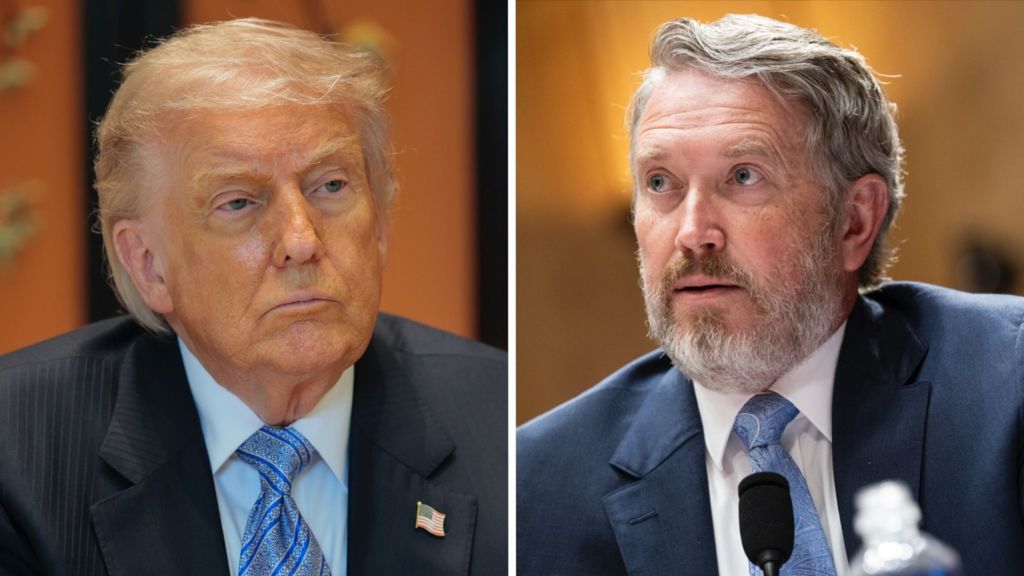
    Former President Donald Trump has issued a stark warning to international trading partners, threatening severe economic retaliation against nations attempting to exploit last week’s Supreme Court decision that curtailed his tariff-imposing authority. Through his Truth Social platform on Monday, Trump declared that any country engaging in what he termed ‘games’ regarding the judicial ruling would face substantially higher import duties than previously negotiated.

    The Supreme Court’s landmark decision struck down Trump’s use of emergency economic powers to implement country-specific tariffs, dealing a significant blow to his economic nationalist agenda. In response, Trump has pivoted to alternative legislative mechanisms to announce new 15 percent duties on imports, asserting his presidential authority to bypass Congressional approval for tariff implementation.

    Trump’s social media statements emphasized his unconventional interpretation of the court ruling, claiming it actually granted him ‘far more powers and strength’ through licensing authorities that could enable aggressive trade measures against foreign nations. This stance contradicts legal experts’ reading of the decision as a limitation on executive trade powers.

    US Trade Representative Jamieson Greer has meanwhile called for international partners to maintain existing tariff agreements with Washington, indicating potential tension between diplomatic channels and Trump’s confrontational approach. The development signals continued turbulence in global trade relations as the former president challenges both judicial and international trading norms.

  • French minister moves to block US envoy Kushner from government access

    French minister moves to block US envoy Kushner from government access

    A significant diplomatic rift has emerged between France and the United States following controversial statements made by the American embassy regarding political violence in France. The confrontation centers on Ambassador Charles Kushner, who was appointed to the position last year and is the father of Donald Trump’s son-in-law Jared Kushner.

    The controversy ignited when the US Embassy in France published social media commentary concerning the fatal assault of Quentin Deranque, a 23-year-old mathematics student and far-right nationalist who died on February 14 after being attacked by masked assailants in Lyon. The embassy’s statement suggested that ‘violent left-wing extremism is on the rise’ in France—a characterization that provoked immediate consternation from French officials.

    French Foreign Minister Jean-Noel Barrot summoned Ambassador Kushner for urgent discussions on Monday evening. However, the diplomat did not attend the meeting, citing prior commitments, and instead dispatched a deputy from the embassy. This absence triggered a sharp response from the French foreign ministry, which criticized Kushner for an ‘apparent failure to grasp the basic requirements of the ambassadorial mission.’

    In an unprecedented move, Minister Barrot formally requested that Ambassador Kushner ‘no longer be allowed direct access’ to French government ministers. The ministry’s statement emphasized France’s rejection of ‘any use of this tragedy, which has plunged a French family into mourning, for political ends.’ Barrot further asserted that France requires ‘no lessons to learn, particularly on the issue of violence, from the international reactionary movement.’

    Judicial proceedings continue in the Deranque case, with six suspects charged in connection with the fatal assault. Additionally, a parliamentary assistant affiliated with the radical left France Unbowed (LFI) party faces complicity charges. LFI leader Jean-Luc Mélenchon, a potential presidential contender, has distanced his party from the incident while condemning ‘all forms of violence.’

    The escalating diplomatic tension represents one of the most serious public disputes between the allied nations in recent years, testing the resilience of Franco-American relations during a sensitive political period in both countries.

  • ‘Exciting’ or ‘Frustrating’? – East coast locals and tourists react to record snow

    ‘Exciting’ or ‘Frustrating’? – East coast locals and tourists react to record snow

    A massive winter storm of historic proportions has unleashed its fury upon the East Coast, triggering a critical state of emergency for an estimated 40 million residents and visitors now under blizzard warnings. The tempest’s ferocity has resulted in a devastating infrastructural collapse, with power outages crippling over 600,000 homes and businesses, plunging vast regions into darkness and disconnection.

    The monumental weather event has elicited a starkly divided spectrum of reactions from those in its path. For some, the unprecedented snowfall has been a source of exhilaration, transforming urban landscapes into pristine winter wonderlands and offering a rare opportunity for seasonal activities. Conversely, the storm’s severe impact has generated profound frustration and hardship for many others, stranding travelers, halting economic activity, and raising serious concerns over public safety and access to essential services. This duality of experience highlights the complex interplay between natural phenomena and human resilience, framing a narrative of both awe and adversity in the face of a record-breaking climatic event.

  • More than 5,000 flights cancelled as US east coast digs out of record snow

    More than 5,000 flights cancelled as US east coast digs out of record snow

    A catastrophic winter storm of historic proportions unleashed its fury upon the US Eastern Seaboard on Monday, establishing unprecedented snowfall records and triggering widespread infrastructural collapse across multiple states. Meteorological data from the National Weather Service confirmed extraordinary accumulations, with Rhode Island and Massachusetts bearing the brunt at nearly 33 inches (83cm), while New York’s Central Park recorded over 19 inches—transforming the densely populated corridor into a landscape of immobilized cities and crippled transportation networks.

    The storm’s severity proved particularly devastating for Rhode Island, where Providence shattered its 1978 single-storm record of 28.6 inches with an astonishing 33-inch accumulation. ‘It completely smashed it,’ stated National Weather Service meteorologist Candice Hrencecin, reflecting the astonishment within scientific circles. ‘We were just as shocked as everyone else.’

    Governmental response escalated rapidly as conditions deteriorated. Rhode Island, Connecticut, and Massachusetts implemented non-essential travel bans, with Massachusetts Governor Maura Healey imposing reduced speed limits on major highways while warning citizens: ‘Whiteout conditions are making travel extremely dangerous. If you get stuck, help will have a hard time reaching you.’

    Critical infrastructure faced severe strain as poweroutage.us reported over 600,000 customers without electricity across the region. Massachusetts experienced particularly severe outages, with Barnstable County—encompassing Cape Cod—suffering 85% customer disruption. Urban centers became logistical nightmares, with Providence officials reporting more than 300 vehicles towed for impeding snow removal operations.

    The aviation sector approached complete shutdown, with FlightAware data revealing 5,675 cancelled flights nationwide. New York’s LaGuardia Airport cancelled 98% of flights, JFK Airport 91%, while Boston’s Logan International and New Jersey’s Newark Liberty airports both reached 92% cancellation rates.

    Meteorologists maintained winter storm warnings from North Carolina through northern Maine into eastern Canada, projecting additional accumulations of 1-2 feet (61cm) along northeastern coastal areas through Tuesday morning. The event represents not merely a weather incident but a systemic stress test for emergency response capabilities across America’s most densely populated corridor.

  • Watch: What to watch for during Trump’s State of the Union address

    Watch: What to watch for during Trump’s State of the Union address

    As President Trump prepares to deliver his pivotal State of the Union address, multiple political undercurrents are converging to shape one of the most anticipated presidential speeches of the year. According to analysis from BBC Washington correspondent Daniel Bush, several critical elements warrant close observation.

    The event may witness notable absences, with certain lawmakers potentially boycotting the presidential appearance. This prospect underscores the deeply polarized political climate characterizing current Washington dynamics.

    Simultaneously, the President’s reported frustration toward the Supreme Court introduces another layer of complexity to the upcoming address. This tension between the executive and judicial branches reflects broader constitutional tensions that may influence both the tone and content of the speech.

    Policy analysts are particularly attentive to which legislative areas might experience significant shifts following the address. While some policy domains appear poised for substantial overhaul, others seem likely to maintain their current trajectory despite presidential rhetoric. The address is expected to reveal administration priorities while testing the boundaries of presidential influence amid competing power centers in Washington.

  • Venezuelan foreign minister demands ‘immediate release’ of Maduro

    Venezuelan foreign minister demands ‘immediate release’ of Maduro

    In a forceful address before the United Nations Human Rights Council in Geneva, Venezuelan Foreign Minister Yvan Gil issued a formal demand for the liberation of former President Nicolas Maduro and First Lady Cilia Flores from U.S. custody. The diplomatic confrontation stems from the January 3rd operation conducted by American authorities that resulted in Maduro’s removal from power and subsequent detention.

    Minister Gil characterized Maduro as the ‘constitutional president’ of Venezuela while condemning what Caracas views as an unlawful seizure of its democratically elected leader. The Venezuelan delegation’s appearance at the UN’s premier human rights forum signals an escalation in diplomatic efforts to challenge Washington’s actions through international institutions.

    The development occurs alongside domestic unrest within Venezuela, where thousands have recently demonstrated to demand Maduro’s release. Concurrently, the administration led by Maduro’s allies has announced sweeping judicial reforms including a mass amnesty proposal and plans to shutter the notorious El Helicoide prison facility. These moves appear calculated to bolster governmental legitimacy amid the ongoing political crisis.

    According to independent monitoring organizations, at least 80 political prisoners have been freed in Venezuela recently, though the circumstances surrounding these releases remain unclear. The situation continues to evolve as both domestic and international actors maneuver for position in Venezuela’s protracted political struggle.

  • US partially evacuates Beirut embassy amid rising Iran tensions

    US partially evacuates Beirut embassy amid rising Iran tensions

    The United States has initiated a partial evacuation of its embassy in Beirut, Lebanon, directing non-essential personnel to depart following a comprehensive security assessment. A senior State Department official confirmed the move to the BBC, characterizing it as a “prudent” measure to safeguard American staff while maintaining core diplomatic operations.

    The decision unfolds against a backdrop of severely heightened tensions between the U.S. and Iran. President Donald Trump has issued stark warnings, threatening military action against Tehran if it fails to agree to terms on its nuclear program. This rhetoric has ignited fears of potential Iranian retaliation, with U.S. bases and facilities across the Middle East considered probable targets. Iran’s Supreme Leader, Ayatollah Ali Khamenei, has amplified these concerns through social media posts threatening U.S. forces.

    Approximately 50 staff members are affected by the order. An airport official reported to Reuters that 32 personnel and their families departed via Beirut airport on Monday. The embassy, however, remains functional with a skeleton crew of essential staff.

    The current standoff is rooted in long-standing suspicions from the U.S. and its European allies that Iran is advancing toward a nuclear weapon—a claim Iran consistently denies. Historical animosity also plays a role; Washington holds the Iranian-backed Lebanese group Hezbollah responsible for the devastating 1983 bombings of the U.S. Marine barracks and embassy in Beirut.

    Despite recent diplomatic talks in Switzerland, which officials from both sides acknowledged had made progress, the U.S. continues to bolster its military presence in the region. Satellite imagery has identified warships, including the nuclear-powered aircraft carrier USS Abraham Lincoln, positioned near Oman. Furthermore, the world’s largest warship, the USS Gerald R Ford, appears to be en route to the area.

    President Trump has set an ambiguous deadline, suggesting the world would know within “probably, 10 days” whether a deal is reached or if the U.S. will initiate strikes. This echoes a similar prelude to last year’s U.S.-Israel military action against Iran, which was followed by Iranian missile strikes on a U.S. base in Qatar.

    Concurrently, U.S. Secretary of State Marco Rubio has unexpectedly delayed a planned trip to Israel, with the State Department citing a schedule “subject to change.” The delay coincides with Israeli Prime Minister Benjamin Netanyahu’s declaration that Israel is prepared for “any scenario” and would respond to any Iranian attack with unimaginable force.

    Amid the international crisis, domestic unrest within Iran has resurfaced, with anti-government protests erupting at several universities over the weekend—the first significant demonstrations since a deadly crackdown in January.

  • UN chief Guterres decries global rise of ‘rule of force’

    UN chief Guterres decries global rise of ‘rule of force’

    In a stark address to the UN Human Rights Council in Geneva, Secretary-General António Guterres issued a grave warning that the international rule of law is being systematically supplanted by a dangerous ‘rule of force.’ Delivering his final in-person speech to the council, Guterres declared that human rights are facing a ‘full-scale attack’ globally, often orchestrated openly by the world’s most powerful entities rather than emerging covertly.

    The Secretary-General highlighted specific conflict zones to illustrate this alarming trend. He expressed profound outrage at the four-year war in Ukraine, where over 15,000 civilian deaths have been recorded, demanding an immediate end to the bloodshed. With particular urgency, Guterres condemned what he described as ‘blatant violations of human rights, human dignity and international law in the Occupied Palestinian Territory,’ warning that the two-state solution is being deliberately dismantled in plain sight and insisting the international community must prevent this outcome.

    UN Human Rights Chief Volker Turk echoed these concerns, identifying a ‘deeply worrying trend’ where domination and supremacy ideologies are resurgent. He characterized the current global landscape as experiencing an intensity of power competition unseen in eight decades, with force becoming normalized for resolving disputes both between and within nations.

    The address further connected multiple global crises to the deterioration of human rights protections. Guterres pointed to rapidly widening inequalities, accelerating climate chaos, and the weaponization of technology—particularly artificial intelligence—which he said suppresses rights, deepens discrimination, and targets marginalized communities both online and offline.

    Both leaders criticized powerful nations that operate with impunity, with Turk lambasting leaders who act as if ‘above the law and above the UN Charter,’ employing economic leverage as a weapon and spreading disinformation to silence opposition. The speech catalogued vulnerable groups suffering from this erosion: migrants facing harassment and expulsion, refugees becoming scapegoats, LGBTIQ+ communities being vilified, and minorities and indigenous peoples targeted.

    Guterres concluded with an urgent call to action, appealing to the international community not to allow the powerful to write a new rulebook where ‘the vulnerable have no rights and the powerful have no limits.’

  • Watch: US TV reporters battle snowy conditions as a major storm hits east coast

    Watch: US TV reporters battle snowy conditions as a major storm hits east coast

    Television news crews across the northeastern United States confronted perilous on-air conditions as a massive winter storm system descended upon the region. Reporters stationed from New York to Massachusetts demonstrated remarkable resilience while delivering live updates from the epicenter of the blizzard’s fury.

    Amidst swirling winds and rapidly accumulating snowfall, one seasoned correspondent offered a vivid description of the surreal experience, noting the sensation resembled ‘being trapped inside an violently shaken snow globe’. The metaphorical depiction captured the intensity of whiteout conditions that reduced visibility to near-zero in some metropolitan areas.

    The meteorological event triggered widespread transportation disruptions, with thousands of flights canceled and highway travel advisories issued across multiple states. Emergency management officials urged residents to shelter indoors as utility crews prepared for potential power outages caused by heavy snow loads on electrical infrastructure.

    Broadcast networks implemented special coverage protocols, with many journalists remaining on location for extended shifts to document the storm’s progression. Safety personnel maintained close proximity to reporting teams as gusting winds occasionally threatened to topple equipment and signage.

    The comprehensive media coverage provided vital real-time information to affected communities while showcasing the dedication of news professionals operating under exceptionally challenging environmental circumstances.

  • Judge blocks release of  Smith’s report on Trump classified documents case

    Judge blocks release of Smith’s report on Trump classified documents case

    In a significant legal development, U.S. District Judge Aileen Cannon has issued a permanent injunction preventing the public release of Special Counsel Jack Smith’s comprehensive report on his investigation into former President Donald Trump’s handling of classified documents. The ruling came in response to a request from President Trump’s legal team seeking to shield the detailed findings from public view.

    Judge Cannon, who was appointed to the bench by Trump himself, determined that releasing the investigative report would result in “irreparable damage” to the former president and would fundamentally “contravene basic notions of fairness and justice.” The document in question chronicles Smith’s two-year probe into allegations that Trump improperly retained sensitive defense materials at his Mar-a-Lago estate after leaving the White House in 2021.

    The case originated in 2023 when Trump faced charges of illegally retaining classified defense information, but the prosecution was ultimately dismissed following Trump’s re-election to the presidency. Judge Cannon had previously granted a motion to dismiss the federal case in 2024, ruling that the Justice Department’s appointment of Smith as special counsel was unconstitutional, thereby invalidating his authority to bring charges.

    The investigation revealed that dozens of classified documents were discovered in various locations throughout Trump’s Florida residence, including a shower area and storage rooms. Smith, initially appointed by former Attorney General Merrick Garland, first appealed the dismissal but subsequently requested the case be dropped entirely in 2024, acknowledging that Justice Department regulations prohibit prosecuting a sitting president.

    In her Monday ruling, Cannon emphasized that Smith had been “acting without lawful authority” when he initially charged Trump, and noted that the defendants “still enjoy the presumption of innocence held sacrosanct in our constitutional order.” A representative from Trump’s legal team praised the decision, stating that broad disclosure of materials from a dismissed criminal case, along with “unproven accusations by an unconstitutional prosecutor, has no place in the American judicial system.”