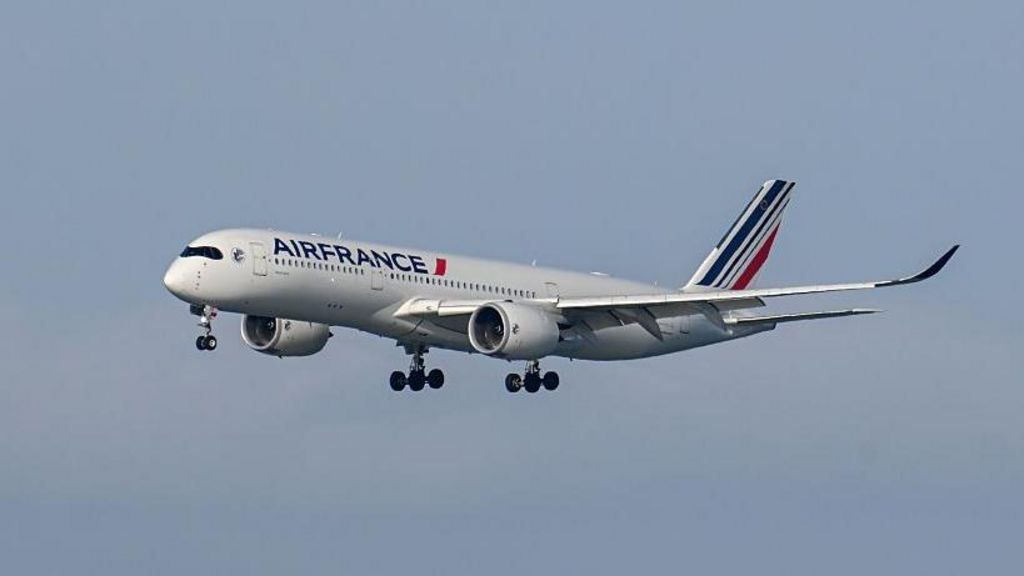
A transatlantic commercial flight traveling from Paris to Detroit was forced to make an unscheduled diversion to Montreal, Canada, after airline staff incorrectly allowed a passenger who had recently traveled from the Ebola-stricken Democratic Republic of Congo (DRC) to board the aircraft, according to official statements. U.S. Customs and Border Protection (CBP), the agency that oversees U.S. border entry rules, confirmed to the BBC that the passenger should never have been allowed onto the Air France jet under current public health entry restrictions designed to curb the spread of the deadly virus. The ongoing Ebola outbreak across central Africa has already claimed nearly 140 lives, with health officials documenting more than 600 suspected infections across affected regions. As of the report’s release, authorities have not released key details about the passenger, including whether they were displaying visible Ebola symptoms, or the exact date of their most recent stay in the DRC. Air France later verified the diversion to U.S. media outlets, confirming that the plane was rerouted to Montreal Pierre Elliott Trudeau International Airport at the explicit request of U.S. public health and border authorities, after the Congolese passenger was formally denied entry to the United States. “Air France boarded a passenger from the Democratic Republic of Congo in error on a flight to the United States,” CBP said in an official statement. The agency added that it acted quickly to block the flight from landing at its intended destination, Detroit Metropolitan Wayne County Airport, prompting the 500-mile (800-kilometer) diversion north to Canadian soil. To reduce the risk of Ebola importation, the U.S. currently enforces strict entry rules: non-U.S. passport holders who have visited the DRC, South Sudan, or Uganda in the 21 days prior to travel are barred from entering the country. U.S. citizens and legal permanent residents who have traveled to these three countries are only allowed to enter through Washington-Dulles International Airport in Virginia, where they undergo mandatory enhanced public health screening. The World Health Organization (WHO) has already designated this current Ebola outbreak a Public Health Emergency of International Concern, the highest global alert level for infectious disease events. The U.S. Centers for Disease Control and Prevention (CDC) has noted that the overall risk of Ebola spreading widely within the U.S. remains relatively low, but the agency has still moved to implement layered precautionary measures to stop the virus from crossing U.S. borders. To date, one American has tested positive for Ebola in this outbreak: a physician who was working with a medical missionary organization in the DRC. He is currently receiving treatment in a specialized isolation ward at a hospital in Germany. On Wednesday, WHO officials added another layer of context to the outbreak, confirming that the specific variant driving the current outbreak—the Bundibugyo strain—does not currently have a licensed vaccine available for widespread use. According to the agency’s timeline, it could take as long as nine months before a targeted vaccine for this strain is developed and cleared for deployment. The incident has drawn attention to the challenges of enforcing cross-border public health measures during a global infectious disease emergency, highlighting how even a single administrative error can trigger major disruptions to international air travel.
标签: North America
北美洲
-
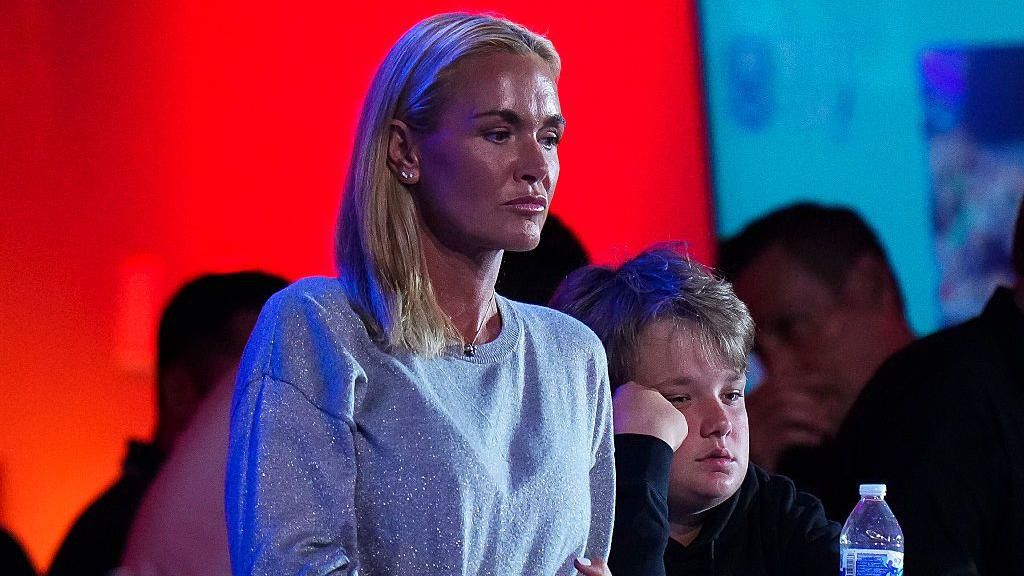
Vanessa Trump, former wife of Donald Trump Jr, diagnosed with breast cancer
Vanessa Trump, the former spouse of Donald Trump Jr. – eldest son of United States President Donald Trump – has publicly revealed that she has received a breast cancer diagnosis, sharing the news via her personal social media account.
In an Instagram post published Wednesday, Vanessa acknowledged that a cancer diagnosis is never an outcome anyone anticipates, confirming that she is currently collaborating closely with her medical care team to develop a tailored treatment strategy. She added that she already completed an initial medical procedure earlier this week, and respectfully asked the public and media to grant her privacy as she redirects her energy to prioritizing her health and working toward a full recovery.
A former model by profession, Vanessa first met Donald Trump Jr. in the early 2000s through a deliberate introduction by the current U.S. president. In a 2006 interview with The New York Times, she recalled the chance meeting at a fashion show: Donald Trump Sr. approached her with his son and said, “Hi, I’m Donald Trump. I wanted to introduce you to my son Donald Trump Jr.” The pair went on to marry at Mar-a-Lago, Donald Trump’s private Florida estate, in 2005. During their marriage, they welcomed five children, whose ages currently span from 11 to 19 years old. The couple separated in 2018. Most recently, Vanessa made headlines last year when she and professional golf legend Tiger Woods confirmed they were in a romantic relationship.
Despite the unexpected health challenge, Vanessa maintained a resolute, hopeful tone in her announcement. “I am staying focused and hopeful while surrounded by the love and support of my family, my kids, and those closest to me,” she wrote. “Thank you for your kindness and support it truly means more than I can express.”
Within hours of her post going live, hundreds of messages of encouragement and well-wishes flooded the comment section, including a public note of support from Ivanka Trump, the U.S. president’s eldest daughter and Vanessa’s former sister-in-law. “Praying for your continued strength and a swift recovery. Love you mama,” Ivanka wrote.
Among the couple’s five children, their eldest 19-year-old daughter Kai Trump has carved out a notable public profile of her own, boasting a large following on social media and making frequent public appearances alongside her grandfather at the White House.
-
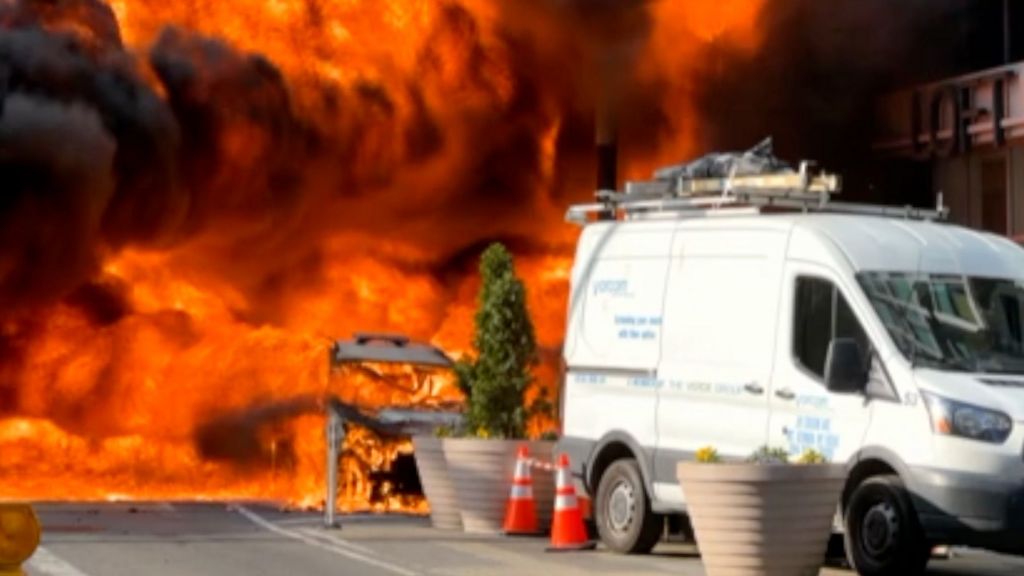
Watch: Moment car explodes into massive fireball in NYC
A shocking piece of footage has spread rapidly across social media platforms this week, capturing the heart-stopping instant when a car erupted into a giant fireball in the middle of a New York City street. The dramatic viral clip, which has been viewed millions of times since it was first uploaded to the internet, paints a vivid picture of chaos unfolding in one of the world’s busiest urban centers. In the footage, intense orange flames quickly consume the vehicle before thick, plumes of jet-black smoke billow upward, completely shrouding the surrounding roadway and obscuring nearby buildings from view. Pedestrians and nearby motorists are reported to have fled the area immediately as the explosion sent waves of heat across the block, with local emergency dispatchers receiving a flood of 911 calls within seconds of the blast. As of the latest updates, the cause of the explosion remains under investigation by city authorities, who have not yet released additional details regarding potential injuries, property damage, or the circumstances that led to the vehicle catching fire and detonating. The rapid spread of the user-generated content across digital platforms underscores how quickly unexpected, dramatic events in major cities capture global public attention in the age of social media, turning a routine day in New York City into a viral news event viewed by audiences around the world.
-
Nvidia’s record result fails to impress investors
As the global AI boom continues to reshape the technology and business landscapes, chip manufacturing leader Nvidia has delivered another blockbuster set of quarterly earnings that far outpace Wall Street projections, underscoring the unrelenting demand for AI infrastructure — even as investor caution pulled shares lower in extended trading.
Widely recognized as the foundational supplier of advanced processing chips for the world’s top AI development teams, including industry leaders OpenAI and Meta, Nvidia’s financial results have become a closely watched benchmark for the overall health of the generative AI sector. The California-based firm announced that its first-quarter revenue surged 85% year-over-year to hit $81.6 billion, while net income more than tripled to $58.3 billion, numbers that blow past prior analyst forecasts. The company’s skyrocketing growth was fueled almost entirely by explosive expansion in its data center division, which produces the high-performance chips that power large-scale AI model training and deployment.
Today, Nvidia holds the title of the world’s most valuable publicly traded company, boasting a total market capitalization of roughly $5.3 trillion, and the firm makes a bold prediction for the future of AI investment: it projects that annual global spending on AI infrastructure will reach between $3 trillion and $4 trillion by the end of the 2020s. Speaking to analysts during a post-earnings conference call, Nvidia chief executive Jensen Huang framed the current growth as a fundamental shift in the global technology ecosystem, noting, “Demand has gone parabolic. The reason is simple: the era of agentic AI is here.”
Despite the universally acknowledged strength of the quarterly report, Nvidia’s stock dropped 1.6% during after-hours trading immediately following the earnings release. Market analysts point to two key factors driving this unexpected pullback: sky-high investor expectations that set an extraordinarily high bar for results, and growing concerns over mounting competition in the AI chip space.
Ruth Foxe-Blader, managing partner at U.S. venture capital firm Citrine Venture Partners, described the dip as a classic “law of large numbers” effect. “Nvidia represents 8% of the S&P 500. Unless there’s a belief in this continued parabolic growth it’s difficult for investors to get super excited, although Nvidia posted outstanding numbers,” she explained to the BBC. “But it’s just investors seeking that hypergrowth, which is indicating an early sell-off.”
Victoria Scholar, head of investment at retail investment platform interactive investor, echoed this analysis, noting that the AI bellwether has repeatedly outperformed market projections to the point that investors now expect nothing short of extraordinary results. She also pointed to the common “buy the rumour, sell the fact” market dynamic that played out this quarter: “shares had already rallied ahead of earnings,” she said, leading investors to lock in gains once the results were officially released.
Beyond inflated growth expectations, a growing undercurrent of concern among investors centers on rising competition in the data center chip market. As the sector evolves, major cloud and tech giants (known in the industry as hyperscalers) are increasingly developing their own custom AI chips to reduce reliance on third-party suppliers, a shift that could eat into Nvidia’s dominant market share over time.
-
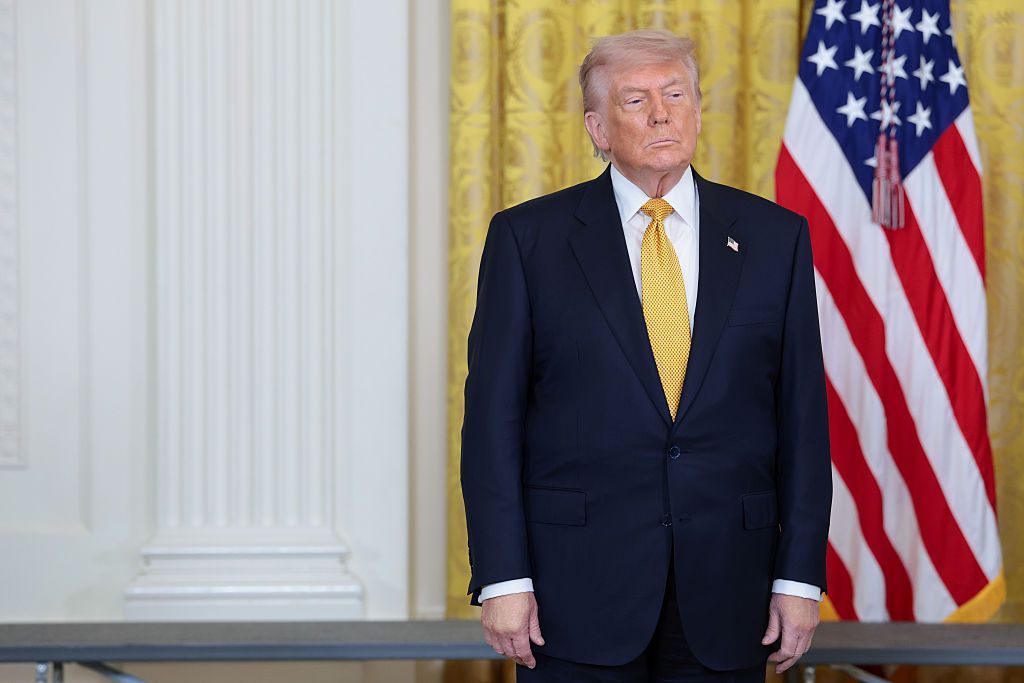
How Trump’s IRS settlement could block tax audits of him, his family and their businesses
In an unprecedented legal move that has sent shockwaves through Washington, the U.S. Department of Justice (DOJ) announced a last-minute settlement this week of a historic lawsuit brought by former President Donald Trump over the leak of his personal and business tax returns — a settlement that permanently bars the Internal Revenue Service (IRS) from reviewing any past tax filings submitted by Trump, his immediate family, and their affiliated business entities before May 19, 2026.
The settlement marks the first time a sitting or former U.S. president has ever sued the federal government, and its unprecedented terms have triggered fierce condemnation from lawmakers, legal scholars, and government watchdog groups, who argue the deal violates core federal tax law and amounts to a brazen act of self-dealing that places Trump above the law.
The case dates back to January 2026, when Trump and his two eldest sons launched a $10 billion legal action against the IRS over the unauthorized disclosure of their private tax documents. On Monday this week, DOJ announced the suit had been resolved. As part of the deal, the agency agreed to establish a nearly $1.8 billion public fund, labeled the “Anti-Weaponization Fund,” to compensate individuals who claim they were unfairly targeted by political investigations. A day after the public settlement announcement, DOJ quietly released a one-page addendum that halts all pending IRS audits of Trump, his family, their trusts, corporate holdings, and subsidiary companies. The document explicitly states the U.S. government is “FOREVER BARRED AND PRECLUDED” from carrying out routine tax enforcement actions, including examinations of filings, claims for unpaid taxes, and legal recourse against underpayment for all tax documents submitted by the Trump party before the May 19, 2026 cutoff. DOJ has clarified that the ban applies only to existing audits, not future tax reviews.
Federal law does not publicly disclose ongoing IRS investigations, so it remains unclear what specific reviews of Trump and his business empire the agency may have had underway when the settlement was reached. DOJ has defended the unusual addendum, framing it as a standard clause used to bring full closure to settled legal disputes. “There would be little point in settling several significant claims if either party could simply turn around and seek to initiate more adverse claims that could have been pursued previously,” a DOJ spokesperson said in an official statement.
But critics across legal and political circles have pushed back hard against that framing, warning the deal undermines long-standing safeguards to protect the integrity of the U.S. tax system. Ron Wyden, the top Democratic member of the Senate Finance Committee, called the settlement “clearly a violation of the law that prohibits interference by executive branch officials in IRS audits.” Wyden added, “Democrats are going to fight every element of this self-dealing settlement, but regardless of the outcome of those efforts, future administrations and IRS leadership should consider this illegal directive completely invalid.”
U.S. law bars the president, vice president, and most high-ranking executive branch officials from directly or indirectly requesting the termination of an IRS audit, though the attorney general holds a narrow exception to this rule. The addendum was signed by current Acting Attorney General Todd Blanche, leading supporters of the deal to argue it technically adheres to statutory requirements. But critics argue the structure of the settlement is an end-run around the law, noting Trump himself indirectly orchestrated the end of potential investigations through the lawsuit. “Trump filed a bad-faith lawsuit and, with the settlement, aims to escape from IRS audits,” said Robert Weissman and Lisa Gilbert, co-presidents of government watchdog group Public Citizen, in a joint statement.
Tax experts also point to multiple other departures from standard legal and tax procedure. The IRS typically closes outstanding tax cases either through a negotiated agreement with the taxpayer or via referral to DOJ, and there is no public record the IRS took either step in this case. Unlike routine tax settlements, the broad blanket ban on audits was attached to a personal lawsuit against the IRS, not a formal tax dispute, and was approved without any input from IRS leadership. “It purports to put the President, his entities, and his family above the tax laws—even though DOJ alone doesn’t have authority to offer those extraordinary protections,” said Brandon DeBot, Policy Director at the nonpartisan Tax Law Center. DeBot called the entire deal “a breathtaking abuse of the tax and legal system.”
The $1.776 billion compensation fund included in the settlement has sparked its own controversy, with critics across the political spectrum condemning it as an unauthorized “slush fund” that could be used to distribute money to Trump’s political allies, including rioters convicted for their role in the January 6, 2021, breach of the U.S. Capitol. Even Senate Majority Leader John Thune, one of the top Republican leaders in Congress, has publicly expressed skepticism about the fund’s legality and purpose. Already, the first claim has been filed by Michael R. Caputo, a former adviser to Trump’s 2016 presidential campaign and a former official in Trump’s first term, who is seeking $2.7 million in compensation over investigations into Russian interference in the 2016 election. In a statement, Caputo said he was “profoundly grateful” that Trump “will not let this political weaponization stand.”
Legal challenges to the settlement and the fund are already mounting. Two Capitol Police officers who were on duty during the January 6, 2021, riot filed a federal lawsuit on Wednesday arguing the fund is illegal on multiple grounds: no federal statute authorizes its creation, the underlying settlement is a “corrupt sham,” and its structure violates both the U.S. Constitution and federal law. The officers also warn the fund threatens their personal safety by providing financial compensation to convicted rioters who have repeatedly issued death threats against them, and could open the door to funding for violent paramilitary groups.
-
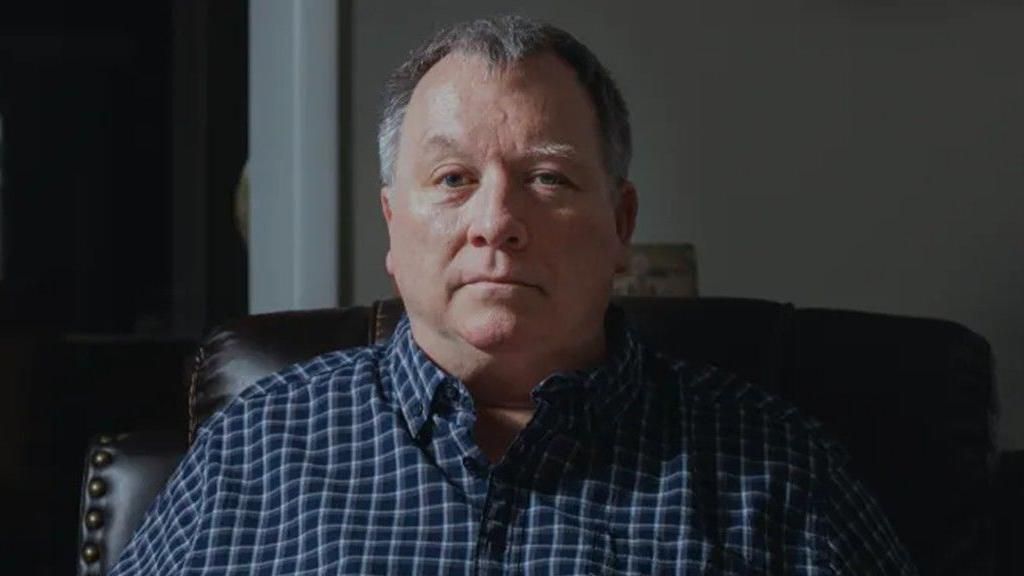
Tennessee man jailed over Charlie Kirk post settles lawsuit for more than $800K
A retired law enforcement officer from Tennessee who spent more than five weeks in jail following his arrest over a social media post connected to the killing of conservative activist Charlie Kirk has reached an $835,000 settlement in his wrongful incarceration lawsuit against local authorities. Larry Bushart, 64, spent 37 days in pre-trial detention before prosecutors ultimately dropped all felony charges against him — a period of incarceration that cost him his part-time post-retirement job and forced him to miss the birth of his first grandchild.
Bushart’s arrest dates back to September 2024, when deputies from the Perry County Sheriff’s Office took him into custody hours after he shared a satirical meme in a public Facebook discussion thread about a community vigil honoring Kirk, who was fatally shot during an outdoor speaking engagement in Utah 10 days prior. The meme paired the partial line “We have to get over it” — a quote taken from former President Donald Trump’s 2024 message of condolence following a deadly school shooting in Perry, Iowa — with the caption “Seems relevant today.”
Local authorities claimed that area residents grew alarmed by the post because Tennessee’s Perry County is home to a public school that shares the same name as the Iowa school where the 2024 shooting occurred. Then-sheriff Nick Weems argued publicly after the arrest that investigators believed Bushart had intentionally posted the meme to stoke widespread fear and hysteria within the local community, charging him with threatening mass violence at a school. Unable to pay the exorbitant $2 million bail set by the court, Bushart remained behind bars for more than a month even as he maintained his post was protected free speech and never intended to incite harm.
After all charges were dismissed, Bushart filed a federal civil lawsuit against Perry County, Weems, and lead county investigator Jason Morrow, alleging the defendants had violated his First Amendment right to free expression and his Fourth Amendment protection against unreasonable search, seizure, and unlawful detention. A jury trial was scheduled to begin in Memphis this coming July, before the two sides reached a settlement agreement that was announced publicly this week.
In a formal statement announcing the resolution of his case, Bushart said he was pleased that his First Amendment rights had ultimately been vindicated. “The people’s freedom to participate in civil discourse is crucial to a healthy democracy,” the statement read. “I am looking forward to moving on and spending time with my family.” The BBC has reached out to Perry County officials for additional comment on the settlement, but has not yet received a response.
Bushart is one of more than 30 Americans who faced some form of professional or public repercussion — ranging from widespread online harassment to termination from employment — for controversial social media comments made in the wake of Kirk’s killing. To date, he remains the only individual known to have been incarcerated for a social media post related to the high-profile killing, a fact that has drawn increased national attention to his case and broader debates over the balance between public safety and free speech rights in the digital age.
-
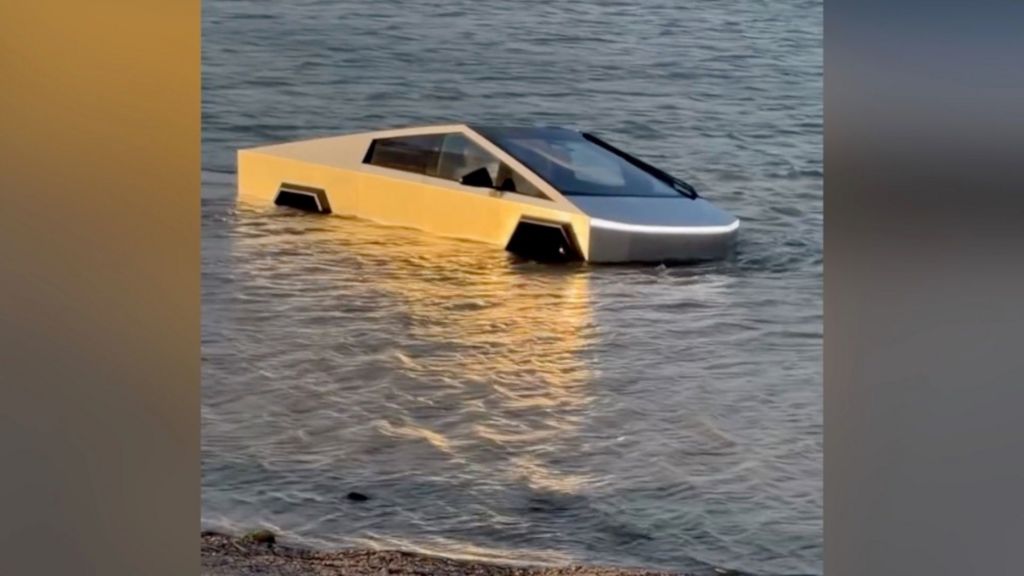
Moment Cybertruck driver intentionally drives into Texas lake
A bizarre incident unfolded at a Texas lake over the weekend when a Tesla Cybertruck driver deliberately steered their electric pickup into the water, prompting a swift emergency response and leading to the driver’s arrest. Local law enforcement confirmed that the driver was attempting to test the vehicle’s advertised “wade mode”—a feature designed to allow the truck to traverse shallow flooded or waterlogged terrain—when they made the decision to enter the open lake. First responder teams, including local rescue divers and water recovery crews, were dispatched to the scene near the shoreline, where they successfully pulled the partially submerged electric vehicle from the water hours after the incident. No injuries were reported in the event, but the reckless act has raised new questions about how owners interpret and test the off-road capabilities of modern electric pickup trucks. Police have not yet released details on potential charges the driver will face, but they confirmed the suspect was taken into custody immediately following the recovery operation. Local park officials also noted that the incident caused minor disruption to public recreation access to the shoreline for several hours while recovery work was underway.
-
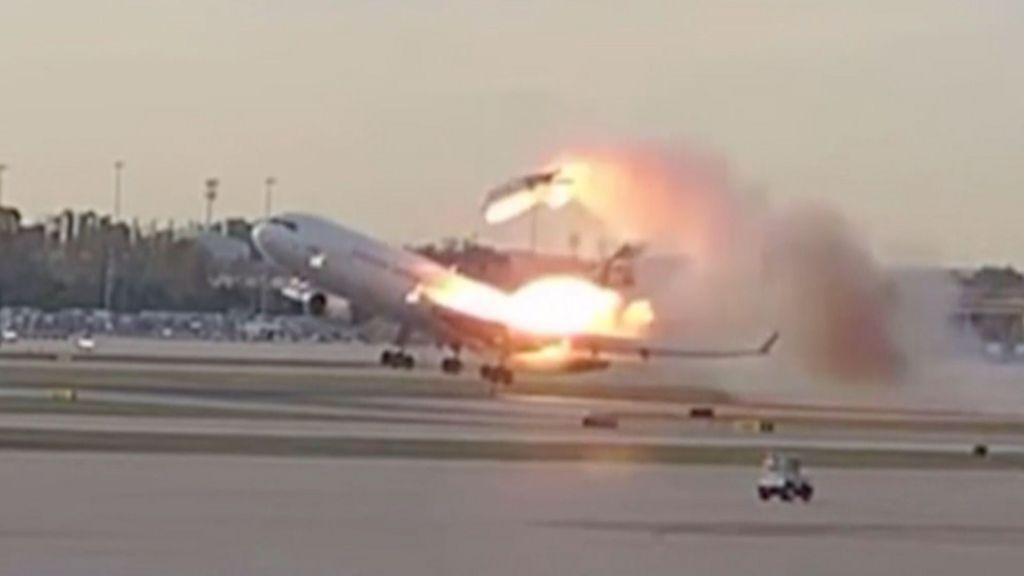
New video captures engine ripping off cargo plane in deadly Kentucky crash
Investigators probing one of the deadliest aviation incidents in recent Kentucky history have made public dramatic new video that captures a critical moment in the disaster: the cargo plane’s engine tearing away from the airframe as the aircraft attempted to climb away from the runway. The crash, which occurred earlier this year, claimed the lives of all 14 people on board, leaving families grieving and aviation safety experts searching for clear answers into what caused the tragedy.
The visual evidence, released as part of the official ongoing inquiry, offers investigators a key new clue to piece together the sequence of events that unfolded on the takeoff roll. The footage clearly documents the structural failure that led to the engine detaching from the wing before the plane went down. Since the crash first happened, investigation teams have been working diligently to recover debris from the crash site, interview witnesses, and analyze all available flight data to determine root causes, from mechanical malfunction to maintenance oversights or other contributing factors.
Aviation safety officials have emphasized that the investigation remains active, and no final conclusions on the cause of the crash have been reached yet. The release of the video marks a key step in keeping the public informed about the progress of the inquiry, as authorities work to uncover the full truth of what led to the fatal accident, and to identify any safety gaps that could be addressed to prevent similar tragedies in the future. For the families of the 14 victims, the new footage comes as a painful reminder of the disaster, even as it brings investigators one step closer to finding answers.
-
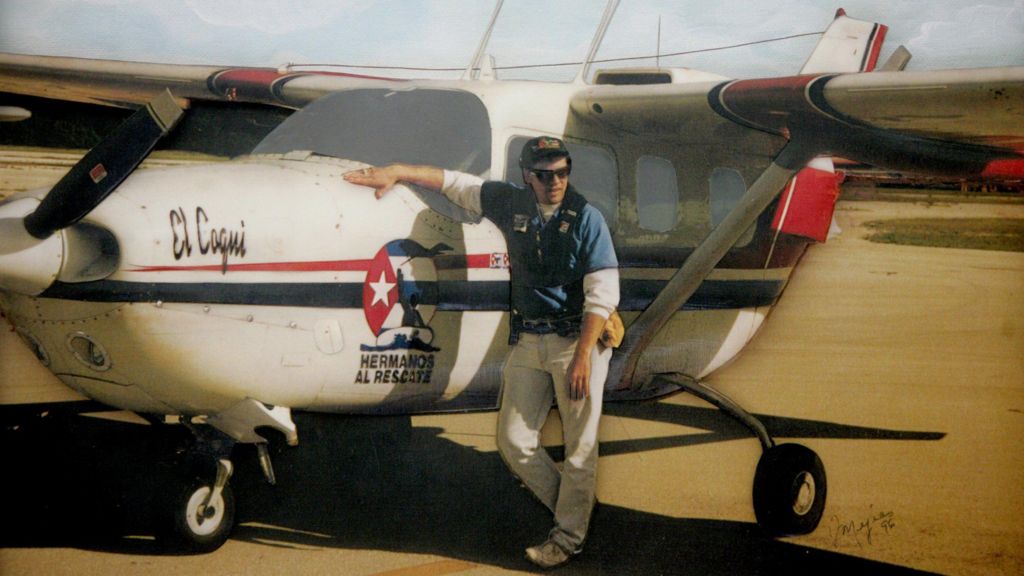
The deadly plane attack at the centre of Castro’s indictment
More than three decades after a fatal incident that reshaped decades of Cuba-United States relations, US authorities have unveiled criminal charges against former Cuban leader Raúl Castro, centering on the 1996 downing of two civilian aircraft off Florida’s coast that killed all four people on board. The attack, carried out by Cuban military fighter jets, triggered one of the most severe crises between the two nations, a rift whose impacts continue to ripple through bilateral ties to the present day.
The two small Cessna planes targeted in the strike belonged to Brothers to the Rescue, an organization founded by Cuban exiles based in Miami, Florida. The February 24, 1996, incident left all four passengers — three US citizens and one Cuban national — dead instantly when the jets opened fire over the waterway separating Cuba and the US. At the time of the attack, Raúl Castro served as Cuba’s Minister of the Armed Forces, placing him at the center of international condemnation that followed the strike. The incident immediately derailed tentative diplomatic outreach between Havana and the Bill Clinton administration, and prompted the US to ramp up economic sanctions against the government led by Raúl’s older brother, Fidel Castro. Though Raúl Castro formally stepped down from the Cuban presidency and Communist Party leadership in 2021, the 94-year-old still retains significant behind-the-scenes influence on the island, making the timing of the indictment particularly sensitive amid Cuba’s current ongoing crises.
To understand the roots of the 1996 incident, context of Cuba’s 1990s economic collapse is critical. After the Soviet Union, Cuba’s primary economic and political backer, dissolved in 1991, the island entered a devastating period of crisis marked by widespread food shortages, rolling blackouts, and acute fuel scarcity. This hardship drove thousands of Cubans to attempt risky sea crossings to Florida to reunite with family members already settled in the US. “Suddenly, everyone started looking for anything that floated to try to reach Florida,” Cuban historian and former diplomat Juan Antonio Blanco told BBC Mundo of the period — a crisis many observers draw direct parallels to between Cuba’s current economic and energy turmoil.
It was in this context that Brothers to the Rescue was formed in Miami, led by now 85-year-old Cuban exile José Basulto. The group’s original mission was to conduct flights over the Florida Straits to locate makeshift vessels carrying Cuban migrants, share their coordinates with the US Coast Guard for rescue, and drop emergency supplies of food and water to those adrift. Over time, however, the group expanded its activities beyond search and rescue, according to Cuban political scientist Carlos Alzugaray, who spoke to BBC Mundo from Havana. “They stopped doing what they said they wanted to do, which was helping to rescue rafters, and started entering Cuban airspace and dropping leaflets over Havana,” Alzugaray explained. The Cuban government quickly labeled Brothers to the Rescue members as terrorists, repeatedly condemning the air incursions and arguing the group posed a clear threat to national security.
Basulto, who has personally led multiple incursion missions, rejects the terrorism label entirely. He argues the Cuban government’s anger stemmed not from any security threat, but from the content of the leaflets: they carried text from the Universal Declaration of Human Rights, a document banned in Cuba at the time. On the day of the fateful 1996 mission, three Brothers to the Rescue planes took off from Florida for what was intended to be a routine patrol over the straits. Over a six-minute window, Cuban fighter jets intercepted and shot down two of the small aircraft. Basulto, piloting the third plane that escaped the attack, recalled the chaos of the moment: “I looked to the right and saw the smoke in the distance from one of the planes being shot down. I immediately looked at Sylvia Iriondo [a volunteer on the mission] and said to her, ‘we’re next.’” Basulto said his aircraft was the primary target, as he was the group’s founder and leader.
The Cuban projectiles nearly completely destroyed the two downed civilian craft, leaving little physical evidence behind. Basulto maintains both planes were in international waters north of Havana when they were attacked — a claim corroborated by both the International Civil Aviation Organization and the Organization of American States, which formally accused Cuba of violating international law in the strike. The Cuban government has never backed away from its position that the downing occurred within its sovereign airspace.
Blanco, who was serving as a Cuban diplomat in Havana at the time of the incident, has described the strike as a pre-planned ambush orchestrated by Fidel Castro. He claims Fidel Castro had advance intelligence of the mission’s schedule, flight paths, and personnel, thanks to a mole embedded within Brothers to the Rescue. In Blanco’s account, Fidel Castro held ultimate political responsibility for the operation, while Raúl Castro, as armed forces minister, oversaw its execution. A leaked recording, published on Brothers to the Rescue’s website in 2006, allegedly captures Raúl Castro walking Cuban journalists through details of the operation he commanded; while exiled Cuban officials and independent experts have confirmed the recording’s authenticity, BBC Mundo has not independently verified the tape.
Scholars and observers continue to debate the full motivations behind the Cuban government’s decision to shoot down the planes. The official Cuban position frames the strike as a legitimate response to repeated violations of its sovereign airspace by a group it labels a hostile security threat. But many outside analysts argue the decision was rooted in major political calculations. Blanco, who participated in backchannel diplomatic communications between Havana and Washington in the 1990s, argues Fidel Castro orchestrated the attack to derail tentative talks on normalizing bilateral relations that were taking place in the months before the strike, as the Clinton administration explored a potential diplomatic breakthrough ahead of Clinton’s expected second term. Blanco argues Fidel Castro feared that any normalization of ties with Washington would spark pressure for political and economic reform that would undermine his authoritarian grip on power. “Shooting down the planes made it impossible for Clinton to enter into any kind of rapprochement afterwards,” he explained.
In the wake of the attack, the incident triggered the most serious Cuba-US crisis since the end of the Cold War, and set the trajectory of bilateral relations for decades into the 21st century. Clinton condemned the attack “in the strongest terms,” and the United Nations Security Council issued a formal condemnation of the use of lethal force against civilian aircraft in flight. The US responded by significantly expanding economic sanctions on Cuba, a move Havana decried as unprecedented economic and diplomatic aggression. Domestically, the incident also led to a sharp intensification of repressive policies on the island, according to Blanco, who described it as a return to harsh, Stalinist-era governance. Havana has consistently refused to pay compensation to the families of the victims, who ultimately received a $93 million settlement from the US government drawn from frozen Cuban regime assets.
Today, more than 30 years after the downing, the case retains enormous symbolic and political weight, both within Cuba and across the large Cuban exile community in the US. The unsealing of the indictment against Raúl Castro comes as Cuba faces a new wave of overlapping economic and energy crises, spurred by harsh sanctions imposed during the Donald Trump administration and the recent loss of critical support from Venezuela following the ouster of former leader Nicolás Maduro in January, making the new legal action an especially fraced development for the island’s government.
-
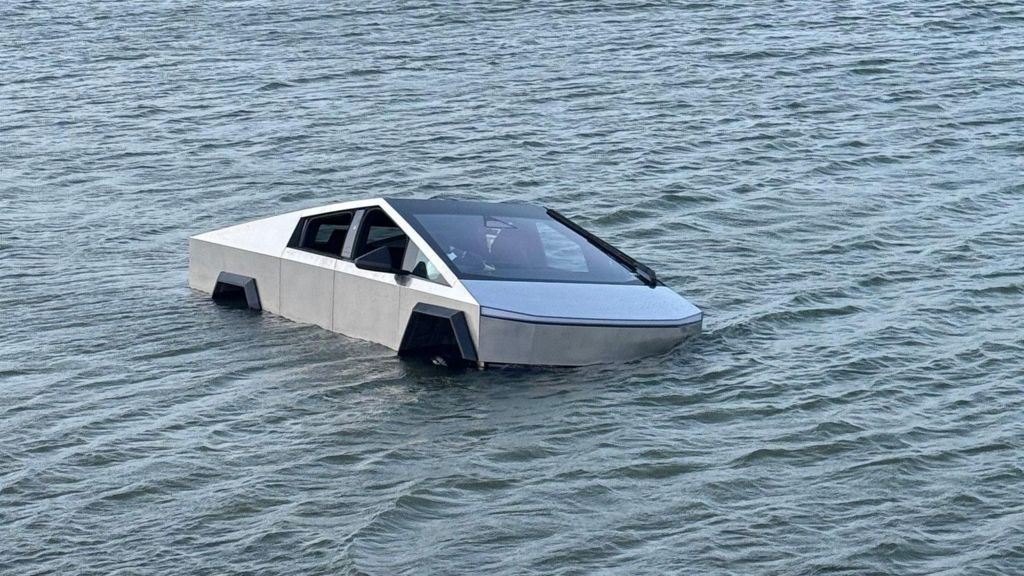
Tesla Cybertruck driver arrested after driving into lake to use ‘wade mode’, police say
A bizarre incident at a popular North Texas recreation spot has resulted in an arrest after a man deliberately submerged his Tesla Cybertruck in Grapevine Lake to test the electric pickup’s advertised off-road wading capability. The Grapevine Police Department reported that first responders were dispatched to the lakeshore on Monday following reports of a submerged, abandoned vehicle that had become trapped after taking on significant water. The driver and any passengers had fled the scene before officers arrived, leaving the partially flooded Cybertruck stuck near the south shoreline.
Tesla’s official owner documentation for the angular stainless-steel pickup explicitly names wade mode as a feature designed to let drivers traverse shallow bodies of water like creeks and small rivers, with a rated maximum depth of 32 inches (81.5 centimeters) measured from the base of the vehicle’s tires. According to police statements, the driver admitted to intentionally entering the lake solely to test out this factory-included feature, despite the area of the lake where he entered being closed to vehicle traffic. After the truck filled with water and became immobilized, he and his companions left it half-submerged for emergency crews to extract.
The recovery operation required joint work between Grapevine police and the Grapevine Fire Department’s specialized water rescue team, who pulled the damaged electric vehicle from the shallow near-shore waters. In addition to the charge of operating a vehicle in a closed section of the lake, the driver faces multiple misdemeanor citations for violations of state water safety equipment regulations. Law enforcement has emphasized that even though the Cybertruck is engineered to handle limited shallow water crossings, testing that capability in a public lake carries both legal and life-safety risks under Texas state law.
“We wouldn’t encourage willingly driving your vehicle into the water,” Grapevine Police Department spokesperson Katharina Gamboa told CBS News, the US partner of the BBC. “Not only that, it’s a safety concern, but it’s also a legal concern as well.”
First unveiled to public fanfare in 2019, Tesla’s futuristic Cybertruck — built with ultra-hard 30X cold-rolled stainless steel marketed as bullet-resistant against small arms fire — only began full customer deliveries in 2023. Tesla’s owner manual includes clear warnings that go beyond just depth limits: the manufacturer explicitly warns drivers against attempting to cross deep, fast-moving water such as rapids or flood-swollen channels, and notes that it is the driver’s sole responsibility to confirm water depth before attempting any crossing. Critically, the automaker also specifies that any damage or water intrusion caused by driving the vehicle through bodies of water is not covered under the vehicle’s factory warranty, leaving owners liable for all repair costs if something goes wrong.